Home Blog Page 48

Hashim-Olawepo: Ten years under APC is disaster

0

According to Gbenga Hashim-Olawepo, a former presidential candidate, the economic situation in Nigeria during the ten years of the All Progressives Congress (APC)-led Federal Government was disastrous.

Chieftain of the Peoples Democratic Party, or PDP, Hashim-Olawepo made this statement on Wednesday in an interview with Channels Television’s “Politics Today” show.

He claims that twenty years ago, when former President Olusegun Obasanjo was stepping down, Nigeria’s GDP was higher than it is now.

The lawmaker said that at the time former President Goodluck Jonathan handed over power to APC’s Muhammadu Buhari, Nigeria’s economy was the largest in Africa. However, he called the current state of affairs as a catastrophe, claiming that it was only in fourth or fifth place.

Nigeria’s current GDP ranges between 220 billion to 230 billion. The IMF/World Bank forecast and the International Monetary Fund both support this.

Nigeria’s GDP was 268 billion when former President Olusegun Obasanjo left office in 2007, which is more than it is currently.

“Under the APC, this catastrophe occurred. Nigeria’s GDP has increased to 574 billion when Goodluck Jonathan relinquished power, making us the continent’s largest economy. We are on the fourth day of the fifth.

He declared, “What has happened to the economy in the ten years of APC government is a disaster and tragic.”

PETROAN Warns Ojulari Over Failure to Restart Port Harcourt Refinery

0

The Nigerian National Petroleum Company (NNPC) Limited’s GCEO, Bayo Ojulari, has come under fire from the Petroleum Products Retail Outlets Owners Association of Nigeria (PETROAN) over remarks he made regarding the Port Harcourt refinery.

According to reports, Ojulari had previously asserted that the Port Harcourt plant was suffering enormous losses, which prompted the shutdown of the establishment.

As state-owned refineries were shut down, Ojulari urged Nigerians to give thanks to God for the Dangote refinery, stating that it gave them a “breathing space.”

However, Joseph Obele, the national public relations officer (PRO) of PETROAN, requested in a statement on Wednesday that the NNPC executive refrain from praising the Dangote refinery based on the state-owned asset’s failure.

He criticized Ojulari’s position that the Dangote refinery’s success should be the only reason Nigerians should be “thankful.”

He stated that private investment cannot take the place of the government’s constitutional and financial duty to effectively manage public assets, notwithstanding the strategic significance and admirable accomplishment of the privately held refinery.

Profit and efficiency are the driving forces behind Dangote Refinery’s private investment. In contrast, Nigerians have access to national assets held in trust by NNPC. Obele stated that one cannot be used as a justification for the other’s shortcomings.

He cautioned that the NNPC leadership’s frequent public confessions of ineptitude might damage Nigeria’s energy security framework, diminish investor confidence, and jeopardize years of policy initiatives focused on job creation, price stability, and local refining.

The NNPC GCEO was urged by Obele to realize that his role was to address issues, “not to retreat behind the success of a private refinery.”

Since Dangote is already supplying Nigeria’s fuel needs, he called the claim that there is no hurry to reopen the Port Harcourt Refinery “most worrisome.”

According to Obele, “such a statement is annoying, unacceptable, and indicative of leadership that is not solution-centric.”

According to the PETROAN PRO, Nigeria cannot keep normalizing institutional failure, waste, and the retrospective defense of bad choices.

He emphasized that acknowledging failure is only significant if it is accompanied by responsibility, changes, and a convincing strategy to stop it from happening again.

Obele added that in order “to demand the removal of the NNPC GCEO should the Port Harcourt Refinery fail to resume operations on or before 1 March 2026,” he will work with civil society organizations and pertinent stakeholders to investigate legal possibilities.

He cautioned that if the massive sums already spent on rehabilitation are not immediately addressed, further downtime may result in rust, corrosion, and equipment failure, making the entire refurbishment attempt pointless.

ADC Knocks Senate, Calls Electoral Act Changes APC’s “Rigging Blueprint”

0

The African Democratic Congress (ADC) has denounced the APC-led 10th Senate’s decision to reject important changes to the Electoral Act that would have increased the Independent National Electoral Commission’s (INEC) effectiveness and the legitimacy of upcoming elections.

Bolaji Abdullahi, the party’s publicity secretary, described the action as an intentional attempt to weaken Nigeria’s democracy.

It notably criticizes the Senate for ruling against provisions for the electronic download of voter cards and for refusing to authorize the electronic communication of election results.

Additionally, the ADC denounces the decision to dramatically shorten the deadlines for publishing the list of candidates and to cut election notice periods.

The ruling party’s fear of free and fair elections in 2027, despite its current political dominance, is revealed by these tactics, the ADC claims.

Consequently, the party urges the Conference Committee on the Electoral Act to reverse the Senate’s ruling and enact changes that represent democratic values and the Nigerian people’s desire.

“The 10th APC-led Senate’s decision to reject important provisions that would have strengthened the credibility, transparency, and integrity of Nigeria’s electoral process is strongly condemned by the African Democratic Congress (ADC),” the complete statement says.

“The most important of them is the denial of the electronic transmission of election results, which obviously indicates another attempt by the APC to subvert the will of the Nigerian people and rig future elections.

Additionally, the Senate voted against important measures that would have cut the notice period for elections, allowed voter cards to be downloaded electronically from the INEC website, and decreased the time frame for candidate publication from 150 days to 60 days.

The goal of these proposed measures was to restore voter trust in the electoral process and to provide the essential protections against electoral fraud. Rather, by altering the law in a way that increases the likelihood of election tampering and places significant logistical burdens on INEC, the Senate has decided to further reduce the effectiveness of future elections.

As a result of this shameful move, the APC has manipulated the law and created the conditions for widespread election malpractice by taking use of its majority in the National Assembly.

Nigerians are fully aware that the APC is terrified of holding free and fair elections because to the unprecedented suffering it has caused regular people. But few anticipated that the party would go so far in dismantling the country’s electoral regulations.

“The APC has shown that it lacks confidence and is determined to hold onto power by whatever means, including meddling with legislation, by rejecting important measures intended to improve the holding of elections.

“All well-meaning Nigerians must hold the APC responsible for its activities that continue to undermine democracy and destroy public confidence in the electoral system at this crucial juncture.

The ADC, the country’s main opposition party, strongly denounces the Nigerian Senate’s retrogressive move and urges all Nigerians to reject it.

“We also urge the Conference Committee on the Electoral Act to reject the Senate’s proposal and approve changes that are consistent with democratic ideals and accurately represent the goals and desires of the Nigerian people.”

Coup Plot: Falana Faults FG, Says Suspects Cannot Face Court Martial

0

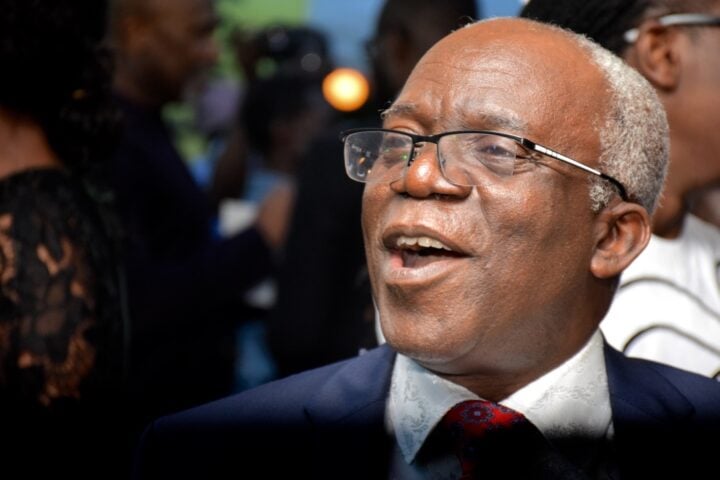
The Federal Government’s plan to try military officers accused of plotting a coup against President Bola Tinubu before a court martial has drawn criticism from human rights attorney and Senior Advocate of Nigeria Femi Falana, who maintains that the offense is criminal in nature and should be prosecuted under the Criminal Code Act.

In a statement issued from Lagos, Falana reportedly made this known in response to the Defense Headquarters’ declaration last week that certain military officials and civilian accomplices had planned to topple the Tinubu government in October 2025.

The attorney particularly cited Section 41 of the Criminal Code Act, which stipulates that anyone who tries to overthrow the government or oust the President faces life in jail.

The contentious story by Sahara Reporters that 16 officers, ranging from captain to brigadier general, were arrested in October 2025 for organizing covert meetings to overthrow the government was finally addressed by the Defense Headquarters this week.

Insisting that the situation was an internal disciplinary problem, Brig. Gen. Tukur Gusau, the Director of Defense Information at the time, rejected the claim as sensational. The Defense Intelligence Agency did, however, subsequently affirm that a thorough inquiry was conducted and that the results will be released to the public.

Maj. Gen. Samaila Uba, the new Director of Defense Information, gave an update, stating that the suspects would face trial before a military tribunal and that the investigation had been completed in accordance with military protocols.

Gen. Christopher Musa, the Minister of Defense, also addressed the development, saying that the accused would face court-martial procedures in accordance with military laws.

“Even though I am involved in the ongoing campaign against unconstitutional change of governments in Africa, I am compelled to point out that the accused coup plotters cannot be tried by a court martial or any other military tribunal under the current democratic dispensation,” Falana wrote in response. It is a serious offense that needs to be tried under the Criminal Code Act since the military officers involved in the coup attempt intended to remove an elected president from office. It is important to note that the alleged coup plotters can only be tried under section 41 of the Criminal Code Act, which states that anyone who plans to overthrow the government by using criminal force or to overthrow the president while he is in office and makes that intention known through an overt act is guilty of a felony and faces life in prison.

The case of Umoru Mandara v. Attorney-General of the Federation (1984) 4 S.C. 8 should be studied by those who are putting increasing pressure on the Federal Government to have the suspected coup plotters tried by a court-martial. The appellant was charged with four counts of treason, inciting to mutiny, and seeking to cause disaffection in that case, which was tried at the Federal High Court in Lagos. The defendant was found guilty at the conclusion of the protracted trial and given a 15-year prison sentence. Due to the Federal High Court’s lack of jurisdiction to try the appellant, the Supreme Court overturned his conviction. The Federal High Court has the authority to try treason and related offenses under the Constitution.

However, the Constitution was suspended and altered following President Shehu Shagari’s ouster on December 31, 1983, and the nation was governed by directives issued by the head of state and governors, respectively. In order to deal with alleged political opponents, some of the annoying decrees were quickly passed. For example, the Treason and Other Offences (Special Military Tribunal) Decree 1 of 1986 was issued after General Ibrahim Babangida, the military president, learned that General Mamman Vatsa and the other military officers could only be sentenced to life in prison under section 41 of the Criminal Code Act.

The death sentence was established by the Treason Decree for treason and treasonable felonies. Despite being detained in December 1985, the accused coup plotters were put on trial under the Treason Decree, which was issued on January 6, 1986. As a result, they were premeditatedly executed after being found guilty by a military court. In contrast, General Babangida’s assertion that he killed his close buddy Vatsa because the law had his hands tied is wholly false. Major Gideon Orkar and his associates were aware of the legal repercussions of their April 22, 1990, effort to kill General Babangida and dismember Nigeria, which they failed to do. Nigerians were therefore not shocked when the coup plotters were put on trial, found guilty, given the death penalty, and put to death in accordance with the Treason Decree.

May 1992 saw the arrest of the following batch of suspected coup plotters. According to section 41 of the Criminal Code Act, the five individuals were accused of conspiracy and treason. They were charged before a Chief Magistrate Court in Gwagwalada, the Federal Capital Territory, because they were civilians. They were accused of starting a campaign across Nigeria called “Babangida Must Go.” Among the five defendants were the late Chief Gani Fawehinmi and myself. We made an appearance on behalf of ourselves and our allies because we were detained incommunicado.

“It is ironic that Babangida and his comrade-in-arms, who should have been put on trial for toppling the Shehu Shagari government in December 1981, have turned to charge us with treasonable felony for campaigning against the criminal manipulation of his political transition program,” Fawehinmi said while pleading for our bail. The Criminal Act’s section 41, I argued, allows for the creation of an intention to remove the president from office while he is still in office. I came to the conclusion that the law was intended to defend an elected President with a maximum term of eight years rather than a military dictator, as the General had no set term of office.

“The prosecutor dropped our trial after it was confirmed that we intended to utilize the case to try the serial coup plotters in power. We were released as a result, and the charge was dropped for lack of rigorous prosecution. Babangida then issued the Treason and Treasonable Offenses Decree No. 29 of 1993, which gave the former military junta the authority to establish military tribunals for the trial of coup conspirators. Under the Treason and Treasonable Offenses Decree, the military and civilians—including journalists detained for organizing the 1995 phantom coup d’etat—were prosecuted in camera.

The military tribunal’s trial of civilians was not legally warranted. The commission concluded in Media Rights Agenda v. Nigeria (2000) AHRLR 5 that the arraignment, trial, and conviction of civilians by a Special Military Tribunal presided over by active military officers violated both the duty to ensure the independence of the courts under article 26.63 and the fundamental principles of a fair trial guaranteed by article 7 of the Charter. The commission said that military courts “should not, in any circumstances whatsoever, have jurisdiction over civilians,” citing its Resolution on the Right to a Fair Trial and Legal Aid in Africa and saying as much. In a similar vein, Special Tribunals shouldn’t hear cases involving crimes that belong in regular courts.

It is known that General Abdulsalami Abubakar overturned anti-democratic laws, including the Treason and Treasonable Offenses Decree No. 29 of 1993, in order to restore civil rule in the nation, which took effect on May 29, 1999. However, the authors of the 1999 Constitution added section 251(2), which states that “The Federal High Court shall have and exercise jurisdiction and powers in respect of treason, treasonable felony, and allied offences,” in response to the Lagos High Court’s ruling on November 10, 1993, dismissing the Interim National Government led by Chief Ernest Shonekan.

The purported involvement of certain people in the scheme is another reason why the accused coup plotters cannot be convicted in a court-martial. A military court cannot try the indicted civilians because they are not covered by service law. In Chief Moshood Abiola vs. The Federal Republic of Nigeria (1995) 1 NWLR (Pt.370) 155, the Federal High Court even charged the defendant with treason. The Federal High Court also indicted defendants, including now-President Senator Bola Tinubu, with treason in the case of Ameh Ebute vs. State (1994) 8 NWLR (Pt 360) 66.

In the case of Dr. Kizza Besigye & Others vs. Attorney General and Others (Miscellaneous Cause 31 of 2025) [2025] UGHCCD 29 (24 February 2025), the Supreme Court of Uganda has put an end to the unlawful practice of prosecuting civilians in military courts. In one instance, on November 16, 2024, Dr. Kizza Besigye and Haji Obeid Lutale were violently kidnapped from Nairobi, Kenya, transported to Uganda, and wrongfully imprisoned at the Makindye military barracks. On November 20, 2024, they were hauled before the General Court Martial on allegations that included possession of firearms and security violations. The trial’s legal competence was contested. The Supreme Court ruled on January 31, 2025, that military courts lacked the authority to try civilians. As a result, officials were ordered to stop any current military prosecutions of civilians and move them to the nation’s civilian legal system.

In light of the aforementioned, the case file of the suspected coup plotters should be sent right away to the Federation’s Attorney-General’s office. Following receipt of the case file, the Attorney-General is required under section 251(2) of the 1999 Constitution to review it and file a charge of treasonable felony before the Federal High Court. It is important to remind the military authorities that the plot to overthrow a civilian government is not a military matter, even though they have threatened to trial the accused coup plotters in a military court. Treason is not one of the offenses specified in the Armed Forces Act, and the edict that the military officials were depending on to try coup plotters has been revoked.

Deputy Senate President Bara Says 2027 Victory Secured for APC

0

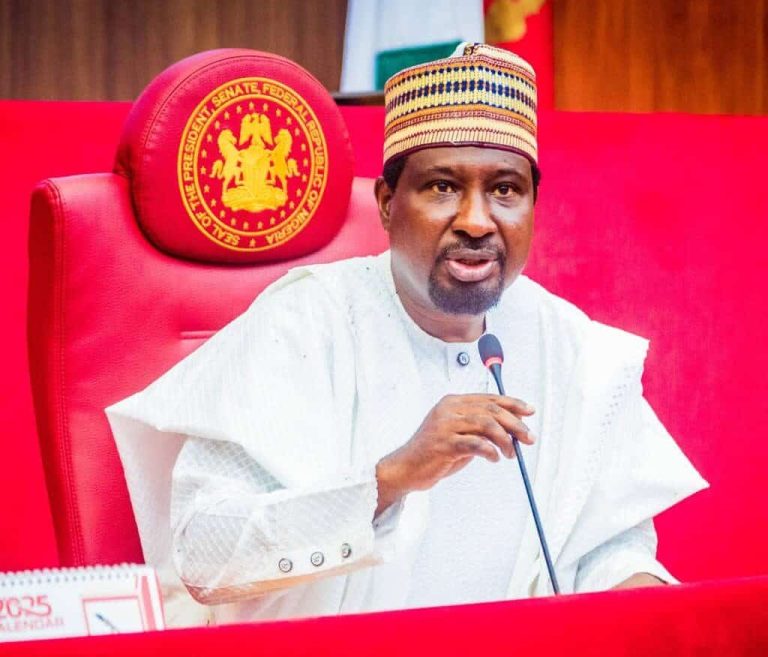
Given its control over 29 state governments, Senator Barau Jibril, the deputy president of the Senate, has claimed that the All Progressives Congress (APC) will win the 2027 election.

According to reports, Barau said this while speaking to party supporters at a political event that supported President Bola Tinubu and Katsina State Governor Dikko Umaru Radda for second terms in 2027.

He maintained that the party has the institutional presence, broad grassroots reach, and political apparatus necessary to sustain national leadership thanks to its 29 governors.

APC’s state-level dominance, according to Barau, is a structural advantage that improves governance and election prospects rather than merely being a statistic.

The Deputy Senate President claims that President Tinubu’s endorsement was based on performance rather than sentiment, pointing to advancements in infrastructure, healthcare, education, and security as proof that the administration is making success in all important areas.

Speaking from “firsthand experience,” Barau added that he had insight into ongoing reforms and policy direction because of his working relationship with the President.

He insisted that the government is building solid groundwork for stability and expansion in the long run.

He addressed worries about the growing cost of living by acknowledging economic challenges but attributing them to global instability, such as international conflicts and global economic shocks.

He stated that despite these obstacles, the federal government is attempting to stabilize the economy and establish systems that would eventually produce outcomes.

He emphasized that stability is necessary for effective governance and urged continued unity within the party as well as collaboration among political actors. He claimed that political peace and widespread support will provide the President with the conditions necessary to completely carry out his plan.

Mounting Calls on N’Assembly to Reserve Legislative Seats for Women

0

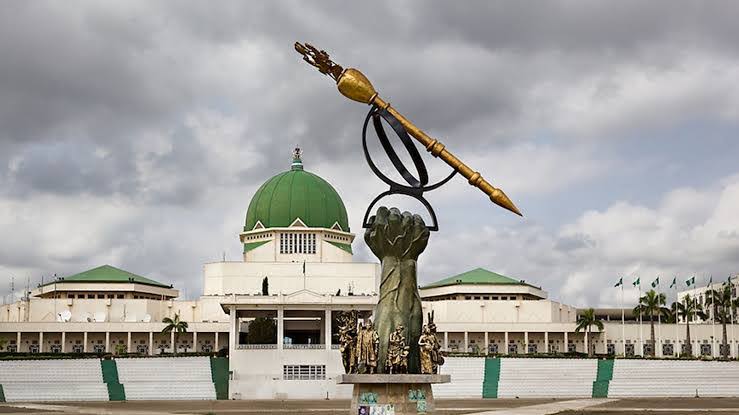
A contentious constitutional amendment that reserves legislative seats for women has become a litmus test for political bravery as Nigeria’s National Assembly approaches a final vote. Beyond gender fairness, proponents claim that if the measure is not passed, Nigeria will lose out on an estimated $269 billion in economic benefits and its democratic deficit will widen.

Nigeria is on the verge of yet another pivotal moment in the quiet hallways of the National Assembly, where agreements are discussed in whispers and history is frequently determined by delay. Now in its crucial third reading stage, the Reserved Seats for Women Bill has evolved from a gender advocacy proposal into a high-stakes test of Nigeria’s political integrity, economic acumen, and democratic maturity.

Discussions about women’s political participation were long written off as romantic or culturally awkward. But this time, the debate has gained quantifiable figures, deadlines, and a clear sense of urgency.

Nigeria may increase its GDP by over $269 billion over the next ten years by increasing the participation of women in formal education, governance, and the economy, according to research cited by the bill’s proponents.

Legislators are now asked if Nigeria can afford to keep women out of the spotlight rather than whether they should be included.

Chief Osasu Igbinedion-Ogwuche, CEO of TOS Group and coordinator of the coalition supporting the bill, has once again taken the lead.

“If this bill does not scale through in February 2026, it cannot be operationalized for the 2027 general elections,” she stated plainly when speaking to reporters in Abuja last week. And if that occurs, we would essentially keep 50% of Nigerians on the sidelines for an additional four years.

Nigeria’s stats are startling and getting harder to defend. Despite making up almost half of the population, women only hold 4% of the seats in the National Assembly, which includes 4 out of 109 senators and 16 out of 360 members of the House of Representatives.

At the subnational level, the situation is worse: 36 State Houses of Assembly have 51 female lawmakers out of 993 total, and 16 states have no female representation. Campaigners frequently use the sad irony to point out that a male chairs the state’s women’s issues committee.

Nigeria has the lowest percentage of women in parliament in Africa when compared to continental standards. Rwanda’s quota-based system has increased female representation above 60%, while the continental average is between 23 and 27%.

The contradiction is obvious for a nation that calls itself the “Giant of Africa.”

The purposeful rebranding of the bill as an economic and governance reform rather than a social compromise is what has changed the debate’s tone. Igbinedion-Ogwuche makes the case that inclusive government is closely related to better development outcomes, citing research from the World Bank, the UN, and McKinsey.

According to her, a 2024 analysis by McKinsey and the Mastercard Foundation also projects that by 2030, the GDP of Africa might increase by $287 billion if more young women joined the continent’s formal labor.

“This is about productivity, human capital, and national competitiveness,” she stated. The socioeconomic benefit is evident. We can’t keep discussing progress while systematically keeping women out of decision-making.

Advocacy Lead at TOS Group Andikah Umoh provided legal and policy framing, characterizing the law as a democratic correction rather than an empowerment program.

According to her, “More investments in social protection, health, and education, as well as better social policy outcomes, are associated with women’s representation.” Additionally, it is associated with less corruption and more cooperative policymaking. Legitimacy is lacking in a legislature that excludes half of the populace.

The Reserved Seats for Women Bill calls for the introduction of 108 seats in State Houses of Assembly and 74 additional seats in the National Assembly. These seats would be filled by competitive elections between female candidates nominated by political parties. Advocates are adamant that no one is guaranteed office by the bill.

“Tokenism is not what this is. There isn’t an appointment. Igbinedion-Ogwuche emphasized time and again that it is not a handout.

These are roles that are elective. Candidates will be brought by the APC, PDP, and other parties, and women would compete with one another, she clarified.

The bill is intended to address long-standing obstacles that have made Nigerian politics one of the most inhospitable environments for women, including the weaponization of religion, political violence, expensive nomination fees, informal gatekeeping by male power brokers, and cultural expectations.

Advocates contend that many wealthy, educated, and politically aspirational women have been routinely excluded even before the election.

Nigeria has attempted to enact laws promoting inclusivity before. Claims that the Gender and Equal Opportunities Bill went against religious and cultural values caused it to fail in the 8th Assembly.

Despite support from the then-legislative leadership, a new attempt in the 9th Assembly likewise failed. These losses served as examples of what not to do.

The present bill’s supporters started an unprecedented consultation process because they were determined not to repeat the past.

To interact directly with communities, the coalition set up coordinators at the ward, state, municipal, and geopolitical levels during the previous year. All six geopolitical zones’ lawmakers participated in closed-door caucus meetings, where the opposition was met head-on rather than sidelined.

A few legislators were open. Igbinedion-Ogwuche remembered, “Some openly told us that they did not believe there should be any women in parliament at all.” We therefore inquired as to what it would take for them to reconsider.

According to Igbinedion-Ogwuche, religion—long mentioned as a barrier—became a focal focus.

“TOS Foundation Africa partnered with the Sultan of Sokoto, Nigeria’s highest Islamic authority, to organize a symposium that brought together lawmakers, clerics, and political stakeholders in October last year on the International Day of the Girl Child,” she stated.

She clarified that the Sultan’s support for the legislation was crucial. He said that it was a distortion of faith to use religion as an excuse for exclusion and that women have traditionally occupied prominent positions in Islamic cultures.

She noted that snippets of his comments were then broadcast on major radio and television networks, specifically focusing on areas where religious concerns had been most pronounced.

High-level political endorsements quickly followed, she said.

“The President publicly declared his support in December 2025,” Igbinedion-Ogwuche stated. The Senate President, Speaker of the House, Deputy Speaker, Vice President, and Chief of Staff to the President were all present for a strategic meeting called by the First Lady in the Presidential Villa.

The Deputy Speaker of the House of Representatives became the bill’s sponsor, and more than 50 senators promised support.

Prior to the state-level ratification procedure, the coalition also obtained guarantees of support from governors and a formal relationship with the Governors’ Spouses Forum.

However, there is discomfort underlying the momentum. Nigeria’s legislative history is replete with proposals that were endorsed by elites but quietly perished during vote, as advocates are well aware.

“Assurances alone are insufficient since electronic voting protects individual choices from instantaneous public scrutiny.

The coalition responded to this by launching the 469 Tracker, a monitoring tool that documents and disseminates each National Assembly member’s declared stance. The goal is straightforward: make it politically expensive to go back.

She claims that the last point of pressure has been determined to be the media. Kingsley Sintim, Managing Director of TOS Group, pleaded for consistent coverage during a high-level conference with editors and bureau chiefs.

“Mindsets don’t change overnight,” he stated. Repetition is necessary. It requires visibility. Human-centered narrative is necessary. Lawmakers’ priorities and fears are shaped by the media.

“Especially in areas where resistance is still strong, radio outreach, TV discussions, and social media amplification have increased.

In order to emphasize that support for the law is a reflection of popular opinion rather than elite lobbying, constituents are being urged to give their representatives a call directly.

But time does not pardon.

Before the 2027 election cycle, constitutional revisions must be approved by the National Assembly in time for two-thirds of State Houses of Assembly to ratify them. Delays after February run the possibility of delaying implementation until 2031, so undoing years of lobbying.

“Delay is just as deadly as rejection. The ramifications are significant for the 10th National Assembly. The passage would establish Nigeria as a late but serious reformer and represent a historic departure from decades of marginalization.

Its reputation as a legislative incapable of or unwilling to address structural inequity, even when the financial costs are obvious, would be cemented if it failed.

Without the people at the table, we are unable to enact laws on their behalf. This is about dignity, progress, and democracy. Legislators have a straightforward decision to make: will we advance Nigeria or will we make the same mistakes again for future generations?

Nigeria is waiting for evidence that its politics can finally match its potential as the election draws near, rather than just for a bill to pass.

Since the federal parliamentarians started plenary on January 27, numerous women’s advocacy groups have descended upon the National Assembly building, either to mobilize the parliament leadership to support the bill or to protest the alleged delay in the adoption of the crucial legislation.

Advocacy groups are already very concerned about whether the legislators’ engagement with the various ministries, departments, and agencies of the federal government, which will start this week on the 2026 national budget, which is scheduled for passage in the second week of March, will give them time for the bill.

This is due to the fact that the Senate is anticipated to do the same after voting on the controversial parts of the 2022 Electoral Act modifications bill this week. The House of Representatives had previously suspended plenary to allow the green chamber to attend to the money measure.
Yahaya Bello Trial: Court Dismisses CTCs Without Receipts in ₦80.2bn Fraud Case

0

On Wednesday, the Federal High Court in Maitama, Abuja, proceeded to hear Yahaya Bello’s trial for the alleged ₦80.2 billion fraud.

The Economic and Financial Crimes Commission (EFCC) is reportedly prosecuting Bello on 19 counts related to money laundering totaling ₦80,246,470,088.88.

Following the cross-examination of the seventh prosecution witness, Justice Emeka Nwite presided over the proceedings.

When the hearing was restarted, the prosecution’s attorney, Prof. Kemi Pinheiro (SAN), told the court that Prosecution Witness Seven (PW7) will be cross-examined and that three witnesses were available.

PW7, Olomotane Egoro, an Access Bank Plc compliance officer, affirmed that he was still under oath while mounting the witness box.

While being cross-examined by the defense attorney, J.B. The witness, Daudu (SAN), affirmed that he testified in response to a subpoena and submitted Exhibits 32, 33(1–11), and 34.

He further informed the court that he had previously testified before a different Federal High Court on the identical papers, but he was unable to remember which defendants were involved or if he had testified as a PW2.

Afterwards, the defense attempted to submit Certified True Copies (CTCs) of the other court’s records.

Pinheiro brought up a procedural point, claiming that the defense had neglected to provide receipts proving payment for the CTCs, even though the prosecution did not contest the documents’ admissibility.

Additionally, he insisted that the witness had provided consistent testimony.

According to Justice Nwite, the objection was upheld, and the documents could only be allowed if payment receipts were presented.

The court was told by the defense that the receipts were still being sought.

Transactions involving Abba Adaudu, Fazab Oil, and Keyless Nature Limited became the subject of additional cross-examination.

The witness verified transfers of ₦200,000 and ₦8 million in Abba Adaudu’s favor, as well as a countercheck payment at the Otukpo branch of Access Bank.

The following payments were made for specified purposes, according to PW7’s testimony regarding local government inflows:

Okehi Local Government for the provision of medical supplies, ₦7,500,144.61;

on June 3, 2022, ₦10,863,247.50 from Omala Local Government for the provision of athletic supplies;

On June 6, 2022, Yagba East Local Government awarded ₦12,228,400.10 for the purchase of medical supplies.

He went on to say that the entries in Exhibit 33(11) showed typical banking activities.

The Fazab Oil account opening package was not immediately available, but it could be obtained if needed, the witness added.

The matter was postponed by Justice Nwite to Thursday, February 5, 2026, so that PW7’s cross-examination could continue.

Maritime Stakeholders Blame Lagos Port Congestion on Cargo Overconcentration

0

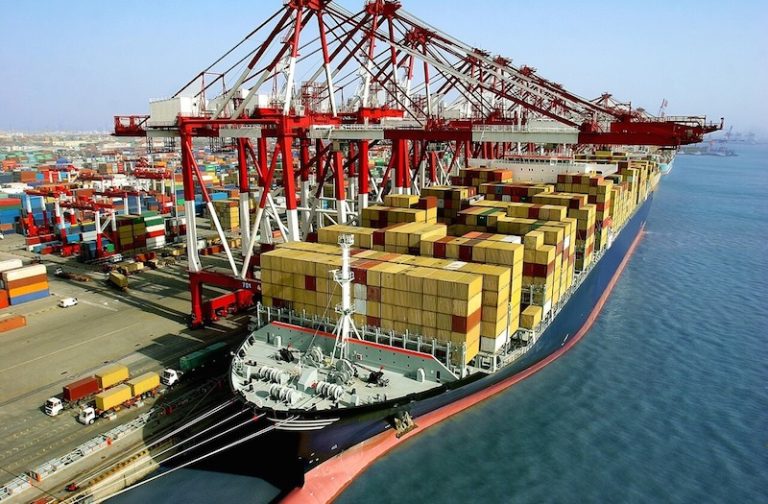
Stakeholders in Nigeria’s marine sector have described the situation as operationally unsustainable and economically detrimental, attributing the ongoing traffic jams and inefficiencies at Lagos ports to the excessive concentration of port activity in the state.

They argued that years of excessive reliance on the Lagos ports— Apapa, Tin Can Island, Ports and Terminal Multiservices Limited (PTML), Kirikiri Lighter Terminal (KLT) and Lilypond—have resulted in monumental traffic gridlock, systemic inefficiencies, rising corruption, and severe pressure on port access roads.

As a result, the stakeholders applauded the Federal Government’s increased efforts to modernize and activate eastern ports, pointing out that Lagos and the rest of the nation would benefit economically in the long run.

Concerns expressed by the Lagos State Government that revitalizing eastern ports may lower cargo throughput at Lagos ports were disregarded by industry observers, who maintained that these worries were unfounded and based on incomplete information.

The ports of Calabar (Cross River State), Warri and Koko (Delta State), and Port Harcourt (Rivers State) have been underutilized for many years, driving the majority of import and export cargo into Lagos and taxing the state’s infrastructure.

President Bola Ahmed Tinubu, however, has taken steps to buck the trend by aiming to modernize and revitalize seaports across the country. According to analysts, the program will increase government revenue, promote balanced regional development, and increase cargo volumes.

In order to put Nigerian ports in a competitive position with those in Europe, Asia, and North America, the President has approved a $1 billion (about N1.6 trillion) port modernization scheme.

At a conference held by the Chartered Institute of Logistics and Transport (CILT), he also revealed

Procurement procedures for comparable enhancements at eastern ports had already begun in Lagos.

Governor Babajide Sanwo-Olu’s Lagos State Government voiced concerns over the decentralization of port operations after the news. The Nigerian Ports Authority (NPA) was criticized by his Senior Special Adviser on Transportation and Logistics, Mr. Adekoya Hassan, for refocusing its operations on ports in Warri and Koko, stating that this could cause traffic jams similar to those in Lagos.

An industry insider, however, pointed out that the decentralization policy was already having an impact, with Warri and Koko ports handling more containers.

The Federal Government’s move, according to maritime analyst Ismail Aniemu, was both essential and timely.

“While some eastern ports like Onne and Port Harcourt are already functional, there is an urgent need to channel more cargo traffic to Warri and Calabar. Dredging is necessary for ongoing maintenance, but the advantages are huge, he noted.

Cargo headed for Onitsha, Aba, Owerri, Port Harcourt, and other eastern cities is routed through Lagos and transported by road, which accounts for a large portion of Lagos’ traffic, according to Aniemu.

Intense rivalry for scarce road space, numerous collisions, shipment losses, and even fatalities have resulted from this. This strain would be lessened and equilibrium restored by reviving eastern ports, he stated.

He went on to say that interior logistics and trade efficiency would be further strengthened by the activation of river ports like Onitsha, which are backed by barges.

Aniemu stated that the policy would boost economic growth throughout the value chain, including employment, investment, security, and tourism, in addition to relieving traffic in Lagos.

“Where maritime trade thrives, hotels, recreation, logistics and other services flourish. This is about Nigeria as a whole, not just Lagos. Lagos cannot accommodate everybody,” he stressed.

JUST IN: Ojulari Admits NNPC Refineries Are Unsustainable

0

Nigerian state-owned refineries were operating at what he called a “monumental loss,” according to Bayo Ojulari, Group Chief Executive Officer of the Nigerian National Petroleum Company Limited (NNPCL). This forced his management team to halt operations in order to prevent additional financial harm to the nation.

In an uncommon and direct evaluation of the operational and financial reality of the country’s refining assets, Ojulari made the revelation on Wednesday in Abuja at a fireside discussion titled “Securing Nigeria’s Energy Future” at the Nigeria International Energy Summit 2026.

The head of NNPC acknowledged the public’s general dissatisfaction with the refineries, pointing out that Nigerians had every right to be angry given the substantial sums of public money that had been invested over the years.

Nigerians were furious about the refineries. Expectations were high, and a lot of money was spent. Therefore, we were under tremendous pressure,” he stated.

Nigeria’s four state-owned refineries—Port Harcourt (two plants), Warri, and Kaduna—have reportedly spent billions of dollars on turnaround maintenance and rehabilitation over the years, but they have mostly failed to produce consistently.

“I Needed to Pick Things Up Quickly.”
After spending the most of his professional career in the upstream oil industry, Ojulari acknowledged that refining was not his area of expertise when he took office.

My learning curve was vertical because of my upstream background. You have to pick things up quickly since you are responsible. “There’s no way out otherwise,” he stated.

Once his crew was moved in, he said, accountability required a quick and honest evaluation of the refineries.

Ojulari claimed that following a thorough operational examination, the refineries’ actual financial situation became evident almost immediately. “We Were Running At A Monumental Loss.”

The first thing that became evident—and I want to make this very clear—was that we were losing badly to Nigeria. All we were doing was squandering money. With confidence, I can say that now,” he said.

He clarified that although NNPC was supplying crude oil cargoes to the refineries on a monthly basis, utilization was only between 50 and 55 percent, which led to significant value degradation.

“We were using a lot of funds for both operations and contractors.” However, when you look at the internet, we were simply losing value,” he remarked.

Ojulari said that the lack of a viable strategy to undo the losses was more concerning.

“Investing can sometimes result in a loss, but there is a path to recovery. This was not a clear line of sight, he said.

He said that this ambiguity rendered ongoing activities fiscally untenable.

One of the first significant moves his administration made, according to Ojulari, was to stop refinery operations.

“We made the decision to halt the refinery and conduct a brief inspection. “We intended to reopen and work on them if everything lined up,” he stated.

He claimed that in order to stop additional losses and reevaluate the plants’ sustainability, they had to be shut down.

Citing the Port Harcourt Refinery as an example, the NNPC chairman further revealed that a portion of the losses were caused by the caliber of the goods being produced.

“Mid-grade products were being produced from the crude we were transporting into Port Harcourt. It was a waste, he claimed, when you add up their worth in relation to what you contributed.

Given the ongoing pressure on NNPC to maintain refineries in order to guarantee petroleum supply, Ojulari recognized that the decision to suspend operations was politically delicate.

“There was a lot of political pressure to maintain the refinery product.” But you can’t sleep with that after being taught for more than 35 years to prioritize commerciality and profitability,” he remarked.

For decades, Nigeria’s refineries have ran much below capacity, occasionally operating at single-digit utilization or ceasing operations completely. Africa’s biggest oil producer is now mostly dependent on imported refined petroleum products as a result.

While several billion-dollar rehabilitation contracts were granted by consecutive governments between 2015 and 2023, domestic refining output remained low, raising public concerns about NNPC’s effectiveness.

Ojulari’s comments are among the most direct acknowledgements by a NNPC CEO that refinery operations could not be sustained economically under the current circumstances. Under the Petroleum Industry Act, NNPC is increasingly enforcing commercial discipline, especially in politically delicate areas like domestic refining, as the comments highlight.

2027: LG Councillors Rally Support for Tinubu’s Second-Term Bid

0

Nigerian local government council members, both current and previous, have supported President Bola Tinubu’s reelection in 2027.

The forum promised to organize Nigerians, especially those at the grassroots level, supporting Tinubu’s bid for a second term when it made the announcement on Wednesday during a news conference in Abuja.

The lawmakers justified their support for Tinubu for a second term in office by citing the administration’s efforts to press for local government autonomy and other important reforms.

Nigeria has seen forward-thinking leadership since Tinubu took office as president in 2023, according to Dr. Evoh Ugochukwu, President of the National Councillors Forum of Nigeria, who spoke on behalf of the current and previous local council legislators.

The restoration of local government autonomy, increased grassroots funding and accountability, a renewed emphasis on rural development, the growth of social investment programs, significant investments in infrastructure and security, and calculated changes in agriculture and economic management have all occurred under his administration.

“These policies are not just pledges. These are facts that are changing people’s lives in our communities, according to Evoh.

He claims that the Tinubu administration’s Renewed Hope Agenda is now a living example throughout Nigerian towns, villages, and wards, rather than just a catchphrase.

The current and former local council lawmakers, Evoh continued, recognized the Tinubu administration’s efforts to improve national security by modernizing the Armed Forces, integrating intelligence and technology more effectively, improving security personnel’s welfare and manpower, and taking decisive action against terrorism, banditry, and kidnapping.

Evoh, the council member for Enenaezeraku Ward in Ohaozara Local Government Area, Ebonyi State, stated, “These interventions have brought renewed confidence to our people and created safer environments for economic and social activities.”

The National Councillors Forum of Nigeria is made up of 8,809 council members from the Federal Capital Territory (FCT) and the 36 states’ 774 local government units.

Evoh stated the council members’ collective stance, saying, “As grassroots leaders, we have consulted with our members across the nation extensively.”
The voices of our communities have been heard.

“This administration’s performance has been assessed. We’ve come to a unified and unambiguous decision based on facts, evidence, and the actual situation.

“Therefore, I hereby formally declare our complete, unwavering, and unconditional support for His Excellency, President Asiwaju Bola Ahmed Tinubu for re-election in 2027 on behalf of the National Councillors Forum of Nigeria, 8,809 councillors, 176,836 polling places, and millions of grassroots supporters.”

Evoh stated that the local council legislators think Tinubu has shown bravery, skill, and dedication and that they believe he has established a solid basis for the country’s success.

Evoh called on all current and past council members, ward leaders and coordinators, grassroots mobilizers, and community stakeholders to join the nationwide mobilization for Tinubu’s reelection.

Our people need to be mobilized, organized, and educated. He emphasized that we need to deliver this message to every home, district, and polling place.

Chief Okorie Ikechukwu Raphael, National Coordinator, Citizens Network for Peace and Development, and Hyacinth Horvel Turnoe, National Coordinator, ST/HT Grassroots Coordinators of Development, both signed the speech given by Evoh.

jojobet