Home Blog Page 49

Yahaya Bello Trial: Court Dismisses CTCs Without Receipts in ₦80.2bn Fraud Case

0

On Wednesday, the Federal High Court in Maitama, Abuja, proceeded to hear Yahaya Bello’s trial for the alleged ₦80.2 billion fraud.

The Economic and Financial Crimes Commission (EFCC) is reportedly prosecuting Bello on 19 counts related to money laundering totaling ₦80,246,470,088.88.

Following the cross-examination of the seventh prosecution witness, Justice Emeka Nwite presided over the proceedings.

When the hearing was restarted, the prosecution’s attorney, Prof. Kemi Pinheiro (SAN), told the court that Prosecution Witness Seven (PW7) will be cross-examined and that three witnesses were available.

PW7, Olomotane Egoro, an Access Bank Plc compliance officer, affirmed that he was still under oath while mounting the witness box.

While being cross-examined by the defense attorney, J.B. The witness, Daudu (SAN), affirmed that he testified in response to a subpoena and submitted Exhibits 32, 33(1–11), and 34.

He further informed the court that he had previously testified before a different Federal High Court on the identical papers, but he was unable to remember which defendants were involved or if he had testified as a PW2.

Afterwards, the defense attempted to submit Certified True Copies (CTCs) of the other court’s records.

Pinheiro brought up a procedural point, claiming that the defense had neglected to provide receipts proving payment for the CTCs, even though the prosecution did not contest the documents’ admissibility.

Additionally, he insisted that the witness had provided consistent testimony.

According to Justice Nwite, the objection was upheld, and the documents could only be allowed if payment receipts were presented.

The court was told by the defense that the receipts were still being sought.

Transactions involving Abba Adaudu, Fazab Oil, and Keyless Nature Limited became the subject of additional cross-examination.

The witness verified transfers of ₦200,000 and ₦8 million in Abba Adaudu’s favor, as well as a countercheck payment at the Otukpo branch of Access Bank.

The following payments were made for specified purposes, according to PW7’s testimony regarding local government inflows:

Okehi Local Government for the provision of medical supplies, ₦7,500,144.61;

on June 3, 2022, ₦10,863,247.50 from Omala Local Government for the provision of athletic supplies;

On June 6, 2022, Yagba East Local Government awarded ₦12,228,400.10 for the purchase of medical supplies.

He went on to say that the entries in Exhibit 33(11) showed typical banking activities.

The Fazab Oil account opening package was not immediately available, but it could be obtained if needed, the witness added.

The matter was postponed by Justice Nwite to Thursday, February 5, 2026, so that PW7’s cross-examination could continue.
Maritime Stakeholders Blame Lagos Port Congestion on Cargo Overconcentration

0

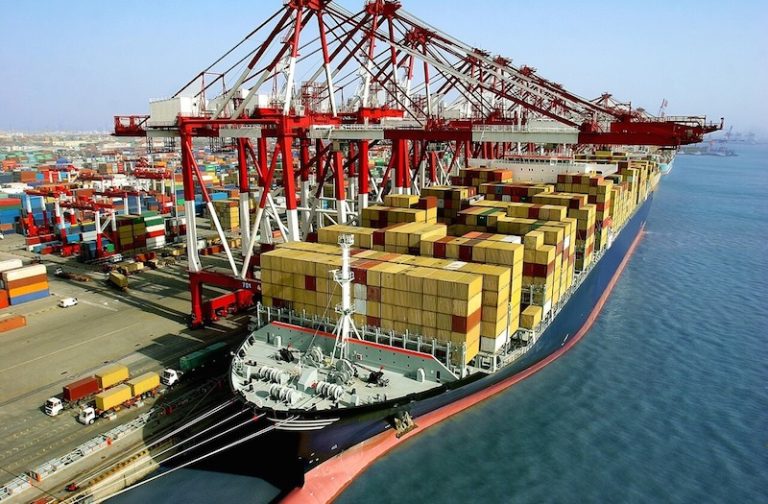
Stakeholders in Nigeria’s marine sector have described the situation as operationally unsustainable and economically detrimental, attributing the ongoing traffic jams and inefficiencies at Lagos ports to the excessive concentration of port activity in the state.

They argued that years of excessive reliance on the Lagos ports— Apapa, Tin Can Island, Ports and Terminal Multiservices Limited (PTML), Kirikiri Lighter Terminal (KLT) and Lilypond—have resulted in monumental traffic gridlock, systemic inefficiencies, rising corruption, and severe pressure on port access roads.

As a result, the stakeholders applauded the Federal Government’s increased efforts to modernize and activate eastern ports, pointing out that Lagos and the rest of the nation would benefit economically in the long run.

Concerns expressed by the Lagos State Government that revitalizing eastern ports may lower cargo throughput at Lagos ports were disregarded by industry observers, who maintained that these worries were unfounded and based on incomplete information.

The ports of Calabar (Cross River State), Warri and Koko (Delta State), and Port Harcourt (Rivers State) have been underutilized for many years, driving the majority of import and export cargo into Lagos and taxing the state’s infrastructure.

President Bola Ahmed Tinubu, however, has taken steps to buck the trend by aiming to modernize and revitalize seaports across the country. According to analysts, the program will increase government revenue, promote balanced regional development, and increase cargo volumes.

In order to put Nigerian ports in a competitive position with those in Europe, Asia, and North America, the President has approved a $1 billion (about N1.6 trillion) port modernization scheme.

At a conference held by the Chartered Institute of Logistics and Transport (CILT), he also revealed

Procurement procedures for comparable enhancements at eastern ports had already begun in Lagos.

Governor Babajide Sanwo-Olu’s Lagos State Government voiced concerns over the decentralization of port operations after the news. The Nigerian Ports Authority (NPA) was criticized by his Senior Special Adviser on Transportation and Logistics, Mr. Adekoya Hassan, for refocusing its operations on ports in Warri and Koko, stating that this could cause traffic jams similar to those in Lagos.

An industry insider, however, pointed out that the decentralization policy was already having an impact, with Warri and Koko ports handling more containers.

The Federal Government’s move, according to maritime analyst Ismail Aniemu, was both essential and timely.

“While some eastern ports like Onne and Port Harcourt are already functional, there is an urgent need to channel more cargo traffic to Warri and Calabar. Dredging is necessary for ongoing maintenance, but the advantages are huge, he noted.

Cargo headed for Onitsha, Aba, Owerri, Port Harcourt, and other eastern cities is routed through Lagos and transported by road, which accounts for a large portion of Lagos’ traffic, according to Aniemu.

Intense rivalry for scarce road space, numerous collisions, shipment losses, and even fatalities have resulted from this. This strain would be lessened and equilibrium restored by reviving eastern ports, he stated.

He went on to say that interior logistics and trade efficiency would be further strengthened by the activation of river ports like Onitsha, which are backed by barges.

Aniemu stated that the policy would boost economic growth throughout the value chain, including employment, investment, security, and tourism, in addition to relieving traffic in Lagos.

“Where maritime trade thrives, hotels, recreation, logistics and other services flourish. This is about Nigeria as a whole, not just Lagos. Lagos cannot accommodate everybody,” he stressed.

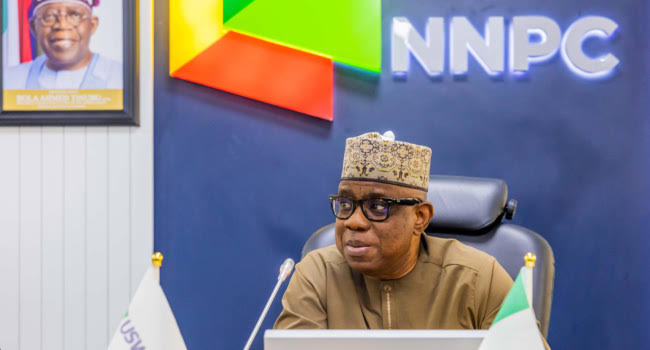
JUST IN: Ojulari Admits NNPC Refineries Are Unsustainable

0

Nigerian state-owned refineries were operating at what he called a “monumental loss,” according to Bayo Ojulari, Group Chief Executive Officer of the Nigerian National Petroleum Company Limited (NNPCL). This forced his management team to halt operations in order to prevent additional financial harm to the nation.

In an uncommon and direct evaluation of the operational and financial reality of the country’s refining assets, Ojulari made the revelation on Wednesday in Abuja at a fireside discussion titled “Securing Nigeria’s Energy Future” at the Nigeria International Energy Summit 2026.

The head of NNPC acknowledged the public’s general dissatisfaction with the refineries, pointing out that Nigerians had every right to be angry given the substantial sums of public money that had been invested over the years.

Nigerians were furious about the refineries. Expectations were high, and a lot of money was spent. Therefore, we were under tremendous pressure,” he stated.

Nigeria’s four state-owned refineries—Port Harcourt (two plants), Warri, and Kaduna—have reportedly spent billions of dollars on turnaround maintenance and rehabilitation over the years, but they have mostly failed to produce consistently.

“I Needed to Pick Things Up Quickly.”
After spending the most of his professional career in the upstream oil industry, Ojulari acknowledged that refining was not his area of expertise when he took office.

My learning curve was vertical because of my upstream background. You have to pick things up quickly since you are responsible. “There’s no way out otherwise,” he stated.

Once his crew was moved in, he said, accountability required a quick and honest evaluation of the refineries.

Ojulari claimed that following a thorough operational examination, the refineries’ actual financial situation became evident almost immediately. “We Were Running At A Monumental Loss.”

The first thing that became evident—and I want to make this very clear—was that we were losing badly to Nigeria. All we were doing was squandering money. With confidence, I can say that now,” he said.

He clarified that although NNPC was supplying crude oil cargoes to the refineries on a monthly basis, utilization was only between 50 and 55 percent, which led to significant value degradation.

“We were using a lot of funds for both operations and contractors.” However, when you look at the internet, we were simply losing value,” he remarked.

Ojulari said that the lack of a viable strategy to undo the losses was more concerning.

“Investing can sometimes result in a loss, but there is a path to recovery. This was not a clear line of sight, he said.

He said that this ambiguity rendered ongoing activities fiscally untenable.

One of the first significant moves his administration made, according to Ojulari, was to stop refinery operations.

“We made the decision to halt the refinery and conduct a brief inspection. “We intended to reopen and work on them if everything lined up,” he stated.

He claimed that in order to stop additional losses and reevaluate the plants’ sustainability, they had to be shut down.

Citing the Port Harcourt Refinery as an example, the NNPC chairman further revealed that a portion of the losses were caused by the caliber of the goods being produced.

“Mid-grade products were being produced from the crude we were transporting into Port Harcourt. It was a waste, he claimed, when you add up their worth in relation to what you contributed.

Given the ongoing pressure on NNPC to maintain refineries in order to guarantee petroleum supply, Ojulari recognized that the decision to suspend operations was politically delicate.

“There was a lot of political pressure to maintain the refinery product.” But you can’t sleep with that after being taught for more than 35 years to prioritize commerciality and profitability,” he remarked.

For decades, Nigeria’s refineries have ran much below capacity, occasionally operating at single-digit utilization or ceasing operations completely. Africa’s biggest oil producer is now mostly dependent on imported refined petroleum products as a result.

While several billion-dollar rehabilitation contracts were granted by consecutive governments between 2015 and 2023, domestic refining output remained low, raising public concerns about NNPC’s effectiveness.

Ojulari’s comments are among the most direct acknowledgements by a NNPC CEO that refinery operations could not be sustained economically under the current circumstances. Under the Petroleum Industry Act, NNPC is increasingly enforcing commercial discipline, especially in politically delicate areas like domestic refining, as the comments highlight.

2027: LG Councillors Rally Support for Tinubu’s Second-Term Bid

0

Nigerian local government council members, both current and previous, have supported President Bola Tinubu’s reelection in 2027.

The forum promised to organize Nigerians, especially those at the grassroots level, supporting Tinubu’s bid for a second term when it made the announcement on Wednesday during a news conference in Abuja.

The lawmakers justified their support for Tinubu for a second term in office by citing the administration’s efforts to press for local government autonomy and other important reforms.

Nigeria has seen forward-thinking leadership since Tinubu took office as president in 2023, according to Dr. Evoh Ugochukwu, President of the National Councillors Forum of Nigeria, who spoke on behalf of the current and previous local council legislators.

The restoration of local government autonomy, increased grassroots funding and accountability, a renewed emphasis on rural development, the growth of social investment programs, significant investments in infrastructure and security, and calculated changes in agriculture and economic management have all occurred under his administration.

“These policies are not just pledges. These are facts that are changing people’s lives in our communities, according to Evoh.

He claims that the Tinubu administration’s Renewed Hope Agenda is now a living example throughout Nigerian towns, villages, and wards, rather than just a catchphrase.

The current and former local council lawmakers, Evoh continued, recognized the Tinubu administration’s efforts to improve national security by modernizing the Armed Forces, integrating intelligence and technology more effectively, improving security personnel’s welfare and manpower, and taking decisive action against terrorism, banditry, and kidnapping.

Evoh, the council member for Enenaezeraku Ward in Ohaozara Local Government Area, Ebonyi State, stated, “These interventions have brought renewed confidence to our people and created safer environments for economic and social activities.”

The National Councillors Forum of Nigeria is made up of 8,809 council members from the Federal Capital Territory (FCT) and the 36 states’ 774 local government units.

Evoh stated the council members’ collective stance, saying, “As grassroots leaders, we have consulted with our members across the nation extensively.”
The voices of our communities have been heard.

“This administration’s performance has been assessed. We’ve come to a unified and unambiguous decision based on facts, evidence, and the actual situation.

“Therefore, I hereby formally declare our complete, unwavering, and unconditional support for His Excellency, President Asiwaju Bola Ahmed Tinubu for re-election in 2027 on behalf of the National Councillors Forum of Nigeria, 8,809 councillors, 176,836 polling places, and millions of grassroots supporters.”

Evoh stated that the local council legislators think Tinubu has shown bravery, skill, and dedication and that they believe he has established a solid basis for the country’s success.

Evoh called on all current and past council members, ward leaders and coordinators, grassroots mobilizers, and community stakeholders to join the nationwide mobilization for Tinubu’s reelection.

Our people need to be mobilized, organized, and educated. He emphasized that we need to deliver this message to every home, district, and polling place.

Chief Okorie Ikechukwu Raphael, National Coordinator, Citizens Network for Peace and Development, and Hyacinth Horvel Turnoe, National Coordinator, ST/HT Grassroots Coordinators of Development, both signed the speech given by Evoh.

Police Harassment: Lawyer Urges Court To Decline Jurisdiction

0

A lawyer, Barrister Victor Giwa has asked a High Court of the Federal Capital Territory to decline jurisdiction in the case brought against him and one other, Bukola Ibitade, by the Nigeria Police.

In the motion challenging the jurisdiction of the court, Giwa said the court has no power to try him on the charge brought against him by the Nigeria Police.

He urged the court to decline jurisdiction.

The police had accused Giwa of forging letterhead paper of a Senior Advocate of Nigeria, Chief Awa Kalu.

But Awa Kalu, in a letter to the Inspector General of Police, Mr Kayode. Egebtolun, put a lie to the allegation of the police against Ibitade amd Giwa.

Despite the letter of Prof. Awa Kalu to the Inspector-General of Police, formally distancing himself from the allegation of forgery and impersonation against Giwa and Ibitade, the police have gone ahead to press charge against Giwa.

Chief Kalu, in a letter to the Inspector-General of Police, Mr Kayode Egbetokun, had said his letterhead was never forged and that he had not at anytime lodged any complaint to the police about forgery of his document.

Professor Kalu, in a letter dated May 30, 2025, addressed to the Inspector General of Police, clarified that he neither filed a complaint nor reported Mr. Giwa for allegedly forging his firm’s letterhead
.
During the proceedings Wednesday, Counsel to Giwa, Mr Farooq: Akanbi from. Dr. Ahmed Raji, SAN, Chamber, told the court about the pending application, challenging the jurisdiction of the court.

He said the application borders on jurisdiction which touches on the soul of the case.

Akanbi said, “The 1st defendant has an application seeking to relist the motion on notice earlier struck out by the court.

“The applications have been served on all the parties. The prosecution served us a counter-affidavit this morning. This motion should be taken before other pending applications.”

Police Prosecution, Theophilous Silas, said he filed a counter-affidavit and served the defendant adding that no copy of the application has been served on the court.

“We filed a counter affidavit and served but the court’s copy is not yet in the court’s file. The motion is not ripe for hearing and the court’s copy, although, served on the court, the registrar of the court said it will be put in the file after today’s proceedings.

“Furthermore, the 1st defendant hasn’t supplied a single basis, authority or facts that will suggest that the motion will take precedent over the prosecution’s motion. We urge the court to hold that the prosecution should move his motion.”

Ogbu Aboje, Counsel to Ibitade, confirmed receipt of the mtion from the 1st defendant and was also served with the counterr-affidavit this morning.

He told the court that the motion should be taken first because it challenges the jurisdiction of the court.

He argued that issues have been joined in the application and urged the court to consider the application first so that the records of the proceedings of the court will be straight.

In a short ruling, Justice Jude Onwuegbuzie, adjourned the case till February 12′, 2026 for all the pending applications to be taken

APC Chairman Yilwatda Claims Party Outnumbers ADC Six to One

0

Nentawe Yilwatda, the National Chairman of the All Progressives Congress (APC), has minimized the African Democratic Congress’s (ADC) political significance, maintaining that the ruling party is still far stronger and more powerful.

According to reports, Yilwatda characterized the ADC as a weak opposition force in an interview on Channels Television’s Politics Today on Tuesday. He quoted notable members of the opposition coalition, such as former Senate President David Mark, former Vice President Atiku Abubakar, former House Speaker Aminu Tambuwal, former Anambra State Governor and 2023 Labour Party presidential candidate Peter Obi, and former Osun State Governor Rauf Aregbesola.

Yilwatda also denied that the opposition’s coalition of powerful politicians is unsettling the ruling party, emphasizing that the APC is unbeatable and citing continuous defections by opposition governors as proof of the ruling party’s increasing popularity.

The APC chairman emphasized that the party’s control is founded on voluntary support rather than coercion or intimidation, stressing that the government is neither threatened nor desperate.

“ADC is not a match at all (for the APC),” he said. We have five or six of them for every one they have.

Yilwatda vehemently refuted allegations that the APC is pressuring civil officials to join its ranks, urging detractors to produce evidence.

He added that the APC is obviously favored by numerical strength and suggested that such charges might be an attempt by the opposition.

We have never made an appeal to any civil worker or asked anyone,” he continued. No civil servant has been coerced verbally, in writing, or in a video, and I will apologize.

JAMB Disburses Over N2.4bn to Tertiary Institutions in Nine Years – Oloyede

0

Through its NATAP-M awards, the Joint Admissions and Matriculation Board claims to have given tertiary institutions more than N2.4 billion to support openness and merit-based admissions.

Over the previous nine years, the Joint Admissions and Matriculation Board (JAMB) has awarded N2.42 billion to tertiary institutions throughout Nigeria through its National Tertiary Admissions Performance–Merit Awards (NATAP-M).

This was revealed by Prof. Is-haq Oloyede, the Board Registrar, at a meeting with State Commissioners of Education in Lagos.

During his presentation, Oloyede described how the NATAP-M award, which was created in 2018, was intended to promote merit-based, transparent, and equitable admissions procedures among postsecondary institutions while also encouraging rigorous adherence to national admission rules.

He recalled that N125 million was awarded in the first edition of the awards in 2018. In 2019, this jumped to N375 million, and in 2020, it reached N500 million.

He claims that during a combined award ceremony for the 2021/2022 and 2022/2023 editions, the prize money was adjusted increased and a total of N710 million was given out. The top-performing institution overall received N500 million during a second combined session for the 2023–2024 and 2024–2025 cycles, which was reorganized into sectoral prizes.

According to Prof. Oloyede, organizations have used the money for worthwhile projects including building roads, creating Computer-Based Test (CBT) centers, building hostels, upgrading infrastructure, and fixing facilities.

He gave two examples: Ahmadu Bello University in Zaria built access roads, and the University of Ilorin used its award cash to establish a hostel called the JAMB Merit Award International Hostel.

The JAMB Merit prize-Spider FM Radio Station, a medical laboratory, and the renovation of Kaduna Polytechnic’s administration block—all dubbed in honor of the prize—were established using the award funds.

Other recipients include the Federal University, Wukari, which used its cash to build access roads and infrastructure, and the Ogun State Institute of Technology, Igbesa, which built a CBT center worth millions of naira.

Sokoto Panel Reveals N117 Billion Missing During Tambuwal’s Tenure

0

The Sokoto State Government has received the report of its judicial panel of inquiry, which claimed that while previous Governor Aminu Waziri Tambuwal’s eight years in office, more than ₦117 billion was embezzled.

According to reports, retired justice Mu’azu Abdulkadir Pindiga, the commission’s chairman, turned in the findings on Tuesday.

The commission found widespread financial irregularities connected to abuses of power during the previous administration, violations of existing laws, and noncompliance with due process, according to Justice Pindiga.

He said that abuse of executive authority, lax financial controls, and disrespect for procurement laws were the main causes of the alleged embezzlement.

In accordance with constitutional rules and the public interest, he added, the investigation was set up to examine the prior administration’s actions through verifiable records and sworn testimony.

The report’s five main sections, according to the chairman, include the inquiry’s background, the testimonies that were received, the specific findings, recommendations, and a summary that will direct government action.

In addition to hearing testimony from witnesses selected from pertinent ministries, departments, and agencies as well as other stakeholders associated with the administration under examination, he said the panel also reviewed papers, contracts, and financial data.

Justice Pindiga praised the commission’s members for their commitment, professionalism, and honesty, pointing out that the task was completed without fear or favor.

After reviewing the findings, Sokoto State Governor Ahmed Aliyu stated that the panel’s formation was a constitutional obligation rather than a political grudge.

He further stated that a committee will be established to draft a white paper based on the study, guaranteeing that the procedure would be carried out honestly and fairly for all those impacted.

House of Reps Debunks Reports of Hindering Electoral Act Amendment

0

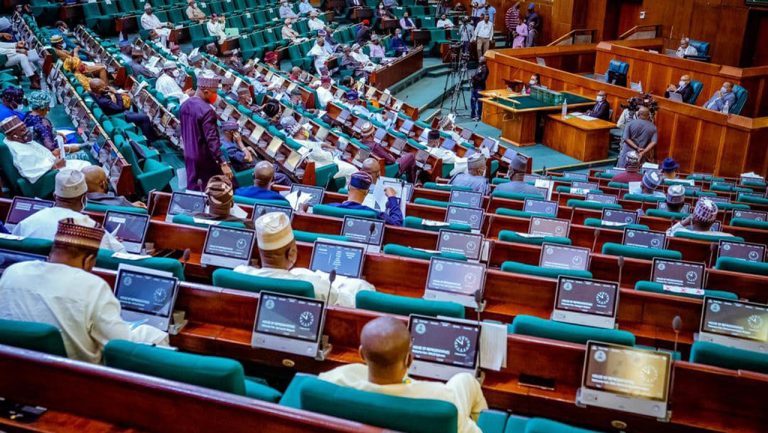
The Electoral Act Amendment Bill is allegedly being purposefully delayed by the National Assembly, but the House of Representatives has denied this, stating that the slowing is procedural rather than political and that they are certain the bill will be harmonised next week.

According to Adebayo Balogun, the chairman of the House Committee on Electoral Matters, there is no intentional delay in the bill’s progress, which is being worked on in both houses of the National Assembly.

“The Senate is now debating the bill. In the Ibeju-Lekki Federal Constituency of Lagos State, Balogun told Punch, “I hope the harmonisation will be finished by next week.”

He continued by saying that the law will be delivered to the President for assent in preparation for the 2027 general elections once the House and Senate have finished harmonizing.

Senate Cannot Finish Bill Again
The Senate once again failed to finish work on the Electoral Act (Amendment) Bill on Tuesday, retreating into a protracted closed-door session that ended without a clear outcome regarding the planned revisions, despite assurances of progress.

The report of the Senate Committee on Electoral Matters, which was chaired by Senator Simon Lalong, and the opinions of a seven-member ad hoc committee tasked with addressing controversial provisions in the bill were discussed by lawmakers for around four and a half hours during an executive session.

However, the bill remained in limbo for the second consecutive sitting when plenary reconvened at around 5:35 p.m. with no information on the debates or outcomes revealed.

Senator Opeyemi Bamidele, the Senate Leader, moved for the chamber to dissolve into a Committee of the Whole for clause-by-clause scrutiny of the measure, which opened the executive session.

Senators decided to discuss the findings of the ad hoc committee, which was chaired by Senator Niyi Adegbonmire (Ondo Central), behind closed doors despite it being on the Order Paper for presentation.

When the Senate reconvened, Senate President Godswill Akpabio provided a hazy summary of what had happened.

After stating that the Senate discussed issues pertaining to the Senate’s operations in particular and the country as a whole during the executive session, Akpabio asked senators to verify that the statement accurately represented the session.

Lawmakers unanimously said “aye,” and the issue was quickly resolved.

Shortly after, Bamidele moved to postpone plenary till Wednesday. He did not specify whether the bill had reached third reading or when it would be brought back for final passage.

Polls in 2027 Cause Anxiety Due to Slow Pace
Concerns regarding Nigeria’s electoral system’s preparedness for the general elections in 2027 have been raised by the recurrent delays. Most people agree that the election Act Amendment Bill is essential to enhancing public trust, preventing election fraud, and preserving electoral integrity.

Mandatory real-time electronic transmission of polling unit results, harsher penalties for electoral offenses like result manipulation and ballot-box snatching, substituting the Bimodal Voter Accreditation System for references to the “smart card reader,” safeguarding vulnerable voters, including those with visual impairments, from interference, and making it illegal for presiding officers to refuse to sign and stamp electoral materials are some of the major proposals that are currently before the Senate.

Major opposition parties have criticized what they say is a lack of urgency in changing the Electoral Act, including the New Nigeria Peoples Party (NNPP), the Labour Party (LP), and the African Democratic Congress (ADC).

The credibility of the 2027 polls and public trust in the democratic process could be damaged by more delays, they cautioned.

The delayed progress of the bill in the final quarter of 2025 drew harsh criticism from the public. Before the House’s Christmas break, the bill was originally scheduled for consideration, but it was withdrawn because MPs were not given enough copies.

Accusing the National Assembly of purposefully ignoring the bill last week, Senior Advocate of Nigeria Femi Falana claimed that lawmakers would rather keep things as they are.

“Clearly, from the conduct of both chambers of the National Assembly, it is very clear that the members simply want the status quo retained,” Falana stated during an Arise News broadcast.

The goal of this rigmarole is to make Nigerians believe that the proposed Electoral Act is being discussed.

Falana emphasized that in an environment of “reckless impunity,” lawmakers are prioritizing defections over substantive election change.

The National Assembly’s leadership insists that delays are caused by legislative processes and the requirement for both chambers to agree before the law can be sent for presidential assent, despite growing opposition.

Kannywood Actress Samha Inuwa Arrested by EFCC Over Alleged Naira Mutilation

0

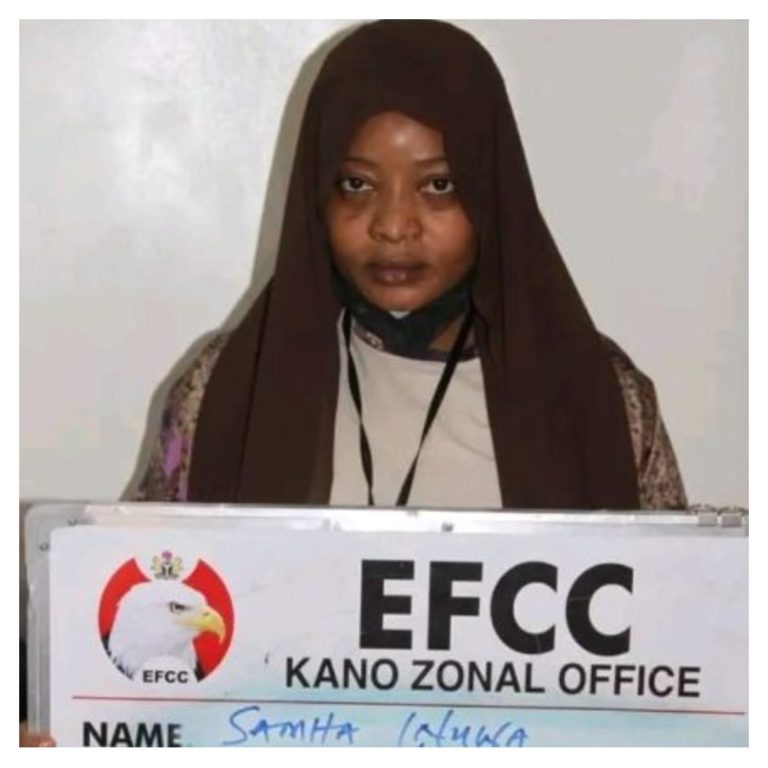
Due to alleged Naira abuse, Samha Inuwa, a well-known actress in the Kannywood film business in Northern Nigeria, has been arrested and detained by the Economic and Financial Crimes Commission (EFCC).

On Tuesday, February 3, 2026, Inuwa was arrested by agents from the EFCC’s Kano Zonal Directorate.

The actress was seen wiping snot from her nose with Naira notes in a social media video that went viral, which led to her detention.

The EFCC spokesperson, Dele Oyewale, confirmed the development in a statement, stating that the video led the Commission to move quickly.

When the video went viral, Oyewale claims that EFCC agents followed the actress and arrested her to question her about the alleged currency mutilation.

He revealed that Inuwa is being held in the Commission’s facilities while the probe is ongoing.

Oyewale also stated that after the inquiry was finished, the actress will face charges in court.

jojobet