Home Blog

Dangote Refinery’s Court Case Against FG Postponed Over Judge’s Absence

0

The case filed by Dangote Petroleum Refinery against the Federal Government over the alleged issuance of fuel import licences to some petroleum marketers was on Monday stalled due to the absence of the presiding judge, Justice Chukwujekwu Aneke of the Federal High Court, Lagos.

The court was told that Justice Aneke was not available and it adjourned the matter for hearing until October 7.

The suit, FHC/L/CS/857/2026, also involves the Nigerian National Petroleum Company Limited (NNPC Ltd) and several petroleum marketing firms including NIPCO, AA Rano, Matrix, Shafa, Pinnacle and Bono, which the refinery alleges benefited from the disputed import licences.
Dangote Petroleum Refinery is seeking to invalidate the fuel import licences allegedly issued or renewed in favour of the marketers and NNPC Ltd, contending that the approvals were granted in violation of an earlier court order.

The application, brought under Sections 6, 36(1) and 287 of the 1999 Constitution (as amended), Order 26 Rules 1 and 2 of the Federal High Court (Civil Procedure) Rules 2019 and the court’s inherent jurisdiction, seeks an order setting aside all import licences issued or renewed on or about May 6, 2026.

The refinery says the licences were granted despite the court’s April 29, 2026 order for all parties to maintain the status quo that existed on April 2, 2026.

But in its defence, NNPC urged the court to dismiss the suit, arguing that the Petroleum Industry Act (PIA), and the Backward Integration Policy of the Federal Government, empowered the relevant regulatory authorities to issue fuel import licences whenever necessary to guarantee national supply.

The national oil company contended that there is no blanket ban on fuel imports, especially where imports are necessary to ensure product availability and market stability.

NNPC also accused Dangote Refinery of trying to monopolise the Nigeria’s downstream petroleum market with the litigation.

The company said the Nigerian Midstream and Downstream Petroleum Regulatory Authority (NMDPRA) acted within its statutory powers when it issued the disputed licences, adding that the law allows for such approvals for companies with local refining capacity or a proven track record in petroleum trading.

It also argued that the Petroleum Industry Act does not impose a blanket ban on the importation of fuel except in the case of a verified domestic surplus, maintaining that importation is still a legitimate instrument for stabilising supply and prices of fuel.
For its part, Dangote Refinery argued that the continued issuance and renewal of import licences undermine local refining and violate Section 317(9) of the Petroleum Industry Act, which it interprets as restricting imports to situations where there is a proven domestic supply shortfall.

The refinery argued that with its installed refining capacity of about 650,000 barrels per day, Nigeria has adequate domestic refining capacity to meet local demand. It was based on regulatory data it said showed that daily petrol and diesel production now exceeds national consumption.

The refinery was set up “to meet Nigeria’s refined petroleum needs as well as create export surpluses”, it added. The project is a strategic national investment that will create a multi-billion-dollar market for Nigerian crude oil, it said.

NNPC, however, disputed those claims, arguing that Dangote had failed to present credible and verifiable evidence showing it could independently guarantee Nigeria’s fuel supply.

The legal dispute has since grown in scope after an application by the NMDPRA to join the proceedings, turning the case into a wider challenge over Nigeria’s fuel import policy and regulation of the downstream petroleum sector.

Dangote also alleged that the NMDPRA, the Nigerian Upstream Petroleum Regulatory Commission (NUPRC) and the NNPC had created a hostile operating environment by continuing to issue import licences despite what it described as the absence of any domestic fuel supply shortfall.

The refinery also accused NNPC of not supplying it with enough crude oil, saying it gets roughly five crude cargoes per month instead of the 13 cargoes it needs to run at full capacity, forcing it to get crude from the international market at higher prices.

The NNPC denied the allegation, saying that crude oil allocation was based on operational, commercial, security and logistical considerations, and not an attempt to frustrate the operations of the Dangote Refinery.

The company warned that limiting fuel import licences could expose Nigeria to supply disruptions, price volatility and threats to national energy security.

However, Dangote insisted that continued fuel imports would hurt local refining, discourage investment and frustrate Nigeria’s long-term goal of energy self-sufficiency.

The refinery, in its reliefs, is seeking an interim injunction restraining the Attorney-General of the Federation and the relevant regulatory agencies from issuing or renewing import licences for Premium Motor Spirit (PMS), Automotive Gas Oil (AGO) and Jet A1 pending the determination of the suit, arguing that it would suffer irreparable financial and operational losses if the licences continue to be issued.

ADC Guber Candidate Blames Voters For Choosing Poor Leaders

0

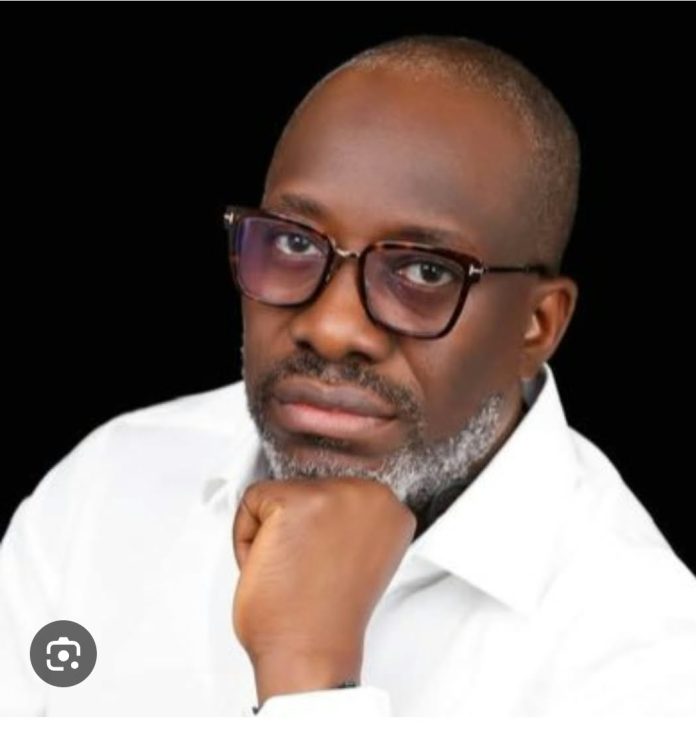
Biodun Collins Ogundipe, the African Democratic Congress (ADC) candidate for governor of Ogun State, has accused Nigerians of choosing inept politicians to the position.

He cautioned that the nation’s developmental issues are the result of inadequate governmental leadership.

He reportedly said this on Monday during a media engagement in Abeokuta.

He counseled Nigerians to put ability, capacity, and character ahead of party loyalty, money politics, and ethnic feelings and to quit choosing idiots to serve as governors.

He maintained that voters frequently choose people who lack vision, expertise, and the ability to rule, which is why many governments are underdeveloped.

He urged Nigerians, particularly young people, to carefully consider candidates before the 2027 elections and cast their ballots for leaders who have a proven track record and clear development plans.

“Forget about all these guys who will come and campaign to you and tell you not to worry; when that day comes, you grab it, run away, and steal it,” he stated. Those days have passed.

“You should have no business in the twenty-first century voting for someone or people who cannot demonstrate their track record in the private sector or even in their own business if they continue to use such campaign slogans and fail to explain how they hope to improve your life, the lives of your children, and the lives of future generations.

They will say, “I run a business, sir. Come and show us how you have turned over that business so we can know that we are entrusting you with the allocation and resources of this state.” We are unable to even confirm people’s track records.

He claimed that the state government does not give a damn about the people at the grassroots level and that governance is about people.

Ogundipe further maintained that efficient police in the twenty-first century is fueled by intelligence collecting, prediction, prevention, and quick response, and that modern security management extends beyond the deployment of armed people and weaponry.

“Ask them about their state template; there needs to be a blueprint.” No, securing lives is not about purchasing armored tanks or carrying firearms to pursue criminals after the crime has been committed. As you can see, you elect dullards to be governors.

“They spend billions on armored tanks and patrol cars when artificial intelligence-driven solutions can solve the problem,” he continued.

Nollywood Star Ricardo Agbor Blessed With Twins After 18-Year Wait

0

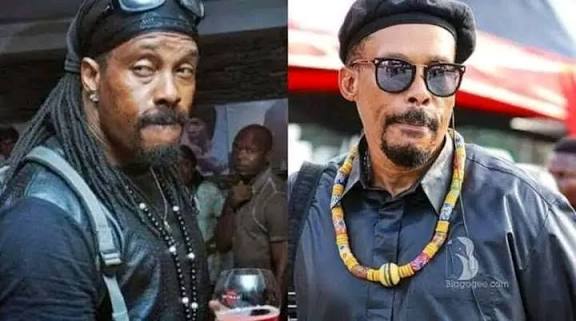
Veteran Nollywood actor Ricardo Agbor has revealed his 18 year journey to parenthood, as he and his wife waited almost two decades before welcoming their twins.

During a recent interview, the actor spoke about his marriage, faith, and the struggles he and his wife went through before welcoming children.

Agbor said that throughout the long wait he never wavered in his commitment to his wife and never allowed the delay in starting a family to affect their relationship.
“I wanted to marry a particular lady; I married her regardless of where she comes from. She’s not one of my people. “Normally we should have had strife, no, it was very fair,” he said.

He shared about the couple’s struggle with infertility and how he specifically prayed for twins and refused to give up hope, even after waiting for 18 years.

“It took me 18 years to get the twins. And I waited. God knows I was 18 years old and they’re 14 now, I told God I wanted twins.

“So in that wait, if it was someone else, he would cross. Bottom line is I have twins. I have a son and daughter. “I asked God for what I wanted,” he added.

Agbor also spoke about what he described as the most painful experience of his life, the death of his mother.

She had been under treatment for about three weeks with no improvement, before doctors advised that she should be flown to South Africa for further medical attention, he said.

He said his mother had asked to be taken to another private hospital in Surulere but had died in his arms while he was helping her into the car.

“My mother died right in my arms. At the hospital they were bringing almost 10 doctors to do tests… the sickness was not improving after almost three weeks.

“After three weeks they told me to come and carry my mom and take her to South Africa. I took my mother and moved her to another private hospital in Surulere. My mom told me to get her away from there. “She quit,” he said. “She went into the car with her.

The loss devastated him, Agbor said, adding that it was the first time he’d cried outside of acting.

“I think that was the first time I ever cried in my life. I don’t cry. If I cry, it might be in a movie, it might be a role. So I wept. It was a painful thing,” he added.

Fake Agency Scandal: CNPP Calls For Sack Of Senior Government Officials

0

The Conference of Nigeria Political Parties (CNPP) has demanded the dismissal of top Government Officials and resignation of President Bola Tinubu over alleged mishandling of the Multi-Billion Naira ‘Fake Agency’ scandal, stating that Nigeria is not a Banana Republic:

The CNPP added that the group watched with deep shock, profound disappointment and mounting national embarrassment the unfolding scandal surrounding the purported Presidential Foreign Intervention Promotion Council, an agency now publicly described by the Presidency as “fake” or “fictitious” notwithstanding its inclusion in the 2026 Appropriation Acts signed into law by President Tinubu.

“What ordinarily should have been a simple case of administrative correction has now blown into one of the greatest self-inflicted international embarrassment in the history of Nigeria’s democracy because of the incompetence and poor crisis management shown by the All Progressives Congress (APC)-led Federal Government,” the Deputy National Publicity Secretary, Comrade James Ezema said in a statement made available to Journalists in Kaduna.

“The CNPP says, in no uncertain terms, that if Nigeria were a serious country with functioning institutions and a culture of accountability, heads of critical government agencies and top political appointees implicated by this scandal would have already resigned or been immediately relieved of their duties pending investigations,” he said.

Ezema said: “Nigerians have been told that for months, one Prince Adeniyi Adeyemi Matthew allegedly operated a federal agency that did not exist; occupied office space within the Federal Secretariat in Abuja; allegedly held meetings with ambassadors and foreign nationals; corresponded with government institutions; and allegedly opened bank accounts, including one with the Central Bank of Nigeria, all under the guise of being the Director-General of the so-called Presidential Foreign Intervention Promotion Council.”

He added that the matter got even more disturbing when documents emerged showing that this same “non-existent” agency was captured in the 2026 Appropriation Act with over N1.3 billion in budgetary allocations, including funds for salaries, allowances and even a proposed World Investment Summit.

“This is not just a scandal,” he said, “it is an indictment of the entire machinery of government,” and he added, “a federal budget does not write itself, budgetary allocations do not drop down from heaven, every line item in the national budget passes through rigorous bureaucratic and political processes.”

“The budget is prepared by the executive, scrutinised by the Federal Executive council chaired by the President, presented to the National Assembly by the President, debated and approved by lawmakers and eventually signed into law by the President”, the CNPP statement added.

Ezema further stressed that “therefore, the Federal Government cannot, in one breath sign an Appropriation Act that contains an agency and in another breath issue a press statement declaring the same agency fake, illegal or non-existent.”

He said, “Such conduct depicts Nigeria as a nation that does not know its laws and does not respect its laws and its constitutional processes”.

The CNPP stressed that “by virtue of its inclusion in the 2026 Appropriation Act and the presidential assent granted to that Act, the agency acquired legal recognition for the purpose of the budget year unless and until the relevant provisions of the law are amended or repealed by the National Assembly.”

“A government cannot nullify an Act of Parliament by means of a press statement. No presidential aide has the constitutional authority to nullify a law duly passed by Congress and signed by the president by mere public declaration. The Federal Government may choose to close down the agency or do away with it altogether but it cannot by law declare an agency contained in a subsisting Act of Parliament as “fake.” “To do so will be to ridicule the National Assembly, undermine the sanctity of the country’s laws and project Nigeria before the international community as a Banana Republic where state institutions have collapsed”, the statement stressed.

“More embarrassing still is the way this scandal has been handled. “The CNPP said a competent and responsible administration with effective crisis management mechanisms would have simply announced the scrapping of the agency, initiated an immediate investigation and transmitted an Executive Bill to the National Assembly seeking an amendment to the 2026 Appropriation Act to reflect the government’s decision.

“That would have been an example of leadership, of responsibility and of respect for constitutional processes. “Instead, the APC-led Federal Government has taken a path that has embarrassed Nigeria internationally, amplified doubts about the country’s institutional credibility and further strengthened the already negative global perception of Nigeria as a corruption-prone nation,” the statement also added.

The group lamented, “International partners and foreign investors are now asking uncomfortable questions. What other dubious entities are lurking in government finances if a supposedly non-existent agency can find its way into a signed federal budget? What does this tell us about Nigeria’s governance systems if an agency that is allegedly fictitious can obtain office space in the Federal Secretariat and interact with key government institutions? “If a fake agency could even get through the Budget Office, the Federal Executive Council, the National Assembly and get presidential assent, where exactly are the safeguards that government always boasts about?”

“These are not questions of opposition; they are questions of governance,” it said. The real scandal isn’t one individual standing trial anymore. The real scandal is institutions’ failure. The real scandal is incompetence of those who are in charge of the administration of the country. The real scandal is the web of officials whose acts and omissions supposedly legitimized an allegedly non-existent agency.”

Consequently, the CNPP called for the following; immediate dismissal or resignation of all public officers whose actions and inactions enabled this monumental national embarrassment, including:
. the President’s Chief of Staff,the Governor of the Central Bank of Nigeria, should an account indeed be opened for a purported non-existent agency under the watch of the apex bank,appropriate officials in the Office of the Accountant- General of the Federation.relevant officials in the Federation’s Budget Office, .members of the Federal Executive Council who reviewed and approved the budget proposal, ministers and heads of agencies that processed or interacted with documents related to the agency and,principal officers and committee chairmen in the National Assembly who managed the budget process and did not detect the alleged anomaly.

“The CNPP further states that should President Bola Ahmed Tinubu fail to immediately sack these officials and begin a transparent process of accountability, then he must bear full responsibility for this unprecedented governance failure and tender his resignation”, the statement stressed.

2027: North Will Not Support Atiku, Southern Presidency Should Continue — Sheriff

0

Former Borno State Governor and All Progressives Congress (APC) stalwart, Ali Modu Sheriff, has said the chances of former Vice President Atiku Abubakar getting Northern support for the 2027 Presidential election was slim, arguing that the North believes power should remain in the South.

Speaking on Channels Television’s Politics Sheriff on Monday insisted that Nigeria’s principle of regional power rotation should be respected, especially after former President Muhammadu Buhari completed two terms in office.
He said the North has no business aspiring to the presidency in 2027, insisting that Atiku should shelve any ambition till 2031.

Sheriff said that after the civil war, political leaders agreed to the power-sharing plan as a means of promoting unity and justice among the country’s regions.
“After the civil war, our leaders said this situation will no longer be in Nigeria; there is a regional agreement. It’s not Atiku’s time now. It is his own, the South. It is his turn. Buhari just done 8 years.
“If Atiku wants to be president, he should wait. He is a leader in Northern Nigeria, he is eminently qualified, but it is not our time now, he has to wait until 2031. ‘That is the time for the North; for now it is time for the South,’ he said.

The APC chieftain also said he was confident that President Bola Tinubu would get a second term in office, though he noted that the ruling party would still campaign vigorously ahead of the election.

Sheriff also dismissed the presidential ambition of a former Labour Party candidate, Peter Obi, who will be contesting the 2027 election under the newly registered Nigeria Democratic Congress (NDC).

He alleged that Obi’s record as governor of Anambra State had damaged his chances of attracting Northern voters and that some Northern political supporters had expressed reservations about any alliance involving the former Anambra governor.

Why The Proposed NYSC Reform Faces Growing Criticism

0

The National Youth Service Corps (NYSC) program has been Nigeria’s finest institutional barrier against ethnoreligious division since its post-bellum beginnings in 1973. Its major mandate has unquestionably been the fusion of cross-cultural integration; it is known to have been developed with the objective of healing fragmented polity. However, the Federal Executive Council’s (FEC) recent acceptance of extensive reforms raises the possibility of drastically altering this cherished plan.

Based on a thorough analysis and observation, it appears that these proposed reforms would commercialize the NYSC scheme’s structural goals, introduce elitist taxonomies through skill-based deployment, and methodically destroy its fundamental paramilitary ethos. These changes will make the plan outdated at the expense of the country’s socio-political balance rather than upgrading it as suggested.

Additionally, the revisions aim to double the customary three-week orientation session to an enormous six-week duration in an act of extreme logistical negligence. This time, inflation is clearly intolerable in terms of both military and the economy. Nigeria’s financial reserves would be severely impacted by the cost of housing, feeding, and providing medical care for millions of graduates for an additional three weeks, given the country’s current hyperinflation.

Beyond the apparent socioeconomic burden, however, a closer examination of this program indicates that this extension will cause severe curriculum weariness because it is a redundant reproduction of tertiary education objectives. This is due to the fact that it turns what ought to be a sharp, intense, and cohesive socialization process into a boring board room presentation. The orientation experience has always been characterized by physical discipline and liveliness, yet this policy was created by committees with limited vision.

The complete separation of the Directorate-General from the military hierarchy is arguably the most concerning and hazardous institutional change in the authorized reforms. The substitution of civilian operational leadership for the conventional military officer leadership is a structural error of enormous dimensions. It is crucial to realize that the military leadership model was a requirement for logistical effectiveness and structural discipline in a setting beset by systemic instability in order to fully appreciate the seriousness of this blunder.

It is an invitation to operational dysfunction to expect a civilian bureaucracy to manage the intricate, multi-state deployment of hundreds of thousands of young people across unstable areas while simultaneously depending on an externalized military apparatus for security. This duality of leadership creates a point of friction where crucial decisions pertaining to the safety of corps members will unavoidably become mired in bureaucratic delay.
Additionally, the NYSC’s institutional gravity is significantly diminished by the demilitarization of the leadership position. When orientation camps or corps lodges encounter unexpected security threats from criminal elements, a civilian Director-General lacks the inherent tactical authority and direct structural leverage within the national security apparatus to command immediate, high-level defensive responses, given the current state of Nigeria’s security architecture.

“Are our children safe?” is a question that will begin to sneak into the hearts of parents and guardians. I think the Nigerian government would wish to deal with the surge of terrorist and bandit attacks on camps.

Additionally, the erosion of NYSC identity by substituting a cultural Adire Uniform for the sophisticated and rugged khaki is another bogus alteration to be aware of. Symbols serve as the cornerstone of institutional coherence and are utilized to symbolize national identities all over the world. In a unique way, the classic khaki uniform functions as a radical socioeconomic equilibrium. When both a graduate from a wealthy university and a graduate from a poor rural village wear the khaki uniform, they are seen as being on an equal footing. Socioeconomic differences are eliminated when wearing khaki, and a common identity that serves the country as a whole takes its place.

However, the adoption of Adire cloth, which is native to the Yoruba ethnic group, in favor of the practical khaki uniform signifies a risky transition from functional egalitarianism to shallow cultural commodification. While it is admirable to honor indigenous textile companies, including Adire into the main uniform will undermine the corps’ tradition, uniform, and conformity.

Furthermore, personalized personalization and disunity will unintentionally be made possible by this Adire clothing. Due to its handcrafted nature, adire is prone to differences in texture, tint, and quality, which unintentionally allows for individual customization and class differentiation. Since Adire clothing obviously doesn’t reflect his culture, other ethnic groups can feel excluded and uneasy about its widespread use.

Additionally, it is a reckless decision to replace the famous passing-out parade (POP) with a “formal graduation ceremony,” depriving the NYSC of its extremely touching, long-standing ritual of group perseverance. A typical graduation celebration just mirrors the academic elitism the graduates have just left behind; the procession was a tangible representation of discipline, solidarity, and shared national victory.

The shift to a “skills-based deployment” paradigm is the most pernicious aspect of these reforms. According to the policy, rather than using general national postings, graduates will henceforth be deployed depending on their academic credentials and chosen career paths. This is a total reversal of the NYSC’s primary purpose.

Forcing young people to leave their cultural comfort zones was the main goal of the 1973 mandate, which sent Northern graduates to the coastal reality of the South and Southern graduates to rural villages in the North. Interethnic marriages, pan-Nigerian commercial networks, and enduring cultural empathy were all made possible by this intentional breakdown of geographic insularity.

The system will automatically direct top-tier engineering, medical, and finance graduates into major metropolitan economic hotspots like Lagos, Abuja, and Port Harcourt by linking deployment to job streams. In this instance, Nigerians will soon witness the relegation of graduates from less capitalized disciplines to rural areas, while the urban class will benefit from an influx of high-end professionals. Additionally, underprivileged areas will use the rural educational labor class as inexpensive supplemental teaching labor. Economic segregation will take the place of cross-cultural mixing, creating opportunities for political manipulation. The program has a risky dual-class caste system that the FEC has only accepted.

National youth service frameworks around the world are only successful when they preserve complete structural clarity, according to a comparative institutional analysis. Diluting the command structure degrades institutional efficacy, as demonstrated by the high-intensity military and civic hybrid model employed by countries such as Israel, which depends on extreme social equality and unwavering operational discipline. On the other hand, pure civilian professional distribution schemes, such as Ghana’s National Service Scheme, are ill-suited for a multiethnic, post-conflict democracy like Nigeria because they only address economic inadequacies rather than cross-cultural mandates.

The attempt to create a complex hybrid—an administrative chimera that attempts to be a corporate job placement agency, a cultural fashion show, and a paramilitary security outfit all at once—is where the FEC changes went wrong. It guarantees that nothing will be accomplished successfully by attempting to do everything.

examining the demilitarization of NYSC leadership, the removal of the khaki uniform, the lengthening of camp, and the split caused by career-stream deployment. The recent approval of “NYSC reforms” by the Federal Executive Council (FEC) is nothing more than an alluring lexicon of modernization and youth empowerment, and it poses a serious threat to national unity. The bridge that has supported Nigeria’s flawed lines for decades is being dismantled by the Federal Executive Council.

These disruptive changes must be immediately stopped in order to move forward. Reforming the plan is necessary, but not from a corporate opportunist perspective. By strengthening camp perimeters, improving intelligence sharing between corps networks and state security agencies, guaranteeing strong financial renovation through inflation-adjusted allowances, and upholding the blind, random geographic deployment matrix that compels a diverse youth population to discover a shared national identity, true reform must concentrate on radical security infrastructure.

The NYSC will no longer serve as a tool for fostering national unity if these present reforms go unchecked. Instead, it will turn into a bloated, highly stratified corporate seminar, endangering Nigerian unity in the long run.

President Tinubu Vows To Strengthen Nigerian Army As Security Threats Grow

0

President Bola Tinubu has reiterated his administration’s commitment to repositioning and strengthening the Nigerian Army as the country grapples with rising security challenges.

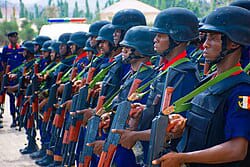
The President made the declaration at the end of the 163rd Nigerian Army Day Celebration, which took place on Monday at the Yakubu Gowon Stadium in Port Harcourt, Rivers State.

Tinubu, who was represented by Vice President Kashim Shettima, said his administration would modernize the Nigerian Army by deploying emerging technologies and strengthening operational capabilities across all theatres of operation to improve military planning, combat readiness and the nation’s response to evolving security threats.

“My administration is fully dedicated to addressing modern threats through the use of emerging technologies and the development of capacity across all battle spaces, enhancing operational planning and readiness,” he said.

He pointed out that the investment in R&D in the Armed Forces and the drive for technological advancement and indigenous innovation are picking up steam.

He said that the revitalisation of the Defence Industries Corporation of Nigeria, DICON, is at the heart of this drive, with the forum’s partnership expected to inject fresh momentum into local defence manufacturing, create skilled jobs and strengthen Nigeria’s capacity to support counter-terrorism operations through indigenous production.

He also welcomed the creation of the African Land Forces Forum, which he said would be a platform to boost security cooperation across Africa.

“This administration is committed to modernising our Army to enhance its capacity to meet contemporary security challenges,” Tinubu said, adding that his government shares the aspirations of the forum’s organisers to raise Nigeria’s standing in defence diplomacy and enhance the Army’s combat readiness through shared expertise.

The President lauded the Nigerian troops for their sacrifices in safeguarding the territorial integrity of the nation and assured that the Federal Government would continue to support the families of personnel that lost their lives in the course of duty.

To the officers and men of the Nigerian Army, you bear a trust that few are asked to carry and you carry it with an honour that steadies the whole nation.

“Treat the people with the same care you show in defending them, for the uniform only commands respect when it protects the weak and upholds the dignity of every citizen,” he added.

Also speaking, Governor of Rivers State, Siminalayi Fubara, commended the Nigerian Army for its remarkable strides in technological advancement and manpower development.

He said the institution had his administration’s support and called for improved welfare for soldiers, saying better conditions of service would make them more effective in the performance of their duties.

The Chief of Army Staff, Lieutenant General Waidi Shaibu, in his welcome address said this year’s celebration is coming at a critical period as over 80 per cent of Nigerian soldiers are currently involved in operations against insurgency and other security threats across the country.

The Army has grown and changed with the nation over the decades, he noted, adapting to new realities and taking on more responsibilities to defend the country.

Shaibu said the Army was aware of the infiltration of jihadist groups from neighbouring countries and assured Nigerians that troops were fully prepared to confront and defeat the threat.

He said the Army is an institution based on selfless service, loyalty, honour, courage and sacrifice, saying the Army remains committed to the defence of Nigeria’s sovereignty, territorial integrity and protection of the lives and aspirations of its citizens.

He described the anniversary as a renewal of the Army’s dedication to national service. “This celebration is also a reaffirmation of our commitment to protecting the nation and serving the people, regardless of the challenges of any era,” he said.

The Army is closely monitoring the deteriorating security situation in the Sahel region, he added.

“We’ve already seen the footprints of foreign jihadists across our borders. However, I want to assure all of us that the Nigerian Army is alert and up to the task.

“Just as our forefathers successfully confronted the security challenges of their generations in the two World Wars, the Nigerian Civil War and the ECOMOG missions the Nigerian Army of today will definitely triumph in confronting the security challenges of our generation,” Shaibu said.

This year’s Nigerian Army Day Celebration was held under the theme, “Protecting the People and Serving the Nation: A Way Forward for the Nigerian Army.

There were also parades of the Army’s corps and departments and demonstrations of land and aerial combat capabilities.

Among the dignitaries in attendance were the Minister of Defence, the Chief of Defence Staff, the Chief of the Naval Staff, the Chief of the Air Staff, former President Olusegun Obasanjo, former Head of State Yakubu Gowon, retired service chiefs and Army chiefs from several African countries.

Peller Released On N500,000 Bail After Facing Charges Of Allegedly Threatening Police Officers

0

A Lagos Magistrate Court has granted bail of ₦500,000 to TikTok content creator, Habeeb Hamzat, popularly known as Peller, and his accomplice, Bello Oladipo, who were arraigned over an allegation of obstructing police officers during an operation.

The report said the pair pleaded not guilty to the charges preferred against them by the Lagos State Police Command and were granted bail by the court.

They were required to provide two sureties, one of whom must be a blood relative.

The court further directed them to produce their tax clearance documents for two years before the bail conditions could be fulfilled.

The case was then adjourned to 11th August for further hearing.

Linda Ikeji reports that the charges against Peller and Oladipo were brought after an occurrence on July 2 along Coastal Road, Lekki, Lagos, when police officers allegedly stopped the TikTok star over a car said to be driving without number plates.

It was reported that Peller told the officers that the vehicle was newly bought, but the officers insisted he should follow them to the station.

Things then took a turn for the worse when the content creator started recording the interaction with his phone.

The TikTok personality later accused the officers of acting aggressively during the incident, but the police command dismissed the claims and filed charges against him and his associate.

The pair are also charged with resisting police officers, preventing officers from carrying out their duties and acting in a manner which could lead to a breach of the peace.

Federal Government Launches National Laureate Committee, Introduces Yearly Student Research Award

0

The Federal Government on Monday inaugurated the Tertiary Institutions National Laureate Committee in what education stakeholders described as one of Nigeria’s most ambitious efforts to reposition scholarship, innovation and research as national priorities.

“The Committee will introduce a new annual awards programme to reward outstanding undergraduate, master’s and PhD research with prizes worth about N365 million.

The Minister of Education, Dr Tunji Alausa, inaugurated the Committee at the Digital Resource Centre, Universal Basic Education Commission (UBEC).

The committee is charged with the oversight of the implementation of the National Laureate Programme, a flagship initiative to bring academic excellence to the highest level of national recognition.

It will also foster research commercialisation and innovation in Nigerian accredited post-secondary and tertiary institutions.

Speaking on the inauguration exercise, Dr Alausa said the programme was a conscious effort by the Federal Government to re-jig the country’s reward system.

It will put scholarly achievement, scientific discovery and innovation alongside other nationally celebrated accomplishments, he says.

The Minister add that the initiative is expected to inspire a new generation of young Nigerians to pursue researches that can solve real world problems, create new industries and enhance the nation’s global competitiveness.
He said: “The ability to turn knowledge into economic value will be increasingly important in determining the future prosperity of nations.

He said Nigeria must consciously celebrate intellectual achievement if it wants to build a globally competitive knowledge economy.

The Federal Government found it necessary to establish a national platform in an era dominated by the social media-driven “attention economy,” Alausa said. The platform will reward creativity, scholarship, invention and commercially valuable research, especially among young people.

The newly inaugurated Committee is headed by the President, Nigerian Academy of Science, Professor Abubakar Sambo.

Other names are Professor Solomon Nwhator, Obafemi Awolowo University, Ile-Ife; Professor (Mrs) Tolulope Ariyomo, Federal University, Oye-Ekiti; Professor Francis F. Uba, Federal University of Health Sciences, Otukpo; Dr Babangida Abubakar Albaba, representing National Board for Technical Education (NBTE) and Dr Salihu Bakari Girei representing Tertiary Education Trust Fund (TETFund).

Others are Professor (Mrs) Carol Arinze-Umobi of Nnamdi Azikiwe University, Awka; Dr (Mrs) Obianuju Anigbogu, Federal Ministry of Education; Mr Francis Egbokare, Nigerian Academy of Letters; Dr Ezinne Orisakwe, National Universities Commission (NUC) and Dr Pius O. Ekireghwo, National Commission for Colleges of Education (NCCE).

Also, the Secretary of the Nigeria Education Repository and Databank (NERD), Mr Richard Falaye, is to act as Secretary to the Committee.

The first National Laureate Awards will be held in November 2026. The awards will honour the country’s top Undergraduate Dissertations, Master’s Theses and Doctoral (PhD) Theses, in addition to six thematic Excellence Awards.

The thematic categories are Medicine and Health Sciences, Engineering and Technology, Agriculture, Law, Arts and Social Sciences and Teaching Innovation.
The approved prize structure sees the winner of the Undergraduate Dissertation category taking home N35 million, while the best Master’s Thesis will attract N50 million. The overall winner in the Doctoral (PhD) category goes home with N100 million.

Also, six National Laureate Excellence Awards to the tune of N30 million each shall be given annually.

That will bring the programme’s total prize pool to an estimated N365 million annually.

The Minister also announced the setting up of the Dr Stella Adadevoh Excellence Award in Medicine and Medical Innovation. The late physician, whose leadership during the 2014 Ebola outbreak averted a national public health catastrophe, is the recipient of one of the programme’s special awards.

He also asked the Committee to complete its work on eligibility criteria, evaluation procedures and institutional engagement in good time to ensure successful hosting of the inaugural awards in November.

Dr Alausa also seized the opportunity to commend Engr Olatunji Ariyomo, Chairman of NERD, for his innovative contributions to transformative interventions in Nigeria’s education sector.

The Chairman of the Committee, Emeritus Professor Abubakar Sambo, speaking for the Committee, said the initiative was a historic turning point in the country’s education policy. He commended the administration of President Bola Ahmed Tinubu for putting academic excellence and research at the heart of national development.

“The Committee will ensure the highest standards of transparency, fairness and merit in the selection process,” Professor Sambo assured.

He commended Dr Alausa for spearheading a national revolution to reward and promote innovation and its commercialisation, assuring that every eligible student irrespective of institution and geographical location would have equal opportunity to attain National Laureate status.

He said the process would be protected from institutional preference and other outside influences.
He also said he believed the National Laureate Programme could be one of the most consequential reforms in Nigeria’s tertiary education landscape if it is successfully implemented.

The committee argues the initiative signals a shift away from national priorities of social media celebrity culture towards a deliberate recognition of ideas, discoveries and innovations capable of driving economic transformation, over and above its substantial prize fund.

The programme is expected to foster deeper collaboration between universities, polytechnics, colleges of education, industry and government as well as create stronger incentives for commercially viable research and position Nigeria to compete more effectively within the global knowledge economy.

PDP Calls For Forensic Investigation Into Gbajagate, Raises Presidential Oversight Concerns

0

The Tanimu Turaki led faction of the Peoples Democratic Party (PDP) has demanded for an independent forensic investigation into the controversy surrounding the alleged activities of the Presidential Foreign Intervention Promotion Council (PFIPC).

It described the development as evidence of institutional failure, negligence and poor oversight within the federal government.

The opposition party, in a statement issued on Sunday by its National Publicity Secretary, Ini Ememobong, said the allegations involving the Chief of Staff to the President, Hon. Femi Gbajabiamila and the Presidency’s response, had raised serious questions about accountability, transparency and presidential oversight.

The controversy arose from claims by Prince Adeniyi Adeyemi Matthew, who identified himself as Director-General of the PFIPC), that financial inducements were demanded and received in connection with his appointment and the operations of the council.

But the Presidency, through presidential spokesman Bayo Onanuga, debunked the allegations and described both the PFIPC and the Presidential Economic Advisory Council (PEAC) as fictitious bodies, claiming that Adeyemi forged official documents and unlawfully paraded himself as a government appointee.

Reacting to the development, the PDP said the Presidency’s explanation only deepened concerns about the integrity and effectiveness of government institutions.

If Adeyemi indeed operated as an impostor, the party said, it would be a monumental failure of state institutions, raising questions as to how an unauthorised individual could allegedly secure office accommodation, have personnel attached to his office, obtain budgetary provisions, operate accounts linked to official institutions and engage with agencies like the Economic and Financial Crimes Commission (EFCC) and other security bodies.

The opposition party argued that such a scenario would reveal glaring weaknesses in internal controls, background checks and oversight mechanisms within the nation’s highest offices.

It also argued that if the alternative account is correct, that financial considerations were behind appointments into the PFIPC, then the matter would represent another major corruption scandal that needs urgent investigation and accountability.

The PDP said either result was damaging to public confidence and indicative of what it called a persistent pattern of administrative failures on the part of the current administration.

The party referenced past controversies over government appointments and other governance-related incidents, insisting that they reveal deeper institutional deficiencies within the federal system.

It said any responsible administration faced with allegations of such magnitude should immediately order an independent forensic investigation, suspend officials directly involved with the matter pending the outcome of investigations, and institute systemic reforms to prevent the recurrence of such and give Nigerians a full and complete explanation.

The opposition party specifically called on President Bola Tinubu to order a forensic investigation by a reputable international firm, announce the suspension of key officials linked to the controversy, embark on a comprehensive reorganisation of structures within the Presidency and issue an unreserved apology to Nigerians over what it described as a deeply embarrassing development.

The controversy has heightened concerns about presidential oversight and the effectiveness of mechanisms designed to safeguard public institutions from abuse, infiltration and administrative failures, according to the PDP.

The party insisted that Nigerians deserve a government built on transparency, competence and accountability, asserting that only a credible and open investigation would restore public confidence in state institutions.

It said until the government shows willingness to hold public officials accountable, recurring controversies would deepen citizens’ distrust and empower calls for a more responsible and effective system of governance ahead of the 2027 general elections.