Home Blog Page 47

Pat Utomi: Nigeria May Become Great After I Am Gone

0

Pat Utomi, a former presidential contender, bemoaned Nigeria’s abandonment of intellectual leadership.

Speaking on Arise Television, Utomi claimed that Nigeria’s issue stems from the 1999 end of military control in the nation.

He claimed that public life has been poisoned and democracy has been hollowed out by the rejection of ideas in favor of naked power.

When asked what he had learned about Nigeria from life that he wishes he had known sooner, Utomi responded that the nation’s struggle should be seen through a long historical lens.

He remarked, “I was reminded of Socrates a few days ago by Reverend Father George Ehusani.” He made an effort to reassure me that I shouldn’t feel guilty if Nigeria hasn’t yet been shaped by the lessons I’ve taught for the most of my life. Western civilization was founded on the ideas of Socrates, who was encouraged to consume poison. Therefore, in a manner, I am meant to find solace in the thought that Nigeria might rise to greatness as a result of the ideas I shared after I am gone.

Utomi insisted that Nigeria has a special historical duty and expressed his continued hope for change during his lifetime.

He declared, “I think Nigeria was given to humanity to redeem the crushed dignity of the Black man and to undo the path to serfdom paved by colonial oppression and slavery.” “We might leave with the impression that we contributed to making Nigeria the catalyst for that redemption if we concentrate on being a generation that is redeeming.”

At one time in our history, people stopped appreciating concepts. Obafemi Awolowo was a deep philosopher in his 30s and 40s. He continued, “Fela Anikulapo Kuti was one of the greatest philosophers of all time if you listen to him.

He claimed that military dictatorship and oil revenue caused the final break.

Utomi cautioned that having power without ideas can have long-term negative effects.

Nigeria Set to Surpass Algeria as Africa’s Third-Largest Economy, IMF Forecasts $334bn GDP

0

According to the International Monetary Fund (IMF), Nigeria’s GDP is expected to reach $334 billion in 2026, surpassing Algeria as Africa’s third-largest economy.

According to the fund’s World Economic Outlook (October 2025), Nigeria ranked fourth in Africa in 2025 with a GDP of roughly $285 billion at current prices, after South Africa, Egypt, and Algeria.

Increased oil production, improved foreign exchange (FX) liquidity, and the results of ongoing economic reforms, such as the elimination of fuel subsidies, the liberalization of exchange rates, and fiscal adjustments, all of which are intended to support medium-term growth despite short-term inflationary pressures, were all linked by the IMF to Nigeria’s projected economic rise.

Nigeria is expected to surpass Algeria, whose output is predicted to reach $284 billion this year, with a GDP of over $334 billion.

According to IMF forecasts, the review year will see a change, with Nigeria’s economy continuing to maintain its resilience and have a promising growth outlook.

With a projected GDP of $443 billion in 2026, South Africa is predicted to continue to have the largest economy in Africa, followed by Egypt at $399 billion.

With a GDP of $426 billion, South Africa continued to be the continent’s largest economy in 2025. Egypt came in second with $349 billion, and Algeria came in third with roughly $288 billion.

Because of currency devaluations, rebasing efforts, and more general macroeconomic issues impacting major African economies, Nigeria’s economic standing has changed recently.

The IMF raised the country’s 2026 GDP growth estimate from 4.2% to 4.4% earlier this year.

In addition, the World Bank increased its growth estimate for Nigeria from 3.7% in mid-2025 to 4.4% in 2026.

The IMF predicted last week that Nigeria will rank sixth internationally and among the top 10 countries in terms of its contribution to real GDP growth, with a 1.5% growth rate in 2026.

Furthermore, the development put the nation ahead of a number of developed and growing countries, such as Saudi Arabia (1.7%), Vietnam (1.6%), Brazil (1.5%), and Germany (0.9%).

At 26.6%, China is predicted to continue to be the biggest contributor to global growth, followed by India (17.0%), the United States (9.9%), Indonesia (3.8%), and Turkey (2.2%).

43.6% of the world’s economic growth is expected to come from China and India this year.

In keeping with the region’s ongoing economic momentum, the IMF study also alluded to the Asia Pacific region’s supremacy, which was predicted to contribute close to 50% of world economic growth.

“The balance of power is changing,” Tesla CEO Elon Musk stated in response to the IMF study.

Sources claim that despite present difficulties, Nigeria’s true growth forecast stays at about 3–4%.

economy in trade, telecoms, energy, and services was facilitated by the nation’s consumption-driven economy.

The ranking also highlighted the county’s exceptional resilience in the face of persistent domestic and international economic issues, as well as its role as a major growth generator among rising economies.

The IMF report demonstrated how China and India were becoming key players in the expansion of the world economy.

Together, the Eurozone contributes two percent to global growth. Emerging markets are expected to grow by 4.2%, while advanced economies as a whole are expected to grow by 1.8%.

Untangling the Legal Pathways in the Coup Plot Against the State

0

The question of how Nigeria should prosecute accused coup plotters has returned to the forefront of public discourse during a time of increased political vigilance and rekindled concerns about national stability.

It’s not only guilt or innocence that’s at issue. It concerns jurisdiction, a constitutional issue that lies at the nexus of the rule of law, military discipline, and democratic administration.

The subject at hand is deceptively straightforward: Should people suspected of conspiring to overthrow the government be tried in civilian courts or in the military’s court-martial system?

As is always the case with Nigeria’s constitutional design, the solution is based on what can be called a dual-track constitution.

Nigeria’s 1999 Constitution establishes two distinct legal systems, each with its own goals and parameters. Sections 6 and 36 serve as the foundation for the civilian judiciary, which is responsible for upholding fundamental rights and adjudicating crimes against the state. The purpose of the military justice system, which is protected by Sections 217, 218, and 315, is to impose discipline on members of the armed forces.

Sometimes these two systems clash, particularly when troops and civilians are accused of participating in the same alleged plot in politically delicate situations.

There is no uncertainty in the Constitution for civilians. The Federal High Court has exclusive jurisdiction over treason and treasonable felonies, as stated in Section 251(2). For this reason, a civilian court tried and found businessman Muhammadu Mandara guilty of organizing troops to overthrow President Shehu Shagari during the Second Republic.

No matter how serious the accusation, Mandara’s case serves as a reminder to law scholars that civilians cannot be tried by military tribunals.

For active military troops, the circumstances are very different. The Armed Forces Act, which is protected by Section 315 of the Constitution, gives the military the power to discipline its members. Court-martial jurisdiction is triggered by the accused’s status rather than the nature of the offense.

Nigerian appellate courts have regularly upheld this principle. The Court of Appeal ruled in Brigadier-General Anyankpele v. Nigerian Army that court-martial procedures are constitutionally legitimate and come under the judicial authority acknowledged by Section 6.

For soldiers, a coup attempt constitutes not just treason under civilian law, but also conduct that is detrimental to military discipline, mutiny, and insubordination—all of which are crimes that fall under the Armed Forces Act.

Because of this dual nature, soldiers who are suspected of attempting coups have traditionally been tried by court-martial, even while civilians who are implicated in the same plan are tried by the Federal High Court.

Nigerian courts have historically managed to strike a careful balance between military discipline and civilian supremacy. Tribunals were the norm during military administration. The courts have adopted a more active stance under democracy, upholding the constitutional bounds of military justice while demanding due process.

The judiciary has ruled against attempts to try civilians in military courts, supported court-martial proceedings for active military personnel, demanded rigorous respect to fair-hearing standards, and stepped in when military tribunals overreached their legislative authority in politically contentious cases.

This delicate balancing act mirrors a larger constitutional principle: the military must never eclipse civilian power while maintaining discipline in the Armed Forces.

The controversy has been rekindled by recent claims of coup plotting, allegedly including active military officers.

Since treason is a crime against the democratic order, rights attorney Femi Falana (SAN) has urged that all accused, including soldiers, should face trial in civilian courts.

His stance is based on constitutional supremacy and is based on principles. However, it faces a long-standing legal reality: Nigerian courts have always recognized the military’s right to trial its own personnel, and the Constitution specifically guarantees military discipline.

The Mandara precedent, which is frequently brought up in public discussions, exclusively pertains to citizens. The issue of how to handle soldiers who are accused of masterminding a coup remains unresolved.

In the end, Nigeria’s constitutional system exhibits a practical equilibrium. People who are accused of conspiring against the state are put on trial in public, with the public watching. In the military system that oversees their service, soldiers who are charged with the same offense are tried together.

It is a two-pronged strategy that is flawed, disputed, and intentional.

Even during times of political unrest, the court serves as the silent referee as Nigeria fortifies its democratic institutions, guaranteeing that the rule of law is upheld and that neither system goes too far.

Ultimately, the map is provided by the Constitution. The compass comes from the courts. The country keeps a close eye on this, knowing that the way we prosecute accused coup plotters reveals just as much about our democracy as the accusations themselves.

New Developments Bring Fresh Hope to Tudun Biri

0

The aforementioned statement from an unnamed academic reflects moral and ethical perspectives on the nature of good governance, the social contract, and public integrity in Nigeria under President Bola Tinubu’s government. The premise is that the consent of the governed, which denotes a frequently unwritten agreement to act in the citizens’ best interests, is the foundation for the legitimacy of government.

The current condition of affairs in Nigeria is indicative of a fiduciary vision of public office, in which the state’s primary responsibility is to uphold its promises to the people.

President Tinubu’s plan to reconstruct Tudun Biri, a peaceful hamlet in Kaduna State’s Igabi Local Government Area that was destroyed by a fatal military drone misfire, in December 2023 was written off by some as one of those meaningless government promises.

However, on Friday, January 29, 2026, the village that had been abandoned and reduced to a shell of its once-vibrant self came back to life. The president’s pledge to reconstruct the community—which had been badly damaged by a military drone mishap bomb that killed innocent people, injured others, and left many traumatized—became a happy reality.

When Vice President Kashim Shettima launched the Tudun Biri Resettlement Scheme, roughly 133 housing units, schools, and other cutting-edge infrastructure were finished.

When VP Shettima visited the tragedy’s victims in December 2023, he was astounded by what he observed at Kaduna’s Barau Dikko Teaching Hospital, where some of the wounded—the majority of whom were women and children—were being treated. He was clearly having trouble stopping the tears from streaming down his face. Touched by the heartbreaking scene, he instructed the National Emergency Management Agency (NEMA) to make sure the victims received enough supplies for relief.

“Most importantly, the President approved the commencement of the Pulaku Initiative by next month,” the Vice President said, announcing President Tinubu’s commitment to reconstruct the neighborhood and addressing community leaders and other state stakeholders. The President’s special non-kinetic response to the problems in the Northwest is the Pulaku Initiative.

Although our original plan was to launch the initiative in Sokoto, the President ordered that the Pulaku Initiative be launched here in Kaduna State due to recent events. Additionally, Tudun Biri will be the program’s first beneficiary. He continued, “It’s a comprehensive set of solutions as a non-kinetic response to the issues of kidnapping and banditry in the North West.”

Aside from the sheer number of casualties, the vice president also told the leaders of the community how concerned President Tinubu had been about the terrible event, admitting that it was horrific to lose even one life. “The President is very concerned, which is why I am here.” He was profoundly moved by the events. Let’s not discuss the numbers, as the late Dele Giwa correctly said: “One life taken in cold blood is as gruesome as millions lost in a pogrom.”

In order to fulfill that commitment, Senator Shettima visited Kaduna again last Friday to officially launch the resettlement plan. A government that places a high priority on accountability, transparency, and keeping its word is viewed as an ideal and frequently contrasted with the reality of broken promises. The inauguration genuinely represents this, demonstrating the Tinubu administration’s dedication to fulfilling its commitments and producing outcomes.

The project’s agenda, according to the vice president, is based on the straightforward yet potent idea that government should serve the people, bridge differences, and fortify the basis of national stability.

Today is a real-life example of that idea in action. He said, “The Tudun Biri Resettlement Scheme’s commissioning is a testament to our shared conviction that justice is the binding agent of a nation and that compassion is not a state weakness but rather its moral strength.”

The ability of good governance to fulfill commitments related to social welfare, economic growth, and human rights is the real litmus test. Even the most difficult tasks can be completed with dedication, teamwork, and caring leadership, as the Tinubu administration has demonstrated. The Pulaku Initiative, which is now known as RSPIC, is a prime illustration of this dedication.

The goal of the Federal Government intervention project is to resettle, reintegrate, and rehabilitate internally displaced people (IDPs). RSPIC is a crucial part of the administration’s non-kinetic strategy to manage insecurity, especially in the North West and North Central areas. It was started by President Tinubu in July 2024 and is supervised by Vice President Shettima.

In order to provide long-term, permanent solutions, such as constructing sturdy homes, schools, and hospitals for communities uprooted by banditry and conflict, the program goes beyond short-term humanitarian relief. It is intended to cover seven states—Sokoto, Kebbi, Benue, Katsina, Zamfara, Niger, and Kaduna—that were initially impacted by banditry and disputes between farmers and herders. In order to facilitate social and economic reintegration, the plan calls for building roads, clinics, residential buildings, and skill development facilities.

Following the security incident, the pilot phase was started at Tudun Biri, Kaduna State. The Kaduna State government, led by Governor Uba, and the federal government worked together to make the project a success.

The Tudun Biri Resettlement Scheme’s effects extend beyond only offering housing. It is about giving the people of Tudun Biri their dignity, optimism, and sense of identity back.

“The Tudun Biri Resettlement Scheme is a vehicle for hope for families whose lives were disrupted,” as Vice President Shettima put it, and “a practical assurance that the Nigerian state does not abandon its citizens in times of adversity.”

The plan reflects the Federal Government’s resolute will to take strong action in response to the humanitarian crisis and internal displacement that have occurred throughout Nigeria, he continued.

He claims that the program offers a realistic guarantee that the Nigerian government does not desert its people during difficult times, giving hope to families whose lives were upended.

Without a doubt, the tale of Tudun Biri is a fantastic example of what can be accomplished when leaders collaborate flawlessly. More than just a pledge, President Tinubu’s plan for the community’s rebuilding aimed to give the residents of Tudun Biri their dignity and hope back. And he was certain that Vice President Shettima should be given the task of realizing that vision.

The project’s success was largely due to Senator Shettima’s continuous passion and attention. To make sure that every little detail was taken care of and that the job was finished on schedule, he worked assiduously.

Additionally, the host governor, Senator Uba Sani, was more than happy to collaborate and offer the assistance required to complete the project.

The way the job was carried out is what really sets it apart. The VP underlined that cooperation, mutual trust, and shared ownership between the federal government, state authorities, host communities, and development partners are what make the project successful. The project was completed on schedule thanks to the Vice President’s oversight, which Governor Sani acknowledged while praising the President’s caring leadership.

The actual beneficiaries of this endeavor are ultimately the residents of Tudun Biri. They now have access to contemporary housing, healthcare, and education, which has given them a fresh start. Because of these leaders’ combined efforts, the neighborhood is flourishing.

This is how governance ought to be: leaders cooperating, prioritizing the demands of their constituents, and producing outcomes. President Tinubu’s dedication to reconstructing communities and reestablishing stability under the Renewed Hope Agenda is demonstrated by this approach, which can be used throughout Nigeria.

Northerners Demand Removal of INEC Chairman, Support SCSN Stance

0

The Supreme Council for Shari’ah in Nigeria (SCSN) has explained why it demanded that Prof. Joash Ojo Amupitan, the Chairman of the Independent National Electoral Commission (INEC), be removed and prosecuted. The SCSN maintains that its stance is unrelated to religion.

Recall that SCSN sought Amupitan’s immediate resignation and prosecution last week, claiming that his integrity had been compromised after he allegedly corroborated allegations of genocide and persecution against Christians in Nigeria in a court brief.

The Christian Association of Nigeria (CAN) in the Federal Capital Territory and the 19 northern states criticized the Council for calling for the removal of the INEC Chairman and warned against using religion as a political tool in response to the SCSN’s call for Amupitan’s removal and prosecution.

The Council claimed in a statement released on Wednesday, February 2, that although the resolution was approved during its Annual Pre-Ramadan Conference and General Assembly on January 28, 2026, it was subsequently misunderstood and exaggerated.

SCSN claims that rather than the INEC chairman’s religious affiliation, the call was motivated by worries about national unity, constitutional duty, and the impartiality demanded of an electoral arbiter.

According to the statement, “the Council states unequivocally that its position is motivated by grave concerns relating to national cohesion, institutional integrity, and constitutionalism, not by religion or sectarian considerations.”

Since Nigeria gained its independence in 1960, the majority of heads of electoral organizations have been Christians, the Council noted, adding that Muslims have never objected to their appointments on religious grounds.

“The vast majority of people in charge of Nigeria’s voting institutions have been Christians since Eyo Esua in 1964. Prof. Attahiru Jega and Prof. Mahmood Yakubu are the only two Muslims among the Commission’s thirteen (13) chairs. Muslim resistance to any chairman has never been organized on the basis of religion. Instead of religion, all were accepted on the basis of institutional legitimacy. The notion that the current call is motivated by religious bias is categorically refuted by this historical record, according to SCSN.

According to SCSN, Prof. Amupitan’s case stands out due to his recorded record of behavior and opinions, especially a legal brief he wrote in 2020 that the Council deemed toxic, offensive, and extremely biased toward Northern Nigeria and Nigerian Muslims.

Claims of a purported Christian genocide in Nigeria and attempts to connect the current unrest in the North to Sheikh Uthman bin Fodio’s 19th-century jihad are particularly concerning, the Council added.

In a vulnerable, multireligious nation like Nigeria, “these claims are historically inaccurate and dangerously destabilizing,” the statement stated.

The Council also voiced alarm over the suspected presentation of such allegations to international actors, which depicted Nigeria as a nation with religious extermination on the horizon.

It further stated that “such conduct constitutes a serious breach of patriotic responsibility and is incompatible with the neutrality expected of the Chairman of INEC.”

The story of a Christian genocide was denied by SCSN, which emphasized that violence in Northern Nigeria is complicated and impacts both Christians and Muslims.

In states like Borno, Yobe, Zamfara, Katsina, Sokoto, and others, the majority of victims are Muslims, according to the data currently available. The Council declared that it is intellectually dishonest to promote a one-sided persecution narrative.

Additionally, it made the case that in a pluralistic society, a person cannot command public trust if their prior writings demonstrate prejudice or animosity toward a significant faith group.

The Federal Government has apparently had to refute the allegations globally, but Prof. Amupitan has not denied writing the letter or offered an apology or retraction since the scandal went public, according to SCSN.

According to the Council, “Nigeria has experienced embarrassment, financial cost, and reputational damage,” all of which are sufficient justifications for dismissal and legal responsibility.

The seriousness of the damage is further highlighted by recent media reports claiming that millions of dollars were given to foreign lobbyists in order to mitigate the consequences of these lies. He stated that such repercussions alone are adequate justifications for resignation, dismissal, and legal responsibility in any responsible society.

Dr. Bashir Aliyu Umar, the President of SCSN and Imam of Al-Furqan Mosque in Kano, stated in an exclusive interview on Wednesday that integrity is the only problem.

“Religion has nothing to do with it. It’s about honesty and the capacity to cross boundaries on matters that will impair one’s judgment,” he stated.

The Council, according to Dr. Bashir, is an advocacy organization rather than a political party.

“We are clear about our stance. On behalf of the vast numbers of Muslims headed by intellectuals and religious leaders under the Council, we only hope that the President would listen to our request,” he stated.

Nigerians should not be mislead by divisive storylines, the Council said in its conclusion, which reiterated its support for competent and equitable leadership regardless of faith.

You can’t trust the INEC Chairman, Mukhtar Adnan

Mukhtar Adnan, a former candidate for the Kano State House of Assembly, has backed efforts to remove the Chairman of the Independent National Electoral Commission (INEC) from office, claiming that he cannot be trusted to supervise Nigeria’s electoral process.

In response to the Supreme Council for Shari’ah in Nigeria’s (SCSN) demand that the INEC chairman resign due to what it described as concerns about integrity and neutrality, Adnan made the declaration in an exclusive interview.

If the chairman stays in office, Adnan says, the electoral body’s legitimacy is under jeopardy, particularly in light of claims that he sent a letter to international organizations accusing Nigerian Muslims of committing genocide against Christians.

“How can you expect a man who has adopted such a stance to be neutral?” Adnan said.

“Every piece of evidence indicates that he is an ethnic jingoist and tribalist, and such a person cannot be trusted to manage this nation’s electoral process.”

He asserted that the letter, purportedly submitted to the United States and the United Nations under the chairman’s legal firm’s name, wrongly stated that genocide had occurred in Nigeria.

The chairman has not officially refuted writing the letter, which raises more questions about his objectivity, according to Adnan.

Adnan emphasized that Nigeria is a multiethnic and multireligious nation and that the president of the electoral commission must be viewed by all segments of the populace as impartial and fair.

In Nigeria, I support the Supreme Council’s stance on Shari’ah. The dude ought to leave. “The President ought to fire him,” he declared.

He went on to say that in order to preserve the legitimacy of upcoming elections, the president should name a competent individual who is impartial, free from religious or ethnic prejudice, and in the event that the INEC chairman is ousted.

Nura Usman: In order to maintain public confidence, INEC must be totally impartial.

Comrade Nura Usman, a young activist and politician with the Peoples Redemption Party (PRP) in Kaduna, also supported the Supreme Council for Shari’ah in Nigeria (SCSN), arguing that INEC’s leadership must be wholly impartial in order to preserve public trust in Nigeria’s electoral system.

“The Council’s concerns are too serious to be ignored,” Usman remarked.

According to Usman, “the electoral leadership must be completely neutral to preserve public trust.”

“The Supreme Council for Shari’ah is reminding the nation that integrity and justice must guide our leadership by advocating for fairness, accountability, and unity.”

He cautioned that there could be dire repercussions if the Council’s request to remove the INEC chairman is disregarded, particularly given how sharply divided Nigerian politics are along religious and ethnic lines.

He stated that “loss of confidence in the electoral process will be the immediate consequence if this call is ignored.”

“Voter turnout may be impacted by this, and opposition parties may be able to contentiously contest the legitimacy of any new government.”

He believes that the long-term effects could be far worse.

Over time, it will result in a decline in confidence in organizations like INEC that are meant to be autonomous. Additionally, it will intensify national tensions and polarize people along religious lines.

Given that the petition for the chairman’s ouster originated from Muslim organizations, Usman recognized that some Nigerians would see it through a religious prism.

But he maintained that the true problem is missed by this understanding.

It is not appropriate for us to approach this from a religious or tribal perspective. No minority group, including Christians, is being targeted. This is an appeal for openness, responsibility, and impartiality in the electoral process.

He went on to say that the National Assembly and the President must take prompt measures to appropriately address the problems brought on by the scandal.

“Failing to address this will affect the entire electoral process because the INEC chairman is still in office despite the legal brief he allegedly wrote and the calls for his removal are growing,” he stated.

Usman went on to call the purported legal brief “dangerous to national unity” and accuse the INEC chairman of harming Nigeria’s reputation abroad.

He ought to be responding to inquiries about a treasonous offense by now in a serious nation. You cannot use fabrications and lies to present your nation to foreign authorities and still be trusted to have elections. That poses a serious risk.

Usman made the case that Nigeria shouldn’t permit “religion merchants” to have an impact on how elections are conducted.

Should we permit the use of religion in an election that will be tainted right from the start? Probably not,” he added.

The president should remove the incumbent INEC chairman and replace him with someone who has no credibility problems, Usman added, calling for swift action.

“The President may designate another Christian from a minority group or from anyplace in Nigeria after he is removed. Tribe and religion are irrelevant. The most important thing is integrity.

He maintained that the head of a delicate organization like INEC should not be someone who is seriously questioned about their neutrality and character.

“You cannot allow someone who has a lot of unanswered questions to continue to lead a significant organization like INEC,” he stated.

“INEC is overly sympathetic. It is necessary to delete everything that compromises its integrity.

Usman also asked the President to consult stakeholders following any decision made.

“The President ought to speak with interested parties and explain the reasons behind the INEC chairman’s removal and replacement. This will support the rule of law, resolve issues, and validate the Electoral Commission’s independence.

He issued a warning, saying that letting the present chairman run elections in the future might lead to issues that last for decades.

“Even in the next fifty years, the issues might not be fixed if he runs the election,” he stated.

Usman emphasized that Nigeria’s first goal must continue to be peace.

Peace is paramount, and as Nigerians, we must recognize this. Both Nigeria and elections will be impossible without peace. The President needs to pay attention and take prompt action.
Peter Obi Calls for Urgent Action After Killing of 162 in Kwara

0

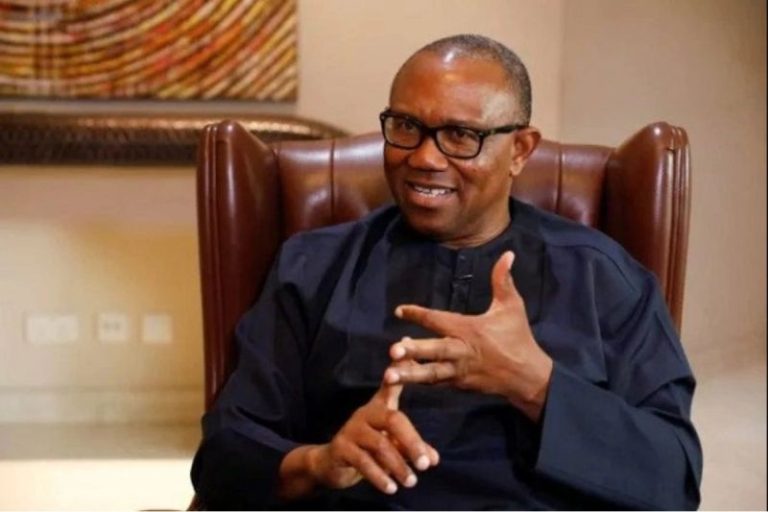
Peter Obi, the Labour Party’s (LP) 2023 presidential candidate, has expressed sorrow over the reported deaths of 162 people in the Kwara State communities of Woro and Nuku.

According to reports, Peter Obi said that these deaths constitute a significant failure for the nation in a message posted on his 𝕏 Twitter headlined “Killings in Kwara: We Must Act Now.”

Peter Obi urged for the appropriate authorities to move quickly to restore peace and bring the offenders to justice, while also offering his sympathies to the impacted communities and their families.

“I am deeply saddened by the recent attacks in Kwara State, where gunmen allegedly killed about 150 people in villages including Woro and Nuku,” he said. Every loss of innocent life is heartbreaking, and these murders constitute a serious national failing. The families of the victims, the impacted communities, the Kwara State administration, and the people themselves have my deepest sympathies.

“These frequent acts of violence throughout our nation, which are now worse than what happens in certain warring nations, highlight the urgent necessity for us as a nation to declare war on insecurity of life and property and to use every resource at our disposal to put an end to this scourge.

“Therefore, I urge the appropriate authorities to take immediate action to restore peace, prosecute those responsible, and reassure the people of Kwara State and all Nigerians that their lives are important and need to be protected.”

Electoral Act Amendment: Reps Establish Conference Committee for Harmonisation

0

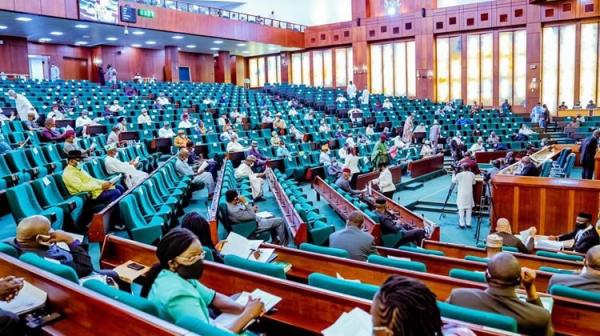
In order to reconcile the differences between the versions of the Electoral Act (Amendment) Bill that were approved by both chambers of the National Assembly, the House of Representatives established a bipartisan conference committee.

Akin Rotimi, the House spokesperson, revealed the development in a statement on Thursday morning, according to Daily Trust.

Rotimi clarified that, in accordance with a directive from the Green Chamber leadership, the decision was conveyed via an internal letter from Dr. Yahaya Danzaria, the Clerk of the House of Representatives.

The announcement states that Representative Adebayo Balogun, the Chairman of the House Committee on Electoral Matters, is in charge of the committee.

The panel also includes representatives. Fred Agbedi, Dr. Zainab Gimba, Iduma Igariwey Enwo, Saidu Musa Abdullahi, Ahmadu Jaha, and Sada Soli.

The task assigned to the conference committee is to work with its Senate equivalent to resolve discrepancies in the Electoral Act (Amendment) Bill’s provisions.

The House claims that the goal of the exercise is to create a unified version of the measure for the National Assembly’s final approval.

The statement stated, “The conference committee is required to work with its Senate counterpart to reconcile the disparate provisions in the Electoral Act (Amendment) Bill, with a view to producing a harmonized version for final passage by the National Assembly.”

In order to improve transparency, credibility, and public trust in Nigeria’s democratic process, the House of Representatives reaffirmed its commitment to implementing electoral reforms.

The legislators said the action demonstrates the National Assembly’s resolve to strengthen the laws governing the nation’s elections.

It was understood that in order to collaborate with the House on harmonizing the measure, the Senate had already established its own conference committee.

Simon Bako Lalong was named the Senate committee’s chairman by Senate President Godswill Akpabio on Wednesday.

Senators Niyi Adegbonmire, Mohammed Tahir Monguno, Adamu Aliero, Orji Uzor Kalu, Abba Moro, Asuquo Ekpenyong, Aminu Abbas, and Tokunbo Abiru are among the other members.

It is anticipated that the combined efforts of both chambers will expedite the legislative process and guarantee the creation of a single change to the Electoral Act that represents the National Assembly’s consensus.

Hashim-Olawepo: Ten years under APC is disaster

0

According to Gbenga Hashim-Olawepo, a former presidential candidate, the economic situation in Nigeria during the ten years of the All Progressives Congress (APC)-led Federal Government was disastrous.

Chieftain of the Peoples Democratic Party, or PDP, Hashim-Olawepo made this statement on Wednesday in an interview with Channels Television’s “Politics Today” show.

He claims that twenty years ago, when former President Olusegun Obasanjo was stepping down, Nigeria’s GDP was higher than it is now.

The lawmaker said that at the time former President Goodluck Jonathan handed over power to APC’s Muhammadu Buhari, Nigeria’s economy was the largest in Africa. However, he called the current state of affairs as a catastrophe, claiming that it was only in fourth or fifth place.

Nigeria’s current GDP ranges between 220 billion to 230 billion. The IMF/World Bank forecast and the International Monetary Fund both support this.

Nigeria’s GDP was 268 billion when former President Olusegun Obasanjo left office in 2007, which is more than it is currently.

“Under the APC, this catastrophe occurred. Nigeria’s GDP has increased to 574 billion when Goodluck Jonathan relinquished power, making us the continent’s largest economy. We are on the fourth day of the fifth.

He declared, “What has happened to the economy in the ten years of APC government is a disaster and tragic.”

PETROAN Warns Ojulari Over Failure to Restart Port Harcourt Refinery

0

The Nigerian National Petroleum Company (NNPC) Limited’s GCEO, Bayo Ojulari, has come under fire from the Petroleum Products Retail Outlets Owners Association of Nigeria (PETROAN) over remarks he made regarding the Port Harcourt refinery.

According to reports, Ojulari had previously asserted that the Port Harcourt plant was suffering enormous losses, which prompted the shutdown of the establishment.

As state-owned refineries were shut down, Ojulari urged Nigerians to give thanks to God for the Dangote refinery, stating that it gave them a “breathing space.”

However, Joseph Obele, the national public relations officer (PRO) of PETROAN, requested in a statement on Wednesday that the NNPC executive refrain from praising the Dangote refinery based on the state-owned asset’s failure.

He criticized Ojulari’s position that the Dangote refinery’s success should be the only reason Nigerians should be “thankful.”

He stated that private investment cannot take the place of the government’s constitutional and financial duty to effectively manage public assets, notwithstanding the strategic significance and admirable accomplishment of the privately held refinery.

Profit and efficiency are the driving forces behind Dangote Refinery’s private investment. In contrast, Nigerians have access to national assets held in trust by NNPC. Obele stated that one cannot be used as a justification for the other’s shortcomings.

He cautioned that the NNPC leadership’s frequent public confessions of ineptitude might damage Nigeria’s energy security framework, diminish investor confidence, and jeopardize years of policy initiatives focused on job creation, price stability, and local refining.

The NNPC GCEO was urged by Obele to realize that his role was to address issues, “not to retreat behind the success of a private refinery.”

Since Dangote is already supplying Nigeria’s fuel needs, he called the claim that there is no hurry to reopen the Port Harcourt Refinery “most worrisome.”

According to Obele, “such a statement is annoying, unacceptable, and indicative of leadership that is not solution-centric.”

According to the PETROAN PRO, Nigeria cannot keep normalizing institutional failure, waste, and the retrospective defense of bad choices.

He emphasized that acknowledging failure is only significant if it is accompanied by responsibility, changes, and a convincing strategy to stop it from happening again.

Obele added that in order “to demand the removal of the NNPC GCEO should the Port Harcourt Refinery fail to resume operations on or before 1 March 2026,” he will work with civil society organizations and pertinent stakeholders to investigate legal possibilities.

He cautioned that if the massive sums already spent on rehabilitation are not immediately addressed, further downtime may result in rust, corrosion, and equipment failure, making the entire refurbishment attempt pointless.

ADC Knocks Senate, Calls Electoral Act Changes APC’s “Rigging Blueprint”

0

The African Democratic Congress (ADC) has denounced the APC-led 10th Senate’s decision to reject important changes to the Electoral Act that would have increased the Independent National Electoral Commission’s (INEC) effectiveness and the legitimacy of upcoming elections.

Bolaji Abdullahi, the party’s publicity secretary, described the action as an intentional attempt to weaken Nigeria’s democracy.

It notably criticizes the Senate for ruling against provisions for the electronic download of voter cards and for refusing to authorize the electronic communication of election results.

Additionally, the ADC denounces the decision to dramatically shorten the deadlines for publishing the list of candidates and to cut election notice periods.

The ruling party’s fear of free and fair elections in 2027, despite its current political dominance, is revealed by these tactics, the ADC claims.

Consequently, the party urges the Conference Committee on the Electoral Act to reverse the Senate’s ruling and enact changes that represent democratic values and the Nigerian people’s desire.

“The 10th APC-led Senate’s decision to reject important provisions that would have strengthened the credibility, transparency, and integrity of Nigeria’s electoral process is strongly condemned by the African Democratic Congress (ADC),” the complete statement says.

“The most important of them is the denial of the electronic transmission of election results, which obviously indicates another attempt by the APC to subvert the will of the Nigerian people and rig future elections.

Additionally, the Senate voted against important measures that would have cut the notice period for elections, allowed voter cards to be downloaded electronically from the INEC website, and decreased the time frame for candidate publication from 150 days to 60 days.

The goal of these proposed measures was to restore voter trust in the electoral process and to provide the essential protections against electoral fraud. Rather, by altering the law in a way that increases the likelihood of election tampering and places significant logistical burdens on INEC, the Senate has decided to further reduce the effectiveness of future elections.

As a result of this shameful move, the APC has manipulated the law and created the conditions for widespread election malpractice by taking use of its majority in the National Assembly.

Nigerians are fully aware that the APC is terrified of holding free and fair elections because to the unprecedented suffering it has caused regular people. But few anticipated that the party would go so far in dismantling the country’s electoral regulations.

“The APC has shown that it lacks confidence and is determined to hold onto power by whatever means, including meddling with legislation, by rejecting important measures intended to improve the holding of elections.

“All well-meaning Nigerians must hold the APC responsible for its activities that continue to undermine democracy and destroy public confidence in the electoral system at this crucial juncture.

The ADC, the country’s main opposition party, strongly denounces the Nigerian Senate’s retrogressive move and urges all Nigerians to reject it.

“We also urge the Conference Committee on the Electoral Act to reject the Senate’s proposal and approve changes that are consistent with democratic ideals and accurately represent the goals and desires of the Nigerian people.”