Home Blog Page 30

Military Wage Bill Hits N924bn as Tinubu Approves New Salary Increase

0

President Bola Tinubu has approved an upward review of salaries of about 250,000 personnel of the Armed Forces, increasing the military’s annual wage bill from N660bn to N924bn in what is the biggest upward review of military salaries under his administration.

Under the new pay structure, which takes effect from September 1, 2026, the highest increases are for junior personnel, with soldiers from the rank of private to staff sergeant getting an 80 per cent salary increase, warrant officers to colonels getting 50 per cent, and brigadier-generals to generals earning 30 per cent more.

The Presidency on Tuesday announced the package, saying the review was in recognition of the sacrifices the military personnel continue to make in the fight against terrorism, banditry and kidnapping, adding that the administration would continue to prioritise the welfare of troops and modernise the Armed Forces with advanced weapons and technology.

The announcement was widely welcomed by retired senior military officers who said the pay increase was a big morale booster that could enhance troop commitment, recruitment and operational effectiveness. They however, called on the Federal Government to ensure swift implementation and compliment the salary review with modern weapons, improved logistics, accommodation, healthcare and other welfare packages.

The development was also welcomed by the serving military personnel but said they would reserve their judgment until the new salaries are reflected in their bank accounts and stressed that the real test for the government’s commitment to the troop welfare would be how effectively the new salaries are implemented.

The graduated structure of the increase scaled inversely with rank, with the highest percentage increases going to the most junior personnel, Bayo Onanuga, Special Adviser to the President on Information and Strategy, said in a statement on Tuesday.

The pay package will increase the annual salary bill for the armed forces from N660bn to N924bn, an increase of N264 billion.

The pay rise was linked directly to the sacrifices personnel continue to make in the fight against banditry, kidnapping and terrorism across parts of the country, the President said.

He said: “The men and women who help to keep us safe in our homes must be supported and appreciated in the course of their duties to our nation.

“Troop welfare and military modernisation will continue to be a standing priority of my administration,” Tinubu said.

“Our administration will continue to give priority to the welfare of the troops and modernise the armed forces by giving them the weapons and technological tools needed to discharge their duties,” he stated.

The salary increase is linked to the wider philosophy Tinubu has on national security, he argued.

“We believe that no nation can achieve greatness without security,” he said. “Our administration has taken the position that security is the foundation upon which greatness is built. We remain resolute in deploying all military and law enforcement assets to eliminate security threats and protect the lives and property of all Nigerians.”

He told the benefiting personnel, “I call on our servicemen to see our gesture as a sign of our deep appreciation of the services they render to our fatherland.”

We shall together overcome the enemies determined to destroy the fabric of our nation,” the President added.

The pay hike, the biggest upward adjustment to military pay under the current administration, comes only two weeks after Tinubu restructured the Nigerian Army into four additional divisions designed to boost response times to regional security threats.

Military morale lifter

The Minister of Defence, Gen. Christopher Musa (retd.) commended the President for approving a new salary structure for members of the Armed Forces, saying the move was a major boost to troop’s welfare and operational effectiveness.

Musa said in a statement on Tuesday by his Special Assistant on Media, Leah Katung-Babatunde, that the approval was a reflection of Tinubu’s commitment to improving the welfare of military personnel and strengthening Nigeria’s security architecture, adding that the new package would increase the annual personnel cost of the Armed Forces from N660bn to N924bn.

Musa said: “Once again, the President has shown strong leadership and empathy for the brave men and women who risk their lives every day to preserve the peace and the territorial integrity of our nation.

He said the review of the salary would help to alleviate the financial pressures on troops and boost the morale of personnel deployed in various theatres of operation including the North-East where they are battling insurgency and other areas affected by banditry, kidnapping and crude oil theft.

Musa told the President that the military would respond to the gesture by showing more commitment, discipline and better operational performance.

He urged officers and soldiers to see the improved remuneration as a renewed call to duty, urging them to redouble efforts to address security threats, protect lives and restore stability across the country.

The minister also reiterated the Defence Ministry’s commitment to ongoing efforts to modernise military equipment, strengthen technological capabilities and improve the welfare of personnel and their families.

Former military chiefs respond

Retired senior military officers have lauded President Bola Tinubu’s approval of a 30 to 80 per cent salary increase for Armed Forces personnel, terming it a major morale booster while urging the Federal Government to complement the package with better equipment, logistics and improved welfare.

Retired Brig. Gen. Sani Usman, a former Director of Army Public Relations, said the decision was timely, adding that no amount of money could be enough for the soldiers in the course of defending the country.

He said military personnel deserve to be among best-paid public servants because of the hazardous nature of their duties and the sacrifices they make in combating insurgency, terrorism and other security threats.

“The question is not whether it is sufficient or not. How much do you think you can pay a soldier to be sufficient? I don’t think you can measure the sacrifices or the life of a soldier. Due to the nature of their work and the sacrifices they make, soldiers are supposed to be among the best-paid public servants in Nigeria.

“If you consider their participation in counter-insurgency, counter-terrorism and other internal security operations and the level of deprivation they go through, you will know why. This move really merits commendation to the President. “An 80 per cent increment will go a long way especially considering the inflationary trend in the country,” he said.

Usman said the approval was a demonstration that the government was living up to its promises with action, adding that the Minister of Defence had earlier alluded to an upward salary review.

This was hinted at some time ago by the Minister of Defence and it is good that actions are now matching words. “It provides a sense of belonging to the troops and that the government is listening and responding to their welfare concerns,” he said.

Retired Commodore Omatseye Nesiama described the salary increase as a welcome development, stating that the development would help bridge existing disparities in military remuneration.

However, he stressed that further adjustments were needed to bridge gaps across the various ranks, especially among senior officers.

“It is a welcome development. There is a great need for a bridging strategy. However, on closer scrutiny, there has always been a disproportionate gap even between the ranks of senior officers and that also needs to be addressed. The increase should be extended to all security agencies in the country in my opinion, because they are all exposed to the same risks in terms of security and economic challenges,” he said.

Also reacting, retired Brig. Gen. Bashir Adewinbi said the salary increase would boost troop morale significantly, improve commitment and make military service more attractive to young Nigerians.

“It will boost the confidence of the beneficiaries. Soldiers will be encouraged to do more, put in their best and remain committed to whatever assignments they are given. . It will also encourage able-bodied Nigerians who are still undecided on joining the military because we need more recruits.

“This is a good development and we must commend President Bola Tinubu for the political will to do this. But this is a good beginning, even if the demand for money is insatiable and inflation has reduced the purchasing power of salaries. It shows that the President has goodwill to members of the Armed Forces.”

However, Adewinbi stressed that higher salaries alone would not solve the military’s operational challenges and urged the government to provide modern weapons, improved accommodation, quality uniforms and adequate logistics.

“The government should not stop on salaries. The troops need more protection and technology to aid their operations. “They require sophisticated weapons, accommodation, uniforms and the logistics to carry out their duties effectively,” he said.

But retired Brig. Gen. George Emdin warned that welfare improvements have often been announced in the past but the implementation has been poor.

“This is not a new phenomenon. It’s been said for a long time. There’s no money in it.

“Until we see how it is implemented, you cannot say much.” “Of course it will boost morale and earning power, which we like, but the problem has always been implementation,” he said.

Retired Rear Admiral Othiniel Filafa also noted that increased salaries, a strong political will and the effective deployment of military equipment were all crucial for improving the operational effectiveness of the Armed Forces.

Filafa said in speaking to one of our correspondents that decisions made at the strategic level had a direct impact on how troops performed on the battlefield.

The pay raise is warranted. Most of the problems faced by troops are the consequence of political will of those who are making decisions at the strategic level. No matter what happens there, it ends up filtering down to personnel on the field.

As regards to equipment, particularly in the Air Force, the Federal Government has made laudable efforts in acquiring platforms to sustain combat operations. But commanders must make sure the equipment that is provided is used properly.

“The salary increase is crucial because it will raise troop morale, reduce resignations and improve combat effectiveness.”

Also reacting, the Special Adviser to the Sokoto State Governor on Security Matters, retired Col. Ahmed Usman, praised President Bola Tinubu for approving the salary review, describing it as a significant step towards strengthening Nigeria’s security architecture.

In a statement, Usman said the improved welfare package will boost the morale, commitment and operational effectiveness of military personnel who continue to make enormous sacrifices to protect lives and property across the country.

He said that security personnel often work under difficult and life-threatening conditions and that improving their welfare was not only a recognition of their patriotism but also a strategic investment in national peace and stability.

He said that a well-motivated security workforce is critical to effective intelligence gathering, prompt response to emerging threats and sustained operations against banditry, terrorism, kidnapping and other criminal activities.

We commend President Bola Ahmed Tinubu for his decision to improve the salaries and welfare of our security personnel. It will certainly inspire greater dedication, professionalism and commitment among those in charge of safeguarding our nation,” he said.

However, Usman stressed that the country’s security challenges would not be solved by improved remuneration alone, urging the Federal Government to complement the salary review with modern operational equipment, continuous training and retraining, comprehensive insurance, quality healthcare and decent housing for military personnel and their families.

He also called on security personnel to justify the government’s confidence by maintaining discipline, professionalism, integrity and respect for human rights in the discharge of their duties.

The retired military officer also urged Nigerians to support security agencies by giving timely and credible intelligence, saying community engagement is indispensable in tackling insecurity.

He reiterated the commitment of the Sokoto State Government to supporting security agencies with sustained collaboration with federal security institutions to protect lives, secure communities and restore lasting peace.

“Security is a shared responsibility. Government will continue to provide the necessary leadership and support, but citizens also have a vital role to play by cooperating with security agencies. “Together we can build a safer Sokoto State and a more secure Nigeria,” he said.

Personnel serving respond

Serving military personnel have welcomed President Bola Tinubu’s approval of a new salary structure for members of the Armed Forces, but said they would withhold celebrations until the increases are reflected in their bank accounts.

A military officer who spoke on condition of anonymity because he was not authorised to comment publicly, said the salary review was a step in the right direction and could improve recruitment by making military service more attractive to young Nigerians.

“We’re not celebrating until it starts coming in. “Of course it is the right move. Poor welfare has been affecting recruitment. This is a good start but the government can do better, especially for junior officers and soldiers because of the present economic situation. “Better welfare will make military service more rewarding and will encourage more Nigerians to serve,” he added.

The salary increase of 50 per cent, for another serving senior officer, will increase his monthly salary from ₦362,405.67 to ₦543,608.51, according to a breakdown he shared on how it would affect his earnings.

The increment adds ₦181,202.84 to his current salary, which will be ₦543,608.51 per month, according to the calculation.

Read Also: Actress Temitope Osoba Passes Away After Long Fight Against Cancer

“$362,405.67 divided by two is $181,202.83. My present salary is ₦543,608.51. “It does not compare with what many of my contemporaries outside the military earn. But we thank the President,” he said.

Another serving crew member said the announcement was encouraging but stressed that implementation was the real test.

“It’s good news, but there is no reason to celebrate yet. We can celebrate when the money hits our bank accounts. Fingers-crossed, for the time being.”

A third soldier welcomed the salary increase but doubted it would be enough to offset the country’s economic problems.

I thank the President for the increment but with the current economic situation, I doubt if it will make much difference. Hopefully, this will be the start of better welfare for the troops. We put our lives on the line to protect this country and we deserve better.”

The latest salary review comes amid growing calls to improve welfare for military personnel.

Recently, The PUNCH exclusively reported that retired military personnel gave the Chief of Defence Staff, Gen. Christopher Musa a seven-day ultimatum to facilitate an increase in soldiers’ salaries to at least ₦250,000.

The demand came after an earlier disclosure by the Minister of Defence, Mohammed Badaru, that the monthly salary of the lowest-ranked soldier was increased from ₦50,000 to ₦100,000.

The Presidency announced a new salary structure under which the Armed Forces annual wage bill will increase from ₦660bn to ₦924bn, an additional ₦264bn.

President Tinubu said the pay rise was in recognition of the sacrifices troops continue to make in the fight against terrorism, banditry and kidnapping. He said his administration would continue to prioritise troop welfare while equipping the Armed Forces with modern weapons and technology to tackle emerging security threats.

Senators praise Tinubu

The Chairman of the Northern Senators Forum, Senator Abdulaziz Yar’Adua, and Chairman of the Senate Committee on Defence, Senator Ahmad Lawan, have commended President Bola Tinubu’s approval of a 30 to 80 per cent salary increase for Armed Forces personnel, describing it as a timely intervention that would boost troop morale.

The lawmakers said the new pay structure would boost the commitment of military personnel involved in operations against terrorism, banditry, kidnapping and other security threats.

In a statement on Tuesday, Yar’Adua thanked the President for acknowledging the sacrifices of troops, saying the increase that would affect some 250,000 personnel from September 1, 2026, was an indication of the administration’s dedication to troop welfare.

He said the increase in the military’s annual personnel wage bill from N660bn to N924bn showed the government’s resolve to improve the welfare and modernisation of the Armed Forces.

The senator, who chairs the Senate Committee on Army, linked the salary review to recent moves to expand Army divisions, saying both would enhance operational effectiveness and national security.

He added that Senate would continue to work with the executive to ensure full implementation of the package, better equipment and better condition of service for personnel.

Lawan also reacted, describing the salary review as a “compassionate and strategic intervention” which showed the government’s commitment to the welfare of troops.

The former Senate President said the phased increase was fair because it gave more incentives to junior personnel who bear much of the burden of frontline operations.

However, he called on the Armed Forces to respond to the gesture through professionalism, operational efficiency and better synergy between the Army, Navy and Air Force.

Lawan said that while more funding and welfare should be provided to security services, it should be matched with more coordination and intelligence sharing among them to effectively address the country’s security challenges.

Actress Temitope Osoba Passes Away After Long Fight Against Cancer

0

Nollywood actress, Temitope Osoba has died after a long battle with cancer.

Osoba’s passing is less than two years after she asked for financial help for her second surgery in November 2024, it was reported.

On Wednesday, Nollywood actor, Alesh Ola Sanni, announced the sad news in a post via his Instagram page that Temitope passed away on Tuesday evening.

He wrote, “Couldn’t sleep since last night it’s well rest in peace my dearest sister Temitope Osoba we had amazing time and good memories together till we meet again. mehn gosh I really dunno what to say.

Recall that Temitope Osoba had opened up about how cancer almost stopped her from getting pregnant.

Read Also: WAEC Withholds 167,486 WASSCE Results Over Alleged Examination Malpractice

The thespian revealed in an interview on Oyinmomo TV that she had to go through series of tests to confirm that the cancer had not spread.

Temitope said the doctors had told her she would not be able to conceive for the next five years because of the medications as it would affect the baby.

But she said she dismissed the report, held on to her faith and began to pray and fast over the matter.

“They told me I had cancer and I would have to go back to see how far it had gone,” she said. The doctors also told me I wouldn’t be able to get pregnant for the next 5 years because of the medications I’d be on, since they could impact the baby.

WAEC Withholds 167,486 WASSCE Results Over Alleged Examination Malpractice

0

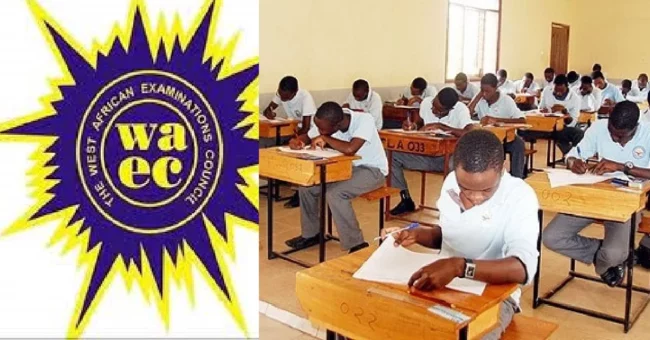
The West African Examinations Council has withheld the results of 167,486 candidates, representing 8.59 per cent of those who sat for the 2026 Computer-Based West African Senior School Certificate Examination for School candidates, over alleged examination malpractice.

But the figure is down from the 9.7 per cent recorded in 2025.

The Head of WAEC Nigeria National Office, Dr Amos Dangut disclosed this while announcing the release of the results in Lagos on Wednesday.

Dangut said the council held back the results of those affected because of a number of infractions, including the escalating use of mobile phones in examination halls despite the ban in place and organised cheating in some schools.

The increasing use of cell phones in the examination hall in spite of the existing ban and organised cheating in some schools are other nagging issues, Dangut said.

He added that some supervisors and invigilators found to have assisted candidates in malpractice had been arrested and would face disciplinary action through the relevant state ministries of education.

Performance decomposition

A total of 1,959,668 candidates registered for the examination across Nigeria, Benin Republic, Côte d’Ivoire and Equatorial Guinea in 24,207 schools, while 1,950,726 candidates eventually sat for the examination.

Of the candidates who sat the examination:

1,200,514 candidates (61.54 percent) secured credits and above in at least five subjects including English Language and Mathematics.

A total of 1,687,378 candidates representing 86.50 per cent obtained credits and above in at least five subjects with or without the English Language and Mathematics.

The percentage of candidates who gained credits in five subjects including English and Mathematics fell by 1.42 percentage points when compared with the 2025 examination.

Of the 1.2 million candidates who obtained credits in English and Mathematics:

558,883 (28.65 per cent) were males.

The female population was 641,631 (32.89 per cent).

A total of 997,267 females (51.12 per cent) and 953,459 males (48.88 per cent) took the examination.

Read Also: Fresh N400 Million Bribery Allegation Emerges in PFIPC Investigation

WAEC said the results of 1,834,695 candidates representing 94.05 per cent had been fully processed and released, while results of 116,031 candidates representing 5.95 per cent were still being processed.

The council also revealed that 1,213 special needs candidates took part in the examination. They were:

– 137 visually impaired candidates;

491 candidates with hearing impairment.

55 spastic and mentally challenged candidates;

41 candidates with physical disabilities.

The 2026 examination was the second edition of the Computer-Based WASSCE for School Candidates having been introduced by WAEC.

Dangut said the council rolled out several innovations, including the Digital Examiner Mark System to improve the speed of processing results, serialisation of question papers to curb malpractice and a new portal that allows candidates to generate e-PINs directly for checking their results.

The exam took place between 24 April and 19 June 2026 with 102,708 examiners marking in 88 marking venues.

Dangut, who described the briefing as his third and last engagement as WAEC Nigeria National Office head, said candidates sponsored by states owing the council would not have their results released until the outstanding payments were cleared.

Fresh N400 Million Bribery Allegation Emerges in PFIPC Investigation

0

A new complaint of payment of ₦400 million for a purported government contract has been presented to the House of Representatives ad hoc committee investigating the activities of the Presidential Foreign Investment Promotion Council (PFIPC).

It was learnt that the Managing Director of Divine Dopacy Nigeria Limited, Collins Oyekunle, told the committee that he paid the money to the embattled former Director-General of the council, Mathew Adeyemi, as a condition for winning a N2bn contract.

Oyekunle made the allegation during a hearing of the House panel in an investigative session.

He said that the award of the contract was predicated on the payment of ₦400m.

The businessman said the transaction was the result of several meetings with Adeyemi and some of his associates.

Oyekunle said he told lawmakers he did not pay the full amount from his personal funds.

He said the money was collected from colleagues and other friends and then transferred in batches in 2025.

He said the payments were made into different corporate bank accounts allegedly provided for the transaction.

Committee members asked why such a large sum was moved into accounts that had not been independently verified as belonging to a recognized government institution.

The lawmakers also wanted to know if Oyekunle had carried out due diligence before making the payments.

The panel said it would review relevant bank records, communications and other documents related to the alleged transaction.

The committee promised to invite all persons and organisations concerned with the allegations to further clarify.

The claims will be part of its comprehensive investigation into alleged forgery, impersonation, financial impropriety and the use of government institutions by the disputed council.

Adeyemi remains in police custody over charges relating to the alleged agency.

He and his lawyers have previously looked to testify before the committee.

Lagos Ports Prepare for Arrival of 39 Vessels Carrying Petrol, Food and General Cargo

0

No fewer than 39 ships laden with petroleum products, food items, containers and other essential cargoes are expected to berth at Lagos ports between August 3 and August 8, the Nigerian Ports Authority (NPA) has said, in a development that signals sustained import and commercial activities across the country’s busiest maritime gateways.

Apapa Port, Lekki Deep Sea Port and Tin Can Island Port are the scheduled berths for the vessels, according to the Daily Shipping Position of the NPA released on Monday.

Of the expected vessels, 11 will be container ships carrying a wide array of imported goods for manufacturers, businesses and consumers across the country, the authority said. The other 28 vessels are carrying bulk cargoes including petrol, crude oil, diesel, urea and other industrial commodities.

Other imports expected during the period include bulk wheat, bulk sugar, gypsum, cooking gas, repair materials and pallets, which are vital raw materials for Nigeria’s manufacturing, construction, agriculture and energy sectors.

Read Also: Adaobi Nnani Stands at the Heart of Russia’s Denied Allegations

“The vessels are expected to arrive Apapa, Lekki Deep Sea Port and Tincan Island Port between 3rd and 8th of August,” NPA said.

s The authority disclosed that 10 vessels had already arrived within the Lagos harbour but were waiting for berthing clearance. These ships are carrying petrol, wheat, fertiliser, crude oil, containers and general cargo.

Meanwhile, cargo-handling activities are still busy across the ports with 21 vessels presently discharging consignments at Apapa, Lekki Deep Sea Port and Tin Can Island Port.

The cargoes being discharged include containers, petrol, crude oil, base oil, bulk wheat, sugar, pallets and other general cargoes for industries, marketers and businesses across Nigeria.

The constant flow of vessels highlights the strategic role of Lagos ports to Nigeria’s economy as the country’s main entry point for imports of not only petroleum products, but food supplies, industrial raw materials and manufactured goods as well.

Industry stakeholders say efficient vessel turnaround and faster cargo clearance will be key in reducing port congestion, lowering logistics costs and ensuring the uninterrupted supply of essential commodities to businesses and consumers across the country.

Adaobi Nnani Stands at the Heart of Russia’s Denied Allegations

0

Adaobi Nnani was a bombing survivor. She did not make it through the war. That’s the simple truth of it and all the rest is the world trying to explain how something so simple can be so cruel.

What occurred in Kharkiv on June 29 was one guided bomb, dropped on the Kholodnohirskyi district, the type of attack that has become so common in Kharkiv that it no longer even makes national news. No trick was needed that afternoon, no confusion to create, One bomb did it.
Nnani Adaobi Marian, 23, was a Nigerian student in her final year at Kharkiv National Medical University. She was caught in the blast with her close friend, Fatima Huseynova, a 23-year-old student from Azerbaijan at the same school. Fatima was dead then and there. Adaobi did not die that day, but she was badly wounded and later had an amputation. According to reports, she lapsed into a coma that lasted five days. She would later be moved out of Ukraine, via Poland, to a hospital in Germany, the very country that had helped train her as a doctor. She lasted one more week before she died there on July 5, just eight days before she and Fatima were to walk across a stage and receive their medical degrees.

The Kharkiv Regional Prosecutor’s Office, which has now folded her case into its wider file on that day’s attacks, said doctors “fought for her life until the very end,” and expressed its condolences to her family. Kharkiv National Medical University issued its own statement entitled “In memory of Nnani Adaobi Marian.” ‘She was “seriously injured” in the shelling, doctors fought for her “first in Kharkiv, and later in Germany,” and although “everyone sympathised, helped, and hoped for her recovery,” in the end, “they could not save her life.”’ At least twelve other people were injured in that same wave of attacks, part of a larger assault that day across the Dnipropetrovsk, Zaporizhzhia and Kharkiv regions, fourteen people killed in total and close to a hundred wounded.

Even the most sincere official statement turns a person into a paragraph. Adaobi comes back into focus through a smaller, more human story from a charity worker who was at the same school that day, helping other students collect their diplomas. “I was in that their school that day to help some student collect their diploma as well, when I heard the air alarm, I ran outside,” she said. “I looked up to the sky, I saw the drones flying and later it changed direction towards the bus station. I heard the blast in 15 minutes. Ada and her friend were together, the friend died, Ada survived and was taken to the hospital. She went to see Adaobi in the hospital four times before she was transferred to Germany. Days before, no one knew how the story would end, that same woman had written online asking for people to pray: “On Saturday, our parishioner, Ada Nnani arrived from Germany for her graduation… today, she passed her final exam and at 3:30pm during the attack of the cabbies she was seriously injured… I am asking for a miracle of healing, health, and cure for Ada.
“It’s absolutely devastating to see this… RIP Ada.” Those were the simple words of Mohammed Yusuf Noori, a German national who studied with Adaobi in a language class. We lost someone who really cared about helping people.”

Nigeria’s Ministry of Foreign Affairs says it is now working with its missions in Kyiv and Berlin to piece together what happened and to support her family, while repeating a call it has made many times before, for the war to end, so it can stop losing citizens who have nothing to do with the fighting. It is a call the federal government keeps having to make about young Nigerians who leave home to study medicine, engineering or law and who sometimes only come back as names in a press statement.

Russia’s version of the story doesn’t leave room for any of that. The Russian Embassy in Nigeria responded to the reports by offering its “deepest and sincere condolences to the family and friends of Marian Nnani.” Then, it outright rejected any implication that Russian troops were involved in her death, stating “there is no confirmed information at the moment about whose actions really caused the death of the student,” and adding “the chaotic operation of the Ukrainian air defense is the primary cause of civil casualties.” It even went further: “Russian Armed Forces strike precisely at military purpose facilities of the Ukrainian regime and never attack civilians or social infrastructure.”

That denial is the part of the story that never really stays put. For years, Ukrainian officials have characterized Russia’s strikes on power stations, water systems and heating networks not as accidents but as a deliberate attempt to make ordinary life impossible. The 1948 UN Convention on the Prevention and Punishment of the Crime of Genocide, signed by 149 countries, requires its members to prevent and punish any deliberate attempt to destroy a group of people, in whole or in part, including by creating conditions designed to wipe them out slowly. Russia denies that this is what it is doing, and no international court has ruled on the question. But it is a question that returns again and again, name by name, and Adaobi’s name is one of those.

She was one test away from a medical degree she had spent six years earning, through a full-scale war, an amputation, and a coma, and in the end, she still didn’t get to keep it. The guided bombs and the embassy statements will continue, long after the headlines of this week will be forgotten. What Russia cannot explain away is simpler than any of that. Five days unconscious, one week dying, in the very country that had trained her to save lives she never got the chance to save.

Aviation Unions Warn of Picket Action Against Airlines Over Unsettled Ticket Charges

0

The Air Transport Services Senior Staff Association of Nigeria (ATSSSAN) and National Union of Air Transport Employees (NUATE) have threatened to shut down the operations of airlines that fail to remit ticket sales charge to key agencies, warning that picketing will start “any time from now” without any further notice.

This was made known by the aviation unions in a notice issued on Tuesday after the expiration of a 7-day ultimatum on Monday, August 3.

The ultimatum came after a previous 14-day notice issued to defaulting airlines over failure to remit the statutory 5% levy levied on passengers on behalf of aviation agencies.

The unions, in a statement jointly signed by ATSSSAN General Secretary, Comrade Frances Akinjole, and NUATE Deputy General Secretary, Comrade Odinaka Igbokwe, reiterated that the contentious ticket sales charge was meant for the smooth running of the Nigerian Civil Aviation Authority (NCAA), Nigerian Airspace Management Agency (NAMA), Nigerian Safety Investigation Bureau (NSIB), Nigerian College of Aviation Technology (NCAT) and the Nigerian Meteorological Agency (NiMet).

Read Also: Wike Recounts Tense Moment with Miscreants at Popular Abuja Eatery

“Because they are adamant to yield to our calls: It has become crystal clear that these airlines that collected this money from the passengers on behalf the aviation agencies have decided to siphon the fund to the detriment of our collective safety and well-being,” the notice partly reads.

The unions said “the pilfering airlines are un-fit to remain in our sky that is being serviced by genuine and patriotic efforts of other sincerely responsible operators in the industry.”

The unions cited safety and workers welfare in saying they “ have decided to stop the operations of the cancerous airlines in our airports any time from now without further notice.”

The notice was sent to the media, all defaulting airlines, Nigerian police divisions in all Nigerian airports, the Department of State Services (DSS) and the general public.

The ticket sales charge is a statutory fee paid by passengers and collected by airlines, and is expected to be remitted to aviation agencies to fund safety, navigation, training and regulatory services.

Wike Recounts Tense Moment with Miscreants at Popular Abuja Eatery

0

The Minister of the Federal Capital Territory (FCT), Nyesom Wike, has disclosed how miscreants maltreated him when he visited a restaurant in Abuja to eat.

The minister said the miscreants were expecting money from him.

Reports had it that Wike spoke at a media chat, responding to questions on how residents of FCT have rated him after the transformation of some parts of the city.

The immediate past governor of Rivers State said he went out without his security aides to eat in an undisclosed eatery but became uncomfortable when miscreants started gathering at the facility begging him for money.

“I went into the restaurant and about 50 people came to greet me, and I had to leave because I was uncomfortable,” he said.

“There was a day that I went to one of the restaurants to eat, and I didn’t go with bodyguards. When I got there I was met with over 50 people coming to greet me and I didn’t know what to do.

“I didn’t feel safe, of course you can’t interpret that as people liking you.

“I told the restaurant workers I’d come back, but I wasn’t comfortable at that point. “As soon as I stepped out, I saw some miscreants waiting for me to give them money,” he said.

Court Ends NDC Legal Battle Against Electoral Act Provisions

0

The Federal High Court, Abuja on Tuesday dismissed a suit filed by the National Democratic Congress (NDC) challenging the provisions of the Electoral Act 2026 on the qualification and disqualification of candidates for elective offices.

Justice Muhammed Umar, in his judgment, said the suit, marked FHC/ABJ/CS/635/2025, was without merit, ruling that the disputed provisions of the Electoral Act were complementary and not contradicting the 1999 Constitution.

It was learnt that the NDC had filed the action against the Attorney General of the Federation, the Clerk of the National Assembly, the President of the Senate, Godswill Akpabio and the Independent National Electoral Commission.

The party instituted a suit before the court seeking, amongst others, the declaration that Sections 138 and 77(5) of the Electoral Act 2026 were unconstitutional.

The plaintiff also asked the court to declare that questions about the qualification or disqualification of candidates could still be raised after an election.

However, Justice Umar over-ruled preliminary objections raised on the competence of the suit.

The judge ruled that, “the NDC is basically seeking an interpretation of the provisions of the Electoral Act vis-à-vis those of the 1999 Constitution.

“The plaintiff is invoking the interpretative jurisdiction of this honourable court in respect of the provisions of the Electoral Act 2026 on one hand and the 1999 Constitution on the contrary,” Justice Umar said.

The judge also dismissed the argument that the matter was a pre-election matter on the ground alone that the INEC election timetable was attached to the originating summons.

The court said that “the fact that the timetable of the defendant is attached cannot bring the case within the contemplation of Section 285… there is no deposition… which raises questions as to the timetable.”

Justice Umar, ruling on the preliminary objection filed by the Clerk of the National Assembly, held that the NDC failed to comply with the statutory requirement to serve a pre-action notice before filing the case.

The judge held that the suit against the Clerk was incompetent because of the lack of the requisite notice.

He then dismissed the case as against the second defendant.

The failure to serve the pre-action notice “renders this suit incompetent against the second defendant,” the judge said.

Read Also: JAMB Sets New Direction with Five-Pillar Digital Transformation Ag

On the substantive issues raised in the case, Justice Umar dismissed the NDC’s argument that Section 138 of the Electoral Act was inconsistent with constitutional provisions on the qualification and disqualification of candidates seeking elective offices.

The judge held that the Constitution provides the qualification and disqualification for elective offices, while the Electoral Act provides the procedure and the time within which to challenge issues arising from the primaries of political parties.

“Candidates could not wait until after an election to challenge the qualification of a person who came through a party primary,” he said.

“Any aggrieved party who intends to challenge any candidate that emerged at the primary election of a political party on grounds of disqualification… must do so at the pre-election level,” Justice Umar said.

The judge also ruled that Section 138 of the Electoral Act, as read together with other relevant law, did not violate the Constitution.

The provision of section 138 of the Electoral Act 2026 is complementary to the provision of the Constitution and not in conflict with it. “The contention of the plaintiff that Section 138 is inconsistent with the Constitution is of no merit,” he ruled.

Justice Umar also declined to declare Section 77(5) of the Electoral Act as invalid, saying that the matter had been considered and decided on by the Court of Appeal before.

The judge said the appellate court’s earlier decision still remained binding on the Federal High Court.

He pointed out the value of judicial precedent, noting that “generally, courts are bound by precedent.”

In effect, the Court upheld the contested provisions of the Electoral Act and re-asserted the position that disputes over the qualification or disqualification of candidates emanating from party primaries should be litigated within the prescribed pre-election period.

JAMB Sets New Direction with Five-Pillar Digital Transformation Ag

0

The new Registrar of the Joint Admissions and Matriculation Board, JAMB, Professor Segun Aina, has assumed duty as the head of the Board, promising to build on the achievements of the Board with an ambitious development agenda.

The agenda is meant to position JAMB as Africa’s most trusted, innovative and accessible assessment and admissions institution.

Professor Aina, who assumed duty on his first day in office, described the moment as a “homecoming and a solemn responsibility.”

He promised to build on the solid foundation laid by his predecessor, Prof. Is-haq Oloyede, through innovations, stronger institutional systems and renewed commitment to excellent service delivery.

The new Registrar, in a statement by JAMB’s Acting Director of Public Affairs, Dr Fabian Benjamin, presented his strategic blueprint tagged “JAMB 2031: Establishing Trust, Reducing Trauma.

He said the five-year development agenda (2026-2031) is built around Project 2:5:7, which consists of two strategic objectives, five enduring pillars and seven flagship initiatives, to transform the Board into a globally respected institution driven by technology, integrity and stakeholder confidence.

The agenda is based on JAMB’s statutory mandate to facilitate fair, transparent, credible, secure and equal access to tertiary education through registration, credible assessments and placement of qualified candidates on merit,” he said.

Prof. Aina reiterated his vision of transforming JAMB into Africa’s most trusted, innovative and accessible assessment and admissions body, stressing that the credibility of the Board would continue to reside in strong systems, institutional values and long-lasting partnerships, not in individuals.

Five pillars to drive the next stage
The Registrar said the agenda would be executed through five enduring pillars, each designed to strengthen the institution and enhance the experience of candidates and other stakeholders.

The first pillar, The Foundation, highlights the need to enhance institutional credibility by adhering to internationally recognised standards like ISO 27001 certification, conducting independent technology reviews, and implementing verifiable systems that ensure transparency, accountability and public trust.
The second pillar, Service – The Heart, focuses on transforming customer experience through responsive service delivery, transparent communication, proactive stakeholder engagement and continuous improvement at all points of interaction with candidates, parents, institutions and the public.
Under the third pillar, Governance – The Framework, the Board aims to strengthen institutional governance through enhanced performance monitoring, efficient contract management, operational resilience and improved internal accountability mechanisms to ensure programmes are delivered on time and in line with established standards.
The fourth pillar, Technology – The Enabler, underscores the essential function of innovation in the future of JAMB. The Board will grow and integrate its internal technology infrastructure by deploying scalable digital platforms to support mobile services, web applications, printing systems and sophisticated artificial intelligence and data analytics for decision-making and service delivery.

Read Also: Police Arrest Five Over Suspected Sale of Contaminated Meat in Borno

The fifth pillar, Partnerships – The Multiplier, recognises that institutional success is a collaborative effort and aims to deepen engagement with financial institutions, including fintech companies, educational organisations and international partners to support innovation, improve service delivery and expand opportunities for stakeholders.
Seven Key Projects
To translate the agenda into tangible results, Prof. Aina announced seven flagship initiatives to be undertaken in the next five years.These include; a holistic independent technology review of JAMB’s infrastructure; attainment of ISO 27001 Information Security Certification; development of a single JAMB mobile app; strategic communication and brand repositioning; establishment of a single customer service platform; implementation of a paperless, enterprise-wide digital administration system; and improved staff welfare and capacity development.

The Registrar said the initiatives were aimed at making JAMB more responsive, digitally integrated, secure and efficient as well as improving public confidence in the operations of the Board.

Leadership That is People-Centred
Prof. Aina said that while technology would be the engine of JAMB’s transformation, people would remain its greatest asset.

He said that every registration represents the aspirations of a young Nigerian and the sacrifices of parents and guardians, assuring candidates and stakeholders that his administration will continue to simplify processes, improve communication, and ensure that fairness, transparency, and integrity remain the hallmarks of the Board.

He also called on staff to foster innovation, professionalism and teamwork, saying institutions become great when their people are bonded together by shared values and common purpose.

As JAMB embarks on this new chapter, Prof. Aina re-emphasized his resolve to build stronger systems that would outlive individuals, deepen public trust and make the Board a global benchmark for technology-driven examination and admissions administration.