Home Blog

Minister Seeks Greater Media Engagement on National Budget

0

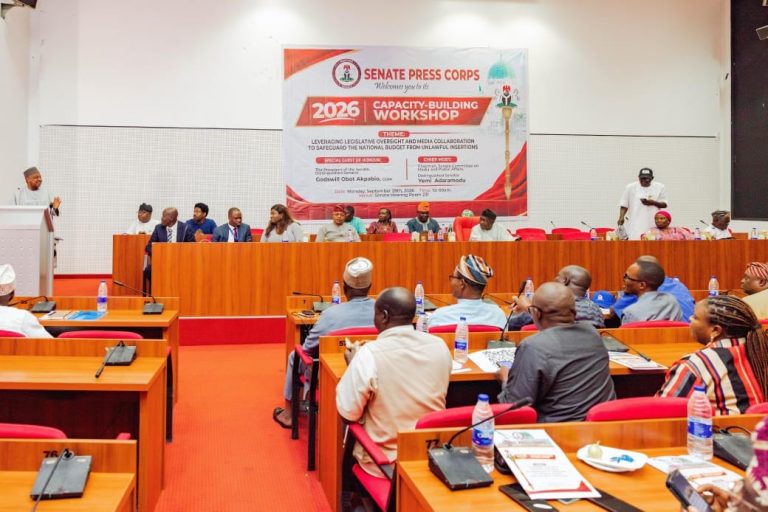
The Minister of Budget and Economic Planning, Senator Abubakar Bagudu, has urged journalists to thoroughly investigate alleged unlawful budget insertions before reaching conclusions about the provisions contained in Nigeria’s national budget.

Bagudu spoke at the Senate Press Corps Capacity-Building Workshop, organised around the theme, “Leveraging Legislative Oversight and Media Collaboration to Safeguard the National Budget from Unlawful Insertion.”

The minister said the media has an important responsibility to scrutinise the budget and ensure that public officials are held accountable. However, he cautioned that responsible scrutiny must be based on adequate information and an understanding of the circumstances surrounding individual allocations.

According to Bagudu, journalists should investigate the origin of a budget provision, its purpose and its intended beneficiaries before describing it as unlawful or irregular.

He argued that some provisions could appear unusual when viewed outside their local or developmental context.

The minister cited water infrastructure in underserved communities and equipment for fishing communities as examples of allocations that could be misunderstood if journalists did not investigate the specific needs they were designed to address.

Bagudu stressed that the need for context should not be interpreted as an argument against scrutiny.

Rather, he said vigilance remained necessary because budget preparation and implementation involved human processes in which errors could occur.

He therefore called on both the media and legislative oversight bodies to remain vigilant throughout the budget cycle.

The minister also encouraged journalists to broaden their coverage of the national budget by explaining the constitutional processes involved in its preparation, consideration and approval.

He said Nigerians need to understand not only what is contained in the budget but also why government and lawmakers make particular fiscal choices.

Bagudu said the national budget conversation should begin with a fundamental question about what the budget should look like in relation to Nigeria’s population and development requirements.

He noted that the country has limited fiscal space and significant demands for infrastructure, education, healthcare, security and human development.

This, he said, makes it necessary for Nigerians to engage more seriously with the question of how government can mobilise additional resources.

Bagudu connected the issue to the Renewed Hope Agenda of President Bola Tinubu and Agenda 2050, as well as the administration’s ambition to build a $1 trillion economy.

He said achieving such an ambition would require difficult decisions about revenue mobilisation, public expenditure and borrowing.

The minister also highlighted the importance of public confidence in fiscal policy.

He said citizens’ understanding and support would be important to the ability of the executive and National Assembly to take major decisions affecting revenue and expenditure.

Bagudu further urged the media to explain the National Assembly’s constitutional role in the budget process and the relationship between lawmakers and the executive.

On budget transparency, he called for balance where the disclosure of certain information could affect national security or strategic interests.

He also challenged the view that capital expenditure was always more important than recurrent spending.

According to him, expenditure on security, education, healthcare, human capital and public-sector personnel can produce direct developmental benefits.

He added that meeting debt-service obligations was also important because failure to do so could affect borrowing costs and private-sector operators.

Bagudu ultimately urged journalists to maintain rigorous oversight while keeping Nigeria’s wider development needs in view.

He said the media could contribute to economic transformation by helping citizens understand difficult fiscal choices and ensuring that budget discussions remain informed and focused on the country’s development objectives.

INEC Urges Staff to Remain Neutral Ahead of 2027 Elections

0

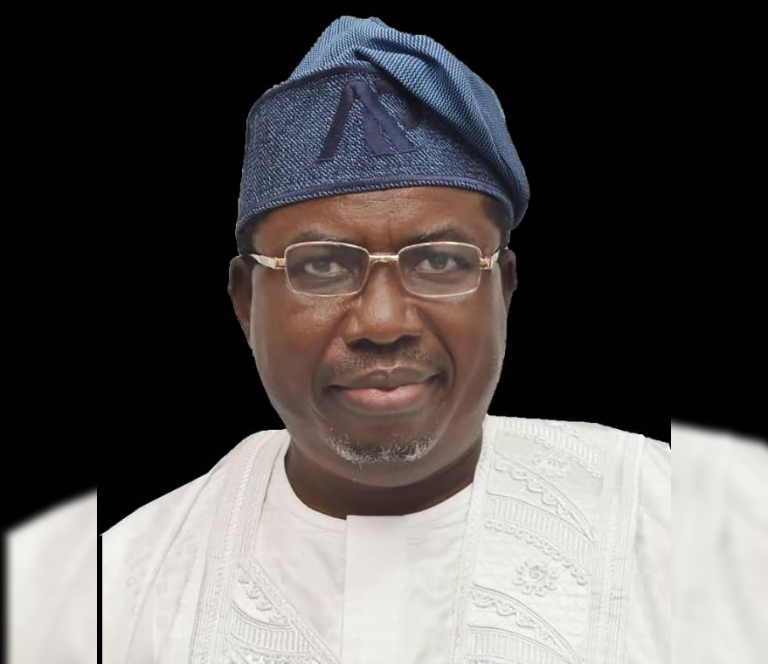
The Independent National Electoral Commission (INEC) has warned its staff against partisan leanings, administrative negligence and compromised ethics as preparations intensify for the 2027 general election.

INEC Chairman, Prof. Joash Amupitan, gave the warning on Monday in Kaduna while declaring open, the North-West Zonal Interactive Meeting with Staff and Readiness Assessment for the 2027 general election.

Amupitan told Electoral Officers, Heads of Departments and senior administrative staff from the North-West zone that the Commission would strictly enforce its code of conduct.

Read Also: ‘I Have No Contract to Fall Into a Pit With Peter Obi’ – Kenneth Okonkwo

“Partisan leaning, administrative negligence, or compromised ethics will not be tolerated,” he said, stressing that protecting INEC’s institutional integrity was non-negotiable.

The chairman said the conduct of field staff was central to electoral credibility, warning that late opening of polling units, perceived bias and poor responses to technical challenges could deepen voter apathy and fuel disinformation.

According to him, “the conduct, competence, and character of our staff in the field are either our strongest defence against fake news, or its biggest catalyst.”

Amupitan reminded officials of the oath of loyalty and neutrality required under Section 26 of the Electoral Act 2026 for electoral officials and security personnel participating in elections.

He said the oath commits every officer to administering elections without favouring any candidate or political party.

“The question must never be ‘Who will benefit from this decision?’ but always ‘What does the law require me to do?’” he said.

He also cautioned staff against improvisation, directing them to strictly follow procedures provided under the Electoral Act 2026, the Regulations and Guidelines for the Conduct of Elections 2026 and guidelines for political parties.

He said operational difficulties should be escalated through formal institutional channels.

Amupitan stressed that a sound legal framework and modern technology alone could not guarantee electoral credibility.

“The credibility of an election depends on how faithfully the law is implemented by the officials entrusted with its administration,” he said.

Describing staff as the face of INEC in their communities, he said, “to the voter in a local ward, INEC is not the Chairman in Abuja; INEC is you.”

He urged officials to know the law, understand their responsibilities, remain neutral and document their actions, adding that administrative decisions must withstand public scrutiny and judicial review.

The chairman said the Kaduna meeting was part of a six-zone Interactive Meetings and Readiness Assessment tour ahead of the 2027 elections.

He said the Commission was breaking more than two decades of practice by having its leadership participate directly in the zonal engagements.

Amupitan recalled the Commission’s performance in recent off-cycle elections, particularly the Osun State Governorship Election, but cautioned that the 2027 polls would be a simultaneous national exercise across the 36 states and the Federal Capital Territory.

The Presidential and National Assembly Elections are scheduled for January 16, 2027, while the Governorship and State Houses of Assembly Elections will hold on February 6, 2027.

Staff Welfare
On staff welfare, Amupitan said INEC was implementing a new salary and welfare package, noting that the Consolidated Election Management Body Salary Structure (CEMBSS) was established effective January 1, 2026, moving the workforce out of the regular Civil Service structure.

He added that overheads to State Offices were increased by 150 per cent from July 1, 2026.

He also announced the procurement and distribution of new operational pick-up vehicles to State Offices and Local Government Areas nationwide to improve staff mobility, security and operational efficiency.

Earlier, Supervising National Commissioner for Kaduna, Mohammed Kudu Haruna, said the Kaduna meeting was the second in the six-zone tour after Lagos.

Haruna disclosed that collection of newly printed Permanent Voter Cards would commence early next month, urging traditional rulers to encourage eligible citizens to collect their cards and exercise their right to vote.

Director of Planning and Monitoring, Helen Ajayi, said the exercise was designed to assess states’ preparedness and identify operational challenges ahead of the elections.

She added that the sessions would ensure staff remained aligned with the Commission’s Code of Conduct.

Directors and representatives from relevant departments also made presentations on their areas of responsibility and preparations for the 2027 elections.

‘I Have No Contract to Fall Into a Pit With Peter Obi’ – Kenneth Okonkwo

0

African Democratic Congress (ADC) chieftain, Kenneth Okonkwo, has revealed that his relationship with Nigeria Democratic Congress (NDC) presidential candidate, Peter Obi, deteriorated after they left the Labour Party and subsequent political developments ahead of the 2027 election.

It was reported that Okonkwo, during an interview on TVC, said there was no agreement to follow Peter Obi regarding the change of political platform. BreakingNews Alerts

The former spokesperson for the Labour Party presidential campaign said Peter Obi, whom he campaigned for in the 2023 presidential election, is different from the person he now sees politically.

Read Also: 2026 Admissions: JAMB Restores CAPS, Calls for Faster Processing

According to Okonkwo, changing political circumstances can alter an individual’s position, and refusing to adapt could amount to inconsistency,

He added that his support for Peter Obi was based on the platform and circumstances that existed at the time.

He said, “I campaigned for him as a member of Labour Party and as the presidential candidate of Labour Party. There was no agreement I should follow him wherever he’s going to because if he’s going to fall into a pit, I do not have any contract to fall into the pit with him.

“So what the person you’re seeing now is completely different from the person I campaigned for, different platform from the information that I have heard, different human being.”

2026 Admissions: JAMB Restores CAPS, Calls for Faster Processing

0

The Joint Admissions and Matriculation Board (JAMB) has restored its Central Admissions Processing System (CAPS) following a temporary disruption and has directed tertiary institutions to expedite the 2026/2027 admission process.

The Board, in a statement on Monday, said CAPS had been “fully restored and is now operational,” urging institutions to make up for the time lost during the disruption and meet the approved admission deadlines.

JAMB said, “With CAPS back online, institutions are urged to accelerate their admission processes to recover lost time and meet the agreed admission deadlines.”

The Board also advised candidates who receive admission offers to accept them promptly to facilitate the admission process.

According to JAMB, the deadline for the 2026/2027 admission exercise is 31 October 2026, for public universities and 30 November 2026, for private universities.

It said other tertiary institutions have until 31 December 2026, to complete their admission processes.

The Board further urged candidates who had previously indicated that they were awaiting examination results to upload or verify their credentials following the release of the 2026 National Examinations Council (NECO) Senior School Certificate Examination results.

JAMB said the step was necessary “to ensure their credentials are available for consideration as institutions intensify their admission processes.”

Read Also: Iyabo Ojo Reflects on Motherhood Journey, Tells Women Not to Give Up

The Board said, “JAMB wishes to inform candidates, institutions and other stakeholders that the Central Admissions Processing System (CAPS) has been fully restored and is now operational, following the temporary disruption.”

It added, “Following the release of the 2026 NECO SSCE results, candidates who previously awaited their results are advised to upload and/or verify them promptly to ensure their credentials are available for consideration as institutions intensify their admission processes.”

HURIWA Demands Preventive Security Strategy After Plateau, Zamfara, Niger Attacks
JAMB expressed regret over the disruption and thanked candidates, institutions and other stakeholders for their patience and understanding.

The Board urged all stakeholders to take advantage of the restoration of CAPS and complete the admission process within the approved timelines.

Iyabo Ojo Reflects on Motherhood Journey, Tells Women Not to Give Up

0

Actress and filmmaker Iyabo Ojo has opened up about her motherhood journey, describing her experiences as evidence of God’s greatness.

Iyabo shared a series of family photographs on Instagram featuring herself, her two children and her grandchild.

Reflecting on her past, the actress said motherhood has been a beautiful journey filled with experiences that have shaped her life.

She said looking back at where she started makes her grateful for how far she has come.

According to Iyabo, her story can provide hope for people who may have lost hope and encourage mothers who are raising their children alone despite difficult circumstances.

Read Also: Why Akpabio Declined Acting President Position, Rufai Oseni Reveals

She specifically appealed to struggling mothers to remain steadfast and not surrender to the pressures they may be facing.

The actress assured them that difficult times would not last forever and that there was light at the end of the tunnel.

Her message comes as she celebrates her family across three generations, providing a glimpse into her personal journey as a mother and grandmother.

Iyabo’s reflection highlights the challenges and rewards associated with motherhood while encouraging women to remain optimistic.

She urged mothers going through difficult experiences to hold on and continue believing in a better future.

Why Akpabio Declined Acting President Position, Rufai Oseni Reveals

0

The decision by Senate President Godswill Akpabio to reject the description of him as Nigeria’s acting president has triggered fresh discussion about the country’s constitutional arrangements.

Arise Television Morning Show anchor Rufai Oseni discussed the issue on Monday while analysing President Bola Tinubu’s prolonged absence from Nigeria. Vice President Kashim Shettima was also outside the country at the time.

Oseni said some political associates had begun describing Akpabio as acting president in the absence of Tinubu and Shettima. He said the Senate president subsequently moved to clarify that he should not be addressed by that title.

According to Oseni, the clarification was necessary because accepting the designation could have created constitutional and political complications.

However, the presenter used the development to question the broader role of the National Assembly in checking executive authority.

Oseni argued that the legislature is constitutionally intended to function as a co-equal arm of government under the principle of separation of powers.

He questioned whether the National Assembly would be prepared to challenge the executive effectively, pointing to its previous endorsement of the state of emergency declared in Rivers State.

Read Also: Atiku Says N70,000 Minimum Wage Is Not Enough to Restore Workers’ Buying Power

The broadcaster recalled that the federal government’s intervention followed a political crisis in Rivers State. He said the National Assembly subsequently endorsed the declaration through voice votes.

For Oseni, the episode raised questions about the extent to which the legislature can independently scrutinise major decisions taken by the executive.

He also questioned whether Akpabio, as Senate president, could lead such a challenge effectively while navigating the political relationship between the executive and legislature.

The comments come at a time when public attention has focused on the constitutional implications of the President and Vice President being outside the country simultaneously.

Nigeria’s Constitution provides a framework for presidential succession and the transfer of authority when circumstances prevent the President from performing his functions. The situation has consequently renewed public interest in the respective powers and responsibilities of the executive and legislature.

Oseni’s analysis has added another perspective to the debate over institutional independence and constitutional checks and balances in Nigeria.

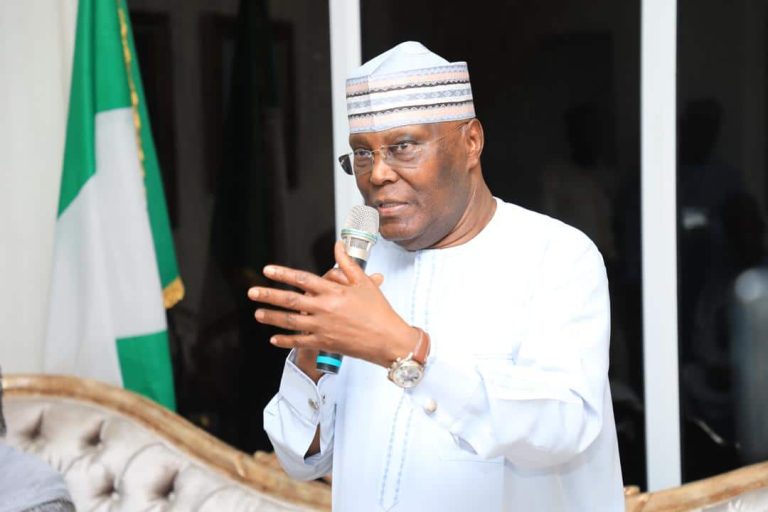
Atiku Says N70,000 Minimum Wage Is Not Enough to Restore Workers’ Buying Power

0

Former Vice President and African Democratic Congress presidential candidate Atiku Abubakar has thrown his full weight behind organised labour’s demand for a substantial increase in the minimum wage, adding that the increase from 30,000 to 70,000 had failed to restore purchasing power.

He accused President Bola Tinubu of presiding over a ruthless economic squeeze in which workers are paid more on paper and condemned to live on less.
He said the administration’s self-congratulatory talk of reform had become an insult to Nigerians whose wages vanish between the filling station and the food market.

In a statement issued by Phrank Shaibu, Director of Strategic Communications of the ADC Presidential Campaign Council, Atiku said Tinubu’s reckless removal of the petrol subsidy sent prices soaring before any credible protection was in place for working families.

“The government pulled away the floor, offered workers a flimsy umbrella and now applauds itself while the rain beats down on them,” he said. “Fuel, transport, food and rent have devoured their earnings. This is a callous way to govern people who work hard and ask only for the means to live.”

“Tinubu asked Nigerians to make sacrifices and treated the suffering that followed as an afterthought. Those with the least have been made to carry the heaviest load. That is the cruel arithmetic of this cost-of-living crisis,” Atiku said.

“At 1,400 a litre, the entire 70,000 monthly minimum wage buys just 50 litres of petrol. What does the worker take home to feed the children? What pays the rent? What gets that worker back to work on Monday?”

Read Also: 2027 Polls: Adeyeye Says Candidates Should Prepare for a Tough Contest

Atiku said the increase from 30,000 to 70,000 had failed to restore purchasing power. At the April 2023 national average petrol price of 254.06 per litre, 30,000 could buy roughly 118 litres. Today, 70,000 buys only 50 litres at 1,400 per litre.

“The payslip has grown, but the fuel it can buy has more than halved. Tinubu has given workers a larger number and left them with a smaller life. That is hardship dressed up as a wage increase,” he said.

Atiku noted that Nigeria’s wage floor compares poorly with those of several oil-producing and African economies. Using exchange rates from July 24, 2026, Libya’s monthly minimum wage was worth approximately ₦213,000; Algeria’s, ₦245,000; Equatorial Guinea’s, ₦302,000; and Gabon’s, ₦351,000. Even Benin Republic’s minimum wage stood above Nigeria’s when converted at those rates.

Wage rules and living costs differ across countries, he said, but those differences cannot make ₦70,000 adequate for a Nigerian worker facing today’s prices.

“The Nigerian worker is the engine of this country’s productive life, yet Tinubu expects that engine to run without fuel. A worker leaves home before dawn, gives the country a full day’s labour, then stands at a bus stop wondering whether the money left will pay the fare home or put food on the family table. That is a national disgrace. You cannot work people to exhaustion, pay them into poverty and lecture them about productivity. If a full month’s wage cannot sustain a worker’s family, government has failed the people who keep this country moving,” Atiku said.

He said the damage extended far beyond the filling station.

“Petrol does not stay at the pump. Its price follows the farmer to market, enters the baker’s oven and appears in the fare a parent pays to take a child to school. Government then announces a wage increase and watches those costs swallow it before the month has begun.”

Atiku challenged President Tinubu to agree immediately to a substantial minimum-wage increase that reflects the real cost of food, transport, rent and power.

“If he has no intention of raising workers’ pay, he should say so plainly and stop stringing the Nigeria Labour Congress and other labour leaders along. Nigerian workers deserve an answer, not another round of meetings that ends where it began. I will begin the work of raising the wage floor from my first day in office,” Atiku said.

“Tinubu has eight months left in this term. Nigerian workers cannot be told to endure eight more months of hunger while his government debates whether their wages are enough. He must raise the wage floor and bring down the costs crushing families. From May 2027, my policies will protect the people: support Nigerian production, deliver relief at the pump and provide targeted help to those hit hardest by the cost-of-living crisis,” Atiku said.

“If we are serious about repairing the damage, better pay must be accompanied by lower living costs. Anything less leaves the Nigerian worker as the guinea pig in Tinubu’s economic experiment,” he said.

Atiku said his plan for a targeted production subsidy would support petroleum products refined in Nigeria and sold to Nigerians, subject to a firm spending cap, public accounting and independent audit. Government support, he said, must produce measurable relief at the pump. He reaffirmed his commitment to realistic wage adjustments, targeted social protection and measures to stabilise the cost of essential goods and energy.

“Nigerians do not eat FAAC figures. A full treasury is no answer to an empty kitchen. The test of this government is whether the men and women who work all month can live on what they earn.

“A living wage must buy a living. It is not a privilege; it is a basic right. Tinubu has made life painfully expensive. I will make life affordable again,” Atiku said.

2027 Polls: Adeyeye Says Candidates Should Prepare for a Tough Contest

0

A former senator representing Osun Central, Olusola Adeyeye, has warned political parties against assuming that the 2027 general election will be an easy contest.

Adeyeye, who is the South-West Coordinator of the All Progressives Congress (APC) Presidential Campaign Council, made the remarks during an appearance on Channels Television’s Sunday Politics.

He said the APC was working hard to secure victory in the 2027 election, while arguing that any political party that approaches the contest with the belief that it would be straightforward could be setting itself up for disappointment.

“I make bold: anyone from any party who thinks the next election will be easy for it is suffering self-delusion. We in the APC, we work very hard to win, and I want to assure you that we will win,” Adeyeye said.

He also expressed confidence in the APC’s prospects in the South-West, saying the party’s unity would be an important factor in its performance across the region.

“I also want to assure you. We will win big. I care that we win the South West, and we’re going to shock everybody,” he said.
Adeyeye argued that political parties risk losing elections when they enter contests divided, adding that he did not currently see any party capable of defeating the APC in areas of the South-West where the ruling party remains united.

Turning to Osun State, the former lawmaker said the APC was also targeting victory in the state in 2027.

He questioned the extent to which the popularity of Governor Ademola Adeleke could translate into support for the Peoples Democratic Party, arguing that some of the governor’s appeal was linked to his family background.

Adeyeye was also asked about the potential influence of former Osun State Governor Rauf Aregbesola, who is associated with the African Democratic Congress (ADC).

The APC campaign coordinator pointed to the ADC’s performance in the August 15, 2026 Osun governorship election and questioned its showing in Ilesa and Osun Central.

“How did the ADC perform, even in Ilesa? How did Aregbesola perform in Osun Central, where I come from?” he asked.

Adeyeye acknowledged Aregbesola’s popularity but said that his personal support could not automatically be transferred to another politician if he was not the candidate.

“If Aregbesola is the candidate, it’s a different matter,” he said.

“The truth is he’s still a magnificent person, much loved. If he were a candidate, believe you me, anybody would be hard-pressed to beat him in Osun, but where he’s not the candidate, even he must not deceive himself that he can automatically take the affection for him to another person,” he added.

Adeyeye further referenced former President Olusegun Obasanjo’s electoral history to argue that losing the South-West would not, by itself, determine the outcome of a presidential election.

“In the worst scenario, let us say that Bola Tinubu lost the South-West; I guarantee you he will not. But if he does, have we forgotten that another Yoruba man lost the South-West and became the President?” he said.

“Did (former President Olusegun) Obasanjo not lose his ward, lose his polling booth, lose his state, lose his zone, lose every state in the South-West and yet become President?” he added.

The 2027 presidential election is scheduled for January 16, 2027, according to the electoral calendar published by the Independent National Electoral Commission.

Canada-Based Nigerians Applaud Tunji-Ojo, NIS Over Improved Passport Delivery

0

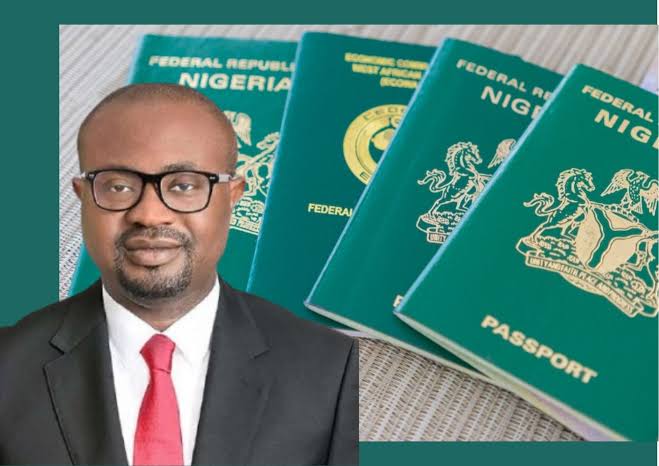
Nigerians living in Canada have praised the Minister of Interior, Olubunmi Tunji-Ojo, the Nigerians in Diaspora Commission (NiDCOM) and the Nigeria Immigration Service (NIS) for the successful completion of a passport intervention programme held across five Canadian provinces.

It was reported that the program, organized as part of the Nigeria Diaspora Economic Conference (NiDEC) in Toronto, was conducted between August 12 and September 4, 2026. Access Premium News

A total of 2,233 applicants were captured during the exercise, which took passport services directly to Nigerian communities in Toronto, New Brunswick, Manitoba, Saskatoon and Calgary.

The programme was carried out through a joint effort involving the Ministry of Interior, NiDCOM, the Nigerian High Commission, NIS, the Nigerian Canadian Association Council of Presidents and various Nigerian Canadian associations.

Several Nigerians who benefited from the exercise expressed satisfaction with the speed at which their passports were processed and delivered.

Some applicants said they received their passports between four and seven days after completing their biometric capture, reducing the waiting period usually associated with passport processing.

Read Also: Tinubu-Aregbesola Rift: Adeyeye Says Reconciliation Depends on Both Leaders

One beneficiary in Manitoba received her passport within a week of completing her biometric registration and praised the officials involved in the exercise for their commitment to serving Nigerians living outside the country.

Another applicant said the passport was delivered four days after biometric capture and described the exercise as properly organised and efficient.

Representatives of the Nigerian community in Canada said the programme showed the benefits of government services being taken closer to Nigerians in the diaspora.

They also said the exercise helped strengthen the relationship between the Nigerian Government and its citizens living in Canada.

The community leaders also praised the Nigeria Immigration Service for sending officers to the five locations and making arrangements to attend to applicants despite demanding schedules, including work on weekends. DownloadInteractive Maps

The Nigerian Canadian Association Council of Presidents also acknowledged the contributions of NiDCOM and the Nigeria Immigration Service to the coordination of the programme.

According to the association, the cooperation between government agencies and Nigerian diaspora organisations made it possible to provide passport services across several cities under one coordinated programme.

Following the completion of the first phase, community leaders have called on the Federal Government to consider extending the intervention.

They want the Minister of Interior to approve a second phase that would give Nigerians in Canada who were unable to participate in the first exercise another opportunity to obtain or renew their passports.

Philip Agbese Steps Up Campaign, Mobilises Support Across Benue Constituency

0

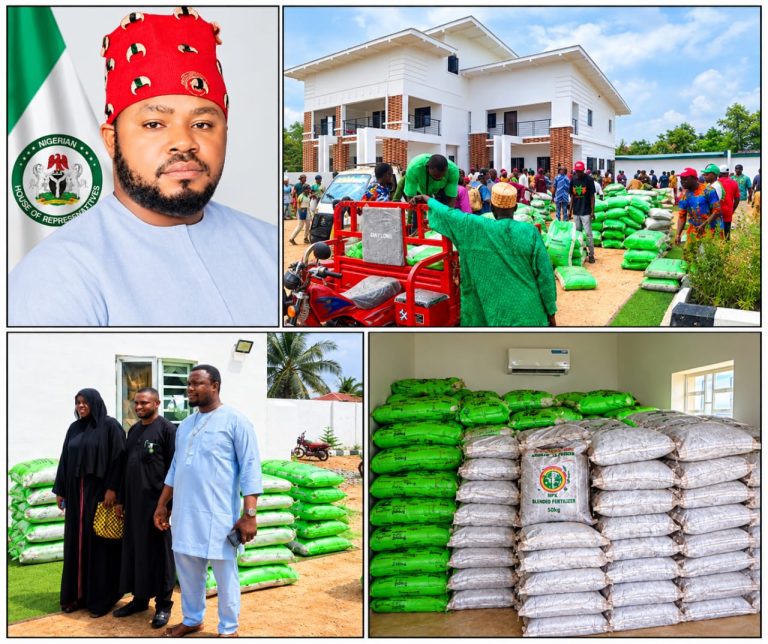
Chief Philip Agbese’s distribution of 5,000 bags of 50kg fertilizer to farmers in Ado, Okpokwu and Ogbadibo Federal Constituency has renewed attention on grassroots agricultural support and the importance of empowering farmers in Benue State.

For farmers in Ado, Okpokwu and Ogbadibo Federal Constituency, the distribution of 5,000 bags of 50kg fertilizer by Chief Philip Agbese represents more than the provision of agricultural inputs.

It is a gesture directed at people whose daily work sustains families, supplies food to communities and keeps Benue’s agricultural economy active.

Benue is widely recognised for its agricultural potential, but behind every farm is a farmer confronting rising input costs, unpredictable weather conditions and broader economic pressures.

Despite these challenges, farmers continue to cultivate the land, plant seeds and hope for a productive harvest.

For such farmers, fertilizer is not simply an agricultural input. It can mean the opportunity to improve crop yields, strengthen household income and support the education and welfare of family members.

5,000 Bags of Fertilizer for Farmers

The distribution of 5,000 bags of 50kg fertilizer is significant because agricultural interventions have their greatest impact when they reach farmers at the grassroots.

Chief Philip Agbese’s agricultural interventions have previously included fertilizer distribution, agrochemical sprayers and other forms of support aimed at rural farmers.

A publicly circulated compendium of his constituency interventions has also listed agricultural training and the distribution of 15,000 live birds to rural dwellers.

Beyond the statistics, however, are individual farmers and families whose livelihoods depend on agriculture.

There is the elderly farmer who has spent decades working the land, the young farmer seeking a sustainable livelihood, the mother whose farm income contributes to her children’s education and the household relying on agriculture for food and income.

For these people, timely agricultural support can provide renewed confidence at a critical point in the farming cycle.

Agriculture and the People of Benue

Agriculture is more than an economic activity in Benue. It is deeply connected to the identity and livelihoods of communities across the state, including Enone and surrounding areas.

The farmer is therefore not simply a beneficiary of development programmes but an important partner in community development.

When farmers increase production, communities can benefit from greater food availability and improved economic activity. Increased agricultural productivity can also create opportunities for rural households and encourage young people to view farming as a viable enterprise.

This makes interventions targeted at farmers particularly important.

The soil receives the efforts of everyone who cultivates it, whether an elderly farmer, young entrepreneur, widow, graduate or family struggling to make ends meet. With the right support, that labour can translate into food, income and dignity.

From Political Representation to Grassroots Responsiveness

Representation is commonly associated with legislation, parliamentary debates, oversight and constituency projects.

However, representation also has a grassroots dimension.

For many constituents, the effectiveness of representation is experienced through interventions that respond to everyday challenges.

Chief Philip Agbese has publicly described constituency development as involving legislation, oversight and interventions aimed at improving people’s lives. His constituency activities have also included agricultural and empowerment initiatives.

Against this background, the fertilizer distribution adds to the broader discussion about how elected representatives can connect parliamentary responsibilities with the economic realities facing constituents.

For a farmer, representation becomes tangible when agricultural assistance reaches the farm.

For a household dependent on farming, it becomes meaningful when such support helps sustain its livelihood.

For young people, agricultural empowerment can provide an avenue for economic participation and enterprise.

The Human Story Behind 5,000 Bags

Five thousand bags of fertilizer can easily become just another statistic.

But behind that number are farmers preparing their land, planting crops and planning for harvest.

The real impact of agricultural support will ultimately be seen beyond the distribution exercise—in the farms where the fertilizer is used, the crops that are cultivated, the produce that reaches markets and the income generated by farming households.

The significance of the intervention, therefore, cannot be measured solely by the number of bags distributed.

It can also be considered through the opportunities those inputs may create for farmers and their families.

A Message of Hope to Benue Farmers

For farmers receiving the fertilizer support, the intervention carries a simple message: their work matters.

Food on Nigerian tables begins with farmers who cultivate the land, often under difficult economic and environmental conditions.

Every seed planted requires investment and confidence. Every cultivated field represents labour. Every harvest represents perseverance.

Agricultural interventions that help farmers access essential inputs can therefore serve as investments in household livelihoods and the wider food system.

What Farmers May Remember

Political and public leaders are often remembered through their offices, policies and major projects.

At the grassroots, however, people can also remember leadership through direct experiences—who listened, who responded and who provided assistance when it was needed.

For beneficiaries of the fertilizer distribution, the lasting memory may not simply be the 5,000 bags.

It may be what the agricultural support helps them achieve: stronger farms, improved harvests, increased income, better household welfare and renewed confidence.

That is where the human dimension of grassroots leadership becomes visible.

When Leadership Returns to the People

Chief Philip Agbese’s fertilizer intervention provides an opportunity to reflect on the relationship between leadership, agriculture and grassroots development in Benue State.

A bag of fertilizer may appear ordinary from a distance. To a farmer preparing for a new planting season, however, it can represent an opportunity to improve production.

For a farming household, it can contribute to income and food security.

For a community, stronger agricultural productivity can support economic activity.

Ultimately, the deeper meaning of grassroots leadership is found not simply in political positions but in how development initiatives affect ordinary people.

When support reaches the farmer, leadership touches the soil.

And when the soil produces a better harvest, the benefits can extend beyond the individual farmer to families, markets and communities.

The distribution of 5,000 bags of 50kg fertilizer by Chief Philip Agbese is therefore not only an agricultural intervention. It is also a story about farmers, livelihoods, community development and hope.

For in the hands of a farmer, fertilizer is more than an input.

It is a seed of possibility.

It is a promise of tomorrow.

It is hope waiting to grow.