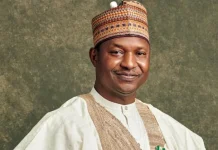
The decision by Senate President Godswill Akpabio to reject the description of him as Nigeria’s acting president has triggered fresh discussion about the country’s constitutional arrangements.
Arise Television Morning Show anchor Rufai Oseni discussed the issue on Monday while analysing President Bola Tinubu’s prolonged absence from Nigeria. Vice President Kashim Shettima was also outside the country at the time.
Oseni said some political associates had begun describing Akpabio as acting president in the absence of Tinubu and Shettima. He said the Senate president subsequently moved to clarify that he should not be addressed by that title.
According to Oseni, the clarification was necessary because accepting the designation could have created constitutional and political complications.
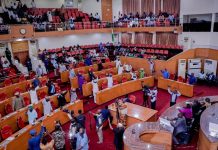
However, the presenter used the development to question the broader role of the National Assembly in checking executive authority.
Oseni argued that the legislature is constitutionally intended to function as a co-equal arm of government under the principle of separation of powers.
He questioned whether the National Assembly would be prepared to challenge the executive effectively, pointing to its previous endorsement of the state of emergency declared in Rivers State.
Read Also: Atiku Says N70,000 Minimum Wage Is Not Enough to Restore Workers’ Buying Power
The broadcaster recalled that the federal government’s intervention followed a political crisis in Rivers State. He said the National Assembly subsequently endorsed the declaration through voice votes.
For Oseni, the episode raised questions about the extent to which the legislature can independently scrutinise major decisions taken by the executive.
He also questioned whether Akpabio, as Senate president, could lead such a challenge effectively while navigating the political relationship between the executive and legislature.
The comments come at a time when public attention has focused on the constitutional implications of the President and Vice President being outside the country simultaneously.
Nigeria’s Constitution provides a framework for presidential succession and the transfer of authority when circumstances prevent the President from performing his functions. The situation has consequently renewed public interest in the respective powers and responsibilities of the executive and legislature.
Oseni’s analysis has added another perspective to the debate over institutional independence and constitutional checks and balances in Nigeria.