Nigeria’s political parties have officially commenced campaigns for the 2027 presidential and National Assembly elections, marking the beginning of an intense battle for votes ahead of the January 16, 2027, polls.
The Independent National Electoral Commission (INEC) opened the campaign window on August 19, 2026, in line with the revised timetable for the elections.
Under Section 98(1) of the Electoral Act 2026, political parties are permitted to commence public campaigns 250 days before polling day and must end their campaigns 24 hours before the election.
According to INEC’s timetable, campaigns for the presidential and National Assembly elections will run from August 19, 2026, to January 15, 2027.
Campaigns for the governorship and State Houses of Assembly elections are scheduled to begin on September 9, 2026, and end on February 5, 2027. The governorship and State Assembly elections will take place on February 6, 2027.
Tinubu, Atiku and Obi Face Fresh Political Battle
The 2027 presidential election is expected to generate significant political activity as major contenders seek to secure the support of millions of Nigerian voters.
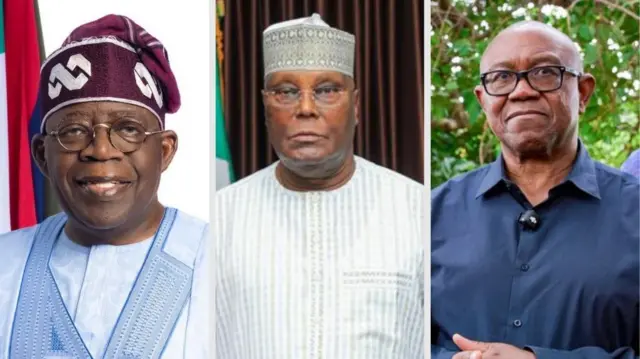
President Bola Tinubu, the candidate of the All Progressives Congress (APC), is seeking re-election, while former Vice President Atiku Abubakar, now of the African Democratic Congress (ADC), and Peter Obi, who is contesting under the Nigerian Democratic Congress (NDC), are among the major opposition figures preparing for the contest.
The race could once again produce a closely watched three-way contest similar to the 2023 presidential election.
In 2023, Tinubu contested under the APC, Atiku represented the Peoples Democratic Party (PDP), while Obi contested under the Labour Party.
Read Also: Nigeria’s 2027 Presidential Election: Beyond Judging Tinubu’s Government
Tinubu eventually won the election, with Atiku finishing second and Obi third.
Opposition Coalition Faces Major Test
The opposition is also exploring the possibility of forming a coalition to challenge the APC.
A proposed opposition unity summit in Abuja, reportedly backed by the G-100 Coalition led by former APC National Vice Chairman for the North-East, Salihu Lukman, is aimed at bringing opposition groups together and potentially producing a consensus presidential candidate.
However, differences among opposition politicians could make the process difficult.
Both Atiku and Obi have presidential ambitions, and convincing either politician to step aside for another candidate could prove challenging.
Atiku has contested presidential elections on several occasions, while Obi emerged as a major political force after his strong performance in the 2023 election.
Obi’s 2023 Momentum Faces New Test
Obi’s 2023 campaign attracted substantial support, particularly among young Nigerians who mobilised through the Obidient Movement.
Read Also: Nigeria’s 2027 Presidential Election: Beyond Judging Tinubu’s Government
The movement used social media and grassroots mobilisation extensively to promote Obi’s candidacy.
Although he finished third, his performance disrupted the traditional dominance of the two major parties and significantly affected voting patterns in several parts of the country.
However, questions remain over whether the movement can reproduce the same level of enthusiasm in 2027.
APC Begins Preparation for Re-election Campaign
The APC has expressed confidence in its ability to retain the presidency.
The party’s Director of Media and Publicity, Bala Ibrahim, said the ruling party was working to maintain public confidence and secure the renewal of Tinubu’s Renewed Hope mandate.
APC National Publicity Secretary Felix Morka also said the party was preparing a comprehensive nationwide campaign programme.
According to Morka, although August 19 was the date approved by INEC for the commencement of presidential and National Assembly campaigns, parties were not le…