Home Blog Page 715

Driver arraigned for allegedly stealing N25m solar panels

0

The Lagos State Police Command, on Monday, arraigned a 32-year-old bus driver, Olusola Olaniyi, for allegedly stealing 80 pieces of solar panel structures worth N25m.

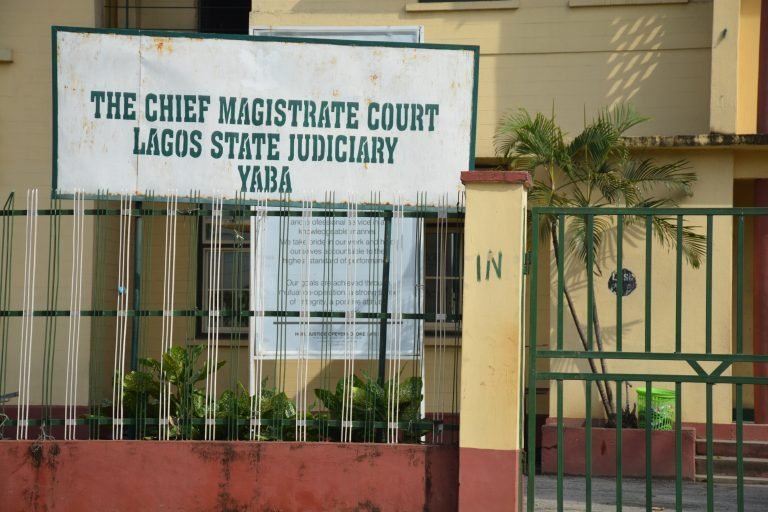
Olaniyi was arraigned at the Chief Magistrate Court, Yaba, before Magistrate Patrick Nwaka and charged with two counts of conspiracy to steal and theft.

The charges alleged that the defendant, on May 17, 2024, conspired and stole 80 pieces of solar panel structures worth N25m belonging to one Ololade Olawuyi.

According Metro gathered that Olawuyi reported that the defendant was hired at Kara Park to convey and supervise two buses containing solar panels to Cross River State, but one of the buses did not arrive at the destination.

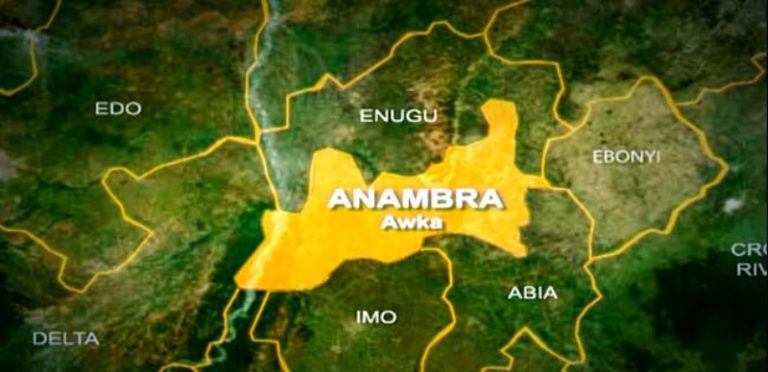
The missing bus contained 80 pieces of solar panel structures worth N25m, leading to the case being reported to the police later. During the investigation, it was discovered that a week after the buses left Lagos State, the defendant received a phone call from an unknown person stating that his goods had been offloaded in Onitsha, Anambra State. The complainant travelled to Anambra but did not find his goods.

The chairman of the park was invited, and with his statement, the police were able to track the defendant to Kastina State, where he was arrested.

Prosecutor Thomas Nurudeen informed the court that the alleged offence was committed on May 17, 2024, contravening Sections 410 and 287 (5) of the Criminal Laws of Lagos State of Nigeria 2015.

The prosecutor also mentioned that the complainant’s statement and statements from the investigating officer served as evidence that the alleged offences were committed.

The defendant pleaded not guilty to the charges alleged against him.

Nwaka ordered that a bail sum of N4m be paid and four sureties, who are residents of Lagos State, be provided.

He further ordered that the defendant be remanded at Ikoyi Correctional Centre until he had perfected his bail terms.

The case was adjourned to September 9, 2024.

Prisons beef up security to avoid jailbreak

0

The Nigerian Correctional Service, on Monday, said the K9, intelligence and armed squads of the service had been placed on red alert, ahead of the proposed nationwide protests.

In October 2020, Nigerians across major cities protested against police brutality under the #EndSARS movement.

The protests, which led to the disbandment of the Special Anti-Robbery Squad, were eventually hijacked by hoodlums, resulting in attacks on correctional facilities and other government buildings.

Over 2,000 inmates were reported to have escaped after the attacks on prisons in Edo and Ondo states during the period.

In Edo State, hoodlums, in the guise of #EndSARS protesters, attacked the Oko and Benin custodial centres where a total of 1,993 inmates escaped, while 58 inmates escaped from the Okitipupa custodial centre in Ondo State.

Speaking in an interview with our correspondent on Monday, the NCoS spokesperson, Abubakar Umar, noted that the CG of the service had sought the collaboration of other security agencies to protect the custodial centres across the country.

Umar said, “Since the last unfortunate incident, we have strategised on the issue of security around our custodial centres. Both overt and covert operations will be conducted. We have deployed intelligence officers across locations where we have our custodial centres.

“Our K9 Department and armed squad have been placed on alert. The CG has issued a strong circular on the need to collaborate with other security agencies to help secure our custodial centres.

“The interior task force which was introduced under the immediate-past minister has been reactivated. Our men are on high alert for any eventuality.”

32 arrested for attacking FG inspection team in FCE

0

The Lagos State Police Command on Monday said it had arrested 32 suspects for allegedly attacking a Federal Government team that came on an inspection to the Federal College of Education (Technical) in the Akoka area of the state.

The crisis on the campus deepened as some students who had been protesting poor welfare on the campus for about a week were seen in videos fleeing from teargas reportedly fired by police officers on Monday.

A student who craved anonymity for fear of victimisation sent a voice note to our correspondent, saying they were having a meeting in the school when police officers “came and started shooting students.”

The student alleged that the school management invited the police to the campus. “During the meeting, they started throwing tear gas. The provost ordered them to throw tear gas and they arrested some staff (members). They were beating the staff (members),” he alleged.

Another 17-second video watched by our correspondent also showed some policemen firing shots in the air on the campus.

The Provost of the college, Dr Wahab Azeez, had, last week, claimed in an interview with our correspondent that the protesting students were being instigated by staff members eyeing his position, a claim denied by the students and some staff members of the college.

The students insisted that they were not happy with the state of the facilities in the college and expressed displeasure over the provost’s comments.

“Those students who are protesting are being instigated by those staff members eyeing my position. For the past five years since I was appointed as the Provost, I’ve never had an issue with students because I was a former Student Union leader and I know what the students want,” Wahab said in an interview with According Metro last Monday.

Pictures of parts of the hostel obtained by our reporters last week showed rotten wood structures, dilapidating concrete, rusted tanks and overgrown grasses.

The Speaker of the Students’ Union Government, Enoch Oyefara, said the students were not questioning the Provost’s tenure, but, how they were being treated.

When contacted on Monday, the Provost denied the shooting on the campus and said the students threw stones at him.

“There was no shooting anywhere. The students came to the Provost’s lodge, they vandalised the lodge and they were even throwing stones at me, then the police came when the DSS informed them that the Provost’s lodge was being attacked,” he told one of our correspondents.

They (the police) used canisters at the staff quarters not even the college. Please, your people should go and investigate what happened. So, there was no shooting anywhere, I can tell you that.

“Please, confirm from the Police Area Commander who led the team and if anybody was shot, let them also tell you who was that person and which hospital he’s in.”

He said the students allegedly held the council members hostage for three hours moving them from one place to another before the police came to rescue them.

The Lagos State Police Public Relations Officer, Benjamin Hundeyin, did not immediately respond to inquiries from According Metro.

But in a post on X.com shortly after on Monday evening, Hundeyin confirmed that 32 suspects were arrested in connection to the incident at the college.

According to him, for over three months, the staff members of the college locked out the Provost, depriving him of the use of his office.

Hundeyin said, “A team set up by the Minister of Education arrived at the school today (Monday) to mediate the ongoing impasse. However, (the) staff (members) of the college aided by students attacked the team from Abuja, damaging over five vehicles and the Provost’s official quarters.

“Not done, the rioting staff and students also blocked all entrances in and out of the college. The police arrived at the scene and restored normalcy after being attacked with stones and sachets of water by the rioters.

“Meanwhile, 32 suspects have been arrested while men of the Nigeria Police Force from Area Command, Surulere remain on (the) ground to ensure that the restored peace remains intact.”

The Secretary General of the Students’ Union, Favour Randle, while speaking with According Metro, blamed the police for shooting tear gas canisters into a female hostel.

“I don’t even know how everything became a riot,” she said, adding that the protest on Monday started peacefully around 10 am.

“They (the police) first fired gunshots. I heard gunshots from my hostel. It was followed by a tear gas inside the female hostel. Why would they fire teargas in a female hostel,” she queried, noting this was what triggered the crisis. She urged students to remain calm and go home so that peace could be restored.

Motorists, commuters groan as fuel scarcity bites harder, fares rise

0

Motorists and commuters have lamented that the persisting fuel scarcity has caused long queues resulting in a hike in transport fares in Lagos and other parts of the country.

The fuel scarcity has caused long-drawn gridlocks around fuel stations in the state as motorists queue for hours to fill up their tanks with petrol at the few stations dispensing products.

According Metro reports that long queues have been building up at several petrol stations in Lagos since Friday and haven’t ceased.

One of our correspondents gathered that on Monday a few petrol stations that dispensed PMS sold it between N618/litre and N800/litre depending on the area of purchase, and due to this, there had been an increase in transport cost.

A bus driver, who simply identified himself as Mr Adeniyi, who spoke to one of our correspondents at the Ogba Bustop, Ikeja lamented the struggle to get fuel and justified the fare hike, which had increased from N300 to N400 from Ogba to Ikeja Underbridge.

“The increase in transport cost is not our fault. We sleep at petrol stations just because we want to buy fuel and do our business. Things are hard, and people should understand it is not our fault,” he said.

A commuter, Miss Anne Ono, complained about the increase in fares and expressed her dissatisfaction.

“It is affecting everyone, not only drivers. It is honestly tiring, you come out every day and the fare has changed. It has either increased or it is fluctuating,” she told According Metro.

A minibus driver plying the Ketu to Ikeja route in Lagos also lamented the increase in fuel price saying this had affected his profitability.

“It is affecting us seriously. If the fuel price returns to the previous price, things would be better. When I worked before, from Ketu to Ikeja, I could buy fuel N3,000 to fill up my tank, but now it is N40,000 to fill up my tank. If I take four trips, I won’t make any gains because I would still have to buy more fuel. Now, once I buy fuel, it is as if I did not make any gain, because the money I have left would be small. It is not easy, we are just managing, and there is nothing we can do. It is affecting us,” he lamented.

Our correspondents observed that at several filling stations in Lagos, there were long queues and some of the drivers had been in the queues for hours just to fill up their tanks.

One of the drivers, Mr Emeka, complained about the stress of waiting in the queue.

He said, “It is not easy, we have been here since 11:00 am unless you want to buy from the black market for N1,200 and above or some filling station that sells for N800 or N700, you have to queue. It’s seriously stressful.

Another motorist complained about the situation stating that drivers who weren’t patient in queues at filling stations ended up buying fuel from the black market at a higher rate.

“It is affecting us. Previously, we could buy fuel of N4000 and we worked with hopes to buy fuel at the next filling station after four or five trips. Now, you pay N20,000 to get petrol for the day, and you might not even get passengers after using that amount to buy fuel. We spend more on fuel, some filling stations are selling for N850, and sometimes, you have to look for cheap petrol stations unless you are in a hurry. If you are not, you have to queue. This morning I went to buy PMS at a Mobile filling station in Ikeja.. I had to queue from 4:00 am to 11:00 am, and bought it for N618 per litre, but wasted time that I would have used to make some money to buy fuel. So, it is not easy,” he said.

It was reported on Sunday that black marketers had taken advantage of the situation, selling as high as N1,300 per litre and N1,500 per litre in parts of Lagos and Ogun states.

On Saturday, while reacting to the long queues and scarcity in some parts of the country, the Nigerian National Petroleum Company Limited said the tightness in fuel supply and distribution was caused by a hitch in the discharge operations of a couple of vessels.

“The NNPC Ltd wishes to state that the tightness in fuel supply and distribution witnessed in some parts of Lagos and the FCT is a result of a hitch in the discharge operations of a couple of vessels,” the NNPC Chief Corporate Communications Officer, Olufemi Soneye, said. The company added that it was “Working round the clock with all stakeholders to resolve the situation and restore normalcy in the operations.”

RCCG holds free medical outreach in Lagos community

0

No fewer than 1,000 adults and children benefitted from the medical outreach organised by the Redeemed Christian Church of God, The Calvary Area Headquarters, Province 89, Oshodi, Lagos State, on Saturday, as part of activities to mark its 27th anniversary.

The activity, which has been held in the community for the past 10 years, featured free medical consultations, healthy living counselling, blood pressure checks, blood sugar screening, deworming and eye tests, among others.

According Metro gathered that the outreach was organised in collaboration with Chike Okoli Foundation, Emzor Pharmaceuticals, and Pharmatex Industries.

The programme coordinator, Mr Bode Martins, told our correspondent that the outreach was a platform created to give back to the community by providing access to free medical healthcare services to the residents, adulst and children.

“In the last 10 years, we have served over 5,000 beneficiaries and we have done that in partnership with Emzor Pharmaceuticals and Pharmatex Nigeria Limited. They provide the drugs for us free of charge. We also have medical doctors who volunteer their time and expertise.

“It is meant to reach out to people who do not have the financial resources to visit the hospital for medical attention. This is done to make life easier for the people as part of the church’s Corporate Social Responsibility initiatives. As we depend on them for membership, we also want to give care to them,” he added.

A representative of Emzor Pharmaceuticals, Theresa Obioha, commended the church for the initiative and expressed the commitment of the company to continue to engage in such impactful collaborations with the church to provide relief to provide relief vulnerable members of the public noting that the medical outreach had been going on for a long time.

“Emzor has been in this partnership for a very long time. We provide different kinds of drugs for different health challenges. The outreach is helping the community, because some have not checked their blood pressure for a long time. So, we do a series of tests for them and give them the drugs for free of charge. About 85 per cent of the people we met in this outreach are hypertensive,” she disclosed.

One of the medical doctors attending to the beneficiaries, Dr Rotimi Adesanya, advised the government to adopt the pattern of organising medical outreaches for members of the community.

The doctor who acknowledged the efforts of the government in building health centres across wards said, “It is high time the government took medicare to meet people like immunisation. Nothing is stopping the government from taking health workers from house to house so as to check people’s blood pressure. It is not capital intensive. This may encourage people to visit the hospital for further medical examination.”

A beneficiary, Mrs Adeola Adekunjo, said the programme was beneficial to her as it made her more aware of her health status.

She said, “The programme is beneficial to me. If not for this I would not have known some hidden ailments inside of me. So, it makes me to be more aware of my health.”

Speaking in a similar tone, another beneficiary, Josephine Mike, said, “It is a good programme. Some of us here did not know if we were sick or not until we were able to come for a medical check-up and we knew our health status. And when they checked us, they knew what step to take.”

The chairman of Abajiodu Community Development Area under which the community falls, Oludayo Adeboye, described the programme as laudable to the community.

He also claimed to have lost count of similar programmes organised by the church in the past.

“The programme is a laudable one and I have lost count of the medical outreach and other programmes they hold to help the community. Beyond preaching the word of God, it is a church of the community and they feel the pains of the community and we appreciate what they have been doing.“

He also urged the government to adopt such a pattern, adding that such awareness would encourage people to go to the hospital for medical check-ups.

Two jailed 14 years for stealing iron rods in Anambra

0

A Chief Magistrate’s Court sitting in Amawbia, Anambra State, on Monday, sentenced two men, Philip Avatus and Pius Dickson, to seven years imprisonment each, for stealing rods worth N1.1m in the state.

Both men, who hail from Taraba State, pleaded guilty to the conspiracy, theft and malicious damage levelled against them.

The court presided over by Chief Magistrate, Mike Anyadiegwu, noted their remorse and sentenced them to seven years each, with the terms running concurrently.

The suspects were accused of stealing 120 pieces of 12mm iron rods used in road construction and the offence was committed on July 24 along the Amawbia-Nise Road.

The charges violated several Sections of the Criminal Code of Anambra State.

Earlier, the prosecutor, Inspector Innocent Agu, told the court that the defendants committed the offence on July 24, along the Amawbia-Nise Road, Awka, the state capital.

Agu had told the court that the defendants allegedly damaged, cut and stole 120 pieces of the 12mm iron rods used to construct drainage along the Amawbia-Nise Road in Awka.

He said the offences contravened Sections 495(a), 380(b) and 415 of the Criminal Code Cap 36 Vol. II Revised Laws of Anambra State of Nigeria 1991, as amended.

All rights reserved. This material, and other digital content on this website, may not be reproduced, published, broadcast, rewritten or redistributed in whole or in part without prior express written permission from According.

Contact: [email protected]

Community pleads with govt to reinstate sacked LASU lecturers

0

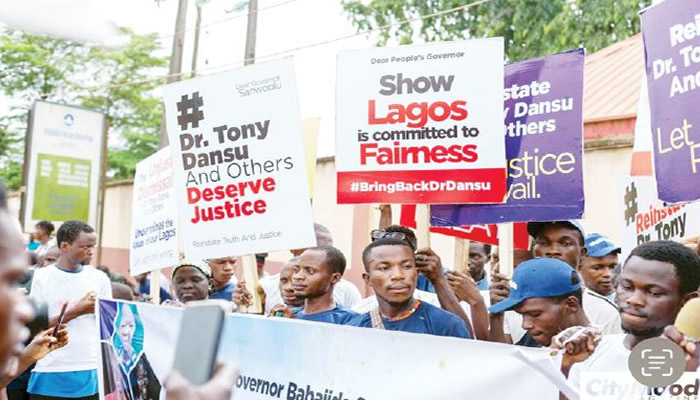
The residents of Ikoga-Zebbe Kingdom in the Badagry Local Government Area of Lagos State have appealed to Governor Sanwo-Olu to reinstate five lecturers from the Lagos State University who were sacked by the varsity management in 2019.

Our correspondents learnt that the lecturers, who were members of the Academic Staff Union of Universities, Lagos State chapter, were dismissed in September 2019 over allegations of unauthorised removal, retention, dissemination, or publication of official confidential documents.

The dismissed lecturers include Isaac Oyewumi, the union’s chairman; Adebowale Adeyemi-Suenu, vice chairman; Dr. Tony Dansu, secretary; Adeolu Oluwaseyi Oyekan, assistant secretary; and Oluwakemi Aboderin-Shonibare, treasurer.

Members of the community hosting the university had organised a protest demanding the reinstatement of the lecturers in May 2024.

A communiqué issued after a subsequent protest, obtained by According Metro on Sunday, revealed that residents called for the “unconditional reinstatement” of the affected lecturers and requested that all accrued financial entitlements and benefits be paid to them.

The communiqué partly read, “Sanwo-Olu on the above subject matter. We appeal that Mr Governor should graciously lift the embargo his government placed on the implementation of the decision of the Lagos State University Governing Council on February 23, 2022, to the effect that our illustrious son, Dr. Tony Dansu, and four other ASUU-LASU officials who were wrongfully and illegally dismissed from the services.”

Despite letters and pleas for the lecturers’ reinstatement, the communiqué noted that the residents lamented, “As of the time of this press release, we have yet to see any positive results! Therefore, we must once again appeal for justice through the public via the press on this same issue.”

When contacted for comment on the community’s demands on Monday, the varsity spokesperson, Oluwayemisi Thomas-Onashile, stated that the university lacked the authority to reinstate the dismissed lecturers.

“I don’t think there has been a time the school asked them to return to work. What the community is asking for is not even within the purview of the school,” Thomas-Onashile stated.

Meanwhile, the state Commissioner for Information and Strategy, Gbenga Omotoso, did not answer his mobile phone or respond to our correspondent’s text message as of the time this report was filed.

Why governors should align with Tinubu on LG autonomy

0

Governors have been acting tongue-in-cheek in their reactions to last Thursday’s verdict of the Supreme Court, which stripped them of their suffocating grip over the money meant for local governments in the country. As a collective, the governors unreservedly endorsed the judgement. The Chairman of the Nigeria Governors’ Forum and Kwara State Governor, AbdulRazaq AbdulRahman, who spoke on behalf of the governors, said the forum welcomed the apex court’s ruling granting financial autonomy to the councils, describing the verdict as a relief from the burden on the governors. Addressing State House correspondents on the matter after a meeting with President Bola Tinubu at the Presidential Villa, Abuja on Friday last week,  AbdulRahman was flanked by the Chairman of All Progressives Congress Governors’ Forum, Hope Uzodimma, and Chairman of the Peoples Democratic Party Governors’ Forum, Dr Bala Mohammed, suggesting they were all in agreement with AbdulRahman in his pronouncement.

“Our Attorney-General has applied for the enrolment order, which we will study carefully. But by and large, governors are happy with the devolution of power in respect of local government autonomy. It relieves the burden on governors. Our people really don’t know how much states expend in bailing out local governments, and that’s the issue there,” AbdulRahman said, adding that his government in Kwara State had never tampered with local government funds.

However, it was learnt that the governors were not happy with the decision of the Federal Government to take them to court and are merely playing to the gallery. For instance, a few days after the NGF chairman spoke, Oyo State Governor, Seyi Makinde, who is of the opposition PDP, described the case as a distraction. He questioned the sustainability of local governments receiving allocations from the Federal Government. Speaking with members of the Nigeria Union of Journalists in Ibadan, Oyo State, the governor said: “They said there is a judgment of the Supreme Court on local government autonomy. I think it is just a distraction. We must face the real issue that we have. The issue that we have is that we are not producing enough. We are not productive. Maybe it may be part of the problem, we want to have value for what is being shared but our problem is productivity.”

It may be argued that it is customary in our clime for an opposition governor to toe a different path from that of the President from a different party and this may be correct. However, the opposition of state governors to local council financial autonomy has never been in doubt. It has always been vainly concealed. In a report in The According newspaper of January 25, 2023, state Houses of Assemblies across Nigeria had rejected nine constitutional amendment bills, including the proposed legislation for financial and administrative autonomy for local government councils. The state Assemblies were believed to have done so at the promptings of their governors who exert considerable influence over legislative processes at the state level. The rejected bills were part of the bills that the National Assembly transmitted to them for concurrence. The National Assembly had in March 2022, voted on 68 bills aimed at further amending the 1999 Constitution. At the end of the exercise, 44 of the bills were approved by both the Senate and the House of Representatives and transmitted to the state Assemblies for concurrence. A simple majority of votes was required in at least two-thirds of state Assemblies (24 out of 36) for the amendments to sail through and the amendments that sailed through would then be sent to the President for assent.

The Senate, in a motion by the then Chairman of the Senate ad-hoc Committee on Constitution Review, Ovie Omo-Agege, said during plenary that 27 out of the 36 state Assemblies had forwarded their resolutions on the constitution amendment bills to the National Assembly. Presenting his committee report, Omo-Agege said 35 bills satisfied constitutional provision, having been approved by not less than 24 state Assemblies. Nine bills could not sail through. Prominent among the bills voted against by the state parliaments was the one seeking to grant financial and administrative autonomy to the country’s local governments. Also among the bills that did not sail through are the ones seeking the abrogation of state-local government joint account and establishment of local government as a tier of government, meaning a majority of the state Assemblies, and by extension the governors, never wanted local governments to have absolute freedom.

It’s perhaps in the realisation of this, and the overarching need for local governments to be financially empowered to cater to the challenges at the grassroots that the President took upon himself the crusade for financial autonomy for the local governments. He mandated the Attorney-General of the Federation and Minister of Justice, Chief Lateef Fagbemi(SAN), to institute a case against the governors at the Supreme Court. This is with a view to reinforcing democratic principles through full financial powers and effective devolution of power to the councils and ensuring genuine representation at the grassroots through periodic elections.

In the suit, the Federal Government sought the enforcement of full autonomy of local governments in Nigeria and also for an order prohibiting state governors from embarking on unilateral, arbitrary and unlawful dissolution of democratically-elected local government chairmen, and constituting caretaker committees in their place. It also asked the court to make an order permitting the funds meant for the LGs to be directly channelled to them from the Federation Account in line with the provisions of the constitution as against how the governors take advantage of Section 162 (6) at the detriment of the local governments.

The Supreme Court’s verdict was very emphatic and unequivocal. All the reliefs sought by the Federal Government were granted. The apex court ordered direct payment of council allocations, saying the 774 local councils in the federation should manage their funds without interference or deduction from any quarter. According to the apex court, it is unconstitutional for state governors to retain and utilise LG statutory allocations paid through them. The seven-man panel of the court led by Justice Emmanuel Agim also declared that a state has no power to appoint a caretaker committee, while it is mandatory for a local government council to be democratically governed.

“In this case, since paying them through states has not worked, the justice of this case demands that the local government allocations from the Federation Account should henceforth be paid directly to the LG councils,” the apex court ruled. On the dissolution of democratically elected councils and appointments of caretaker committees by governors, Justice Agim held that it is a mandatory duty of the state governments or governors, under Section 7 (1) of the constitution, to ensure their existence. “A democratically-elected local government is sacrosanct and non-negotiable,” the court added.

This landmark judgment is a critical step forward. It has now become imperative for the governors to file behind Tinubu in ensuring that local councils become an independent and self-governing tier of government. The governors’ buy-in is important because when the chips are down, the state chief executives will still play an influential role in the election of local government chairmen. The governors must understand that to ensure genuine grassroots development and further strengthen our democracy, the local governments must be empowered financially.

This is part of the democratic re-engineering and restructuring the nation yearns for. Indeed, not a few Nigerians are looking forward to the restructuring of the country under this president, given his antecedents. Apart from his numerous struggles for the entrenchment of democracy in the land, even as governor (1999-2007), he fought many battles with President Olusegun Obasanjo on matters bordering on true federalism. Many would recall the issue of the creation of 37 additional local governments in Lagos State during which he dragged the Federal Government to the Supreme Court when Obasanjo stopped the federal allocation to the state. In its ruling, the Supreme Court okayed the process leading to the creation of the councils and described the creation of the 37 new councils as legal, but declared them as inchoate because they had not been listed in the constitution as LGs. Asíwájú Tinubu’s ingenuity came into play with the new councils becoming Local Council Development Areas. Today, these LCDAs have helped to expand the frontiers of development in Lagos.

There is also the matter of ownership of lands and granting of development plans in the states. Asiwaju Tinubu as Lagos governor filed a case at the Supreme Court to determine who had the power to control urban and regional planning in a state. Two of the issues determined were: whether the ownership rights of the federal Government over land in state territories include the power to control and regulate town planning and physical development in relation to such land.  The second was whether all approvals, permits, and licences granted by the 1st defendant (Federal Government) or any of its agencies for any construction, building or physical development, or use of land in Lagos without the consent of the plaintiff are not illegal, null, and void. The Supreme Court granted the states power to grant building approvals and other development plans in the states where such federally-acquired lands are domiciled while not denying the Federal Government the right to also acquire lands in the states.

For Tinubu, restructuring has indeed begun. The President has been working to reinforce existing laws, promoting their judicial interpretation and, in some cases, outright amendments in a bid to strengthen democracy and engender fiscal federalism. It is a measure of his commitment to restructuring that one of the first bills he signed into law as the country’s President was the Electricity Act 2023, which he signed on June 6, 2023, barely his eighth day in office, marking a significant milestone in the sector. The new law focuses on enhancing the regulation and management of the electricity value chain with the active participation of the sub-national governments. This, thus far, has resulted in the process of devolution of regulatory powers to three states – Enugu, Ekiti, and Ondo – to set up their electricity markets.

Importantly, the Presidential Fiscal Policy and Tax Reforms Committee led by Mr Taiwo Oyedele is still busy working on comprehensive tax reforms, including reforms to the country’s value-added tax and other taxes that will restructure the system and further advance fiscal federalism in the end.

Back to the issue of LG autonomy. There is still more work to be done. Like the state governors, the National Assembly must take concrete legislative actions to support the vision. The laws governing local government elections must be reworked to transfer the responsibility of conducting these elections to the Independent National Electoral Commission as opposed to the State Independent Electoral Commissions, which are only independent in name. This legislative initiative is crucial to eliminating the undue influence of state governors over the local government election process and ensuring the integrity of the polls. This change will be a significant move in complementing Tinubu and the Supreme Court’s efforts towards achieving genuine local government autonomy and enhancing democratic governance in Nigeria.

Speaking when he hosted some Yoruba elders on April 16, 2024, at the Presidential Villa,  Tinubu had pointed out that the matter of restructuring would be systematic, saying when the economy is properly on a firm footing, steps would be taken on restructuring so that it will be on a solid footing. “As I said in Akure, our approach to it would be as if a baby is learning how to walk. If the baby is rushed, it will fall,” he had said.

  • Rahman is a senior presidential aide

Napoli, Chelsea to discuss Osimhen swap deal

0

Napoli are reportedly ready to engage in talks with Chelsea over a player-plus-cash deal for Victor Osimhen this summer, as the Italian club seek solutions for the Nigerian striker’s situation.

The Blues have been on a spending spree this summer, with Enzo Maresca overseeing a significant squad overhaul at Stamford Bridge.

New signings include Tosin Adarabioyo, Kiernan Dewsbury-Hall, and Renato Veiga, alongside promising youngsters Omari Kellyman, Caleb Wiley, and Marc Guiu. Brazilian wonderkid Estevao is also set to join from Palmeiras next year.

Despite these acquisitions, Chelsea are still in the market for attacking reinforcements. While Aston Villa’s John Dhuran and Lille’s Jonathan David have been linked with moves, a potential deal for long-time target Osimhen may now be on the cards.

According to transfer expert Fabrizio Romano, Napoli are “looking for solutions” regarding Osimhen, aware of his desire to leave. The Italian club are also keen on bringing in Romelu Lukaku, which could pave the way for a swap deal.

Napoli would expect a fee in addition to Lukaku, given Osimhen’s £110m price tag, and it remains to be seen if Chelsea are willing to explore this option.

Osimhen has made no secret of his desire to leave Naples and has already approved a move to Paris Saint-Germain. However, negotiations between Napoli and the Ligue 1 side have stalled due to disagreements over the transfer fee.

The Nigeria striker is reportedly free to leave Napoli, where new manager Antonio Conte has made it clear that he is not part of his plans, with the Italian eager to bring in Lukaku as a replacement and wants the situation resolved quickly.

As a result, the Nigeria international was notably absent from Napoli’s bench for their 4-0 pre-season friendly win over Egnatia on Sunday evening. Romano highlighted this exclusion on social media platform X, mentioning PSG and Chelsea as potential destinations for Osimhen but also noting that Arsenal could make a late bid.

Chelsea may look to capitalise on this impasse to address their goalscoring issues, which have been made more glaring during the pre-season after they drew with League One side Wrexham FC and also lost to Celtic.

However, Osimhen’s wage demands could pose a challenge, as the Blues have been cautious about offering lucrative contracts this summer.

Bandits occupy 102 Zamfara communities, shut down farming

0

 “Farming is our pride” is the popular catch-phrase synonymous with Zamfara State because over 90 per cent of the people of the state are farmers who largely depend on agriculture to survive.

The state has over the years been producing large quantities of food items  – both cash and food crops –  which has earned it the title of the food basket of the nation.

However, with the emergence of banditry which reared its ugly head in the state in 2009 and has defied all solutions, situation which further got out of control in 2012 has continued to make farming activities almost impossible in many parts of the state more especially the rural areas where bandits have completely taken over.

Not a few stakeholders in the state who spoke with Arewa According stressed that it is disheartening to note that more than 70per cent of the rural dwellers who survive on farming have been forced to flee to urban areas for fear of the bandits’ attacks, while those who choose to stay behind in their villages are forced to pay levies or taxes to the bandits.

Arewa According reports that more than 200 villages are currently deserted as their inhabitants can no longer meet up with the assaults and repeated demands of the bandits, thus crippling farming activities to a near halt.

“Worse still, many of the farmlands have become grazing areas for the bandits’ animals,” observed Mallam Garba Musa, who is a large-scale farmer in the Dada community of Zurmi LGA.

Our correspondent’s investigations reveal that some of the villages where farming has become impossible and going almost extinct due to the heavy presence of the bandits are the following areas: In Zurmi Local Government, the villages affected and already deserted are: Gidan Labbo, Tsakauna, Dogon-hako Gidan-duwan, Jididi, Asako, Gidan-oho, Dunnu, Gwamawa, Gidan-Labbobuzu, Marmaro, Takalmawa, Tukurawa, Sangamawa, Tataka, Gidan-Galasima, Gidan-zago, Kada-mutsa, Holuwai, Makosa, Judidi, Geza, Rinni and in Dadan Tsafe Local Government Area, the villages currently under the bandits’ control are: Munhaye, Dutsin Kura, Kekawa, Yarzaiga, Sabon Birnin Nakaka, Unguwar Gyauro, Matso-Matso, Magazawa, Kawasari, Bare-bari, Turba-Kucheri, Marne, Maidagalo, Yar-tsakuwar Garkuwa, Kofar Fada, Sansami and Dankutau.

In Maru Local Government, the deserted villages are: Madada, Bingi, Dandalla, Babbar Doka, Kabaro, Sangeku, Danmani, Kunjemi, Karauci, Gajeren Kauye, Saulawa, Randa, Kango, Balge, Gobirawan cali, Gidan Ardo, Bulakke and Kilin.

In Anka Local Government, the villages are: Rafin Danya, Barayar Zaki, Rafin Gero, Karfa Bawar Daji, Sunka, Tungar Kudaku, Matseri, Dankalgo, Matsafa, Nassarawa and Kawaye.

In Maradun Local Government,  the villages are: Aljimma, Gwargawo, Kuzi, Ruwan Bado, Magamin Diddi, Garka, Saurar Kade, Damaga, Asarara, Burmi Gidan Adamu, Gidan Maidawa, Gidan Baushi and Wari.

In Talata-Mafara Local Government Area, the villages are: Ruwan Jema, Ruwan Gora, Dankalgo, and Ruwan Gizo.

In Gusau Local Government Area, these villages include: Madaro, Kungurmi, Dandindin, Burwaye, Burnai, Fankarfe, Dadin Zama, Bakin Dutsi, Tungar Kudi, Ruwan Mesa, Koli, Buzaye, Tungar Rakumi, Rijiya and Kwarya Tsugunne.

Speaking with journalists in his office, the Secretary to the Zamfara State Government, Alhaji Abubakar Nakwada disclosed that Governor Dauda Lawal has assured that his administration would do everything humanely possible to ensure that farmers return to their farms during this farming season.

Nakwada stressed that the governor has made adequate arrangements with the security agents so that the bandits would be dealt with in order to ensure adequate security in the state.

However, he maintained that the Zamfara State Government would not negotiate with the bandits irrespective of the level of their pressure.

Nakwada added, “The administration of Governor Dauda Lawal has no plan to reconcile with the bandits.

“The state government will squarely face them and deal with them so that security will be restored by the grace of God,” he assured.