Home Blog

Why Nigeria Needs To Redesign Its Mother Tongue Policy

0

What a coincidence! The very crises that have brought Nigeria to STEM are not technical crises at all… not crises of not enough engineering, not enough mathematical modeling, not enough laboratory science … They are humanistic and social crises of meaning, narrative, identity and moral community −.–G.S. Ibileye, Vise Chancellor, Federal University Lokoja.

In this era of Artificial Intelligence (AI), more than 6000 mother tongues in Africa needed to overwhelm extant epistemic process with that of Africans as Africans remain more humanistic and mindful of human interaction with seen and unseen realities than other sub-human races. There is only One Human Race and the knowledge processes issuing forth from the humans should be inclusive and helpful for the existence of the race, not harmful to it. Human languages contain unexplored knowledge processes and Nigeria with over 500 languages should map-out what it takes to harvest such knowledge contents to assuage current danger of looming human extinction caused by excessive, dehumanistic arsenals in the hands of the “wicked”. Harvesting humanistic knowledge contents entails exploring the values of African languages.

Neuroscientists agree that the human brain is working at barely 10% of its capacity and that every child is able to learn at least five languages at earlier stages of life, hence a solid foundation to allow for tolerance, creativity, openness to others, innovation and peaceful behavior for a better humanity. The challenge of stopping wars, insurgency, greed, insatiable political turbulence are challenges that are proactively nipped in the bud by a great dose of humanistic knowledge. Speaking ‎and creating narratives in the languages of the weaker ones to woo them to accept terms of governance and social contract that make them give their best in nation building like it is done in Ethiopia and closer to Nigeria, Chad.

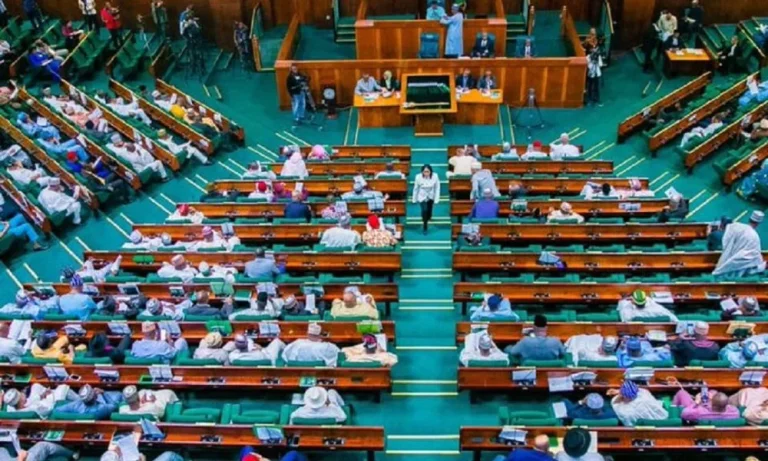
In its 28th Convocation, Induction of New Members and Investiture of Regular and Honorary Fellows, chaired by its President Prof. Andrew Haruna, in which 46 new members were inducted and 10 Fellows were crowned, and Honorary Fellow was bestowed on the El-Kanemi of Borno, HRH Shehu of Borno, Humanistic Practice Award to TundeKelani and Distinguished Life Fellow to Professor Emeritus Femi Osofisan, Nigerian Academy of Letters (NAL) appealed to the Federal Government of Nigeria to not abolish the Mother Tongue (MT) Policy but to re-design and re-position it as “A Second‎Generation Mother Tongue Policy” so as to see it serve as “Path To Nation-Building” as it is seen in Ethiopia, Senegal, South Africa and Chad.

Professor Imelda Udoh who anchored her presentation on “The First Pathway To Nation-Building” MT draws attention to the mooring infrastructure of a nation like stated by Prof. Ishaq Oloyede- cultural consciousness, linguistic heritage, functional literature consumption of the young ones from the homes where mother tongues are used, to ground them and induct into human beings distinct from animals. Like mother tongue like mother suckling – very humanistic and resourceful. Leads to human optimization pathway in the maze of pathways.

Read Also: 2027: NRM Presidential Candidate Esther Okereke Reveals Plans For Nigeria

For Professor Vicky Sylvester, whose presentation hinged on “Policy and Practice Mismatch”, Federal Government was ignoring the fulcrum of mother tongue practice as enunciated by UNESCO in 1953 − not as cultural idealism but as an intellectual boost for the young ones who must still face the colonial languages as well as the Nigerian pidgin. Hence the need to fund it so as to gratify the self esteem of the Nigerian child into well rounded adult. Developing contents in this age of AI could be very original and greatly universalisable if mother tongue practice is well planned. That is where Professor Yinusa Salami brings in what he calls epistemic order and pluriversalism− that is, no matter the number of mother tongues in Nigeria or Africa, their epistemic values and contents must be isolated and uploaded into a universal data base. That takes research, and producing good curricula. It must not be a simple translation from European languages to the mother tongue or vice-versa. Here linguists will tell you that the semantic unit of African proverbs or expressions cannot be rendered word by word.

Universalization could also generate epistemic order semantic units specific to mother tongues, model. Just like Prof. Muhammed Sulaiman Audu writes in his paper on Twi and Ga in Ghana. The Ghanaians have two well-developed languages to upload their own knowledge process, despite the official English in Ghana and the official French in Togo. Ga has helped to promote the peace between Ghanaians and Togolese but as evident in Aflao border. This seems not attainable in Nigeria, Cameroon and Chad borders–Fulfude, Kanuri and Hausa seem on centrifugal drive. It is humanistic and social. How to reconcile them for centripetal purposes beckon. On the occasion of the induction ceremony, The EL-Kanemi spoke of 1500 years of existence, museum and unconquered state and it should matter in nationhood building.

In Ethiopia, Ethiopian languages are the official languages with one dominant language called Amharic. It is expected that each of the official languages take care of its region of origin and educate its citizen along the local needs of Ethiopia, and that expectation to work at federal level must be the knowledge of Amharic – not federal character quota basis. As in Canada where you need to speak and write French and English to become a confederal worker in Ottawa, most people in British Columbia, Prince Edward Island, Newfoundland, Labrador, and Alberta do not care about speaking French and prefer to stay and work within their provinces, thus localizing their development drive and keeping the provinces relevant and active. Unlike in Nigeria where people flock to the center Abuja, Lagos, Kaduna, Port Harcourt neglecting or leaving the rural areas to non-state actors.

Twi and Wolof are very relevant in the development of the rural areas. It may be slow but it is not left to insurgents or Boko Haram-type of activities. In Ghana or Senegal, the notion of Town and Krom (it is a town, it is my ancestral home)

Africa, nay Nigeria, needs a healthy dose of humanistic education that can upload the epistemic pathways embedded in mother tongues that drive Ubuntu philosophy – I am because you are.

As G.S. Ibileye has said, Africa’s problem at the moment and for the near future is more of people and their environment cohesion than deep science and technology. “What does a camera see that a historian cannot name and what does a drone detect that a linguist cannot read… if the life of the spokesperson of the armed forces could not be preserved (Major General Rabe Abubakar) what exactly are we asking five thousand cameras to do?” he said.

So, in effect, for a nation building process where inclusiveness and brotherhood counts and where insurgents are banished, re-design mother tongue policy to look like what obtains in Ethiopia or Senegal.

2027: NRM Presidential Candidate Esther Okereke Reveals Plans For Nigeria

0

The National Rescue Movement (NRM) presidential candidate, Esther Okereke, has outlined plans to tackle Nigeria’s electricity crisis, insecurity, corruption and economic woes if elected as president in 2027.

Nollywood actress and humanitarian, Okereke, said her political ambition was fueled by years of working with vulnerable Nigerians including widows, orphans and people living with disabilities.

She rejected the idea that she was merely a celebrity candidate, defending her political credentials and saying her grassroots experience had given her first-hand knowledge of the problems facing ordinary Nigerians.

“I’m not only an actor. “I would say that I am a humanitarian in politics. I found foundations for widows, orphans, and the disabled. “I’ve run my foundations single-handedly without any support from anywhere,” she said.

She said she was a “grassroots candidate,” and her proposed policies were captured under the six-pillar ESTHER Agenda, which she called a “people’s manifesto.”

The agenda includes economic development, energy, education, security, social and sustainable development, technology transformation, transparency, housing and health.

On electricity, she said her administration would prioritize the end of the power crisis through the deployment of renewable energy and decentralized power generation.

She proposed a target of 25,000 megawatts within her first 100 days in office, arguing that improved electricity would also help to uncover and address other problems, including insecurity.

“First is to take out the darkness in the system because when you take out the darkness, you can see. Next, you secure the system with security. Fix electricity. Remove the darkness so you can see the security issues, and tackle them. We have 100 days to get to 25,000 megawatts. “Very possible,” she said.

Corruption and personal interests were major barriers to fixing the power sector and officials who failed to deliver on agreed targets should be replaced, she said.

On Nigeria’s debt burden and revenue problems, the NRM candidate suggested getting rid of what she described as redundant parastatals, agencies and ministries.

Read Also: Nigeria Seeks End To Criminal Penalties For Attempted Suicide

She said that funds recovered from such restructuring and the recovery of public resources would be reinvested in the economy.

“First thing we will cut off lots of parastatals that are redundant, fake parastatals, fake agencies, fake ministries, lots of these ghost organizations. We cut them off then we go for recovery,” she said.

“The recovery of public funds will be part of the ‘R’ of her ESTHER Agenda,” she said.

Okereke also suggested increased funding for security agencies and community policing as part of her strategy for tackling insecurity.

She argued that if residents who know the lay of the land in their communities were trained and equipped correctly, they would be better positioned to help protect them.

Finance our security. Community policing is very important. “Let the people who know the terrain guard their forest, let them guard their community,” she said.

With the right expertise and support, she added, the training and deployment of community police could be done in six months.

Corruption, Okereke said, is a major obstacle to solving Nigeria’s security and economic problems and pledged to make its elimination a priority.

“Corruption within the system and that is something we do not take for granted in NRM. It’s our motto. Corruption kills everything; it ruins everything in a system. So that we will tackle corruption first, because that is the main problem we have,” she said.

She also called for increased investment in human capital, lamenting the loss of talented professionals and workers to other countries.

She advocated for investment in Nigerians and better opportunities to reverse the loss of skilled manpower.

Okereke said she expected her strongest backing to come from grassroots communities, where she believes her experience has given her a clear understanding of the problems facing Nigerians.

We have people that have the interest and the love of the grassroots, love for people. Now, this is me coming at it from this grassroots angle, because I feel what they feel, I see what they see. And I knew where I was at. Basic amenities are not a luxury, these are basic rights of the citizens,” she told.

She also responded to her lack of traditional government experience by citing her work in hospitality, real estate, investments, construction and agriculture.

I have run a series of businesses in different sectors and that is the way Nigeria is. We have the power sector, we have the finance sector, we have the housing sector, we have the agricultural sector which I have invested in, run and managed,” she said.

Okereke said good leadership, he argued, ultimately depends on the ability to make hard decisions for the benefit of citizens.

“You just need the will,” she insisted.

Nigeria Seeks End To Criminal Penalties For Attempted Suicide

0

The Federal Government has approved a proposed amendment to the National Mental Health Act to remove criminal penalties for attempted suicide and promote a care-based approach to affected persons.

The amendment will be sent to the National Assembly for legislative consideration, with the proposed changes aiming to replace punitive measures with treatment, protection and appropriate support.

He disclosed this when briefing State House correspondents on the resolutions reached at the Federal Executive Council meeting.

Pate said the review was needed because attempted suicide was still an offense under colonial-era provisions of the Criminal Code Act and Penal Code, whereas the National Mental Health Act provided for care and protection for persons at risk of self-harm.

He explained that, under the current legal framework, people experiencing mental health challenges who attempt suicide could still be arrested and prosecuted.

“The idea is that attempted suicide is not a crime,” Pate said. He stressed that people who attempt suicide because of mental illness should be treated as persons requiring care and support rather than as offenders.

The amendment was the result of extensive deliberations involving mental health advocates, the Ministry of Justice, the Attorney-General’s Office, the Ministry of Health and Social Welfare, a task force and the National Assembly, he said.

The aim, Pate said, is to move away from criminalization and toward treatment and support, with the expectation that the reform will contribute to a decrease in both completed suicides and suicide attempts.

We want to reduce it by 15% by 2030,” the minister said.

Pate said the reform would also help Nigeria tackle the larger burden of mental ill-health in the country.

The Federal Executive Council also approved the National Center for Oral Health Establishment Bill 2026 for the National Assembly.

“The proposed center will be a national referral and research institution for oral health services and also establish a comprehensive legal and institutional framework for the management of oral diseases and other oral health-related conditions in Nigeria,” Pate said.

The initiative, he said, was rooted in a 1982 International Congress of Oral Health Research held in Lagos, which recommended the establishment of an inter-country demonstration, training and research center for the African region.

He said the Ministry of Health had set up a center but it did not have the legal framework to back it up.

The proposed legislation is expected to provide the legal foundation and strengthen Nigeria’s institutional capacity in oral health.

Pate said the development would fill a major gap in the country’s health infrastructure, saying Nigeria already had specialized institutions in fields like teaching hospitals, federal medical centers, orthopedic care, eye care, ear, nose and throat services and snake-bite treatment.

The Council also approved contracts for several major infrastructure upgrades at the National Hospital, Abuja.

Pate said the hospital was set up some 25 to 26 years ago with an ultimate vision of being a quaternary healthcare center but had not been receiving the requisite infrastructure and equipment upgrades over the years.

He said the approvals were in line with the instruction of President Bola Tinubu to transform the country through infrastructure upgrades and better equipment in the health sector.

The approved contracts include the refitting of the administrative and management block of the National Hospital, which was awarded to Visible Construction Limited at the cost of N18,740,038.

Strabbing Construction Limited was awarded N64,917,827,000 for construction of modular clinics and a theater complex.

The project will offer modular clinics for different specialties and theaters, Pate said.

CBC Global Civil Construction Limited has been awarded another contract for a high-end wing at the National Hospital for N103 billion, with a completion period of 24 months.

The Council also approved the construction of a Neuroscience Institute at the National Hospital for CBC Global Civil and Building Construction Limited for N69 billion.

Pate said the neuroscience facility would provide dedicated infrastructure for neurosurgical, radiological, interventional and rehabilitation services.

Such specialized infrastructure was particularly important for patients suffering from conditions including stroke, brain tumors and other diseases affecting the brain and nervous system, he said.

The size of the approvals showed the need for Nigeria to invest heavily in healthcare infrastructure, the minister said.

“Good quality healthcare doesn’t come cheap. “Nigeria needs to invest in its healthcare system to have the healthcare system we need,” he said.

Pate noted that the cumulative investment approved for the National Hospital by the present administration was more than what was invested in the institution in the past 27 years.

The Federal Executive Council also okayed a major project for the National Institute for Cancer Research and Treatment (NICRAT).

Read Also: Tinubu Directs Forensic Probe To Uncover Fake Federal Agencies

The project includes the design, construction, furnishing, equipment, supervision and commissioning of a National Institute for Cancer Research and Treatment Center.

The contract was awarded to CBC Global Civil and Building Construction Nigeria Limited for N302,304,243,000, and is to be completed within 36 months.

The project was part of a larger Federal Government effort to strengthen the country’s cancer research and treatment infrastructure, Pate said.

He said President Tinubu had earlier approved the upgrade of cancer centers and equipment, with facilities in Katsina, Benin and Enugu already completed and inaugurated.

The minister said the new center at NICRAT would act as a flagship institution for cancer research, treatment, innovation and capacity building.

Pate said NICRAT had already been included in the 2025 and 2026 budgets.

He also said the contracts for the National Hospital and NICRAT were funded from resources appropriated by the legislature to the relevant agencies and entities and not found in the Federal Ministry of Health.

He said the agencies followed due process and got clearances through competitive procurement procedures involving the Bureau of Public Procurement.

He said the contractors chosen were evaluated for their ability to carry out specialized hospital and health infrastructure projects in the set timelines.

He said the procurement processes and relevant matrices were open to scrutiny and had been reviewed by the Federal Executive Council without objection from the Bureau of Public Procurement.

The scale of approvals for health infrastructure was unprecedented, the minister said, adding Nigeria had not invested enough in health infrastructure in the past.

“The poor state of many health facilities in the country showed the need for more investment in the sector, he said.

Pate said Nigeria has not traditionally invested as much in health as it does in roads, although roads are a major contributor to economic growth.

“We are starting to change that and thanks to His Excellency, Mr President,” he said.

As the Nigerian economy and government revenue grow, more resources would inevitably need to be devoted to healthcare, he added.

Pate said poor revenue had led to the negligence of health infrastructure at the federal and state levels, leading to poor infrastructure and inadequate equipment in many primary healthcare centers and general hospitals.

The government was now on a path to address those deficiencies, he said.

“Our goal is to ensure that they are executed and that Nigerians can be able to see a transformation of the National Hospital as well as a befitting cancer center here at NICRAT,” he said.

Also the minister said that the investments were expected to reduce the need for Nigerians to travel long distances to access specialized health care and contribute to reducing medical tourism.

Tinubu Directs Forensic Probe To Uncover Fake Federal Agencies

0

President Bola Tinubu has directed a full forensic investigation into the creation of the Presidential Foreign Intervention Promotion Council (PFIPC) and other fake agencies discovered within the system of the Federal Government.

The Minister of Finance and Coordinating Minister of the Economy, Taiwo Oyedele, made this known on Wednesday while briefing State House correspondents after the Federal Executive Council meeting held at the Presidential Villa, Abuja.

The meeting, which Tinubu presided over, was the first FEC session since June 29.

Oyedele said the decision was based on updates made to the President on the investigation carried out by the Independent Corrupt Practices and Other Related Offenses Commission (ICPC).

He said the investigation showed it was not an isolated case, and the President ordered a wider review of government processes and controls.

“That is to do with the fake agency that is called the Presidential Foreign Intervention Promotion Council, Oyedele said. Mr President gave us the updates about the work that the ICPC has done, and as a consequence of that, the council has directed that we commission a forensic investigation that will look into our processes, our procedures, internal control weaknesses that allow some of these things to happen, because the findings discovered that we indeed have additional fake agencies.

“The important thing is to find out what went wrong, how it can be prevented, and how we can strengthen our systems going forward. You build systems when you find problems, you deal with them decisively and that’s exactly what Mr President and council have directed today.”

Oyedele said Tinubu directed that the investigation should cover the Integrated Personnel and Payroll Information System (IPPIS) as well.

He said the discovery of fake government agencies raised fears that fictitious workers may be on the Federal Government payroll.

“Mr President directed that the review should extend to IPPIS, because if you have fake agencies, you most likely have fake employees,” Oyedele further stated.

“We can’t afford to have fake people hanging around in a country where you would have seen Mr President doing everything to ensure we enhance payroll, salaries and wages. “It hurts our ability to pay our people well, who are doing the hard work.”

The minister said other salaries and allowances for civil servants were paid from subsidy savings and increased revenue of ₦9.495 trillion.

He said the amount was more than the actual savings the Federal Government realized from removing the petrol subsidy.

Oyedele said the investigation would also look into how the fictitious agencies obtained administrative and Treasury Single Account codes within the Federal Government system.

He said that the fake entities had reached the point of having accounts, but no government money was paid into them.

The minister added: “They were able to register and get an administrative code and a TSA code. “The only thing we didn’t do was put any money into those accounts.

But it’s gone too far to even reach that level. “The idea now is we want to find out what went wrong and strengthen the system.”

He said the Attorney-General of the Federation and his ministry have been directed to liaise with the relevant government institutions to address the issue from administrative, accounting and governance perspectives.

Idris Speaks On ICPC’s Findings –
The Minister of Information and National Orientation, Mohammed Idris, said the ICPC findings had shown that the problem went beyond the fake Presidential Foreign Intervention Promotion Council.

Idris said investigators had identified at least two other fictitious agencies operating within the system.

Idris said, “The President was informed that it is not only about the so-called Presidential Foreign Promotion Council and the fake DG that was there, but there were at least two other fake agencies that were in that process.

“So what the President said was that this is not only about accounting, it is also about the administrative looseness that was discovered by the ICPC.

Idris said that Tinubu had directed the Attorney-General and the Finance Minister to jointly review the administrative and accounting procedures of the government and to engage the services of professional audit firms for a comprehensive forensic review.

The minister said the goal was to make sure the loopholes that allowed the scandal to happen would be closed forever.

“So that we have a forensic, total evaluation of this system, with a view to plugging this once and for all, so we don’t have this national embarrassment again,” he added.

“I want you to know that this isn’t something that just happened now. Perhaps this goes back farther than the President was in office.

“The President is not just looking at this, he is looking at the possibility that this may also have occurred elsewhere and trying to find a solution that will block this from recurring going forward.

Presidency: Nigeria’s Presidential Campaigns Officially Kick Off

0

Nigeria’s political parties have officially commenced campaigns for the 2027 presidential and National Assembly elections, marking the beginning of an intense battle for votes ahead of the January 16, 2027, polls.

The Independent National Electoral Commission (INEC) opened the campaign window on August 19, 2026, in line with the revised timetable for the elections.

Under Section 98(1) of the Electoral Act 2026, political parties are permitted to commence public campaigns 250 days before polling day and must end their campaigns 24 hours before the election.

According to INEC’s timetable, campaigns for the presidential and National Assembly elections will run from August 19, 2026, to January 15, 2027.

Campaigns for the governorship and State Houses of Assembly elections are scheduled to begin on September 9, 2026, and end on February 5, 2027. The governorship and State Assembly elections will take place on February 6, 2027.

Tinubu, Atiku and Obi Face Fresh Political Battle

The 2027 presidential election is expected to generate significant political activity as major contenders seek to secure the support of millions of Nigerian voters.

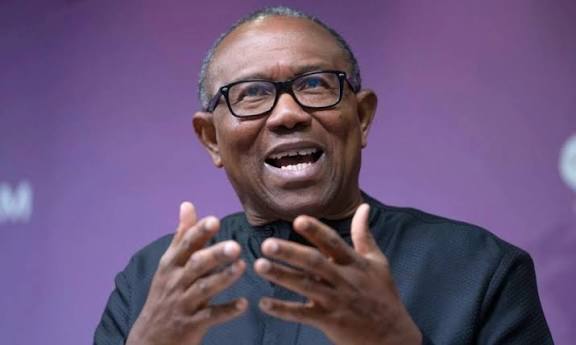
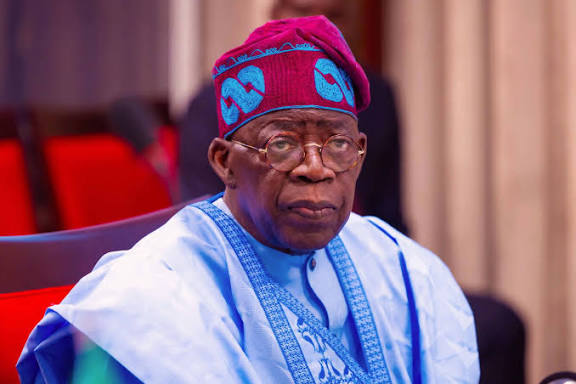
President Bola Tinubu, the candidate of the All Progressives Congress (APC), is seeking re-election, while former Vice President Atiku Abubakar, now of the African Democratic Congress (ADC), and Peter Obi, who is contesting under the Nigerian Democratic Congress (NDC), are among the major opposition figures preparing for the contest.

The race could once again produce a closely watched three-way contest similar to the 2023 presidential election.

In 2023, Tinubu contested under the APC, Atiku represented the Peoples Democratic Party (PDP), while Obi contested under the Labour Party.

Read Also: Nigeria’s 2027 Presidential Election: Beyond Judging Tinubu’s Government

Tinubu eventually won the election, with Atiku finishing second and Obi third.

Opposition Coalition Faces Major Test

The opposition is also exploring the possibility of forming a coalition to challenge the APC.

A proposed opposition unity summit in Abuja, reportedly backed by the G-100 Coalition led by former APC National Vice Chairman for the North-East, Salihu Lukman, is aimed at bringing opposition groups together and potentially producing a consensus presidential candidate.

However, differences among opposition politicians could make the process difficult.

Both Atiku and Obi have presidential ambitions, and convincing either politician to step aside for another candidate could prove challenging.

Atiku has contested presidential elections on several occasions, while Obi emerged as a major political force after his strong performance in the 2023 election.

Obi’s 2023 Momentum Faces New Test

Obi’s 2023 campaign attracted substantial support, particularly among young Nigerians who mobilised through the Obidient Movement.

Read Also: Nigeria’s 2027 Presidential Election: Beyond Judging Tinubu’s Government

The movement used social media and grassroots mobilisation extensively to promote Obi’s candidacy.

Although he finished third, his performance disrupted the traditional dominance of the two major parties and significantly affected voting patterns in several parts of the country.

However, questions remain over whether the movement can reproduce the same level of enthusiasm in 2027.

APC Begins Preparation for Re-election Campaign

The APC has expressed confidence in its ability to retain the presidency.

The party’s Director of Media and Publicity, Bala Ibrahim, said the ruling party was working to maintain public confidence and secure the renewal of Tinubu’s Renewed Hope mandate.

APC National Publicity Secretary Felix Morka also said the party was preparing a comprehensive nationwide campaign programme.

According to Morka, although August 19 was the date approved by INEC for the commencement of presidential and National Assembly campaigns, parties were not le…

Nigeria’s 2027 Presidential Election: Beyond Judging Tinubu’s Government

0

The Presidential and National Assembly campaigns will herald the commencement of campaigns for the 2027 general elections in Nigeria. The ruling All Progressive Congress (APC) will be campaigning for the re-election of President Bola Ahmed Tinubu for a second term in office.

The 1999 Constitution of Nigeria (as amended) allows an incumbent serving a four year term to run for a second term. The constitution limits a President to eight years in all.

Tinubu is among 19 candidates vying for the presidency in 2027. Among them are Alhaji Atiku Abubakar of the African Democratic Congress (ADC), Peter Obi of the Nigeria Democratic Congress (NDC), Governor of Oyo State, Seyi Makinde of the Allied Peoples Movement (APM) and Donald Duke of Peoples Redemption Party (PRP).

Political analysts generally view the forthcoming presidential election as a referendum on Tinubu’s government, but I think it is going to be a referendum on the opposition as well. For those who may not be familiar with the term “referendum”, it is simply a direct vote by the electorate on a proposal, law or political issue.

The presidential polls of January 16, 2027 are expected to bring two outcomes. May 29, 2027, is either the day eligible voters in Nigeria vote Tinubu back in office for another four years or they elect one of the remaining 18 presidential candidates to take over the mantle of leadership from him. That is provided Nigerians are allowed to exercise their franchise in a free and fair atmosphere.

The election is regarded as a referendum on Tinubu’s government because “ceteris paribus” (all other things being equal), the peoples opinion about the government will determine the fate of the President. If they think the government has done well, then they will definitely vote for him to continue. If they think differently they will elect a new President.

Nigerians will no doubt examine Tinubu’s achievements in office and compare them with the promises he made while campaigning for the presidency in deciding his fate. Tinubu’s 2023 campaign was built around the slogan of “Renewed Hope Agenda,” a strategic policy framework for 2023-2027.

The policy as designed by the President and his party was intended to reform Nigeria’s economy, improve security and enhance living standard through eight core pillars. Priority areas include economic reforms, national security, food security, natural resource development, infrastructure expansion, human capital development, innovation (including digital economy growth), industrialization and good governance.

Read Also: Tinubu’s Deep Offshore Order Could Unlock 1m bpd, $50bn Investment – NUPRC

Against all odds in the 2023 presidential election, including serious concerns about his health, APC’s poor security and economic scorecard under the Muhammadu Buhari administration, gaffes during the campaign and the controversy surrounding his same-faith (Muslim-Muslim) ticket , the Independent National Electoral Commission (INEC) declared Tinubu the winner, in the dust raised by his main opponents over the glitches that marred the upload of the results of the election to the INEC Result Viewing Portal (IREV). The rest is history.

President Tinubu today feels that his government has done very well, contrary to the opinion of his critics like the Catholic Bishops Conference of Nigeria who during a recent meeting with him expressed serious concerns about the worsening economic hardship, rising insecurity and democratic challenges. His appointees and other members of APC are never left out of the opportunity in the media to harped on the achievements of the present administration in various sectors especially the economy, infrastructure, education and security.

Some of the often trumpeted achievements of the present government include removal of fuel subsidy, unification of exchange rate, tighter fiscal policies and establishment of new tax architecture. Others are the attraction of billions of fresh foreign investments, the increase in the stock market, security/ military upgrades, and the continuous construction of the Lagos-Calabar Coastal Road and Sokoto Badagry Highway.

The government is equally credited with the establishment of the National Education Loan Fund (NELFUND) and creation of regional development commissions. NELFUND was established to provide zero-interest loans for higher education, while the regional commissions were set up to fast-track local infrastructure and economic growth.

Despite all these touted achievements, the general feeling outside the government circle and ruling party, is that the Tinubu government failed in its primary duties of ensuring the security and welfare of the citizens. Since the government came to power, poverty and hardship have increased dramatically in the country.

Millions of Nigerians are grappling with high food inflation and deep hunger. For the first time in the history of Nigeria, a hunger protest hit different parts of the country few weeks after the one year anniversary of the current administration. International partners, like the World Bank, describe the “painful economic reforms” as bold and necessary for economic stability and national growth, but also note that the reforms have severely strained everyday citizens with an estimated 139 million of them living in poverty.

Transportation and food prices skyrocketed after President Tinubu announced the removal of fuel subsidy on the day of his inauguration on May 29, 2023. While the federal government insists that the removal of subsidy has increased the revenue of the states and local governments, the standard of living of Nigerians continue to worsen.

In the same way, the liberalization of the foreign exchange market weakened the Naira, making imported goods much more expensive. The high costs sharply reduced the purchasing power of Nigerians, who depend heavily on imports.

The currency devaluation has resulted in a difficult economic environment (foreign exchange shortages, high operating costs) leading to scalebacks or exits by many well-known multi-national corporations and foreign investments. Procter and Gamble (P&G) and GlaxoSmithKline Consumer Nigeria (GSK closed manufacturing operations in Nigeria in December 2023 for example. GSK also shut down its commercial operations and instead moved to a third party distribution model for its consumer brands and medicine.

The departure of these companies and many others saw the cost of drugs go through the roof. The most affected were people with chronic diseases such as diabetes, cancer and arthritis. Number of jobs were lost because of the exodus of companies from Nigeria, thus aggravating the already terribly bad unemployment situation in the country. It seems the government purposefully allowed the average Nigerian on the street to feel the reforms without providing a buffer, especially for the vulnerable.

Although President Tinubu has assured Nigerians that the pains of the reforms are temporary, more than three years after he came to power, Nigerians have not seen any serious indication that their pains will abate soon.Insecurity remains a serious and complex national challenge with persistent kidnappings, banditry and violent attacks. Violent attacks continue, especially in rural communities. Attacks are forcing farmers off their farms, sparking fears of a further increase in food insecurity.

Nigerians now shun traveling on highways for fear of being kidnaped, thus hindering the movement of goods and services. Many rural communities, especially in northern Nigeria, have been emptied by violent attacks. Those who fled from these communities are now living in camps for Internally Displaced Persons (IDPs). The International Organization on Migration (IOM) estimates there are more than 104 IDP camps in Nigeria.

Urban dwellers are not immune either. They are faced with increasing cost of energy, healthcare, education, electricity, rents, transportation, food, cooking gas and other basic necessities of life. Insecurity is also endemic in many urban centers in Nigeria.

The government may pride itself on its success in achieving macroeconomic stability, but for many families the feeling is that little has been done to alleviate the heavy financial burden on households and low-income earners. President Tinubu has faced public criticism for not meeting Nigeria’s economic expectations, even as the government defends its aggressive reforms as vital for long-term economic growth.

The public sentiments appear to be heavily titled against the Tinubu administration, less than five months to the general election. Many analysts have said his government failed in its primary duty of ensuring security and welfare of the citizens.

But the opposition shouldn’t think the election is going to be about the incumbent and the road is clear for them. Political analysts have been widely assessing that the opposition parties themselves are failing to meet public expectations ahead of the 2027 general elections. Civil society organizations in Nigeria say the opposition is not strong or organized enough to provide an effective challenge to the ruling party.

Many of the opposition parties are either fragmented or are bogged down by persistent leadership tussles and factional disputes. Too many of them have failed to maintain a clear, single line of leadership. If they cannot manage their own affairs how can they manage the affairs of a large heterogeneous country like Nigeria?

Of course, the ruling party cannot be completely absolved of responsibility for the crises in the opposition parties’ ranks. Recently, the Igbo Leaders of Thought, a prominent assembly of Southeastern Nigerian intellectual, traditional rulers and stakeholders, expressed concern over the role played by state institutions including INEC and the courts in the crises in the opposition parties.

The opposition parties are also not absolved from the crises within their ranks. Many of them, in their conduct of affairs, override the party constitution. They haven’t been able to curb the moles within their ranks who work, overtly or covertly, for the ruling party. These moles are the people who are often used to sow discord among opposition parties.

The drive for a unified national movement in the opposition through a broad alliance of opposition figures, such as the botched ADC coalition, is often outweighed by individual ambitions and competing personal interests. The opposition, for the one time they got together in this Fourth Republic, kicked the ruling party out. That was in 2015. Muhammadu Buhari of the APC, then a merger of some of the existing opposition parties, defeated the sitting President, Dr. Goodluck Ebele Jonathan of the PDP. That defeat has not been recovered from till date by PDP.

The Labor Party (LP) emerged as a Third Force in 2023, but it was a ‘flash in the pan.’ Since then, LP’s success has been eroded by a prolonged intra-party crisis that factionalized the party and kept party leaders in and out of courts, including the Supreme Court, Nigeria’s apex court.

I conclude by arguing that the 2027 election is not a one-man referendum on Tinubu. I think it is a referendum on the opposition as well. I don’t want to interfere with the outcome of the election. That is for Nigerians to decide. I can only appeal to the Nigerian authorities to give the electorate a free and fair atmosphere to choose our next President using their votes.

Tinubu’s Deep Offshore Order Could Unlock 1m bpd, $50bn Investment – NUPRC

0

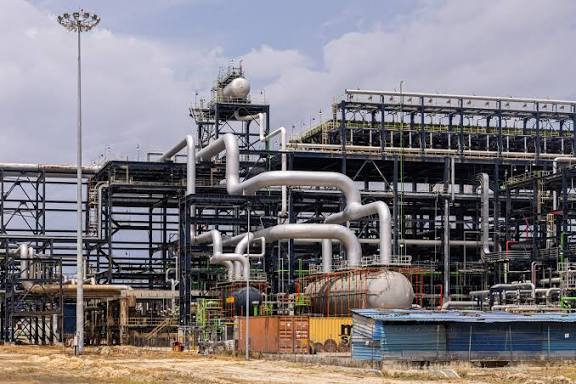
The Nigerian Upstream Petroleum Regulatory Commission (NUPRC) has said the Deep Offshore Oil and Gas Project Incentives (Tax Remission) Executive Order 2026 signed by President Bola Tinubu could unlock about $50 billion investments and increase the country’s crude oil and condensate production by an additional one million barrels per day (bpd).

This was disclosed by the Commission Chief Executive of NUPRC, Mrs. Oritsemeyiwa Eyesan, on Tuesday during Tuesday Live on NTA.

“The executive order has established a transparent, rules-based investment framework that will support new deep offshore developments and encourage investors to take Final Investment Decisions (FIDs),” said Enorense Amadasu represented by the Executive Commissioner, Development and Production, NUPRC.

“Nigeria currently produces about 1.7 million bpd of crude oil and condensate, while deep offshore operations account for about 24 per cent of total oil production and 19 per cent of gas production,” she said.

She said the country has produced more than 4.6 billion barrels to date from deep offshore assets, or about 5,000 cargoes.

The new incentives will help fast-track projects with already approved Field Development Plans (FDPs) by the NUPRC, Eyesan said.

Read Also: Amaechi Knows When to Put Personal Interests Aside – Atiku’s Aide

The NUPRC boss said the $10 billion Bonga South project, expected to come on stream in 2027, will be one of the projects that would drive the expected production increase.

“So where are these volumes going to come from? Nine of these projects have approved FDPs, so the next step is expected to be the FID in the near to mid-term.

“The $10bn Bonga South will be in 2027 and in the next four to five years we are expecting almost another one million barrels additional per day,” he said.

“The executive order will also have wider economic benefits, particularly for the marine economy, as increased deep offshore activities will require expansion of Nigeria’s logistics and marine infrastructure,” Eyesan said.

She also identified increased reserves, transfer of technology and skills and creation of jobs as some of the expected benefits of the policy.

She said the executive order is expected to provide greater certainty for investors and support the development of deep offshore oil and gas projects that require substantial capital and long-term investment.

Amaechi Knows When to Put Personal Interests Aside – Atiku’s Aide

0

Atiku Abubakar’s Senior Political Assistant to the African Democratic Congress (ADC) Presidential Candidate, Demola Olarewaju, said that the party’s running mate, Rotimi Amaechi, is a statesman who understands the game of politics.

He said Amaechi knows when to fight and when to sheathe his sword.

The aide posted his thoughts via his 𝕏 account, it was reported.

Amaechi knows when to bury his personal interest for the bigger goal of dislodging President Bola Tinubu in 2027, Olarewaju said.

“He is a statesman who knows when to fight hard and when to sheathe swords; when to be selfish and when to subsume personal interest for a larger agenda of kicking Tinubu out.

“Some people are only useful for themselves, thus useless for society and a coalition.”

Meanwhile, the former Chairman of Ikwerre Local Government Area of Rivers State, Samuel Okechukwu Nwanosike, popularly known as Ishi Nwanosike has threatened the African Democratic Congress (ADC) vise presidential candidate, Rotimi Amaechi ahead of 2027 election.

In a video circulating online, Nwanosike, a loyalist of the Minister of the Federal Capital Territory, Nyesom Wike, said it will be difficult for Amaechi to win the forthcoming general election in Rivers State, Naija News reports.

Nwanosike said that despite occupying several political offices for the last two decades, the people of Ikwerre have not benefited much from Amaechi.

He said the political battle ahead of the 2027 elections in Rivers State would go beyond the streets, warning that the contest would be taken to the former governor’s bedroom.

He said, “Amaechi was in the House of Assembly twice, the Ikwerre people supported him to become governor twice, and he was a minister for two tenures.

He would rather kill his friends than help the Ikwerre people. But he thinks that it’s just him that is from the Ikwerre Local Government.

“We are here to tell the world and his political faction that until the Supreme Court decides which faction of the ADC is to be recognized by INEC, they should not bother coming home. E go better.

“We will take the battle to their bedroom not the street.”

EFCC Charges FCMB Staff, Accomplice Over Alleged $25,000 Credential Deal

0

A First City Monument Bank (FCMB) staff, Gideon Bakpa Aghogho, and his alleged accomplice, Oscar Ebere Chukwuebuka, were on Wednesday arraigned before the Federal High Court, Lagos, over alleged unlawful dealings in the bank’s access credentials.

The suspects were arraigned by the Economic and Financial Crimes Commission (EFCC) along with one “Scott”, who the prosecution said is currently at large, it was reported.

They were arraigned before Justice F.S.N. Ogazi on eight counts of conspiracy, unauthorized access to a computer system, unlawful disclosure of access credentials, attempted interception of a network database and retention of proceeds of unlawful activities.

The Lagos Zonal Directorate 1 of the EFCC said the charges resulted from the alleged illegal provision and use of access credentials that could permit entry to the database of FCMB.

These offenses were reported to contravene the provisions of the Cybercrime (Prohibition, Prevention, Etc.) Act. Act, 2015, as amended in 2024, and relevant sections of the Money Laundering (Prevention and Prohibition) Act, 2022.

EFCC prosecutor, Bilikisu Buhari, was before the commission, while N. Egah appeared for Aghogho and M. Livingstone for Chukwuebuka. Patrick Ngbeoma appeared for the nominal complainant in a watching brief capacity.

Aghogho pled not guilty to the charges while Chukwuebuka pled guilty when the charges were read to them.

Buhari, following Aghogho’s request, asked the court to remand him in a correctional facility and asked for a date to start the trial.

The prosecutor asked the court to set a date for review of facts after his guilty plea on Chukwuebuka.

Justice Ogazi then adjourned the matter to August 27, 2026, for the review of facts and other proceedings and ordered that the defendants be held in a correctional center.

The charges alleged Aghogho supplied his access code to the FCMB system through the local Administrative Credential (ITSD) which, the prosecution contended, could allow access to the FCMB Virtual Center Platform.

“The anti-graft agency argued that the access credentials were given between July 24 and 26, 2026 in Lagos with the intention to commit an offense.

In a separate count, the commission alleged that between April and May 2025 in Lagos, Aghogho knowingly and without any lawful authority disclosed access credentials, including FCMB’s server IP and domain credentials to enable access to the bank’s database in exchange for $15,000.

Chukwuebuka was also accused of leaking access credentials like the IP of the bank’s server and domain credentials, for an alleged financial gain of $10,000.

The prosecution further alleged that between July 24 and 26, 2026, Aghogho and Chukwuebuka, together with “Scott”, attempted to use an HP Elite laptop assigned to Aghogho by FCMB as a working tool to illegally access the bank’s database.

The EFCC also said the defendants and “Scott” made attempts to unlawfully access FCMB’s network database. The last two charges concern alleged possession of proceeds of crime.

The charges say Aghogho was in possession of $2,000 and Chukwuebuka of $400 as of July 26, 2026, which the prosecution argues they should reasonably have known was part of the proceeds of unlawful acts.

‘I Didn’t Know She Was With Him’ – Blaqbonez Speaks on Odumodublvck Rift

0

Nigerian rapper, Blaqbonez, has disclosed that his long-standing feud with his colleague, Odumodublvck, stems from an intimate relationship with a girl the singer was also involved with.

It was recalled that Odumodublvck has always maintained that his beef with Blaqbonez is not about music.

In June 2025, Odumodublvck responded to Blaqbonez’s diss song with a post via 𝕏, saying: “You want to make it about studio. Na lie. The street finds us again. You know the score. This is not a rap beef. Na me and you for this world.

Speaking in an interview with media personality, Rufai Oseni, Blaqbonez said he didn’t know that Odumodublvck was romantically involved with the girl.

He said, “Odumodu and I had a girl at the same time but I didn’t know she had Odumodu too around the same time we met.

Read Also: UNICEF Supports Kano Health Sector With Upgraded Primary Healthcare Centre

I didn’t know the girl was with Odumodublvck. I don’t know when Odumodublvck came into the picture exactly. She told my manager that she’s going to destroy my career.

Odumodublvck called me on the phone to tell me I was disturbing his babe. And I’m like how? Then I told him I’m not disturbing your babe. We had a thing and she sent me a weird message and I just called her to know why she send me this message, but she didn’t pick my calls and I blocked her.

We never spoke again. And then I talked to you later and found out it was you. I found out it was you when I didn’t speak with her again since then. I have kept away from the girl.

Odumodublvck sent me a message five minutes after the call asking when last did I have intercourse with her. And I said to him bro I don’t know what she told you so I can’t answer this question and affect anything that you guys got.

“This is me trying to avoid the drama. Odumodublvck Now said, “You’re not telling me then we’re enemies.”