President Bola Tinubu’s special assistant on media and public communications, Daniel Bwala, has expressed his disapproval of the recent comments made against Nigeria by Kemi Badenoch, the head of the UK Conservative Party. Bwala attacked Badenoch in a string of tweets for her derogatory depiction of Nigeria, claiming it was an unsuccessful attempt to win over the UK’s far-right audience.
Bwala said he was disappointed by Badenoch’s remarks, calling them demeaning and detrimental to Nigeria’s reputation. He claims that Badenoch’s speech unjustly presents her native country in a negative way. In reaction to the Conservative leader’s remarks, Bwala tweeted, “I sincerely hope that sister @KemiBadenoch would refrain from disparaging Nigeria, her homeland, as a means to appease her far-right base.”
Badenoch’s scathing comments against Nigeria’s governance situation in her first speech of the year sparked the uproar. She referred to the nation as “poor” and charged that corruption and poor administration were ruining lives. Badenoch shared her own story of growing up in Nigeria, explaining how her family, who had previously been prosperous, became drastically poor as a result of inflation and bad administration. She described how these encounters influenced her determination to keep Britain from suffering a similar fate.
“I grew up in a poor country, and I saw my relatively wealthy family keep getting poorer and poorer even though they worked harder because inflation took away their money,” Badenoch remarked. With my father’s final £100 and the promise of a better life, I returned to the UK at the age of 16. I have therefore experienced the repercussions of a horrible regime that ruins lives, and I would never, ever want it to occur here.
Others, like Bwala, have seen Badenoch’s words as a betrayal of her heritage, while others have applauded her for being so forthright. Bwala compared the situation to that of former UK Prime Minister Rishi Sunak, who is of Indian heritage and never used derogatory remarks against India to further his political career. He maintained that Badenoch’s comments lacked the delicacy and diplomacy that a Nigerian leader should possess.
Bwala said, “Rishi Sunak never weaponized gang rape and other vices in India, his home country, just to impress the far-right base.” While praising Badenoch’s political accomplishments and intelligence, he bemoaned her “dreadful rhetoric against Nigeria.”
There are differing views on social media as a result of the controversy over Badenoch’s remarks. Others mirrored Bwala’s stance, stressing the necessity for constructive criticism that does not damage the nation’s reputation abroad, while several Nigerians backed her for speaking up against the shortcomings of the Nigerian administration.
This conversation demonstrates the fine line expatriate politicians must walk when tackling issues pertaining to their home nations. Bwala’s criticism highlights the wider ramifications of such utterances on national identity and pride, even though Badenoch’s speech reflects her political viewpoint and personal experiences.
As the discussion goes on, it brings up issues regarding leaders’ obligations to preserve the honor of their heritage while negotiating the political systems of their new nations.
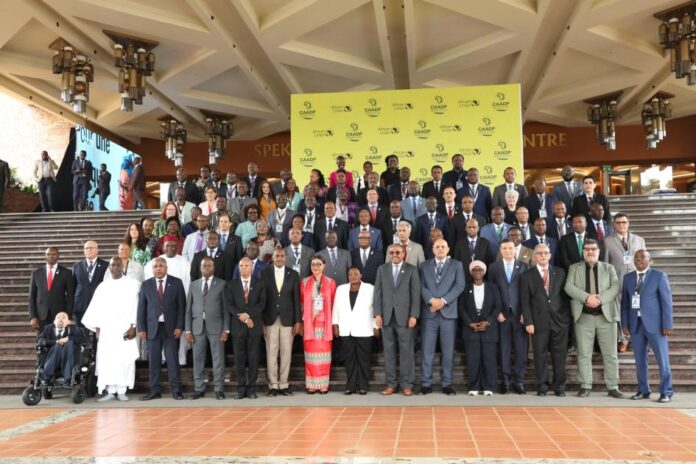
Officials from 49 African Union member states, including Uganda’s President Yoweri Museveni, recently convened for the Comprehensive Africa Agriculture Development Program (CAADP). This high-profile event focused on strengthening food security systems and promoting sustainable agricultural practices across Africa. Leaders emphasized that agriculture remains pivotal in addressing Africa’s socioeconomic challenges and reducing dependence on external markets.
President Museveni, a staunch advocate of agricultural development, recounted Uganda’s journey toward leveraging its natural resources for prosperity. He underscored four critical sectors essential for Africa’s advancement: commercial agriculture, manufacturing, services, and information and communication technology (ICT). These sectors, he argued, are the backbone of any thriving economy.
Historical Context and Challenges
The President highlighted the limitations of precolonial and colonial economic structures. These economies were largely precapitalist and focused on subsistence farming—an approach defined as “working only for the stomach.” While communities developed artisan skills like blacksmithing, woodworking, and ceramics, large-scale economic development was stunted.
Colonial-era economies further entrenched inequality by prioritizing cash crops such as coffee, cotton, and copper, alongside tobacco, tea, and tourism. These products were exported as raw materials, with minimal value addition locally. This model left only 9% of homesteads participating in the colonial cash economy, creating what Museveni described as an “enclave economy”—a small island of modernity in a sea of underdevelopment.
The Path to Agricultural Revolution
Uganda’s post-1960s economic strategy sought to address these historical imbalances. According to Museveni, agriculture must be fully commercialized to ensure food and income security for families. He advocated for tailored strategies based on land size:
Intensive Agriculture: For families with small plots (four acres or less), high-value crops and enterprises are key. Examples include coffee, fruits, dairy products, and poultry farming.
Extensive Agriculture: For larger plots, low-value crops like cotton, tea, and maize, grown at scale, can generate substantial income.
President Museveni stressed that intensive and extensive agricultural models must work in harmony. For instance, intensive agriculture often relies on by-products from extensive farming, such as maize for poultry feed or sugarcane for livestock feed. Relying solely on imports for these inputs could make local products uncompetitive in global markets.
Breaking the Poverty Cycle
Reflecting on colonial policies, Museveni criticized how they pushed families to grow cash crops like cotton without reaping significant economic benefits. While production increased, poverty persisted among the farmers. Today, Uganda and other African nations aim to reverse this trend by focusing on value addition and sustainable practices that uplift local communities.
Conclusion
The CAADP meeting underscored that agriculture is not just about feeding populations; it’s about creating wealth, fostering independence, and unlocking the continent’s potential. With the right strategies and investments, Africa can transform its agricultural sector into a global powerhouse, ensuring prosperity for generations to come
Senator Orji Uzor Kalu Highlights Governance Challenges
In an appearance on a morning show, Senator Orji Uzor Kalu spoke candidly about the challenges facing Nigerians, particularly in relation to the South East region. Dressed patriotically in a Nigerian jersey, he addressed several pressing issues, including the recently debated tax reform bills, the uneven distribution of resources, and governance inefficiencies. His remarks provide a roadmap for understanding and tackling Nigeria’s complex economic and social problems.
Tax Reforms: A Progressive Step with Room for Dialogue
The senator began by applauding the progress made with the tax reform bills. He described them as “progressive” but stressed the need for expanded dialogue. According to Kalu, most of the laws currently in use in Nigeria are outdated and no longer fit for the modern era.
“Most of the laws we are using today in Nigeria are obsolete. They are not functional laws for a 21st-century economy,” he said. “We started at the same time as countries like Indonesia, Malaysia, and Vietnam. Look at where they are today; they have left us behind.”
He expressed optimism about the reforms, believing they would lay the foundation for a more competitive and diversified economy. However, he emphasized the importance of consultation with all stakeholders, including ordinary Nigerians.
“The governors have done the needful by initiating discussions, but it is crucial to take these conversations to the people on the streets and all departments within the states.”
VAT Sharing Formula: A Balanced Proposal?
A significant portion of the discussion revolved around the proposed changes to the Value Added Tax (VAT) sharing formula. Currently, VAT is distributed as 20% for derivation, 50% for equality, and 30% based on population. The new proposal aims to shift these percentages to 60% for derivation, 20% for equality, and 20% for population. However, the governors’ forum suggested a compromise: 30% for derivation, 50% for equality, and 20% for population.
Kalu expressed measured support for the governors’ position. “This is a starting point for discussion. While the governors have set the ball rolling, the National Assembly will have the final say. The sharing formula is only a small part of what the bill addresses. The bigger picture is creating a system that benefits all Nigerians.”
He also highlighted the political nature of resource allocation, noting that ongoing amendments and consultations would ensure fairness over time.
Addressing Regional Inequalities and Promoting Competition
One of the core issues discussed was how these reforms could exacerbate or alleviate regional inequalities. Some critics argue that states in the northern region, which rely heavily on federal allocations, may struggle under the new system. However, Kalu dismissed this notion, insisting that every Nigerian state is viable.
“There is no state in Nigeria that is not viable. States like Zamfara and Sokoto are rich in untapped solid minerals. It is up to their leaders to attract investment and develop these resources,” he said.
Drawing comparisons to China, Kalu advocated for healthy competition among states to drive growth. “In China, provinces compete fiercely, and this has fueled their economic growth. Nigeria can adopt a similar model to unlock the potential of all regions.”
Criticism of Governance Practices
Kalu did not shy away from criticizing governance practices, particularly the misuse of public funds. He called on leaders to prioritize investments over luxuries.
“Governors and people in government should stop buying luxurious cars every year. They should focus on investments that will benefit the people in the long term,” he remarked.
The Role of the National Assembly
Turning to his role in the National Assembly, Kalu addressed perceptions that the current legislature is a “rubber stamp” for the executive branch. He refuted these claims, emphasizing the independence of the National Assembly.
“We are not stooges for anybody. Disagreements happen behind closed doors, and the Senate often provides constructive feedback to the executive,” he said.
On the budget, he acknowledged public dissatisfaction but assured Nigerians that lawmakers are committed to scrutinizing allocations and ensuring accountability.
A Call for Modern Governance
Throughout the interview, Kalu emphasized the need for Nigeria to adopt modern governance practices. He pointed out that many laws from the colonial era remain unchanged, hindering progress. “We must be modern people and update our laws frequently to reflect current realities,” he urged.
Moving Forward: A Vision for a Better Nigeria
Kalu’s comments reflect a vision of a more competitive, equitable, and modern Nigeria. While he acknowledged the hardships many Nigerians are currently facing, he expressed optimism about the country’s future.
“It might be difficult now, but in the long run, we will see a better Nigeria,” he concluded.
By addressing outdated laws, promoting regional competition, and fostering inclusive dialogue, Kalu believes Nigeria can overcome its challenges and emerge stronger. His call for action is not only a challenge to policymakers but also an invitation for all Nigerians to engage in shaping the country’s future.
The Role of the National Assembly in Addressing Nigeria’s Challenges
Nigeria faces significant challenges, including economic instability, insurgency, and social discontent. The National Assembly is at the forefront of efforts to address these issues, working to reverse hunger and enhance the lives of citizens. Despite criticism, legislators emphasize their commitment to constructive collaboration with the executive branch and underscore the importance of effective lawmaking to support national development.
Bridging the Gap Between Executive and Legislative Powers
A common perception is that the National Assembly operates as a rubber stamp for the executive branch. However, senators and representatives assert that their role involves critical examination of policies and constructive disagreements with the executive. Such disagreements often take place behind closed doors to maintain stability and avoid sensationalism. For instance, closed sessions between the Senate and House of Representatives provide opportunities to resolve conflicts while preserving the integrity of governance.
Rather than engaging in public disputes, the legislature adopts a problem-solving approach, focusing on repairing systemic issues. This approach is rooted in the understanding that visible discord between the branches of government undermines public confidence. By fostering a collaborative atmosphere, the National Assembly aims to ensure that laws are passed and implemented effectively to improve the lives of citizens.
Legislative Responsibility and Implementation Challenges
The National Assembly’s primary responsibility is lawmaking. Legislators acknowledge that while they draft and approve laws, the implementation rests with the executive and its agencies. This delineation of roles often leads to misplaced blame, as citizens expect immediate results from the legislative arm. However, lawmakers stress that their efforts are focused on crafting laws that align with the needs of Nigerians, leaving the execution to the appropriate authorities.
Despite these challenges, legislators dedicate long hours to their duties. For example, during budget deliberations, some members of the National Assembly work from morning until late at night to ensure thorough scrutiny and alignment with national priorities. This commitment underscores the depth of responsibility and effort invested in governance.
Addressing Southeast Economic Development
The Southeast region of Nigeria, renowned for its industrial and entrepreneurial spirit, remains underdeveloped. Challenges such as inadequate transportation networks, limited access to capital, and persistent insecurity hinder the region’s economic potential. Lawmakers advocate for targeted federal interventions to support the Southeastern Economic Corridor.
Key steps include:
Improved Infrastructure: Enhancing transportation networks is essential for connecting the region to national and regional markets. Modern roads, railways, and ports can facilitate the efficient movement of goods and services.
Access to Capital: Businesses in the Southeast require financial support to thrive. Initiatives such as low-interest loans and grants can empower entrepreneurs and stimulate economic growth.
Security Stabilization: Addressing insurgency and banditry is critical for fostering a conducive business environment. The federal government must intensify efforts to combat insecurity, allowing the region to realize its economic potential.
Integration with Trade Frameworks: By aligning with national and regional trade policies, the Southeast can become a hub for manufacturing and export. This integration would attract investment and create jobs.
Harnessing Local Potential
The Southeast is capable of producing goods that rival imports. With proper infrastructure and support, the region could manufacture items currently sourced from abroad. For example, Aba, a city known for its industrial prowess, can produce everything from footwear to electronics. Efforts to promote locally made products, such as labeling them “Made in Aba” instead of foreign brands, can boost the region’s economy.
Electricity remains a critical barrier. Reliable power supply would revolutionize industries, enabling continuous production and innovation. The federal government’s role in providing sustainable energy solutions is pivotal to unlocking the Southeast’s potential.
The Role of Leadership and Social Organizations
Leadership within the Southeast plays a vital role in driving development. Organizations like Ohanaeze Ndigbo, under capable leadership, can unite the region’s stakeholders, fostering collaboration and advocacy. The appointment of Senator Emmanuel Iwuanyanwu as President-General of Ohanaeze Ndigbo has raised expectations for non-partisan, socio-cultural leadership that prioritizes the region’s interests.
By focusing on dialogue and strategic negotiations, such organizations can influence policies that benefit the Southeast and contribute to national stability. The collective support of governors and other political leaders further strengthens the region’s position in national discourse.
Reflecting on Nigeria’s Political Evolution
The class of 1999–2007 governors has significantly shaped Nigeria’s political landscape. Members of this group, now occupying key positions such as the presidency and the National Assembly, have brought their experience to bear on governance. While they acknowledge that challenges remain, they emphasize their sincerity in pursuing reforms that benefit the nation.
President Bola Tinubu, a member of this cohort, embodies the boldness required to implement transformative policies. Legislators from this era, such as Senator Orji Uzor Kalu, advocate for comprehensive reforms that address economic and social issues. Their shared history and commitment to progress serve as a foundation for advancing Nigeria’s development.
Overcoming Current Challenges
Nigeria’s current challenges require bold leadership and collective effort. The government must prioritize economic reforms, security stabilization, and social cohesion. The National Assembly plays a crucial role in supporting these efforts through robust lawmaking and collaboration with the executive branch.
As the nation navigates complex issues, citizens are urged to recognize the dedication of their representatives. Progress may be gradual, but with sustained commitment, Nigeria can achieve stability and prosperity for all its people
The Lagos State Ministry of Environment and Water Resources enforcement team recently apprehended and punished hoodlums for defecating at the Ile Epo Pedestrian Bridge in Abule Egba.
In a bid to maintain public hygiene and discourage acts of environmental nuisance, the Ministry’s enforcement officers launched a targeted operation to address the unsanitary practice, which has long been a concern for residents and commuters.
The incident occurred at the busy pedestrian bridge, which serves as a vital link for thousands of people daily. According to the Ministry, the hoodlums were caught in the act and subjected to immediate disciplinary measures in accordance with environmental laws.
Speaking on the development, an official from the Ministry emphasized the state’s zero-tolerance policy for acts that compromise public health and safety. “This behavior is not only unhygienic but poses serious health risks to the community. Such actions will not be condoned,” the official stated.
The Lagos State Government has intensified efforts to maintain cleanliness and order in public spaces, urging residents to report individuals engaging in such acts. As part of the government’s drive, facilities for proper sanitation have been installed across the state to discourage public defecation and ensure access to hygienic alternatives.
Residents applauded the swift action, calling for sustained enforcement to deter similar acts. The video of the operation has since sparked conversations online, with many praising the government’s commitment to keeping Lagos clean.
The Lagos State Ministry of Environment and Water Resources enforcement team has punished some hoodlums for defecating at the Ile Epo Pedestrian Bridge in… pic.twitter.com/Q4odiG4gQO
Faults Former Emir’s Past at First Bank, CBN for Nation’s Economic Woes
The Northern Patriotic Coalition for Democracy (NPCD) has condemned former Emir of Kano, Muhammadu Sanusi II, for his criticism of President Bola Ahmed Tinubu’s economic policies, describing his statements as careless and misinformed.
The group said Sanusi lacks the moral justification to advise the government, accusing him of exacerbating the country’s economic problems.
According to the NPCD, Sanusi’s tenure at First Bank was marred by questionable loan approvals that contributed to the banking crisis, while his policies as Central Bank of Nigeria Governor were inconsistent and often controversial.
Speaking at a press conference on Friday in Abuja, its convener, Mohammed Yahaya, described Sanusi’s comments as “unhelpful” and “indicative of a lack of genuine interest in the advancement of Nigeria.
The NPCD expressed support for President Tinubu’s economic reforms, including the removal of fuel subsidies and unification of exchange rates.
The group noted that these reforms have received widespread support from global economic experts and institutions like the World Bank and IMF.
“Firstly, let us recognize that President Tinubu has taken bold steps to correct decades of economic mismanagement. The removal of the fuel subsidy, while initially challenging, was a necessary move to free up resources for critical infrastructure and social investments which has further helped mitigate its impact on the vulnerable populations
“The unification of the exchange rate has also been widely praised by global financial institutions, including the World Bank and IMF, as a step toward long-term economic stability.
“Secondly, it is worth noting that these reforms have received widespread support from global economic experts. The World Bank has projected positive growth for Nigeria’s economy in the coming years, affirming that we are on a path to recovery.
“Evidently, the Tinubu administration is steering Nigeria in the right direction, despite the temporary pains of adjustment. It is no news that President Tinubu’s administration has demonstrated its openness to dialogue with stakeholders with meaningful contributions across various sectors.
“This government has prioritized transparency and inclusivity, ensuring that the voices of ordinary Nigerians are heard in shaping policies that directly affect their lives. Additionally, efforts are underway to communicate these policies effectively in local languages, ensuring that all Nigerians understand the benefits of these reforms.
“Rather than acknowledging these efforts or contributing positive ideas to enhance their effectiveness, Sanusi opted for a cynical and self-serving narrative. In contrast, what has Sanusi offered? Criticisms that are devoid of actionable solutions and reflect a parrot-like analysis of Nigeria’s economic situation.
“He speaks of problems but offers no roadmap for resolution. This pattern of empty rhetoric is unhelpful and unbecoming of someone who claims to be a patriot. We believe that such inconsistency raises serious questions about the integrity of his arguments.
“Does Sanusi have a personal grudge against the policies, or is his criticism motivated by anything else? His recent comments give a clear picture of being more about settling personal scores and furthering partisan goals than they are about the actual content of economic reforms.”
Yahaya urged Sanusi to abandon his “cynical criticisms” and engage constructively with the government to address Nigeria’s challenges.
Yahaya also called on Nigerians to reject “divisive counterproductive rhetoric” and support President Tinubu’s leadership, which they believe is taking bold steps to correct decades of economic mismanagement.
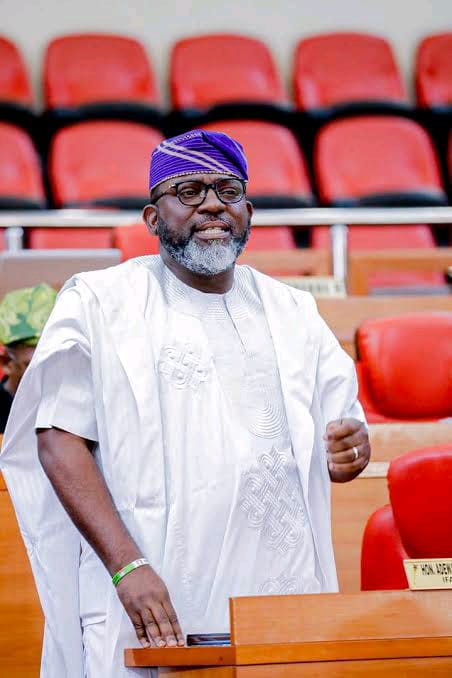
Temitope Adewale Adedeji has been named the new Majority Leader of the 10th Assembly by Lagos State Speaker Mojisola Meranda.
The constituency of Ifako-Ijaiye I is represented by Adedeji.
This statement follows the impeachment of former Speaker Mudashiru Obasa on Monday, which resulted in Meranda becoming the new Speaker of the Lagos State House of Assembly.
According to sources, Dr. Oba Otudeko, the chairman of Honeywell Group and the former chairman of First Bank Plc, departed Nigeria soon after it was revealed that he would soon be arraigned for fraud by the Economic and Financial Crimes Commission, or EFCC.
It discovered that on Thursday night, Otudeko departed the nation through one of Nigeria’s land borders. According to security officials, a family member dropped him off at the Nigeria-Benin border.
Oba Otudeko and three others were charged with 13 counts by the anti-graft commission before the Federal High Court in Lagos. The charges center on claims that a ₦30 billion loan was obtained fraudulently and under false pretenses.
Co-defendants include former First Bank Group Managing Director Stephen Olabisi Onasanya, former Honeywell Flour Mills Plc board member Soji Akintayo, and Anchorage Limited, a business purportedly associated with Otudeko.
The First Bank loan tranches that Otudeko and his co-defendants obtained totaled ₦12.3 billion, ₦5.2 billion, ₦6.2 billion, ₦6.1 billion, and ₦1.5 billion, according to the EFCC. According to reports, these cash were acquired by pretending to be distributed to other businesses.
A Federal Court in the Federal Capital Territory (FCT) has granted the New Nigeria Peoples Party (NNPP) leadership an interim injunction to prevent a faction of the party from choosing parallel national and state executives to manage the party’s operations.
A power struggle over control of the party’s 2022 structure has engulfed the national leadership of the NNPP, which is devoted to Dr. Musa Kwankwaso, the party’s presidential candidate in the 2023 election, and the camp, which is loyal to Dr. Boniface Aniebonam, the party’s founder.
The court prohibited members of the organization led by the defendant in suit No. FCT/HC/CV/5518/2024 from
Aneibonam from posing as NNPP members and from electing new officers through national conventions and congresses.
Ladipo Johnson, the party’s national publicity secretary, provided a copy of the directive to the Nigerian Tribune in Ibadan on Thursday, claiming that the individuals responsible for the scheme were no longer NNPP members.
Accusing them of being utilized by opposition parties by “towing their line on issues and attempting to confuse the public about the rightful leadership, logo, and colors of the New Nigeria Peoples Party,” Johnson said that Aniebonam and other party chieftains in his camp had been dismissed by the NNPP long ago.
“The court’s order also prohibits them, their agents, or servants from performing or undertaking any official activity for and on behalf of, or in the name of the NNPP,” the NNPP spokesperson clarified.
In a similar vein, the court barred the Independent National Electoral Commission (INEC) from keeping tabs on their unlawful congresses or receiving or responding to any contact from them.
We are aware that an effort is being made to divert our attention by using these former members. But in order to stop their unlawful use of the party’s name, the party expects that they will show up in court, Johnson asserted.
This afternoon, I had the honor of leading a delegation on behalf of our esteemed congressman, Hon. Chief Dr. Philip Agbese, the ENONE Chief Servant, to pay a condolence visit to Engr. Nwike Linus Chinedu, a prominent business tycoon of the Ezza community in Apa-Agila, Abuja. Engr. Nwike, widely known as the Ogbuefi 1 of Ndi Ezza, is also the president of Ezza Ezekuna Benue State and the secretary-general of Ezza Ezekuna National. The visit was to commiserate with him and his family over the recent passing of his beloved mother.
Hon. Philip Agbese extended his heartfelt condolences to the family, emphasizing the depth of a mother’s love, which he described as immeasurable and irreplaceable. Acknowledging the magnitude of their loss, he urged the family to find strength and courage during this challenging time. “No one is ever truly prepared to lose a mother,” he said, “but we must strive to bear such irreparable losses with fortitude.”
While the primary focus of the visit was to console the bereaved family, Hon. Agbese used the occasion to advocate for unity, peace, and development within the Ezza community. He stressed the importance of collaboration and mutual support in fostering growth and progress in the region.
In his response, Engr. Nwike expressed profound gratitude for the visit, describing it as a significant honor. He noted his admiration for Hon. Agbese’s efforts and dedication to the community. Engr. Nwike also appealed to the congressman to champion the cause of inclusive governance and address the pressing issue of voter registration.
Highlighting a key challenge, Engr. Nwike stated that over 75% of residents in Ado and Oju local government areas have not yet participated in elections. He urged Hon. Agbese to advocate for additional voter registration opportunities through the Independent National Electoral Commission (INEC). Engr. Nwike emphasized the importance of engaging the community in upcoming elections, remarking, “Democracy is a game of numbers, and active participation is crucial.”
In a show of unwavering support, Engr. Nwike assured Hon. Agbese of the community’s full backing in the 2027 elections. “We are aware of every good thing you are doing for our people, and I promise you massive and total support in the future,” he stated with enthusiasm.
The visit not only provided solace to the bereaved but also reinforced a shared commitment to unity and progress in the Ezza community.
Minister of State for Petroleum Resources (Oil), Sen. Heineken Lokpobiri, has reaffirmed the Federal Government’s commitment to guaranteeing petroleum product supply and quality control in a deregulated industry.
This was revealed by Lokpobiri to reporters shortly after the ministry’s first-ever Petroleum Industry Stakeholders’ Forum on Thursday in Abuja.
According to him, the price of crude oil globally determines the price of Premium Motor Spirit (PMS), also referred to as petrol, in a deregulated market, and Nigeria would not be an exception.
According to reports, the forum gives the stakeholders a chance to conduct a comprehensive analysis of the sector with the goal of identifying problems and suggesting suitable solutions for its expansion.
We are worried about the government’s greater interest in availability and quality control, which is something I always bring up with the Nigerian Midstream and Downstream Petroleum Regulatory Authority (NMDPR).
The proper quantity’s disposal is of special concern to the government.
Let’s hope that the fuel pump pricing does not undercut us if we purchase ten liters of fuel; that’s where the problems lie.
“The goal of deregulation is to allow prices to stabilize.” You were hearing bad news about gasoline subsidies before, but now that the industry is fully deregulated, there is no news about them.
“The price of fuel may increase in tandem with the global oil price. The price may decrease when the price of oil declines.
“The true essence of deregulation is that there are no lines because people have a choice of fuel stations to purchase fuel once there is competition,” he stated.
The minister emphasized the necessity of resolving the sector’s many taxes and levies as well as policy disagreements.
According to him, the forum’s goal was to unite the oil industry’s top executives so they could present a united front and reach an agreement on issues that would benefit the sector.
“The goal is to create a one-stop shop where all interested parties can come together to discuss issues related to the oil industry and develop policies,” he stated.
The Petroleum Retail Outlets Owners Association of Nigeria (PETROAN) National President, Dr. Billy Harry, also spoke and stated his desire to cooperate with the government in order to guarantee energy security.
Harry, while thanking the minister and all industry stakeholders that had ensured that the forum was established, recommended that the forum should be convened quarterly in anticipation of favourable policies.
Alhaji Abubakar Shettima, National President, Independent Petroleum Marketers Association of Nigeria (IPMAN), while lauding the inaugural forum, attributed the current reduction in retail prices of fuel to its partnership with Dangote Refinery.
According to Shettima, IPMAN has been loading petroleum from the Dangote refinery since the end of 2024, exactly like MRS Oil Marketing Company.
According to him, PMS rates were lowered to a consistent N935 across all of their locations nationwide as a result of the agreement between MRS, IPMAN, and Dangote refinery.
Ministers of state petroleum resources (oil and gas), important industry participants, chief executives of regulatory bodies, and industry captains were among the stakeholders present at the meeting.