Home Blog Page 322

Nigeria Secures Historic First U-19 Women’s Cricket World Cup Victory

0

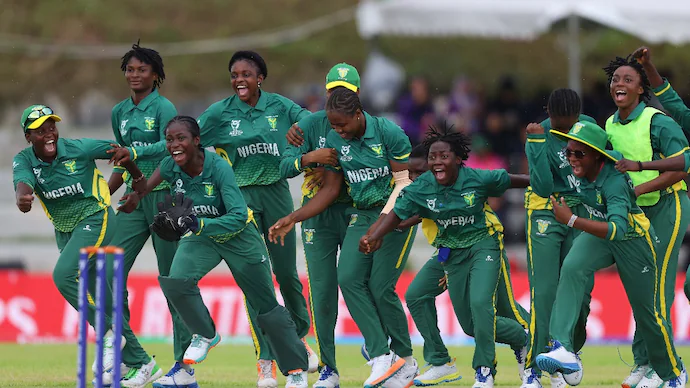
With a two-run victory over test-playing New Zealand on Monday, Nigeria’s Junior Female Yellow Greens finally got a taste of the action at the 2025 ICC U-19 Women’s T20 World Cup in Malaysia.

Similar to what happened against Samoa on Saturday, Sarawak’s rain caused the game to be postponed. However, the Nigerian team’s brilliance was not to be dampened, as the action started more than two hours later than planned and with fewer overs.

The Nigerian hitters were forced into the crease as New Zealand decided to field first.

The Junior Yellow Greens finished with 65 runs for the cost of six wickets in 13 overs, led by captain Lucky Piety, who smashed Nigeria’s maiden six in a steady innings at a Women’s World Cup.

Knowing that their bowling had to join the celebration, Sarah Bakhita’s squad proceeded cautiously in the second innings before dismissing the fourth-ranked country for 63 runs at a cost of six wickets.

U.S. TikTok Fans Celebrate App’s Return, Hoping for the ‘Magic’ to Reignite

0

For the first time in five years, millions of TikTok users in the United States received a surprise notification on Saturday night that their favorite app had been shut down and banned.

Following the announcement by President-elect Donald Trump, who assumes office on Monday, that he would restore U.S. access, the restriction was lifted on Sunday after less than twenty-four hours.

However, since TikTok has captured the attention of over half of all Americans, many users had already begun to think about life without it by the time the app went back online.

Upon their return, some users took to social networking platform X to praise Trump or share heartfelt farewells in response to the sudden shutdown. Some wondered if the TikTok experience would ever be the same again.

“We’ve returned, but at what price?” On the platform, one person pondered.

Trump’s decision to save ByteDance-owned TikTok is a reversal of his first term in office.

He sought to outlaw the short-video app in 2020 due to worries that the business might provide the Chinese government access to Americans’ private information.

Trump has recently claimed to have “a warm spot in my heart for TikTok,” attributing his success in the 2024 election to the app’s role in attracting younger people.

Late on Saturday, TikTok ceased operations for American users, and on Sunday, a statute that shut it down for national security reasons went into effect.

In order to reach an agreement to safeguard our national security, Trump promised to “extend the period of time before the law’s prohibitions take effect.”

On his Truth Social platform, he posted, “I would like the United States to have a 50% ownership position in a joint venture.”

Despite their relief, some users question whether the TikTok experience would ultimately change as a result of the company’s ownership structure change.

“I recall how Elon’s acquisition of Twitter fundamentally changed public opinion and user behavior on the platform.

“So that gives me a lot of concern,” said Kelly Sites, 38, referring to billionaire Elon Musk’s purchase of the social media site now known as X.

“I don’t want the magic of the algorithm to change,” said Sites, a part-time content creator based in Kansas City, Kansas.

The algorithms TikTok relies on for its operations are deemed core to the overall operations of ByteDance, which would make a sale of the app with algorithms highly unlikely, Reuters reported in April.

Even if there are still concerns about TikTok’s future, some users, especially those who make a career off of it, complain that their faith in the government will never be the same.

“I think that this is a very sad time in history,” said Richard “Chuck” Fasulo, 37, a mechanic and auto-influencer from Duchess County, New York.

Fasulo told Reuters that the app helped him dig his way out of debt, more than double his income and take his family on vacation for the first time last summer.

It was unpleasant to face the possibility of losing the business potential the app offered.

“I think that myself, like many others, have gained a lot of disdain for the U.S. government,” said Fasulo, who has about 400,000 followers.

For others, however, relief is the important thing, no matter its source.

“I would choose a political stunt over losing TikTok forever,” Charlotte Warren, 31, a dating and relationships content creator based in Austin, Texas, told Reuters.

Without TikTok, she said she could lose up to 60,000 dollars in annual income, over 200,000 followers and was unsure if she would continue posting content to other platforms.

“I just wanted my app back.”

NAHCON Sets 2025 Hajj Fare at Over N8 Million

0

According to the National Hajj Commission of Nigeria (NAHCON), Nigerians planning to travel to Saudi Arabia for the Hajj in 2025 will have to pay fares ranging from N8.3 million to N8.7 million, depending on their region.

Expectant pilgrims from Southern States will pay N8.7 million, while those from Borno and Adamawa Zone will pay N8.3 million, according to a statement released by NAHCON on Monday.

Prof. Abdullahi Usman, the Executive Chairman of NAHCON, explained that the Hajj fare was the outcome of careful coordination with all pertinent parties.

Usman made this claim in a statement released in Abuja on Monday by Mrs. Fatima Usara, the organization’s assistant director of information and publications.

Usman added that N8.4 million would be needed for Northern Zone pilgrims planning to travel to the Kingdom of Saudi Arabia for the Hajj in 2025.

He thanked the Forum of Executive Secretaries of State Pilgrims Welfare Boards, Agencies, and Commissions as well as the Presidency for their assistance.

Under the direction of its Chairman, Prof. Abdullahi Usman, the National Hajj Commission of Nigeria (NAHCON) is pleased to announce the hajj fee for the 2025 season, he said.

After receiving clearance from the Federal Republic of Nigeria’s Office of the Vice President, the fare was made public.

For pilgrims planning to travel to Borno and Adamawa, the 2025 Hajj fee is N8.33 million.

Read Also: Nigeria Seeks International Collaboration in Mining to Strengthen Economy

Similarly, anticipated pilgrims from the Southern states would pay N8.78 million for the 2025 Hajj, while those from the Northern zone will pay N8.46 million.

He claimed that the NAHCON leadership tried their best to keep the hajj fare within the same range as before, working with Malam Ameen Amshi, Special Assistant to the President, Special Duties, as a representative of the Presidency.

After lengthy conversations to guarantee inclusivity in this crucial decision-making process, a minimal effort on the fare was accomplished.

Nigeria Seeks International Collaboration in Mining to Strengthen Economy

0

The federal government has stated that it is committed to developing strategic international mining alliances that will stimulate innovation, investment, and economic growth.
Leading the drive at the Future Minerals Forum (FMF) in Riyadh, Saudi Arabia, was Dr. Doris Uzoka-Anite, Minister of State Finance, who highlighted Nigeria’s abundance of natural resources and its willingness to work with international partners.
“With our rich resource base and a renewed focus on innovation, sustainability, and investment,” the minister said in a statement released by Mohammed Manga, Director of Press and Public Relations.

“We invite international investors to join us as we unlock the immense opportunities in these sectors.” “We are positioning Nigeria as a leader in the global minerals and energy landscape.”
“The Future Minerals Forum is a demonstration that Nigeria is open for business,” said Doris Uzoka-Anite, who is attending the Minerals Forum with Mr. Dele Alake, Minister of Solid Minerals.
Over 14,000 people from 178 nations attended the forum, which is the premier platform for influencing the future of minerals. Among them were entrepreneurs, industry professionals, and government leaders.
The participation of the Nigerian delegation demonstrated the nation’s abundant resource wealth and the administration of President Bola Ahmed Tinubu’s willingness to work with international partners to promote growth in mining, energy, and other sectors in order to strengthen the nation’s economy in accordance with its Renewed Hope Agenda.
Uzoka-Anite presented Nigeria’s mining industry as a top investment destination during the forum by holding fruitful meetings with business leaders at the Federation of Saudi Chambers of Commerce, having strategic talks with the Saudi Governor for the General Authority for Foreign Trade, and paying a courtesy visit to the Saudi Vice Minister for Finance.
The Forum highlighted Nigeria’s status as a preferred partner by holding a collaborative session with the Saudi Ministry of Energy and prominent stakeholders, such as Mr. Wale Tinubu, the CEO of Oando Plc, that explored collaboration potential in the mining and energy sectors.
With an emphasis on mining and energy collaboration potential, the interactions gave Nigeria and Saudi Arabia a platform for further economic ties.

Read Also:NUPENG Extends Sympathy to Those Affected by Niger Tanker Blast

The unrealized potential of Nigeria’s resources was highlighted, underscoring the country’s status as a preferred partner.
An important turning point in Nigeria’s attempts to promote economic growth through mining partnerships is the Future Minerals Forum.

NUPENG Extends Sympathy to Those Affected by Niger Tanker Blast

0

On Sunday, the Nigeria Union of Petroleum and Natural Gas Workers (NUPENG) expressed their condolences to the victims, their loved ones, and the communities impacted by the terrible petroleum truck accident that occurred over the weekend at Dikko Junction in Gurara Local Government, Niger State.

In a joint statement issued by General Secretary Comrade Olawale Afolabi and President Comrade Williams Akporeha, NUPENG expressed its profound sadness over the deaths, property damage, and injuries suffered by numerous individuals in this tragic event.

“During this difficult and traumatic time, our thoughts and prayers are with the victims and their loved ones.”
The Union also urged the federal government to act quickly to fix the nation’s highways, pointing out that they were in poor condition.

Additionally, it directed the federal government to direct its pertinent agencies to take the lead in educating Nigerians about the risks associated with collecting fuel at the scene of gasoline tanker accidents.

“The Union takes this opportunity to urgently appeal to the federal government to repair bad roads to prevent such incidents and to intensify efforts in sensitizing the public about the dangers of scooping fuel from accidental situations of petroleum trucks on highways.

“As a responsible organization, NUPENG collaborates annually with relevant agencies, including the Federal Road Safety Corps, the Police, and State Traffic Management agencies, to train our drivers on road safety.

Read Also: Fuel Tanker Blast Prompts NMDPRA to Review Safety Protocols

“The Union is committed to continuously training and retraining our members on best driving and safety practices.

“The entire Dikko community in Niger State and the impacted families have our undying support.” We commend the emergency responders who bravely extinguished the fire and rescued many injured victims.

“We urge all relevant authorities to provide the necessary support and medical care to those injured and to take measures to prevent future tragedies.

NUPENG remarked, “May the families of the deceased find the fortitude to endure these irreversible losses, and may their souls rest in peace.”

Tax Reforms in Nigeria: President’s Approval, Governors’ Backing, Public Concerns

0

Political and Economic Developments in Nigeria:

Nigeria has recently witnessed significant political and economic developments, particularly with the revision of tax reforms and the nation’s inclusion in global geopolitics. The revised tax reform bills, currently under discussion in the National Assembly, have received strong support from the Nigerian Governors’ Forum (NGF). President Bola Tinubu commended the forum’s endorsement, recognizing the bold leadership and commitment of the governors in advancing national unity. The proposal includes a shift to a derivation-based Value Added Tax (VAT) model, a point of contention, particularly with lawmakers such as Ali Ndume who have expressed concerns about the 30% derivation sharing formula.

A crucial component of the tax reforms is the introduction of a more optimized tax system, with increased revenue generation potential without hiking taxes. This addresses challenges such as the multiplicity of taxes and the lack of technology adoption in tax administration. Experts argue that the reforms are essential for correcting the “window-dressed economy” inherited before President Tinubu’s tenure. The tax reform bills are expected to be passed into law by the first quarter of 2025, with implementation slated for July 1, 2025.

Additionally, Nigeria’s political and economic focus has expanded to include global partnerships, as the country officially joined the BRICS group as a partner nation. This inclusion in the group, alongside countries like Belarus, Bolivia, and Malaysia, raises questions about Nigeria’s global standing. Critics argue that the country, as a regional power in Africa, should have secured full membership. Nevertheless, joining BRICS marks a significant step in Nigeria’s engagement with the evolving international economic landscape, opening avenues for trade, investment, and diplomacy.

2. Tax Reforms in Nigeria:

Tax reform in Nigeria has become a central issue, with ongoing debates regarding the best approach to modernize the tax system. President Tinubu’s administration is pushing for a comprehensive overhaul of the existing tax framework, which has been criticized for inefficiency and the low rate of tax compliance. A central feature of the proposed reform is a shift to a derivation-based VAT system, which would redistribute tax revenue according to regional economic contributions. The NGF’s endorsement of the revised tax proposals, despite initial reservations, highlights a significant political consensus across the nation.

Experts have emphasized the importance of leveraging technology to streamline tax collection and administration. With a large portion of Nigeria’s economy operating informally, there are concerns about the ability to capture tax revenue from this sector. The proposed reforms aim to address this issue by simplifying tax collection processes and offering incentives for small and medium enterprises (SMEs). However, challenges remain, such as determining the appropriate thresholds for tax exemptions and addressing concerns raised by groups like ASU regarding the future of educational funds (T-Fund).

The NGF’s involvement has been instrumental in pushing the reforms forward, overcoming political obstacles related to revenue allocation, which has been a point of contention between the federal and state governments. With substantial input from stakeholders, the reforms are expected to pass in 2025, bringing much-needed modernization to Nigeria’s tax system. The success of these reforms will ultimately depend on continued political cooperation and a balanced approach to revenue distribution.

3. Nigeria’s Role in BRICS and Global Geopolitics:

Nigeria’s inclusion as a partner nation in the BRICS group marks a pivotal moment in the country’s geopolitical trajectory. The BRICS coalition, which includes Brazil, Russia, India, China, and South Africa, has evolved into a significant global bloc that seeks to challenge the Western-dominated financial and political systems. Nigeria’s new status within this group signals a shift toward greater global engagement, although some experts question whether being a partner nation rather than a full member is sufficient for Nigeria’s aspirations.

Nigeria’s strategic position in Africa and its growing economic potential make it an important partner for BRICS, even if it is not yet a full member. This partnership provides Nigeria with opportunities to access new markets, engage in cross-border trade, and build diplomatic ties with countries seeking alternatives to the Western financial system. Nigeria’s membership in BRICS could also enhance its influence in international forums and provide a platform for collaboration in areas such as energy, infrastructure, and technology.

However, critics of Nigeria’s BRICS involvement express concern that the country’s alliance with both the West and BRICS might lead to a delicate balancing act in its foreign policy. The growing competition between Western powers and BRICS nations, including Russia and China, poses challenges for Nigeria in maintaining positive relationships with all sides. Despite these concerns, Nigeria’s participation in BRICS is viewed as a positive step toward diversifying its international partnerships and asserting its role in global geopolitics.

4. Impact of Fuel Price Changes in Nigeria:

The fluctuation of fuel prices in Nigeria has far-reaching implications for the country’s economy and its citizens. Recent changes, driven by global oil market conditions, have resulted in an increase in fuel prices, pushing the cost of petrol above 1,000 Naira per liter. This surge in prices follows a decline in pump prices, when Dangote Refinery reduced fuel prices. However, the global rise in crude oil prices, particularly Brent Crude, has led to an adjustment in the refinery’s depot price, causing a ripple effect on retail prices across the country.

The increase in fuel prices has a profound impact on the private sector, particularly small businesses that rely on transportation and energy to conduct operations. Higher fuel prices inflate the cost of logistics and production, leading to higher consumer prices. The informal sector, which constitutes a significant portion of Nigeria’s economy, is especially vulnerable as many businesses operate with limited access to subsidies or formal financial support.

Despite the operational challenges for businesses, the situation has prompted renewed discussions about the role of Nigeria’s refineries. The government’s push for domestic refining capacity, symbolized by Dangote Refinery’s operations, holds promise for long-term solutions. However, with fuel prices continuing to rise due to global pressures, Nigeria’s dependence on international oil markets remains a critical issue for policymakers. The government will need to balance the needs of consumers, businesses, and the oil industry while exploring alternative energy sources and refining solutions to stabilize fuel prices in the future.

Fuel Tanker Blast Prompts NMDPRA to Review Safety Protocols

0

To prevent a repeat of the Niger Tanker disaster, which killed 86 people and injured 55 more, the Nigerian Midstream and Downstream Petroleum Regulatory Authority has made it clear that it intends to examine a review of current safety regulations.

This was said by Farouk Ahmed, the Authority Chief Executive of the regulatory body, who visited the tanker explosion site on Sunday.

Farouk warned Nigerians against hurrying to the scene of tanker mishaps in order to prevent accidents that could result in the loss of life and property. He also expressed the authority’s condolences to the families of the deceased and the Niger State government.

Mustapha Lamorde, the organization’s Executive Director for Health, Safety, Environment, and Community, represented Ahmed.

Ahmed wished the injured people a speedy recovery and clarified that while the industry already has standard operating procedures and guidelines that needed to be followed, those regulations could need to be reexamined.

While expressing his wish for the injured to recover quickly, Ahmed pointed out that even though the industry now has standard operating procedures and guidelines, they might need to be reexamined.

“I think awareness is the most important thing,” he stated. People need to understand the risks that this presents, particularly in the event of an accident such as that. They also need to understand the perils of explosions. In order to prevent individuals from approaching the area when mishaps like this occur, we must raise public awareness.

Additionally, we have rules and standard operating practices. Within the industry, we have mandated training that promotes safety consciousness. As a result, we will review it and work with important stakeholders.

“To ensure that we raise public awareness and work together to prevent this from happening again, we have the Nigerian Association of Road Transport Owners here, NUPENG, IPMAN, Petroleum Tanker Drivers, Federal Road Safety Corps, and other important stakeholders,” he said.

In order to decide on steps to stop similar mishaps in the future, he also emphasized the necessity of a thorough report on the event.

“According to what we have learned, there was an accident yesterday (Saturday), and as a result of the accident, there was a spill, and people were scooping fuel, which led to the incident that caused many lives to be lost,” he continued.

In his remarks, Yusuf Othman, the National President of NARTO, stated that accidents were typically caused by environmental, mechanical, and human causes. He also claimed that people were not taking the government’s efforts to raise awareness seriously.

“However, I will suggest that we raise awareness through the conventional institutions in a region where there are numerous petroleum-related operations taking place. Religious leaders and village chiefs ought to participate in raising awareness.

In addition, I would want to suggest that the Niger State government set up a fire station here. This incident would have been arrested if there had been a fire station nearby. This is a result of the heavy trucking activity that is occurring here. Because, as everyone knows, trucks transport all petroleum products in this nation.

Therefore, he continued, “I will recommend that awareness be increased through the traditional institutions in an area where there is high trucking activity, just like this.”

Speaking on behalf of NARTO Executive Secretary Aloga Ogbogo, Othman emphasized that because the country was already in sorrow, now was not the time to assign blame and that every effort should be made to ensure that such incidents were reduced to the lowest possible level.

Additionally, Malut Abubakar, the Deputy National Chairman, noted that the group had previously written to the government about the poor condition of the roads.

Therefore, our primary issue is that the government ought to intervene by constructing a really nice road. This would not have occurred if it weren’t for the road conditions. Because we requested in writing that the Kaduna State government call the road contractors to the Kaduna Bypass the last time we performed this task in Kaduna.

Additionally, there were other incidents there in which the government stepped in by requesting that the contractors come level the area. “And they succeeded,” he emphasized.

According to reports, the crew also went to Yar’Adua Memorial Hospital, where some injured people were taken in an ambulance. Dr. Musa Lafaruwa, the hospital’s head of hospital services, provided an update on the condition of the injured.
Army Detains Four IPOB Members, Dismantles 23 Illegal Refineries in Niger Delta

0

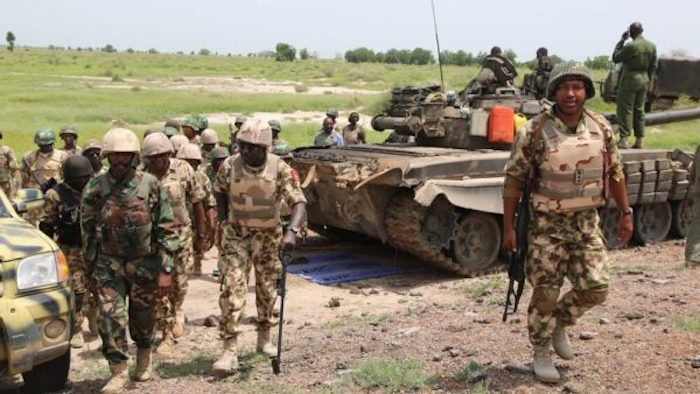
According to the Nigerian Army’s 6 Division, its soldiers detained 25 alleged oil thieves, including four members of the now-defunct Indigenous People of Biafra.

According to the Army, the agents also retrieved 45,000 stolen goods from the Niger Delta and dismantled 23 illicit refining facilities.

In a statement released in Port Harcourt on Sunday and distributed to reporters, Lt. Col. Jonah Danjuma, Acting Deputy Director, 6 Division Army Public Relations, revealed this.

Danjuma stated that after a series of army operations in the Niger Delta region from January 12 to January 19, 2025, the alleged IPOB members were apprehended in Oshimili LGA of Dekta State.

According to the statement, Troops 6 Division has made progress in combating economic sabotage and related crimes in the Niger Delta Region (NDR), with multiple victories to date.

In addition to deactivating 23 illegal artisanal refineries and destroying 14 boats, these operations resulted in the arrest of 25 oil thieves, including four alleged members of Delta State’s banned Independent People of Biafra, and the recovery of nearly 45,000 liters of stolen goods.

From January 12–19, 2025, the operations were carried out throughout the joint operations area with other sibling services.

“A truck carrying more than 15,000 liters of stolen goods along the East-West Road by Tank to Eneka in the Obia-Akpor Local Government Area was impounded in Rivers State as a result of the activities.

Troops deactivated seven illegal refining plants, seized four fiber boats, and retrieved more than 12,000 liters of stolen goods in the Degema LGA’s Karakarma area. Similarly, two illicit refining facilities, three receivers, and three pots of various sizes containing more than 2,400 stolen products were handled in the vicinity of Bille, also in Degema LGA.

In the Imo Riverside, forces also advanced, destroying 13 illegal refining installations, 25 drum pots, 24 receivers, and 6 metal containers while recovering almost 7,000 liters of stolen goods.

Motorcycles, a boat used for the horrible crime, four hollow pipes, and numerous empty liters were among the other items removed. Four boats and more than 2,700 liters of stolen goods were deactivated and recovered at Buguma LGA’s Oga-Ama route, respectively.

Additionally, troops detained a barge and a suspected tugboat near Finima in Bonny LGA. It was claimed that the barge was transporting automobile gas oil that had been stolen.

It went on, “near the same time, four suspected members of the banned IPOB were taken into custody by military during a sting operation in Delta State near the Power Line Bonsac general area in Oshimili LGA.

Read Also: Lagos State Assembly Speaker Mudashiru Obasa Impeached After 10-Year Tenure

Members of the irredentist group had a number of items found on them. Additionally, other motorcycles were stopped while transporting pilfered goods from Abor Community Junction to Kwale in Ndokwa West LGA. In connection with this, five dugout pits along the Yokri River in Burutu LGA were demolished, containing unknown amounts of stolen goods.

According to the statement, troops stopped two Toyota Avalons with registration numbers AN AUG 964 TN and By By SAG 513 EA in Bayelsa State along the Okarki to Otuasega route in Ogbia LGA. The vehicles were carrying an unknown amount of illegally processed AGO.

“The products and vehicles have been handled in accordance with the operating mandate that is now in effect.

According to the Army 6 Division spokesperson, “troops maintain the requisite operational posture to ward off criminal elements while in Akwa.”

Speaking, Major General Jamal Abdussalam, the General Officer Commanding, 6 Division, Nigerian Army, praised the soldiers’ perseverance and asked them to speed up operations.

They were also tasked by Abdussalam with preventing criminal elements—especially IPOB members—from gaining any traction in the Niger Delta.

Lagos State Assembly Speaker Mudashiru Obasa Impeached After 10-Year Tenure

0

In a historic move, the Lagos State House of Assembly has impeached its Speaker, Mudashiru Obasa, bringing an end to his decade-long tenure. Obasa, who has been at the helm since 2013, was ousted amidst allegations of authoritarianism, financial misconduct, and strained relationships with key political stakeholders. In a groundbreaking development, the Assembly elected Mojisola Miranda as its new Speaker, marking the first time in Lagos State’s history that a woman will occupy this prestigious position.

The Impeachment Saga

The impeachment, which occurred last Monday, has been described by many as both shocking and inevitable. While Obasa’s leadership once seemed unshakable, his recent actions, particularly during the presentation of the 2025 Appropriation Bill, raised eyebrows. During the event, he made controversial remarks and engaged in behavior that many perceived as insubordination to Governor Babajide Sanwo-Olu. Reports suggest that Obasa delayed the Governor’s address and used language considered unbecoming of a Speaker.

Political analyst Bestman Jumbo described Obasa’s actions as “a case of someone rubbing oil on themselves while adversaries were ready to ignite the flames.” The impeachment was supported by 32 of the 40 House members, with dissenting voices muted either by absence or presumed alignment with the majority decision.

Key Allegations Against Obasa

  1. Financial Misconduct: While the allegations of financial impropriety remain unproven, they have severely impacted public trust in the Assembly. Investigations by the Economic and Financial Crimes Commission (EFCC) may yet provide clarity.
  2. Authoritarian Leadership: Obasa’s alleged high-handedness and disregard for party unity alienated both colleagues and party leaders.
  3. Strained Relations with the Governor: Obasa’s perceived disrespect for Governor Sanwo-Olu, particularly during official proceedings, added to his growing unpopularity within the political establishment.

The Role of Party Politics

The peculiar nature of Lagos State politics, dominated by the All Progressives Congress (APC), played a critical role in Obasa’s downfall. Observers note that party supremacy often dictates legislative outcomes in the state. While Governor Sanwo-Olu’s office has denied involvement in the impeachment, political insiders suggest that Obasa’s behavior left party stakeholders with little choice but to act.

“The party’s structure in Lagos does not tolerate dissent that jeopardizes its overarching agenda,” Jumbo noted. “The Speaker’s actions likely alienated even his closest allies within the party.”

Impact on Lagos Politics

The transition to Speaker Miranda ushers in a new era for Lagos State politics. As the first female Speaker, Miranda brings a fresh perspective to the Assembly and faces the challenge of rebuilding public trust in the legislature. Analysts predict that her leadership style will prioritize harmony between the executive and legislative branches to ensure Lagos continues on its developmental trajectory.

Miranda’s election was unanimous, reflecting a desire for stability after the turbulence of Obasa’s tenure. Jumbo expressed confidence in her abilities, citing her prior experience as Deputy Speaker as evidence of her competence.

Lessons for Political Leaders

Obasa’s dramatic fall from grace serves as a cautionary tale for politicians. Despite starting his career as a local government councilor and rising to become one of the most powerful figures in Lagos politics, Obasa’s perceived arrogance and lack of humility contributed to his downfall.

“Humility and a respect for the party structure are non-negotiable in Lagos politics,” Jumbo remarked. “Leaders who prioritize personal ambition over collective goals risk alienating their support base.”

Looking Ahead: The Road to 2027

Obasa’s impeachment has sparked speculation about its implications for Lagos State’s 2027 gubernatorial race. While some see the move as clearing the way for potential contenders, others argue that it reflects the APC’s commitment to maintaining discipline and unity within its ranks.

Governor Sanwo-Olu, who has consistently prioritized collaboration over confrontation, remains focused on governance rather than political intrigues. “When the time comes, the party will decide who leads Lagos forward,” he reportedly said.

Conclusion

The impeachment of Mudashiru Obasa marks a turning point in Lagos State politics, offering valuable lessons on leadership, accountability, and the importance of party unity. As Speaker Miranda assumes office, Lagosians will be watching closely to see how this historic change shapes the state’s political landscape and governance in the years ahead.

BREAKING: “We’re sad Kemi Badenoch pushing terrible rhetoric against Nigeria”— Daniel Bwala cried out

0

President Bola Tinubu’s special assistant on media and public communications, Daniel Bwala, has expressed his disapproval of the recent comments made against Nigeria by Kemi Badenoch, the head of the UK Conservative Party. Bwala attacked Badenoch in a string of tweets for her derogatory depiction of Nigeria, claiming it was an unsuccessful attempt to win over the UK’s far-right audience.

Bwala said he was disappointed by Badenoch’s remarks, calling them demeaning and detrimental to Nigeria’s reputation. He claims that Badenoch’s speech unjustly presents her native country in a negative way. In reaction to the Conservative leader’s remarks, Bwala tweeted, “I sincerely hope that sister @KemiBadenoch would refrain from disparaging Nigeria, her homeland, as a means to appease her far-right base.”

Badenoch’s scathing comments against Nigeria’s governance situation in her first speech of the year sparked the uproar. She referred to the nation as “poor” and charged that corruption and poor administration were ruining lives. Badenoch shared her own story of growing up in Nigeria, explaining how her family, who had previously been prosperous, became drastically poor as a result of inflation and bad administration. She described how these encounters influenced her determination to keep Britain from suffering a similar fate.

“I grew up in a poor country, and I saw my relatively wealthy family keep getting poorer and poorer even though they worked harder because inflation took away their money,” Badenoch remarked. With my father’s final £100 and the promise of a better life, I returned to the UK at the age of 16. I have therefore experienced the repercussions of a horrible regime that ruins lives, and I would never, ever want it to occur here.

Read Also: President Museveni Champions Agriculture as Africa’s Economic Pillar

Others, like Bwala, have seen Badenoch’s words as a betrayal of her heritage, while others have applauded her for being so forthright. Bwala compared the situation to that of former UK Prime Minister Rishi Sunak, who is of Indian heritage and never used derogatory remarks against India to further his political career. He maintained that Badenoch’s comments lacked the delicacy and diplomacy that a Nigerian leader should possess.

Bwala said, “Rishi Sunak never weaponized gang rape and other vices in India, his home country, just to impress the far-right base.” While praising Badenoch’s political accomplishments and intelligence, he bemoaned her “dreadful rhetoric against Nigeria.”

There are differing views on social media as a result of the controversy over Badenoch’s remarks. Others mirrored Bwala’s stance, stressing the necessity for constructive criticism that does not damage the nation’s reputation abroad, while several Nigerians backed her for speaking up against the shortcomings of the Nigerian administration.

This conversation demonstrates the fine line expatriate politicians must walk when tackling issues pertaining to their home nations. Bwala’s criticism highlights the wider ramifications of such utterances on national identity and pride, even though Badenoch’s speech reflects her political viewpoint and personal experiences.

As the discussion goes on, it brings up issues regarding leaders’ obligations to preserve the honor of their heritage while negotiating the political systems of their new nations.