Home Blog Page 2

Iyabo Ojo Reflects on Motherhood Journey, Tells Women Not to Give Up

0

Actress and filmmaker Iyabo Ojo has opened up about her motherhood journey, describing her experiences as evidence of God’s greatness.

Iyabo shared a series of family photographs on Instagram featuring herself, her two children and her grandchild.

Reflecting on her past, the actress said motherhood has been a beautiful journey filled with experiences that have shaped her life.

She said looking back at where she started makes her grateful for how far she has come.

According to Iyabo, her story can provide hope for people who may have lost hope and encourage mothers who are raising their children alone despite difficult circumstances.

Read Also: Why Akpabio Declined Acting President Position, Rufai Oseni Reveals

She specifically appealed to struggling mothers to remain steadfast and not surrender to the pressures they may be facing.

The actress assured them that difficult times would not last forever and that there was light at the end of the tunnel.

Her message comes as she celebrates her family across three generations, providing a glimpse into her personal journey as a mother and grandmother.

Iyabo’s reflection highlights the challenges and rewards associated with motherhood while encouraging women to remain optimistic.

She urged mothers going through difficult experiences to hold on and continue believing in a better future.

Why Akpabio Declined Acting President Position, Rufai Oseni Reveals

0

The decision by Senate President Godswill Akpabio to reject the description of him as Nigeria’s acting president has triggered fresh discussion about the country’s constitutional arrangements.

Arise Television Morning Show anchor Rufai Oseni discussed the issue on Monday while analysing President Bola Tinubu’s prolonged absence from Nigeria. Vice President Kashim Shettima was also outside the country at the time.

Oseni said some political associates had begun describing Akpabio as acting president in the absence of Tinubu and Shettima. He said the Senate president subsequently moved to clarify that he should not be addressed by that title.

According to Oseni, the clarification was necessary because accepting the designation could have created constitutional and political complications.

However, the presenter used the development to question the broader role of the National Assembly in checking executive authority.

Oseni argued that the legislature is constitutionally intended to function as a co-equal arm of government under the principle of separation of powers.

He questioned whether the National Assembly would be prepared to challenge the executive effectively, pointing to its previous endorsement of the state of emergency declared in Rivers State.

Read Also: Atiku Says N70,000 Minimum Wage Is Not Enough to Restore Workers’ Buying Power

The broadcaster recalled that the federal government’s intervention followed a political crisis in Rivers State. He said the National Assembly subsequently endorsed the declaration through voice votes.

For Oseni, the episode raised questions about the extent to which the legislature can independently scrutinise major decisions taken by the executive.

He also questioned whether Akpabio, as Senate president, could lead such a challenge effectively while navigating the political relationship between the executive and legislature.

The comments come at a time when public attention has focused on the constitutional implications of the President and Vice President being outside the country simultaneously.

Nigeria’s Constitution provides a framework for presidential succession and the transfer of authority when circumstances prevent the President from performing his functions. The situation has consequently renewed public interest in the respective powers and responsibilities of the executive and legislature.

Oseni’s analysis has added another perspective to the debate over institutional independence and constitutional checks and balances in Nigeria.

Atiku Says N70,000 Minimum Wage Is Not Enough to Restore Workers’ Buying Power

0

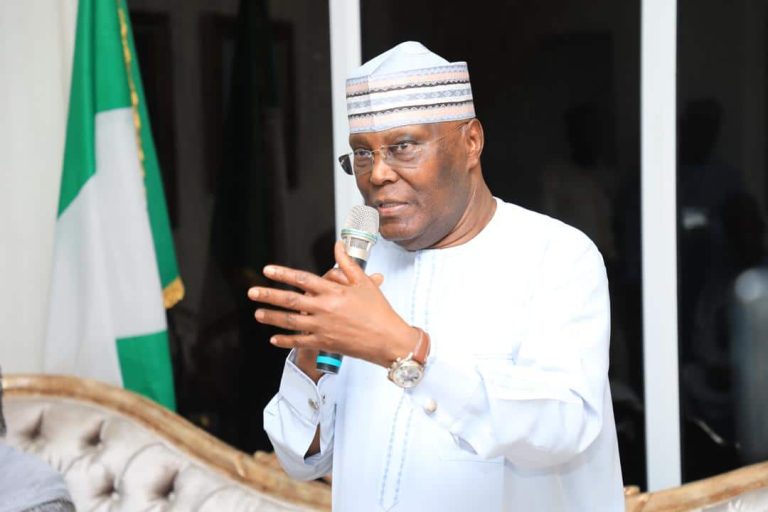
Former Vice President and African Democratic Congress presidential candidate Atiku Abubakar has thrown his full weight behind organised labour’s demand for a substantial increase in the minimum wage, adding that the increase from 30,000 to 70,000 had failed to restore purchasing power.

He accused President Bola Tinubu of presiding over a ruthless economic squeeze in which workers are paid more on paper and condemned to live on less.
He said the administration’s self-congratulatory talk of reform had become an insult to Nigerians whose wages vanish between the filling station and the food market.

In a statement issued by Phrank Shaibu, Director of Strategic Communications of the ADC Presidential Campaign Council, Atiku said Tinubu’s reckless removal of the petrol subsidy sent prices soaring before any credible protection was in place for working families.

“The government pulled away the floor, offered workers a flimsy umbrella and now applauds itself while the rain beats down on them,” he said. “Fuel, transport, food and rent have devoured their earnings. This is a callous way to govern people who work hard and ask only for the means to live.”

“Tinubu asked Nigerians to make sacrifices and treated the suffering that followed as an afterthought. Those with the least have been made to carry the heaviest load. That is the cruel arithmetic of this cost-of-living crisis,” Atiku said.

“At 1,400 a litre, the entire 70,000 monthly minimum wage buys just 50 litres of petrol. What does the worker take home to feed the children? What pays the rent? What gets that worker back to work on Monday?”

Read Also: 2027 Polls: Adeyeye Says Candidates Should Prepare for a Tough Contest

Atiku said the increase from 30,000 to 70,000 had failed to restore purchasing power. At the April 2023 national average petrol price of 254.06 per litre, 30,000 could buy roughly 118 litres. Today, 70,000 buys only 50 litres at 1,400 per litre.

“The payslip has grown, but the fuel it can buy has more than halved. Tinubu has given workers a larger number and left them with a smaller life. That is hardship dressed up as a wage increase,” he said.

Atiku noted that Nigeria’s wage floor compares poorly with those of several oil-producing and African economies. Using exchange rates from July 24, 2026, Libya’s monthly minimum wage was worth approximately ₦213,000; Algeria’s, ₦245,000; Equatorial Guinea’s, ₦302,000; and Gabon’s, ₦351,000. Even Benin Republic’s minimum wage stood above Nigeria’s when converted at those rates.

Wage rules and living costs differ across countries, he said, but those differences cannot make ₦70,000 adequate for a Nigerian worker facing today’s prices.

“The Nigerian worker is the engine of this country’s productive life, yet Tinubu expects that engine to run without fuel. A worker leaves home before dawn, gives the country a full day’s labour, then stands at a bus stop wondering whether the money left will pay the fare home or put food on the family table. That is a national disgrace. You cannot work people to exhaustion, pay them into poverty and lecture them about productivity. If a full month’s wage cannot sustain a worker’s family, government has failed the people who keep this country moving,” Atiku said.

He said the damage extended far beyond the filling station.

“Petrol does not stay at the pump. Its price follows the farmer to market, enters the baker’s oven and appears in the fare a parent pays to take a child to school. Government then announces a wage increase and watches those costs swallow it before the month has begun.”

Atiku challenged President Tinubu to agree immediately to a substantial minimum-wage increase that reflects the real cost of food, transport, rent and power.

“If he has no intention of raising workers’ pay, he should say so plainly and stop stringing the Nigeria Labour Congress and other labour leaders along. Nigerian workers deserve an answer, not another round of meetings that ends where it began. I will begin the work of raising the wage floor from my first day in office,” Atiku said.

“Tinubu has eight months left in this term. Nigerian workers cannot be told to endure eight more months of hunger while his government debates whether their wages are enough. He must raise the wage floor and bring down the costs crushing families. From May 2027, my policies will protect the people: support Nigerian production, deliver relief at the pump and provide targeted help to those hit hardest by the cost-of-living crisis,” Atiku said.

“If we are serious about repairing the damage, better pay must be accompanied by lower living costs. Anything less leaves the Nigerian worker as the guinea pig in Tinubu’s economic experiment,” he said.

Atiku said his plan for a targeted production subsidy would support petroleum products refined in Nigeria and sold to Nigerians, subject to a firm spending cap, public accounting and independent audit. Government support, he said, must produce measurable relief at the pump. He reaffirmed his commitment to realistic wage adjustments, targeted social protection and measures to stabilise the cost of essential goods and energy.

“Nigerians do not eat FAAC figures. A full treasury is no answer to an empty kitchen. The test of this government is whether the men and women who work all month can live on what they earn.

“A living wage must buy a living. It is not a privilege; it is a basic right. Tinubu has made life painfully expensive. I will make life affordable again,” Atiku said.

2027 Polls: Adeyeye Says Candidates Should Prepare for a Tough Contest

0

A former senator representing Osun Central, Olusola Adeyeye, has warned political parties against assuming that the 2027 general election will be an easy contest.

Adeyeye, who is the South-West Coordinator of the All Progressives Congress (APC) Presidential Campaign Council, made the remarks during an appearance on Channels Television’s Sunday Politics.

He said the APC was working hard to secure victory in the 2027 election, while arguing that any political party that approaches the contest with the belief that it would be straightforward could be setting itself up for disappointment.

“I make bold: anyone from any party who thinks the next election will be easy for it is suffering self-delusion. We in the APC, we work very hard to win, and I want to assure you that we will win,” Adeyeye said.

He also expressed confidence in the APC’s prospects in the South-West, saying the party’s unity would be an important factor in its performance across the region.

“I also want to assure you. We will win big. I care that we win the South West, and we’re going to shock everybody,” he said.
Adeyeye argued that political parties risk losing elections when they enter contests divided, adding that he did not currently see any party capable of defeating the APC in areas of the South-West where the ruling party remains united.

Turning to Osun State, the former lawmaker said the APC was also targeting victory in the state in 2027.

He questioned the extent to which the popularity of Governor Ademola Adeleke could translate into support for the Peoples Democratic Party, arguing that some of the governor’s appeal was linked to his family background.

Adeyeye was also asked about the potential influence of former Osun State Governor Rauf Aregbesola, who is associated with the African Democratic Congress (ADC).

The APC campaign coordinator pointed to the ADC’s performance in the August 15, 2026 Osun governorship election and questioned its showing in Ilesa and Osun Central.

“How did the ADC perform, even in Ilesa? How did Aregbesola perform in Osun Central, where I come from?” he asked.

Adeyeye acknowledged Aregbesola’s popularity but said that his personal support could not automatically be transferred to another politician if he was not the candidate.

“If Aregbesola is the candidate, it’s a different matter,” he said.

“The truth is he’s still a magnificent person, much loved. If he were a candidate, believe you me, anybody would be hard-pressed to beat him in Osun, but where he’s not the candidate, even he must not deceive himself that he can automatically take the affection for him to another person,” he added.

Adeyeye further referenced former President Olusegun Obasanjo’s electoral history to argue that losing the South-West would not, by itself, determine the outcome of a presidential election.

“In the worst scenario, let us say that Bola Tinubu lost the South-West; I guarantee you he will not. But if he does, have we forgotten that another Yoruba man lost the South-West and became the President?” he said.

“Did (former President Olusegun) Obasanjo not lose his ward, lose his polling booth, lose his state, lose his zone, lose every state in the South-West and yet become President?” he added.

The 2027 presidential election is scheduled for January 16, 2027, according to the electoral calendar published by the Independent National Electoral Commission.

Canada-Based Nigerians Applaud Tunji-Ojo, NIS Over Improved Passport Delivery

0

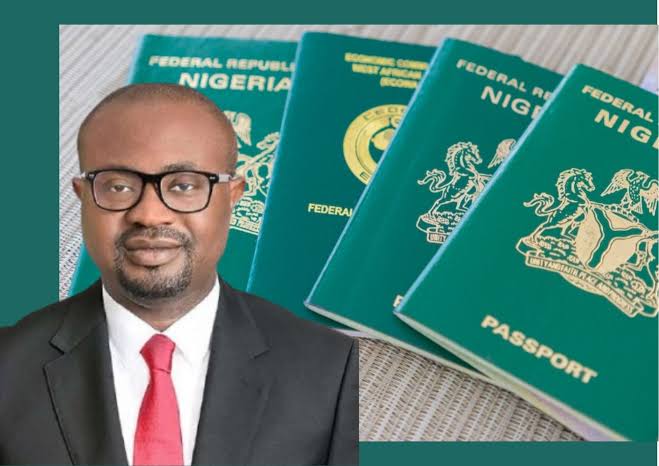
Nigerians living in Canada have praised the Minister of Interior, Olubunmi Tunji-Ojo, the Nigerians in Diaspora Commission (NiDCOM) and the Nigeria Immigration Service (NIS) for the successful completion of a passport intervention programme held across five Canadian provinces.

It was reported that the program, organized as part of the Nigeria Diaspora Economic Conference (NiDEC) in Toronto, was conducted between August 12 and September 4, 2026. Access Premium News

A total of 2,233 applicants were captured during the exercise, which took passport services directly to Nigerian communities in Toronto, New Brunswick, Manitoba, Saskatoon and Calgary.

The programme was carried out through a joint effort involving the Ministry of Interior, NiDCOM, the Nigerian High Commission, NIS, the Nigerian Canadian Association Council of Presidents and various Nigerian Canadian associations.

Several Nigerians who benefited from the exercise expressed satisfaction with the speed at which their passports were processed and delivered.

Some applicants said they received their passports between four and seven days after completing their biometric capture, reducing the waiting period usually associated with passport processing.

Read Also: Tinubu-Aregbesola Rift: Adeyeye Says Reconciliation Depends on Both Leaders

One beneficiary in Manitoba received her passport within a week of completing her biometric registration and praised the officials involved in the exercise for their commitment to serving Nigerians living outside the country.

Another applicant said the passport was delivered four days after biometric capture and described the exercise as properly organised and efficient.

Representatives of the Nigerian community in Canada said the programme showed the benefits of government services being taken closer to Nigerians in the diaspora.

They also said the exercise helped strengthen the relationship between the Nigerian Government and its citizens living in Canada.

The community leaders also praised the Nigeria Immigration Service for sending officers to the five locations and making arrangements to attend to applicants despite demanding schedules, including work on weekends. DownloadInteractive Maps

The Nigerian Canadian Association Council of Presidents also acknowledged the contributions of NiDCOM and the Nigeria Immigration Service to the coordination of the programme.

According to the association, the cooperation between government agencies and Nigerian diaspora organisations made it possible to provide passport services across several cities under one coordinated programme.

Following the completion of the first phase, community leaders have called on the Federal Government to consider extending the intervention.

They want the Minister of Interior to approve a second phase that would give Nigerians in Canada who were unable to participate in the first exercise another opportunity to obtain or renew their passports.

Philip Agbese Steps Up Campaign, Mobilises Support Across Benue Constituency

0

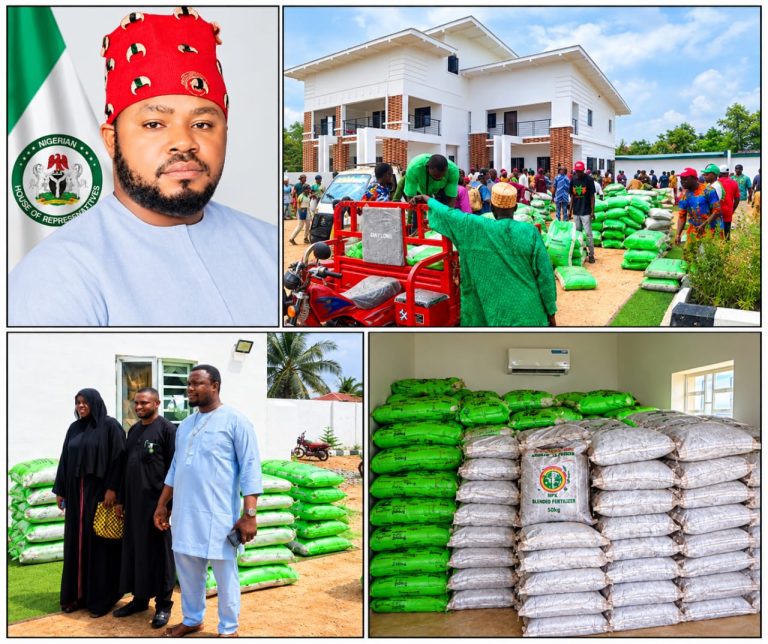
Chief Philip Agbese’s distribution of 5,000 bags of 50kg fertilizer to farmers in Ado, Okpokwu and Ogbadibo Federal Constituency has renewed attention on grassroots agricultural support and the importance of empowering farmers in Benue State.

For farmers in Ado, Okpokwu and Ogbadibo Federal Constituency, the distribution of 5,000 bags of 50kg fertilizer by Chief Philip Agbese represents more than the provision of agricultural inputs.

It is a gesture directed at people whose daily work sustains families, supplies food to communities and keeps Benue’s agricultural economy active.

Benue is widely recognised for its agricultural potential, but behind every farm is a farmer confronting rising input costs, unpredictable weather conditions and broader economic pressures.

Despite these challenges, farmers continue to cultivate the land, plant seeds and hope for a productive harvest.

For such farmers, fertilizer is not simply an agricultural input. It can mean the opportunity to improve crop yields, strengthen household income and support the education and welfare of family members.

5,000 Bags of Fertilizer for Farmers

The distribution of 5,000 bags of 50kg fertilizer is significant because agricultural interventions have their greatest impact when they reach farmers at the grassroots.

Chief Philip Agbese’s agricultural interventions have previously included fertilizer distribution, agrochemical sprayers and other forms of support aimed at rural farmers.

A publicly circulated compendium of his constituency interventions has also listed agricultural training and the distribution of 15,000 live birds to rural dwellers.

Beyond the statistics, however, are individual farmers and families whose livelihoods depend on agriculture.

There is the elderly farmer who has spent decades working the land, the young farmer seeking a sustainable livelihood, the mother whose farm income contributes to her children’s education and the household relying on agriculture for food and income.

For these people, timely agricultural support can provide renewed confidence at a critical point in the farming cycle.

Agriculture and the People of Benue

Agriculture is more than an economic activity in Benue. It is deeply connected to the identity and livelihoods of communities across the state, including Enone and surrounding areas.

The farmer is therefore not simply a beneficiary of development programmes but an important partner in community development.

When farmers increase production, communities can benefit from greater food availability and improved economic activity. Increased agricultural productivity can also create opportunities for rural households and encourage young people to view farming as a viable enterprise.

This makes interventions targeted at farmers particularly important.

The soil receives the efforts of everyone who cultivates it, whether an elderly farmer, young entrepreneur, widow, graduate or family struggling to make ends meet. With the right support, that labour can translate into food, income and dignity.

From Political Representation to Grassroots Responsiveness

Representation is commonly associated with legislation, parliamentary debates, oversight and constituency projects.

However, representation also has a grassroots dimension.

For many constituents, the effectiveness of representation is experienced through interventions that respond to everyday challenges.

Chief Philip Agbese has publicly described constituency development as involving legislation, oversight and interventions aimed at improving people’s lives. His constituency activities have also included agricultural and empowerment initiatives.

Against this background, the fertilizer distribution adds to the broader discussion about how elected representatives can connect parliamentary responsibilities with the economic realities facing constituents.

For a farmer, representation becomes tangible when agricultural assistance reaches the farm.

For a household dependent on farming, it becomes meaningful when such support helps sustain its livelihood.

For young people, agricultural empowerment can provide an avenue for economic participation and enterprise.

The Human Story Behind 5,000 Bags

Five thousand bags of fertilizer can easily become just another statistic.

But behind that number are farmers preparing their land, planting crops and planning for harvest.

The real impact of agricultural support will ultimately be seen beyond the distribution exercise—in the farms where the fertilizer is used, the crops that are cultivated, the produce that reaches markets and the income generated by farming households.

The significance of the intervention, therefore, cannot be measured solely by the number of bags distributed.

It can also be considered through the opportunities those inputs may create for farmers and their families.

A Message of Hope to Benue Farmers

For farmers receiving the fertilizer support, the intervention carries a simple message: their work matters.

Food on Nigerian tables begins with farmers who cultivate the land, often under difficult economic and environmental conditions.

Every seed planted requires investment and confidence. Every cultivated field represents labour. Every harvest represents perseverance.

Agricultural interventions that help farmers access essential inputs can therefore serve as investments in household livelihoods and the wider food system.

What Farmers May Remember

Political and public leaders are often remembered through their offices, policies and major projects.

At the grassroots, however, people can also remember leadership through direct experiences—who listened, who responded and who provided assistance when it was needed.

For beneficiaries of the fertilizer distribution, the lasting memory may not simply be the 5,000 bags.

It may be what the agricultural support helps them achieve: stronger farms, improved harvests, increased income, better household welfare and renewed confidence.

That is where the human dimension of grassroots leadership becomes visible.

When Leadership Returns to the People

Chief Philip Agbese’s fertilizer intervention provides an opportunity to reflect on the relationship between leadership, agriculture and grassroots development in Benue State.

A bag of fertilizer may appear ordinary from a distance. To a farmer preparing for a new planting season, however, it can represent an opportunity to improve production.

For a farming household, it can contribute to income and food security.

For a community, stronger agricultural productivity can support economic activity.

Ultimately, the deeper meaning of grassroots leadership is found not simply in political positions but in how development initiatives affect ordinary people.

When support reaches the farmer, leadership touches the soil.

And when the soil produces a better harvest, the benefits can extend beyond the individual farmer to families, markets and communities.

The distribution of 5,000 bags of 50kg fertilizer by Chief Philip Agbese is therefore not only an agricultural intervention. It is also a story about farmers, livelihoods, community development and hope.

For in the hands of a farmer, fertilizer is more than an input.

It is a seed of possibility.

It is a promise of tomorrow.

It is hope waiting to grow.

Ebola: Congolese Doctor Dies as Outbreak Spreads Across DRC

0

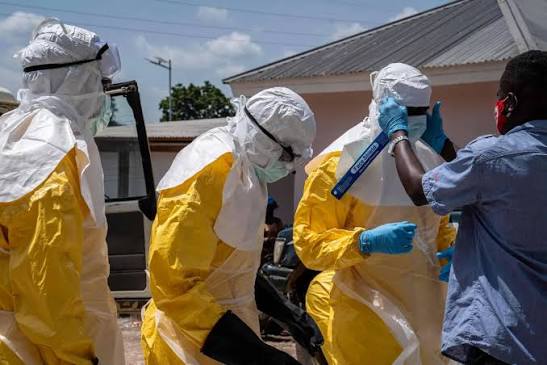
A young doctor has died of Ebola in Kisangani, as cases surge beyond the epicentre of the outbreak in the Democratic Republic of Congo.

Dr. Victor Kingombe, an internal medicine doctor, succumbed to the virus at the Ebola treatment centre in Kisangani, capital of Tshopo province.

Colleagues and family gathered for his funeral, watching from a distance as health workers in full protective gear carried his body to a coffin.

“Our internal medicine doctor is gone. Doctor Victor, why? Why, Doctor? Our internal medicine doctor,” fellow doctor Agnes Kalokola cried.

Read Also: Tinubu, Guterres and Ruto Push Again for Africa’s Representation on UN Security Council

Kisangani first reported Ebola cases in late June, and the treatment centre where Kingombe died was inaugurated less than two weeks ago.

While cases have decreased this month in Ituri province, the epicentre of the outbreak, neighbouring provinces have recorded sharp increases, with North Kivu seeing a 73 percent surge in the past three weeks.

The World Health Organization has warned that the epidemic is on track to surpass the 2014-2016 West Africa outbreak, the deadliest on record.

The virus is spreading under difficult conditions, fuelled by insecurity, displacement, a health workers’ strike and intense population movements.

Health workers are also facing community mistrust, with treatment centres and burial teams attacked on several occasions as rumours spread that Ebola is not real.

Tshopo vice-governor Didier Lomoyo Iteku, who attended Kingombe’s funeral, said after viewing the body through a plastic window: “This disease is real. Here is a doctor who was here trying to save lives, and he himself was a victim.”

Congo began vaccinating health workers in Kisangani in August with the Ervebo vaccine, originally developed for the Zaire strain, which has been found to offer some protection against the current Bundibugyo strain. Trials for potential treatments are underway nationwide.

Tinubu, Guterres and Ruto Push Again for Africa’s Representation on UN Security Council

0

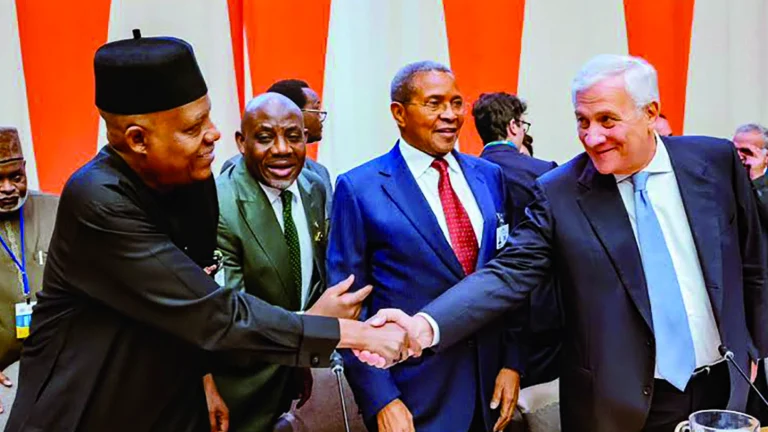
In a remarkable departure from last year’s address at the United Nations General Assembly, Nigeria yesterday joined the United Nations’ Secretary-General and other African leaders to protest the continent’s continued absence from the world body’s permanent membership of its Security Council.

Delivering Nigeria’s address to delegates and attendees at the 81st United Nations General Assembly at the United Nations Headquarters in New York last night, Vice President Kashim Shettima, who spoke on behalf of President Bola Tinubu, called for the reconstitution of the UN Security Council with the inclusion of an African representative.

The Security Council presently consists of 15 members: five permanent members – Russia, China, the United States, the United Kingdom, and France – and 10 non-permanent members elected by the General Assembly for two-year terms. The five permanent members each hold veto power over substantive resolutions, enabling any one of them to block adoption of a draft resolution regardless of the level of support among other members. African Union (AU), as a body, is a representative non-permanent member.

The influence of the veto was visible in June 2025 when the U.S. blocked a Security Council resolution calling for an immediate and permanent ceasefire in Gaza. The resolution received 14 votes in favour, including support from all 10 elected members of the council, but failed after the U.S. cast the only vote against it.

Speaking yesterday, President Tinubu, through Shettima, renewed calls for a radical shake-up of the UN, insisting that reforms must start with reconstituting the Security Council to grant Africa permanent seats. He warned that the continent can no longer afford to fill the Council’s agenda from the margins, pointing out that the world of 2026 cannot remain captive to the distribution of power in 1945.

Specifically, he demanded at least two permanent seats for the continent—including full rights, responsibilities, and veto power—along with a total of five non-permanent seats. “The reform of this institution must begin with the reconstitution of the Security Council, for the world of 2026 cannot remain captive to the distribution of power in 1945. Africa cannot continue to fill the Council’s agenda while remaining absent from its permanent membership.

“Nigeria demands, in accordance with the Ezulwini Consensus and the Sirte Declaration, at least two permanent seats for Africa, with all the rights and responsibilities of permanent membership, including the veto for as long as it exists, and five non-permanent seats in total. The authority to speak for humanity carries an obligation to represent it,” he stated.

Guterres, United Nations secretary-general, said Africa’s absence from its permanent membership is “unjust and indefensible”. Speaking earlier yesterday, he said: “We must reform the Council so that it reflects today’s world with the legitimacy and effectiveness that today’s challenges demand.”

The African Union has for years pushed for reform of the Security Council, saying the continent is under-represented in a body whose decisions have significant implications for global peace and security, including conflicts in Africa. The AU is also demanding at least two permanent seats on the Security Council, with full privileges including veto power if the veto is retained, as well as five non-permanent seats.

ALSO, Kenyan President William Ruto called for reform of the United Nations Security Council, urging permanent African representation on the body. In his address to the UN General Assembly, Ruto lamented Africa’s continued exclusion from permanent representation, despite accounting for more than a quarter of the assembly’s membership.

“Africa has 54 member states, more than a quarter of this assembly, yet no permanent voice in the body entrusted with the primary responsibility of international peace and security”, Ruto said. “We are frequently the subject of its decisions, permanently discussed, yet permanently excluded.”

President Tinubu further issued a wake-up call to world leaders, demanding an immediate end to global warfare and a total rejection of the rising tide of nationalism. With urgent moral clarity, he warned that the global order hangs in the balance, while fiercely rallying the international community to dismantle unilateral aggression, resurrect the foundational principles of the United Nations Charter, and forge an unyielding, unified front through a recommitted era of global multilateralism.

The Nigerian leader categorically told the global leaders not to pretend that distant or domestic conflicts do not exact a price from other nations, underscoring the UN’s urgent duty to restore trust in institutions built to reconcile differences and advance global common interests.

“The persistence of conflict across the world recalls the purpose for which the United Nations was founded: to spare succeeding generations the devastation of war. We must therefore return to the founding principles of dialogue, mutual respect and collective responsibility.

“Nigeria stands by the Charter and its promise of a world in which diplomacy prevails over coercion, cooperation over isolation and international law over the arbitrary exercise of power,” he declared.

The President framed Nigeria’s peacekeeping efforts in Africa as a model, noting that the nation stands ready to take on greater responsibility and sacrifice to restore peace across the continent—just as it did in Liberia, Sierra Leone, Darfur, Mali, and The Gambia, where it committed personnel and resources when global solidarity demanded action.

Last year’s remarks drew some flak across diplomatic and political circuits when the Vice President, who also represented President Tinubu at UNGA, chose to focus on the conflicts in Palestine/Israel, calling for a two-state permanent solution.

Shettima was heavily criticised for focusing on the plight of Palestinians during his address to the United Nations, while failing to draw the world’s attention to and seek global support for the worsening insecurity and economic hardship in Nigeria.

Yesterday, the Nigerian leader categorically told the global leaders not to pretend that distant or domestic conflicts do not exact a price from other nations, underscoring the UN’s urgent duty to restore trust in institutions built to reconcile differences and advance global common interests.

“The persistence of conflict across the world recalls the purpose for which the United Nations was founded: to spare succeeding generations the devastation of war. We must therefore return to the founding principles of dialogue, mutual respect and collective responsibility.

The President framed Nigeria’s peacekeeping efforts in Africa as a model, noting that the nation stands ready to take on greater responsibility and sacrifice to restore peace across the continent—just as it did in Liberia, Sierra Leone, Darfur, Mali, and The Gambia, where it committed personnel and resources when global solidarity demanded action.

Drawing lessons from Nigeria’s prolonged struggle against Boko Haram, ISWAP and other armed groups, the President said: “no nation, however formidable its defences, can secure itself completely against dangers sustained beyond its borders.”

He noted that while modern threats like terrorism and cyber-attacks exploit gaps in global action, lasting military victory requires a foundation of education, economic opportunity, accountable governance, and human rights.

As a founding member of ECOWAS, President Tinubu said Nigeria remains ready to uphold regional solidarity and African leadership in resolving security challenges, “reinforced by principled international partnerships.”

The Nigerian leader maintained that Nigeria is committed to the peaceful settlement of disputes under the United Nations Charter, as “the conflicts in Sudan and other war-torn countries demand urgent diplomacy to address their humanitarian, economic and geopolitical consequences.”

MEANWHILE, Vice President Shettima will later today lead a joint effort by the Federal Government and the private sector to market the country’s workforce to global employers on the margins of the United Nations General Assembly in New York.

This is according to a statement signed on Thursday by the Head of Communications, Hire From Nigeria, Oluwatoyin Ashipa, titled ‘Nigeria to Advance Services Exports and Job Creation through Hire from Nigeria Engagement at UNGA 81.’

The event, themed ‘Impact sourcing as a driver of global trade and inclusive job creation,’ will bring together senior government officials, state governors, and technology and private-sector leaders before an audience of international employers, investors and partners in New York for UNGA week.

Shettima is expected to speak on the theme ‘Setting the global trade and impact sourcing context; Nigeria’s positioning as the next outsourcing frontier.’ Ashipa described the forum as building directly on the national launch of Hire from Nigeria in Abuja on August 31, 2026, where government and private-sector leaders committed to connecting Nigerian talent across white- and blue-collar roles with global demand.

Speaking ahead of the meeting, the Minister of Industry, Trade and Investment, Jumoke Oduwole, said, “Our priority is to translate Nigeria’s talent into greater participation in global trade. “Through Hire from Nigeria, we are working with the private sector to connect Nigerian professionals and service providers with international demand.”

Other officials expected at the meeting include Lagos State Governor, Babajide Sanwo-Olu; Niger State Governor, Mohammed Bago; the Minister of Education, Tunji Alausa; the Director-General of the National Identity Management Commission, Bisoye Coker-Odusote; the Co-Founder and Executive Chairman of Itana, Luqman Edu; the Country Director of Mastercard Foundation Nigeria, Rosy Fynn; the Co-Founder and President of Tech4Dev, Joel Ogunsola; and the Chief Executive Officer of Semicolon Africa, Sam Immanuel.

Tech4Dev Chief, Ogunsola, said, “Nigeria has an opportunity to move from being recognised for the size of its talent pool to being recognised for the value that talent creates globally. “Hire From Nigeria is about making that value visible and connecting Nigerian capabilities to the businesses and markets that need them.”

INEC Charges Editors to Avoid Declaring Election Results Before Official Announcement

0

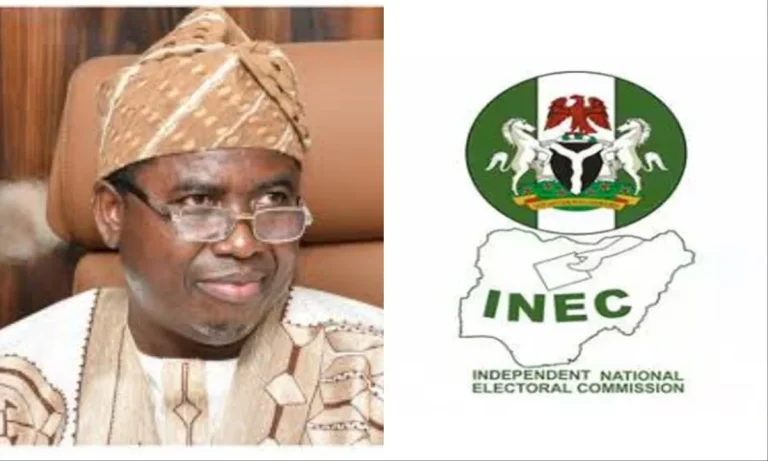
The Independent National Electoral Commission (INEC) has charged editors across the country to resist premature declaration of election results and strengthen fact-checking and digital verification mechanisms ahead of the 2027 general elections.

The commission warned that publishing or amplifying privately collated results before their official declaration could create conflicting narratives, confuse voters and undermine confidence in the outcome of the elections.

In a statement signed by the chief press secretary/special adviser on Media to the INEC chairman, Adedayo Oketola, the commission said its chairman, Prof. Joash Amupitan (SAN), represented by the resident electoral commissioner for Enugu State, Dr Chukwuemeka Chukwu, gave the charge yesterday at the 22nd All Nigeria Editors Conference (ANEC) 2026 in Enugu.

Amupitan, who spoke on the theme, “The Ballot, the Media and the Task of Keeping Democracy Alive,” said the emergence of generative artificial intelligence, voice cloning, deepfake videos and automated bot networks had created new challenges for election reporting and information management.

He warned that malicious actors could use the technologies to manufacture convincing videos of electoral officials, clone the voices of INEC officials and produce manipulated result sheets designed to appear authentic.

“We have moved far beyond simple political bias, hyperbole, or unverified rumours into an era of synthetically manufactured reality. Generative artificial intelligence, voice cloning, deepfake video synthesis, and automated bot networks have democratised mass deception,” Amupitan said.

According to him, the danger posed by synthetic disinformation goes beyond the spread of individual falsehoods, as repeated exposure to convincing fake content could make citizens doubt even genuine information released by legitimate authorities.

“When deepfakes render lies believable, real truth is greeted with skepticism. Cynicism replaces civic engagement, leading voters to ask: Why stand in line for hours if the outcome is already manipulated on a screen? That mental retreat is where democracy begins to decay,” he said.

The INEC chairman therefore urged editors to institutionalise specialised fact-checking desks in their newsrooms and integrate digital verification tools into their daily editorial processes.

He also called for the use of deepfake detection software and forensic image-analysis tools to authenticate election-related photographs, videos, audio recordings and documents before publication.

Amupitan said editors must pay particular attention to information circulating on social media, where manipulated content could be widely distributed before journalists had an opportunity to establish its authenticity.

He further cautioned media organisations against publishing or amplifying privately collated election results ahead of official declarations by INEC.

“Let’s resist premature result declarations. Under the Electoral Act, statutory authority to declare election results rests exclusively with INEC,” he said.

The chairman warned that unverified figures released by political actors and circulated on social media could create competing versions of election outcomes and undermine confidence in the official results.

He urged editors to ensure that their platforms did not become channels for giving institutional credibility to unverified figures, fake result sheets or manipulated videos.

“The pressure on modern newsrooms to be first is immense. But in national elections, it is vastly more important to be right than to be first,” Amupitan said.

He added that rushing to publish unverified election claims could cause damage to public confidence and peace that would be difficult to reverse.

The INEC chairman called on the Nigerian Guild of Editors and media organisations to build a collaborative mechanism for identifying and responding to election-related disinformation before, during and after the 2027 elections.

He said the media had become an important component of election security because political contests were no longer fought only at polling units, but also in the information space.

“We should use our platforms to educate citizens on spotting synthetic content, fake letterheads, and algorithmically generated rage-bait,” he said.

On its own preparations to deal with the emerging technology-driven threats, Amupitan disclosed that INEC had established a dedicated Artificial Intelligence Division within its ICT Department.

He said the commission had also commenced the deployment of automated AI auditing tools within the Results Management process to detect discrepancies before final verification.

Read Also: Isbae U Reflects on 2022 Sex Scandal and Its Impact on His Career

According to him, the automated checks would remain subject to a five-pillar AI Governance Framework and mandatory human auditing.

Amupitan also disclosed that INEC had commenced a six-zone Interactive Meetings and Readiness Assessment tour, beginning in Lagos on September 7, as part of efforts to assess preparations for the 2027 elections.

On the welfare of journalists, the INEC chairman said the working conditions of media practitioners could affect the quality and independence of election reporting.

He urged media owners and managers to provide decent remuneration and structured welfare for journalists, warning that financial insecurity could expose practitioners to inducement and other pressures.

“A poorly compensated journalist is vulnerable; a financially neglected newsroom is fertile ground for compromise,” he said.

Amupitan disclosed that INEC had established the Consolidated Election Management Body Salary Structure (CEMBSS), separate from the regular Civil Service salary structure, with effect from January 1, 2026.

President of the Nigerian Guild of Editors, Eze Anaba, said the media had a responsibility to protect democracy by holding those in power accountable and providing space for diverse voices.

“We have a responsibility to ensure that our democracy survives. The media must hold power accountable and provide the space for diverse voices to be heard,” Anaba said.

He added, “The political actors alone are not in charge of our democracy, the judiciary and the media have a role to play to strengthen our democracy.”

The Obi of Onitsha, Igwe Nnaemeka Alfred Achebe, urged INEC to establish a joint Rapid Response Desk involving newsrooms to quickly identify and dispel election misinformation.

Achebe also challenged editors to intensify voter education and address voter apathy by providing citizens with accurate and timely information on the electoral process.

Also speaking, Archbishop Emeritus of Abuja, John Cardinal Onaiyekan, said a free press remained essential to genuine democracy.

Onaiyekan noted the growing diversity of Nigeria’s media landscape, including newspapers, radio, television and social media, but said the emergence of artificial intelligence had introduced both opportunities and dangers.

“Artificial intelligence, AI, is already working wonders in the communication space, though not without its dangers if it is allowed to spin out of human control,” he said.

Isbae U Reflects on 2022 Sex Scandal and Its Impact on His Career

0

Nigerian content creator Adebayo Ridwan, popularly known as Isbae U, has opened up about the impact of the controversy he faced in 2022, revealing that the experience forced him to rethink how he handled fame and public attention.

The skit maker spoke about the difficult period during an interview with Morayo Afolabi Brown, saying the backlash was severe enough to make him question whether his career would survive.

Isbae U explained that the situation was particularly painful because people who had previously supported his work began criticising him.

He said the experience exposed how quickly public opinion can change when a popular personality becomes involved in controversy.

During the period, Isbae U said he sought guidance from fellow content creator Mr Macaroni.

He recalled asking him whether the situation represented the end of his career because he was unsure about what would happen after the intense criticism.

“2022 was a tough time for me. It was the first time I was going through something like that, and then I asked Mr Macaroni, ‘Is this the end?’” he recalled.

Read Also: WHO Raises Alarm Over Health Worker Shortage in DRC Ebola Outbreak

According to the content creator, some people who had regularly praised his work suddenly began posting negative comments.

He said this taught him that members of the public have their own opinions and may change their perception of celebrities based on circumstances.

Rather than responding constantly to the criticism, Isbae U said he decided to focus on improving his craft.

He also worked on becoming a better person and concentrated on providing entertainment for his audience.

Another major change was his decision to share less about his personal life online.

“I stepped back from posting anything about my life and I kept giving them entertainment,” he said.

Isbae U said he preferred to focus on his work rather than spend his energy worrying about public reactions.

The entertainer also discussed Curiosity Made Me Ask, explaining that the programme is intended to reveal another side of celebrities that audiences may not have seen.

He said he would like to interview Donald Trump on the programme.

Isbae U’s reflections show how the 2022 controversy influenced his approach to social media, fame and his professional career.