Home Blog Page 1814

Uganda Implements Anti-Venting Law to Prevent Gas Flaring

0

The Ugandan National Government claims that it has learned from Nigeria and other African countries by passing an anti-venting law that prevents gas flaring. This law was modeled after similar legislation in Nigeria.

Mrs. Ruth Ssentamu, the Minister of Energy and Mineral Development for Uganda, made this announcement on the sidelines of the recently wrapped-up Offshore Technology Conference (OTC), which took place in Houston, Texas, in the United States.

The minister stated that the legislation encourages investments for the country’s oil and gas industry as another one of its benefits.

This was discussed at the Africa Women in Energy International Summit, which had the theme of “Promoting Diversity and Partnership for Growth.” Ssentamu made these remarks at the summit.

Read Also: Court postpones Mompha’s trial until July 3: Money laundering

In addition to that, she mentioned that it was in an effort to safeguard the environment from pollution, deterioration, and a lack of investment.

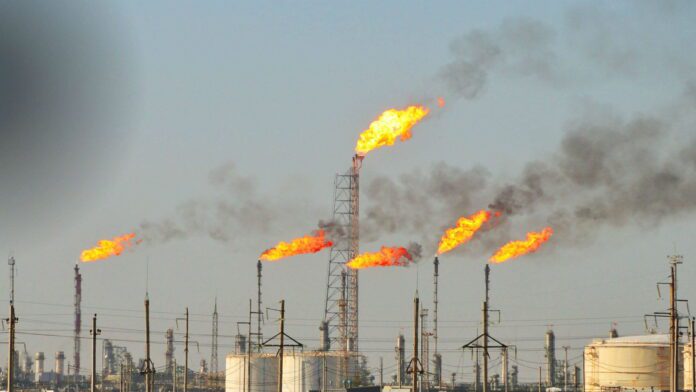
You may remember that the World Bank stated that gas flaring, which is the burning of natural gas associated with oil extraction, is responsible for more than 400 million tons of CO2 equivalent emissions each year. These emissions include methane and other types of pollutants.

Ssentamu stated that Uganda had developed its own oil and gas law by learning from the errors committed by other oil producing countries, particularly those located in Africa. This allowed Uganda to avoid repeating the errors made by its predecessors.

She made the announcement that Uganda will start producing its first oil in 2025 and stated that the country would prohibit gas flaring and any other form of environmental hazards associated with oil exploration and production from the very first day that oil would be produced.

The minister stated that the discovery of oil in any nation ought to naturally be regarded as a blessing. However, he issued a warning that such a blessing could turn into a curse if adequate preparations were not made for it.

She went on to say that oil could be a blessing or a curse for a country depending on its decision to give up agriculture in favor of relying solely on the profits from hydrocarbon resources.

”Uganda prepared itself very well by training Ugandans to be the ones to negotiate the terms, policies, and conditions for its oil industry, and now Ugandans are the ones developing the industry themselves.

“In order to ensure that our business complies with all applicable laws, we have put them into effect. According to one of these laws, all of the money we make from oil sales must be invested solely in the expansion of our infrastructure and cannot be used to buy food or pay employees’ salaries.

Electricity, which is necessary for a nation to become industrialized, is said to be one of the infrastructure developments that will be funded by the resources derived from oil, according to her.

She went on to say that the country would not be in the business of petroleum resources to export all of its oil, so the money made from the sale of oil would be used to construct refineries instead of selling the oil abroad.

Regarding the issue of gender equality, she stated that it was high time for women to be given prominent roles and front row roles in the management of the economy.

”Women are naturally not selfish because they want every member of the family to be happy in an equitable manner,” she said, explaining that this is because women become mothers.

Read Also: Insurgents kill three Nigerian, Nigerien soldiers, injure 12

The Minister of Energy suggested that more women should hold leadership positions in the energy industry.

According to her, when there is an inadequate supply of electricity and a scarcity of cooking gas, it is the women who are forced to resort to using firewood to cook, which reduces the amount of time she has left in her life.

Tinubu, Akpabio, others to launch book about El-Rufai’s eight years in Kaduna

0

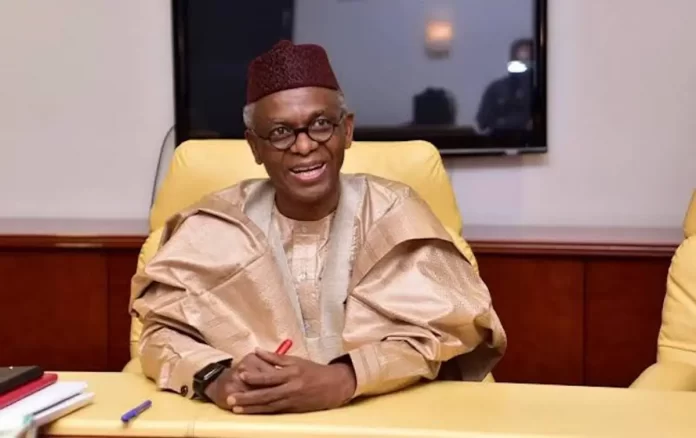
A book about Nasir El-Rufai, the governor of Kaduna State, is scheduled to be released on Saturday by the President-elect, Asiwaju Bola Tinubu, the Chairman of the Dangote Group, Alhaji Aliko Dangote, Senator Godswill Akpabio, and the former Emir of Kano, Muhammad Sanusi.

Putting The People First: The El-Rufai Years is a 412-page compilation of articles on the eight years of the El-Rufai administration as governor of Kaduna State, written by seasoned journalist Emmanuel Ado.

Speaking to reporters on Monday in Kaduna, Co-Chairman of the Public Presentation Organizing Committee Tony Maude said the book, which had been recommended by Deputy Senate President Ovie Omo-Agege, “provides perspectives on a wide range of issues: agenda setting, policy statements, budget, Internally Generated Revenue, Local Government and Public Service reforms, and the perennial security challenges confronting the State, including the nagging Southern Kaduna question.”

According to Maude, Emmanuel Ado’s collection of articles titled “Putting The People First: The EI-Rufai Years” details the eight years that El-Rufai served as governor of Kaduna State. Emmanuel Ado has been a resident of Kaduna for more than 50 years and is a senior journalist and media consultant with extensive experience.

According to Obarisi Ovie Omo-Agege, the Deputy Senate President, in his Forward to the book, “Putting The People First: The El-Rufai Years ‘provides perspectives on a wide range of issues: agenda setting, policy statements, budget, Internally Generated Revenue [IGR], Local Government and Public Service reforms, the perennial security challenges confronting the State and the nagging Southern Kaduna question, amid the regime of conspiracy theories as well as the COVID

Additionally, he claimed that the book made a “immense contribution to governance and political leadership in Nigeria” and that it documented “political stewardship and the trope of governance,” both of which Nigeria has lacked.

For politicians, administrators, political scientists, researchers, students, and the general public, this book is a valuable resource on El-Rufai’s tenure as governor of Kaduna State.

He added that “His Excellency, Asiwaju Bola Ahmed Tinubu, President-Elect, Federal Republic of Nigeria will grace the occasion as the Special Guest of Honour, Sen. Uba Sani, Governor-Elect, Kaduna State will serve as Chief Presenter, HRH, Khalifa Muhammad Sanusi II, 14th Emir of Kano as Chairman and HRH, Amb. Ahmed Nuhu Bamali, Emir of Zazzau as Royal Father of the Day.

Sen. Godswill Akpabio, Mr. Babajide Sanwo-Olu, Governor of Lagos State, Barr. Simon Lalong, Governor of Plateau State and Chairman of the Northern Governors’ Forum, Aliko Dangote, President of the Dangote Group, and Dr. Bashir Jamoh, Director General of the Nigerian Maritime Administration and Safety Agency, are among the guests of honor.


Insurgents kill three Nigerian, Nigerien soldiers, injure 12

0

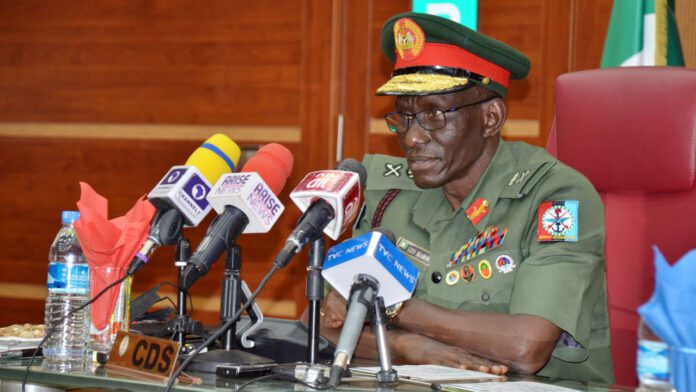
According to Reuters, on Sunday, Islamist fighters carried out attacks in the Northeast of the country, which resulted in the deaths of at least three soldiers from Nigeria and Niger and injured at least 12 others.

The soldiers were a component of the Multinational Joint Task Force, which is comprised of armed personnel from the countries of Benin, Cameroon, Chad, Niger, and Nigeria. The mission of the Multinational Joint Task Force (MNJTF) is to put an end to the Islamist insurgency that has caused the deaths of thousands of people and the displacement of millions more.

According to a source within the Nigerian military, two members of the MNJTF lost their lives when an improvised explosive device detonated under their vehicle while they were pursuing insurgents in the Arege region of Borno State, which is considered to be the epicenter of the insurgency in the region. There were a total of 12 people hurt: ten military personnel, including the commanding officer, and two civilians who were helping the military personnel.

Another explosive device went off in the vehicle that a Nigerien soldier was riding in when they carried out a separate attack in Arege, which resulted in the death of the soldier. According to a source within the Nigerien army, the total number of injured soldiers as a result of this attack is not yet known.

In a situation report, the MNJTF confirmed the attacks; however, the MNJTF spokesman, Lieutenant Colonel Kamarudeen Adegoke, was not available for comment at the time this report was made.

PDP: Makarfi’s Suspension Illegal

0

The national leadership of the People’s Democratic Party (PDP) has overturned the suspension of Senator Ahmed Mohammed Makarfi in Kaduna State. Senator Ahmed Mohammed Makarfi is a former governor of Kaduna State and a former acting national chairman of our party.

The party has stated that the suspension does not comply with the provisions of the PDP Constitution (in its amended form from 2017), despite the fact that it has declared the suspension to be null and void and without effect.

There were rumors circulating that the former governor had been removed from his position as governor by the PDP Ward Executive of the Tudun Wada Ward in the Makarfi Local Government Area of Kaduna State.

Read Also: Demand for phones worldwide has decreased 21%, in three years

In 2019, Makarfi ran for the presidency on the ticket of the People’s Democratic Party (PDP), for which he had previously served as acting national chairman of the party.

However, in a statement released on Monday, the People’s Democratic Party (PDP) said, “The attention of the National Working Committee (NWC) of the Peoples Democratic Party (PDP) has been drawn to the purported suspension of former Governor of Kaduna State and former Acting National Chairman of our Party, Senator Ahmed Mohammed Makarfi. This suspension was reportedly carried out by the Ward Executive of Tudun Wada Ward of Makarfi Local Government Area of Kaduna State.”

“The NWC, after a thorough consideration of all of the issues raised by the Ward Executive, hereby declares the purported decision and action of the Tudun Wada Ward Executives which borders on issues of discipline, as null and void and of no effect, not being consistent with the provisions of the Constitution of the PDP (As amended in 2017).”

“For the sake of clarity, Section 57 (7) provides that “Notwithstanding any other provision relating to discipline, no Executive Committee, at any level except the National Executive Committee, shall entertain any question of discipline as may relate or concern a member of the National Executive Committee, Deputy Governor, or member of the National Assembly.”

“The National Working Committee has therefore issued a charge to all leaders, critical stakeholders, members, and teeming supporters of our Party in Kaduna State and the general public to disregard the purported suspension of Senator Makarfi by the Ward for being a member of the National Executive Committee (NEC) of our Party.

Read Also: US charges Nigeria with violating religious freedom

The National Working Committee also issued a call to all party members in Kaduna State, saying, “The NWC also charges all Party members in Kaduna State to remain united at this critical time especially as the Party leadership is progressing in our concerted effort to ensure a comprehensive reconciliation in our Party,” according to a statement released by the party.

Court postpones Mompha’s trial until July 3: Money laundering

0

In the alleged N6 billion fraud trial involving Ismaila Mustapha, also known as Mompha, Justice Mojisola Dada of the Special Offences Court sitting in Ikeja, Lagos, on Monday, May 15, 2023, adjourned further hearing until Wednesday, July 3, 2023, due to the absence of his lawyer. The hearing will now take place on Wednesday, July 3, 2023.

On Monday evening, our correspondent was able to obtain a correspondence in which the spokesperson for the Economic and Financial Crimes Commission, Wilson Uwujaren, revealed some information.

Uwujaren mentioned that on January 12, 2022, the Lagos Zonal Command of the EFCC arraigned Mompha along with his company, Ismalob Global Investment Limited, on an eight-count charge bordering on conspiracy to launder funds obtained through unlawful activity, retention of proceeds of criminal conduct, laundering of funds obtained through unlawful activity, failure to disclose assets and property, possession of documents containing false pretence, and use of property derived from unlawful activity. Uwujaren also mentioned that the charges

In one of the counts, it is stated that “Ismaila Mustapha, Ahmadu Mohammed (at large), and Ismalob Global Investment Limited, sometime in 2016, in Lagos, within the jurisdiction of this Honorable Court, conspired amongst yourselves to conduct financial transactions to the tune of N5,998,884,653.18, with the intention of promoting the carrying on of specified unlawful activities to wit: obtaining by false pretence.”

In spite of this, Mompha entered a plea of not guilty to the charges.

Read Also: US charges Nigeria with violating religious freedom

In addition, the spokesperson for the EFCC noted that the EFCC had informed the court during the proceedings that took place on June 10, 2022, that Mompha was in possession of another passport in addition to the one that he had submitted to the court as part of the conditions of his bail, and that he had used the same passport to travel from Ghana to Dubai via Emirates Airlines on April 11, 2022, in violation of the court order. This was mentioned by the spokesperson for the EFCC.

According to Uwujaren, “Consequently, Justice Dada had revoked the N25 million bail variation granted to him, and also issued a bench warrant for his arrest over his failure to appear in court.” The bench warrant was issued because of the defendant’s failure to appear in court.


The EFCC had issued a warrant for his arrest as well. However, Mompha has not been seen in court since the 16th of June in the year 2022, despite the EFCC continuing their efforts to secure his arrest and bring him back before the judge.

“On September 22, 2022, Justice Dada issued an order that the trial would continue even though the defendant was not present in court. This was due to the defendant’s persistent absence from court as well as the inability of both the prosecution and the defense to produce him in court.

“During Monday’s proceedings, the counsel for the EFCC, S.I. Suleiman, informed the court that the prosecution, in collaboration with its international partners, had secured the arrest of the defendant.” “Attorney for the Economic and Financial Crimes Commission”

Suleiman stated, “We would like to bring to the knowledge of my lord that, in collaboration with our international partners, we have been able to apprehend him, and we plan to take him into custody and produce him before the court,” Suleiman said.

In addition to this, he reported to the judge that the attorney representing the defendant “reached out to me seeking an adjournment that he would be absent today.”

The judge has postponed the proceeding until the following Monday, July 3, 2023, for the purpose of continuing the trial.


US charges Nigeria with violating religious freedom

0
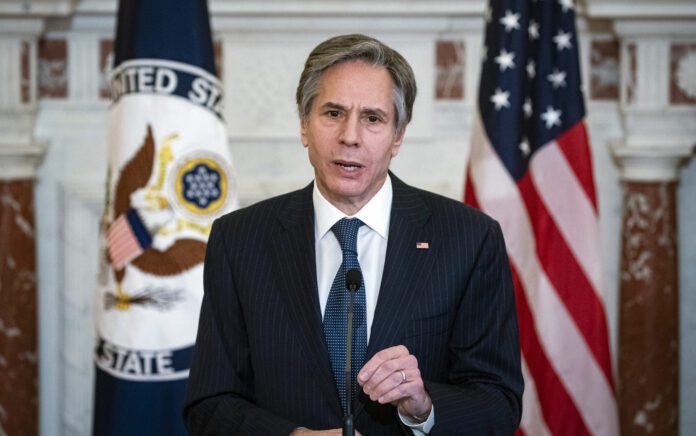
Secretary of State Antony Blinken announces his appointment of Gayle Smith as the new State Department Coordinator for Global COVID-19 Response and Health Security as he speaks about U.S. leadership in fighting the coronavirus pandemic at the State Department in Washington, Monday, April 5, 2021. (Al Drago/Pool via AP)

The commission reported a worsening of criminal activity and violent armed group incidents that affected religious freedom.

A Shari’a court executed Sheikh Kabara for blasphemy, according to one of the examples cited by the commission. For blasphemy and other offenses, judicial authorities jailed humanist leader Mubarak Bala for 24 years.

The United States claims that “in 2022, the environment for religious freedom in Nigeria remained unfavorable, with both state and non-state actors committing particularly egregious violations of religious freedom.

While some government representatives worked to address the causes of religious freedom violations, other officials actively violated the rights to religious freedom of Nigerians, including by enforcing blasphemy laws. Religious freedom was worsened by increased criminal activity and armed group violence.

In addition, the report stated that “rampant violence and atrocities across Nigeria continued to impact freedom of religion or belief, including militant Islamist violence; some forms of identity-based violence; mob violence; and criminal, political, and vigilante violence impacting worship.”

Read Also: Blacklist: Review hasty terrorism-clad conclusion on Nigeria, Northern Christain leaders tell U.S

The US stated that it took note of the federal authorities’ accelerated efforts to address violence affecting religious freedom, including by institutionalizing harsher punishments against offenders, enhancing military efforts to neutralize Islamist fighters in the North, and stepping up efforts to look into and apprehend offenders of the most heinous attacks.

“The effectiveness of these efforts remained in question, while in some regions state and local officials failed to fully prosecute individuals who incited mob violence against alleged blasphemers,” it was stated.

“Security and judicial sector reform aimed at preventing and offering redress for religious violence remained stagnant, with such efforts largely absent from or peripheral to leading politicians’ policy priorities,” the report stated.

In spite of ongoing problems with religious freedom in the nation, it was added, “In November, the U.S. Department of State failed to designate Nigeria as a Country of Particular Concern for engaging in particularly severe violations of religious freedom.”

The Commission recommended that the United States government “designate Nigeria as a CPC, for engaging in systematic, ongoing, and egregious violations of religious freedom, as defined by the International Religious Freedom Act, and redesignate Boko Haram and ISWAP as ‘entities of particular concern,’ or EPCs, for engaging in systematic, ongoing, and egregious violations of religious freedom, as defined by IRFA.”


Proposed retirement age increase sparks new discussion

0

According to HENRY FALAIYE, experts have voiced contrasting opinions on the Nigeria Labour Congress’ request to raise the country’s retirement age and years of service requirements for civil servants.

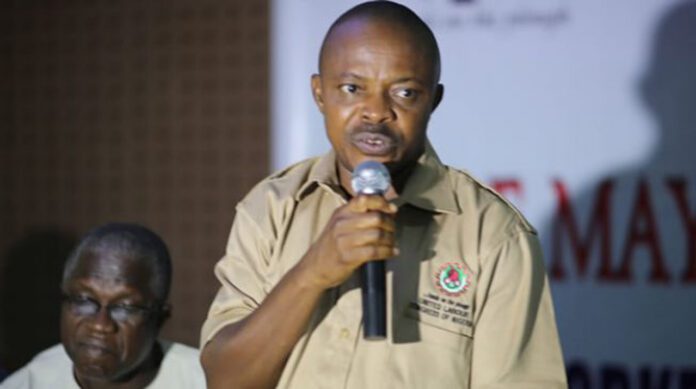
During the celebration of 2023 Workers’ Day on May 1, Nigeria Labour Congress President Joe Ajaero demanded that the retirement age and length of service requirements for the entire public sector, including the civil service, be raised from 60 to 65 years of age and 35 to 40 years of service, respectively.

According to Ajaero, it is now essential to review the retirement age and years of service across the board in the Public Service. This extension was already made in other areas of the Public Service, and labor believes it should continue.

Only a few other establishments, such as the core civil service, are now excluded, he claimed. Therefore, we are requesting that the retirement age and length of service be raised to 65 years of age and 40 years of service, whichever comes first, for the entire public service, including the civil service.

There have been conflicting views on the subject ever since the NLC president called for the extension of the nation’s retirement age and years of service.

Dr. Muda Yusuf, the chief executive officer of the Centre for the Promotion of Private Enterprise, noted that many civil servants were calling for an increase in the retirement age because they were finding it difficult to start new businesses after they retired.

Most of them can’t run a business, he said. Therefore, even when they attempt to conduct business, the majority of them lose money, and many people con them by offering them a variety of absurd business ideas and venture proposals. Since it is difficult to start a business when you have spent your entire life in the civil service, many of them have lost their entitlements as a result of choosing the incorrect line of work.

He asserted that many retired civil servants have trouble fitting into other situations.

He claims that the NLC’s request for an increase in the retirement age and length of service makes some sense.

“At least, if the employees are healthy and fit, they can work for up to 65 years before retiring.

Read Also: Retirement: the implementation of the 65 year retirement age and 40 year of service begins Jan. 1

He argued, “After all, judges are permitted to serve for up to 70 years, and in the universities, they permit them to serve for up to 70 years.”

He argued that the demand of labor was supported by an existing precedent.

Some consultants work well into their eighties. Because of their years of experience, the older they are, the better, according to Yusuf.

According to him, employees should be permitted to work up to 65 years if they are in good health and are still productive.

“Nearly 90% of them are unable to conduct business. As long as they are productive, the longer they can stay, the better for them,” he said.

NLC demand should be taken into consideration on its own merits, according to senior HR expert and consultant Tolu Adedayo.

He claims that some businesses even lower the retirement age so that workers can leave the workforce earlier and start working for themselves.

He clarified that his former employer had a 55-year-old retirement age. “The rationale behind that is that people would still be nimble so that they could accomplish something on their own after leaving work.

He clarified, “What we do is provide them with post-retirement business ideas and training so that, even before they leave paid employment, they are already trained and equipped with everything they would need to survive.

He pointed out that given the standard of living and Nigeria’s economic situation, the NLC may be calling for an increase in the retirement age and the number of service years.

I believe that retiring early is the best course of action. In France, where the government was attempting to raise the retirement age, there was recently a national demonstration in the nation.

“The French government’s plan to raise the retirement age was to decrease the number of retirees. Therefore, in my opinion, the best way to move forward is to encourage entrepreneurship, teach Nigerians how to start their own businesses so they can generate more jobs, encourage them to retire early, and provide them with the resources and training they need to survive after retirement.

The African Centre for Supply Chain’s Director-General and President of the Association of Outsourcing Professionals, Dr. Obiora Madu, claimed in an interview with The PUNCH that the question of whether the retirement age and length of service should be reviewed was unimportant.

Productivity ought to be the main concern, according to Madu.

He claimed that raising the retirement age and the length of service would have a negative effect on output.

He continued by saying that the Nigeria Labour Congress should be concerned with the productivity of the civil servants and that they ought to demand a living wage and depart from the system when it was time.

He questioned, “Given that the unemployment rate is around 33%, where will those people find employment if they raise the retirement age and length of service for civil servants?

For Victor Oyesina, an expert in human resources and talent acquisition, it was one thing to publicly demand that the retirement age be raised to 65 and that the length of service in the public sector be increased to 40 years; it was quite another to actually follow through with the declaration or proposal by designing the systems and processes that would enable the justification for that extension to stand.

He claims that the government speaks more than it does.

“Are they prepared to create the systems that would bring about those outcomes?

Because the current administration is coming to an end, labor must wait until the next administration to complete this.

Because no one knew who would be appointed to the Ministry of Labour and Productivity, Oyesina continued, the timing was improper.

“It’s wise to raise this so the incoming administration is aware. Of course, the National Assembly will still have to pass various bills.

“It’s great that the NLC was spreading awareness. Starting with awareness will allow us to monitor how implementation proceeds, he said.

Dr. Dare Ajiboye, a fellow of the Chartered Institute of Personnel Management of Nigeria and a former general secretary of the Bible Society of Nigeria, pointed out that before raising the retirement age and the number of years of service, the country’s life expectancy rate needed to be taken into account.

What is the country’s average life expectancy at this time? According to him, Nigeria’s life expectancy is between 50 and 55 years, and the country is pushing for a 40-year service requirement and a 65-year pension age.

He asserts that one should consider the demand’s justification and practicality.

It implies that if one has a 55-year life expectancy, they begin to deteriorate between the ages of 45 and 50.

“What happens to people’s productivity when they reach 65 years old. Would they still produce as anticipated?” he questioned.

He claimed that because their jobs were less demanding than those in private businesses, where employees struggle to meet goals, civil servants were pushing for an increase in the retirement age.

Ajiboye argued that it would be difficult for someone to be very productive at the age of 65.

It is not just Nigeria that is currently debating retirement age and length of service. While the country’s labor union is pushing for an increase in the retirement age, their French counterparts opposed their government’s plans to raise the retirement age from the current 62 years to 65 years. Hundreds of French workers protested against the extension in April because they were so adamantly opposed to it.

The UK government recently announced that it was thinking about increasing the retirement age from 60 years to 68 years by 2035. If adopted, the proposals would apply to current employees who are under the age of 54.

The Prime Minister and Chancellor were warned by some of the nation’s lawmakers that raising the retirement age to 68 would be “playing with fire.”

According to reports, millions of Britons may be able to extend their careers thanks to government plans to raise the retirement age to 68 by 2035.

The proposal, which would apply to people born in the 1970s and later, was reportedly expected to be announced in the March Budget.

Backbench MPs have warned both Prime Minister Rishi Sunak and Chancellor Jeremy Hunt that they are ‘playing with fire’ in the lead-up to the next general election.

The Treasury reportedly estimated it to be worth millions to the UK’s struggling economy, according to the proposal. In response to the rising cost of living, hundreds of thousands of workers have already decided to reduce their pension contributions.

Different tactics clearly work for different people, as evidenced by the varied responses to proposals for a review of the retirement age.
Offer Ajaokuta for sale without any concessions

0

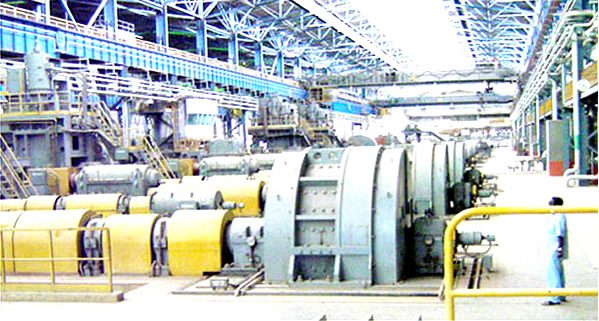
It is not surprising that the Federal Government’s most recent initiative to concession the Ajaokuta Steel and Itakpe Iron Ore companies has also sparked a storm given the long history of official evasion, dubious concessions, asset stripping, litigation, and worker and host community protests. The House of Representatives and labor unions oppose the President’s (major general Muhammadu Buhari, retired) plan to grant concessions to the two businesses. The controversy is yet another chapter in the complicated story of the steel complexes, which have cost the nation more than $8 billion in 40 years with little to show for it.

Buhari attempted to further complicate matters on his way out of office after failing to take decisive action to clear the mess through a transparent privatization process to a reputable international steel sector operator for eight years. On the grounds that it is against the interests of the country, the House wants the proposal suspended. We are also concerned about the timing of the concession arrangement, said a lawmaker named Abdullahi Halims. why at this time? Why is it necessary to act quickly to sell off such important national assets in a brief period of less than six weeks?

The Kogi Heritage Protection Advocacy and the Iron and Steel Senior Staff Association of Nigeria, both stakeholder groups, have also denounced the concession agreements, for which 11 companies have submitted bids, three of which are from Russia. Additionally, the Kogi State Government filed a lawsuit against the Federal Government in an effort to scrap the plan.

The history of Nigeria’s steel industry is a case study in bad leadership, waste, corruption, and missed opportunities. The National Iron Ore Mining Company, Itakpe, and the Ajaokuta Steel Company, both in Kogi State, serve as the backbones of the complex integrated steel system, with additional steel companies dispersed throughout the nation.

While previous administrations privatized the Delta Steel Company, Ovwian-Aladja, and the three rolling mills in Osogbo, Jos, and Katsina, Ajaokuta and Itakpe remain in state hands, are idle, and continue to drain taxpayer funds without providing any benefits. Previous administrations’ attempts to make concessions to them failed miserably, preventing Nigeria from benefiting from a robust steel foundation for its economy after spending over $8 billion.

Nigerians’ suspicion of concessions, commercialization, and privatization is understandable. The Bureau of Public Enterprises acknowledged that 37% of the 142 SOEs sold between 2004 and 2018 had failed, despite the National Assembly’s claim that about 80% of privatized state-owned enterprises had failed or were failing a few years earlier. In contrast, asset sales in other nations produced “strong performance improvements, achieved surprisingly without sacrificing employment security,” as reported by the Journal of Finance.

Nigeria’s unions, who understandably worry about their jobs, contend that “national patrimony” shouldn’t be sold to shady investors, especially given that prior concession agreements haven’t been advantageous to the nation. These statements are partially accurate, but they do not sum up the requirements of the modern economy.

The liberalization of the telecom industry generated tax revenue, jobs, and foreign direct investment. The National Council on Privatization has just awarded Transcorp Power a post-privatization discharge certificate for operating the Ughelli Power Plant successfully, despite the poorly executed power privatization of 2013.

In 2003, the Olusegun Obasanjo administration began the tragic history of treacherous concessions at Ajaokuta, first going to the obscure company Solgas and then to Global Steel Holdings Limited. NASS’s later findings demonstrate that instead of making investments and increasing production, succeeding concessionaires stripped their assets. Concerned, the Umaru Yar’Adua administration confiscated the ASC in 2008 and granted GSHL the NIOM concession for the remaining nine years of the concession.

It was ineffective. Nigeria’s attempt to industrialize itself instead failed. After that, GSHL went to arbitration in a London court, where Nigeria agreed to pay the Indian company $496 million.

Read Also: Demand for phones worldwide has decreased 21%, in three years

Fair enough, the Warri-Itakpe rail line was finished by the Buhari administration, which was necessary for transporting produced steel and raw materials. Buhari traveled to Russia as a result of its pledge to revive the ASC in 2019, but it claimed that this plan was thwarted by the COVID-19 pandemic in 2020 and the Russia-Ukraine conflict in 2022.

Because the sector has stagnated since the Buhari-led junta overthrew the Shehu Shagari civilian administration in 1983, Nigeria is actually paying for the serious mistakes of its previous governments. Nigeria was poised to take a significant role in the global steel industry under Shagari.

This is a lost opportunity. The DSC was built with a $1.8 billion investment (at a 60 kobo to $1 exchange rate), but was reportedly sold for $30 million. The rolling mills are dead right now. Nearly all of the auto assembly plants that were supposed to rely on domestic steel producers have closed.

Nigeria has failed on every level. In addition to the $496 million fine, the government has been allocating roughly N3.5 billion annually for salaries to idle ASC staff since 2016. The third and fourth quarters of 2021 saw Nigeria import iron, steel, and metals worth N837.76 billion.

In contrast, India, the second-largest producer in the world, shipped 6.7MT in 2022–2023, per Reuters.According to Statista, in 2021 there were 308,675 workers in the sector across 27 EU countries.

According to the World Steel Association, global crude steel production will fall to 1.87 million tonnes or 4.2% in 2022, but several nations that started the journey with Nigeria finished their own projects within a decade. These include Argentina, Brazil, Brazil, Egypt, South Africa, India, Iran, Venezuela, Saudi Arabia, and Venezuela. Egypt, Libya, and South Africa held the top three positions in Africa, where 1.1MT was produced in 2022.

The new administration should work with the NASS, the BPE, the NCP, host state governments, unions, and host communities to conduct an extensive review of the industry in order to save it.

The government will stop paying salaries for redundant workers, stop importation, create jobs, collect income taxes, and save on foreign exchange, which are all significant benefits that have made outright privatization the global trend.

The government of Nigeria must abandon the notion of making yet another concession—the only workable choice is an outright sale.It should stay away from the mistakes made in the past that gave privatization a bad reputation.


Demand for phones worldwide has decreased 21%, in three years

0

Shipments of mobile devices on a global scale have decreased by 21% over the past three years.

According to information that was obtained from the International Data Corporation, the number of phones that were shipped all over the world decreased by 22 percent, going from 340 million units in the first quarter of 2021 to 268 million units in the first quarter of 2023.

When compared to the previous quarter, the global shipment was at its highest in 2021, but it dropped to 311.2 million units in 2022, and then it dropped even further to 268 million units in the first quarter of 2023.

When compared to the previous year, the number of mobile phones shipped around the world hit an all-time high of 1.67 billion units in 2021, but only 1.21 billion units were shipped the following year.

Earlier, we had reported that the total number of global smartphone shipments in the first quarter of 2023 came in at 268.6 million units, which was a decrease of 14.6% year-on-year.

As a result of lukewarm demand, inflation, and general economic unpredictability, this was the seventh consecutive quarter in which the smartphone market experienced a decline in revenue.

IDC reported that the decrease was greater than the 12.7 percent that it had predicted it would experience in its previous forecast.

According to a report that was published by the World Economic Forum in 2021, “Some experts think that “peak smartphone” is already behind us, but market research group IDC remained hopeful for the industry to return to previous heights and even surpass them.”

Nabila Popal, the Research Director of the Worldwide Tracker team at IDC, stated that “The industry is going through a period of inventory clearing and adjustment,” despite the fact that there may have been a decrease in the demand for phones all over the world.

Read Also: UI, UNN, others stand out in international varsity ranking

“Market participants continue to exercise caution and are opting to take a conservative approach rather than flooding a channel with additional stock in order to chase after momentary gains in share. If we want to avoid an unhealthy situation like the one that will exist in 2022, I believe that doing this is the prudent thing to do.

“Although we have reason to believe that we will be back on our feet by the end of the year, we still have a difficult three to six months ahead of us. Everyone is tense and worried about the specific time that the tide will turn, and they all want to be the first ones to ride the wave of recovery when it arrives. Nevertheless, it is a difficult circumstance.”

In general, the effects of inflation and market saturation have thrown the global phone shipment market into chaos. This is especially true in light of the fact that projections about a significant economic downturn are becoming more likely.


UI, UNN, others stand out in international varsity ranking

0

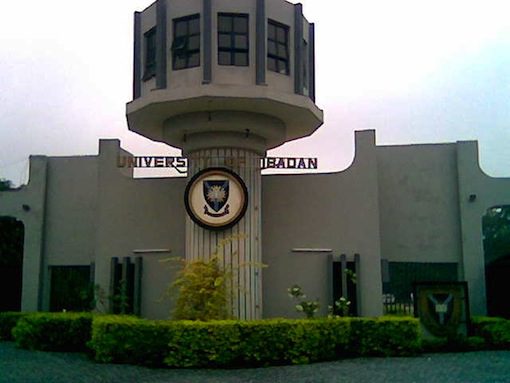
According to the Centre for World University Rankings, the University of Ibadan, the University of Nigeria, the University of Lagos, and the Ahmadu Bello University have all been ranked among the top universities in the world.

According to the list that was published on the website of the international organization on Monday, there was a total of 20,531 universities that were ranked, but only 2,000 made it onto the global list.

Read Also: Court tells NYSC, don’t declare Enugu gov-elect certificate fake

The University of Ibadan achieved a ranking of first in Nigeria and 1,163rd out of a possible 2,000 worldwide.

The University of Nigeria, Nsukka (UNN) came in at number two on the national list and 1,784th overall.

While ABU was ranked fourth nationally and number 1,881 on the global list, UNILAG was ranked third in Nigeria and placed at number 1,875 on the global list.

According to the ranking, the top five universities in the world are located as follows: Harvard University in the United States; Massachusetts Institute of Technology in the United States; Stanford University in the United States; University of Cambridge in the United Kingdom; and University of Oxford in the United Kingdom. All five universities are located in the United States.

As a consequence, the rankings were determined by factors including research, employability, faculty, and education.

“While it is encouraging to see Nigeria making gains in the rankings, funding to further promote the development and reputation of Nigeria’s higher education system is vital if the country aspires to be more competitive on the global stage,” Dr. Nadin Mahassen, President of the Center for World University Rankings, said in response to the national picture: “While it is encouraging to see Nigeria making gains in the rankings, it is vital for the country to have funding to further promote the development and reputation of Nigeria’s higher education system.” “Efforts need to be made to ensure that Nigeria attracts top academics and students, that increasing enrollment numbers at universities come alongside increases in teaching capacity, and that tertiary education expenditure as a percentage of the national GDP steadily grows over the next several years.”