Home Blog Page 1438

Tinubu’s math class, undersea cables and Meta’s promise

0

On Thursday evening, President Bola Tinubu stood among senators to deliver his first Math lecture as President.

Although the setting neither looked nor felt like a learning environment, the President felt the lessons would stick better with food in the students’ mouths.

So, at the break of the Ramadan fast that evening, he stole the moment to scratch a lingering itch: the budget padding allegation levelled against his government by Senator Abdul Ningi.

You see, Ningi, a ranking senator representing Bauchi Central on the platform of the Peoples Democratic Party poked the hornets’ nest with a short stick weeks ago when he accused the Federal Government of implementing a budget other than the one Tinubu signed on January 1, 2024.

As the Chairman of the Northern Senators Forum and Senate Committee on Population, the lawmaker argued in a BBC Hausa Service interview that the red chamber debated and passed an N25tn budget, not the N28.7tn that was currently being implemented. Therefore, N3.7tn could not be accounted for in the 2024 budget.

The ensuing uproar was akin to that of the days of former Central Bank of Nigeria governor, Sanusi Lamido Sanusi, who told a group of dumbfounded senators that $20bn could not be accounted for in the national coffers. However, the context was different this time.

Anyone familiar with Nigeria’s history understands that the political economy of numbers has occupied a special seat since independence. The much-debated population census of May 1962 comes to mind. As it appears, citizens tend to unleash their full arithmetic know-how when it comes to the economy, census, and elections.

Although the Presidency had since denied any knowledge of a parallel budget, it was the first time President Tinubu spoke publicly on the matter.

In the thick of the controversy, the Presidency stated, “We want to state categorically that the only 2024 budget that is being implemented is the N28.7tn budget passed by the National Assembly and signed by the President…He did not present a budget of N25tn…We don’t expect a ranking senator not to pay due attention to details before making wild claims.”

At its plenary session two days later, the Senate suspended Ningi for three months. That meant missing Tinubu’s arithmetic class last Thursday.

Brandishing his accounting pen before the lawmakers, the President said, “I know the arithmetic of the budget and the numbers that I brought to the National Assembly, and I know what numbers came back.

“Those who are talking about malicious embellishment in the budget; did not understand the arithmetic and did not refer to the baseline of what I brought. But your integrity is intact. I appreciate all of you for the expeditious handling of the budget.”

I could imagine some senators nodding in agreement and screaming in their thoughts, “Oh, baseline! I’ve got to look that up on Investopedia.”

Given his admitted proficiency in arithmetic, will the President now hold tutorials for the likes of Ningi at the Villa? Will lawmakers be made to undergo a refresher course in arithmetic every budget cycle? And will Ningi have to present a certificate from a three-month course on ‘Budgeting and Financial Analysis’ before he is readmitted to the Senate? We don’t know for sure. But to bank on the President’s grasp of numbers should not be too risky.

Leading Africa’s digital technology from space?

Earlier that Thursday, President Tinubu played host to a delegation from Meta Platforms Incorporated, led by former UK Deputy Prime Minister and Meta’s President of Global Affairs, Sir Nick Clegg, at the State House.

A statement by the official spokesperson to the President revealed that Tinubu assured Sir Clegg that Nigeria would be Africa’s guiding star of information and communications technology.

To do this, Tinubu said the Federal Government was sustaining investments in digital technology to enhance the sustainability of small businesses and expand opportunities across sectors. His administration is opening up channels of opportunities in information and communications technology, deepening capacity, and fostering partnerships, Tinubu added.

As he has done in various fora, the President emphasised that Nigerian youths are the most critical asset in Nigeria’s arsenal. Thus, his government is moving to achieve digital economic expansion through its 3MTT programme, which is training three million Nigerian youths in digital technology and essential skills before deploying them in innovation hubs nationwide.

I felt proud to be a youth when I read those lines. You’ll understand my joy when you remember that another President flew thousands of kilometres to London on taxpayers’ money to paint the youth as lazy.

Okay, back to the gist. When I read Tinubu’s ambitious declaration to lead Africa’s digital transformation, I recalled the March 14 incident where millions of Nigerian Internet users were thrown into darkness as Internet services failed.

In the ensuing days, it was announced that undersea cables supplying critical communications lines to Africa had been compromised. Now, I won’t join the wild party of speculations about the cause of the cable snaps. That’s not my calling. What’s not up for debate is that repairs would take anywhere from weeks to months to complete.

It once again revealed the underbelly of our digital infrastructure, much like COVID-19 did for fragile healthcare systems worldwide. If we aim to lead Africa’s ICT revolution, a part of me believes we must be immune from black swans, such as undersea cable cuts. This will take advanced forms of evolution.

Father of evolution by natural selection, Charles Darwin, puts it this way, “It is not the strongest of the species that survive, nor the most intelligent, but the one most responsive to change.”

While most living organisms evolve towards survival, those who last evolve for the sake of innovation – a deeply rooted notion that things (and ways of doing things) can be better no matter how efficient they currently seem. A phased upgrade from cables to satellite communications might be an excellent place to start.

In the meantime, Nigeria’s teeming youths in the content creation space have reasons to rejoice as Sir Clegg announced that, come June 2024, Meta would introduce a feature on its Instagram app to allow Nigerian creators to monetise their content to enable them to earn a living using the app.

31 states owe CBN N340bn bailout funds

0

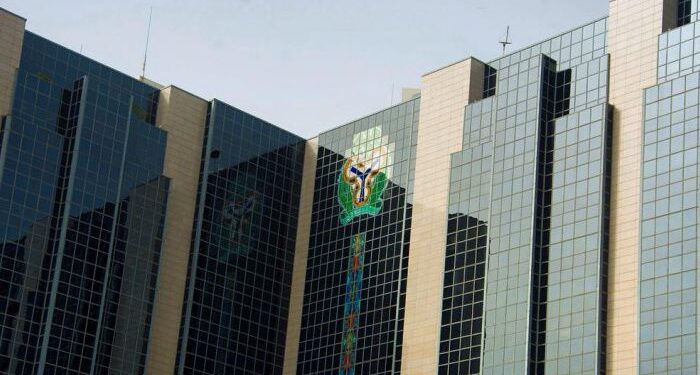
Thirty-one state governments owe the Central Bank of Nigeria, CBN, a total of N339.9bn obtained to pay workers’ salaries between 2015 and 2023, a document obtained from the apex bank has revealed.

The document also stated that the sub-nationals had yet to pay an outstanding of N339.97bn and a loan default of N1.31bn as of September 2023.

The fund, which was facilitated through the Salary Bailout Facility, a strategic intervention by the CBN aimed at alleviating the fiscal pressures faced by the states, was part of the over N10.3tn intervention fund made available by the apex bank under the immediate former CBN governor, Godwin Emefiele.

In contrast, the current governor, Olayemi Cardoso, stopped the programme, stressing that the apex bank could not continue to fund more intervention programmes amidst the current economic crisis.

The CBN said the SBF was designed to help the state governments to clear the backlog of salaries owed their employees. The initiative underscores the critical role of the CBN in stabilising the country’s financial landscape, especially in times of fiscal distress faced by state administrations.

The programme, which has been closed according to its status report, involved key stakeholders, such as the benefiting state governments, Deposit Money Banks, the Federal Ministry of Finance, and the Accountant-General of the Federation, all of whom played pivotal roles in implementing and managing the bailout package.

A breakdown of the report showed that 31 state governments benefited from the initiative, with N457.17bn disbursed. Despite the substantial disbursement, the principal repayment made so far totalled N117.21bn, with interest repayments at N45.21bn.

It also showed that the states collectively borrowed N457.17bn to pay salaries to their respective civil servants and an overdue amount of N1.31bn.

The report further said the top beneficiaries of the bailout facility included Imo, which received N20.46bn; Kogi, N20.26bn; Kano, N20.21bn; Oyo, N16.81bn; and Osun, N15.93bn.

The inability of the states to perform their primary obligation to their workforce has been a front-burner issue in recent times amidst clamour by labour unions to increase the minimum wage from the current N30,000.

Last year, state governments borrowed about N46.17bn from three banks to pay salaries between January and June, according to an analysis of the half-year 2023 financial statements of Access Bank, Fidelity Bank, and the Zenith Bank Group.

It was observed that the states borrowed the most from Access Bank in the six months, with a record of N42.97bn loan.

This was followed by Zenith Bank with N1.78bn, and Fidelity Bank with N1.42bn in the six months.

The According also exclusively reported the inability of 24 states to pay workers’ salaries this year without having to wait for federal allocations from the central government despite improved federal allocations.

The development also means that the respective wage bills of the affected states surpassed their various internally generated revenues, raising concerns about workers productivity and state governments’ efficiency in internal revenue generation.

The 24 states include Bayelsa, Ondo, Yobe, Sokoto, Taraba, Plateau, Oyo, Niger, Nasarawa, Kogi, Kebbi, Katsina, Jigawa, Gombe, Ekiti, Ebonyi, and Borno.

Others are Benue, Bauchi, Adamawa, Akwa Ibom, Cross River, Abia, and Delta.

In 2023, state governors got the most Federal Account Allocation Committee disbursements in at least seven years. The rise in FAAC allocations to the three tiers of government, especially the states, followed the removal of petrol subsidy and currency reforms of the current administration. The reforms have reportedly led to a 40 per cent boost in income.

Financial experts have raised concerns about states’ spending on recurrent expenditure, highlighting the need to embrace financial innovations.

 ‘States risk insolvency’

The Chief Executive Officer of the Centre for the Promotion of Private Enterprise, Dr Muda Yusuf, said the report indicated that a majority of states were not financially sustainable and were at risk of insolvency if there was no boost in investment.

He said, “This issue is a fiscal sustainability problem, showing that many states are not fiscally sustainable and need to work towards it; and that the states need to do a lot more to attract more investments to their states so that their level of dependence on the Federal Allocation Accounts Committee would reduce.

“Even as we speak, many of them are also in debt, and by the time they pay salaries and service their debts, there is not much left to improve on infrastructure. It’s in the interest of the sustainability of the states for them to be more creative in generating more revenue and attracting more investment to their states so that they can generate more revenue.

“Secondly, we also need to address the issue of fiscal federalism because some of the states don’t have power over some resources in their domain and can’t bring investors into it. For instance, mining is controlled mainly by the Federal Government, you get permission from them and revenue is remitted to them. So we need to revisit the issue of restructuring to help states have more control over resources within their domain.”

A development economist, Aliyu Ilias, said many states had yet to fully develop themselves as industrialised and marketable to attract investors.

Ilias urged governors to develop an area of strength they could leverage to attract foreign investments.

To address these ongoing challenges, the report recommends that an increased focus be placed on enlightening state investment companies about the benefits of Public-Private Partnerships. Such partnerships could significantly enhance the state’s Internally Generated Revenue, improving fiscal health and reducing dependence on bailout facilities for salary payments.

This delay underscores the broader challenges of fiscal management and sustainability within the states, highlighting the need for more robust financial strategies and practices.

N4.94tn domestic debt

The Federal Government borrowed a total sum of N4.94tn from domestic sources in the first six months of the administration of President Bola Tinubu, indicating significant dependence on loans.

This is according to the latest debt stock document obtained from the Debt Management Office on Saturday.

According to the document, the domestic debts rose by N4.94tn from N48.3tn recorded in June 2023 to N53.3tn as of December 31, 2023.

Sunday According observed that although external loans reduced by $664m in the six months ($43.2m in June and $42.4m in December), the figure increased by $901m when compared with $41.5m in September and $42.4m in December.

The DMO in a statement on Friday said the public debt soared by 10.7 per cent to N97.34tn in the fourth quarter of 2023 from N87.91tn recorded in the previous quarter.

Delving deeper into the specifics, the DMO explained that the N97.34tn public debt comprised N59.12tn in domestic debt and N38.22tn in external debt.

It said the increase was largely due to new domestic borrowing by the Federal Government to part-finance the deficit in the 2024 budget, and disbursements by multilateral and bilateral lenders, adding that loans from multilateral sources constituted 49.77 per cent of the country’s external debt stock, while loans from bilateral sources constituted 16.02 per cent.

It said, “Nigeria’s public debt stock as of December 31, 2023, was N97.34tn or $108.229 bn. This amount comprises the domestic and external debt stocks of the Federal Government of Nigeria, the 36 state governments, and the Federal Capital Territory.

“There was an increase of N9.43tn over the comparative figure for September 2023, which was largely due to new domestic borrowing by the FGN to partly finance the deficit in the 2024 Appropriation Act and disbursements by multilateral and bilateral lenders.”

An analysis of the domestic debts showed that the government borrowed N2.29tn from the FGN bonds market with the figure increasing by 5.45 per cent from N41.97tn recorded in June 2033 to N44.26tn as of December 31, 2023.

The government also borrowed N1.79tn from treasury bills, N8.47bn from savings bonds, N350bn in Sukuk loans, and N549.02bn from promissory notes.

Under external debt, increased borrowing was observed from the African Development Bank and the Exim Bank of China, with a total loan of $541.5m.

The increased debt is, however, contradictory to promises made by the Tinubu administration to reduce borrowing and focus more on increasing revenues.

The Minister of Finance and Coordinating Minister for the Economy, Wale Edun, at different forums, noted that the country needed to improve its revenue standing because it could not afford to rely on borrowing going forward.

Reaffirming the country’s revenue position, the Minister of Budget and Economic Planning, Abubakar Bagudu, declared at the public presentation of the 2024 budget that revenue generation remained the major hindrance to the country’s fiscal viability.

“Revenue generation remains the major fiscal constraint to Nigeria’s fiscal viability. However, the government is reviewing current tax and fiscal policies to improve revenue generation. The target is to increase the ratio of revenue to the GDP from less than 10 per cent currently to 18 per cent within the current term of this administration,” he said.

This is a position backed by the World Bank, which believes that Nigeria’s debt servicing cost is on course to hit over 200 per cent of its revenue by 2026 until its recent reforms and policy redirection. The bank, however, believes that recent reforms in the country are set to boost revenues and keep debt levels below 40 per cent of the GDP over the medium term.

It predicts that debt servicing cost is set to fall from about 101.5 per cent of total revenue in 2022 to 43 per cent in 2026.

Economy sick – Experts

Experts have said that the Nigerian economy is currently sick as a result of the increasing debt profile.

While debt financing has helped other countries to boost production and increase capital infrastructure, experts say Nigeria has no business borrowing more funds with the current debt situation.

An economist at Sankore Global Investment, Jonathan Thomas, said the country’s debt profile was hindering economic growth, noting that the only justification for the huge debt was if the country recorded a positive growth in capital stock.

Thomas stated, “This increasing rate of debt in Nigeria is undoubtedly not the best because it is hindering the growth rate. The high amount of the revenue is used for debt servicing; at least not less than 90 per cent of our revenue is used for debt servicing. Before we can justify the debt rate, we must see a positive impact on our capital stock, but there has not been any proof to show that our capital stock is increasing; so, the increased debt is used for consumption and debt servicing.

“It doesn’t make any sense when revenue is used to service debt. It is better to run the economy based on internally generated revenue.”

He noted that the government needed to plan towards offsetting the previous debts to sustain positive economic growth.

Thomas added, “The government needs to plan towards offsetting the debts from the past years, especially those of the previous administration.

“The idea of debt for now is not rational. No one can justify this. The government is still borrowing because it feels what is for everybody is for no one.

“The government needs to be selfless enough to tackle the debt situation of the country.”

An economist at Lotus Beta Analytics, Shedrach Israel, said Nigeria’s high debt profile gave the impression that the country could not sustain itself. He also called on the government to tackle the recurring debts.

He said, “It is shocking to know that we are still borrowing as a nation because petrol subsidy removal is meant to provide more revenue to the government. The government is already doing a lot to restructure the tax system, so there are enough sources of income. The implication of borrowing more cannot be over-emphasized. It’s reducing the country’s revenue for capital infrastructure. Borrowing gives a false sense of liquidity. It is like eating the future today and bearing the consequences later.

“Borrowing gives the impression that the economy is not viable and cannot survive outside of borrowing.

“For every money that’s borrowed, there are budgetary allocations because the loans cannot be paid within a short time. The amount spent on debt servicing is almost more than the budgets of some ministries, departments, and agencies of the Federal Government.

“The government has to put an end to borrowing, especially borrowing without public knowledge.”

Pharmsavi laments social media pressure on public figures

0

A former Big Brother Naija contestant and health content creator, Saviour Akpan, aka Pharmsavi, has said that social media pressure is worse for public figures.

In an interview with Sunday Scoop, he said, “There is so much pressure on social media generally, and it’s even worse when one is a public figure. However, I try to stay positive and focused on the grind without getting distracted by whatever is happening on social media.

“As a professional, I have mastered the art of work-life balance. Pharmaceutical health content requires a lot of research, and this helps me to stay informed and disseminate accurate information to my audience in the most engaging way possible.”

Sharing his opinion on why some brands seem to prefer working with female reality TV stars, rather than their male counterparts, he said, “I believe it is related to audience preferences, and maybe a bit of societal factor.

“The majority of brands in Nigeria are female-inclined, so those brands always go for ladies for endorsement deals, leaving the male housemates with little or few opportunities. Thus, they have to struggle their way through. Women also tend to network easily and get more favour from people, so it’s easier for them to scale through in the industry.”

He also stated that his life had changed since he participated in BBN.

He said, “It is a huge platform that comes with so many opportunities, and I have been able to leverage that by carving out a niche for myself as a health content creator with an online community that consumes my health content. I am grateful for the platform and I look forward to exploring more collaboration and partnerships within the industry.”

All rights reserved. This material, and other digital content on this website, may not be reproduced, published, broadcast, rewritten or redistributed in whole or in part without prior express written permission from According.

Contact: [email protected]

Despite resistance, black tax still a burden for income earners

0

In Africa, a popular saying on family life and child upbringing that has transcended ages is that it takes a community to raise a child. Put differently, ‘a child is owned by all’.

Although this has been interpreted to mean that raising a child is the responsibility of all members of a community, it has also become a huge weight on the backs of African children, who feel indebted to the community which joined hands with their immediate family to raise them.

Some even go over and beyond to make sure that, in success or squalor, they provide immense support, not just to their nuclear family, but to the village.

The term, ‘black tax,’ originated in South Africa, denoting the financial support black professionals and higher-income individuals provide to their parents, siblings, and other family members.

A deep-seated sense of responsibility towards familial obligations often drives this financial assistance.

A family life expert and women’s rights activist, Mrs Funmi Goke, noted that black tax referred to the financial responsibility placed on individuals, usually young adults, to support their extended family members, including parents, siblings, and sometimes even distant relatives.

According to her, this phenomenon is prevalent in many African countries, including Nigeria, where cultural norms emphasise communalism and collective responsibility within families and communities.

In Nigeria, black tax manifests in various ways, reflecting the socio-economic realities and cultural values of the society.

They can come in the form of financial support. Many young adults are often expected to contribute financially to their families’ upkeep, including paying bills, providing for basic needs, and assisting with educational expenses.

This burden, experts have noted, may extend beyond immediate family members to include relatives such as aunts, uncles, and cousins.

Also, young people are often expected to prioritise supporting their families over pursuing their own educational and career goals, thereby sacrificing their personal dreams for their family’s bigger goals.

They may forego higher education or delay entering the workforce to work and earn money to support their families’ needs.

Goke identified emotional pressure alongside financial obligations as another way black tax can be seen.

She said, “Alongside the financial obligations, individuals may also experience emotional pressure to fulfill their familial duties. They may feel a sense of guilt or obligation to support their family members, even at the expense of their well-being and aspirations.

“Nigerian culture places a strong emphasis on family and communal ties, with the expectation that individuals will support their relatives in times of need. Failure to meet these expectations may lead to social stigma or strained relationships within the family and community.”

Speaking on interdependence, Goke said, “Black tax perpetuates a cycle of interdependence within families, where individuals rely on each other for financial support. This can create a sense of mutual obligation and solidarity but may also reinforce patterns of dependency and inhibit individual autonomy.”

Overall, for her, black tax reflects the complex interplay between sociocultural norms, economic conditions, and familial expectations in Nigeria.

While it fosters a sense of communal support and solidarity, it also poses significant challenges for young adults striving to achieve financial independence and pursue their dreams and aspirations.

Addressing the root causes of black tax requires systemic changes, including economic empowerment initiatives, social welfare programmes, and cultural shifts that prioritise individual autonomy and well-being alongside familial obligations.


Root

The causes of black tax are multifaceted. Economic instability, inadequate social welfare systems, and cultural norms that prioritise family obligations over individual aspirations all contribute to its prevalence.

In a country where unemployment rates soar and access to quality education remains elusive for many, young Nigerians often find themselves thrust into adulthood prematurely, burdened by the weight of their family’s financial struggles.

For Tolu Ogunshe, a 25-year-old banker in Lagos, navigating black tax requires resilience and resourcefulness.

She recognised that while she could not change her family’s circumstances overnight, she could take proactive steps to manage her responsibilities effectively.

First and foremost, she learnt to set boundaries and communicate openly with her family members about her financial limitations. By establishing clear expectations and boundaries, she avoids feeling overwhelmed and burnt out.

Moreover, Tolu seeks opportunities for personal growth and development, knowing that investing in herself is crucial for breaking the cycle of intergenerational poverty.

She pursues additional education and skills training, equipping herself with the tools needed to secure better job prospects and higher income potential. Through continuous learning and self-improvement, she expands her opportunities for financial stability and independence.

In addition to personal development, Tolu explores alternative sources of income to supplement her earnings. She harnesses the power of technology and entrepreneurship, leveraging social media platforms to market her skills and talents.

Whether it’s freelance writing, graphic design, or tutoring, she discovers creative ways to generate extra income while balancing her familial responsibilities.

Furthermore, Tolu seeks out support networks and community resources to alleviate the burden of black tax. She connects with other young Nigerians facing similar challenges, sharing advice, and strategies for coping with familial expectations.

“It is really difficult for me because I am very young and my parents sometimes do not understand when I say I do not have to give. It puts me under so much pressure to always want to sacrifice my good for theirs,” she added.

A historian and professor at the University of Texas, United States of America, Toyin Falola, in an article, “Black Tax: Family charges and mandatory payment”, said that like the brown tax in the Latino communities, the black Tax spread across Africa as a general description of family relations for every black.

“It is seen as an obligation, and the person who sends it must do something as a necessity. Those who are the beneficiaries sometimes develop a sense of belonging and claim over the income of the individual,” he added.


The Mikel Obi experience

Drawing from his personal experiences and those of fellow Nigerian footballers, renowned midfielder and former Super Eagles player, Mikel Obi, vividly portrayed the considerable mental and financial strain imposed on those paying the ‘black tax.’

Obi emphasised the difficulty of striking a balance between achieving one’s own goals and meeting material demands, many of which are accompanied by a worrisome sense of entitlement. He stressed cases where unidentified extended family members frequently took advantage of family ties for their own self-interest and personal benefit, even threatening the ‘payer’ when they tried to refuse their requests.

The former Chelsea star described how some family members felt their lives were predetermined by their relationship with him, emphasising how some of them who came from large families tacitly assigned him the role of caregiver to their children.

His situation is not unlike that of French football player, Paul Pogba, whose avaricious relatives landed him in hot water with the law.

Obi said, “You get threatened by your own blood, your own. When you come from Africa, and this is something I don’t think we speak a lot about, when you make money, it’s not your money.

“You have all these relatives, cousins, whatever you call it. Yeah. You know, and your sisters, they go off and they get married to some guy who just wants to get married to John Obi Mikel’s family because my life is sorted. And then you start looking after this guy.

“Before you know it, you’re looking at them. They keep having so many kids and so many kids, and you look at it, okay, you’re having this many kids, who’s going to look after them? It’s you.

“For them, you owe them that. So, sometimes, you have to be strong and say, ‘You know what? Guys, enough is enough; I don’t care.’ They give you this thing whereby, if you don’t do it, we’re going to go to the press. Oh, wow. After all I’ve done for you guys. But this happens a lot.

“In Africa, I’m telling you, not everybody comes out and speaks about it, because we’re thinking, how are we going to talk about this?”

As expected, the interview generated mixed reactions from Nigerians on the Internet, with many accusing the retired star of egocentrism in the face of poverty in the country and others drumming support for him.

The discussion with Obi, according to several commentators, illuminated the larger problem of entitlement, which is the idea that one should receive benefits or special treatment not based only on merit.

 If clarified, the idea of ‘unmerited favour’ frequently stems from a lack of empathy and a failure to recognise the work that went into obtaining the riches the recipient wishes to have in their hands.

Obi emphasised how persistent financial demands have an emotional cost and that people are reluctant to acknowledge their weakness, which feeds into the cycle of entitled behaviour.

According to a psychologist, Usen Essien, a refusal to admit when help is needed and a need to maintain one’s sense of superiority can give rise to entitlement.

He added that examining hidden feelings like vulnerability and guilt might shed light on the actions linked to entitlement.

“When people take advantage of victimisation and poverty, believing that these circumstances entitle them to unjustifiable benefits, this entitlement can materialise. Societies that view poverty as a virtue are prone to this inclination, which makes victimisation desirable.

“This is demonstrated by the large number of beggars in Nigerian streets who make significant daily incomes and friends and family who feel that because they know someone, it gives them the right to collect financial help from them whenever they need it.

“Also, for any contribution made to one’s finances in one’s struggling period, family members and friends feel entitled to the proceeds of the success,” he added.

However, Obi was not the first to air his view on black tax.

In 2017, a former Arsenal and Togolese striker, Emmanuel Adebayor, revealed that he was driven to suicidal thoughts because of how his family attempted to “manipulate money out of him”.

“I felt like killing myself so many times. I kept this to myself for years and years. I am disgusted that things reached this stage, but I feel relieved to have talked about it”.

Another footballer, Victor Osimhen, who plays for Napoli football club and the Super Eagles, was in the news for a similar situation with his brother-in-law.

Though Osimhen has not opened up to the media about what happened, it would not be bad to assume that many African football icons may be going through serious bullying and other manipulations from their families and friends which should be condemned entirely.

An author and social commentator, Cheta Nwanze, lending his voice, noted that entitlement often manifested when a dedication to consumption exceeded one’s capacity for productivity.

He said, “The imbalance between virtuous restraint and pronounced greed can lead to a tipping point. The persistence of this behaviour, regardless of its origin, is driven by the anticipation of some form of reward, making negative reinforcement a potential means for behavioural change.

“Usually, individuals may lack awareness of the emotional toll associated with giving, mainly when results are not evident. Thus, cultures that fail to cultivate empathy tend to experience higher incidences of entitled behaviour.

“While acknowledging the negative aspects of entitlement, it is imperative to approach the discourse on black tax with nuance and balance. One must consider instances where poor people have been helped to access lifesaving or life-changing resources such as education, healthcare, housing, or trade funding.”

According to him, there have been notable instances of positive outcomes resulting from black tax, indicating that the concept should not be dismissed outright.

He added that black tax extended beyond the exchange of money, adding that it also involved the transfer of intangible resources such as skills and insights derived from successful professional and financial experiences.

“A good example in this context is the American billionaire, Robert F. Smith. He has generously contributed a substantial portion of his estimated $4.4bn fortune to his community, including $34m for student loan debt forgiveness.

“Many beneficiaries of his generosity have achieved remarkable feats, partly attributed to the alleviation of financial burdens he provided.

“In Nigeria’s context, the prevalence of black tax reflects a distorted social contract, where responsibilities traditionally assigned to impersonal institutions, such as the government, are shifted onto individuals who cannot bear such responsibilities sustainably,” he said.

“A significant portion of the country can trace more of its success to the input of kinsmen than to any direct input from formal governance structures, which might be a foundational element of the problem.

“This distorted social contract places an undue burden of governance on the helper, affording them some level of authority over the group. This deviates from the conventional principles of a fair social contract, wherein the government is designated the responsibility and authority over resources, decision-making, violence, and other pertinent aspects.

“The inclination to rely on personal relationships instead of institutional structures hampers the adoption of a more structured and practical approach to social welfare and governance,” he added.

For a sociologist, Fortune Obi, putting the onus of ensuring well-being on individuals may turn attention away from broad ideals and toward the whims of particular individuals.

He added, “People who believe that they only have social contracts with their kinsmen are more likely to fight to have resources placed at their kinsmen’s disposal rather than a government, which is one of the reasons our politics are often polluted by tribalism.

“This phenomenon is the outcome of an unsuccessful shift from the monarchist to the contemporary nation-state era. Because solid institutions were not established throughout this transition, a system of disproportionate influence on individuals rather than ideals has persisted.”

Also speaking on the matter, Prof Falola averred that the African social system was unarguably built on the premises and strength of family and responsibilities.

“Society is built on collective responsibilities that spread even to every member of society at large as a unit. This is why persons from the same village, like Umuahia, would always refer to their kinsmen as brothers or sisters merely because they have come from the same village or area.

“It is the sense of responsibility that bonds the African society that has been spelt out so eminently. But the question in this piece is not about the collective nature of the African communities but the responsibilities that follow from the family relationships, either for those within the same blood or the ‘village family.’ The issue is of ‘black’ tax; black here is not a racialised category.”

He further added that the modern exposure had allowed questions raised on whether the cultures were of necessity or mere subjections that had resulted in the slow pace of individual developments or castigated some Africans’ invisible slavery.

The historian added, “When there is just one successful person in an extended family, the act of giving moves from mere social responsibilities to social burdens.

“We must understand that new cultures and the contemporarily subscribed behaviours born out of overbearing cultural diffusions gotten from excessive universalism have been gradually killing the bonds that the African societies have for each other. It has increased selfishness and made the act of philanthropism, which was initially a social necessity, become out of the ordinary.


Why I ditched law for skit making, acting — Bro Bouche

0

A skit maker and actor, Ogunleye Oluwatosin, aka Bro Bouche, has said that he decided to focus on skit making rather than his law career, because of financial constraints.

Recalling how he delved into skit making, he told Sunday Scoop, “I started my journey as a stage play actor during my second year at the Obafemi Awolowo University, Ile Ife, Osun State. However, content creation became a significant part of my life around 2015.

“Upon returning from law school, I pursued roles in movies, although it was quite demanding. Despite the challenges, I cherished every audition experience. When faced with financial strain, I leaned more into content creation, while still managing my commitment to acting. Ultimately, my passion for acting remained a driving force throughout.”

On what sets him aside from other content creators, he said, “I can confidently say that I truly immerse myself in my performances. Whether it is in my content creation or elsewhere, I approach it with the mindset of embodying a character in a movie. My penchant for dialogue adds a distinctive touch to my works, setting me apart from others.”

Bouche also maintained that fame cannot change his personality.

He said, “I have always been a popular person since my days in the university. I have been used to popularity for some time, and it cannot change me from the kind of person I am. I always stay true to myself.”

All rights reserved. This material, and other digital content on this website, may not be reproduced, published, broadcast, rewritten or redistributed in whole or in part without prior express written permission from According.

Contact: [email protected]

Goke Bajowa advises gospel artistes against makingimmoral songs

0

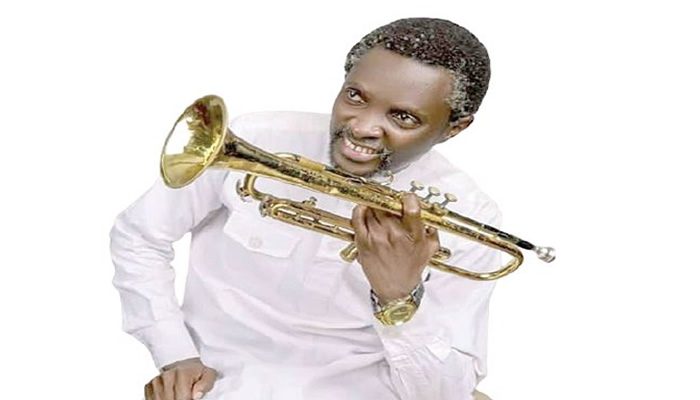
Veteran gospel minister, Goke Bajowa, has said that some gospel songs these days fall below the moral standard expected of them.

Bajowa, who is planning to celebrate the 25-year anniversary of his music ministry, told Sunday Scoop, “The quality of music being pushed out these days has become so poor because people who are not mature enough to be musicians are out there doing different things.

“However, the word, ‘secular’, does not necessarily mean bad, ungodly, or evil. It just means that it is not faith-based. A song can be secular and still be good, as long as it does not compromise generally acknowledged moral standards.

“If a particular song had originally been associated with certain artistes, concepts or ideologies that fall below the moral standards of what the gospel stands for, then it is wrong to feature such in Christian gatherings because it will remind the audience about the source it came from, even if it is done now in a Christian gathering.

“We (gospel artistes) have to be mindful of the lyrics we use in our songs.”

The singer added, “I would like to see more songs that are edifying and glorifying the name of the Lord; as well as decent dressing among gospel acts. There should also be more collaboration, support and love for one another, especially to help the younger generations grow properly.”

Bajowa also disclosed that he was working on a new album, a mini-concert, and a Thanksgiving event to celebrate his career of 25 years. He said, “I am working on a new album titled, Covenant of Mercy. I am also planning a Thanksgiving concert.”

All rights reserved. This material, and other digital content on this website, may not be reproduced, published, broadcast, rewritten or redistributed in whole or in part without prior express written permission from According.

Contact: [email protected]

There’s a better way to develop Africa than aid– Elumelu

0

Billionaire businessman, Tony Elumelu, has expressed a commitment to eradicating poverty on the African continent through the empowerment of entrepreneurs.

Elumelu said this on Friday at the 10th anniversary celebration of the Tony Elumelu Foundation Entrepreneurship Programme and announcement of the 2024 beneficiaries of the programme which held at the UBA building in Marina, Lagos.

The founder TEF added that the motive for the foundation was to show practical example to the world that there is a better way to develop Africa than through foreign aids.

According to African Arguments, since 1960, Africa has received billions of dollars in aid. In the last 30 years alone, one estimate puts aid to the continent at $1.2tn, though distributed very unevenly across the continent.

Elumelu said, “This is just phase one and we are just getting started. Unless and until we eradicate poverty in Africa by Africans leading and showing the way, we cannot stop. We have 1.2 billion people in Africa, the poverty level is very high, our young ones are over 60 per cent, and we need to create jobs for them. We need them to empower to create jobs for themselves. That is why we do what we do. We are just getting started, we aspire to increase our impact and scale. We want to do more.”

Responding to questions about the future of the foundation, Elumelu said that TEF keeps track of beneficiaries and how they are doing.

“For us, what gets measured, gets done. We track how the beneficiaries are succeeding and impacting humanity, society and their communities. They have generated $1.2bn in revenue in their businesses. All have not succeeded but we told ourselves from the beginning that it was not about 100 per cent success, that even if 40, 50 per cent of our beneficiaries succeed, let’s through them eradicate poverty but more importantly show others. We are trying to crowd others into this space of entrepreneurship. We are trying to encourage other Africans and global citizens that we are in the 21st century there is a better way to give, a better way to develop Africa than just aid.

“If you ask for impact, we have created jobs, we have grown businesses but more importantly we have shown the light, we have told people in Africa our young people need support, mentors, and financial support to help them start their business and collectively we can develop Africa in a manner that is truly sustainable in the 21st century.”

Elumelu, whose birthday was on Friday revealed that the announcement of the 2024 beneficiaries of the Entrepreneurship Programme was a worthwhile avenue to mark his birthday.

“Today, I’m plus one and both my family and I, thought there was no better way to celebrate than announcing the 2024 Tony Elumelu Entrepreneurship Programme beneficiaries. 1,104 beneficiaries as you heard from our partners from EY. These 1,104 young men and women from 54 African countries will each receive $5,000 non-refundable seed capital. We believe in spreading luck, we believe in democratising luck.

“We believe in spreading prosperity and we believe that the best way to spread prosperity in Africa is by identifying our young ones, encouraging them and helping them to start their own businesses. This is why we have done this. Awele (his wife) and I started this journey 10 years ago. We sought to democratise luck and improve lives. We are happy with the results we are seeing today.

“Today, over 20,000 young men and women from across Africa have received over $100m in support of their projects. We are happy to see our young ones progressing. We are happy to see that what we started alone as Tony Elumelu Foundation, we have been able to identiy and partner with other global institutions.

“Today is a day of impact, a day of gratitude and most importantly a day of reflection for me personally because God has been kind in so many ways to me,” he said.

He added that the foundation was set up not out of abundance but a desire to spread prosperity, saying, “My family and I do what we do not from the abundance of wealth but the realisation that poverty anywhere is a threat to us everywhere and that we cannot live alone in prosperity.

“Today, I’m happy that we have continued to spread that prosperity not just in Nigeria, not just in our family but in all 54 African countries. I’m that in our lifetime we are able to impact the next generation.”

In his presentation at the event, EY Partner, Damilola Aloba, who disclosed the beneficiaries and the methodology used in selecting them said that the 1,104 beneficiaries were selected from the 54 African countries.

He said “TEF appointed EY to review the 2024 applications. There were 1485 applications from Nigeria, 240 from Benin Republic and 825 from the rest of Africa. We looked at the feasibility of the ideas, business plans, financial knowledge of the applicants, leadership of the business and their entrepreneurship skills.”

A shortlist was arrived at which consisted of 590 applicants from Nigeria, 109 from Benin Republic and 405 from the rest of Africa.

TEF was founded in 2010 and the TEF Entrepreneurship Programme was launched in 2015. Since the, the Foundation has trained over 1.5 million young Africans on its digital hub, TEFConnect, and disbursed nearly $100m in direct funding to over 20,000 African women and men, who have collectively created over 400,000 direct and indirect jobs.

Also speaking during the event, the co-founder of TEF, Dr Awele Elumelu, expressed delight at the success of the foundation and urged the beneficiaries to utilise the opportunity in shaping the future of Africa.

“It’s been a wonderful journey so far. From the beginning, we had a clear vision of eradicating poverty and empowering African men and women. We have indeed fulfilled a promise today. I express my gratitude to all the participants from 2015 when the programme started,” she said.

A beneficiary of the TEF in 2015 and founder of Mama Moni, Nkem Okocha, appreciated the foundation for the opportunity and its impact in Africa.

NLC writes INEC, warns against planned LP national convention

0

The Nigeria Labour Congress has written the Independent National Electoral Commission, urging it to halt any support for the national convention of the Labour Party scheduled for March 27, 2024.

In a Friday letter addressed to the Chairman of INEC, Mahmood Yakubu, the NLC accused the Chairman of the Labour Party, Mr Julius Abure, and his associates of planning an illegal convention in defiance of court orders.

The NLC’s solicitors, Falana and Falana’s Chambers, in the letter dated March 22, 2024, highlighted the illegality of such a gathering, citing previous court rulings that declared the Labour Party’s status and ordered inclusive conventions.

The NLC, in the letter signed by Marshal Abubakar, threatened legal action if INEC failed to comply with the demand to prevent what they deemed a breach of justice and the rule of law.

The congress’ letter was titled, “Request To Desist From Validating The Illegal Labour Party National Convention Scheduled For March 27, 2024.

NLC writes INEC

It read, “We are solicitors to the Nigeria Labour Congress, on whose behalf we write this letter.

“It has come to our notice that Mr Julius Abure, the Chairman of the Labour Party, and a handful of his supporters are planning to hold a national convention of the Labour Party on March 27, 2024, at Abia, Abia State, with the active connivance of some officials of the commission under your able leadership.

“As you are no doubt aware, a national convention conducted by the Abure faction will be violative of the judgment of the Federal High Court in Suit no. FHC/ABJ/CS/866/2014 between Labour Party and 3 Ors. vs. Com. Salisu Muhammed, where the court had declared the Labour Party as ‘an institutional political party founded, promoted, and registered by the Nigeria Labour Congress (NLC) on behalf of the Nigerian Workers.’ and thus ordered the factions to ‘convene an expansive and inclusive national convention of the party.’ Please find attached a CTC of the judgment.

“Similarly, the plaintiffs in Suit No. FHC/ABJ/CS/491/2021 between Labour Party & 9 Ors. vs. Barrister Julius Abure& 2 Ors. had approached the Federal High Court seeking, inter alia, an order of injunction in favour of the plaintiffs restraining the first (Barrister Julius Abure), second (Umar Farouk), and third (Barr. Akingbade Samuel Oyelakin) defendants, or any and/or all of the national officers appointed in any manner violative of the orders of the Federal High Court in suit no. FHC/ABJ/CS/866/2014 between Labour Party & 3 Ors. vs. Com. Salisu Muhammed & Ors.”

It further read, “In a well-considered ruling, the Federal High Court on Friday, July 23, 2021, ruled, ‘An order is hereby made for the parties to maintain status quo ante bellum in order not to disturb the res of the matter pending further order of this court.’ Attached is a CTC of the order.

“In view of the foregoing, we are compelled to urge you to restrain officials of the commission from undermining the due administration of justice and respect for the rule of law by attending the illegal convention.

“Take notice that unless you comply with the foregoing request forthwith, we shall approach the Federal High Court and institute contempt proceedings against you.”

NLC, LP crises

According Online reported that the NLC stormed the national secretariat of the Labour Party in Abuja on Wednesday to protest the party’s national convention planned for the end of this month.

Recently, there has been back-and-forth dragging between the congress and its political wing and the LP.

The leadership crisis rocking the LP took on a different dimension last Saturday after the National Working Committee of the opposition party accused the National President of the Nigeria Labour Congress, Joe Ajaero, of desperately seeking to replace its National Chairman, Abure.

NDPC plans data protection training for Ondo youths

0

The Nigeria Data Protection Commission has restated its readiness to work with state governments to promote a culture of data protection that would also help create employment opportunities for young people in the state.

The commission’s National Commissioner, Dr Vincent Olatunji, revealed this when he received the deputy governor of Ondo State, Olayide Adelami, at the commission’s headquarters in Abuja.

This was made known in a statement signed by the Head of Media Unit, NDPC, Itunu Dosekun, on Saturday in Abuja.

Adelami said the purpose of his visit was to explore possible areas of collaboration between the NDPC and the state in a way that fosters development for the people of the state.

He said, “Our government is passionate about youth development, and one of the ways to ensure our youths are gainfully employed is to equip them with the right skills, needed for the 21st-century workplace.

“In view of this, we have identified ICT as one key area to upskill our youths and expand their capabilities so as to be globally competitive.

“My visit is to meet with the team at NDPC to establish a partnership that will enable us to train thousands of young graduates in Ondo State as data protection officers, realising the enormous opportunity in this field.”

Olatunji, while commending the move by the Ondo government to explore the potential of data protection in empowering its young citizens, decried what he described as the dearth of data protection officers in Nigeria, reiterating that only 10,000 out of 500,000 available positions are currently filled.

He commended the deputy governor’s understanding of the importance of data protection.

He said, “Unauthorised access to data will lead to breaches, and breaches will lead to lots of implications, such as reputational damage, financial loss, and in extreme cases, death.”

He acknowledged the Ondo State Government’s commitment to addressing this issue and its potential to enhance trust and confidence in governance.

The statement added that Olatunji accepted the proposed collaboration, expressing the commission’s eagerness to work with the state government to promote a culture of data protection, enhance capacity, and create employment opportunities within the state.

“Jobs will be available for youths of Ondo State when they are trained and certified as Data Protection Officers, which will also give room for global competition,” he said.

This collaborative effort between NDPC and the Ondo State Government signifies a significant step towards harnessing data protection for youth development and governance enhancement, ultimately contributing to the progress and prosperity of Ondo state and Nigeria as a whole.

On June 12, 2023, President Bola Tinubu signed the Data Protection Bill into law to advance the privacy rights and other fundamental freedoms of Nigerians both in cyberspace and in analogue transactions.

Russian TV shows questioning of Moscow attack suspects

0

Russian television on Saturday aired footage of the detention and questioning of four men suspected of carrying out the deadly attack on a Moscow concert hall.

Russia’s Channel One television showed footage of four suspects and their damaged white Renault car.

It said they were captured by special forces in the village of Khatsun in the western Bryansk region, which is close to borders with Ukraine and Belarus.

In footage shot at night and in daylight, the detained men speak Russian with an accent.

The Islamic State (IS) group has claimed responsibility for Friday night’s attack, when a group of gunmen opened fire at Crocus City Hall concert venue near Moscow and set it ablaze.

They killed at least 133 people.

The interior ministry said Saturday that all four suspected gunmen were foreign nationals.

A Russian MP has said some of those detained are from Tajikistan, an impoverished post-Soviet state that borders Afghanistan and whose nationals have participated in previous IS attacks.

“What were you doing at Crocus?” a young bearded man seated on the ground is asked.

“I shot people.. for money,” he answers in broken Russian. He goes on to say he was offered “half a million rubles ($5,425)” and had received half of it on a bank card.

– Contacted on Telegram –

Those who had hired them had supplied them with the weapons, he added, corresponding with him on the Telegram secure messaging platform without giving their names.

The footage also shows one suspect being led along on a snowy track in a forest. The dark-haired man in a light brown T-shirt has blood pouring down his cheek from his ear.

He too is shown being questioned with a bandage wrapped around his head, his lips and nose bloodied and swollen.

Asked what the suspected attackers did with their weapons, he says they were left “somewhere on the road”.

Earlier, a graphic video was posted online, apparently showing the detention of the same suspect.

It showed a man in camouflage cutting off part of the ear of a dark-haired man, trying to make him eat it and then hitting him on the face.

Russian television showed other suspects with cuts to their faces.

Chechen leader Ramzan Kadyrov said that Chechen soldiers had helped the FSB security service capture the suspects.


Belarus said that it had assisted Russia in detaining the men “to prevent them from leaving through our common border”.


None of those questioned mentioned either Islamic State or Ukraine in the footage broadcast.


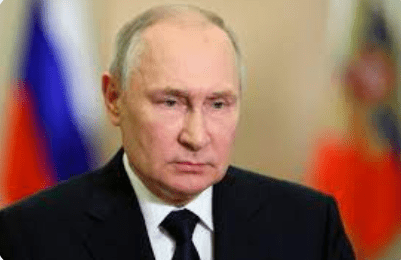
Russian officials have not mentioned the Islamic State group in their public statements, but President Vladimir Putin said Saturday the suspects had been planning to cross the border into Ukraine.

Kyiv firmly denies any involvement and has dismissed any suggestion the gunmen could have been heading into Ukraine.

Russia has said it has detained 11 people including four suspected gunmen.

AFP