Home Blog Page 1437

Soldiers rescue 16 abducted Almajiris in Sokoto

0

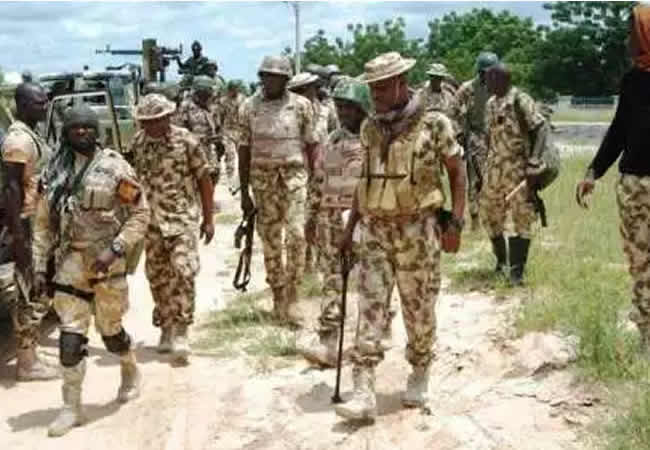
The Defence Headquarters has said troops of Operation Hadrin Daji have rescued 16 Almajiris and a woman abducted in Gada Local Government Aera of Sokoto State.

The According had reported that some terrorists had invaded the LGA on March 9, 2024, and kidnapped the rescued victims.

The DHQ, in a statement on Saturday by the Director of Media Operations, Major General Buba Edward, said the troops with local authorities and government agencies worked together to ensure the freedom of the hostages.

The statement read, “Recall terrorists invaded and kidnapped 16 pupils (Almajiris) with a woman in Gada LGA of Sokoto State.

“On 21 March 2024, the military working with local authorities and government agencies across the country, in a coordinated search and rescue operation rescued these hostages. The rescued hostages have been handed over to the Sokoto State Government for further action.”

All rights reserved. This material, and other digital content on this website, may not be reproduced, published, broadcast, rewritten or redistributed in whole or in part without prior express written permission from According.

Contact: [email protected]

How hospital’s negligence led to my first-class graduate daughter’s death

0

Father of 24-year-old Rebekah Sekidika, a first-class graduate of the Benson Idahosa University, Benin City, Edo State, Sampson Sekidika, speaks to DENNIS NAKU on how his daughter died during a procedure at a hospital in Port Harcourt, Rivers State, and his spirited efforts to get justice for the deceased

How old was your daughter when she passed away and what school did she attend?

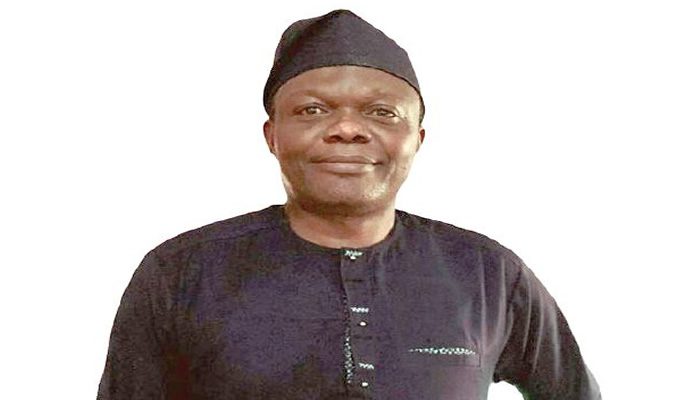
My name is Sampson Sekidika. I hail from Okrika in the Okrika Local Government Area of Rivers State. I work with Nigeria Liquefied Natural Gas as a lead process engineer in the expansion coordination department at the head office here in Port Harcourt. I am the father of the late Rebekah Tamunotorukubu Sekidika. She was 24 years old and graduated from Benson Idahosa University, Benin City in Edo State, where she studied Microbiology and made first-class.

What led to her death?

Before February 2, 2024, my daughter had a series of clinical visits to Paragon Clinics and Imaging Diagnosis located at No. 96 Stadium Road. Paragon Clinics and Imaging Diagnosis is a retainer-ship hospital used by the NLNG. So the NLNG recommended that we use that clinic because they have been qualified to attend to their staff and families. That is why we used that place. It is part of their HMO. So what was my daughter’s complaint? She had some clinical visits and tests she did with them and since November last year (2023) she had not seen her period for nearly three months so she needed to know why. So they carried out a series of tests, including pregnancy and everything came out negative. But they decided that she should see a specialist, more like closing that part of the whole investigation.

She got the call on Wednesday, January 31, 2024, to see a specialist which she did a day before. So they said they were going to do a hysteroscopy on her, which is supposedly a simple procedure that involves using a probe with a light bulb at the end to be inserted through her private parts to see what was causing the obstruction or whatever it was, and they would be seeing it on a monitor at the same time. So that was why they did that. I didn’t know before then that she was going to be given any form of anaesthesia, spinal anaesthesia for that matter for a simple procedure. They said they just wanted her not to feel any pain.

On February 2, 2024, the doctor said she should come between 12 noon and 1pm. So I drove her and her mom to the clinic and around 12.30pm I left to attend to some other things. From what we know about hysteroscopy, the procedure takes between 15 and 30 minutes depending on the doctor handling it. So by 3.10pm I called my wife and asked why they hadn’t called me. She said the doctor had not come out. I now said if by 4pm nothing happened I would come and pick them. My daughter was having an online class at the university by 4.30pm. She had the last online classes and closed her laptop.

What happened next?

By 4.30pm, my daughter walked into the theatre; she was not sick; she was hale and hearty. She had no issues at all; she was very strong. By 5pm it was expected my daughter would have been out of the theatre but was not out. Around 5.10pm, I had already arrived at the clinic. So I went upstairs to stay with my wife. I asked her what was going on. She said they were still in the theatre. I now went to the reception area to sit. Around 5.30pm, my wife came rushing to me saying that something was not right; she heard them in the theatre shouting ‘Rebekah wake up, wake up, wake up’. Then we saw nurses running up and down.

Then it was nearly 6.20pm we saw them rolling up oxygen bottles from downstairs through the elevator. I was wondering what was going on and each time we saw the matron, we asked what was going on with our daughter, she would say our daughter would be fine. That was what she said until around 7pm when two doctors came to the reception area where I was seated. They said they did everything they could but lost our daughter. I don’t know the unusual calmness that came over me. It was just like a dream and I needed someone to wake me up from that bad dream. When I got into the theatre, what I saw was terrifying. I saw my daughter in a pool of blood. My wife rushed into the theatre and shouted, ‘God! God! You people have killed my daughter’. She was shouting and crying all over the place. The doctors and nurses all disappeared from the third floor. We didn’t see anyone.

My wife then called our sons to inform them of what had happened. They were crying. While our last born was crying, his flatmate heard it and called his father here in Port Harcourt who happens to be my colleague, Isaac Chu, who immediately drove down with his wife to the hospital to see us. We went to the reception and luckily we saw a nurse, who took us to see the doctors, who were in a room downstairs. By then, Rebekah’s younger sister, and two of my wife’s sisters with their husbands had arrived. This was around 10pm. So you can imagine that from 7pm to 10pm none of them came to even console us.

When we entered the room where they were, the doctor and the anaesthesia specialist were seated. Isaac Chu now asked the doctor to tell us what happened. He now started the story by saying they had prepared her for the procedure and he pointed at the specialist who gave her the spinal anaesthesia. I asked him why the heavy spinal anaesthesia. He now said that 30 minutes into the procedure they lost her, adding that about 10 minutes into the procedure, my daughter said she couldn’t breathe. Shortly after, she said she wanted to throw up and they brought something for her to throw up into, and what they saw was blood. At that time blood had already filled her lungs.

So apparently something happened when he was doing the procedure. It was later discovered that the anaesthesia specialist ruptured a vessel inside of her when he inserted the probe. The anaesthesia was on one hand killing her and the blood vessel they ruptured caused her to bleed inside and it went into her lungs. The doctor now said when Rebekah vomited blood the second time, he was confused about what to do because he had never seen such a thing before. That was when they stopped the procedure and tried to take over her respiratory system by which time she was already lifeless. At that point, Isaac Chu took me outside and asked me to call my sister, who is a consultant physician, and her husband is a consultant surgeon.

What happened after you called your sister?

My sister and her husband came past midnight, went upstairs, and saw my daughter. Immediately she broke down and her husband took her away. They came downstairs, saw the doctor, and started asking him questions. One of the things she asked was, ‘If you’re carrying out a procedure like this and you notice a vessel rupture or vascular rupture, what are you supposed to do to salvage the situation?’ He (doctor) said he didn’t know, and he was confused when she started vomiting blood. So she was just killed by negligence and incompetence. Then my sister asked the anaesthesiologist what his qualifications were. He said a diploma. So, he too wasn’t a consultant. My sister and her husband now asked for the death certificate. They said she died of pulmonary embolism/vascular rupture. Pulmonary embolism is when you see blood clotting in the lungs. Vascular rupture! Who ruptured the vessel? It was their procedure. So it was purely an act of negligence and incompetence that killed my daughter.

Did the hospital make any attempt to pacify your family?

Early on Saturday, we took her corpse and deposited it in the Military Hospital mortuary. Throughout Sunday and Monday, I didn’t get a call from anybody, if not for anything but to say we are sorry for what happened and this and that. So they completely ignored me and my family. At that point we were confused. What emboldens them or gives them this impunity I don’t know. It is very bad behaviour. So I got a call from my boss to go to the police since it is a state matter.

So, I reported the case to the state homicide department on Monday and raised a petition, got it approved, and raised a letter, which was addressed to Paragon Clinics and the NLNG. The one to Paragon and Imaging they gave them till February 8. They asked the administrator to come with the two doctors involved in the procedure so that they could take their statements. Paragon did not honour the invitation. That Thursday, February 8, 2024, my daughter was supposed to travel to the United Kingdom. On February 12, the police wrote a reminder to Paragon Clinic to produce the people by Wednesday, February 14, but they did not show up.

They (police) went and obtained a warrant of arrest, did all the paperwork, and stormed the hospital on Thursday. They picked the administrator, and the radiologist and the head of the cleaners accompanied their madam to the Deputy Commissioner of Police office at the state CID. I was called to listen to what the hospital administrator had to say. They asked her why she shunned the repeated invitations.

What was her response?

She said when they received the first letter on February 6, the tone of the letter was that somebody was killed in their clinic and that they should produce the two doctors, that she was afraid. So she took the letter and gave it to the legal people, who instead of producing the people involved took the letter to Human Rights International in Abuja. I don’t know what they presented before the human rights body. They obtained a court injunction there for the police not to investigate, arrest, or prosecute them on this matter. So the Deputy Commissioner of Police was confused and asked, ‘Was the injunction to protect the parents of the deceased or to protect yourself?’ The DCP was very furious. He now asked one more question: did you serve the police this injunction? She said she gave it to one of their administrative staff members who said he did not serve the police.

The DCP told the Investigating Police Officer to keep her in custody until the doctors involved in the procedure were produced. The following day, the hospital came with more than eight lawyers; the husband of the administrator flew into Port Harcourt: the Nigerian Medical Association got involved and produced the doctors, the nurse, the matron, and the administrator. So they knew what they were doing. Why did they kill my daughter? Why did they experiment with my daughter? What have they done with her? Up till today, I don’t know.

What happened after that interrogation, which you witnessed?

I heard all of them speak but I didn’t say anything. In the end, the DCP said they should take their statements and we should all go. So we put our heads together and talked about the autopsy. Finally, Paragon Clinics produced their pathologist, and I produced my own. My pathologist stood for my family and the police. Then the NMA produced its pathologist, and my company, the NLNG, produced its pathologist. My sister, who is a medical doctor, was an observer. So there were five people for the autopsy. My sister witnessed everything and signed off on behalf of the family.

When did they say the autopsy result will be out?

About three to four weeks. They performed the autopsy on February 22. The following day I applied to the police to release her corpse for burial. So they granted my application a week after we had about eight days or so to prepare for the burial.

Has she been buried and where?

Yes, she was buried on March 2 at a private section of the Port Harcourt Cemetery.

Are you satisfied with the police investigation of the incident so far?

Yes, I’m satisfied with what they are doing so far, you know, getting all the proper documentation from them, investigating and calling all the parties, and meeting with them. There is no foul play so far to be honest with you. I’m okay with the way it is going. If I were not impressed with the way it is going, I would have raised the alarm and even informed you to see what is happening.

It was reported by a blog that your daughter went to the hospital for liposuction and died in the process. How would you react to that?

Oh my God, it is unfortunate! A lot of people called me and reported what they read. I said well it’s an Instagram report. There will be lots of wrong narratives out there because these people probably are spreading propaganda through their machinery. So when you see something like that you report that page, you tell them, say what you know that that wasn’t what she went for. So I don’t know how we can get to the root of that issue or the people behind it and know who they are. But I learned that if one reports to Instagram there is a way Instagram will either close them or investigate or that if you inform the police, the police can find out who they are and pick them up and ask why they didn’t investigate before spreading false information and false narrative and diverting people’s attention. That is very unfortunate but that is the country we find ourselves in. There will be lots of false narratives that will be put out there just to divert peoples’ attention.

What is liposuction? How can she go for that kind of thing? The doctors are not there? Haven’t they given their statements? Their statements are with the police. Did they not say it before the police that she went there for a diagnosis hysteroscopy? So what are they talking about? Do they even do liposuction in that clinic? They don’t. So that is unfortunate and I don’t blame them because you know people should close their eyes and swap positions for a moment.

Has the hospital or the doctors reached you yet after the burial?

They have not. It is like I’m their enemy. They were looking at me with scorn that day, very arrogant people, after killing my daughter they are acting as if I can’t do anything to them. Anyway, we will see how it goes by the grace of God.

Hospital, NMA’s reactions

When our correspondent visited the Paragon Clinic and Imaging located on Ken Saro-Wiwa Road, Port Harcourt, a front desk officer, who simply gave his name as Chima, said he was aware of the incident, but that the manager was not in the office.

Asked if there was any other official who could speak on the matter, Chima asked our correspondent to channel any inquiry to the state chairman of the Nigerian Medical Association.

“Okay as regards the issue of Rebekah, currently our manager is not around. But you can channel all your inquiries to the NMA chairman, Rivers State chapter. That is it for now,” he said.

The state NMA Chairman, Dr Ebi Robinson, said the matter was under police investigation.

He stated that a coroner’s inquest was ongoing on the case and that the NMA would take the matter up from there when the result was out.

Robinson said, “The matter is under police investigation and a coroner inquest is already in progress.

“So, we are awaiting the conclusion of the coroner’s inquest and then we will take it up from there. The death of that young lady is quite regrettable.

“Our sincere condolences to the family. The NMA’s position is to make sure that the matter comes to a closure conclusively in a manner that will be acceptable to all involved and all concerned.”

Real estate firm partially demolished house I suffered to build

0

AJIBADE OMAPE speaks with Adegoke Olalekan, a bricklayer who is seeking justice after a real estate company allegedly came with policemen and bulldozers to partially destroy his and other houses in an Ogun State neighbourhood

What led to the demolition of your house?

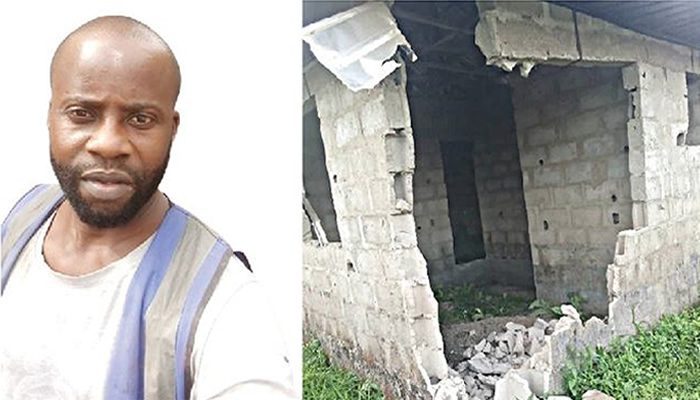
My name is Adegoke Olalekan, I hail from Osun State, and I live in the Okeiran area of Mowe, Ogun State. I am a tiler and bricklayer, I was born into a family of Muslims, and I have five children who live with me in a house that has almost been destroyed. I cannot say in particular what circumstances surrounded the demolition of my house, but the demolition happened on Friday, February 23, 2024, after most of the residents of the community had gone to work; it took a little while before I decided to leave for work that day and the few residents still around saw some policemen at the junction to our street, who came with three bulldozers.

I was very surprised to see them and wondered what was going on. We called some other residents who had not gone too far to come back and find out what the policemen wanted to do with the caterpillars, and some men went to meet the policemen to ask them what they wanted and what happened, the policemen pointed to our sites saying they had something to do there, they refused to tell us anything else and we were not notified of their arrival before they came, not long after the little encounter we had with them, the policemen and the caterpillars went towards the houses and the caterpillars started destroying buildings, and that was what happened.

We noticed some people with the policemen and when we approached them, they claimed to be from the town planning department, but we disagreed because town planning people would not destroy houses that have the necessary documents, and there were so many buildings in the area whose owners do not have the requisite papers; we asked them to present a written document backing their action, but they refused to respond; we insisted that if they were from the town planning department, the department would have notified and served us the necessary notices.

It was in the middle of this discussion that we noticed agents of a real estate development company, who claimed that they had previously purchased the pieces of land on which our houses were built, but there were no documents to prove to us that their claims were true; the agents made several contradictory statements regarding when the company purchased the pieces of land but there was no proof.

 What were the conditions surrounding the acquisition of the plots of land and were there legal proceedings or negotiations involved?

 I was not given any conditions by the ‘omoonile’ or family when I bought my piece of land; I bought my piece of land legally and obtained the relevant papers for the purchase. I acquired the land on which I built my house with complete papers, which were handed to me by the family. When I bought the land in 2015, I made sure to involve the ‘omoonile’ as well and I have all the receipts that I received from the family, so there is no situation of fake land documents with me. I have not had any issues with the land ever since I purchased it up until when the estate agents came to destroy our place.

 Did you receive any previous notice or communication regarding the intention to demolish your house?

 To be honest, we did not receive any prior notice or communication regarding any intention by the so-called town planning department to destroy our houses. We approached them to show us a letter of demolition or any document that permitted them to demolish our buildings, but our efforts did not yield any response from them; instead, they proceeded to destroy the buildings and we could not intervene because of the heavy presence of security personnel present on the scene.

Were there any permits or approvals obtained for the demolition, and were you allowed to challenge or appeal the decision?

 No, we did not receive any papers; we requested a demolition permit from them but there was nothing presented to us and we didn’t see any papers stating their authority to demolish the houses; they refused to respond to us. When the people around tried using their phones to record the melee, the policemen seized the phones and even asked them to kneel for trying to make use of their phones; it was after the bulldozers had finished destroying the buildings that the policemen returned some of the phones and I am sure they did not return all.

They just want to cheat us as members of the lower class. I worked as a bricklayer to build my small three-bedroom house so that I could provide shelter for my wife and children because rent has become too expensive to pay; if you take a look at this area, it is bushy and not well developed; I feel that they just want to exploit us because we have not committed any offence.

 What efforts did you make to seek remedy or legal assistance after the demolition of your house?

 We have not taken any legal steps; we haven’t done anything like that. We are still thinking about the possible outcome of their action, maybe they would request some money or something else, but we have not spoken to any authorities, and besides, the majority of us here are below the middle class and we are looking to God as we have no power for any legal actions at the moment. We have made efforts to come together and think of a solution but nothing has come up yet.

 Can you describe the extent of the damage caused by the demolition in terms of property loss and emotional pain?

 The bulldozers were just destroying walls of houses and roofs; neither the policemen nor the officials from the real estate company or those from the town planning department asked anyone to leave or stay. Since the incident happened, many people have not been in sound health; a lot of the landlords collapsed and fainted as a result of the demolition. I have been nursing my wife’s high blood pressure ever since the incident, so now I am looking for money for food and also looking for extra money for my wife’s well-being; it is not easy because these houses are our investments.

Have you been given any form of compensation or assistance to mitigate the loss you suffered from the demolition of your house?

 There has been no compensation or assistance whatsoever, and we do not even have an idea of what they will want to do when they eventually come back to the area, and we do not have anyone who will rescue us at the moment and we do not know their plans when they come back and that is the fear of everybody around. The policemen, real estate agents, and other officials did not ask us to leave, nor did they tell us of the plan, they just destroyed buildings and left. According to what people have said around, the developers want to build an estate and we do not have the powers to build an estate that is why we all bought our lands separately and we still have the family receipts for the parcel of land that we bought from the ‘omoonile’ and there are no empty lands on the site, although there are several uncompleted buildings in the place.

 What impact has the demolition had on your living arrangements, livelihood, and overall well-being as a community?

 I can’t lie; it has affected the living arrangements and livelihood of my family, and almost every other person. To begin with, the part of my house that got destroyed by the bulldozers will cost me over 70 cement blocks to repair. Now I have to start thinking of how I will get that done in this economic crisis that we are facing; I know that the price of cement has increased and other building materials like sand and granite have also increased in price; it will be very difficult for some of us to even go out and work because we are not sure of the time that the real estate agent and officials from town planning would return with the bulldozers and destroy the place we live in, so we are all in fear right now.

We do not have anybody to run to, and it is not like we live in an estate, it is just a community where we all live. We are just hoping that the government will come to our aid; we had plans to do some major work on our road just before the incident occurred; we are trying to have a meeting at the moment but we are still very conscious of the time that these agents will return to complete the demolition of our place.

 How do you perceive the actions of the real estate developer and the officials from the urban and regional development about the demolition of your house?

 It is a very terrible situation that could lead to a quick death, and it makes someone question his good work and efforts. I did an honest job building my house with the money I made from bricklaying in December 2022; it has been over a year now since I moved in with my wife and children; the other people also worked in different jobs to build their respective houses, and now the estate agents want to tear down their sweat.

 What are your expectations and hopes for obtaining justice and compensation for the demolition of your house?

 Honestly, I am hoping that the government can help us because most of the people here do not have anywhere to go; initially, when the agents came with policemen and bulldozers, we tried to speak with them but they were not responding and when we requested for papers that authorised them to take action against us, nothing was presented to us so I believe if the government can come to our rescue we will get justice.

How has the community responded to the demolition of your houses, and has there been any solidarity or support on your behalf?

 Well, the neighbours have continually expressed their sympathy with us but most importantly, we have not got anyone to stand up for us; it has all just been messages from neighbours showing their sympathy, but what we want right now is for someone to help us to stop the demolition of our homes; we do not have anywhere else to go.

What message would you like to express to the public and investors regarding the importance of protecting property?

 We want the help of Nigerians who are influential in society; we need their intervention because we feel cheated by the real estate developers, who did not provide any documents before destroying our buildings. So we want the youth and other people to help us.

How parenting affects kids’ mental health – Clinical psychologist

0

Assistant Director of Clinical Psychology at the Federal Neuropsychiatric Hospital, Yaba, Lagos, Dr Akin Gabriel, who was the Vice Chairman of the Nigeria Psychological Association, Lagos Chapter, speaks to VICTORIA EDEME on the causes and effects of depression

What is depression?

Depression is simply a mood disorder. A mood disorder is a condition or illness that affects the mood, feelings, or emotions. So depression is a mood disorder that causes a persistent feeling of sadness that is also associated with a loss of interest in things and activities that one is used to or enjoyed in the past. It can also cause some issues with thinking, memory, and other behaviours like eating and sleeping. It’s from some of these behaviours that one can tell if another person may be depressed. As a person, I will know I am depressed when my feeling is usually low when I’m feeling low most of the time, and when I’m not so interested in things that I used to be happy about or have an interest in. This is what depression means.

Who are those who are more at risk of depression?

Everyone, including myself, is at risk of depression. Anybody can develop depression. If we look at the causes of depression, we would understand that anyone can be depressed. Some of the causes of depression include genetic factors. If somebody has one or two people within one’s family who have a diagnosis of depression, there’s a possibility of that person developing depression. This possibility increases with how close the relative is. For example, if there are parents that have depression, chances are higher than if it is from an extended family. Life issues could also cause depression. Everybody has issues. Everybody must go through life and overcome certain issues to manoeuvre through life and daily activities. There are always challenges that we all face as human beings in our normal daily routine. To achieve our potential, there are some obstacles and stresses that we need to go through and overcome. For some people, meeting these challenges and not being able to overcome them may make them develop feelings of anxiety, worry, tension, and frustration that could eventually lead to depression. Another cause of depression could also be things like childbirth. The process of pregnancy, labour, and delivery are stressful conditions that cause physical stress. There are so many hormones increasing and decreasing, which disrupt the physiological system of the woman. The process of delivery could also lead to a particular type of depressive disorder.

Another cause of depression is substance misuse. Some people are dependent on substances and the nature of some psychoactive substances can trigger depression in people. With these causes, anyone can become depressed. Everybody has life challenges. The differences in each person include our stress-coping capacities, views about life, identification, and discovery of our psychological resources, which are available to us to overcome challenges. The way we manage these tools determines if we come down with depression or overcome it and live a more psychologically fulfilling life.

What’s the relationship between mental health and depression?

Depression is a mental health condition. It is a mental health illness that affects mood.

How can someone know that they are going through depression?

The first thing that one will observe is the mood. Mood is a subjective feeling that you know for yourself. It’s difficult for other people to know your real mood. They may think that they know it but you are the one who knows how you are feeling. If you observe that your mind is going lower than it used to be, you have to examine why such is happening. In this case, it has to be a persistent low mood, not just a brief occurrence. You may also find out that it’s difficult to get off the low mood. For example, if you’re watching a movie and you feel a sad mood during an emotional scene that is just a reaction to the movie. But if these feelings persist for hours, days, or weeks, you can now think of having an evaluation for a mood disorder like depression. So, low mood is one of the signs.

Another sign is recurrent negative thoughts, which can be about self-worth, the world, people around you, and other thoughts. This can lead to sleeplessness as you are unable to sleep because you engage in thinking. One who is depressed will not feel happy. There is a persistent feeling of sadness that just will not go away. You will not find humour when a joke is made and you’d wonder why others are laughing. You can also notice a loss of control of one’s mood and thinking. In some cases, it can also affect the appetite; one can eat too much or have no appetite at all. There can also be some changes in a person’s appearance. The grooming will not be as good as it used to be. The hair may be dishevelled and the dressing haphazard. You may dress haggardly to work and people will wonder what is going on with you.

These are some of the obvious signs people can see when you are depressed. When depressed, you may not even participate in social activities. When you are called, you don’t pick up; you don’t honour invitations; and you give excuses. You may even find it difficult to get out of bed, pick up the phone and talk to people. There is lethargy and weakness to do anything. These are the signs you should look out for to determine if you need to be evaluated for depression.

How can people assist someone going through depression?

Looking out for a person can help them during depression. By the time a colleague, a friend, or a neighbour begins to be scarce in places where they used to be regular, you need to ask questions and check on them. It is good for you to confirm the psychological state of that individual first before accusing the person of not picking up calls or distancing themselves. Such a person may need help.

At what point does a depressed person get suicidal?

The thoughts can be so negative that you become suicidal. These are self-demeaning thoughts. Sometimes, the distress may be so severe that you think suicide is the best way to get out of it. During depression, you can also hear strange voices of people who are not there. The voices may be abusive or tormenting. At this point, you may begin to contemplate suicide as a form of escape.

In a recent report, you mentioned that four in 10 Nigerian women were depressed. How did you arrive at such statistics?

Yes, four in 10 women have one form of depression or the other, especially when you consider the various forms of depression with different levels of severity. The levels of severity of depression can be mild, moderate, and severe. Specifically, about four years ago, Adeyemi et al in the Eti-Osa Local Government Area of Lagos State found out that there was a prevalence rate of 35.6 per cent, which is about three and a half women out of 10 nursing mothers with postpartum depression. In India, about six years ago, they gave an estimate of 40 to 50 per cent of women who had postpartum depression. So there is quite a lot of depression, including postpartum depression, which is commonly known as major depressive disorder. There are several others. These figures are specific and are the current rate for postpartum depression. For other types of depression, the rate may be slightly lower, ranging between 1.5 to 2.5 women out of every 10 with depression. The highest so far is women who have depression as a result of childbirth.

Can societal pressures be a contributing factor to high rates of depression in women?

Societal pressures can lead to depression. Every human being is charged to get the best out of life and to flourish, but to achieve this you have to go through a lot of challenges. Societal pressures can be beyond one’s control, which constitute distractions and obstacles that we need to know how to manage, flourish, and achieve our goals. Societal pressures can include laws, regulations, dollar rates, increases in prices of goods and services, fuel, food, kidnapping, robbery, etc. Such societal issues can create worry, anxiety, tension, and frustration. If these feelings persist for too long, it can lead to depression. Despite the pressure, every individual is equipped with psychological resources to manage these pressures. You should focus on and discover your psychological resources irrespective of the societal pressure, and learn how to apply them to manage these societal pressures.

What are your thoughts on mental health-related issues experienced by teens?

There is no adult who wasn’t a teen at a particular time. However, the dynamics of time are changing. There are so many things we are observing with teens now. It’s the age of the Internet, social media, and other innovations. The society also reflects on the mental health of things. Everyone has a way they manage their stresses and challenges, including a newborn baby. If a newborn baby is hungry, he or she will cry out for attention to be fed. That is the way the newborn baby is attending to the stress of hunger. By the time the baby is one or two years old, he or she will have learned to request food from his/her parents. There are appropriate ways within society that will teach the individual to adapt to the environment and solve their problems. Unfortunately, it may not run smoothly.

These days, there are single parents, parents in absentia, or those who see their kids at intervals. These have an impact on the general mental health of the child or teen. The great influences that teens get from the environment, especially on the Internet and social media that they easily have access to can influence their behaviour. The teenage years are years of major influence. When a child is between the ages of 10 and 12, that child is already looking at how to identify himself and wants to pull out from the family. This process begins in childhood. From age one to two, the child depends on his parents for survival. From age three to four, the child begins to explore and the parents begin to create barriers to ensure the child is still under their care. The quest to pull out and self-discover gets to its height at ages 10 to 12 when the child can have access to social media, books, and schools where they learn about so many things.

How can individuals facing depression find professional help?

Individuals with depression can get help despite the dearth of professionals. The current population of licensed clinical psychologists in Nigeria is just about 500 as of a few months ago. The number of professional consultant psychiatrists in the country is not up to 300. The japa syndrome has taken away many of the mental health nurses from the country. The number of professional therapists and social workers is grossly inadequate. Despite that, help is available for individuals who feel that they have some of these symptoms. They can go to the Internet to search for mental health facilities around them. You can go to the nearest one you know and speak to a professional, and not a charlatan. The charlatan will complicate issues, and we also have that as a problem right now. A lot of people come up and call themselves mental health experts when they may not have the required professional licences and experiences.

Can depression/mental health-related issues lead to addiction? If yes, what kind of addiction?

Addiction occurs when you rely on substances to overcome depression.

Many years back, the issue of mental health was not quite as popular as it is now. What could have led to the rising popularity of the subject?

Thanks to the era of information, mental health topics are becoming more popular in the media. The reason for its popularity is the information that is available in the media and other non-formal groups like religious houses, schools, and markets. We also have mental health workers who go out for community outreaches and advocacy programmes to discuss more about these topics and how to identify them. More advocacy and awareness are being created by professionals through various bodies in the country.

Does the current hardship in the country contribute to the rising cases of depression?

The current hardship we are experiencing in the country is having a psychological impact on everybody. Nigerians may feel unhappy, worried, anxious, and frustrated about the future. These are normal responses to adverse situations. As they are normal, it is only normal to overcome them. It is when you don’t overcome them that they become a problem.

Military formations among highest power debtors – ANED director

0

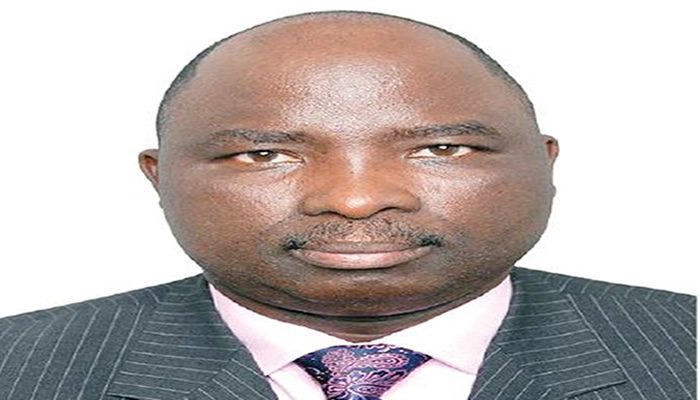
Executive Director, Research and Advocacy, Association of Nigerian Electricity Distributors, Sunday Oduntan, speaks to AJIBADE OMAPE on the N100bn outstanding electricity bills allegedly owed by government ministries, departments and agencies, among other issues facing the power sector

Can you provide insights into the alleged N100bn in outstanding electricity bills owed by the government?

The Nigerian government does not owe N100bn. The ministries, departments and agencies of the government owe the amount in electricity bills. Each of these MDAs is a stand-alone body, so this does not mean that the government is the one owing. These ministries have their budgets appropriated to them. So, it’s not Mr (Bola) Tinubu that is expected to pay. The MDA debts have been there since 2013 and we’ve had three presidents since then. When we talk about MDAs, we’re also talking about military formations.

 However, some of the military formations pay their bills. The major culprit is the Army in terms of military formations. If you go and check with the Ministry of Defence, there are provisions in their budgets; so I cannot blame the Defence minister or the President for the non-payment of electricity bills by the MDAs.

It’s not that the government is not paying or doesn’t want to pay; it’s the government agencies that are not paying, and they all have budgets; we have continuously asked for this. Four weeks ago, it took a published advert to call the attention of the President before he became aware of the indebtedness. Should the President be the one paying bills for the Aso Rock? No. It was when he saw it that he ordered that they should settle their bills. If we don’t say anything, the bills will remain unpaid.

What measures are being taken to address this issue of outstanding electricity bills?

One such measure is the publication of adverts to ask them to pay. We can’t cut off all the MDAs. For example, the military formations will tell you that if you disconnect the power supply, it will affect their armoury. That’s what they told us. The Nigeria Defence Academy also owes but we can’t put it at the doorstep of one of them, so that is why I said military formations owe and that’s a fact. The measures we’re taking include demanding payment from them. I believe that the matter is getting better attention from the government now than before, maybe it’s because the announcement that the MDAs owe is very embarrassing.

If we call different distribution companies, they will state how much they are being owed. I know that many MDAs have yet to pay their bills but I don’t want to give out an embarrassing headline that will make foreigners think that Nigeria is an irresponsible country. They are wrong and those of them that can be disconnected will be disconnected at the appropriate time after giving them an appropriate legal notice. It is irresponsible for any governmental department to refuse to pay electricity bills.

The MDA debts need to be paid. Payment of the MDAs’ debts will enable us in the power sector to be able to invest more in the system. You can’t invest where it does not yield profits. I’m not giving excuses for them. Non-payment of energy debt is affecting the performance of the Discos and power generation companies. The press mostly looks at the inefficiency of the Discos but does not ask questions about the reason for the inefficiency.

What factors contribute to the frequent collapse of the national grid, and what steps are being taken to enhance its stability and reliability?

The biggest factor that contributes to the frequent collapse of the national grid is the shortage of gas. The low frequency is brought about by a shortage and unavailability of gas to generate more electricity and the generation becomes so low. We have three hydroelectric power plants in Jebba, Shiroro, and Kainji, which are all in Niger State. They are all collectively contributing less than one-quarter of the quantum of the power that we generate in the country. The major power that we generate in the country comes from thermal power or gas-fired power plants. These include the Egbin, Olorunsogo, and Omotoso power plants.

These power plants depend on gas to fire their turbines just as cars depend on petrol to fire them. The problem in the last two months is because of indebtedness to gas suppliers. There are legacy debts that have yet to be paid by the government. The Discos are collection agents. They only retain 20 per cent of what they collect. They have to remit everything to the value chain – generation, transmission, and distribution. So, if they do not collect enough, they cannot pay enough. For example, Benin Disco took electricity worth N12bn from the generation companies. But so far, it has only been able to collect N7bn. That means it is short of N5bn.

If the indebtedness to the gas suppliers is settled, do you think the national grid will be stable to supply stable power?

Yes, because efforts are being made, even by the last government, to install some equipment for the Transmission Company of Nigeria to enhance its efficiency. There are ongoing projects like the Siemens project from Germany. What is crippling the power sector is liquidity and lack of money. If there’s no money to invest, you cannot do anything because when you keep on owing your suppliers, they won’t supply again. That’s what happened in the last two months. The gas suppliers are not supplying. The gas suppliers are not part of the power sector. These are international oil companies that sell their gas to the international market where they make more money than to the domestic market.

Apart from liquidity, what other challenges is the electricity distribution sector facing to ensure stable power supply across the country?

Energy theft is another challenge and it adds to the liquidity crisis. If people are stealing the little that we have, how can we have more? Energy theft includes vandalism, illegal connection, and meter bypass. By the time you calculate the losses, that is the cause of the liquidity crisis. Someone took goods worth N11bn and can only collect N7bn; that means N4bn has been stolen. In addition, there is also the issue of non-payment. If you give some people a bill of N5,000, they end up paying N2,000. How do we account for the N3,000 balance? Not until we all agree that there’s a need for all of us to play our part, Nigeria will be in a mess. We are in a mess already.

How do you respond to criticisms regarding the performance and efficiency of the electricity distribution companies?

First, we are not efficient enough and we have a lot more to do. However, efficiency is also linked to pricing. You cannot expect an entity that sells below the cost price to be efficient. So, while I’ll agree that we are not efficient enough due to the liquidity crisis, I also feel that some of those blaming us are doing so out of ignorance. You give them a prepaid meter, they bypass it, they connect appliances like their air conditioners, refrigerators, and many more illegally, and many Nigerians want electricity free of charge and they keep lying that they will pay but it’s only a lie, they don’t pay; they can argue from morning till night about bad light or inadequate power supply, but when they are provided with the light, they do not like to pay for it.

Some of the people who make such comments and who are quick to criticise us, if you check their bills and the appliances they run, they are the worst; so, we are all guilty and all of us need to play our part, that is the best solution.

What is the role of government policies and regulations in shaping the electricity system?

Well, as for the regulators, they are the policemen of the sector and they have been playing that role effectively well considering the environment within which we all operate; as for the government policies too, there have been a lot of improvements in the government policies over the years and it has been that way since 2013, and I can say that with the way they are driving it, we believe that with time we can begin to show better results. So the role of the government and their policies is very germane; we cannot underestimate their importance.

What initiatives or investments are being made to upgrade and modernise the electricity distribution infrastructure in the country?

Well, what needs to be upgraded is not just electricity distribution; if we are talking of distribution, distribution does not stand alone, it is a part of the value chain; however, what I can say is that the government has made efforts and will continue to make efforts to upgrade all the dilapidated infrastructure; we have an ongoing project with Siemens, which is a German equipment manufacturer; other initiatives are also ongoing towards renewing the infrastructure, it’s just that these projects and initiatives are very capital intensive and it will take a bit of time for all of these to show before Nigerians can see them.

How do you address concerns about electricity theft and illegal connections?

Well, we are trying our possible best to reduce it by deploying more technology, but mind you the deployment of technology also comes at a huge cost, because it is not cheap; we are also trying to ensure that people who are caught are handed over to the law enforcement agencies. We will try to partner the police, and the Nigeria Security and Civil Defence Corps to ensure that those who are caught stealing energy or vandalising any of the equipment are brought to justice. That is another ongoing effort to address energy theft, and we need the cooperation of the judiciary and other agents because we cannot prosecute by ourselves, but we can only catch them and hand them over to law enforcement agencies so that they can face the wrath of the law.

We also rely on our customers to say something whenever they see something; we encourage the public to provide intelligence that can be useful to catch individuals within our communities who vandalise and steal energy; we believe that if we as individuals cooperate, we can deal with a lot of these issues.

Are there any plans to improve customer service and engagement within the electricity distribution sector to improve consumer satisfaction?

We have continuously engaged with our consumers. For instance, I have been in Benin throughout this week to engage with our consumers in different communities; every other distribution company does it, and we go to different community development association meetings every weekend, and we do this simultaneously over the country to enlighten people and let them know the problem that we have with energy theft and how it affects everyone. We do that to stamp out the menace of energy theft; so yes, we do that because that is the only way out. By engaging with customers, we were able to enlighten them about their roles, just like here in Benin, some of them did not understand their roles; we were able to show them their roles, and also how bypass affects peoples’ bills; so the more you let people know about their roles, the better they can play their part once they understand that it affects them. It is a continuous thing because we realised that there can never be too much information; we just have to keep on giving them more information to help them understand their roles.

How can fair electricity tariff structure be guaranteed while balancing the financial capability of the distribution companies and affordability for consumers?

It is regulated already; that is the job of our regulators; we are in a heavily regulated industry and everything we do is regulated by the regulators. Every single step is taken according to laid down rules and the Discos cannot deviate from them, they can’t just fix tariffs, everything is done scientifically by looking at the economic indices, different factors, conditions, situations, locations, and availability of electricity, among other factors, and they deal with us and make sure to sanction us anytime we fail to carry out our duties properly. It is not easy; they (Discos) are trying their best; they operate in a heavily regulated industry and not where any service provider can just do whatever he likes.

What strategies are being implemented to attract investments and promote private sector participation in the electricity distribution sector?

We already have private sector participation, so when you mention the distribution sector it is private; the Electricity Act of 2023 is also part of the strategies for more private participation. In terms of foreign direct investment, I think that it is up to the government to provide an enabling environment that will encourage foreign investors to come and invest in the sector; the government has to provide that environment that will attract foreigners to invest their money in the country.

How can Nigeria prioritise the adoption of technology and innovation to optimise energy distribution and management?

We do that a lot, what is hampering all of these is just the issue of cost; one cannot succeed in this business without giving priority to technology because it is the most important thing, and we need to deploy technology to be able to bypass some of the ills that we face in the sector. I believe that there is still a lot to be done. I would love to see a power sector in Nigeria where people will be happy because they will be paying for what they consume, but we are not there yet, we still have a long way to go; some people don’t want to pay; they will rather use electricity free of charge.

We have some of our staff members who don’t treat customers properly; we also have some corrupt elements within our system, but corruption is a two-way thing – if the people who give them money continue to give them, the corruption will never stop – so we have a society that still needs a lot more information and orientation to understand the evil of giving the bribe and the long term implications of it; these are some things we are making efforts to include and it is not achievable in a month, it takes time so we have to continuously engage with Nigerians we have to make them understand what their role should be in the sector.

Don’t let Kanu die in DSS facility, family begs Tinubu

0

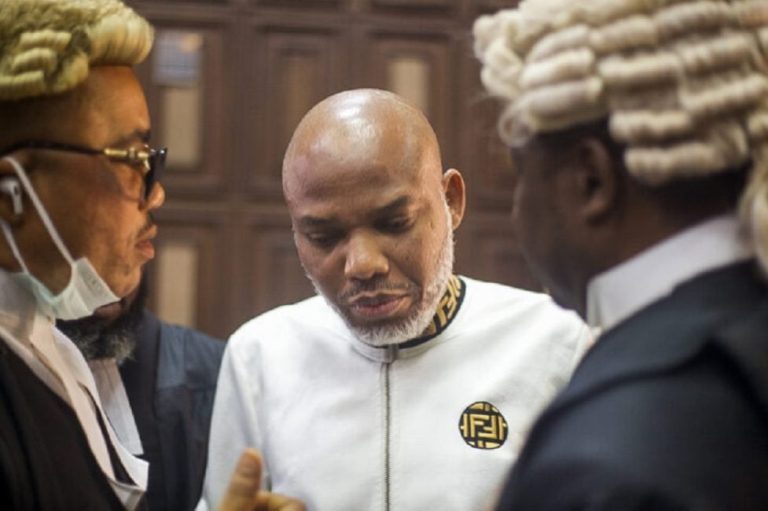
The family of the leader of the Indigenous People of Biafra, Nnamdi Kanu, has raised the alarm that their son is critically ill in the custody of the Department of State Services.

The family claimed that he urgently needed a cardiologist, and urged President Bola Tinubu not to allow him to die in the DSS custody.

Kanu has been in custody since 2021 after he was renditioned to the country from Kenya.

His bail application based on his deteriorating health condition was declined by Justice Binta Nyako on Tuesday.

In a statement on Saturday, Kanu’s younger brother, Emmanuel said he was informed earlier that his brother was critically down.

He stated that Kanu needs urgent medical attention to avert a major health crisis.

The statement partly read, “We got information this morning that he is critically down. He has not been granted access to his personal doctors, and he urgently needs a cardiologist. He should not be allowed to die in DSS custody.”

The family had earlier berated the political elites in the South-East over their failure to intercede with the President to help secure the release of their son.

They alleged that some people were benefiting from his continued incarceration, hence the apparent apathy on the part of the political elite to engage the President in his release.

“It’s a shame that Kanu is being punished for asking for the freedom of Ndigbo, and the leaders have abandoned him to die in DSS custody,” the family said.

All rights reserved. This material, and other digital content on this website, may not be reproduced, published, broadcast, rewritten or redistributed in whole or in part without prior express written permission from According.

Contact: [email protected]

Protracted hiccups sign of underlying ailments – Respiratory expert

0

Chest physician and Head, Medical Unit, Emergency Medicine Department, University of Nigeria Teaching Hospital, Enugu, Dr Augustine Ikechukwu, speaks with AJIBADE OMAPE on the mechanisms of hiccups and how potentially deadly ailments hide underneath

Can you explain the physiological mechanism behind hiccups and how they occur in the human body?

Well, hiccup is a contraction of the diaphragm; the diaphragm is the muscle in the body that separates the chest from the abdomen so that they don’t get to mix up; the diaphragm helps you to breathe in. When you take a deep breath and breathe out, the diaphragm relaxes, but when this happens very quickly and in short intervals, that is what happens with hiccups. Hiccups are just a quick contraction of the diaphragm and a quick relaxation of the diaphragm, so it is as though you are breathing in and breathing out very fast. Once the diaphragm contracts quickly and then relaxes, usually a part of it should do that, what happens is that hiccups occur if there is anything that touches or irritates the diaphragm; remember I said it separates the chest from the abdomen, below you have the liver, the stomach basically the intestines, and you also have the kidney, and above it, you also have your lungs and then the heart, and of course, there is the nerve connecting down to the diaphragm, which stimulates the diaphragm to contract; so anything in the brain that is around the nerve that controls the contraction of the diaphragm can make a person have hiccups; so if there is a stroke around that area, any infection around that area of the brain that controls the diaphragm can make anybody have hiccups.

Normally, when someone is eating too fast or taking in water too quickly, because it is coming in too fast it can irritate the diaphragm and cause hiccups; any infection around the lungs as well can irritate the diaphragm because the lungs are sitting just around the diaphragm. There are other systemic things like kidney failure, which can also make the diaphragm irritated. So, largely anything around the diaphragm can cause hiccups. Normally once it happens physiologically, it will go away within minutes; one shouldn’t have hiccups lasting up to an hour, but once it continues for days, we know there is a problem and that is what we call protracted hiccups or intractable hiccups, so we usually begin to assess the problem. If you have hiccups that have lasted for days, we begin to worry but for the usual ones, the moment you take water, it should subside.

 What are the common causes of hiccups, and how do they vary from babies to adults?

 Hiccups in adults and babies have the same mechanisms; hiccups are more common in babies because of how they are, particularly when they feed on breast milk and breathe very fast they tend to have hiccups. Traditionally, we try to put something on the head for it to stop. Normal physiologic hiccups will run their course and will stop, but most hiccups in children are physiologic so they will stop but when you have hiccups lasting long, then there is a problem.

 Are there any specific triggers or underlying medical conditions that can contribute to persistent or chronic hiccups?

 Yes, once hiccups last longer than 24 hours, we know there is a problem and we begin to evaluate and assess the body for infections around the liver and lungs, check for stomach cancer and brain injuries and do other assessments around the diaphragm because that is where it is coming from; we check the stomach, the liver, the lungs, the brain and that’s how we evaluate hiccups; sometimes, someone who takes an overdose of drugs will have hiccups; even alcohol overdose can cause hiccups.

 How long do hiccups typically last, and what factors can influence the duration and severity of hiccups?

 Well, hiccups naturally should not last more than a few minutes, especially for the physiological ones, but the intractable or protracted hiccups could last more than 24 hours, which is a sign that there is a medical condition or organ in the body that needs attention.

What are the potential effects or discomfort associated with prolonged or severe hiccups?

For the physiologic hiccups, there are no effects; it is natural so there is no issue; once water is ingested, they should subside, but the intractable or protracted hiccups can be very disturbing and embarrassing; they can contribute to a lack of sleep, because there is more background problem; the patient will also be suffering from the background problem so it is quite disturbing having persistent or recurrent hiccups. So generally, hiccups in themselves may not be so disastrous in that sense, but if they’re protracted, it’s only a sign that there is a background problem.

Can hiccups be indicative of underlying health issues or complications, and if so, what are some examples?

 Yes, it is a red flag that there is a very serious or heinous health issue; just like I said earlier, hiccups in themselves may not be so deadly but just a sign that there is an issue with someone medically; it can be a sign that someone has kidney problems, kidney disease, kidney failure, liver failure, liver cancer, stomach cancer, lung infection, and lung cancer, particularly if they are located at the lower parts of the lungs, these are the possible issues that the hiccups could be signalling if there is an infection in the oesophagus, or around the diaphragm; the hiccups can give you all of those signs.

 Is there any evidence to suggest that hiccups can lead to serious medical complications or death?

 Well, not in the sense of leading to serious medical conditions or complications or death, it is just an indicator that there is a need for an assessment; hiccups cannot lead to death, they can only signal one to assess and look for life-threatening ailments that could potentially cause harm to the individual.

 A Nollywood actor popularly called Sisi Quadri, died recently, and there were rumours that he had hiccups before being taken to a hospital, can hiccups be a symptom of an illness or are they deadly on their own?

 Well, there is never a never in medicine, but it is not common for one to die from protracted hiccups since they are just an indicator that there are underlying issues. For instance, if someone takes alcohol and gets intoxicated, such a person can have hiccups before he gets to the hospital and such a person can die of low blood sugar because alcohol will give you low blood sugar so, it may not necessarily be the hiccups because the person could be having severe kidney problems or other underlying issues so the hiccups are what the main ailment comes with. Once someone has protracted hiccups, it is an indicator of an underlying issue, so it is not a usual thing for someone to have hiccups and die from it; the person will only be dying from the underlying issues.

 How do medical professionals assess and treat severe or persistent cases of hiccups, and what options are available for management?

 I mentioned before that hiccups are a red flag, so what we do is not go chasing the hiccups; we go chasing the things that could most likely trigger the hiccups. We do things like urinary function tests, liver function tests, chest X-rays, etc. We may even need to assess some basic things to be sure what problem the patient could be having, and what we find preliminary will determine how far we go with the investigations; you may just do a renal function test and find out that the person’s kidneys are bad and then you may not go too far, all you have to do is just treat the kidney problem and the hiccups will stop, so in itself we don’t start to evaluate hiccups, we chase what could cause the hiccups and what we find in the preliminary investigations will determine how far we go with the other evaluations.

 Can you discuss any potential complications or risks associated with treating hiccups, especially in cases of underlying medical conditions?

 If a patient comes with prolonged hiccups, it is disturbing so we may want to give the patient a few drugs to try to reduce the number of contractions, because if the contraction becomes too much it could wear the patient out, resulting in fatigue and exhaustion. We will want to calm the patient down with a few drugs that can reduce the frequency of the contraction, while you treat the underlying issue; overzealous chasing of the hiccups can make one use too many drugs that may not be too good for the patient’s health because there may be something underlying happening but at the same time you do not want to overload the patient with drugs that may also weigh them down, so we are very careful with the management and assessment.

 What lifestyle factors or habits can contribute to the development or exacerbation of hiccups, and are there any preventive measures individuals can take?

 Well for the physiologic hiccups, as much as possible, no matter how hungry you are, try to eat slowly, because if one eats too fast or drinks too fast, hiccups are bound to occur; another thing is alcoholism and heavy drinking can cause hiccups, so people should engage in controlled drinking. I advise that drinking should be cut down to safe limits, eat healthy food and drink enough water, exercise, avoid refined sugar, and quit smoking, these are some of the general principles that can prevent hiccups.

 How do hiccups differ in their management between adults and infants or children?

It is the same mechanism for infants and adults; hiccups are largely physiologic because once the infant feeds, the stomach is already hinging on the diaphragm. They begin to have hiccups that happen as often as they feed. Also, the positioning of the infant immediately after feeding can cause them to have hiccups. If they have gone on for days, that is the only thing that can raise concerns to check if there are congenital problems, but physiological hiccups generally will stop.

 Are there any misconceptions or myths surrounding hiccups that you would like to address or clarify?

 Well, traditionally we have women putting threads on the head of a child who has hiccups, but I think these things work because people believe in them; however, there is no medical backing to putting a thread on the head of a child as a solution to hiccups. You can find out that because the hiccups are self-limiting, they will die or go naturally. So imagine that if at the time one is putting the thread on the head of a child at the same time the hiccups are now dying off naturally, over time it will be believed that putting a thread on the child’s head is what cured the hiccups, meanwhile, the hiccups just went naturally. What you believe is what works for you; we cannot throw away everything traditional, so if that worked in the past, why not now? But we know that it is just a coincidence, and so far it is not a harmful practice there is nothing wrong with it.

 What advice do you have for individuals experiencing persistent or severe hiccups, and when should they seek medical attention?

 Once the hiccups have gone beyond days, one needs to see the doctor, and particularly if one is feeling unwell and has hiccups, such a person should also see the doctor, also one should cut down on drinking, eat healthy foods, drink, and eat slowly to avoid contraction of the diaphragm, but particularly if one feels unwell with hiccups, one needs to see the doctor. Nobody visits the doctor because they had hiccups for a few days, however, if it becomes recurrent and persistent, such a person should see the doctor.

Arrest Gumi within seven days, group tells FG

0

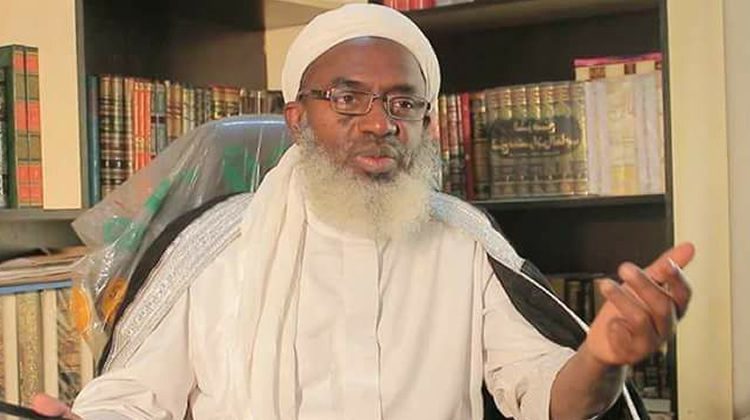
A group, the World Institute for Peace, on Saturday, gave the federal government a seven-day ultimatum within which the security agents must arrest and question Sheik Ahmad Gumi to determine the extent of his involvement in the insecurity ravaging the country.

The group’s chairman, Lamina Kamiludeen, in a statement in Osogbo on Saturday, queried incessant outbursts of Gumi against the Nigerian Military and other security agents whenever they take action against bandits and terrorists.

At different times in the past, Sheik Gumi has made controversial remarks about military campaigns against insurgence and banditry in the north.

On Wednesday, while speaking on “When will there be an end to Nigeria’s recurring abductions?” organised by Daily Trust via X space, Gumi said, “To them (military) they are fighting a war. Honestly, the military has been very hard on them, the Air Force is killing their families.”

Kamiludeen, who asked the Federal Government if he was above the law, said inflammatory statements by the cleric not only undermined the efforts of the security forces but would also embolden perpetrators of the crime to continue creating security challenges across the country.

The release further read partly, “His continuous criticism and condemnation of the efforts of the security forces send signals that Gumi may be among the sponsors of the insecurity in Nigeria. Nigeria security agents must take immediate action to question Sheik Gumi regarding his involvement in the ongoing insecurity in the country.

“His actions constitute a threat to national security and must be addressed with urgency. Or is Gumi above the law? Action must the taken to prove that no one is above the law of the land.”

All rights reserved. This material, and other digital content on this website, may not be reproduced, published, broadcast, rewritten or redistributed in whole or in part without prior express written permission from According.

Contact: [email protected]

Tinubu’s math class, undersea cables and Meta’s promise

0

On Thursday evening, President Bola Tinubu stood among senators to deliver his first Math lecture as President.

Although the setting neither looked nor felt like a learning environment, the President felt the lessons would stick better with food in the students’ mouths.

So, at the break of the Ramadan fast that evening, he stole the moment to scratch a lingering itch: the budget padding allegation levelled against his government by Senator Abdul Ningi.

You see, Ningi, a ranking senator representing Bauchi Central on the platform of the Peoples Democratic Party poked the hornets’ nest with a short stick weeks ago when he accused the Federal Government of implementing a budget other than the one Tinubu signed on January 1, 2024.

As the Chairman of the Northern Senators Forum and Senate Committee on Population, the lawmaker argued in a BBC Hausa Service interview that the red chamber debated and passed an N25tn budget, not the N28.7tn that was currently being implemented. Therefore, N3.7tn could not be accounted for in the 2024 budget.

The ensuing uproar was akin to that of the days of former Central Bank of Nigeria governor, Sanusi Lamido Sanusi, who told a group of dumbfounded senators that $20bn could not be accounted for in the national coffers. However, the context was different this time.

Anyone familiar with Nigeria’s history understands that the political economy of numbers has occupied a special seat since independence. The much-debated population census of May 1962 comes to mind. As it appears, citizens tend to unleash their full arithmetic know-how when it comes to the economy, census, and elections.

Although the Presidency had since denied any knowledge of a parallel budget, it was the first time President Tinubu spoke publicly on the matter.

In the thick of the controversy, the Presidency stated, “We want to state categorically that the only 2024 budget that is being implemented is the N28.7tn budget passed by the National Assembly and signed by the President…He did not present a budget of N25tn…We don’t expect a ranking senator not to pay due attention to details before making wild claims.”

At its plenary session two days later, the Senate suspended Ningi for three months. That meant missing Tinubu’s arithmetic class last Thursday.

Brandishing his accounting pen before the lawmakers, the President said, “I know the arithmetic of the budget and the numbers that I brought to the National Assembly, and I know what numbers came back.

“Those who are talking about malicious embellishment in the budget; did not understand the arithmetic and did not refer to the baseline of what I brought. But your integrity is intact. I appreciate all of you for the expeditious handling of the budget.”

I could imagine some senators nodding in agreement and screaming in their thoughts, “Oh, baseline! I’ve got to look that up on Investopedia.”

Given his admitted proficiency in arithmetic, will the President now hold tutorials for the likes of Ningi at the Villa? Will lawmakers be made to undergo a refresher course in arithmetic every budget cycle? And will Ningi have to present a certificate from a three-month course on ‘Budgeting and Financial Analysis’ before he is readmitted to the Senate? We don’t know for sure. But to bank on the President’s grasp of numbers should not be too risky.

Leading Africa’s digital technology from space?

Earlier that Thursday, President Tinubu played host to a delegation from Meta Platforms Incorporated, led by former UK Deputy Prime Minister and Meta’s President of Global Affairs, Sir Nick Clegg, at the State House.

A statement by the official spokesperson to the President revealed that Tinubu assured Sir Clegg that Nigeria would be Africa’s guiding star of information and communications technology.

To do this, Tinubu said the Federal Government was sustaining investments in digital technology to enhance the sustainability of small businesses and expand opportunities across sectors. His administration is opening up channels of opportunities in information and communications technology, deepening capacity, and fostering partnerships, Tinubu added.

As he has done in various fora, the President emphasised that Nigerian youths are the most critical asset in Nigeria’s arsenal. Thus, his government is moving to achieve digital economic expansion through its 3MTT programme, which is training three million Nigerian youths in digital technology and essential skills before deploying them in innovation hubs nationwide.

I felt proud to be a youth when I read those lines. You’ll understand my joy when you remember that another President flew thousands of kilometres to London on taxpayers’ money to paint the youth as lazy.

Okay, back to the gist. When I read Tinubu’s ambitious declaration to lead Africa’s digital transformation, I recalled the March 14 incident where millions of Nigerian Internet users were thrown into darkness as Internet services failed.

In the ensuing days, it was announced that undersea cables supplying critical communications lines to Africa had been compromised. Now, I won’t join the wild party of speculations about the cause of the cable snaps. That’s not my calling. What’s not up for debate is that repairs would take anywhere from weeks to months to complete.

It once again revealed the underbelly of our digital infrastructure, much like COVID-19 did for fragile healthcare systems worldwide. If we aim to lead Africa’s ICT revolution, a part of me believes we must be immune from black swans, such as undersea cable cuts. This will take advanced forms of evolution.

Father of evolution by natural selection, Charles Darwin, puts it this way, “It is not the strongest of the species that survive, nor the most intelligent, but the one most responsive to change.”

While most living organisms evolve towards survival, those who last evolve for the sake of innovation – a deeply rooted notion that things (and ways of doing things) can be better no matter how efficient they currently seem. A phased upgrade from cables to satellite communications might be an excellent place to start.

In the meantime, Nigeria’s teeming youths in the content creation space have reasons to rejoice as Sir Clegg announced that, come June 2024, Meta would introduce a feature on its Instagram app to allow Nigerian creators to monetise their content to enable them to earn a living using the app.

31 states owe CBN N340bn bailout funds

0

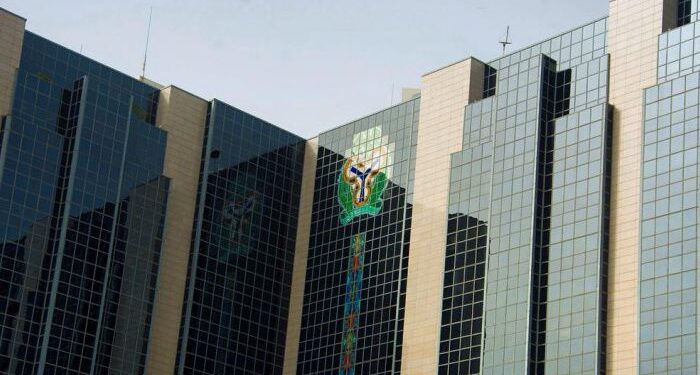
Thirty-one state governments owe the Central Bank of Nigeria, CBN, a total of N339.9bn obtained to pay workers’ salaries between 2015 and 2023, a document obtained from the apex bank has revealed.

The document also stated that the sub-nationals had yet to pay an outstanding of N339.97bn and a loan default of N1.31bn as of September 2023.

The fund, which was facilitated through the Salary Bailout Facility, a strategic intervention by the CBN aimed at alleviating the fiscal pressures faced by the states, was part of the over N10.3tn intervention fund made available by the apex bank under the immediate former CBN governor, Godwin Emefiele.

In contrast, the current governor, Olayemi Cardoso, stopped the programme, stressing that the apex bank could not continue to fund more intervention programmes amidst the current economic crisis.

The CBN said the SBF was designed to help the state governments to clear the backlog of salaries owed their employees. The initiative underscores the critical role of the CBN in stabilising the country’s financial landscape, especially in times of fiscal distress faced by state administrations.

The programme, which has been closed according to its status report, involved key stakeholders, such as the benefiting state governments, Deposit Money Banks, the Federal Ministry of Finance, and the Accountant-General of the Federation, all of whom played pivotal roles in implementing and managing the bailout package.

A breakdown of the report showed that 31 state governments benefited from the initiative, with N457.17bn disbursed. Despite the substantial disbursement, the principal repayment made so far totalled N117.21bn, with interest repayments at N45.21bn.

It also showed that the states collectively borrowed N457.17bn to pay salaries to their respective civil servants and an overdue amount of N1.31bn.

The report further said the top beneficiaries of the bailout facility included Imo, which received N20.46bn; Kogi, N20.26bn; Kano, N20.21bn; Oyo, N16.81bn; and Osun, N15.93bn.

The inability of the states to perform their primary obligation to their workforce has been a front-burner issue in recent times amidst clamour by labour unions to increase the minimum wage from the current N30,000.

Last year, state governments borrowed about N46.17bn from three banks to pay salaries between January and June, according to an analysis of the half-year 2023 financial statements of Access Bank, Fidelity Bank, and the Zenith Bank Group.

It was observed that the states borrowed the most from Access Bank in the six months, with a record of N42.97bn loan.

This was followed by Zenith Bank with N1.78bn, and Fidelity Bank with N1.42bn in the six months.

The According also exclusively reported the inability of 24 states to pay workers’ salaries this year without having to wait for federal allocations from the central government despite improved federal allocations.

The development also means that the respective wage bills of the affected states surpassed their various internally generated revenues, raising concerns about workers productivity and state governments’ efficiency in internal revenue generation.

The 24 states include Bayelsa, Ondo, Yobe, Sokoto, Taraba, Plateau, Oyo, Niger, Nasarawa, Kogi, Kebbi, Katsina, Jigawa, Gombe, Ekiti, Ebonyi, and Borno.

Others are Benue, Bauchi, Adamawa, Akwa Ibom, Cross River, Abia, and Delta.

In 2023, state governors got the most Federal Account Allocation Committee disbursements in at least seven years. The rise in FAAC allocations to the three tiers of government, especially the states, followed the removal of petrol subsidy and currency reforms of the current administration. The reforms have reportedly led to a 40 per cent boost in income.

Financial experts have raised concerns about states’ spending on recurrent expenditure, highlighting the need to embrace financial innovations.

 ‘States risk insolvency’

The Chief Executive Officer of the Centre for the Promotion of Private Enterprise, Dr Muda Yusuf, said the report indicated that a majority of states were not financially sustainable and were at risk of insolvency if there was no boost in investment.

He said, “This issue is a fiscal sustainability problem, showing that many states are not fiscally sustainable and need to work towards it; and that the states need to do a lot more to attract more investments to their states so that their level of dependence on the Federal Allocation Accounts Committee would reduce.

“Even as we speak, many of them are also in debt, and by the time they pay salaries and service their debts, there is not much left to improve on infrastructure. It’s in the interest of the sustainability of the states for them to be more creative in generating more revenue and attracting more investment to their states so that they can generate more revenue.

“Secondly, we also need to address the issue of fiscal federalism because some of the states don’t have power over some resources in their domain and can’t bring investors into it. For instance, mining is controlled mainly by the Federal Government, you get permission from them and revenue is remitted to them. So we need to revisit the issue of restructuring to help states have more control over resources within their domain.”

A development economist, Aliyu Ilias, said many states had yet to fully develop themselves as industrialised and marketable to attract investors.

Ilias urged governors to develop an area of strength they could leverage to attract foreign investments.

To address these ongoing challenges, the report recommends that an increased focus be placed on enlightening state investment companies about the benefits of Public-Private Partnerships. Such partnerships could significantly enhance the state’s Internally Generated Revenue, improving fiscal health and reducing dependence on bailout facilities for salary payments.

This delay underscores the broader challenges of fiscal management and sustainability within the states, highlighting the need for more robust financial strategies and practices.

N4.94tn domestic debt

The Federal Government borrowed a total sum of N4.94tn from domestic sources in the first six months of the administration of President Bola Tinubu, indicating significant dependence on loans.

This is according to the latest debt stock document obtained from the Debt Management Office on Saturday.

According to the document, the domestic debts rose by N4.94tn from N48.3tn recorded in June 2023 to N53.3tn as of December 31, 2023.

Sunday According observed that although external loans reduced by $664m in the six months ($43.2m in June and $42.4m in December), the figure increased by $901m when compared with $41.5m in September and $42.4m in December.

The DMO in a statement on Friday said the public debt soared by 10.7 per cent to N97.34tn in the fourth quarter of 2023 from N87.91tn recorded in the previous quarter.

Delving deeper into the specifics, the DMO explained that the N97.34tn public debt comprised N59.12tn in domestic debt and N38.22tn in external debt.

It said the increase was largely due to new domestic borrowing by the Federal Government to part-finance the deficit in the 2024 budget, and disbursements by multilateral and bilateral lenders, adding that loans from multilateral sources constituted 49.77 per cent of the country’s external debt stock, while loans from bilateral sources constituted 16.02 per cent.

It said, “Nigeria’s public debt stock as of December 31, 2023, was N97.34tn or $108.229 bn. This amount comprises the domestic and external debt stocks of the Federal Government of Nigeria, the 36 state governments, and the Federal Capital Territory.

“There was an increase of N9.43tn over the comparative figure for September 2023, which was largely due to new domestic borrowing by the FGN to partly finance the deficit in the 2024 Appropriation Act and disbursements by multilateral and bilateral lenders.”

An analysis of the domestic debts showed that the government borrowed N2.29tn from the FGN bonds market with the figure increasing by 5.45 per cent from N41.97tn recorded in June 2033 to N44.26tn as of December 31, 2023.

The government also borrowed N1.79tn from treasury bills, N8.47bn from savings bonds, N350bn in Sukuk loans, and N549.02bn from promissory notes.

Under external debt, increased borrowing was observed from the African Development Bank and the Exim Bank of China, with a total loan of $541.5m.

The increased debt is, however, contradictory to promises made by the Tinubu administration to reduce borrowing and focus more on increasing revenues.

The Minister of Finance and Coordinating Minister for the Economy, Wale Edun, at different forums, noted that the country needed to improve its revenue standing because it could not afford to rely on borrowing going forward.

Reaffirming the country’s revenue position, the Minister of Budget and Economic Planning, Abubakar Bagudu, declared at the public presentation of the 2024 budget that revenue generation remained the major hindrance to the country’s fiscal viability.

“Revenue generation remains the major fiscal constraint to Nigeria’s fiscal viability. However, the government is reviewing current tax and fiscal policies to improve revenue generation. The target is to increase the ratio of revenue to the GDP from less than 10 per cent currently to 18 per cent within the current term of this administration,” he said.

This is a position backed by the World Bank, which believes that Nigeria’s debt servicing cost is on course to hit over 200 per cent of its revenue by 2026 until its recent reforms and policy redirection. The bank, however, believes that recent reforms in the country are set to boost revenues and keep debt levels below 40 per cent of the GDP over the medium term.

It predicts that debt servicing cost is set to fall from about 101.5 per cent of total revenue in 2022 to 43 per cent in 2026.

Economy sick – Experts

Experts have said that the Nigerian economy is currently sick as a result of the increasing debt profile.

While debt financing has helped other countries to boost production and increase capital infrastructure, experts say Nigeria has no business borrowing more funds with the current debt situation.

An economist at Sankore Global Investment, Jonathan Thomas, said the country’s debt profile was hindering economic growth, noting that the only justification for the huge debt was if the country recorded a positive growth in capital stock.

Thomas stated, “This increasing rate of debt in Nigeria is undoubtedly not the best because it is hindering the growth rate. The high amount of the revenue is used for debt servicing; at least not less than 90 per cent of our revenue is used for debt servicing. Before we can justify the debt rate, we must see a positive impact on our capital stock, but there has not been any proof to show that our capital stock is increasing; so, the increased debt is used for consumption and debt servicing.

“It doesn’t make any sense when revenue is used to service debt. It is better to run the economy based on internally generated revenue.”

He noted that the government needed to plan towards offsetting the previous debts to sustain positive economic growth.

Thomas added, “The government needs to plan towards offsetting the debts from the past years, especially those of the previous administration.

“The idea of debt for now is not rational. No one can justify this. The government is still borrowing because it feels what is for everybody is for no one.

“The government needs to be selfless enough to tackle the debt situation of the country.”

An economist at Lotus Beta Analytics, Shedrach Israel, said Nigeria’s high debt profile gave the impression that the country could not sustain itself. He also called on the government to tackle the recurring debts.

He said, “It is shocking to know that we are still borrowing as a nation because petrol subsidy removal is meant to provide more revenue to the government. The government is already doing a lot to restructure the tax system, so there are enough sources of income. The implication of borrowing more cannot be over-emphasized. It’s reducing the country’s revenue for capital infrastructure. Borrowing gives a false sense of liquidity. It is like eating the future today and bearing the consequences later.

“Borrowing gives the impression that the economy is not viable and cannot survive outside of borrowing.

“For every money that’s borrowed, there are budgetary allocations because the loans cannot be paid within a short time. The amount spent on debt servicing is almost more than the budgets of some ministries, departments, and agencies of the Federal Government.

“The government has to put an end to borrowing, especially borrowing without public knowledge.”