Home Blog

Oriire Kidnapping: Now the Real Questions Must Be Answered

0

I grew up in Ijebu-Ode where my job was to join the other children in defending the hens of each family and their chicks from predators. We were led by a practical proverb: first you have to drive away the eagle, then you can count the chicks. That meant having rocks and slings on hand to intervene when the hens were under attack from an eagle overhead. If we were awake and ready, the predator had no chance.

The abduction of children and teachers by the Oriire in Oyo State is on my mind. It was good that our security forces, as it should be in a normal country, got involved and after 56 days rescued the victims.” I commend the excellent work of the security forces under the overall leadership of President Bola Ahmed Tinubu who worked behind the scenes, ostensibly, with the Governor of Oyo State, Seyi Makinde. Up to now, Nigerians have been told that the victims’ unharmed release was not negotiated for ransom or quid pro quo demands by the kidnappers.

There is so much we should push to know still. Now it’s time to count the chicks. The media has little snippets of information. Pidgin rendition of killing. There is need to substantiate claims that eight terrorists were captured alive as many were “unalived.” Interesting if true: that the security forces rounded up family members of the terrorists in different states in Northern Nigeria and delivered a clear message of killing those family members in retaliation for any further deaths among the victims beyond the dastardly slaughter of Michael Oyedokun and the killing of another teacher on the day of the kidnap.

Governor Seyi Makinde’s call for further investigation into the roots of this crisis would be a welcome development if it was not a major departure from established diplomatic protocols. Ideally, a subnational leader would have a basic understanding of the international system that would allow him or her to understand the specific, limited role of the UN. From the point of view of international relations and the legal environment of global interventions, this type of request seems misguided.

UN Secretary-General: A Secretary, Not A General

Governor Seyi Makinde may have been misled by the Yoruba translation of United Nations as “Ijoba Agb’aiye”, literally World Government, and in which case the UN Secretary-General as the President of the World. This could not be further from the truth. The UN is not a government. It has neither a police nor a military force.

The office of the Secretary-General is more for a Secretary and not a General, although the Secretary-General is one of the main organs of the UN system, as the British Permanent Representative to Prof. Ibrahim Agboola Gambari and I campaigned for General Olusegun Obasanjo to be the UN Secretary-General in 1991. The General Assembly has the power of the purse , but the power at the UN is more in the Security Council ( if the veto system allows decisions ) . The Secretary-General is to a large extent a secretary for a union of member states.

His profile as the media representation of the will of the union or if you like association of member states does not make him the boss. Of course, in theory he has power over the staff he appoints when the strong countries are not strongly interested in opposing him. He also has his “good offices role” with which he makes direct and indirect intervention pleas for peace, development and respect for human rights and humanitarianism around the world. These efforts offer him significant media visibility.

The Barrier of Sovereignty

The UN Secretariat and related agencies are not mandated to engage with sub nationals unless there is an express Security Council resolution calling for their involvement and/or a request for assistance by the national government concerned. This is what the agitators for the dismemberment of Nigeria never understood, while they deceived Nigerians by claiming that they wrote to the UN, requesting one sanction or the other for Nigeria. Of course, some demands could be included in the many reports the UN issues annually, but without an express resolution that could bite, it is only at best, for academic masturbation and that is if any of the five Permanent Members of the Security Council did not cast a negative vote.

Of course, the UN Secretariat and its Agencies and other International entities could be asked for all sorts of support, including sharing of material and knowledge, but not an investigation over kidnapping by terrorists. It was a big and very important development in the South-West of Nigeria, more so with the beheading of a teacher and the killing of another and keeping 42 children and seven teachers in the forest for 56 days.

Read Also: DHQ Kicks Off Capacity-Building Programme for Retired Armed Forces Personnel

But even more serious situations such as civil war would have to be handled with care to prevent the UN from violating the sovereignty of a member state, no matter how weak or comatose a situation such a state may be in. For the Security Council to investigate, it would have to adopt a resolution under Chapter 7. The general responsibility to protect cannot be invoked in such a situation, and not through an innocuous subnational utterance of a Governor.

If the situation was more serious than what was faced in Oyo, the Human Rights Council could have given Governor Makinde succour and PBAT has no objection to external intervention. If PBAT objects the investigation team would not be issued visas but the report could be prepared from outside.

But for a report like that to matter, it would need a Security Council intervention to use its power to impose sanctions, if the Nigerian government had no veto-wielding friend who would swap a veto for an interest that Nigeria could cultivate.

Now it’s time to count the chicks. Governor Makinde could have taken a more constructive lead by addressing his concerns/questions directly within the national framework with the 49 Nigerians safely outside the den of the terrorists. He could have sought clarity on the processes that led to the victims’ abduction and freedom by organising internal pressures through the Governors Forum, credible Civil Society Organisations and investigative journalism. In my opinion, a lost opportunity to take a more statecraft-oriented approach was going over Nigeria for an external appeal. This situation is not beyond Nigerias coping capacity . Therefore, it is not too late to seek accountability and draw lessons for use elsewhere especially in Northern Nigeria.

*Babafemi A. Badejo is a former Deputy Special Representative of the UN Secretary General for Somalia, a former Professor of Political Science and International Relations at Chrisland University, Abeokuta, and author of several books including a best seller on Politics In Kenya as well as Why Peace Has Been Elusive In Somalia. Currently a Legal Practitioner and Chairman of the national NBA Anti-Corruption Committee and a Consultant at Yintab Strategy Consults. He received the 2025 Nelson Mandela Distinguished Africanist Award at the Africa Annual Conference at the University of Texas at Austin. In November 2025, he was decorated with the Order 27 Juin 1977 by Djibouti.

DHQ Kicks Off Capacity-Building Programme for Retired Armed Forces Personnel

0

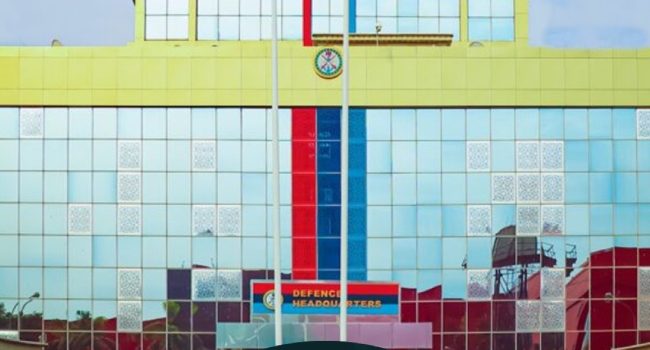
In the Federal Capital Territory (FCT) and the North Central geographical zone, the Defense Headquarters (DHQ) has initiated the Skill Acquisition Training for Veterans (SAT-V).

This underscores the DHQ’s dedication to enhancing the welfare and post-service well-being of retired members of the Nigerian Armed Forces through possibilities for sustainable livelihood and vocational empowerment.

The Veterans Affairs Directorate of the DHQ organized the four-day course, which took place from July 14 to July 17, 2026, at Headquarters 22 Brigade, Sobi Cantonment, Ilorin, Kwara State. It is a component of continuous initiatives to increase veterans’ economic resilience and independence nationwide.

General Olufemi Oluyede GCOR, the Chief of Defence Staff (CDS), announced the training’s opening, characterizing it as a strategic investment in veterans’ health and a testament to the Armed Forces’ unwavering dedication to those who gave their lives to defend Nigeria.

The program’s topic, “Enhancing Veterans’ Capacity Building through Sustained Skill Acquisition Training for Enhanced National Development,” he pointed out, emphasizes how crucial it is to present veterans as valuable contributors to Nigeria’s socioeconomic development.

The CDS added that the program is consistent with his leadership style, which emphasizes effective administration and enhanced welfare as essential components. General Oluyede encouraged attendees to embrace the training’s practical knowledge and vocational skills in order to fully utilize the opportunity.

He emphasized that the skills they would get would not only enhance their own quality of life but also significantly advance the growth of the country.

Major General OD Williams, Director of Veterans Affairs, represented the CDS during the inaugural ceremony.

The SAT-V is intended to give veterans the technical and entrepreneurial abilities they need to launch long-lasting companies and find other sources of income following active duty.

Beauty Queen Chidimma Adetshina Arrested, Begins Court Fight Over Deportation

0

Chidimma Adetshina, a former Miss Universe Nigeria and Miss South Africa finalist, is at the heart of an escalating legal dispute in South Africa following her recent detention for alleged immigration infractions, rekindling the debate over her citizenship and residency status.

In June 2026, South African immigration officials detained Adetshina in Cape Town’s Summer Greens neighborhood. She was originally deemed a forbidden person under South Africa’s Immigration Act, but after being arrested, she appeared before the Cape Town Regional Court on charges that she had entered and lived in the country illegally.

Authorities claim that Adetshina, who was formally prohibited from entering South Africa on December 19, 2024, unlawfully reentered the nation from Mozambique via the border station in Lebombo. The Department of Home Affairs claims that she obtained entrance by falsely declaring her nationality to immigration authorities.

Prosecutors are still pursuing the beauty queen’s deportation, even though she has subsequently been placed on warning for additional court proceedings. The South African government is still working to get her out of the country in compliance with immigration laws, and she is anticipated to appear in court again at a later time.

See Also: Whitemoney Explains Why His Marriage Plans Are Being Delayed by Nigerian Dating Culture

Adetshina’s little son, who was allegedly discovered living with her in South Africa without proper immigration documents, has also come under scrutiny due to the judicial procedures. As part of the larger probe, authorities are expected to look into the child’s immigration status.

A long-running dispute that initially surfaced during Adetshina’s participation in the 2024 Miss South Africa contest is the basis for the most recent legal complaint. When concerns were raised regarding her eligibility to compete, public scrutiny of her citizenship status increased.

Adetshina’s mother allegedly stole South African identity documents years prior, according to evidence found during subsequent investigations by the Department of Home Affairs in South Africa. According to the agency, Adetshina was categorized as a forbidden person since the paperwork used to determine the family’s legal status in South Africa was flawed.

Adetshina was forced to resign from the Miss South Africa pageant before it ended due to the issue, which garnered significant media coverage both domestically and abroad.

Read Also: Complete List of Roads, Buildings and Institutions Named After Tinubu

Adetshina gained newfound success in Nigeria, where she was named Miss Universe Nigeria 2024, despite the setback. Later, she competed for Nigeria in the Miss Universe pageant, placing first runner-up and receiving praise from all around the world for her performance.

Her success in Nigeria made her one of Africa’s most renowned beauty queens, but the legal issues pertaining to her immigration status have resurfaced since her return to South Africa.

Due to its ramifications for immigration enforcement, border security, and citizenship verification, the case has subsequently developed into something more than a standard immigration issue, garnering substantial public attention. Additionally, it has spurred discussion on nationality rules, documentation procedures, and the legal obligations of public officials in both South Africa and Nigeria.

When the case goes back to court, Adetshina’s legal team will probably contest the government’s assertions in an attempt to stop her deportation, while South African authorities are anticipated to provide evidence to back up their accusations.

The former beauty queen may face serious legal repercussions from the case’s verdict, which might also influence conversations about immigration law and cross-border citizenship on the African continent.

Complete List of Roads, Buildings and Institutions Named After Tinubu

0

The Federal Government (FG) has renamed the Lagos-Calabar Coastal Highway after President Bola Tinubu, one of several other major public facilities that have borne the president’s name since he assumed office in May 2023.

The Minister of Works, David Umahi, announced the decision on Thursday, stating that the 750-kilometre highway was named in honour of Tinubu because the project started during his tenure as Governor of Lagos State about 30 years ago.

Umahi said the idea of the coastal road came about 27 years ago, long before Tinubu became president.

The latest development comes on top of a growing list of roads, public buildings, educational institutions and government facilities that have been renamed or established in the president’s honour over the past two years.

Read Also: Ningi Warns FG Over Delay in Prosecution of Oyo School Kidnappers

List of public assets named after Tinubu since becoming president:

Latest Coastal Highway Addition
The Lagos-Calabar Coastal Highway, a flagship infrastructure project of the Federal Government, has become the latest facility to be named after Tinubu following the minister’s announcement on July 16, 2026.

Umahi said the decision acknowledged the president’s vision for the project which he said dates back to Tinubu’s administration in Lagos State.

Minna Airport Renamed
Among the first of Tinubu’s namesakes was the international airport at Minna in Niger State.

Governor Umar Bago renamed the Abubakar Imam International Airport to Bola Ahmed Tinubu International Airport in March 2024 saying the president has supported the state.

The move attracted attention because the airport was recently named after the late renowned writer, Abubakar Imam.

Southern Parkway Abuja renamed
In May 2024, Nyesom Wike, the Minister of the Federal Capital Territory, renamed the Abuja Southern Parkway Bola Ahmed Tinubu Way.

The road which connects the Christian Centre to Ring Road One in the nation’s capital was renamed after being rebuilt.

National Assembly Library Named After Tinubu
Also in May 2024, the National Assembly chose to name its new library after the president.

Tinubu inaugurated the facility which was started in the Ninth Assembly and completed by the Tenth Assembly.

Technology Complex Names Immigration
In December 2024, the Nigeria Immigration Service named its command and control centre after Bola Ahmed Tinubu Technology Innovation Complex (BATTIC).

The agency said the facility would be a vital hub for border security, migration management and technological innovation in the service.

Abuja Polytechnic Is Established
The Federal Government also approved the establishment of Bola Ahmed Tinubu Polytechnic in Gwarinpa, Abuja, in January, 2025.

The institution was established to offer technical, vocational and entrepreneurial education.

Army Names Barracks After Tinubu
In late January 2025, the Nigerian Army named its newly built barracks in Asokoro after the president.

The military said the decision was made to “give respect to who respect is due.”

The facility also includes residential quarters, places of worship, sporting facilities and other operational infrastructure.

International Conference Centre Gets New Name
In June 2025, the Federal Capital Territory Administration also renamed the Abuja International Conference Centre (ICC) as Tinubu International Conference Centre after the renovation of the facility.

Some of the conference centre’s halls were renamed after senior government officials.

The Lagos-Calabar Coastal Highway renaming is the latest of at least eight major public infrastructure projects and institutions named after President Tinubu since he assumed office – a trend that has persisted throughout his administration.

Ningi Warns FG Over Delay in Prosecution of Oyo School Kidnappers

0

Bauchi Central Senator, Abdul Ningi has called on the Federal Government and security agencies to fast-track the prosecution and parade of the culprits behind the kidnap of school children and teachers in Oyo State.

It was gathered that Ningi made the demand during the plenary on Wednesday.

He warned that any delay in bringing the suspects to trial would “undermine public confidence in the justice system.”

Read Also: Shettima Says Criticising Buhari Is The Fastest Way To Upset Tinubu

The perpetrators should face justice to act as a deterrent to others, he said.

What’s key now going forward is to take a cue.” Now we have people arrested, they must be paraded, prosecuted and the full course of the law taken.”

“Delayed prosecution will create another impression that there is something wrong. “So I am calling on the security agency to prosecute them, parade them and make them an example,” he said.

Meanwhile, Ningi, has urged the Nigerian government to act against the Xenophobic attacks on Nigerian citizens.

The lawmaker called for the Nigerian government to immediately recall its diplomats from South Africa.

The call was said to have been made by Ningi on Tuesday during plenary at the Senate.

His call came amid a spate of xenophobic attacks on Nigerians in South Africa

While more than 1200 Nigerians were evacuated, the South African government only warned their people, Ningi said.

“Cut off all diplomatic relations with South Africa. Nigeria has been killing people left right and centre There has never been any action other mouth condemnation.

“This xenophobic attack is not done by mouth, but physically. Imagine someone in his own home and place of business, with no warning, and then mobs start chasing that man, killing and burning him.

“As we speak today over 1200 Nigerians are already being evacuated. And what did the government do? Prudence. Caution what?

“Does Nigeria not have a right to live in other countries? Are they to be killed in this way, even if they are criminals? And that is why the United States and other countries are different. “That is why you could see the relationship between the United States’ citizens and their country,” the Bauchi senator noted.

Shettima Says Criticising Buhari Is The Fastest Way To Upset Tinubu

0

Vice President of Nigeria, Kashim Shettima, has said that President Bola Tinubu does not blame game and is ready to take responsibility for all his decisions.

Shettima said Tinubu understands that for everything that happens in his administration, the buck stops at his table.

Vice President Kashim Shettima said categorically that President Tinubu gets angry whenever anyone criticizes the late former President Muhammadu Buhari because he is ready to take responsibility for every one of his own actions.

Read Also: Yola Modern Market Reopens As Adamawa Governor Commissions Project

Shettima made the submission on Wednesday in Abuja while speaking at the Agric Development and Investment Summit, where he described President Tinubu as a game changer who is ready to take far-reaching decisions in an effort to reposition Nigeria’s economy, reports.

He said some of the reforms implemented by the Tinubu administration are already bearing fruit, adding that Nigeria remains the hub of every good thing that is about to happen in Africa.

He called on all stakeholders, including development partners, to support the government in the task of repositioning the country.

“He isn’t one who is keen on the blame game. Over the past three years, the surest way to incur the wrath of President Tinubu is to criticise Muhammadu Buhari. “No, the buck stops at his desk and he is ready to take responsibility for whatever comes out of his actions,” he said.

Yola Modern Market Reopens As Adamawa Governor Commissions Project

0

Adamawa State Governor, Ahmadu Umaru Fintiri, has commissioned the reconstructed Yola Market, which he unveiled as the Modibbo Adama Modern Market, Yola (MAMMY), as a major step towards strengthening commerce and preventing the recurring fire disasters that had been affecting traders for decades.

While commissioning the modern market in Yola, the governor said the modern market is a reflection of his administration’s commitment to providing durable infrastructure that supports economic growth, improves public safety and restores the lives of thousands of traders.

Fintiri said that the old market had been destroyed several times by fire outbreaks, poor sanitation and congestion, causing business owners huge financial losses.
Rather than accepting the situation, his administration decided to rebuild the facility with modern infrastructure that would prevent future disasters, he said.

The new market is another campaign promise kept and demonstrates the government’s resolve to deliver tangible solutions to public challenges, he said.

Read Also: Between Police And Developmental State: The Path To National Progress

The governor also commended the indigenous Adamawa contractors that executed the project, saying their performance had proven that local firms have the capacity to deliver major public infrastructure when given the opportunity.

He said the market is made up of 936 shops, comprising 816 lock-up shops and 120 open stalls, wider access roads, a fire service station, fire hydrants, an extensive water supply network, drainage systems, modern sanitation facilities, an administrative block and improved security infrastructure.

The state government has approved the allocation of 350 shops to traders, which is more than the 307 requested by the traders’ association to accommodate possible omissions, Fintiri announced.

He called on beneficiaries to protect the facility through cleanliness and safeguarding public assets, and instructed the Ministry of Commerce, Trade and Industries to contract professional facility managers to manage the market’s security, sanitation and maintenance.

In recognition of the historical heritage of Yola, the governor officially named the reconstructed facility the Modibbo Adama Modern Market, Yola (MAMMY).

Between Police And Developmental State: The Path To National Progress

0

Last Thursday, (9th July 2026) Arise TV held a Dialogue on building national consensus for state police and national security. Well done, and quickly. It was a much needed literacy promotion on the principles of state/community/decentralized policing as distinct from the existing centralized National Police Force (NPF). The Arise Dialogue provided a good platform for reaffirmations and even some rethinking of positions by key state actors. Almost all of the panelists are state governors and legislators.

The outcomes of the Dialogue would complement the bold process initiated by President Bola Ahmed Tinubu, who on June 24, 2026, sent the landmark executive bill to transfer policing to the Concurrent Legislative List and set up a dual federal-state policing structure via the proposed State Police Bill (Constitution Alteration Bill). On the platform, key points are Safeguards Against Political Abuse, Technological Integration through smart security infrastructure and the Principles of Local Government Autonomy and Funding.

The Platform also reignites the debate on how to better our approaches to inevitable reforms. Gradual, inclusive and consensual reform dispositions benefit from inputs of all stakeholders resulting in collective ownership and support. The ongoing police reform, like the recently completed tax reform, rightly departs from the shock therapy policy that pre-empted Fuel Subsidy Removal and Foreign Exchange Unification.

However, as a participant-observer at the Dialogue, I am a witness to an elitist top-down consensus building towards an emergent “Nigeria-security/state”. And why not? The legacy of insurgencies, robberies and banditry has more than ever captured the imagination of policy makers and citizens alike as to the quantity as well as the quality control of the national policing structure. With hundreds of abduction every year, many of the victims are school children and rural working community citizens, the recent being the rescued students and teachers of Oyo state after 56 days in captivity, the need to protect citizens from internal and external security threats cannot be over emphasized.

Not withstanding discordant views about the Constitution, everyone is at home with Section 14(2)(b) of the 1999 Constitution (as amended): that the “security and welfare of the people shall be the primary purpose of government”. And that is the whole point! The Arise Dialogue threw up a bagful of policy ideas, almost repetitively, on policing but almost nothing on the welfare and development component of Section 14(2)(b.

Are we for a developmental state or a police state? “Nigeria is not a discussion club. The promise of independence in 1960 was to undo a century of British colonial underdevelopment. Security is a critical success factor for a developing Nigeria, but it is the means; the end is growth and development as a precondition for the eradication of poverty and crime. The founding fathers were clear about this. When the Union Jack came down, they proceeded to launch in earnest a series of Development Plans: the First (1962-1968), the Second (1970-1974), the Third (1975-1980) and Fourth (1981-1985). The Second, was revolution. It outlined five core national objectives, later enshrined in both the 1979 and 1999 Constitutions, for post-Civil War reconstruction and balanced rural-urban development: “A united, strong, and self-reliant nation. A great economy. Dynamic. A fair society. A society of equals. A land of bright citizens with full opportunities. A democratic and free society.” These constituted a mandatory mantra for undergraduates of Economics and the social sciences in the fast developing Nigeria of the 70s and 80s. Among the legacy inherited, the 1999 Constitution emphasizes security and welfare. Two Core Constitutional Provisions Count. First, the powers of all governments emanate from the people, and the protection of the lives and property of citizens, as well as the provision of basic needs, is the primary duty of the state. Secondly, on Social and Economic Welfare, Chapter II requires the State to ensure adequate livelihood and employment, just and humane working conditions, adequate medical and health facilities and equal pay for equal work. Except for the fashionable buzzwords “kinetic and non-kinetic” from some panelists, almost all discussants were mute on the socio-economic factors of mass youth unemployment, poverty and new illiteracy that fuel criminality of varying hues. We need to name the factors that fuel insecurity, and show what we have done to tame them.

Read Also: Why NIN-SIM Linkage Has Not Stopped Kidnappers, Terrorists – FG

The Governor of Zamfara State, Dauda Lawal, said he has bought 500 vehicles for the police since he was sworn in on May 29, 2023. Having spent so much already on the Federal police, he is certainly ready for state police. But then security is all about vehicles for policemen who suffer wage income poverty and a pension crisis after service. Rural populations are far more susceptible to recruitment by criminal gangs because of high levels of poverty (over 70 percent), widespread illiteracy and a lack of economic opportunities for young people, not a lack of police vehicles. BUKAR USMAN, veteran statesman-activist, was the star of the Dialogue and gave out 400 copies of his published “Case of Local Police”. Usman is strong on nostalgia for post-colonial ‘community policing at its best: simple, inexpensive yet effective’. But his case suffers the same limitation: security discourse without Development context. You cannot romanticise crime-free Northern Nigeria under Premier AHMADU BELLO (1954-1966) without the context of the development agenda he led: rapid modernization through industrialization, regional self-sufficiency and educational advancement. His education policy addressed mass illiteracy with secular and integrated Koranic schools. He established Ahmadu Bello University Zaria and Kaduna Polytechnic to produce indigenous professionals, and set up the Northern Nigeria Development Commission and the Bank of the North to industrialize the region and empower local entrepreneurs. All this generated mass, decent, full employment that kept young people out of criminality. Security, whether local or regional, is one of the prerequisites for the development agenda. Let’s do it right.

The recent security challenges have once again highlighted the significance of the Development Agenda. It is not only in factories that insurgents and criminals can find refuge in ungoverned spaces. There is no question that Nigeria is under-policed. But more worrying is Nigeria’s economic under-performance, with growth rates lagging behind population growth, and increasing graft and land-grab rates. Hundreds of thousands of state and federal policemen cannot stem the tide of crime associated with unemployed and unemployable youth. Take the light arms out of the hands of children at play and put them to work on farms and in factories. Governor Dauda Lawal should revive the cotton farms and Zamfara textile mills that employed thousands of youths directly and indirectly and kept them off crime. “Zamfara has a comparative advantage in the cotton value chain, through farming, ginning, spinning, weaving and sewing, vital for boosting economic growth and creating jobs in agricultural regions.

Why NIN-SIM Linkage Has Not Stopped Kidnappers, Terrorists – FG

0

It was anticipated that the mandatory National Identification Number-SIM linking policy, which was implemented by the federal government in 2020, would revolutionize Nigeria’s battle against insecurity.

Authorities thought that by associating each SIM card with a validated identification, anonymous communications used by criminals would be eliminated.
However, terrorist attacks and kidnapping for ransom continue to be among the nation’s greatest security threats six years later, sparking a fresh discussion about the NIN-SIM policy’s effectiveness in preventing crime.

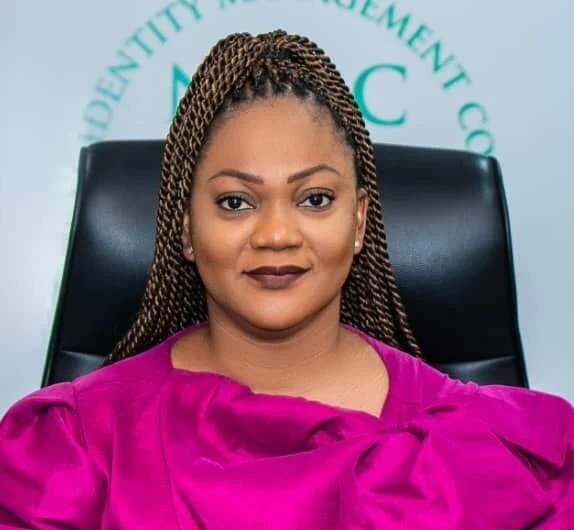
After Abisoye Coker-Odusote, Director-General of the National identification Management Commission (NIMC), explained why terrorists and kidnappers are not always traceable despite the nation’s growing digital identification infrastructure, the topic came up again.

During a monitored appearance on Sunday Politics on Channels Television, Coker-Odusote stated that thieves often obstruct investigations by utilizing their victims’ cell phones rather than their own registered lines.

“We already know that the NIN is the fundamental identification for the security architecture, yet you frequently discover that the kidnappers utilize the victims’ phones. So, because they aren’t using their own phones, how can you track them down?” she said.

She added that Nigeria’s identity database might not even include all of the criminal components involved in abduction operations.

According to a belief, it’s probable that these kidnappers are not Nigerians and are brought into the nation 48 or 72 hours prior to the actual kidnapping. They would obviously not be included in our database if that were the case, but I’m not implying anything,” she continued.

Read Also: PFIPC Scandal: Security Operatives Arrest Adeyemi In Osun

The remarks have raised concerns about whether the NIN-SIM linkage has lived up to expectations beyond what the system was intended to provide.

In order to improve identity management, do away with anonymous SIM ownership, and promote national security, the Nigerian Communications Commission (NCC) and NIMC launched the NIN-SIM linking program.

Millions of customers linked their SIM cards to their NIDs as a result of the exercise over time, and telecom companies canceled millions of lines that did not adhere to regulations.

The NCC had previously insisted that the policy was intended to increase identity verification, facilitate security authorities in criminal investigations, and enhance the integrity of Nigeria’s SIM registration database.

The exercise is a crucial part of the nation’s digital economy and national security framework, according to the regulator.

Telecommunications companies have consistently insisted that they are not in charge of tracking criminals, even though they are essential to the implementation of the NIN-SIM linking policy.

Gbenga Adebayo, Chairman of the Association of Licensed Telecommunications Operators of Nigeria (ALTON), repeatedly clarified during the exercise’s nationwide execution that telecom operators only carry out the NCC’s directives, with the NIMC handling identity verification and validation.

He claims that while operators provide subscriber data for verification, the NIMC platform is where National Identity Number authentication actually takes place. Before impacted subscribers can be cleared in cases of delays or unsuccessful validations, operators rely on NIMC’s responses.

Adebayo had also mentioned that the main goals of the NIN-SIM harmonization operation were to reduce the use of anonymously registered phone lines for illegal activities and to sanitize the subscriber database by guaranteeing that each active SIM is linked to a verified identity.

His stance emphasized the difference between identifying the person behind a SIM card and security services’ duty to use available intelligence and telecommunications data to look into crimes.

The NIMC’s most recent explanation supported the commission’s long-standing stance that the NIN is essentially an identity management system rather than a stand-alone surveillance platform, even if it acknowledged some of the practical constraints facing investigators.

Numerous public and commercial sector activities, such as banking, passport applications, driver’s license processing, telecommunications services, and access to other government programs, use the National Identification Number as a distinct digital identity.

According to Coker-Odusote, cooperation between security agencies, telecom companies, and other pertinent organizations is just as important to the system’s ability to prevent crime as identity verification.

Rotimi Akapo, a telecom lawyer and regulatory specialist, agrees, saying that assumptions regarding the NIN-SIM connectivity have frequently been misinterpreted.

Akapo claims that rather than acting as a stand-alone remedy for Nigeria’s security issues, the project was primarily created to address an identity verification issue by guaranteeing that each SIM card is connected to a verifiable individual.

He stated that although the policy increases accountability within the telecommunications ecosystem, identity theft, fraudulently registered SIM cards, proxy registrations, and other vulnerabilities can still be exploited by criminals if security agencies are unable to effectively use available intelligence. “NIN-SIM linkage solves an identity problem, not a crime problem,” he said.

His perspective is consistent with the overarching goal of the Identification for Development (ID4D) initiative, which is funded by the World Bank and defines digital identification as the fundamental infrastructure that allows individuals to demonstrate their identity in order to obtain services from the public and private sectors. In that context, security is not the only goal of the national identity system, but rather one of many use cases.

The remarks support the claim that although the NIN-SIM linkage has greatly improved subscriber identity verification, successful criminal investigations based on identity data require efficient cooperation between telecom companies, security agencies, and other organizations within Nigeria’s security architecture.

The most recent rationale is given in the context of ongoing kidnapping cases in various regions of the nation despite the NIN-SIM policy’s widespread deployment.

Many Nigerians anticipated that it would be simpler to locate and capture criminals using mobile phones to negotiate ransom payments as a result of the required connection activity.

Security operations, however, are frequently more complicated.

Subscriber records would naturally identify the victim rather than the abductor if kidnappers used the victims’ phones during ransom discussions. Investigators must integrate identify information with other intelligence tools and operational capabilities in such circumstances.

In a same vein, the NIN cannot prove the identities of members of criminal networks who are not registered in Nigeria’s identification database without additional security and immigration intelligence.

The National Identification Number is intended to serve as Nigeria’s fundamental digital identity system, going beyond security.

Foundational identity systems are platforms that allow people to safely prove who they are in order to access public and private sector services, according to the World Bank-backed Identification for Development (ID4D) program, which has helped Nigeria expand its digital identification.

The NIN is now the foundation for identity verification in Nigeria’s banking, telecommunications, passport applications, tax administration, social intervention programs, and other government services. Rather than being the platform’s exclusive goal, security is one of many potential uses.

The effectiveness of the NIN-SIM linkage in combating kidnapping or terrorism ultimately depends on how well identity information is integrated with law enforcement, intelligence gathering, and other national security systems, according to this broader mandate, even though it can strengthen accountability by linking every active SIM card with a verified identity.

The government’s recent initiatives show that the identification ecosystem is still developing.

President Bola Tinubu has instructed NIMC to expedite Nigerians’ enrollment in the national identification database, citing digital identity as essential to planning, governance, and service provision.

Coker-Odusote claims that the commission is bolstering biometric verification throughout government services and increasing membership through collaborations under the Identification for Development (ID4D) program, which is funded by the World Bank. Additionally, she said that during SIM registration, telecom companies now instantly verify facial biometrics against the NIMC database.

The most recent discussion emphasizes a crucial contrast between identity management and crime prevention as Nigeria works to improve its digital public infrastructure.

The NIN-SIM linking has decreased anonymous SIM ownership and greatly enhanced subscriber identification verification. However, the continued prevalence of kidnapping indicates that sophisticated criminal activity cannot be prevented by digital identification alone.

Instead, how well identification information is integrated with intelligence collecting, telecommunications data, law enforcement activities, and other components of Nigeria’s larger security architecture will ultimately determine how effective it is.

PFIPC Scandal: Security Operatives Arrest Adeyemi In Osun

0

The Nigeria Police Force has arrested Prince Adeniyi Adeyemi, the self-styled director-general of the allegedly fictitious Presidential Foreign Investment Promotion Council (PFIPC) hours after a Federal High Court in Abuja issued a bench warrant for his arrest over allegations of forgery, fraud and impersonation.

Adeyemi was arrested on Tuesday by operatives of the Intelligence Response Team (IRT) in Osun State, police sources confirmed. He was subsequently transferred to Abuja, where he would be held until his arraignment before the Federal High Court on 30 September.

The public relations officer of the Force, CSP Anietie Okokon Edem Iniedu, confirmed the development, saying Adeyemi was arrested in compliance with the court’s directive.

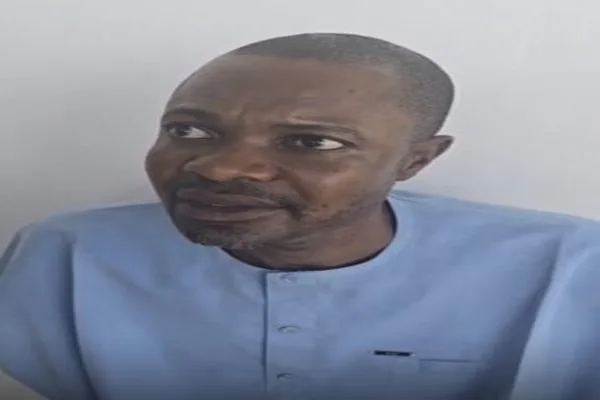
A video that circulated shortly after the operation showed Adeyemi dressed in a light blue traditional outfit and surrounded by armed security operatives.

When asked to identify himself, he first refused to give a straight answer. I have said, sir,” he said to the officers. The operatives kept asking him what his name was. “What’s your name? One officer demanded, “Say it for us, will you?” “I have said it many times,” Adeyemi said.

Justice Mohammed Umar of the Federal High Court in Abuja ordered the arrest of Adeyemi after he failed to appear for his scheduled arraignment on an eight-count charge of forgery, fraud and impersonation, marked FHC/ABJ/CR/562/2025.

The arrest warrant was granted following an oral application by the prosecution counsel, Mr Wisdom Madaki, that the defendant had repeatedly frustrated the commencement of his trial by continuously absconding from court.

“This is the fifth time this case is coming up and all the adjournments have been at the instance of the defendant,” Madaki told the court.

The prosecution urged the court to issue a warrant of arrest to compel Adeyemi’s attendance in accordance with Section 394 of the Administration of Criminal Justice Act (ACJA), 2015.

The defendant did not appear, but his lawyer Mr Genesis Francis announced appearance on the defendant’s behalf and opposed the application.

Francis said Adeyemi’s absence was borne out of security concerns rather than an attempt to evade justice.

His client had appeared in court on May 16, but the matter was adjourned, he said. However, subsequent developments had put him at risk of serious threats, he said.

Since then this case has become of public importance and there have been many threats to his life,” the defence counsel said.

“The defendant fears for his life. He must be alive to stand trial. “They have been looking for him without even an order of court,” argued the lawyer.

But, justice Umar held that the court record showed that the defendant was consistently absent.

The judge observed that Adeyemi had appeared before the court only once considering that the charge was filed on 27 November 2025 and the proceedings started on 4 December 2025.

He has since failed to appear in this court on four consecutive dates,” the judge ruled before issuing a warrant for his arrest and production in court by security agencies on 30 September for arraignment.

Adeyemi was taken to Abuja after his arrest in Osun State and is expected to remain in police custody ahead of his court date on 30 September.

The prosecution has also lined up several prominent witnesses who are expected to testify during the trial.

They include the Chief of Staff to the President, Mr Femi Gbajabiamila, Paul Emmanuel, Jeremiah Imoukhede, Ituah Sylvester, officials of the Office of the Accountant-General of the Federation, Akimbo Shola and Adamu Balongu, and a Deputy Superintendent of Police involved in the investigation.

Police investigations said Adeyemi hatched an elaborate scheme involving forged appointment letters and official government documents to make it look like the PFIPC was a legitimate federal agency.

The investigation, according to the investigators, commenced following a petition by the Office of the Chief of Staff to the President to the Inspector-General of Police on 17 October 2025, on the alleged forged appointment letters purportedly issued by the office.

The petition alleged that the forged documents contained false signatures, reference numbers, official seals and the Nigerian Coat of Arms and that the documents were used to appoint persons to the purported Council.

The investigators further alleged that Adeyemi masqueraded as the director-general of the PFIPC and operated from an office in the Federal Secretariat Complex, Phase III, Abuja.

Prior to his arrest, Adeyemi had given an interview, denying evading security agencies, insisting that he only went into hiding over alleged threats to his life.

“I am ready to show my face,” he said in an interview on Channels TV. I’m not hiding. I fear my life only because I have good evidence that my life is in danger.” “There have been multiple attempts on my life.

Adeyemi also cited the death of one of his associates, Dolapo Babatunde Tanimola, who allegedly died in a hotel fire in Abuja, as his reason to stay away from the limelight.

He said Tanimola was a key intermediary in the PFIPC controversy and the circumstances surrounding his death had further heightened concerns for his own safety.

He also repeated his controversial claim that he paid N400 million through a proxy to Gbajabiamila to secure his appointment as director-general of the PFIPC.

He said those who financed the alleged payment have petitioned the Economic and Financial Crimes Commission (EFCC) to get their money back.

Adeyemi has always denied that the PFIPC is a fictitious organisation.

In an open letter to President Bola Tinubu, he called for the setting up of an independent multi-stakeholder investigation panel into the issues surrounding the council and the alleged plan to allocate N1.3 billion to it in the 2026 Appropriation Bill.

He said he would produce documentary evidence and co-operate with investigators if such a panel was fully constituted.

Adeyemi said the panel should include representatives of civil society organisations, the Nigerian Bar Association (NBA), independent media organisations, international financial institutions, human rights organisations, diplomatic missions, the Independent Corrupt Practices and Other Related Offences Commission (ICPC) and the Economic and Financial Crimes Commission (EFCC).

Meanwhile, President Bola Tinubu has ordered ICPC to investigate all claims and counterclaims over the alleged fake agency.