Home Blog

Why The Proposed NYSC Reform Faces Growing Criticism

0

The National Youth Service Corps (NYSC) program has been Nigeria’s finest institutional barrier against ethnoreligious division since its post-bellum beginnings in 1973. Its major mandate has unquestionably been the fusion of cross-cultural integration; it is known to have been developed with the objective of healing fragmented polity. However, the Federal Executive Council’s (FEC) recent acceptance of extensive reforms raises the possibility of drastically altering this cherished plan.

Based on a thorough analysis and observation, it appears that these proposed reforms would commercialize the NYSC scheme’s structural goals, introduce elitist taxonomies through skill-based deployment, and methodically destroy its fundamental paramilitary ethos. These changes will make the plan outdated at the expense of the country’s socio-political balance rather than upgrading it as suggested.

Additionally, the revisions aim to double the customary three-week orientation session to an enormous six-week duration in an act of extreme logistical negligence. This time, inflation is clearly intolerable in terms of both military and the economy. Nigeria’s financial reserves would be severely impacted by the cost of housing, feeding, and providing medical care for millions of graduates for an additional three weeks, given the country’s current hyperinflation.

Beyond the apparent socioeconomic burden, however, a closer examination of this program indicates that this extension will cause severe curriculum weariness because it is a redundant reproduction of tertiary education objectives. This is due to the fact that it turns what ought to be a sharp, intense, and cohesive socialization process into a boring board room presentation. The orientation experience has always been characterized by physical discipline and liveliness, yet this policy was created by committees with limited vision.

The complete separation of the Directorate-General from the military hierarchy is arguably the most concerning and hazardous institutional change in the authorized reforms. The substitution of civilian operational leadership for the conventional military officer leadership is a structural error of enormous dimensions. It is crucial to realize that the military leadership model was a requirement for logistical effectiveness and structural discipline in a setting beset by systemic instability in order to fully appreciate the seriousness of this blunder.

It is an invitation to operational dysfunction to expect a civilian bureaucracy to manage the intricate, multi-state deployment of hundreds of thousands of young people across unstable areas while simultaneously depending on an externalized military apparatus for security. This duality of leadership creates a point of friction where crucial decisions pertaining to the safety of corps members will unavoidably become mired in bureaucratic delay.
Additionally, the NYSC’s institutional gravity is significantly diminished by the demilitarization of the leadership position. When orientation camps or corps lodges encounter unexpected security threats from criminal elements, a civilian Director-General lacks the inherent tactical authority and direct structural leverage within the national security apparatus to command immediate, high-level defensive responses, given the current state of Nigeria’s security architecture.

“Are our children safe?” is a question that will begin to sneak into the hearts of parents and guardians. I think the Nigerian government would wish to deal with the surge of terrorist and bandit attacks on camps.

Additionally, the erosion of NYSC identity by substituting a cultural Adire Uniform for the sophisticated and rugged khaki is another bogus alteration to be aware of. Symbols serve as the cornerstone of institutional coherence and are utilized to symbolize national identities all over the world. In a unique way, the classic khaki uniform functions as a radical socioeconomic equilibrium. When both a graduate from a wealthy university and a graduate from a poor rural village wear the khaki uniform, they are seen as being on an equal footing. Socioeconomic differences are eliminated when wearing khaki, and a common identity that serves the country as a whole takes its place.

However, the adoption of Adire cloth, which is native to the Yoruba ethnic group, in favor of the practical khaki uniform signifies a risky transition from functional egalitarianism to shallow cultural commodification. While it is admirable to honor indigenous textile companies, including Adire into the main uniform will undermine the corps’ tradition, uniform, and conformity.

Furthermore, personalized personalization and disunity will unintentionally be made possible by this Adire clothing. Due to its handcrafted nature, adire is prone to differences in texture, tint, and quality, which unintentionally allows for individual customization and class differentiation. Since Adire clothing obviously doesn’t reflect his culture, other ethnic groups can feel excluded and uneasy about its widespread use.

Additionally, it is a reckless decision to replace the famous passing-out parade (POP) with a “formal graduation ceremony,” depriving the NYSC of its extremely touching, long-standing ritual of group perseverance. A typical graduation celebration just mirrors the academic elitism the graduates have just left behind; the procession was a tangible representation of discipline, solidarity, and shared national victory.

The shift to a “skills-based deployment” paradigm is the most pernicious aspect of these reforms. According to the policy, rather than using general national postings, graduates will henceforth be deployed depending on their academic credentials and chosen career paths. This is a total reversal of the NYSC’s primary purpose.

Forcing young people to leave their cultural comfort zones was the main goal of the 1973 mandate, which sent Northern graduates to the coastal reality of the South and Southern graduates to rural villages in the North. Interethnic marriages, pan-Nigerian commercial networks, and enduring cultural empathy were all made possible by this intentional breakdown of geographic insularity.

The system will automatically direct top-tier engineering, medical, and finance graduates into major metropolitan economic hotspots like Lagos, Abuja, and Port Harcourt by linking deployment to job streams. In this instance, Nigerians will soon witness the relegation of graduates from less capitalized disciplines to rural areas, while the urban class will benefit from an influx of high-end professionals. Additionally, underprivileged areas will use the rural educational labor class as inexpensive supplemental teaching labor. Economic segregation will take the place of cross-cultural mixing, creating opportunities for political manipulation. The program has a risky dual-class caste system that the FEC has only accepted.

National youth service frameworks around the world are only successful when they preserve complete structural clarity, according to a comparative institutional analysis. Diluting the command structure degrades institutional efficacy, as demonstrated by the high-intensity military and civic hybrid model employed by countries such as Israel, which depends on extreme social equality and unwavering operational discipline. On the other hand, pure civilian professional distribution schemes, such as Ghana’s National Service Scheme, are ill-suited for a multiethnic, post-conflict democracy like Nigeria because they only address economic inadequacies rather than cross-cultural mandates.

The attempt to create a complex hybrid—an administrative chimera that attempts to be a corporate job placement agency, a cultural fashion show, and a paramilitary security outfit all at once—is where the FEC changes went wrong. It guarantees that nothing will be accomplished successfully by attempting to do everything.

examining the demilitarization of NYSC leadership, the removal of the khaki uniform, the lengthening of camp, and the split caused by career-stream deployment. The recent approval of “NYSC reforms” by the Federal Executive Council (FEC) is nothing more than an alluring lexicon of modernization and youth empowerment, and it poses a serious threat to national unity. The bridge that has supported Nigeria’s flawed lines for decades is being dismantled by the Federal Executive Council.

These disruptive changes must be immediately stopped in order to move forward. Reforming the plan is necessary, but not from a corporate opportunist perspective. By strengthening camp perimeters, improving intelligence sharing between corps networks and state security agencies, guaranteeing strong financial renovation through inflation-adjusted allowances, and upholding the blind, random geographic deployment matrix that compels a diverse youth population to discover a shared national identity, true reform must concentrate on radical security infrastructure.

The NYSC will no longer serve as a tool for fostering national unity if these present reforms go unchecked. Instead, it will turn into a bloated, highly stratified corporate seminar, endangering Nigerian unity in the long run.

President Tinubu Vows To Strengthen Nigerian Army As Security Threats Grow

0

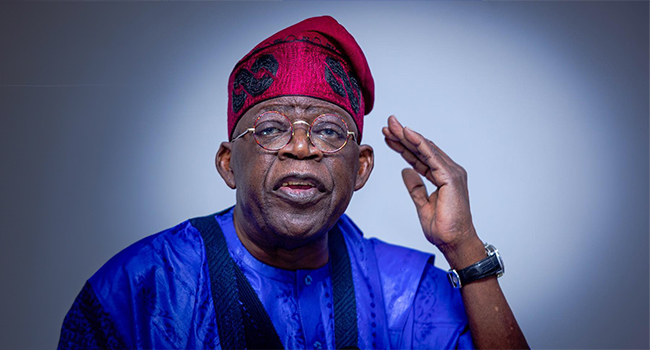
President Bola Tinubu has reiterated his administration’s commitment to repositioning and strengthening the Nigerian Army as the country grapples with rising security challenges.

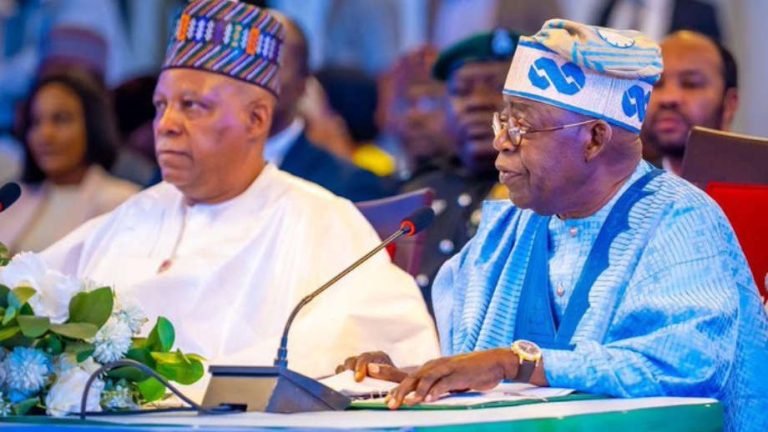
The President made the declaration at the end of the 163rd Nigerian Army Day Celebration, which took place on Monday at the Yakubu Gowon Stadium in Port Harcourt, Rivers State.

Tinubu, who was represented by Vice President Kashim Shettima, said his administration would modernize the Nigerian Army by deploying emerging technologies and strengthening operational capabilities across all theatres of operation to improve military planning, combat readiness and the nation’s response to evolving security threats.

“My administration is fully dedicated to addressing modern threats through the use of emerging technologies and the development of capacity across all battle spaces, enhancing operational planning and readiness,” he said.

He pointed out that the investment in R&D in the Armed Forces and the drive for technological advancement and indigenous innovation are picking up steam.

He said that the revitalisation of the Defence Industries Corporation of Nigeria, DICON, is at the heart of this drive, with the forum’s partnership expected to inject fresh momentum into local defence manufacturing, create skilled jobs and strengthen Nigeria’s capacity to support counter-terrorism operations through indigenous production.

He also welcomed the creation of the African Land Forces Forum, which he said would be a platform to boost security cooperation across Africa.

“This administration is committed to modernising our Army to enhance its capacity to meet contemporary security challenges,” Tinubu said, adding that his government shares the aspirations of the forum’s organisers to raise Nigeria’s standing in defence diplomacy and enhance the Army’s combat readiness through shared expertise.

The President lauded the Nigerian troops for their sacrifices in safeguarding the territorial integrity of the nation and assured that the Federal Government would continue to support the families of personnel that lost their lives in the course of duty.

To the officers and men of the Nigerian Army, you bear a trust that few are asked to carry and you carry it with an honour that steadies the whole nation.

“Treat the people with the same care you show in defending them, for the uniform only commands respect when it protects the weak and upholds the dignity of every citizen,” he added.

Also speaking, Governor of Rivers State, Siminalayi Fubara, commended the Nigerian Army for its remarkable strides in technological advancement and manpower development.

He said the institution had his administration’s support and called for improved welfare for soldiers, saying better conditions of service would make them more effective in the performance of their duties.

The Chief of Army Staff, Lieutenant General Waidi Shaibu, in his welcome address said this year’s celebration is coming at a critical period as over 80 per cent of Nigerian soldiers are currently involved in operations against insurgency and other security threats across the country.

The Army has grown and changed with the nation over the decades, he noted, adapting to new realities and taking on more responsibilities to defend the country.

Shaibu said the Army was aware of the infiltration of jihadist groups from neighbouring countries and assured Nigerians that troops were fully prepared to confront and defeat the threat.

He said the Army is an institution based on selfless service, loyalty, honour, courage and sacrifice, saying the Army remains committed to the defence of Nigeria’s sovereignty, territorial integrity and protection of the lives and aspirations of its citizens.

He described the anniversary as a renewal of the Army’s dedication to national service. “This celebration is also a reaffirmation of our commitment to protecting the nation and serving the people, regardless of the challenges of any era,” he said.

The Army is closely monitoring the deteriorating security situation in the Sahel region, he added.

“We’ve already seen the footprints of foreign jihadists across our borders. However, I want to assure all of us that the Nigerian Army is alert and up to the task.

“Just as our forefathers successfully confronted the security challenges of their generations in the two World Wars, the Nigerian Civil War and the ECOMOG missions the Nigerian Army of today will definitely triumph in confronting the security challenges of our generation,” Shaibu said.

This year’s Nigerian Army Day Celebration was held under the theme, “Protecting the People and Serving the Nation: A Way Forward for the Nigerian Army.

There were also parades of the Army’s corps and departments and demonstrations of land and aerial combat capabilities.

Among the dignitaries in attendance were the Minister of Defence, the Chief of Defence Staff, the Chief of the Naval Staff, the Chief of the Air Staff, former President Olusegun Obasanjo, former Head of State Yakubu Gowon, retired service chiefs and Army chiefs from several African countries.

Peller Released On N500,000 Bail After Facing Charges Of Allegedly Threatening Police Officers

0

A Lagos Magistrate Court has granted bail of ₦500,000 to TikTok content creator, Habeeb Hamzat, popularly known as Peller, and his accomplice, Bello Oladipo, who were arraigned over an allegation of obstructing police officers during an operation.

The report said the pair pleaded not guilty to the charges preferred against them by the Lagos State Police Command and were granted bail by the court.

They were required to provide two sureties, one of whom must be a blood relative.

The court further directed them to produce their tax clearance documents for two years before the bail conditions could be fulfilled.

The case was then adjourned to 11th August for further hearing.

Linda Ikeji reports that the charges against Peller and Oladipo were brought after an occurrence on July 2 along Coastal Road, Lekki, Lagos, when police officers allegedly stopped the TikTok star over a car said to be driving without number plates.

It was reported that Peller told the officers that the vehicle was newly bought, but the officers insisted he should follow them to the station.

Things then took a turn for the worse when the content creator started recording the interaction with his phone.

The TikTok personality later accused the officers of acting aggressively during the incident, but the police command dismissed the claims and filed charges against him and his associate.

The pair are also charged with resisting police officers, preventing officers from carrying out their duties and acting in a manner which could lead to a breach of the peace.

Federal Government Launches National Laureate Committee, Introduces Yearly Student Research Award

0

The Federal Government on Monday inaugurated the Tertiary Institutions National Laureate Committee in what education stakeholders described as one of Nigeria’s most ambitious efforts to reposition scholarship, innovation and research as national priorities.

“The Committee will introduce a new annual awards programme to reward outstanding undergraduate, master’s and PhD research with prizes worth about N365 million.

The Minister of Education, Dr Tunji Alausa, inaugurated the Committee at the Digital Resource Centre, Universal Basic Education Commission (UBEC).

The committee is charged with the oversight of the implementation of the National Laureate Programme, a flagship initiative to bring academic excellence to the highest level of national recognition.

It will also foster research commercialisation and innovation in Nigerian accredited post-secondary and tertiary institutions.

Speaking on the inauguration exercise, Dr Alausa said the programme was a conscious effort by the Federal Government to re-jig the country’s reward system.

It will put scholarly achievement, scientific discovery and innovation alongside other nationally celebrated accomplishments, he says.

The Minister add that the initiative is expected to inspire a new generation of young Nigerians to pursue researches that can solve real world problems, create new industries and enhance the nation’s global competitiveness.
He said: “The ability to turn knowledge into economic value will be increasingly important in determining the future prosperity of nations.

He said Nigeria must consciously celebrate intellectual achievement if it wants to build a globally competitive knowledge economy.

The Federal Government found it necessary to establish a national platform in an era dominated by the social media-driven “attention economy,” Alausa said. The platform will reward creativity, scholarship, invention and commercially valuable research, especially among young people.

The newly inaugurated Committee is headed by the President, Nigerian Academy of Science, Professor Abubakar Sambo.

Other names are Professor Solomon Nwhator, Obafemi Awolowo University, Ile-Ife; Professor (Mrs) Tolulope Ariyomo, Federal University, Oye-Ekiti; Professor Francis F. Uba, Federal University of Health Sciences, Otukpo; Dr Babangida Abubakar Albaba, representing National Board for Technical Education (NBTE) and Dr Salihu Bakari Girei representing Tertiary Education Trust Fund (TETFund).

Others are Professor (Mrs) Carol Arinze-Umobi of Nnamdi Azikiwe University, Awka; Dr (Mrs) Obianuju Anigbogu, Federal Ministry of Education; Mr Francis Egbokare, Nigerian Academy of Letters; Dr Ezinne Orisakwe, National Universities Commission (NUC) and Dr Pius O. Ekireghwo, National Commission for Colleges of Education (NCCE).

Also, the Secretary of the Nigeria Education Repository and Databank (NERD), Mr Richard Falaye, is to act as Secretary to the Committee.

The first National Laureate Awards will be held in November 2026. The awards will honour the country’s top Undergraduate Dissertations, Master’s Theses and Doctoral (PhD) Theses, in addition to six thematic Excellence Awards.

The thematic categories are Medicine and Health Sciences, Engineering and Technology, Agriculture, Law, Arts and Social Sciences and Teaching Innovation.
The approved prize structure sees the winner of the Undergraduate Dissertation category taking home N35 million, while the best Master’s Thesis will attract N50 million. The overall winner in the Doctoral (PhD) category goes home with N100 million.

Also, six National Laureate Excellence Awards to the tune of N30 million each shall be given annually.

That will bring the programme’s total prize pool to an estimated N365 million annually.

The Minister also announced the setting up of the Dr Stella Adadevoh Excellence Award in Medicine and Medical Innovation. The late physician, whose leadership during the 2014 Ebola outbreak averted a national public health catastrophe, is the recipient of one of the programme’s special awards.

He also asked the Committee to complete its work on eligibility criteria, evaluation procedures and institutional engagement in good time to ensure successful hosting of the inaugural awards in November.

Dr Alausa also seized the opportunity to commend Engr Olatunji Ariyomo, Chairman of NERD, for his innovative contributions to transformative interventions in Nigeria’s education sector.

The Chairman of the Committee, Emeritus Professor Abubakar Sambo, speaking for the Committee, said the initiative was a historic turning point in the country’s education policy. He commended the administration of President Bola Ahmed Tinubu for putting academic excellence and research at the heart of national development.

“The Committee will ensure the highest standards of transparency, fairness and merit in the selection process,” Professor Sambo assured.

He commended Dr Alausa for spearheading a national revolution to reward and promote innovation and its commercialisation, assuring that every eligible student irrespective of institution and geographical location would have equal opportunity to attain National Laureate status.

He said the process would be protected from institutional preference and other outside influences.
He also said he believed the National Laureate Programme could be one of the most consequential reforms in Nigeria’s tertiary education landscape if it is successfully implemented.

The committee argues the initiative signals a shift away from national priorities of social media celebrity culture towards a deliberate recognition of ideas, discoveries and innovations capable of driving economic transformation, over and above its substantial prize fund.

The programme is expected to foster deeper collaboration between universities, polytechnics, colleges of education, industry and government as well as create stronger incentives for commercially viable research and position Nigeria to compete more effectively within the global knowledge economy.

PDP Calls For Forensic Investigation Into Gbajagate, Raises Presidential Oversight Concerns

0

The Tanimu Turaki led faction of the Peoples Democratic Party (PDP) has demanded for an independent forensic investigation into the controversy surrounding the alleged activities of the Presidential Foreign Intervention Promotion Council (PFIPC).

It described the development as evidence of institutional failure, negligence and poor oversight within the federal government.

The opposition party, in a statement issued on Sunday by its National Publicity Secretary, Ini Ememobong, said the allegations involving the Chief of Staff to the President, Hon. Femi Gbajabiamila and the Presidency’s response, had raised serious questions about accountability, transparency and presidential oversight.

The controversy arose from claims by Prince Adeniyi Adeyemi Matthew, who identified himself as Director-General of the PFIPC), that financial inducements were demanded and received in connection with his appointment and the operations of the council.

But the Presidency, through presidential spokesman Bayo Onanuga, debunked the allegations and described both the PFIPC and the Presidential Economic Advisory Council (PEAC) as fictitious bodies, claiming that Adeyemi forged official documents and unlawfully paraded himself as a government appointee.

Reacting to the development, the PDP said the Presidency’s explanation only deepened concerns about the integrity and effectiveness of government institutions.

If Adeyemi indeed operated as an impostor, the party said, it would be a monumental failure of state institutions, raising questions as to how an unauthorised individual could allegedly secure office accommodation, have personnel attached to his office, obtain budgetary provisions, operate accounts linked to official institutions and engage with agencies like the Economic and Financial Crimes Commission (EFCC) and other security bodies.

The opposition party argued that such a scenario would reveal glaring weaknesses in internal controls, background checks and oversight mechanisms within the nation’s highest offices.

It also argued that if the alternative account is correct, that financial considerations were behind appointments into the PFIPC, then the matter would represent another major corruption scandal that needs urgent investigation and accountability.

The PDP said either result was damaging to public confidence and indicative of what it called a persistent pattern of administrative failures on the part of the current administration.

The party referenced past controversies over government appointments and other governance-related incidents, insisting that they reveal deeper institutional deficiencies within the federal system.

It said any responsible administration faced with allegations of such magnitude should immediately order an independent forensic investigation, suspend officials directly involved with the matter pending the outcome of investigations, and institute systemic reforms to prevent the recurrence of such and give Nigerians a full and complete explanation.

The opposition party specifically called on President Bola Tinubu to order a forensic investigation by a reputable international firm, announce the suspension of key officials linked to the controversy, embark on a comprehensive reorganisation of structures within the Presidency and issue an unreserved apology to Nigerians over what it described as a deeply embarrassing development.

The controversy has heightened concerns about presidential oversight and the effectiveness of mechanisms designed to safeguard public institutions from abuse, infiltration and administrative failures, according to the PDP.

The party insisted that Nigerians deserve a government built on transparency, competence and accountability, asserting that only a credible and open investigation would restore public confidence in state institutions.

It said until the government shows willingness to hold public officials accountable, recurring controversies would deepen citizens’ distrust and empower calls for a more responsible and effective system of governance ahead of the 2027 general elections.

INEC Portal Update: APC Submits Uzodimma, Buni, Others’ Details, Sets Date For Tinubu And Running Mate

0

The All Progressives Congress (APC) has said it is on course to meet the Independent National Electoral Commission’s (INEC) deadline of July 11 for the submission of its presidential and National Assembly candidates for the 2027 general elections.

According to a senior member of the party’s National Working Committee, who pleaded anonymity, the uploading of candidates’ details had gotten to an advanced stage.

The source disclosed that details of President Bola Tinubu and his running mate were expected to be uploaded to the INEC portal by the middle of the week.

“We are uploading the details of our National Assembly candidates smoothly,” the source told The Nation.

“We expect that on or before next Wednesday, we shall upload the particulars of President Bola Ahmed Tinubu and his running mate. We are fully confident of meeting the July 11 deadline for uploading all our candidates on the INEC portal.”

Checks at the APC’s Information and Communications Technology department at the Muhammadu Buhari House national secretariat in Abuja on Sunday indicated that the party’s technical team had been interacting with the INEC portal without interruption.

The details of most principal officers of the 10th National Assembly and some serving lawmakers have already been uploaded, sources in the department said.

They added that the details of four serving governors – AbdulRahman AbdulRazaq, Kwara State; Mai Mala Buni, Yobe State; Hope Uzodimma, Imo State and Dapo Abiodun, Ogun State – had also been uploaded to the electoral commission’s portal.

The governors are among the prominent members of the All Progressives Congress (APC) that selected the party’s senatorial tickets ahead of the 2027 general elections.

The race to beat the INEC deadline followed a review of the APC’s primary elections after hundreds of petitions were filed by aggrieved aspirants.

The party recently submitted a revised list of candidates to the INEC after its NWC had dropped six senatorial and 19 House of Representatives candidates who had earlier emerged from the May primaries.

The changes touched constituencies in Abia, Kogi, Taraba, Benue, Ebonyi, Ondo, Kaduna, Niger and Kwara states.

The substitutions came on the back of recommendations by the party’s Primary Election Appeal Committee.

A letter conveying the revised list was sent to INEC and signed by the APC National Chairman, Prof. Nentawe Yilwatda, and the National Secretary, Ajibola Basiru.

The APC National Publicity Secretary, Felix Morka, said the ruling party received more than 700 petitions from aggrieved members after the conclusion of its primaries.

After their shadow elections, the party got over 700 petitions from aggrieved members, Morka said.

The party’s leadership then studied the recommendations that had come from the petitions, leading to some constituency changes while candidates who successfully defended their victories through the appeal process kept their tickets.

Morka refused to say when the APC’s final list of candidates would be published.

“The party’s immediate priority is to ensure that all approved candidates complete and return their INEC Form EC9 nomination documents before the deadline,” he said.

“Our immediate absolute priority now is to ensure that our designated candidates properly complete and return their Form EC9 nomination documents for uploading before the INEC deadline rather than releasing the list to the public,” he said.

While there were some changes that resulted from the appeal process, many of the major APC figures kept their tickets, including sitting governors, who want to go to the Senate in 2027.

NiDCOM Chairman Calls For Better Representation Of Nigeria Overseas

0

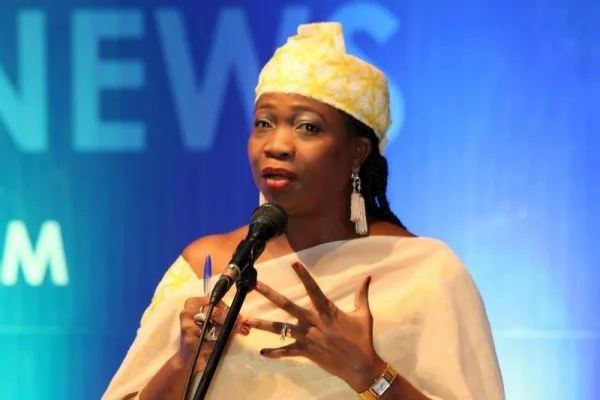
Chairman, Nigerians in Diaspora Commission (NiDCOM), Abike Dabiri-Erewa, has reiterated the need for Nigerians to always celebrate the country’s achievements and showcase its positive image, instead of dwelling on negative narratives.

Dabiri-Erewa made the charge while visiting two prominent Nigerians in the United Kingdom (UK), Christopher Adegoke, Chairman of Nottinghamshire County Council and Rosaline Oguro, recently sworn-in Mayor of Islington.

She called the election of Adegoke another testimony to the excellence, resilience and leadership qualities of Nigerians in the Diaspora.

Ogunro who received the NiDCOM boss in her office thanked her for the visit and urged Nigerians to continue to project the good image of the country wherever they found themselves.

Also, Dabiri-Erewa hailed the excellent academic performance of Dorcas Akanbi, a Nigerian medical graduate of Rostov State Medical University, Russia, who graduated with a stunning 4.90 out of 5.00 Cumulative Grade Point Average (CGPA) and Dr Monilola Adeshina, the Valedictorian and best graduating student of the Medical Class of 2026 of the Medical University of Silesia, Katowice, Poland.

Dabiri-Erewa said the feat was a demonstration of the brilliance, determination and global competitiveness of the Nigerian youths, adding that such accomplishments would continue to enhance the image of Nigeria on the international stage.

She commended all the four Nigerians for putting the nation on the world stage and urged other Nigerians abroad to continue to strive for excellence while being worthy ambassadors of the country.
Although no country is without its challenges, Dabiri-Erewa stressed the need for Nigerians to deliberately celebrate the country’s success stories and the positive impact its citizens continue to make globally.

She said the administration of President Bola Ahmed Tinubu had taken far-reaching reforms and critical infrastructural development steps towards repositioning the country for sustainable growth and national prosperity.

She therefore called on Nigerians in the Diaspora to sustain their support for national development by contributing their expertise, investments, skills and global networks towards the country’s progress.

Dabiri-Erewa reiterated NiDCOM’s commitment to engage and celebrate outstanding Nigerians abroad whose achievements continue to project the country’s image on the world’s stage.

Ten Killed, Six Hurt in Fatal Crash on Ibadan-Lagos Expressway

0

At least 10 people lost their lives while six others were injured in a fatal road accident that occurred on Sunday night at Saapade Bridge along the Ibadan-Lagos Expressway in Ogun State.

The crash involved a Sinotruk truck and a Toyota Hiace passenger bus, according to the Federal Road Safety Corps (FRSC).

The Ogun State Command of the FRSC said 18 people were involved in the accident, including 15 adult males, two adult females and one male child.

The agency confirmed that 10 victims—nine adult males and one male child—died in the collision, while six others sustained injuries. Two passengers escaped without injuries.

According to the FRSC, preliminary findings indicate that speeding, dangerous driving and wrongful overtaking contributed to the crash.

The agency explained that the truck driver allegedly attempted to reverse on the expressway after missing his route. The approaching bus, which was reportedly travelling at high speed, was unable to avoid a collision with the truck.

Emergency responders arrived at the scene shortly after the incident and evacuated the injured victims to Victory Hospital in Ogere for medical treatment. The bodies of those who died were taken to the FOS Mortuary in Ipara.

Police officers took custody of the damaged vehicles, while the accident scene was cleared to restore normal traffic along the highway.

Reacting to the tragedy, the Ogun State Sector Commander of the FRSC, Corps Commander Oludare Ogunjobi, extended condolences to the families of the deceased and urged motorists to comply with traffic regulations.

He cautioned drivers against reversing on highways, speeding and engaging in dangerous driving, stressing that adherence to road safety rules is essential to reducing accidents on Nigerian roads.

Agbese Supporter Urges Constituents to Back Lawmaker’s 2027 Re-election Bid

A supporter of the member representing Ado, Okpokwu and Ogbadibo Federal Constituency in the House of Representatives, Hon. Philip Agbese, has called on constituents to support the lawmaker’s re-election in the 2027 general elections.

In a statement, Lawrence Austine Otene said Agbese, popularly known as Okanga, has made notable contributions to constituency development since assuming office.

According to him, the lawmaker has facilitated projects in healthcare, education, rural infrastructure and youth empowerment across the constituency.

Otene also credited Agbese with supporting scholarship programmes, distributing educational materials, installing solar-powered streetlights in rural communities, rehabilitating primary healthcare facilities and improving access roads.

He further claimed that the lawmaker has facilitated employment opportunities for constituents through engagements with relevant government agencies, while also supporting micro, small and medium-sized enterprises (MSMEs).

The supporter argued that Agbese’s performance has earned him another opportunity to represent the constituency, saying continuity would help sustain ongoing development initiatives.

He maintained that returning the lawmaker for a second term would enable him to consolidate on existing projects and pursue additional programmes aimed at improving the welfare of residents.

The statement concluded with an appeal to voters in Ado, Okpokwu and Ogbadibo Federal Constituency to support Agbese’s re-election bid in 2027.

Agbese, a first-term member of the House of Representatives, represents the Ado, Okpokwu and Ogbadibo Federal Constituency of Benue State.

Delta Police Uncover Alleged Self-Kidnap Plot, Suspect Confesses to N25m Extortion Scheme

0

The Delta State Police Command says it has uncovered an alleged self-kidnapping plot after a man identified as Michael James reportedly confessed to faking his abduction in an attempt to obtain N25 million from his family.

The confession was contained in a video shared by the command’s spokesperson, SP Bright Edafe, who said investigators uncovered the scheme after launching an operation to rescue the reported kidnap victim.

According to James, financial difficulties prompted him to stage the incident after he was unable to repay money owed to his brother and sister.

He claimed that on July 1, he left home to dispose of refuse but abandoned his wheelbarrow and hid in a nearby bush instead of returning.

The suspect said he later contacted his mother by telephone, informing her that he had been kidnapped and that his abductors were demanding N25 million for his release.

He also claimed during subsequent conversations that he was being beaten by the kidnappers and requested that N700,000 be paid to them.

James said he later became frightened after learning that the police and local vigilante groups had begun searching for him.

According to his account, he eventually left his hiding place, travelled to another location on a motorcycle and later informed his family that he had escaped from his captors.

Commenting on the case, SP Bright Edafe said the police immediately activated intelligence-gathering measures after receiving the distress report.

He said officers traced the suspect to the location where he was supposedly being held, but he emerged claiming he had escaped before allegedly admitting that the kidnapping had been fabricated.

The police spokesperson said investigations into the matter are ongoing.

The incident is one of several reported cases in recent years involving alleged fake kidnappings staged to extort money from relatives amid Nigeria’s ongoing security challenges.