Home Blog

Tajudeen Abbas Dismisses Feud Rumours With Governor Uba Sani

0

Speaker of the House of Representatives, Abbas Tajudeen, has debunked speculations of a rift between him and Kaduna State Governor Uba Sani.

There have been speculations of disagreement between Abbas and governor Sani, generating heated exchanges among supporters on social media. It was understands

The speculation has fuelled debates among APC loyalists, with supporters of both leaders trading accusations and expressing concerns over the party’s cohesion in Zaria.

However, speaking to residents of Zaria on Sunday, Abbas assured party members and residents that he and the governor are still committed to working together to take the development of Kaduna State to the next level and to strengthening the APC.

He described their relationship as cordial, and based on mutual trust and common commitment.

Read Also: APC Accuses Gov Otti of Underpaying Workers as LP Fires Back

“There has not been any time that the Executive in Kaduna State and members of the National Assembly from the state have enjoyed the level of cooperation and understanding we are having today.

“The governor and I enjoy a close relationship based on trust, mutual respect and a common resolve to improve the welfare of our people through purposeful leadership and effective collaboration,” the Speaker added.

Abbas said that those who were trying to create misunderstanding between him and the governor would not succeed, stressing that their partnership remained focused on delivering democratic dividends and promoting inclusive development across Kaduna State.

“The office of the Speaker is a blessing not only to Zaria or Kaduna North Senatorial District, it is a blessing to Kaduna State as a whole.

Abbas said, “We are committed to providing services to all parts of the state fairly, justly and inclusively, ensuring that government programs and development projects reach communities without discrimination or political consideration.

The Speaker also called for sustained support for the administration of President Bola Tinubu, saying the President had demonstrated exceptional commitment to Kaduna State through projects and policies that would uplift the livelihood and development of the residents.

He said the people of Kaduna State owe Tinubu continued loyalty, cooperation and support to allow his administration to consolidate ongoing development efforts and deliver more democratic dividends across the state and country.

APC Accuses Gov Otti of Underpaying Workers as LP Fires Back

0

In the said letter, the APC alleged that some civil servants in the State were paid far below the approved N70,000 national minimum wage benchmark, as monthly salaries.

The letter signed by Uche Aguoru, Publicity Secretary, APC, Abia State chapter, also called on the Governor to address the unpaid gratuity of pensioners while criticising the delay in the implementation of allowance increase promised the members of the National Youths Service Corps, NYSC, who are serving in the State.

The party said:

“Also very disappointing was the widely published announcement made by your administration over a year ago promising to increase the monthly allowance of NYSC members serving in the State to N50,000.”

However, reacting to the APC letter, the leadership of the Labour Party, LP, in Abia State, accused the broom party of circulating desperate and blatant lies against Governor Otti’s administration on the welfare of civil servants and pensioners.

Read Also: El-Rufai’s Wife Raises Alarm Over 150 Days in Detention, Health Concerns

The LP, speaking through its Publicity Secretary in the State, Iroegbu Emenike, said the days when pensioners died in queues for their pensions were over in the State.

The LP claimed that members of the current APC in the State were among the people that allegedly set the State back for almost 30 years before Governor Alex Otti assumed office, adding that the APC did not have the face to write such an open letter to Governor Otti.

LP said that workers and retirees are receiving their monthly salaries and pensions, respectively.

The LP berated the APC over the delay in implementing the monthly allowance promises of the NYSC members, saying that the broom party failed to “understand that pronouncements by a Governor are followed by administrative procedures and policies before full implementation.”

El-Rufai’s Wife Raises Alarm Over 150 Days in Detention, Health Concerns

0

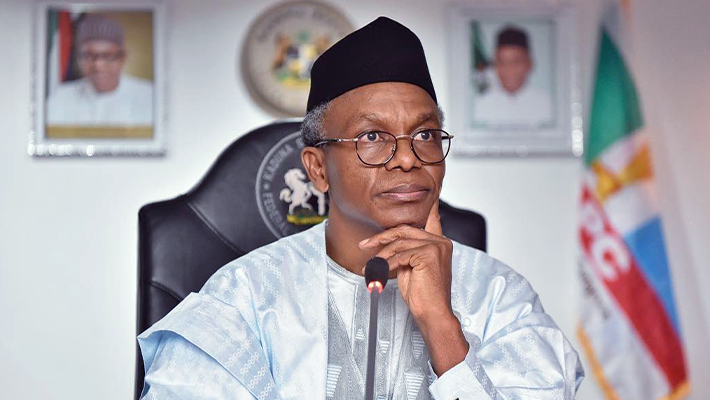
Asia Ahmad El-Rufai, wife of former Kaduna State governor, Nasir El-Rufai has called on the international community to intervene in what she described as the prolonged detention of her husband and denial of due process.

Lawyer Asia had argued that the continued incarceration of the former governor was tantamount to “punishment before trial” and was a threat to Nigeria’s democratic institutions.

In a public statement marking what she termed the 150th day of El-Rufai’s detention, Asia urged foreign governments, multilateral organisations and international human rights groups to closely monitor the legal proceedings involving her husband.

She said it not as a political actor but as a wife and mother looking for fairness for a member of her family.

Asia said the length of the alleged detention had taken a significant emotional and physical toll on El-Rufai and members of his family.

On the 150th day of Mallam Nasir El-Rufai’s detention, I ask readers outside Nigeria to ponder what that number means. One hundred and fifty days is not a term of art.

“It is five months of missed meals, missed prayers, missed proper mourning of his deceased mother, missed family conversations, interrupted medical care and moments we can never get back,” she said.

Asia acknowledged that her husband had been a controversial figure in his more than two decades of public service.

El-Rufai was previously Director-General of the Bureau of Public Enterprises, minister of the Federal Capital Territory and governor of Kaduna state.

“My husband is no stranger to controversy or the public eye. He has been lauded, reviled, loved and hated. That’s democracy.

“But what is happening to him today is neither democracy, nor accountability. “It’s punishment before trial,” she said.

Read Also: Kwankwaso Commends Peter Obi’s Integrity and Leadership Qualities

Asia said the ordeal began when security officials tried to intercept her husband at an airport, confiscated his passport without a warrant and attacked one of his aides.

She said El-Rufai later voluntarily honoured an invitation from the authorities but was detained despite assurances that he would be granted bail.

The unexpected invitation, his willing appearance before the authorities, the bail that was there on paper but not in freedom.

“There was the night he was transferred from one location to another with no warning and without the dignity of his family knowing where he was being taken,” she said.

Asia also claimed that the former governor fell seriously ill in custody, and was bleeding from the nose and mouth.

She said officials refused to provide him with proper medical care or allow his family to deliver medication that had been prescribed for him.

I still remember the helplessness of hearing that he had fallen gravely ill in custody, bleeding from his nose and mouth, while those responsible for his welfare were reluctant to provide the care any person deserves.

“I remember the anxiety of trying to get him his medication and the officials approving it,” she said.

“The detention has caused emotional distress to the family, who are still waiting for the legal process to take its course,” she said.

“These are not abstract breaches, “They are the moments that chip away at a family’s resolve and hope,” she stated.

Asia made clear she was not calling for her husband to be above the law and stressed that former public officials should be investigated if there were credible allegations.

But she said it was important that such investigations were carried out in a transparent manner and in line with constitutional safeguards.

If the state believes it has evidence, then let it be presented openly and fairly before an impartial court.

But justice is not selective. “It cannot be prosecuted in overlapping charges, repeated detentions, impossible bail conditions and public humiliations to convince the nation of guilt before a judge has heard the case,” she said.

The lawyer said authorities appeared to be employing multiple charges and proceedings in different courts to keep her husband in detention.

She also claimed that Nigeria was moving away from legitimate accountability to “lawfare,” which she defined as the use of legal institutions and judicial processes as political weapons.

“The problem is not whether former officials can be investigated. They can and should be.

The worry is whether the law is applied neutrally or used against those who have lost political favour, she said.

Asia attributed her husband’s plight to his falling out with the administration of President Bola Tinubu and his exit from the ruling All Progressives Congress (APC).

She argued that his political disagreements with the government should not be grounds for indefinite detention or persecution because of prosecution.

“His political break with President Bola Tinubu’s ruling All Progressives Congress and his refusal to submit his independent voice should not render him a target for indefinite punishment or detention disguised as prosecution,” she said.

Asia described the legal proceedings as confusing, alleging that the cases involved overlapping accusations, shifting legal arguments and duplicated claims arising from the same events.

“The legal architecture surrounding him is baffling even to trained lawyers: multiple counts in different courts, overlapping accusations, changing statutory theories and duplicative claims based on the same alleged acts.

“If one application for bail is made and the conditions are met, another charge can be filed the next day. “If one judge has to look at freedom, another process can be used to delay it,” she said.

Such procedures, she said, had turned the judicial process into a kind of punishment before conviction.

“This is how judicial procedure turns into premeditated punishment. This is how we have gotten to 150 days of wrongful detention,” she continued.

Asia stated that the mistreatment was not confined to her husband alone, and also involved some of his associates, including Joel Adoga, Jimi Lawal and Professor Abubakar Bello.

She said Adoga, a former public servant and family breadwinner, had been subjected to prolonged detention, including about one month in solitary confinement.

She also said that Lawal’s health had worsened substantially while in custody.

Asia also cited the reported arrest and detention of Bello on July 7, whom she said was El-Rufai’s personal physician, and said he was placed under stiff bail conditions.

“These men are beloved family members and citizens of Nigeria. These men are not files. Their families are not collateral damage to be ignored for a political vendetta,” she said.

Asia appealed to Nigeria’s diplomatic and development partners to take the allegations surrounding the detention of her husband seriously and not to ignore them,

Read Also: Kwankwaso Commends Peter Obi’s Integrity and Leadership Qualities

According to her, countries and organisations that supported Nigeria’s democratic institutions, security agencies, anti-corruption bodies and development programmes had an interest in ensuring that such institutions respected human rights and due process.

“A country cannot get international support while it is using so-called democratic institutions to wipe out opposition political voices,” she said.

She urged diplomatic missions, international organisations and human rights advocates to call for transparent trials, humane detention conditions and immediate access to medical treatment.

Asia also asked them to ensure anti-corruption enforcement was not used as a tool of political retaliation.

Asia made a direct appeal to President Tinubu to allow the courts to fairly and independently deal with the case of her husband.

“To President Tinubu, I say this with respect and sorrow: history is rarely kind to leaders who use power to hurt the innocent to silence the inconvenient.

“A strong government does not fear a strong critic,” said she.

She called for El-Rufai to be granted access to his lawyers, medical personnel and family while facing any credible allegations against him.

“If my husband is credibly accused let him respond to the accusations with access to his legal team, his doctors and his family. “Let the evidence be heard in the court and not through orchestrated leaks of falsehood,” she added.

But Asia concluded that the issue was bigger than her husband’s personal situation and raised larger questions of judicial independence and equality before the law.

“Nigeria’s friends must understand this case is bigger than Nasir El-Rufai. It is about whether a citizen can fall out with power and still enjoy the protection of the law.

“It’s about whether the courts are places of justice or theatres of intimidation,” she said.

She said that she was not asking the international community to decide her husband’s innocence but to support the democratic principles of fairness, due process, humane treatment and equality before the law.

Kwankwaso Commends Peter Obi’s Integrity and Leadership Qualities

0

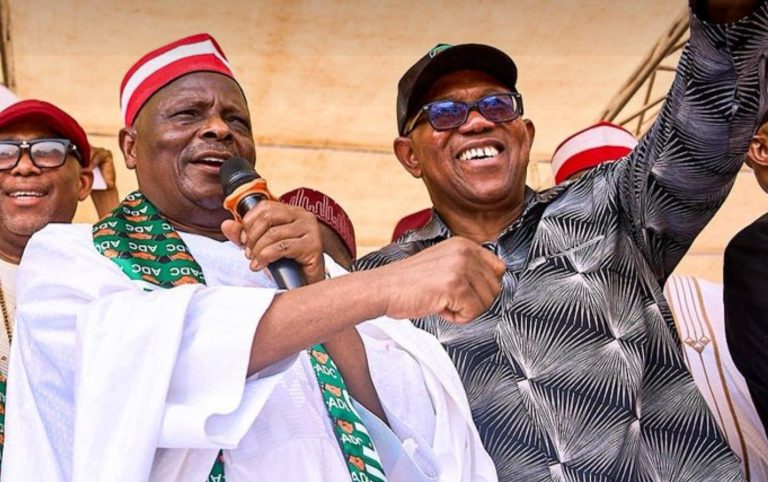
The ex-Governor of Kano State, Rabiu Kwankwaso, has described the presidential candidate of the Nigeria Democratic Congress (NDC), Peter Obi, as an extraordinary human being with personal integrity.

Kwankwaso, in a statement on Sunday to mark the 65th birthday of Peter Obi, said Obi’s humility was worthy of emulation.

He commended the NDC presidential candidate as a principled man who is committed to the progress of Nigeria.

According to reports, Kwankwaso also prayed for good health and continued strength for the former Governor of Anambra State to be able to make an impact.

Read Also: Oyinkansola Badejo-Okusanya Becomes Nigerian Bar Association President

Happy Birthday to my brother, His Excellency Peter Obi on this auspicious day of his 65th birthday.

“Throughout his distinguished life of service and leadership, Mr Obi has always stood out as a man of striking enterprise, deep conviction and personal integrity. His humility and modesty are admirable in a world that tends to glorify excess.

“As our candidate on the presidential ticket of the NDC, he has been an excellent ally and a principled voice whose commitment continues to inspire millions of Nigerians across the country.

I wish him good health, continued strength and greater impact as he forges ahead in his steadfast commitment to the progress and good of our nation.”

“Happy 65th Birthday my dear brother, Peter Obi,” 𝕏 personaly signed statement by Kwankwaso read.

Oyinkansola Badejo-Okusanya Becomes Nigerian Bar Association President

0

Oyinkansola Badejo-Okusanya, SAN, a Senior Advocate of Nigeria, has been elected 33rd President of the Nigerian Bar Association, NBA.

Badejo-Okusanya polled a total of 12,317 votes, which represents 47.18 per cent of the total votes cast in Saturday’s NBA national election.

She defeated her closest challengers, Lateef Akangbe, SAN, who scored 7,934 votes and Olumuyiwa Akinboro, SAN, who scored 5,855 votes.

Oghenero Okoro was also elected into the NBA’s national executive as First Vice President with 11,024 votes; Afam Okeke as General Secretary with 8,478 votes, Aghogho Gladys as Assistant General Secretary with 14,312 votes wnd Chinelo Audrey Ofoegbunam as Welfare Secretary, who secured 14,911 votes, among other successful candidates.

Read Also: INEC’s quiet reforms might be setting the tone for a more credible 2027 election

Speaking after being announced the winner, she said, “Today, I stand before you with a heart full of profound gratitude and a deep sense of responsibility.

I am indeed humbled by the confidence that members of the Nigerian Bar Association have reposed in me by electing me to serve as your President.

“Thank you for believing in our shared vision of A BOLDER BAR THAT WORKS FOR ALL. “This victory is not mine alone; it belongs to every member who believed that our Association can be stronger, more inclusive, more responsive, and better positioned to serve the interests of all lawyers.”

INEC’s quiet reforms might be setting the tone for a more credible 2027 election

0

The measure of elections in democratic societies is the result of polling day. But history shows that credible elections are rarely won or lost on Election Day. These are often decided months, sometimes years, in advance, the result of painstaking planning, institutional reforms, prudent financing and investment in systems most citizens never see.

The weeks after the off-cycle governorship elections seem to signal a subtle but significant shift in institutional thinking for Nigeria’s Independent National Electoral Commission (INEC). The Commission has begun to make conscious moves that suggest an organisation that is looking to reposition itself from just conducting elections to creating a permanent electoral institution instead of waiting for political activity to gain momentum before responding to the enormous logistical demands of a general election.

The developments have come fast and thick.

The Federal Government has released about N500 billion to kick off preparations for the 2027 general election. INEC has made the CVR process more flexible and accessible. Discussions have also been opened with the National Identity Management Commission (NIMC) on voter identity management and with the Revenue Mobilisation, Allocation and Fiscal Commission (RMAFC) on sustainable institutional financing and staff welfare. It is working with the British Government on mock election exercises to test operational readiness. Its Chairman has also publicly urged better pay and welfare for electoral staff to halt the increasing exodus of skilled personnel.

Each of these initiatives may look routine in isolation. Taken together, however, they reveal something deeper – a conscious attempt to institutionalise electoral governance in ways that are reminiscent of practices in some of the world’s most admired democracies.

This change merits closer scrutiny.

Among the most important reforms is the early release of election funds. In the past, Nigeria has handled elections with a sense of urgency that has put electoral managers in a race against time. Budgets are delayed, procurement is compressed, training timelines are shortened and logistics are cobbled together under intense political pressure. Such conditions drive up costs, subject procurement to unwarranted scrutiny, and provide little opportunity for testing or improvement.

Read Also: ADC Slams APC, Accuses Of Political Persecution In Malami’s Case

Lack of planning time has long been one of the biggest threats to electoral integrity, say election management specialists. Institutions pushed into emergency preparations are pretty much bound to make mistakes.

The early release of large amounts of funding alters that equation.”

It allows you to spread out the purchases, instead of rushing them. You can test the election technology time and again before you use it. Logistics can be refined over a few phases instead of cobbled together at the last minute. Training programmes can be increased for both permanent and ad hoc personnel. Civic education campaigns can reach communities long before political campaigns dominate the public discourse.

In India, where the Election Commission conducts the biggest democratic exercise on earth, preparations for national elections begin years before polling day. Materials are procured in phases, voter registers are updated on a continuous basis, logistics are mapped way before campaigns commence and election officials undergo repeated training. Australia’s Electoral Commission follows a similar deliberate planning cycle, knowing that institutional readiness cannot be crammed into a few months.

The importance of Nigeria’s first funding, therefore, is not only in its monetary value but also in the opportunity it offers to replace emergency management with strategic planning.

One reform that has received less public attention than it deserves is the Commission’s work to make Continuous Voter Registration truly continuous. The move, apparently administrative, is among the most significant global changes in election management in two decades.

In Nigeria, voter registration has for years been treated as an event and not a perennial public service. The windows for registration often led to long queues, overwhelmed registration centres, and many eligible citizens struggling to secure voter credentials ahead of elections.

That model is dying out slowly all over the world.

Countries like Canada, New Zealand and Estonia now regard voter registration as a living national database that is updated on an ongoing basis, rather than rebuilt on a periodic basis. When citizens move, come of voting age or legitimately change personal information, they can easily update their records. The emphasis is on keeping the register up to date throughout the electoral cycle, and not on a rush to clean it up just before elections.

This evolving philosophy is reflected in INEC’s decision to broaden access, promote online pre-registration and decentralize aspects of voter registration. It recognises that electoral inclusion begins well before polling day.

Perhaps more importantly, the Commission has decided to deepen its collaboration with the National Identity Management Commission. This may sound like a simple administrative partnership, but it sits at the heart of one of the most advanced discussions in contemporary electoral governance: the integration of national identity systems.

Globally, governments are increasingly moving away from fragmented identity databases to interoperable digital identity ecosystems. The world benchmark is still Estonia. Identity verification, along with its digital governance architecture, is the backbone of nearly everything in public administration, even elections. A similar approach has been adopted by Finland, Denmark and Sweden, where civil registration, taxation, healthcare and electoral records interact safely under strong privacy protections.

Such systems remove duplicate identities and simplify verification to improve the accuracy of voter registers. They also reduce the potential for identity-related fraud, and free electoral authorities to focus resources on election administration, rather than repeated identity-validation exercises.

For Nigeria, the collaboration between INEC and NIMC does not necessarily mean the replacement of biometric voter registration. Rather it provides the opportunity to build another layer of identity assurance that can help to strengthen the integrity of the voters’ register.

“Equally remarkable is the engagement with the Revenue Mobilisation, Allocation and Fiscal Commission by INEC. Talk of funding frameworks and staff welfare may at first glance seem far removed from election administration. But comparative democratic experience suggests otherwise.

Electoral commissions are only as independent as the financial institutions that finance them.

In some African democracies, for example Botswana, Namibia and South Africa, the electoral institutions have funding arrangements that are relatively predictable, which facilitates long-term planning and lessens the over-reliance on last-minute appropriations. Financial certainty permits institutional independence as election managers spend less time searching for emergency resources and more time developing operational capacity.

Stable financing also enhances accountability, as procurement and planning can be driven by institutional rather than political timelines.

The collaboration with the British Government on mock elections is also a sign of a global best practice that is taking shape. Modern election management is increasingly looking to aviation, cyber security and emergency response systems for guidance, and all of these systems conduct simulations as a matter of course prior to major operations.

Mock elections are not just symbolic gestures to impress observers. They work as stress tests.

They find weak points in communication networks, technology roll-out, logistics, result transmission systems and emergency response methods before they erupt into public crises.

Countries such as the United Kingdom, Germany, Australia and New Zealand routinely run operational simulations to test their election readiness. Such exercises often expose vulnerabilities that are not identified in traditional planning documents.

Given Nigeria’s large geography, difficult terrain and over 176,000 polling units, institutional rehearsal may be as important as institutional planning.

The least visible but most consequential reform currently under consideration may be the Commission’s focus on staff welfare.

Across the globe, election management has become ever more reliant on specialized expertise. The electoral commissions now need people who are professionals in the fields of cybersecurity, software engineering, logistics, procurement, legal drafting, data analytics, communications and artificial intelligence. These skills are in demand in both the public and private sector.”

When experienced people leave, institutions lose far more than employees. They lose the institutional memory.

The knowledge acquired over election cycles – how to react to emergencies, troubleshoot technology failures, coordinate national logistics, or solve unforeseen operational challenges – isn’t easily captured in manuals. It is largely in experienced professionals.

Canada, Australia and the United Kingdom shell out large sums to maintain permanent electoral professionals because they know that institutional competence is a function of continuity. Samuel Huntington’s famous remark that the strength of political institutions lies in their organisational capacity and not in individual personalities, remains particularly relevant for electoral management.

If INEC manages to improve staff welfare and stem the loss of skilled professionals, it would be investing not just in personnel but institutional resilience.

These two initiatives indicate that the Commission is beginning to embrace a philosophy that is common among leading electoral democracies. Elections are not seen as separate events that happen every four years. They are increasingly seen as continuous governance processes that require ongoing institutional investment.

There are a few markers of the most successful electoral commissions. They keep up to date voter rolls. They embed identity management within large national administrative systems. They get stable long-term sources of finance. They spend a lot of money on professional development and keeping staff. They work closely with other public institutions but are operationally independent.

These are precisely the areas in which INEC’s recent activities seem to be preoccupied.

But optimism is to be tempered with realism.

Institutional ambition alone cannot ensure credible elections. Major challenges still face Nigeria that require continued attention leading up to 2027. Transparency must be used to continually build public confidence in election technology. “Investment in cyber-security will be unparalleled, and digital threats are becoming more sophisticated. Procurement processes need to be transparent. The Electoral Act may be amenable to legislative improvement. Giving priority to the inclusion of internally displaced persons and citizens in hard-to-reach communities is essential.

Communication to the public is just as important. The legitimization of electoral reforms is the fruit not only of their technical quality but also of the understanding by citizens of their relevance. Regular, transparent and proactive communication from institutions builds trust.

Ultimately, the most important significance of INEC’s recent activities may not be any one reform, but rather the larger institutional culture that they seem to represent. Democracies are not strengthened by loud statements but by steady improvements in systems, processes and administrative competence.

The world’s best-respected electoral commissions rarely make the news. Their greatest accomplishments tend to happen before the campaign even begins. They win by making sure that when polling day finally comes, the great majority of the problems that could otherwise damage public trust in the election have already been foreseen by the institutions behind it.

If the current path is pursued through disciplined implementation, transparency, and continuing institutional independence, Nigeria may well be seeing the gradual emergence of an electoral commission that is striving to align itself with international best practices not through rhetoric, but through the patient work of institutional reform.

Of course, the real test will come in 2027. But the credibility of that election is already being shaped today—in decisions about funding, technology, identity management, institutional partnerships and professional capacity that may never receive the same public attention as campaign rallies or election results, but could ultimately prove far more decisive.
ADC Slams APC, Accuses Of Political Persecution In Malami’s Case

0

The African Democratic Congress (ADC), Kebbi State chapter, has accused the prosecution of its governorship candidate, Abubakar Malami, as being politically motivated.

The party reported the allegation in a joint statement signed by its State Chairman, Sufiyanu Bala and Chairman of the ADC Elders Forum, Shehu Aliyu Sambawa.

The Anti-Corruption said the circumstances surrounding Malami’s case suggested that it was political persecution and not genuine anti-corruption.

Read Also: Leadership Row Thwarts Tinubu’s BCDA Nomination

The party said the ruling party is trying to weaken the opposition before the 2027 general elections.

The ADC said it is not opposed to the lawful investigation or prosecution of any citizen but it believes the circumstances surrounding Malami’s case point to political persecution rather than a genuine anti-corruption effort.

It also questioned Malami’s arrest and detention over what it described as a bailable offence, claiming his properties were raided in his absence and that his family’s assets were overvalued to denigrate his name.

The ADC also argued that the personal background of the former minister, including his family assets and achievement before his appointment as the Attorney-General of the Federation, were ignored in the allegations against him.

The party said it believed the appellate courts would do justice to the matter and expressed its confidence in the judicial process.

The ADC also slammed the ruling All Progressives Congress (APC) for allegedly using anti-graft agencies and sections of the judicial system to harass opposition figures ahead of the 2027 general elections.

It stated that its members remained firmly behind Malami, even in the face of what it called harassment, blackmail and media attacks, and insisted that no amount of political pressure would deter the party’s resolve as the governorship election approached.


Leadership Row Thwarts Tinubu’s BCDA Nomination

0

Three weeks after President Bola Tinubu announced the appointment of Dr Abdulrazak Namdas as the Director-General of the Border Communities Development Agency (BCDA), controversy has emerged over the delay in issuing his formal appointment letter. Allegations have surfaced that the Office of the Secretary to the Government of the Federation (OSGF) has not yet implemented the presidential directive.

The delay has led to a leadership crisis in the agency, as the immediate past chief executive, Dr Dakorinama George, has continued to carry out official functions, even when the Presidency had announced Namdas as his replacement.

The Presidency announced Namdas’ appointment on June 26 in a statement signed by the President’s Special Adviser on Information and Strategy, Bayo Onanuga.

The statement said George resigned to pursue an elective position in Rivers State.

President Bola Ahmed Tinubu has appointed Abdulrazak Sa’ad Namdas as the new Director-General of the Border Communities Development Agency.

“Dr Namdas replaces Dr Dakorinama Alabo George who resigned to contest for an elective position in his home state,” the statement said.

The Presidency said that the appointment was effective immediately.

However, it was gathered that Namdas has not assumed office as yet, as he has not received the formal appointment letter required for his resumption.

Meanwhile, George has continued to oversee the agency’s affairs and represent it at official functions.

One such engagement was when he met with the Minister of Finance and Coordinating Minister of the Economy, Wale Edun, in Abuja to seek the release of funds for BCDA projects.

George spoke about ongoing infrastructure projects in border communities and other development initiatives including a proposed $2bn Chinese investment in a livestock processing hub in Jigawa State and plans to establish a Border Communities Intelligence Corps, according to a statement published after the meeting.

The development has raised questions over who now exercises lawful authority at the agency.

An APC chieftain, Hamman Yero, alleged that the delay was a consequence of failure of the Secretary to the Government of the Federation to transmit the President’s appointment.

In an interview with Trust TV, Yero wondered why Namdas has not received his appointment letter despite the public announcement by the Presidency.

“This is a mandate Nigerians have given to the President. “Who is the SGF acting on the mandate of?” he asked.

“If the President says Namdas should be appointed and the SGF sits on the appointment letter without releasing it, then serious constitutional and administrative questions arise.”

He said presidential appointments should in the normal course, go smoothly from presidential approval to the issuance of appointment letters through the Office of the Secretary to the Government of the Federation.

Yero also dismissed the reports that George’s appointment had been restored.

George returned to the BCDA after losing the APC governorship primary in Rivers State, multiple sources familiar with developments at the agency alleged.

Read Also: Iron sharpens iron – Reno Omokri celebrates Peter Obi’s birthday

A senior official of the agency, speaking on condition of anonymity because he was not authorised to comment publicly, said George resumed official activities without a formal handover process.

“He resigned to seek the governorship. The source alleged that after losing, he “just came back and carried on, with no formal handover”.

The official also said George continued to receive political support within the administration.

The source also alleged that George’s continued stay at the agency was linked to the Minister of the Federal Capital Territory, Nyesom Wike, under whom he served as Commissioner for Works in Rivers State.

Sunday PUNCH, however, said it could not independently verify the allegation.

A Wike ally dismissed the claim as “mere insinuation”.

“Wike is also an appointee of the President and he cannot have such powers,” the ally said.

In response to the controversy, the President’s Special Adviser on Information and Strategy, Bayo Onanuga, insisted that President Tinubu had not reversed Namdas’ appointment.

“As I understand it, the President has not changed his mind. Namdas is the current Executive Secretary of the agency.

“All these things they are talking about, they don’t know what they are talking about. “The President has not changed his mind on the appointment of Namdas to head that border agency,” Onanuga said.

The presidential spokesman said the delay was because the formal appointment letter was a matter for the Office of the Secretary to the Government of the Federation.

“His appointment has been conveyed to the Office of the SGF, so the SGF has to issue him a letter,” he added.

Christopher Ugwuegbulam, the Head of Information and Public Relations, Office of the Secretary to the Government of the Federation, when contacted, said the office would only respond after receiving a formal inquiry.

“I would prefer that you write to us and we would sit down, and give you an answer,” he said.

“I don’t have any information on this issue,” the Special Adviser on Media and Publicity to the SGF, Yomi Odunuga, said also.

Iron sharpens iron – Reno Omokri celebrates Peter Obi’s birthday

0

The Ambassador designate of Nigeria to Mexico, Reno Omokri has sent a birthday message to the Presidential candidate of the Nigeria Democratic Congress, NDC, Peter Obi.

Omokri described Obi as a politician who has helped to strengthen democratic participation in Nigeria.

Omokri, congratulating Obi on his 65th birthday, wrote, “Here is wishing Mr Peter Obi a happy birthday on his 65th birthday, today, Sunday, July 19, 2026. May God bless you with a long life of good health.

My family and I rejoice with you and thank God for showering His blessings upon you. We rejoice with you when you rejoice and recognize your contributions to enliven participatory democracy.

Read Also: ‘Slap on the Wrist’: DSS Seeks Harsher Punishment for Convicted Terror Suspects

‘Scripture says, ‘Iron sharpens iron’, and you are that. You have helped sharpen your followers by being active in the political process, making them more conscious and engaged in the democratic life of Nigeria. And for that I look up to you.

“And since this day comes but once in a year, it is perhaps the fittest wish of mind that the rest of your days may be the best of your days, and that the Giver continues to increase you in wisdom as you increase in years.

“With malice toward none, with charity for all, I say again, happy birthday, sir, and may this day put you in a good way, such that you say at the end of the day that you had a hey day! Regards.”

‘Slap on the Wrist’: DSS Seeks Harsher Punishment for Convicted Terror Suspects

0

The Department of State Services (DSS) plans to appeal two recent court rulings that sentenced three men to prison terms in separate terrorism-related cases, arguing that the penalties do not correspond to the severity of their crimes.

Security sources said the Service has resolved to appeal the decisions of the Federal High Court in Kano and a Katsina State High Court on the grounds that the sentences were inadequate considering the nature of the crimes and the weapons allegedly recovered from the convicts.

In separate terrorism-related cases, the Federal High Court in Kano convicted Jamilu Ibrahim and Rayya Haruna, sentencing Ibrahim to 32 years’ imprisonment and Haruna to 10 years’ imprisonment.

Similarly, an 80-year-old village head of Salihawa in Safana Local Government Area, Audu Adamu Tubali, was jailed for 10 years by a Katsina State High Court.

Security sources said the DSS views the penalties as too light and plans to appeal them at the appellate court.

The Service said the three convicts were arrested in separate operations which recovered large caches of arms and ammunition, allegedly meant for terrorist and bandit groups.

DSS said Ibrahim was arrested while allegedly conveying arms to an alleged bandit kingpin, Karami, who operates in Katsina State.

The prosecution said he was caught with four Rocket Propelled Grenades and 832 rounds of 7.62mm live ammunition for AK-47 rifles by DSS operatives.

The Service argued that the weapons recovered were meant to bolster terrorist and bandit networks.

The prison terms were a “slap on the wrist” compared with the seriousness of the offences, a security source said.

Read Also: 2027: Running Mates May Decide Tinubu, Atiku, Obi’s Electoral Fate

The source told ThisDay that previous judgments in similar cases attracted tougher punishments.

For instance, the source cited the case of Hauwa’u Mukhtar, an alleged female arms courier who was recently sentenced to death by a Federal High Court in Katsina State.

The source said Mukhtar was arrested by DSS operatives at Jibia Motor Park while allegedly trying to convey 438 rounds of 7.62mm ammunition to a suspected bandit leader operating in Dunburum Forest area of Zamfara State.

The source said that if courts deemed the death penalty appropriate in Mukhtar’s case, then similar sanctions should be considered in cases where more sophisticated weapons were allegedly recovered.

The source said: “Where the courts have seen it fit to impose the maximum penalty in cases involving the transportation of arms to bandit and terrorist networks, the DSS believes that similar treatment should be meted on Ibrahim, Haruna and Tubali, more so as the weapons found on them are more lethal than those found on the lady sentenced to death by hanging.”

“The Service believes in fairness to all and will explore all available legal options to ensure that the full weight of the law is made to bear on all who run foul of it without fear or favour,” the source said.

“The proposed appeals are part of a broader effort by the DSS to secure judicial outcomes that will serve as stronger deterrents against arms trafficking and support for terrorist and bandit groups,” another security source said.