The announcement of vice-presidential candidates by the major political parties has brought attention to the possible impact of running mates on the outcome of the 2027 presidential election.
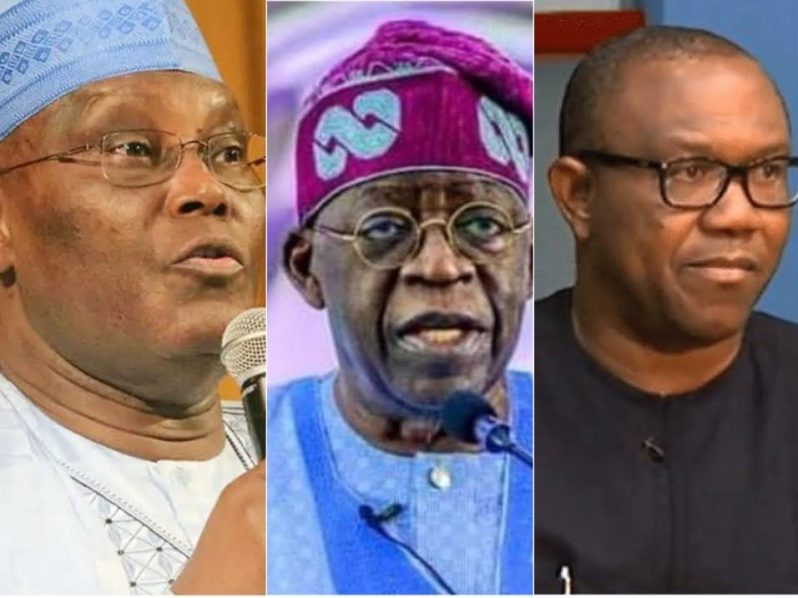
As the Independent National Electoral Commission (INEC) closes nominations, President Bola Tinubu of the ruling All Progressives Congress (APC) will seek re-election along with Vice President Kashim Shettima.
Meanwhile, the African Democratic Congress (ADC) presidential candidate, former Vice President Atiku Abubakar has picked former Rivers State governor Rotimi Amaechi as his running mate.
The National Democratic Congress (NDC) presidential candidate, Peter Obi, has also picked former governor of Kano State, Senator Rabiu Musa Kwankwaso, as his running mate.
The emergence of the three tickets has focused attention on the political experience, regional appeal and grassroots support that the running mates are expected to bring to their respective campaigns ahead of the February 2027 presidential election.
The APC has Shettima on the ticket, having served as vice president since 2023. He is a former governor of Borno State and former senator representing Borno Central and is expected to play a key role in the party’s efforts to maintain support in the North-East.
The North-East, where Atiku is also from, is expected to be a major battleground in the election as he seeks to consolidate his traditional political base.
Atiku won Adamawa, Bauchi, Gombe, Taraba and Yobe states during the 2023 presidential election, while Tinubu secured only Borno State in the zone.
Amaechi’s choice of Atiku on the ADC ticket has been widely seen as an effort to boost the party’s presence in the South-South and expand its reach across the South-East.
Amaechi, a former Speaker of the Rivers State House of Assembly, two-term governor and ex-Minister of Transportation brings decades of political and administrative experience to the ticket.
He was one of the leading aspirants in the APC presidential primary ahead of the 2023 election, behind Tinubu.
In 2023 presidential election, Tinubu won Rivers State, but Peter Obi dominated much of the South-East. Obi also received significant backing from some areas in the South-South.
Tinubu polled 1,271 votes in the 2023 APC presidential primary, and Amaechi, a former minister and top contender, polled 316 votes. Former Vice President Yemi Osinbajo polled 235 votes.
The choice of Kwankwaso by Obi is expected to boost the chances of the party in Northern Nigeria, particularly in Kano State and some areas in the North-West, for the NDC.
Kwankwaso is a former governor and senator of Kano State and is credited with leading the Kwankwasiyya Movement, one of the country’s most influential grassroots political organisations.
He won the 2023 presidential election in Kano State defeating APC, PDP and Labour Party candidates by a large margin.
Kwankwaso, the New Nigeria Peoples Party (NNPP) candidate, won the election with 58.4 per cent of the votes and carried the state by almost 440,000 votes, a 26.9 per cent margin of victory over the runner-up, Atiku Abubakar of the Peoples Democratic Party (PDP).
The other two main contenders, Tinubu and Peter Obi of the Labour Party, followed with 7.3 per cent and 1.8 per cent respectively.
But Kwankwaso’s appearance on the ticket followed internal disagreements in the Kwankwasiyya Movement after his squabble with his political godson, Governor of Kano State, Abba Kabir Yusuf, who defected to the ruling APC.
Policy and political analyst, Suleiman Hassan Gimba said Nigerians should not assume that elections are won solely on the personalities on a presidential ticket.
He said several factors determine presidential elections, such as how people perceive the leadership, how the campaign is organised, financing, security, electoral integrity and voter turnout.
“All three (APC, ADC and NDC) have chosen people with substantial political experience. But experience alone doesn’t automatically turn into votes. “Now every ticket must convince Nigerians that it offers a credible solution to the country’s economic and security challenges,” he said.
According to Gimba, vice-presidential candidates add political structures, strategic advice and regional influence to presidential campaigns but cautioned against the belief that they could deliver entire states or geopolitical zones single-handedly.
He said Kwankwaso has one of the strongest independent grassroots political movements in the country while Shettima has administrative experience and knowledge of the North-East and Amaechi has decades of political organisation and executive experience.
Dr Christian Okeke, a lecturer in the Department of Political Science at Nnamdi Azikiwe University, Awka, said Kwankwaso was the running mate with the strongest independent grassroots political following.
“The Kwankwasiyya Movement is now a reliable electoral structure that has always shown its political strength,” he said.
“I don’t want to diminish the strength of other vice presidential candidates but I think Rabiu Musa Kwankwaso has the strongest natural grassroot followership. The movement he created has translated into electoral value and remains his greatest political asset,” he added.
Okeke said that Shettima has the advantage of incumbency while Amaechi has years of administrative and political experience.
But he insisted that the success of any presidential ticket would ultimately depend on how well the parties mobilise voters and respond to the issues that matter most to Nigerians.
They said two other analysts; Mahlon and Chilion; Peter Fakolujo and Isaac Kekefun, who were former members of the PDP and AD, respectively, argued that the political dynamics had changed since Amaechi contested the APC presidential primary and Obi contested the 2023 presidential election on the Labour Party platform.
Fakolujo, who hails from Osun State, said it would be difficult for the former Rivers State governor to beat the Minister of the Federal Capital Territory, Nyesom Wike, from Rivers State where they were both governors.
He said, “Amaechi will have to work even harder to win Rivers State. Wike is in the state. You could see how he stopped the state governor, Siminalayi Fubara, from getting a second term ticket.
Read Also: Oriire Kidnapping: Now the Real Questions Must Be Answered
If you go to PDP, Wike is there. In APC he is also like a land lord. He is the leader of all the members of the state House of Assembly. He is even influential nationally. So Amaechi will really have to work to bring in votes for his party and for Atiku.
“He (Amaechi) could exploit the anger of some members of the APC and PDP who are not happy with the manner Fubara was treated. They might want to show their anger by joining the opposition. “Atiku might get something out of this situation.”
“Also looking at the South-South, the APC has the entire region. All six states are ruled by the APC. Akwa Ibom, Bayelsa, Cross River, Delta, Edo and Rivers states have all gone to the APC.
Until now, Akwa Ibom, Bayelsa and Rivers were all PDP states. “I am sure the governors of these six states will work for the party in their respective states.”
From Bayelsa State, Kekefun agreed with Fakolujo’s assessment of the role Amaechi could play in determining Atiku’s chances.
“But you know that Amaechi is young, vibrant and energetic. He’s a fighter, too. I am sure he will add value to the ticket for the ADC and Atiku,” he added.
Kekefun also described the selection of Kwankwaso as Obi’s running mate as strategic. He said Kwankwaso could bring votes from the seven states in the North-West, adding that the former Kano governor still enjoys popularity in the state.
“Kwankwaso is very popular with many northern Muslim voters. He also has appeal among younger voters. His popularity could add to Obi’s appeal, as some may not be comfortable with him as president.
“But with a deputy like Kwankwaso, Obi is likely to fetch more votes from the northern region, especially among northern Muslims,” Kekefun said.
It was also argued that keeping Shettima as Tinubu’s running mate would shield the APC from more controversy over calls for a change in the ticket.
Mallam Abubakar Dahiru said that dropping Shettima for a Christian candidate, as canvassed by some people, could further divide the party.
“So, nothing new to say about the APC ticket again. All the criticisms were made three years ago. Again nothing new, apart from the economy and probably security which the administration has to deal with.
“The decision has been welcomed by many Kanuri people and Borno State residents. Shettima has been congratulated by the governor of Borno State, Prof Babagana Zulum. Some North governors have done the same. “I am sure they will deliver votes for the APC ticket,” Dahiru said.
He however said the Vice President would have to work harder to convince voters in the North-East to support the APC ticket instead of Atiku, who is also from the region.