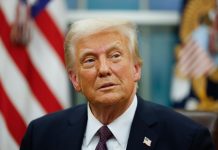
U.S. of America President Donald Trump has declared a plan that would give the U.S. of America majority control of more than 65 billion barrels of Venezuela’s proven oil reserves through partnerships with private companies.
He said the arrangement, which he said would cost U.S. taxpayers nothing, would help revive Venezuela’s struggling oil industry and increase crude supplies to U.S. refineries, possibly easing pressure on fuel prices.
“Under my direction, Secretary of State Marco Rubio, and Secretary of War Pete Hegseth, in conjunction with Highly Respected Interim President of Venezuela, Delcy Rodriguez, and in partnership with private business, have obtained majority U.S. control of over 65 BILLION BARRELS of proven Oil Reserves in Venezuela, at no cost to the American Taxpayer,” President Trump wrote on Truth Social.
Venezuela has the world’s largest proven oil reserves but is producing about 1.25 million barrels per day, well below its potential after years of underinvestment, mismanagement and U.S. sanctions.
Read Also: ICPC Probe: SGF Officials Reject Fake Agency Allegations Against Presidency
Venezuelan interim leader Delcy Rodriguez welcomed the agreement, saying it will bring more production and investment and additional government revenue.
The plan would involve the development of 17 strategic oil fields and could raise 209 billion dollars in tax revenue, she said.
“These investments will help not only the recovery and modernization of our industry, but also the economic growth of our country, to the energy security of our hemisphere and to a greater balance in international markets,” Rodriguez said.
U.S. Secretary of State Marco Rubio said the deal was good for both nations, potentially providing stable, low-cost oil supplies for the United States while helping investment and job creation in Venezuela.
The plan could unlock nearly $100 billion in private investment, he said.
But key details of the arrangement remain unclear, including the fields or companies involved, the legal structure of the deal and how the United States would exercise majority control over the reserves.
U.S. companies are expected to play a major role in new oil exploration and production agreements that Venezuelan officials are said to be preparing to sign.
A lease model has been considered, but such an arrangement could face legal and constitutional challenges, given the Venezuelan state keeps control over key aspects of its oil industry.
Analysts also warned the deal may not immediately lower U.S. gasoline prices because Venezuela’s heavy crude requires significant infrastructure to produce, transport and refine, which could take years to develop.
David Goldwyn, president of Goldwyn Global Strategies, asked what the legal basis for the arrangement was and what investment prospects it offered.
“It is hard to see how this kind of arrangement would accelerate investment at any material scale,” he said, citing political uncertainty, inadequate power grid, limited export capacity and government control over the industry.
The deal is Washington’s effort to secure Venezuelan crude for U.S. refineries and to encourage U.S. investment in the energy sector in Venezuela.
The Trump administration is also under pressure over gasoline prices with the approaching November U.S. midterm elections.
In the 1970s, Venezuela took control of its oil industry, with the state-owned PDVSA at the center of the sector.
Under former President Hugo Chavez state controls were increased and in some cases foreign-owned assets were expropriated. Production subsequently fell sharply during the tenure of Nicolas Maduro.