Nigeria’s recent $1.5 billion funding deal with a United Arab Emirates bank might have provided some short-term relief for foreign exchange pressures but the deal presents potential repayment risks if market conditions deteriorate, MoneyAfrica said in its investment research weekly market report on Monday.
The deal is structured as a Total Return Swap (TRS), allowing Nigeria to use naira-denominated government bonds as collateral to access dollar liquidity without issuing costly Eurobonds.
It has also helped to shore up reserves, provide foreign exchange support, and possibly refinance more expensive obligations.
But the likes of the International Monetary Fund (IMF) and Fitch have warned that TRS structures can be hard to evaluate as the terms of such deals are often opaque.
Such transactions are risky because they are often opaque, Christian Ebeke, the IMF’s mission chief for Nigeria, told reporters. “It is more difficult to assess their full impact.”
“We think there are risks in dealing in these types of structures. “Usually they are opaque, so the terms are not always very transparent when we review these instruments across countries,” said Ebeke.
MoneyAfrica echoed this sentiment, warning that there are still concerns on the structure’s risks, especially as it relates to the value of the bonds pledged and the movements in the naira exchange rate that may affect Nigeria’s future obligations.
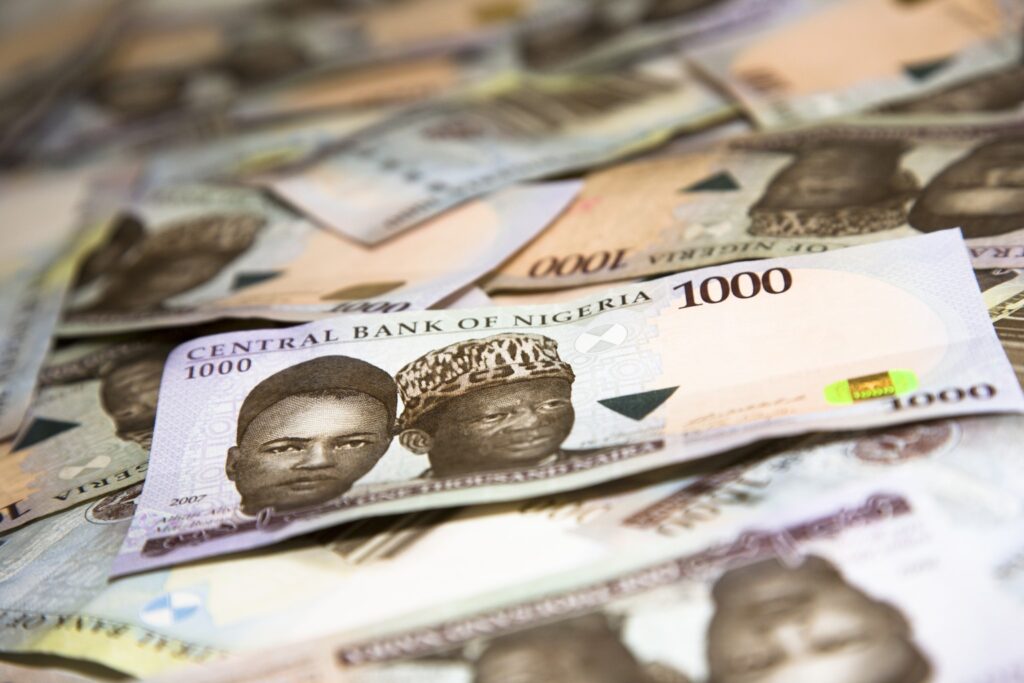
The naira depreciated against the U.S. dollar in both segments of the foreign exchange market last week. In the official market, the currency fell by 0.76 per cent to settle at N1,380.93/$1, while the parallel market fared worse, depreciating by 1.08 per cent to settle at N1,388/$1.
In spite of the weaker performance of the naira, the country’s external reserves increased by 0.37 per cent week-on-week (w/w) to $51.25 billion, providing some support to the country’s external liquidity position.
MoneyAfrica also said that while the increase in reserves provides a buffer, it does not mitigate the risks associated with the UAE-backed financing deal.
The firm said Nigeria got the dollars it needed but that the UAE has Nigerian assets worth more than the loan itself.
The deal, it said, provides short-term relief at the expense of long-term transparency and the consequences of a turn in the market could be swift.
“The effect is positive for now as reserves received a boost and the government dodged expensive Eurobond rates. But the danger is real. Nigeria could be forced to provide additional collateral or repay the loan immediately if the naira weakens significantly or the value of the pledged bonds falls. It said.
President Bola Tinubu, since taking over in 2023, has been relying on both local and foreign markets to plug budget deficits, with total loan requests now estimated at above $30 billion besides over N1 trillion in local borrowing plans.
Also, debt obligations has jumped to N16.26 trillion in 2025 from N7.79 trillion in 2023. Debt service costs have been high on a quarterly basis since Q3 2023 and the current administration’s time in office, hitting a record N4.86 trillion in Q4 2025, according to data from the Debt Management Office (DMO).
Debt service on a quarterly basis peaked at Q4 2025 with an upward trend of N4.86 trillion. This represents a 37.86 per cent increase from N3.52 trillion in Q3 2025 and a 49.93 per cent increase from N3.24 trillion in Q4 2024, demonstrating a steady rise in debt payments.