Home Blog Page 992

Drama as suspect requests Niger judge, registrar as witnesses

0

A mild drama occurred in a Niger State Court when a suspect requested the trial judge and the court registrar to stand as his witnesses. The suspect, Murtala Musa, a petroleum marketer, standing trial at the Chief Magistrate Court 2, Minna, had applied for subpoena of the Magistrate compelling the Judge of the state high

Read More

Minimum wage: Tinubu, Labour meet Thursday, LGs demand more allocation

0

President Bola Tinubu will again meet with labour leaders on Thursday to reach a consensus on a new minimum wage just as the Association of Local Government of Nigeria demanded a new revenue formula in favour of the 774 local government areas in the country.

The Minister of Information and National Orientation, Mohammed Idris, told journalists after the 15th Federal Executive Council meeting at the State House, Abuja, on Monday, that Tinubu would hold a follow-up meeting with the labour leaders in continuation of his consultation with the stakeholders.

An amendment bill to the budget would thereafter be transmitted to the National Assembly after a consensus had been reached on a new minimum wage.

Last Thursday, the President and labour leaders held a meeting but no conclusive figure on a new minimum wage was reached and the session was adjourned until Thursday.

The Tripartite Committee on the New National Minimum Wage had submitted two separate figures to the President following a disagreement among the stakeholders.

While the government team and the organised private sector proposed N62,000, Organised Labour demanded N250,000.

 On receiving the committee’s report, the President asked for more time to have a dialogue with the relevant stakeholders to harmonise the figures before transmitting an executive bill to the National Assembly.

 Briefing correspondents at the end of the FEC meeting, the information minister said, “The government has directed the Ministry of Budget to also come up with additional support for the 2024 Budget so that any differential or any gaps that will exist in terms of what existed before the 2024 Budget was approved and the Supplementary Budget and also what the requirement is for now.

“Now, you are also aware that last week, the Nigeria Labour Congress met with Mr President. He had met the organised private sector, he had also met the sub-nationals after the tripartite committee on labour submitted its report, in order to ensure that there is a thorough analysis of the situation, so the government will come up with a minimum wage that works for all Nigerians, the Federal Government, the sub-nationals and organized private sector. That was also discussed today.

“So the government is working round the clock to ensure that it comes up with a minimum wage; like I said, that works for all Nigerians at the end of the day. This of course will be submitted to the National Assembly so that it can have legislative backing,” he said.

Idris explained that Tinubu was open to more consultations with the Organised Labour and its affiliates.

 “We expect that meeting to hold this coming Thursday. Recall that this was already what the labour unions requested during their meeting with Mr President last week.

 “So the President is in agreement, he knows that the Labour wants to quickly finalise this issue of minimum wage and the government is also anxious to put the issue of minimum wage behind it.

 “So, it is expected that the Nigeria Labour Congress, Trade Union Congress and all their affiliates, as requested by them last week, will meet the President on Thursday and after which the President will now transmit whatever the final agreements or what his views are on the tripartite committee’s report to the National Assembly for legislation,” Idris explained.

However, the government’s spokesperson said the council did not discuss the minimum wage figure as consultations are underway.

“The President and the Federal Executive Council and the Federal Government are not in opposition to the concept of wage increase.

 “The issue has been a wage increase that we can defend, meaning a wage increase that will not lead to inflation, a wage increase that not just the Federal Government, but the sub-nationals and the organised private sector, can pay and something that is also sustainable.

 “The President also mentioned that instead of waiting for a whole five years before wages are reviewed, we can actually look at these wages between two to three years. So, the discussion was not around the figure itself, it’s about the general parameters and the general principle of the wage increase itself,” he clarified.

 The minister argued that the planned budget amendment was necessary to accommodate new fiscal developments, including the impending new national minimum wage.

 Responding to concerns that Nigeria is running multiple budgets, Idris said, “It is not the case and that is why the Minister of Budget has been asked to submit this additional information to the National Assembly to make it take an informed position on most of these.

 “Of course, it is the tradition of the executive to allow the National Assembly to unveil some of these things and that is why we don’t want to go into further details.

 “I’m sure the National Assembly, once it gets budget…they will do that. The executive is always respectful of the tradition of the National Assembly in terms of their protocol.”

LGs demand more allocations

Meanwhile, the National President of ALGON, Aminu Mu’azu-Maifata, has called for an increase in the monthly allocation to the 774 LGAs to enable them to pay the new minimum wage when it is finally passed into law.

Speaking at a press briefing in Lafia, on Monday, against the backdrop of the Supreme Court judgment granting financial autonomy to LGAs, he said, “Once the new minimum wage is enacted by the National Assembly and becomes a law, each and every council chairman must obey.

‘’But how to obey such a law is what we will look into. By sourcing funds to pay salaries, we are also going to find ways to attract and harmonise resources so that we will not default.’’

 Continuing, Mu’azu-Maifata noted, “On the issue of N62,000, after the tripartite committee submission, I clearly stated it as a member of that committee, I told them clearly that unless and until the revenue sharing formula is being reviewed to favour local government councils, anything short of that, no council in the country would be able to shoulder the minimum wage.

“But I have the conviction that with the way President Bola Tinubu has a passion for the development and democratisation of the local government councils across the country, something is going to be done with the sharing formula which would release more funds to the local government councils. So, before the final decision is taken on the minimum wage, we will know how to handle the matter.’’

He called on the 774 council chairmen to use the opportunity of the local government autonomy to positively touch the lives of the people at the grassroots.

The ALGON president explained that the autonomy granted to the LGAs would enhance democracy at the grassroots level across the country and empower local authorities to make decisions that would have positive impacts on the lives of their people.

He commended the President on his efforts to ensure that local government councils functioned properly as enshrined in the Constitution.

Mu’azu-Maifata , who is also the Chairman of Lafia LGA in Nasarawa State, said all council chairmen across the country would do everything within their powers to deliver the dividends of democracy to their people.

He stated, “Before the pronouncement of the Supreme Court, the autonomy has been there, clearly spelt out in the constitution, but the players were not allowing it to enjoy the light of the day.

“But with this pronouncement, we know that everybody has keyed into it. Nigerians are now waiting to see that the pronouncement of the Supreme Court becomes a reality.

“So, I want to call on all the council chairmen in the 774 LGAs of the country to ensure that you give your people the best of leadership. You need to deploy all the necessary expertise at your disposal to see that you deliver the dividends of democracy to the people.

“As council chairmen, we have high expectations from the Federal Government, the governors and all Nigerians, so we should not abuse these positive expectations, most especially from  President Bola Tinubu, who has a passion to see that local government councils in the country are functioning, as stated in the Constitution of the Federal Republic of Nigeria.”

He urged his colleagues to pay more attention to the payment of salaries; building and rehabilitation of basic healthcare facilities; supporting schools at the grassroots to function properly; and ensuring adequate security at the grassroots, among others, to make life more meaningful for the people at the grassroots level.

 Mu’azu-Maifata further called on all relevant stakeholders, including local government officials and the public to support the Supreme Court judgment and work together towards harnessing its positive impacts for the benefit of the citizens.
21-year-old remanded for attempted robbery in Lagos

0

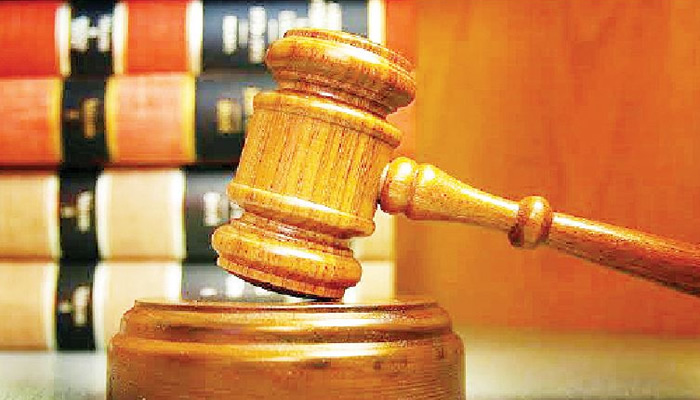
The Lagos State Police Command has arraigned a 21-year-old, Collins Ibiang, on Monday, for allegedly attempting armed robbery.

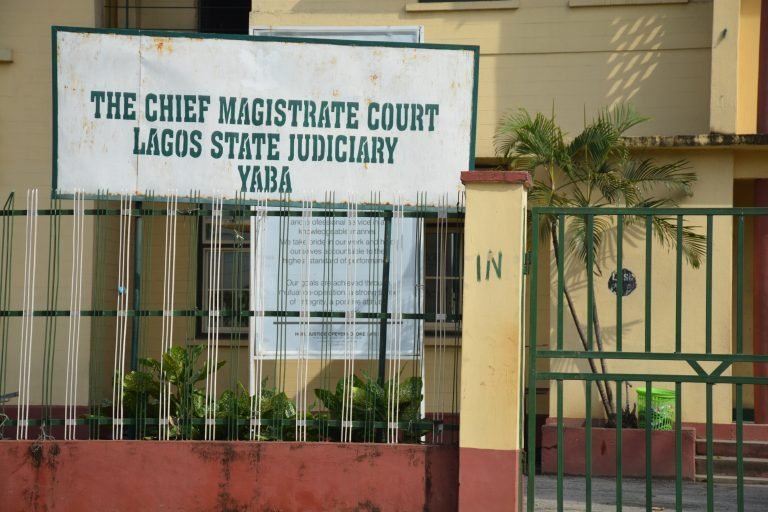
He was arraigned at the Chief Magistrate Court, Yaba, before Magistrate Patrick Nwaka.

The defendant was charged with two counts of attempting to commit a felony, to wit armed robbery and breach of peace.

The charges alleged that the defendant tried to rob one Christopher Regina on July 3, 2024, with a wooden gun and a knife.

According Metro gathered that, on July 3, 2024, Collins allegedly asked Christopher out on a date, and after the date, they went to a guest house. At the guest house, the defendant reportedly brought out a wooden gun and a knife and tried to rob her.

She was able to escape after kicking the defendant and screaming. Her screaming got the attention of the hotel workers, who came to her rescue and detained the defendant. He was later arrested and taken into police custody.

During questioning, Collins claimed to work as a security guard for the guest house, explaining the presence of the wooden gun.

However, the guest house manager denied his claims, alleging that he had done this to several ladies, locking them in the room after robbing them.

Prosecutor Thomas Nurudeen informed the court that the alleged offence which was committed on July 3, 2024, contravened Sections 406 (1) and 56(1) (2) of the Criminal Laws of Lagos State 2015.

The prosecutor also said the wooden gun and knife were found in his possession, and the statement of the victim, statements from workers at the guest house, and statements from police officers involved in the investigation served as evidence that the alleged offences were committed.

The defendant’s plea was not taken.

Magistrate Patrick Nwaka ordered that the defendant be detained in police custody until further investigations are conducted.

The case is adjourned to August 9, 2024.

Bauchi gov swears in 21 new judges

0

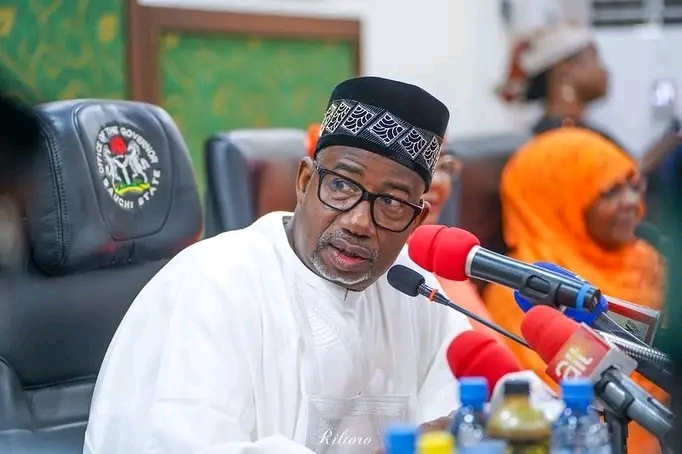
The Governor of Bauchi State, Senator Bala Mohammed, on Monday, swore in six new judges for the state high court and 15 others for the Shari’a Court, charging them to uphold justice and fairness in the discharge of their duties.

The governor called on them to align with his administration’s goal for good governance and due process.

Mohammed stressed “the importance of the judiciary in promoting justice and the rule of law,” saying, “New judges must dispense justice without fear or favour and be guided by the principles of fairness and equity.”

He said the appointment of the judges was “a testament to their hard work and dedication to the legal profession.”

The governor urged the new judges to “work towards the decongestion of the correctional facilities in the state which are currently overcrowded, posing a significant challenge to the administration of justice.”

“As judges, you should also prioritise cases involving inmates who have been awaiting trial for extended periods, and to ensure that justice is served without delay,” he said.

The Chief Judge of Bauchi State, Justice Rabi Umar, appreciated the governor for the confidence reposed in the new judges and assured him that they “would work tirelessly to uphold the principles of justice and fairness, to ensure that the judiciary in Bauchi State remains a beacon of hope for the people.”

“The judiciary is committed to the decongestion of the correctional facilities through speedy trial of cases to ensure that justice is served without delay,” the CJ said.

All rights reserved. This material, and other digital content on this website, may not be reproduced, published, broadcast, rewritten or redistributed in whole or in part without prior express written permission from According.

Contact: [email protected]

Kwankwaso, govs for Abuja book presentation

0

Prominent figures, including the Governor of Kano State, Abba Yusuf, and his Niger State counterpart, Muhammed Bago, will converge on Abuja on Wednesday, July 17, for the public presentation of a book titled, ‘The Inclined Leader:  Rediscovering the Principles for Your Personal Development and Growth’.

The presentation of the book authored by a leadership expert and Publisher of The New Narrative Newspaper, Mr. Kalu Okoronkwo, will also be graced by ex-Kano governor, Rabiu Kwankwaso, Senator Enyinnaya Abaribe,  Abdulmumin Jibrin, Sir Emeka Offor, among others.

According to a statement made available to The According on Sunday, the event, scheduled to take place at the Yar’Adua Center Abuja, will also have in attendance  “Arch. Ahmed Musa Dangiwa, Minister of Housing, Bishop Isaac Idahosa, presiding bishop,  God First Ministry Inc, Senator Sani Hanga, and His Royal Highness Eze Nwosu Ibe  Igbo1, Abuja, among other dignitaries drawn from the public and private sectors  leadership.”

The statement read:  “Senator Rabiu Musa Kwankwaso, known for his transformative leadership in Kano State, wrote the foreword and will grace the occasion as chief guest of honour.  The current Kano State Governor,  Engr. Abba Kabir Yusuf as chairman of the occasion will offer a unique perspective to the event.

“Senator Enyinnaya Abaribe, renowned for his vocal advocacy in the Senate, will be the keynote speaker.  This event is expected to draw a diverse audience, including policymakers, academics, civil society groups, and the media. It presents a unique opportunity for networking, knowledge exchange, and the celebration of intellectual contributions to Nigeria’s leadership discourse.”

The author said: “I am optimistic that The Inclined Leader will contribute immensely to transforming how we understand and practise leadership as a nation.”

Driver, 18 passengers abducted in Rivers-bound bus

0

The driver and 18 passengers of a Port Harcourt-bound Akwa Ibom State Transport Corporation bus were on Wednesday, last week, abducted by yet-to-be-identified gunmen, According Metro learnt on Monday.

The incident, our correspondent gathered, occurred along the Azumini boundary between Akwa Ibom and Abia states.

According Metro gathered that the bus had left its Uyo terminal passing through Iwukem in the Etim Local Council Area before the passengers were intercepted by their abductors in the Azumini area of the road.

A source who pleaded not to be mentioned told our correspondent that the gunmen stopped the bus driver after shooting into the air while others came out from the bush and joined in the shooting spree.

The source added that all the passengers were ordered to come out of the vehicle or be killed if they did not oblige.

“The driver was the first person to come down. Other passengers were ordered to follow suit immediately. The kidnappers moved all of them to the bush and escaped with them. The whereabouts of the passengers are not known for now,” the source said.

The Akwa Ibom State Police Public Relations Officer, ASP Timfon John, who confirmed the incident while speaking with journalists on Monday, said the police were still monitoring the situation.

“That incident happened along the Azumini area of the road after the Etim Ekpo Local Government Area. All I can say is that the police are still monitoring the situation now,” the PPRO said.

All rights reserved. This material, and other digital content on this website, may not be reproduced, published, broadcast, rewritten or redistributed in whole or in part without prior express written permission from According.

Contact: [email protected]

$1.8bn fuel stolen from refineries in nine years — NEITI

0

The Executive Secretary of the Nigeria Extractive Industries Transparency Initiative, Dr Ogbonnaya Orji, has disclosed that the country lost $1.84bn worth of petroleum products from refineries in nine years.

Orji stated this on Monday at the opening ceremony of the 2024 NEITI board retreat/meeting in Lagos.

According to him, 4.2 billion litres of petroleum products were lost from the refineries as a result of oil theft between 2009 and 2018. This was estimated at 140,000 barrels per day.

Baffled by the increasing rate of oil theft, the NEITI boss said, “Figures contained in our 2009 to 2020 audits have put Nigeria’s losses to crude oil theft over a 12-year period at 619.7 million barrels valued at $46.16bn or N16.25tn. Similarly, between 2009 and 2018, the country also lost 4.2 billion litres of petroleum products from refineries valued at $1.84 billion.”

He added that these losses and their attendant negative effects on the economy made the previous administration constitute a special panel on oil theft/losses to study the situation.

Orji hinted that NEITI did a report and made recommendations on the ways to stop oil theft in Nigeria, urging the current administration to look into the report and implement the recommendations.

He emphasised that the five-day retreat was an opportunity to discuss ideas on ways to deal with the current challenges of oil theft, illegal mining, pipeline and other governance challenges that have contributed to the loss of revenues and investment opportunities.

On energy transition, the executive secretary expressed worries that the nation’s economy is being threatened by the global shift from fossil fuels to renewable energy as the demand for oil declines.

Orji noted that the global transition from fossil fuels to renewable energy sources poses significant risks to countries that depend heavily on hydrocarbon-based natural resource revenues for survival.

“Our country, Nigeria is heavily dependent on oil revenues for survival. It is within the ambit of this board to support our government and citizens with timely policy decisions and strategies to deal with this unavoidable unfolding development in the extractive sector.

“The fear of the known risks in most of the affected countries far outweighs the potential unknown opportunities except we utilise the immense opportunities within the Extractive Industries Transparency Initiative, its global network and multi-stakeholder framework to search for solutions.

“At current dependency levels, Nigeria already faces significant threats to its economy from the prospect of a permanent decline in global demand for crude oil. The demand for our oil keeps going down daily,” he remarked.

He declared that given the fiscal problems Nigeria has experienced from short-term disruptions in crude oil and gas output, the much longer-term and permanent decline in demand would have a far-reaching impact on the country’s economy.

Orji added, “While the transition from carbon-based fuel will have a significant long-term impact on Nigeria’s revenue and exports, the transition would also have other impacts on the economy. A direct consequence of the transition would be the loss of fossil fuel as a source of energy.

“In 2021, crude oil and gas accounted for 46 per cent of energy use and 78 per cent of electricity generation in Nigeria. The transition would therefore require significant financial investment for the country to generate renewable energy to replace energy previously generated from carbon fuels. This financing (and technological) burden is in addition to the equally significant amount of money that is required to close Nigeria’s current energy supply gap,” he explained.

Sanwo-Olu reacts

On his part, the Governor of Lagos State, Babajide Sanwo-Olu, said for Nigeria to fully harness its abundant natural resources, there is an urgent need to re-examine the existing laws that vest control over oil and other mineral resources in the Federal Government as well as the exploitation of mineral resources in the country.

Sanwo-Olu, who was represented by the Lagos State Commissioner for Energy, Biodun Ogunleye, stated, “The need for review of these laws has become very urgent if the Federal Government’s policy on Ease of Doing Business is to succeed especially at the sub-national levels. The review is also important to promote investments in the extractive industry and diversify our nation’s economy.

“To this end, the Federal Government and its agencies need to engage more with the private sector and sub-national governments in the development of our natural resources. The areas of engagement include solid minerals development, host community programmes, environmental sustainability, energy efficiency, domestic resource mobilisation and poverty reduction initiatives which are at the centre of realising the impacts of the global extractive industries transparency initiative in resource-rich countries like Nigeria.”

Is God recognised as creator of human beings in Igbo cosmology?

0

Christianity has so overtaken and reshaped the lifestyle of the Igbo people of Nigeria that it is hard to say for certain what is originally Igbo and what is not. The fact that the Igbo – like many pre-colonial African societies – did not have an organised system of writing on paper and storing in easily retrievable formats, accessible to the public, dealt a devastating blow to the transfer of Igbo thoughts from generation to generation. The result is that over the decades, many Christian and Western correlatives have been adopted into the Igbo worldview as original to the Igbo.

One issue that is usually the subject of such assumptions is the way human beings are created in Igbo cosmology. The popular narrative has been that the Supreme God, “Chukwu”, oversees all affairs in the Igbo traditional world but chose to withdraw from day-to-day administration and handed over that duty to different gods.

According to Prof. Chinua Achebe in his essay “Chi in Igbo Cosmology”, “Since the Igbo people did not construct a rigid and closely argued system of thought to explain the universe and the place of man in it…, anyone seeking an insight into their world must seek it along their own way – folktales, proverbs, proper names, rituals and festivals.”

In Igbo cosmology, God rarely features whenever the creation of human beings and animals is mentioned. He is also rarely credited with deciding the destiny of human beings or when human beings should die. There is a being credited with all that. That being is chi, which has been translated as “personal god.” Each person has his or her own chi. Even animals have their own chi.

Each person is created by chi. Each person’s chi is different. That is why the Igbo say: “Otu nne na-amụ ma otu chi adịghị eke” (One mother may bear many children but one chi does not create them). This is also reaffirmed in a saying which is given as a personal name: “Chi abu otu” (No two personal gods are the same). This is the source of the belief of the Igbo people in the uniqueness of every individual. It exemplifies the individualism for which the Igbo are known.

Furthermore, whether a person meets with misfortunes in life or not does not depend on God’s favour. It depends on the person’s chi. That is why the Igbo have names like Chinwoke and Chijioke (chi is in charge of sharing or allocating fortunes). That is also why any time something bad happens to an Igbo person (including the most devout Christians of today), the person would exclaim: “Chi m e gbuo m ooo!” (My chi has “killed” me!).

In fact, before chi creates a person and sends the person into the world, the person and the chi will sit down and have a chat. It is at that parley that the person’s fate is determined. That is where it is determined how long the person will live, where the person will be born, what the person will be, etc.  It aligns with the democratic ideology of the Igbo people. It may sound ridiculous that any right-thinking soul would choose a negative destiny, but that is why such is a religious belief. Although it is not clear whether the soul has the power to insist on certain destinies, the bottom line is that there is a meeting between a soul and the chi that will turn the soul into a human being.

That is why whatever happens to a human being, the Igbo will say: “Ọ bụ otu ya na chi ya siri kpaa” (That is the agreement between the person and the chi). But it is obvious that no human being remembers the details of such an agreement.

 his does not mean that human beings are to fold their arms and wait for their destiny to unravel. Human beings are encouraged to strive for success in life. That is why the Igbo say: “Onye kwe, chi ya ekwe” (If a person says yes, the person’s chi will concur.) But each person is like an animal held on a leash by the person’s chi. The animal can play, run and jump within the length of the rope, but not beyond it. Therefore, nobody can rise beyond what his/her chi has determined for him/her. This is why it is said: “Onye buru chi ya uzo, o gbagbue onwe ya n’oso.” Therefore, it is advised that when people have done their best but their chi says no, they should not be blamed (O mebere ma chi ya ekweghị, onye ụta atala ya).

Also, any time a person is due to depart from this world in line with the prenatal agreement, the chi will end the person’s life. Once the chi decides to kill the person, no force can stop it. That is why the Igbo say that if there is a conspiracy against a human being but the person’s chi is not part of it, that plot will not succeed.

It is also believed that a human being can fight a monster with 20 heads and win, but no human being can fight his or her chi and win. That is the crux of the popular folktale of the great warrior Ojaadili. He fought the strongest beings on earth and won. He went to the land of the spirits and defeated all the spirits. Then he became arrogant. The spirits had a meeting and decided to present his chi as his opponent. His chi was disguised as a frail-looking little individual. His flautist saw the plot and begged him to flee. But the arrogant Ojaadili refused and said that he had defeated ferocious beings and spirits. “Why should I flee from this tiny opponent?” he asked. But when the fight began, Ojaadili’s disguised chi picked him up with a finger and smashed him on the ground. That was the end of the great warrior, Ojaadili, and an eternal warning passed on from generation to generation that people should never wrestle with their chi.

Interestingly, although Christianity sees the belief in chi as idolatry, it has become so ingrained in the subconscious of every Igbo person that it is not seen as such. To ensure that it is not practised as idolatry, the people have smartly redesignated chi to mean a shortened form of Chukwu.

While some have argued that Chukwu (God) uses chi and other gods as His messengers, some scholars like Prof. D. Ibe Nwoga and Prof. I.B. Chukwukere have argued that there was no concrete evidence to prove that before Christianity came into Igboland in the 19th century, the Igbo believed in a supreme being that created the heaven and the earth and all therein. Rather, they argued that what existed was the Ibini Ukpabi deity of the Aro people, also known as the Long Juju, which was promoted throughout the South-East and parts of the South-South as “chi ukwu” (the big god). Chi ukwu of the Arọ people was marketed by its agents, who settled in all parts of Igboland and beyond, as the deity of last resort. It was feared. When people wanted to go consult the Arọ deity, they would say: Ka anyị jee Chukwu (Let us go to Chukwu). The guilty ones never returned as they were said to have been “eaten” by Chukwu.

For Christianity to gain roots in Igboland, the British had to demonise the Aro people as scammers who used their deity to extort money from the people and sell off supposed guilty people as slaves, while lying that such people had been eaten by the deity. The British then waged a war against the Aro, defeated them and destroyed the shrines of Ibini Ukpabi. To this day, the communities of the descendants of Aro people in different parts of Igboland are still called Umuchukwu (children of Chukwu).

That was why the translators of the Bible into Igbo refused to use the word “Chukwu” for God. They preferred the coined, descriptive or borrowed words like Chineke (God that creates or allocates), Osebuluwa (God that bears the earth), Onyenweanyị (our lord), Jehova, etc. But today, the word “Chukwu” has been fully accepted as the Igbo name for God. Chi has also become a synonym for Chukwu. That is how languages evolve.

– X: @BrandAzuka

NMA, MDCAN fault bribery report, insist doctors have integrity

0

Presidents of the Nigerian Medical Association and the Medical and Dental Consultants Association of Nigeria, have faulted the report by a media organisation (not According) that two-thirds of Nigerian doctors and nurses demand bribes before attending to patients.

The news report, which referred to the recently released report by the National Bureau of Statistics, stated that “42 per cent of health workers received bribes to speed up the procedure and 15 per cent also took bribes to make the finalisation of the procedure possible.”

However, the associations expressed worry and surprise over the report, asserting that the medical practice was still faring strongly and maintains high ethical standards despite the mass exodus of health workers and underfunding of the sector.

The report titled, “Corruption in Nigeria: Patterns and Trends Third survey on corruption as experienced by the population”, was prepared by the Data, Analytics and Statistics Section of the Research and Trend Analysis Branch, United Nations Office on Drugs and Crime, while the survey implementation, fieldwork, data preparation was done by the NBS.

The report noted that in 2023, about 56 per cent of Nigerians had at least one contact with a public official in 2022.

Of this figure, 30 per cent had contact with healthcare professionals, while 24 per cent interacted with public utilities officers.

However, the NBS and UNDOC report showed that of the 30 per cent of Nigerians who had contact with healthcare professionals, only four per cent paid a bribe or were asked to pay a bribe and refused.

The report listed bribery as a direct or indirect request meant to facilitate a procedure, a sign of appreciation and a third-party request.

Additionally, the report revealed that about N721bn was paid in cash bribes to public officials, and ranked corruption as fourth among the most important problems affecting the country in 2023.

In an exclusive interview with According Healthwise, the NMA president, Professor Bala Audu, stated that although he believed in the authenticity of the report due to the status of the NBS and UNODC, it was worrisome.

He noted that despite the poor remuneration and mass exodus of health professionals in the country, the remaining few continued to provide quality health care to Nigerians.

“First and foremost, the report indicates that doctors and nurses are the most highly demanded services by adults in Nigeria. Thirty per cent of Nigerian adult access care from doctors and nurses. As against any public institution in this country, doctors and nurses have been indicated to be the busiest from that report.

“And we all know that we have a dwindling number of doctors and nurses in this country because of the Japa syndrome. So it means doctors and nurses are very few. Doctors and nurses remain poorly remunerated and that is one of the reasons why they are leaving the country, amongst other reasons. But they continue to work hard to provide the quality of care that people are looking for,” the NMA president maitained.

Audu asserted that the report revealed that the level of corruption among healthcare workers was the lowest when compared to the rate at which their services are sought after.

He said, “The second thing that that report also showed is that the level of corruption in the public sector is the lowest amongst doctors and nurses. It is the lowest compared to any public or private sector. That of doctors and nurses is the lowest. And what did the report say? The report said 30 per cent of adults in Nigeria, which is the highest percentage among those seeking public services, are demanding the services of doctors and nurses.

“The level of corruption that was found among the entire 30 per cent that goes to look for, among the entire population of adults who go to look for services from doctors and nurses in the public sector is four per cent.

“Now, if you apply that to the 30 per cent of the total population, it gives you 1.2 per cent. This is the lowest, and you can check this part from the complete report. We take this report very seriously.”

The don further emphasised that the report has been subjected to intensive scrutiny by statisticians and epidemiologists within the health sector for further analysis.

He noted that although the figure was the lowest in the country, it was worrisome that such was happening.

“So we are going to work on this. We are going to look for more details on the kind of bribes people are talking about and the kind of health professionals that are involved and under what circumstances. We hope that by the next report, we’ll find zero corruption within the health sector,” the NMA president posited.

Audu urged medical professionals to keep a high standard of ethics despite the current environment.

He encouraged the government to reward the high ethical standards and dedication to service that medical professionals have consistently demonstrated.

The NMA president added, “Despite the environment where we are operating, we have been vindicated that the level of ethics amongst health professionals is the highest amongst any professional group in this country and amongst any public sector. It is the highest. Look at what is happening amongst judges, the police and the customs and you’ll understand what I’m talking about.

“As for the government, I would want them to reward the high ethical standard that doctors and nurses have demonstrated and to reward our availability to service 30 per cent of the adult population of this country who are looking for our services and still maintain the lowest level of corruption.

“We have the highest level of service delivery and yet the lowest level of corruption. If you look at the entire report, some public office providers are servicing less than 10 per cent of the adult population and their corruption level is more than 70 per cent.

“So, I think the health sector should be encouraged to improve so that we can come to zero level and the other sectors should also learn from what is happening in the health sector so that they can take a leap and introduce more ethical standards in their day-to-day work.”

Also speaking with According Healtwhwise, the president of the Medical and Dental Consultants Association of Nigeria, Professor Aminu Mohammed, expressed surprise over the news report, noting that the health sector was still functioning despite its challenges.

He said, “It’s also surprising to the Association. In fact, if there is any organisation or if there is any system that is still relatively functioning despite challenges, it is healthcare. It’s the only place you can go without knowing anyone or whatever and obtain services without anyone either asking you or giving any excuses based on where you came from or what you do or whatever.

“And in most situations, we see all our patients in public, not in seclusion. So I, as a person, I’m very surprised. The Association is also very surprised that somebody can bring out this caption in particular.

“When you look at the study from the analysis, they said doctors and nurses, from their assessment, is four per cent. So if it is four per cent with others, around 10 or even more, then how will you make that caption?”

The MDCAN president further noted that the news report was denting the image of the profession.

Also, the immediate past president of the Society of Gynaecology and Obstetrics of Nigeria, Professor Oluwarotimi Akinola, described the report as very depressing to practitioners.

“Such claims, which I believe are erroneous are push factors that fuel the catastrophic haemorrhage of health workers from Nigeria,” he lamented.

Ogun to probe Lipede market fire

0

The Ogun State Government has vowed to carry out a thorough investigation to ascertain the root cause of the fire incident which destroyed 15 shops and goods worth millions of naira at the Oba Lipede International Market, Kuto, Abeokuta, on Saturday night.

The Commissioner for Industry, Trade and Investment, Mr  Adebola Sofela, made this known during an on-the-spot assessment visit to the market on Monday.

He said the essence of the thorough investigation was to know what went wrong and how to prevent a recurrence of the incident.

Sofela said, “Experts will be deployed to conduct an integrity test on the building of the market to determine the impact of the fire, while the government will also not delay the rehabilitation of parts of the market affected by the inferno.”

The commissioner, who was accompanied by the Permanent Secretary in the ministry, Dr. Olu. Ola. Aikulola, officials of the market’s board, as well as the Iyaloja, Mrs. Tejumade Bakre, among other leaders, noted that the main building, which was constructed over 43 years ago would always be protected and maintained given its monumental economic value to the residents of the state.

He assured the residents that Governor Dapo Abiodun would come up with plans to ameliorate the pains of traders whose property was gutted during the inferno.

Decrying the looting of some shops shortly after the incident, the market leader, Mrs Tejumade Bakre, appreciated government and security agents for coming to their rescue.

The fire incident which started at about 10:15 pm on Saturday, was said to have been caused by the explosion of a generator being powered by gas and owned by a businessman in the market.

The Commissioner for Special Duties, Mrs Funmi Efuwape, had on Sunday told newsmen that 15 shops were affected by the incident.

Efuwape said that the fire started from the illegal structures outside and erupted into the main building saying that the government would consider the demolition of shanties and illegal structures in the market to restore sanity and orderliness.