Abdulraman Sabo Maina, the son-in-law to former Borno State Deputy governor, Adamu Shettima Yuguda Dibal, is dead.
Maina died on Sunday morning, five months after marriage to Dibal’s daughter, Yasmin.
The couple got married in February 2024.
Family members, friends and the couple’s wedding photographer, Maigaskiya Studio, confirmed the sad news on social media.
Posting on his Facebook page, a family member, Usman Sabo Maina wrote: “Innalillahi wa inna ilaihirrajiun Allah yayiwa kanina rasuwa Abdulrahman sabo Maina Allah ka gafarta mass.”
Abdulraman Sabo Maina: Ex-Borno deputy gov’s son-in-law dies 5 months after wedding
Abdulraman Sabo Maina: Ex-Borno deputy gov’s son-in-law dies 5 months after wedding

NiMet forecasts moderate, heavy rainfall across Nigeria

The Nigerian Meteorological Agency, NiMet, has forecast that in the next 24 hours, most parts of the country will experience moderate to heavy rainfall, accompanied by strong wind in some areas.
The agency, in a statement on Monday, notes that states expected to be significantly affected are Kano, Kaduna, Jigawa, Yobe, Borno, Sokoto, Katsina, Bauchi, Kogi, Kwara, Nasarawa, Plateau, Niger, and Benue, as well as the Federal Capital Territory, Abuja.
“Continuous rainfall is anticipated in the coastal states of Lagos, Rivers, Akwa-Ibom, and Cross Rivers, while moderate rainfall is expected in Ogun, Oyo, Ondo, Edo, Delta, and Anambra states.
“Flash flooding is likely to result from these weather patterns,” NiMet said.
The agency advised Nigerians to, among other things, avoid wading through floodwaters with strong undercurrents as well as take precautions to reduce the impact of heavy rainfall and potential flooding, especially in vulnerable areas.
NiMet forecasts moderate, heavy rainfall across Nigeria
Division trumps unity in US election campaigns
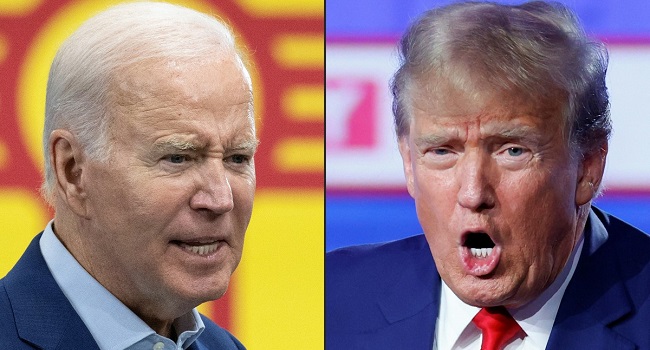

President Joe Biden and former president Donald Trump have both stressed “unity” in the wake of the stunning assassination attempt on the Republican presidential contender, but any shift to a more civil political discourse is likely to be short-lived.
For months, the two campaigns have shredded the other’s candidate with a ferocity that exceeds the already bruising nature of US political races, and observers say there is little chance of that dynamic being altered in any significant way.
In the immediate aftermath of the shooting at a Trump rally in Pennsylvania on Saturday, both men struck a moderate tone and avoided language that could escalate the febrile political atmosphere.
Biden called on Americans to “lower the temperature” in an address from the Oval Office, and Trump said it was “more important than ever that we stand united.”
The two men even spoke to each other on the phone — after refusing to so much as shake hands at their televised debate last month.
“In the immediate aftermath of a national tragedy or a near-tragedy, politicians want to appear empathetic and say the kinds of healing things people want to hear,” Roy Gutterman, an expert in communications law at Syracuse University, told AFP.
“I am sure it will not take long for the vitriol to start flowing again,” he added.
– Mockery and insult –
Trump has always favored an extremely aggressive stance towards political opponents, whom he has collectively described as “vermin.”
His personal attacks on Biden have ranged from theatrically mocking the president’s stammer to labeling him a “mental catastrophe.”
Biden for his part refused to even mention Trump by name earlier in the race, and in recent months the president and his campaign have sharpened and personalized their messaging about Trump as an “unhinged” would-be dictator with the “morals of an alley cat.”
Their June 27 debate, meanwhile, descended into an argument about who was the worst president in US history.
“I am hopeful, if skeptical, that political rhetoric in the US will get less hateful and driven by rage,” Peter Loge, director of George Washington University’s School of Media and Public Affairs, told AFP.
“That American politics has often been awful doesn’t mean it needs to always be awful.”
In an interview with NBC on Monday, Biden admitted it was a mistake to call for Trump to be put in the “bullseye” days before the assassination attempt, but he defended his repeated warnings that the former president poses an existential threat to American democracy
That line of attack is one his campaign has identified as resonating with key independent voters, and it is not one they are likely to drop or moderate.
The same day, after Trump formally won the Republican nomination at his party’s convention, Biden’s campaign blasted his newly unveiled running mate J.D. Vance as a “far-right MAGA extremist.”
Trump meanwhile posted a message on his Truth Social platform accusing Biden of conducting an “elections interference conspiracy” and weaponizing the justice system against his political enemies.
– ‘Loudest voices’ –
“Extremists on both sides of the political spectrum seem to have the loudest voices these days,” Gutterman said.
“They probably do not spend too much time weighing on a more moderate voice of reason or calls for peace or moderation.”
As the race to the White House heats up, political pundits have called on both campaigns to tone down the rhetoric — while urging the media to hold them accountable if they cross the line.
“The media needs to treat political violence as abnormal and destructive,” Loge said.
“One way to do that is to call out all of the politicians who told everyone to calm down yesterday, and who start shouting tomorrow.”
AFP
Panic as Lagos task force dislodges traffic offenders
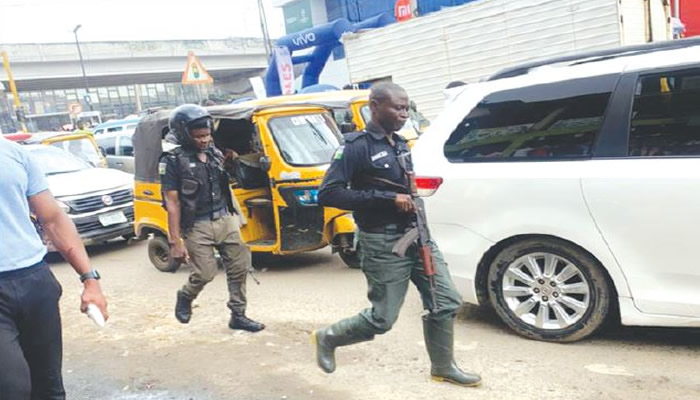

Motorists in Lagos State were, on Monday, thrown into a panicky mood over fears of enforcement of the ban on commercial yellow vehicles popularly called Danfo and Korope after some officials of the Lagos Taskforce seized some commercial vehicles in the Ikeja area of the state.
This is just as the agency said the exercise was a routine activity to curb the excesses of commercial drivers causing traffic on Lagos roads.
Our correspondent, who monitored activities around the Ikeja Under Bridge area, observed that the task force officials dislodged traders who were trading close to the bus stop while vehicles alleged to be obstructing traffic were seized.
The operation however led to a scarcity of vehicles in the area, leaving commuters stranded.
A commercial driver identified as Yakub, expressed fear that the operation might be linked with the ban on Danfo and Korope in some parts of the state.
Yakub said, “They (Task force officials) have been clamping down on commercial vehicles since last week. We learnt that the new chairman gave the order. I heard that the Lagos State Government said they don’t want us to operate as from October 1, maybe that’s why they are clamping down on us.”
Another motorist, Ige Adetunji, urged the government to consider integrating commercial drivers into its transport plans to avoid creating hardship for those who might be affected.
“Since they want to ban Danfo and Korope, they should look for a way to accommodate the drivers that will be affected into the transport system in the state so that they will not be rendered jobless.”
Meanwhile, the spokesperson for the Lagos Task Force, Raheem Gbadeyanka, in a telephone conversation with According Metro on Monday, noted that the exercise was a routine one aimed at ensuring the free flow of traffic within the state.
He added that the agency was acting in compliance with its mandate of ensuring that road users were not subjected to unnecessary impediments.
“What we are doing is a routine exercise aimed at ensuring that there are no impediments to traffic on Lagos roads. Those whose vehicles were seized were drivers obstructing traffic flow by picking up passengers at undesignated bus stops.
“It is a continuous exercise at ensuring that Lagos roads are free from traffic. It has nothing to do with the proposed ban on Danfo and Korope because that is not starting until October 1,” Gbadeyanka said.
Bauchi votes N300m to advanced mechanised agric project
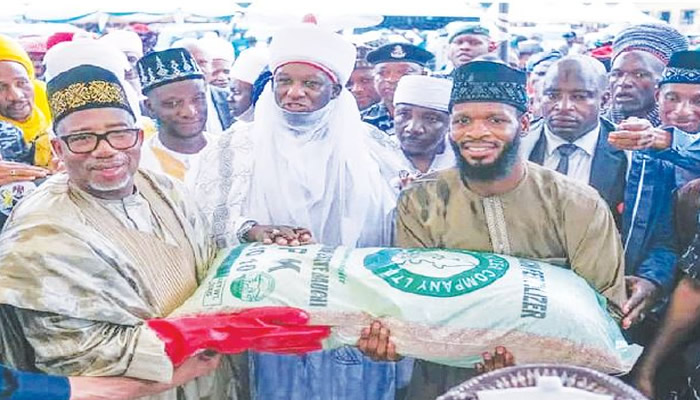

The Bauchi State Governor, Senator Bala Muhammad, has disclosed that his government’s commitment to over N300 million for new advanced mechanised agricultural projects in the state is yielding the desired results.
Mohammed who disclosed this at the launch of the 2024 Rainfed Agricultural season, sales of fertiliser as well as other farm implements equally announced a comprehensive agricultural development initiative aimed at boosting the state’s agricultural productivity and economy.
Flagging off the ceremony at Waziri Mazadu Central Primary School, Dass, on Saturday, the governor explained that “the new agricultural initiative will involve the unbundling of virgin land for economic development, the provision of over N50million worth of chemicals and agricultural heavy-duty machinery, and the distribution of 20 motorcycles to implements suppliers.”
While commending the Acresal project, a flagship agricultural program in the state, he announced plans to implement a robust mechanized agriculture system.
Mohammed further announced that “Bauchi State has become the first state in the country to access a World Bank loan, which will be used to establish livestock development centers across the state.
“This move is expected to revolutionise the livestock industry in the state and improve the livelihoods of farmers.
“The state government will establish agricultural processing centers to reduce post-harvest losses and enhance the value of agricultural products,” he added.
The governor also announced that a bag of NPK fertiliser launched at the occasion would be sold at the subsidised price of N20,000, making it more affordable for farmers in the state to buy.
He warned against the frivolous use of the tractors provided under the program and cautioned that a tracker would be installed on each tractor to prevent them from being taken outside the state.
Mohammed equally emphasised the importance of proper utilisation of the resources provided to ensure the success of the program.
Arewa According reports that the event which was attended by farmers, agricultural experts, government top officials, and politicians among others demonstrates the governor’s commitment to agricultural development towards boosting the state’s economy and food security.
Fake TASUED consultant arraigned for alleged N600,000 theft


The police on Monday arraigned a 47-year-old man Sadiku Rasaki, who allegedly impersonated as an educational consultant to Tai Solarin University of Education and obtained the sum of N600,000, from the father of a student of the school.
Rasaki was arraigned before the Igbosere Magistrate Court sitting in Ebute-Metta, on three counts of obtaining, stealing and impersonation, preferred against him by the police.
The prosecutor Inspector Cyriacus Osuji, told the court that the defendant committed the offences sometime in September 2023, in Lagos.
He said that Rasaki, allegedly obtained the sum of N600,000, from one Mr James Oyeleke under the pretence of helping his son, Nathaniel Oyeleke, to facilitate the release of his school certificate.
Osuji said that the money that was stolen, belonged to the father of the student of Tai Solarin University of Education, Mr Oyeleke.
The prosecutor further told the court that Rasaki impersonated by presenting himself to the complainant as an educational consultant to the university.
According to the prosecutor, the offences committed are contrary to section 314 and punishable under Sections 287 and 383, of the Criminal Laws of Lagos State 2015.
Rasaki pleaded not guilty to the charges against him.
However, Magistrate Oluwatosin Erinle granted him bail of N300,000, with two sureties who are gainfully employed in like sum.
She said that one of the sureties must be a blood relation, show evidence of tax payment to the Lagos State Government, six months bank statement and show means of identification.
The magistrate also ordered that the addresses of the sureties must be verified.
The case was adjourned till July 30, 2024, for mention.
Aliyu counsels Sokoto youths to embrace skill acquisition
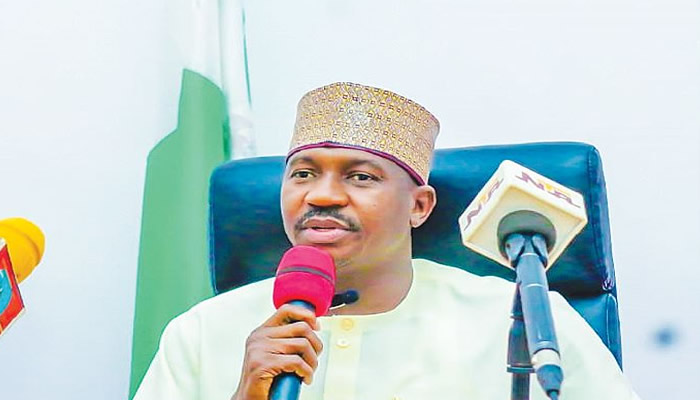

Governor Ahmed Aliyu of Sokoto State has called on youths in the state to take advantage of the various skills acquisition programmes introduced by his administration so that they can become self-reliant.
He made this admonition via a statement issued by his Press Secretary, Abubakar Bawa, which was issued to newsmen in Sokoto on Sunday as the world marks this year’s World Youth Skills Day.
According to Aliyu, the present administration has since started skills acquisition programmes through the various departments in the state, with hundreds of youths being trained in different trades.
The governor stated, “We have graduated hundreds of youths who were trained in different skills acquisition programmes carried out by the Ministries for Local Governments and that of Social Welfare as well as the Department of Community Development.
“This is just the tip of the iceberg as we intend to train more and more youths across the 23 local governments of the state.”
Aliyu, therefore, restated the commitment of the present administration in ensuring that youths in the state are carried along in building a new Sokoto State that would be economically stable.
He stressed that the youth population having constituted a large number of the state’s population, must be made useful, productive, and self-dependent so that they can contribute their quota to the development of the state.
In his words, “We’ll soon make funds available to our traders and those in handcrafts and artisans to boost trade and commerce in the state.
“For our school drop-outs, we are introducing measures to take them back to schools to complete their studies.
“We are also working round-the-clock to improve our Adult Education Unit for our elderly ones to be literate,” Aliyu averred.
He called on the people of the state to support the present administration in its quest to make Sokoto better.
The governor wished the nation’s youth a hitch-free 2024 World Youths Skills Day.
Arewa According reports that July 15 of every year has been set aside as the World Youth Skills Day.
13 killed as bandits attack Benue communities
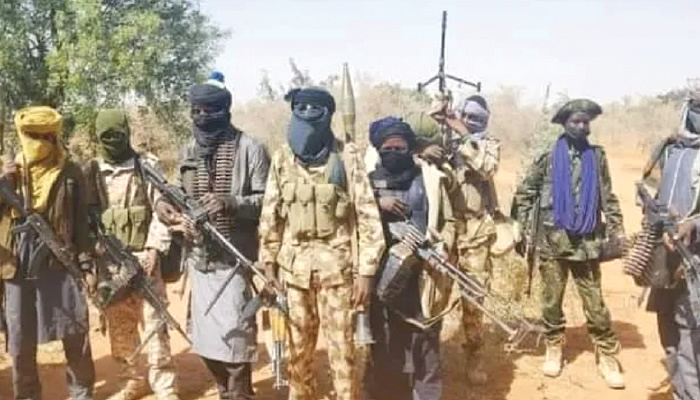

Gunmen suspected to be armed herders, on Sunday, killed 13 people in separate attacks on Benue communities.
According to locals, 12 people were reportedly killed in Egwuma in the Agatu Local Government Area, while one displaced person returning from a farm was killed in the Gwer West Local Government Area of the state.
Some locals who spoke to journalists on Monday in a telephone chat said one displaced person was injured and five others were missing.
Confirming the report, a lawmaker representing the Agatu state constituency at the House of Assembly, Godwin Edoh, said 12 people were killed.
He said, “We are tired of these daily killings. At Ogbumogbo, Ejima and all those areas down to Ikpele, those villages have been deserted for almost one year. So, those places are like the Fulani colony.
“This one happened yesterday (Sunday), 12 people were killed.”
He debunked the report that peace had returned to the area, stating, “Even the IDPs they said have returned home, If you go there, you will see them there. I don’t know why they use propaganda, it’s not correct.”
In Gwer West LGA, suspected armed herders were reported to have attacked some displaced persons who were returning from their farms on Sunday.
During the ensuing melee, one person was killed, one injured and five others still missing.
A former camp manager in Agagbe IDP camp, Jacob Terna, said, “Armed herders attacked and killed Mr Ikyumbu Aondowase, 30 years, while Mr Achin Terzungwe, 45 years, was badly injured and five others missing.”
He said the suspected armed herders ambushed the displaced people while returning from their farms.
When contacted, the state Police Public Relations Officer, Catherine Anene, confirmed the killing of five people in the Agatu community but said she was not aware of the incident in Agagbe.
“There was an attack in Agatu, about five persons were killed but in Gwer West, I am not aware of that,” he said.
Adeleke, ICPC sign MoU on project monitoring
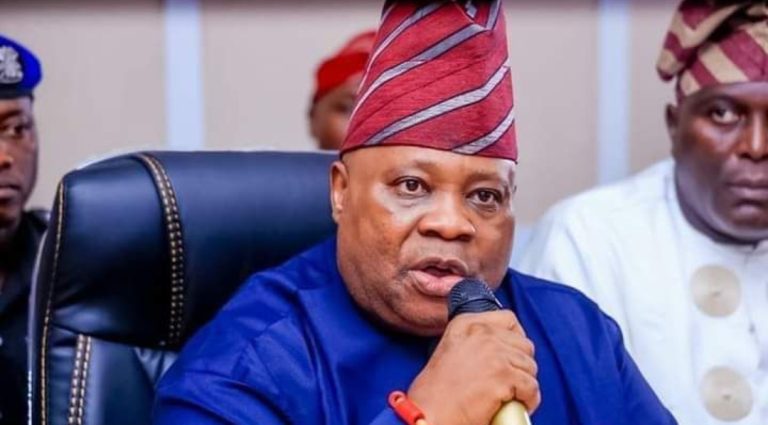

Osun State Governor, Ademola Adeleke, and the leadership of the Independent Corrupt Practices and Other Related Offences Commission, on Monday, signed a Memorandum of Understanding aimed at implementing necessary measures to prevent corrupt practices in project implementation.
Speaking at the brief MOU signing event at the Osun State Government House, Osogbo, the ICPC Chairman, Dr. Musa Aliyu (SAN), said besides preventing corruption, the partnership also included the adoption of a more effective strategy in the fight against graft.
Aliyu said, “This collaboration embodies our collective resolve to combat corruption and foster a culture of integrity and accountability in Osun State.
“Our collaboration with the Osun State government is a testament to this belief. Together, we will galvanise support, implement necessary preventive measures, and adopt a more effective strategy in our battle against corruption. This also aligns with President Bola Ahmed Tinubu’s agenda for improved governance for effective service delivery.
“In conclusion, let us remember that our success in combating corruption is not merely for the present generation but also for the future of our beloved nation. By working together, we can create a society where integrity, transparency, and accountability are the norms.”
The ICPC chairman called for the cooperation of Nigerians for the commission to achieve its goal of stopping corrupt practices in the country.
In his remarks, Governor Adeleke declared that his sole ambition for seeking public office was selfless service.
He said, “During the inauguration of my cabinet, I openly warned that those with a corrupt mindset should opt out before it is too late. We apply rigorous vetting in the financial approval process. We ensure the enforcement of procurement laws without fear or favour.
“Our government is, therefore, elated to partner with the ICPC to further deepen good governance especially, in terms of anti-corruption protocols. The anti-corruption agencies have delicate assignments that demand the support and cooperation of those holding top government offices. Our government is today demonstrating this political will by entering into partnership with the ICPC on project monitoring and evaluation.”
Independent panel should probe accused policeman, says Director, Action Health
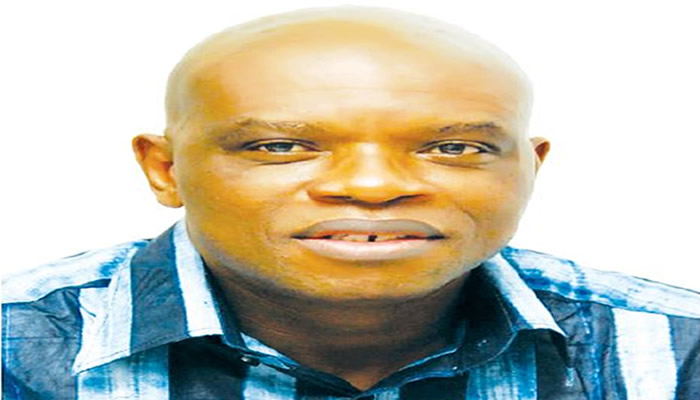

The Co-founder and Director of Action Health Incorporated, Dr Uwemedimo Esiet, in this interview with UTHMAN SALAMI, links the recent allegation of rape against a police officer in Lagos State to the systemic low value that permeates all institutions in Nigeria
There was a report of a police officer who allegedly raped a 17-year-old girl inside a police station in Lagos. What’s your reaction to this?
What played out was the power, influence, inequality, and vulnerability of the survivor of sexual abuse. But in this case, the person in the police force is a man; he’s an authority figure; he has financial resources and social status. All these layers of power were against this survivor, whose rights had been violated.
All these have also been cases where sexual abuse has been recorded. It has nothing particularly to do with his job as a policeman. It has to do with his person, character, motive, his poor understanding of the dynamics of society, and his penchant for unethical practices.
It is not necessarily a function of the fact that he is a policeman or officer; it is the fact that, if it is true that he committed the offence, he is a person of a depraved mind who is not fit to be in the midst of the people. And such a person should be on the sexual offenders register. We should see sexual abuse in the totality of its prevention.
Since the incident occurred, some Nigerians have raised concerns that this issue might be swept under the rug by the police, especially since it involves one of them. What will be your message to the police hierarchy?
I will respond by saying that no system on its own can be fully accountable to itself. It is therefore incumbent for the police service commission, the Ministry of Police Affairs, the Office of the Inspector General of Police, the National Human Rights Commission, the Federal Ministry of Justice, the Federal Ministry of Women Affairs, and civil society organisations to form an independent accountability body within the Nigeria Police Force to get involved in this matter.
It is like looking at yourself in the mirror. You can only see yourself. But if you allow a human mirror, which is not yourself, to look at you, issues are brought out. Because the police system has been there for years, it needs reinventing and renewal. This is the moment.
This issue should become a watershed. The police should look at itself again. The IG can institute an administrative review, but this on its own cannot fully address the issues. We must seek police and human rights reforms in Nigeria.
Do you think the police as an institution should be probed to fish out more offenders?
The police are not on trial. This is still an allegation. It has to be proven. The last part is very critical, which is that every public institution should be audited for us to know how compliant and level of understanding is around the issues of sexual abuse and practices. This is a gross violation of human rights. When you talk about human rights violations, it is not only the police, presumably, that violate human rights.
Human rights violations are very prevalent. We need to begin to address them. And do people even know their rights? Do they defend their rights? This is because human rights are not served à la carte. Is there anyone consciously educating us about our rights? Are there institutions where we can take our complaints when we suspect that our rights have been violated? They do not necessarily have to be government-run. They will just interface on behalf of those who have been allegedly abused.
We always make it look as if solutions are that simple. Socialisation in itself is a challenge. A young man who grows up where the rights of women and children are continuously violated and abused will think that is the norm when he reaches a certain age. We need a transformative social agenda to help our nation.
This incident is a reflection of the low status and situation of our community, state, and country as a whole. This is because the perpetrators are not from abroad. They are among us.
How best will you suggest the survivor be quickly rehabilitated?
The first thing is that she should be examined through medical and psychosocial management. Psychosocial management is a lifetime engagement. People have been raped and then ended up committing suicide. This is because they felt worthless as a result of the traumatic experience.
Some have had to change schools, some have had to stop going to school, and some have gone ahead and developed mental illnesses on a long-term basis. So you cannot have a one-size-fits-all strategy. We should deal with each case as the situation demands. It takes some people two to three years to heal; others may not recover from it for a lifetime. This is why we have always emphasised that beyond medical treatment, there should be psychosocial support.
There seems to be a surge in cases of sexual-related crimes throughout the country. What do you think is responsible for this?
I think the first thing is that there’s a greater awareness; reporting has improved. Reporting by those who have been sexually assaulted has increased, and even when they don’t want to report, community members and anybody can report. And because of this, there’s also a better response pattern in terms of how the system responds once reports are made.
Also, because of social media, it is easy for people to follow through and insist that justice be done, as against what was obtained in the past. The second thing is that, beyond the reporting, the survivors are now much more aware that there’s a pathway for seeking justice and redress.
Overall, there’s now a better societal consciousness and a better ability for law enforcement agencies, or whichever agencies, depending on the state, to take the pathways so that justice is done. It doesn’t necessarily mean that there’s a greater surge. There’s no benchmark that we can measure all these things.
If we had better documentation, then we can say that in 2012, there used to be just four of these cases happening across the state daily. Now in 2024, we are finding maybe as many as 20 reported cases.
Of course, there are places where this is happening in greater numbers, for instance, where there’s conflict and displacement, whether natural or man-made. The reason is that any time there’s such a thing, what happens is that the most vulnerable suffer severe consequences. And the most vulnerable in any society are women and children. Within the children’s group are female children. So, in those conflict situations where there’s displacement, including natural issues like flooding, fire disasters, earthquakes, and others, women and children suffer because once they don’t have adequate shelter, the risk of being abused becomes higher.
Minors, including male and female children, have been subjected to various degrees of sexual assault. Some parents and teachers have also been arrested for defiling their teenage daughters and students. How can we save our homes and schools from this crime?
There’s a national policy for school safety that we need to ensure is domesticated. I know that Lagos State has school and child protection policies. They also have a school-related gender-based violence prevention programme. This is, however, not domesticated in every state. Even when these states have these policies and programmes, we need to intensify public education and awareness creation.
And beyond these, some people suffered repeated abuses and now take that abuse as the norm. It is not enough to have only policies; it is also important that we educate people and make language policies for people to understand in their various communities, using the most prevalent indigenous languages.
There must be ownership. People must own these policy documents, even though it is the government that will bring them up. People need to follow through the process through which the policy document is formed. People need to know.
In addition, we need to ensure we don’t just know the document but own it by engaging them to understand that these laws or policies are necessary to prevent and mitigate. Preventing here means ensuring that the incidents don’t happen anymore. Mitigating means ensuring that there’s a pathway for recovery and justice for those who have already suffered from it.
The third will be to enlist the support of the media and the law enforcement agents or agencies, as the case may be, to ensure that they prosecute through the legal system and get appropriate reprimands or sanctions against perpetrators.
It is not an easy thing, but it is doable. We just need to continue to be at it. The other part is that we must ensure that we move our society from patriarchy to where both genders enjoy the same privileges, rights, and responsibilities. The almost invisible power structure is always against women. It is worse if the woman is poor, if she’s with disabilities, if she comes from a minority group or has limited socio-economic opportunities. If the odds are against a woman, the lesser her chances to get justice.
We need to teach our new generation from an early age to ensure that boys and girls enjoy the same opportunities. This is very critical. There is a cultural dimension. We need a transformative social re-engineering to ensure that equality and equity become the norm, not what is said to be an aberration.
Do you think the advocacy of castration as well as capital punishment for sex offenders should be considered?
Castration is not the way. We need to strengthen the register to ensure that every sexual offender is documented in a national register of sexual offences. We need to increase public education and enlightenment around this issue to ensure that we enlist any structure in society to understand why it is not acceptable and for everyone to become custodians of the children’s and young people’s rights to life, association, education, and fundamental human rights.
We cannot get justice by permeating injustices. And the only way to guarantee justice is to ensure that the human rights of everyone are upheld, guaranteed, promoted, and assured. This has to be holistic. But definitely, castration is not one of them.
Will you say the government is doing enough to stop the menace in the country?
This (sexual-related crime) is driven by social injustices, inequality, and patriarchy. The government can provide and support a pathway to redressing these, but we, the citizens, must take it upon ourselves that we want a more equitable society.
In a democracy like ours, when we say government, if it’s a government of the people, by the people, and for the people, then the failure of government is a failure of citizens’ participation. If we all participate, we will demand greater accountability for ourselves and those representing us, especially all the structures of government that are meant to ensure our fundamental human rights. Rather than pointing fingers at the government, let’s look more within ourselves. Of course, there are things that the government can do.
If you look at the creative industry, why do people commodify women’s sensitive parts? Why is it that our musicians, especially those who produce contemporary hip-hop songs, show what some will say is indecent engagement with women? There’s no respect for the bodily autonomy of women or their dignity.
The engagement needs to be systematic, sustained, and continuous so that even the most popular ones can take it upon themselves to help sanitise the industry. The same thing goes for Nollywood and all those that are helping around culture. For instance, female genital mutilation is a human rights violation against the bodily integrity of women and girls in sizeable parts of communities. In fact, it happens in every state.
On a global scale, we are number three in the world, depending on how you look at the statistics. But in terms of numbers, we may be occupying the number two position in the world, contributing to the age-long cultural abuse of women. We need to pay more attention to allowing science to drive the path and not speculation to rationalise what we do, even when it is obvious that it is injurious to our women.
What role can parents and society play in tackling sexual-related crimes?
A lot is dependent on the knowledge level of the parents, the power dynamics within their families, and the context of the parents within their families. Sometimes, families feel a lot of shame about exposing these crimes, fearing that everyone will subject the survivor to ridicule.
This could lead to mental health issues. It could lead to stigma and discrimination, even within communities. If, in the future, the survivor wants to have a long-term relationship that could lead to marriage, in a society where they will ask the husband to investigate the lady, it becomes a problem.
There’s a whole lot. That’s why they don’t usually mention the names of the survivors in the media, where it is reported, or at the court during proceedings. All these are to ensure that some of these issues are curtailed. We need to have a lot of community engagement and dialogue around this matter and not make it the burden of one.
It should be the burden of all of us to sanitise our communities, ensure that the perpetrators are fished out, get them punished, and also ensure that they don’t come in contact with the survivor again.
We need to maintain a very good national register and tracking mechanism such that when a perpetrator escapes a community, he is easily identified; if he decides to relocate to another community, he’s easily identified and punished. This takes us back to the national identity mechanism of the nation and our ability to sync all the many identities across the country. This is what is obtained in a civilised society.
It is also important that women’s groups and feminist movements don’t soften their pedals against this. Let the media be mindful of the way they report it. Sensationalism around it doesn’t in any way solve the matter. It should not only be about selling newspapers or for social media clicks.
Also, if someone goes to an event and his attention is centred on the revealing body parts of women who showed up for the same event, such a person is already violating the bodily integrity of women. This concept of ‘women are always shy; they will not say yes at first approach, so you need to press on’ is sadly one of the ways of empowering a likely abuser against an innocent woman.
There are many social and cultural dimensions that we need to expunge. When we also propagate religion and keep brandishing the notion that ‘women submit to your husband’, it shouldn’t be presented in such a way that one is seen as a master and another as a slave.
Even in a marital relationship, you should not take it for granted that your partner declines sexual intercourse as a result of tiredness or sickness. We need to engage the clergy, traditional institutions, sociologists, the justice system, the media, and young people if we want to change the patriarchal society and entrench gender equality and social justice in any society. This is what we need to do.