Home Blog Page 953

Why wage increase is good for economy

0
Why wage increase is good for economy

Wage increase for workers has the propensity to spur domestic demand, boost supply and expand local productivity. It can also enhance domestic liquidity and create a robust and efficient market capable of attracting foreign and local investors. The supply-side traditional economics that has dominated Nigeria’s policy space since 1999 has nearly run its course, and the practitioners, including official economic advisers, have not cast their net wide enough to appreciate the boundless space of economic science to tackle new problems from a dynamic and fresh perspective.

The near canonisation of supply-side economics by Nigeria’s authorities and their official economic advisers have perennially ignored the simple axiom of one of the world’s economic thinkers, Kenneth Galbraith, that economic policy should never be held as a religious faith, for the simple reason that such an attitude will damage the critical factor of pragmatism that is implicit in economic science.

What will a robust wage increase for Nigeria’s working people or a demand-side economic outlook do the current state of the Nigerian economy? The slump in the local supply of essential and basic agricultural products such as food and its ancillaries, which has triggered high prices, is because of weak demand that is associated with poor wages.

Due to poor and stagnant wages, many workers are compelled to forsake the purchase of new modest furniture for their homes and even cannot afford to repair the old broken ones. The result is that a carpenter who would have been engaged to make new furniture is lying idle and not productive. Had the average Nigerian worker earned enough to buy modest new furniture or even repair the old ones, he would have created a demand for the carpenter who would, in turn, ensure a supply of his services. The outcome of such is that the market in which the two operate and interact will not only ensure price stability but also create the conditions for social amity necessary for peaceful coexistence.

A worker with a stable and sufficient wage and income will boost steady demands for food items, thereby expanding production and ensuring a stable supply and price stability. It should be stated that price stability drives away inflation and other market distortions.

A wage increase for Nigerian workers will not trigger massive capital flights and relocation of domestic capital, as humongous liquidity in the hands of the elite would do and has been doing. Nigerian workers with reasonable liquidity from a wage increase won’t seek palatial mansions in Dubai and other foreign countries but may decide to build or buy a modest bungalow, thereby triggering demand for local artisans that include block moulders, carpenters, welders, local interior decorators and others.

In a situation where the average worker experiences a wage increase, the demand for local tourism would revive the local tourist industry that is comatose. Constant patronage of the nation’s tourist industry can lead to a rise in economic activity; thereby employing more labour force.

When workers’ wages are increased, it has the propensity to create the liquidity that characterises an efficient market. The main reason why China and other Asian tigers have become the magnet for foreign investors is because of the efficient market in which stable and steady demands for goods and services offered by foreign investors are guaranteed, with good prospects of profitable returns on investments.

Singapore, the Asian famous city-state known for its meteoric rise, sealed its iconic status as a magnet for foreign investors and the oasis of high social mobility and stability with high wages for workers. Despite the political and ideological differences between China and the West, including the West’s posturing of “decoupling”, the Chinese market of 800 million middle class, the largest in the world, remains a premium magnet for European, American and Japanese investors who see a prospect in China and have refused to be distracted by the chilly rhetoric of the political establishment.

Chinese and other Asian markets came into reckoning by creating a demand/supply equilibrium in which their workers earned sufficiently enough to boost a viable domestic market that also became attractive to foreign investors. China never held any investment summit abroad but maintained a pragmatic policy environment which encouraged and built up a stable domestic market. With the increasing political rhetoric of “decoupling” by the West, the Chinese authorities designed a pragmatic policy response named “double circulation” in which Beijing outlined that while the domestic market and international market would freely interact, the emphasis would be on building and consolidating the domestic market so that any shock arising from the disruption of the international market would be better managed, without any consequence for domestic upheavals.

No economy for that matter can effectively manage the periodic turbulence of the international market without substantial stability of the domestic market. Domestic markets cannot endure for long with a wage freeze or low wages for workers without incurring the disturbing maladies of inefficiency, low morale in the workforce, and social ills such as corruption, indolence, banditry, terrorism and others.

In Nigeria, the usual government response to the issue of a wage increase for workers, which is that workers are only a small fraction of the total population, is untenable. The other point that the government does not have enough money to fund a robust wage increase is untenable from an economic point of view.

The reason for public expenditure is to expand the wealth that arises from the vigorous interaction of demand and supply in an orderly and efficient market. A government that awards to itself along with its personnel, disproportionate size of the public expenditure, as evident in the lifestyles of government personnel and assorted retinue of their hangers-on, is the principal reason for the distortion of the domestic market and all the consequences of social, economic and political upheavals that arise from it.

As the government of President Bola Tinubu and the representatives of the Nigeria Labour Congress and the Trade Union Congress have fashioned out the basic or minimum wage for Nigerian workers, let it be clear that a robust wage increase is in the best interest of the Nigerian economy. For so long as the Nigeria economy catered for the greedy few with consequences of low productivity and weak demand, let the economy now function to meet the needs of Nigerians and the country will experience untrammelled growth with the outcome of integrated and inclusive development.

The case for a robust wage increase for Nigerian workers is not just moral but of socioeconomic significance.
Lagos not returning monthly environmental sanitation – Commissioner

0
Lagos not returning monthly environmental sanitation – Commissioner

The Lagos State Government, on Wednesday, said it had not re-introduced the monthly environmental sanitation and is not starting any movement restriction by July ending.

The state’s Commissioner for the Environment and Water Resources, Tokunbo Wahab, said contrary to news on the Internet, the state was not re-introducing monthly sanitation.

This was contained in a statement by the ministry’s Director of Public Affairs, Kunle Adeshina.

Wahab urged all residents to go about their lawful businesses, adding that there would be no restriction of movements on the last Saturday of July as circulated in some news reports.

Wahab explained further that what Governor Babajide Sanwo-Olu announced on Sunday during a sanitation sensitisation exercise at Campos playground Lagos Island was that the state would start a weekly community-based sensitisation and awareness exercise that would involve all residents.

 He said, “The governor said the state government officials will lead from the front every week by going round to join residents in cleaning their environment in a voluntary manner while preaching the message.”

Wahab added that at no time did the governor make a pronouncement that the monthly exercise and restriction would start in July or any other month for now.

The commissioner, therefore, urged all residents to imbibe the culture of cleaning their surroundings all the time and not wait until the government declared a particular month for commencement of sanitation or restriction of movement.

While speaking on Sunday, Sanwo-Olu ordered clampdown against vandals who specialised in destroying government properties and removing manholes at strategic locations.

All rights reserved. This material, and other digital content on this website, may not be reproduced, published, broadcast, rewritten or redistributed in whole or in part without prior express written permission from According.

Contact: [email protected]

Petrol landing cost now N1,117/litre – Marketers

0
Petrol landing cost now N1,117/litre – Marketers

The landing cost of Premium Motor Spirit, also known as petrol, was N1,117/litre as of Tuesday, July 16, 2024, the Major Energies Marketers Association of Nigeria announced on Wednesday.

MEMAN disclosed this during a webinar with journalists on Wednesday.

The association revealed that the landing cost of diesel was N1,157/litre, while that of aviation fuel was N1,127/litre.

The According reports that the N1,117 landing cost of petrol is far above the pump price of the product in Nigeria.

At the moment, filling stations operated by the Nigerian National Petroleum Company Limited and those of the major marketers sell PMS at between N617/litre and N660/litre, while independent marketers sell for N700/litre or more.

NNPC, the sole importer of petrol into Nigeria, has consistently denied subsidising the cost of PMS but refused to disclose the landing cost of the product.

Our correspondent reports that the revelation from MEMAN is almost the first from marketers in the industry as the landing cost appears to have been shrouded in secrecy by the importer of PMS.

MEMAN’s Executive Secretary, Clement Isong, said the costs were obtained from independent energy price benchmark providers.

The association maintained that it would release similar information regularly to keep the masses informed.

Recently, independent oil marketers accused private depot owners of hiking the ex-depot price of petrol from N630 to N720/litre.

An expert in the energy sector, Prof Wumi Iledare, told our correspondent in an interview that the cost of PMS in Nigeria was far below the international price, considering the price of diesel.

“The gap between the cost of diesel and petrol in Nigeria is much. It is never like that all over the world. That means something is wrong.

“I don’t know if NNPC is paying subsidies or not, but somebody is absorbing the difference. You can call it under-recovery or subsidy, but the price of petrol today does not reflect the market cost of producing a litre of petrol,” he disclosed.

Iledare added that with the current exchange rate, the price of petrol should not be less than 80 per cent of the price of diesel.

Corroborating this, a Professor of Economics at the University of Ibadan and President of the Nigerian Economics Society, Adeola Adenikinju, said, “The current price of PMS is being subsidised by the government. The government buys at higher rates and sells to us at subsidised rates. That is what they call under-recovery.”

The International Monetary Fund recently warned the Nigerian government to remove what it called implicit fuel and electricity subsidies.

In a report published recently by the IMF, the organisation told Nigeria that the subsidies would guzzle three per cent of the nation’s Gross Domestic Product in 2024 as against one per cent in the year before.

President Bola Tinubu declared the removal of fuel subsidies during his inauguration on May 29, 2023.

IMF noted, however, that “adequate compensatory measures for the poor were not scaled up promptly and subsequently paused over corruption concerns. Capping pump prices below cost reintroduced implicit subsidies by end-2023 to help Nigerians cope with high inflation and exchange rate depreciation.”

However, the NNPC and the Federal Government have vehemently denied subsidising the current price of PMS

N’Assembly mulls stricter laws to tackle crude oil theft

0
N'Assembly mulls stricter laws to tackle crude oil theft

The National Assembly has thrown its weight behind the Nigerian National Petroleum Corporation Limited’s ongoing efforts to boost crude oil production and grow its reserves, saying it will consider stiffer consequences for crude oil thieves and vandals of the nation’s critical hydrocarbon infrastructure.

According to a statement obtained from the Chief Corporate Communications Officer
NNPC Ltd, Olufemi Soneye on Tuesday, after the National Assembly’s Joint Committee on Petroleum Resources (Upstream) paid an oversight visit to the NNPC Upstream Investment Management Services , an upstream arm of the NNPC Ltd, at its headquarters in Lagos, jointly led by the Committee Chairmen from both chambers, Senator Eteng Williams and Alhassan Doguwa, described the menace of crude oil theft and vandalism of critical oil and gas infrastructure as major challenges to Nigeria’s revenue generation and budget targets, which must be curtailed.

Williams said: “It is imperative for the National Assembly to come up with legislative action that will help stop crude oil theft and increase Nigeria’s crude oil production.

“What we found at NUIMS, it is duty-bound on the legislature to come up with decisive measures that will help the government to achieve its set targets in the oil and gas sector.”

On his part, Alhassan Doguwa said by virtue of their duties as aa legislature, the lawmakers will fast-track the strengthening of a legislative framework to be able to check the excesses bedevilling the nation’s oil and gas sector.

Doguwa, who commended NNPC Ltd’s efforts for its industry-wide security collaboration against the nation’s hydrocarbon infrastructure said more needs to be done to ensure the Company increases Nigeria’s crude oil production and grows its reserves.

He said, “The legislature will consider deploying the stick and carrot approach towards addressing the issue, but where it becomes necessary, the stick approach must be emphasised to rise vehemently against any encumberance standing in the way of Nigeria’s economic growth and development.”

Earlier in his presentation to the lawmakers, the Chief Upstream Investment Officer of NNPC Ltd, Mr. Bala Wunti, described NUIMS as a trustee of Nigeria’s upstream investments which ensures the country maximises returns through effective supervision of its Joint Venture, Production Sharing Contracts and Service Contracts operating partners.

Wunti, who commended the lawmakers for their consistent support to the NNPC Ltd, said engagements with the National Assembly are crucial as they will help the NNPC Ltd in the attainment of its mandate.

“We are here to see how the NASS will help us produce more barrels and deliver value to our shareholders. Increasing production is the new narrative and your support is needed to enable us to achieve our set targets based on our key principles of safety, speed, compliance and efficiency,” Wunti informed the legislators.

He said so far, the industry-wide security collaboration against crude oil theft and vandalism of Nigeria’s critical hydrocarbon infrastructure through the four-way strategy of “Detect, Deter, Respond and Recover” have been instrumental in the recent restoration of some of the nation’s lost barrels.

Malaria: Too much talk, no action

0
FG constitutes advisory board on malaria

THE newly established advisory board on malaria elimination and a ministerial task force by the Federal Government are a commendable initiative. Yet, it is hard to shake off a sense of déjà vu. Since 2020, there has been a series of ambitious plans and declarations to eradicate this deadly disease, but tangible progress remains elusive.

The statistics paint a grim picture: malaria continues to ravage the population, with Nigeria bearing a disproportionate share of the global burden.

Malaria is a life-threatening disease caused by parasites transmitted to humans through the bites of infected female Anopheles mosquitoes. In Nigeria, it is a constant and deadly presence.

According to the WHO, Nigeria had nearly 67 million malaria cases in 2022, accounting for 27 per cent of the global malaria burden. The country accounted for 31 per cent of global malaria deaths and 38 per cent of deaths in children under five. These are not just numbers; they represent the untold suffering and losses experienced by families nationwide.

The human and economic toll of malaria is staggering. It leads to high mortality and morbidity rates, significant loss of work hours, and substantial out-of-pocket expenses for families. Moreover, the government invests heavily in treatments and interventions, straining already limited resources.

Despite being preventable and treatable, malaria remains a major challenge. The past few years have seen a parade of initiatives, each promising to entrench a malaria-free Nigeria. In 2020, the National Malaria Elimination Programme launched the ‘Malaria Control to Malaria Elimination’ campaign to reduce malaria prevalence to less than 10 per cent by 2025.

In 2022, the government announced innovative tools such as the malaria vaccine and insecticide-treated nets to bolster the fight against malaria. The year 2023 saw the introduction of the ‘Zero Malaria Starts with Me’ campaign, a grassroots initiative aimed at engaging communities in malaria prevention efforts.

While these initiatives are laudable on paper, the reality on the ground tells a different story. Despite the flurry of plans and campaigns, malaria cases and deaths remain alarmingly high. The gap between policy and practice, between talk and action, is still too wide.

Undoubtedly, Nigeria needs concrete, sustained action to tackle the disease. This requires a multi-faceted approach that addresses the root causes of malaria and leverages the strengths of various stakeholders.

First, there is an urgent need to strengthen the healthcare infrastructure. Many Nigerians still lack access to basic healthcare services, particularly in rural areas. Investing in healthcare facilities, ensuring the availability of diagnostic tools and treatments, and training healthcare workers are critical steps in making malaria prevention and treatment accessible to all.

Second, the government must prioritise community engagement and education. The success of any malaria elimination effort depends on the active participation of the communities most affected by the disease. This means not only distributing ITNs and promoting their use but also educating people about the importance of early diagnosis and treatment. Community health workers play a vital role in this regard and should be supported and empowered to carry out their work effectively.

Third, addressing the environmental factors that contribute to the spread of malaria is essential. Poor sanitation, stagnant water, and inadequate housing are breeding grounds for mosquitoes.

While Nigeria struggles with malaria, there are success stories from other African countries to learn from. Algeria and Mauritius have successfully eliminated malaria, demonstrating that it is indeed possible.

The fight against malaria cannot be won by the government alone. The private sector and development partners have a crucial role to play.

It is imperative to move beyond rhetoric and focus on action. The newly established advisory board and ministerial task force on malaria elimination must translate their mandates into measurable outcomes. This means setting clear targets, establishing accountability mechanisms, and regularly monitoring and evaluating progress.

Suspect arrested over death of missing Rivers boat driver

0
Suspect arrested over death of missing Rivers boat driver

The Rivers State Police Command has confirmed the arrest of a suspect in connection with the discovery of the body of the missing boat driver identified as Owei Ibolo days after he was declared missing in the Bakana Waterway in Degema Local Government Area of the state.

According Metro learnt that Ibolo, aged 47, a native of Southern Ijaw Local Government of Bayelsa State, was allegedly forced by gunmen who entered his boat at the Bakana Jetty after shooting sporadically and ordering him to drive on Sunday.

It was gathered that several hours afterwards, nothing was heard of him forcing his colleagues in the boat union and family to begin a search.

A relative of the deceased, Lolo Dokubo, who revealed his identity while speaking with newsmen in Port Harcourt on Wednesday, said Ibolo’s body was found at the Bakana Sand-field while his boat was still missing.

He alleged that the boat driver was killed by the four armed men who were shooting indiscriminately before moving towards the waterside where they entered his boat.

But while speaking with our correspondent on Wednesday, the spokesperson for the state Police Command, Grace Iringe-Koko, confirmed the incident and the arrest of a suspect.

Iringe-Koko said, “Yes I can confirm that the man was shot. One suspect has been arrested in connection with the incident and an investigation is ongoing.”

Earlier, while noting that a suspect had already been handed over to the Marine Police in Abonema for investigation, Lolo appealed to the Bakana community to assist in ensuring that the perpetrators were apprehended and made to face justice as well as recover the victim’s boat.

He said, “About four boys came out from the Bakana community with rifles and began to shoot. They didn’t use boats. They just came out from the community, entered the boat and drove away with him (Ibolo).

“Yesterday at about 4 pm, a call came from one of the drivers of a passenger boat travelling from Bakana to Port Harcourt, that they saw a corpse at the Bakana Sandfield and that we should go and check. So, we went there and saw that it was our brother. What we want is for justice to be done.”

Our correspondent recalls that the Bakana waterway was blocked a few days ago by members of the Bakana Boat Union following the killing of the boat driver. The aggrieved boat drivers called on the police to increase security surveillance on the waterways and arrest the suspects.

Let the third tier breathe

0
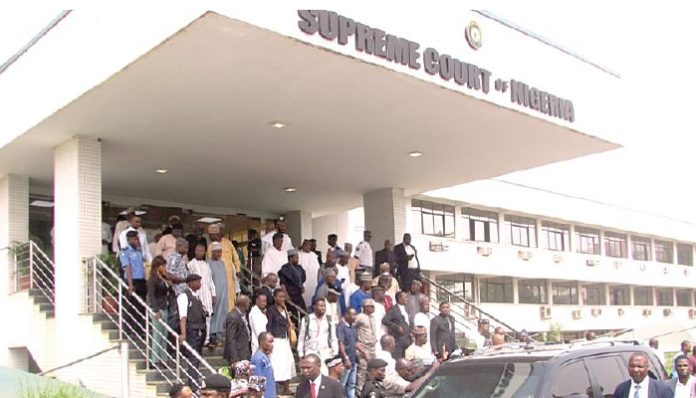
Supreme Court decides FG suit against govs today

The It was perhaps the most remarkable judgment ever delivered by the apex court in recent times, as it used its power to interpret the law to give a different meaning to Section 162 of the 1999 Constitution. on July 11, granting financial autonomy to the 774 local councils and recognising them as the third tier of Nigeria’s governance architecture, was truly historic. It was perhaps the most remarkable judgment ever delivered by the apex court in recent times, as it used its power to interpret the law to give a different meaning to Section 162 of the 1999 Constitution.

Since 1999, governors have used this section to withhold and tamper with the funds federally allocated to the councils, using a joint account that has proven to be a honeypot of abuse.

Last Thursday, the Supreme Court described the payment of the allocations to the account as gross misconduct and scolded the governors for dissolving democratically elected councils and setting up caretaker committees. The court ruled that caretaker committees are illegal and that councils run by them should not receive the federal allocation. Henceforth, the court ruled that the allocations should go directly to the accounts of the 774 local councils.

Justice Emmanuel Agim, who read the lead judgment, said Nigeria runs a three-tier governance structure, where no one tier is subject to the whims and caprices of the other. He criticised the governors and the state Assemblies for almost allowing the councils to go into extinction with their treatment of them. The judgment was generally well received by Nigerians. According to reports, the verdict ignited jubilation by workers in some local councils as they sang the praises of the Tinubu administration.

However, some Nigerians have criticised it as an ‘assault’ on Nigeria’s federalism as it has rewritten Section 162. My simple response to this school of thought is: Must we allow the law to stand still while the local councils die? The Supreme Court also said as much: Since the governors were using the section to perpetuate unconstitutional acts, the court must ensure that the constitution is not applied in a manner that supports its destruction.

In acknowledging the verdict’s import, former Vice-President Atiku Abubakar described it as a win for the people. In a post on X, Atiku wrote: “The court’s ruling is a step in the right direction and a major corrective action in greasing the wheels of national development across the country… The court’s verdict is in tandem with the core functions of the Supreme Court as an arbitration court between and among governments.”

President Bola Tinubu, whose government instituted the case, welcomed the Supreme Court decision, affirming the spirit, intent, and purpose of the constitution regarding the statutory rights of local governments.

“My administration instituted this suit because of our unwavering belief that our people must have relief, and today’s judgment will ensure that only those local officials elected by the people will control the resources of the people. This judgment is a resounding affirmation that we can use legitimate means of redress to restructure our country and economy to make Nigeria a better place to live in and a fairer society for all of our people.”

Tinubu noted that the provision of some essential amenities and public goods, such as the construction and maintenance of roads, streets, street lights, drains, parks, gardens, open spaces, and other residual responsibilities, including community security, has been abandoned owing to the emasculation of local governments. He said the court’s decision to grant financial autonomy to the councils and restate other constitutional principles reinforced the effort to enhance Nigeria’s true federal fabric for the development of the entire nation.

Tinubu and his administration deserved the praise. President Tinubu has earned double appreciation as a defender of the local councils. As governor of Lagos, he sought the intervention of the same Supreme Court to establish the right of states to create councils in compliance with the provisions of the constitution. In a reverse role, as president, he has succeeded in seeking another intervention of the apex court to establish the right of the councils to survive and perform the role envisaged by the constitution.

Former President Muhammadu Buhari had sought to rescue the councils from the governors’ vice grip by using Executive Order 10, which he signed on May 22, 2020, to direct funds straight to the councils, the state legislature, and the judiciary. But the governors challenged his authority in a case filed at the Supreme Court. In a split judgment in 2022, the Supreme Court said Buhari overreached his powers.

In his lamentation, while signing the Executive Order, Buhari had said:  “If the money from the Federation Account to the state is about N100 million, N50 million will be sent to the chairman (of local government), but he (the chairman) will sign that he received N100 million. The governor will pocket the balance and share it with whoever he wants to share it with. Then, the chairman of the local government must pay salaries. Go to hell with development. When he pays salaries, he will put the balance in his pocket. This is what’s happening in Nigeria.”

Tinubu, his successor, sought to combat the problem constitutionally by suing the governors. The Attorney General and Justice Minister, Lateef Fagbemi (SAN), approached the Supreme Court in May, seeking to compel the governors of the 36 federating states to grant full autonomy to local governments in their domains in a suit marked SC/CV/343/2024. The suit, anchored on 27 grounds, accused the state governors of gross misconduct and abuse of power. He prayed that the Supreme Court would make an order stating that funds standing to the credit of local governments from the Federation Account should be paid directly to the local governments rather than through the state governments.

The justice minister also requested an order restraining governors, their agents, and privies from receiving, spending, or tampering with funds released from the Federation Account for the benefit of local governments when no democratically elected local government system is in place in the states. The court granted his prayers in the landmark ruling of July 11.

President Tinubu has always been concerned about the lack of governance at the grassroots. He believes that without fixing the problems at the councils, the objective of developing the country and spreading prosperity to the 200 million people will never be achieved. After all, the councils where the 200 million people live have been financially handicapped by the governors. He made the point clearly when he met in Abuja with the leaders of the Arewa Consultative Forum on May 30, about the same period when Fagbemi approached the Supreme Court for the correct interpretation of Section 162.

Tinubu, responding to the ACF’s demands for more roles by the Federal Government, urged the leaders to summon the governors. He said Nigeria, as a constitutional democracy, has not allowed the councils where we all live, to flourish, citing the absurdity of politicians going to the locals for votes only to abandon them and leave for the capitals and Abuja after winning their votes.

As Nigerians celebrate the historic judgment, it is clear that some work still needs to be done to bring life back to the councils. One issue being raised is how to ensure that the council elections are truly competitive and not predetermined by the governors and the State Independent Electoral Commissions. To solve this, some Nigerians have urged the National Assembly to pass a law that will require only the Independent National Electoral Commission to conduct council elections.

The other problematic issue is the fear that governors will not allow the Supreme Court ruling to affect their domains, as they can always order the councils to send the money received from the Federal Accounts Allocation Committee back to the state coffers. Again, a solution to this possible abuse has been proffered. The Economic and Financial Crimes Commission, Independent Corrupt Practices and Other Related Offenses Commission, and the Nigerian Financial Intelligence Unit should prevent this by monitoring the councils’ accounts. While the governors enjoy immunity to cover their actions, the council chairmen and councillors do not have such cover as they can be arrested, tried, and jailed. The threat of arrest and prosecution can deter local political actors from collaborating with the governors.

In conclusion, while Nigerians await the full implementation of the Supreme Court verdict, one needs to appeal to the powerful governors to allow the councils to breathe. It is in the interest of the states to allow the blossoming of the third tier of government as it was before 1999.

Here are some of the benefits that the states should not let slip away: First, local governments will now have more control over their finances, which could lead to improved service delivery and governance at the grassroots level. Second, with greater financial autonomy, local governments can provide better services to their constituents, such as healthcare, education, and infrastructure development. This will reduce the pressure on the state government from the people expecting such minimal provisions. Third, the judgment could lead to greater accountability and transparency in local government administration.

As President Tinubu remarked after the landmark ruling, “The onus is now on local council leaders to ensure that the broad spectrum of Nigerians living at that level are satisfied that they are benefiting from people-oriented service delivery.

“The Renewed Hope Agenda is about the people of this country, at all levels, irrespective of faith, tribe, gender, political affiliation, or any other artificial line they say exists between us. This country belongs to all of us. By this judgment, our people, especially the poor, can hold their local leaders accountable for their actions and inactions. What is sent to local government accounts will be known, and services must now be provided without excuses.”

  • Onanuga is Special Adviser on Information and Strategy to President Bola Tinubu

Family of slain 26-year-old man fears cover-up, seeks IG’s intervention

0
Family of slain 26-year-old man fears cover-up, seeks IG’s intervention

The family of Felix Nnadozie Jr., who was allegedly fatally beaten by six men in the Sibiri Ojo area of Lagos State, is urging the Inspector General of Police, Kayode Egbetokun, and Governor Babajide Sanwo-Olu to intervene and ensure the perpetrators are held accountable.

Following a fight between Felix’s mother and her female neighbour, our correspondent learnt from the bereaved family that the deceased was allegedly gang-beaten with planks and stones by the six suspects on July 3, which ultimately led to his death on July 6, 2024.

They informed our correspondent that while the six male suspects were beating Felix on the head with planks and stones, the three children of the neighbour, who allegedly encouraged the attack, closed the house’s gate to prevent others from entering the compound.

In a telephone interview with our correspondent on Tuesday, the grieving father, Felix Nnadozie Sr., said some of the suspects in his son’s death had been released by the police because they were under 18, which he said led him to believe that the police were trying to cover up the case.

Nnadozie Snr recounted, “Two of them are sons of serving police officers. My wife was cooking when one of our neighbours came down to pour water on the cooking pot she was using.

“My wife asked them what gave them the effrontery to come to our apartment and pour water on her cooking pot. This led to a confrontation between the neighbour and my son, who was present during the argument.

“The woman brought out a knife, and my son was able to take the knife from her. We thought the problem was over until the next day when the daughter of the woman brought boys to the compound to beat my son. One of them held him down while the others were hitting him with planks and stones.”

According to the distraught father, Felix seemed alright after the incident until hours later when his head began to swell and he started complaining of excruciating pain.

He continued, “We took him to the hospital where the doctor told us that he had blood clots and that he was going to be referred to another hospital at Igando.

“When we got to the Ìgandò General Hospital, the hospital further referred us to another hospital in Ikeja. It was while we were going to the Ikeja hospital that we observed that he was no longer breathing. Two of the people who killed my son are the children of a police officer. This is why I suspect the police do not want to arrest them.”

The victim’s mother, Faith, who expressed shock over her son’s death, made a plea to well-meaning Nigerians to support the family in their quest for justice and make sure the perpetrators did not escape punishment.

She said, “It is very painful and sad. We went to Panti last Wednesday. After making a report, right there in the presence of these people who caused the death of my son, the police said they were likely to release them on that day.

“I could not believe it. The woman, her children, and the boys that they brought to the house to beat my son to death are all supposed to be answering some questions now. I want the governor to come to my aid.

“I appeal to well-meaning Nigerians to help me. The police are not doing enough to arrest the two prime suspects because they are sons of a police officer.

 “They have already released those who went to call them to beat my son because they said they are teenagers. Nobody can wish this kind of painful and gruesome death on anyone. Nigerians should fight for justice for me and my family.”

Meanwhile, the spokesperson for the Force Criminal Investigation Department in Lagos, Aminat Mayegun, on Tuesday, directed our correspondent to speak with the state command’s public relations officer, Benjamin Hundeyin, for details on the incident.

“Please contact PPRO Lagos. I’m certain that a diligent investigation will be conducted, ensuring impartiality,” Mayegun stated.

Hundeyin had not replied to our correspondent’s inquiries into the incident as of the time this report was filed.

UI students protest 10-hour electricity rationing, tuition hike

0
UI students protest 10-hour electricity rationing, tuition hike

Students of the University of Ibadan, on Wednesday, staged a protest to express their grievances following the schedule of a 10-hour electricity supply on campus and a hike in tuition by the university management.

According Metro gathered that the students were provoked by the announced 10-hour power supply, incessant tuition, and introduction of what they termed “outrageous fees” by the authorities.

The protest started in the late hours of Tuesday and continued on Wednesday with the students carrying placards at the front of the university gate.

Our correspondent learnt that an internal memo addressed to the Chief Engineer (Electrical), by the Director of Works and Maintenance Department, O.A Adetolu, that electricity should be rationed and made available to students for 10 hours daily was issued on Tuesday.

 “Effective immediately; the Vice Chancellor has approved a 10-hour daily electricity supply on campus as follows: Day time: 8 am – 2 pm; Night time: 10 pm-2 am. Kindly adhere to the approved schedule.”

The Students’ Union President, Aweda Bolaji, in a voice clip obtained by our correspondent, described the recent policies by the management as “not satisfactory” and termed them “an inconsiderate action.”

He said,” The injustice that has been meted upon us as students of the University of Ibadan is getting too much. The university cannot ration electricity to students in this 21st century. On this basis, if you are a student, join students massively as we demonstrate peacefully against the injustice being meted out by both the miserable government and unconscionable management.”

Bolaji in a statement later also sought the reversal of the new electricity schedule and tuition increment.

“There will be neither lecture nor transportation within the school premises on July 17, 2024. The mass action will continue on July 17 starting from 5 am. The union officials will make available all our resources, including the Aluta Jet and Public Address System, and the Student Union officials must be present to join the mobilisation effort towards this.

 “The school authority in association with maintenance must withdraw the memo on electricity rationing, dated July 16, 2024, and in addition, there must be constant power supply within the school effective immediately.

 “There must be a total reversal of all fees and not a reduction. Those who have paid must be refunded

“The Students’ Union condemns the ongoing victimisation of three students of the University of lbadan; Aduwo Ayodele, Olamide Gbadegesin and Nice Linus, who embarked on a peaceful protest on May 13, 2024, and as such, call for an end to the victimisation,” Bolaji said.

Police hunt ‘area boys’ for killing final-year Bayelsa varsity student over N150 levy

0
Police hunt ‘area boys’ for killing final-year Bayelsa varsity student over N150 levy

There is outrage in Amassoma, Southern Ijaw Local Government Area of Bayelsa State following the stabbing to death on Monday of a final-year student of the Niger Delta University.

Community sources who spoke to our correspondent on Wednesday said the victim, Francis Palowei, was at the Sand Dump, a popular spot among the students for relaxation and socialising when some youths in the area stabbed him to death when he failed to give them N150.

Palowei, who hailed from Obrigbene community in the Ekeremor Local Government Area of Bayelsa State, was expected to graduate on Wednesday, July 24, 2024, when the university would hold its next convocation.

According Metro gathered that men of the Nigeria Police Force had gone to the community and started searching for the perpetrators.

According to one source, who pleaded anonymity, students of the institution have also joined in the search for the perpetrators while the shock of the incident has made some students shun classes, with a greater majority attending classes.

The Public Relations Officer of the university, Indoni Engezi, who confirmed the incident, told According Metro that the incident did not affect academic activities as “the university is a different community.”

Engezi said the issue affected the host community, Amassoma, and that the police were already on top of the situation.

“The owner of the sand dump does not charge any fees for using the premises, but some youths usually charge N150 from anyone who wants to use the premises”, he said.

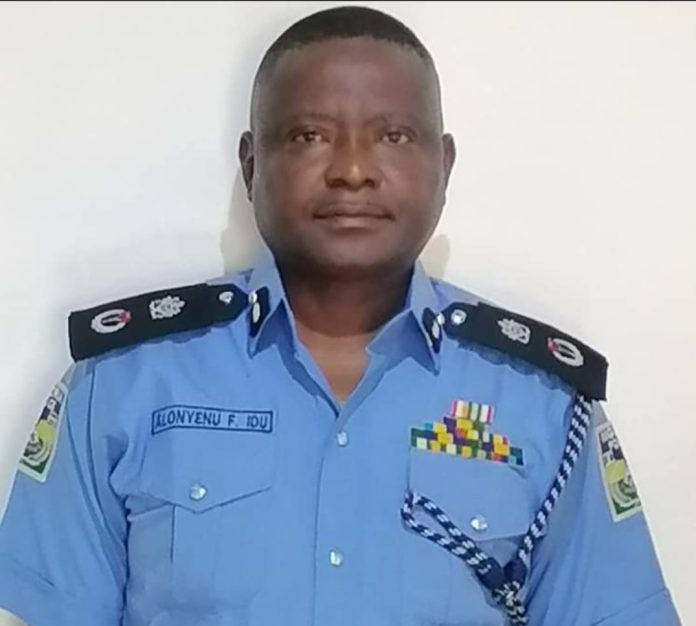
The Police Public Relations Officer, Musa Mohammed, said the Commissioner of Police, Francis Idu, had deployed additional manpower to the community to maintain the peace.

Mohammed said the police had launched a manhunt for the killers.