Home Blog Page 90

Senate Approves Yakubu, Fani-Kayode, Omokri for Ambassadorial Posts

0

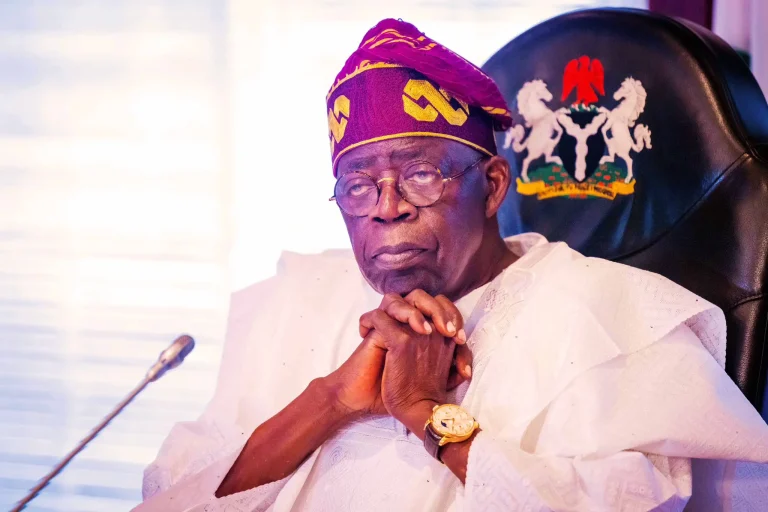
President Bola Tinubu’s 64 ambassadorial candidates were approved by the Senate on Thursday, including former presidential aide Reno Omokri and former Minister of Aviation Femi Fani-Kayode.

The confirmation came after the Senate Committee on Foreign Affairs reviewed and approved a report stating that every nominee had been vetted and deemed qualified for the position.

The exercise took place 48 hours after three non-career ambassadorial nominees were confirmed by the upper chamber: Emmanuel Ayodele Oke (Oyo State), Aminu Dalhatu (Jigawa State), and Lateef Kayode Are (Ogun State). This increased the overall number of confirmed ambassadors to 67.

Former Interior Minister Abdulrahman Dambazau, former President Goodluck Jonathan’s Special Advisor on New Media Reno Omokri, former presidential assistant Ita Enang, and former senator Grace Bent were among those cleared on Thursday.

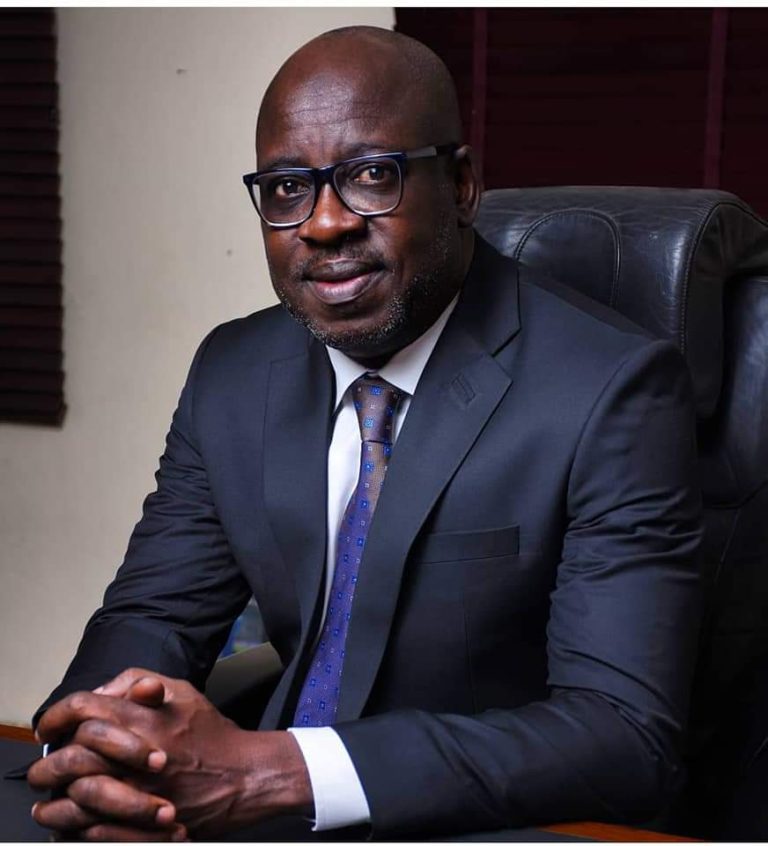
Others include Mahmood Yakubu, the former chairman of the Independent National Electoral Commission; Ifeanyi Ugwuanyi, the former governor of Enugu State; and Okezie Ikpeazu, the former governor of Abia State.

Thirty non-career ambassadors and high commissioners and thirty career ambassadors and high commissioners make up the total confirmed nominations.

The committee’s chairman, Senator Sani Bello (APC, Niger North), presented the committee’s findings and stated that all of the nominees were deemed deserving based on their credentials, experience, and behavior and that none had petitions against them.

Godswill Akpabio, the Senate President, thanked the appointees and asked them to constructively represent Nigeria in their positions.

The confirmation was made a few days after the Senate rejected social media rumors that some nominees, notably Fani-Kayode and Omokri, had been the target of petitions.

Senator Yemi Adaramodu, the Senate spokesperson, insisted that the screening process comprised in-depth interaction with the nominees rather than a simple “take a bow and go” procedure and stated that neither a formal complaint nor a petition had been received by the upper chamber.

“I am telling you that we did not receive petitions from any individuals, organizations, or legal entities,” he declared. Not even from any renegade, illegal, or nameless element. No nominee was the subject of a petition.

In an attempt to realign Nigeria’s overseas embassies and fill long-vacant diplomatic positions, Tinubu sent the Senate an extended list of 65 ambassadorial nominees on December 4.

The transmission came months after the recall of all Nigerian envoys in 2023, which sparked discussion over Nigeria’s diplomatic presence overseas.

In accordance with Nigeria’s foreign policy aims, the confirmed ambassadors are now anticipated to be sent to important world capitals and international organizations.

‘The Hardest Call I Made as Minister’ – Lai Mohammed Speaks Out

0

The moment he nearly resigned from the late President Muhammadu Buhari’s administration, according to former Minister of Information and Culture Lai Mohammed, was the hardest choice.

Mohammed reportedly revealed this information on Wednesday in Abuja during the publication of his book, “Headlines & Soundbites: Media Moments That Defined an Administration.”

He clarified that the book provided an inside look at how the Buhari administration’s narratives were developed, maintained, and disseminated—often in the face of crises, false information, and heavy public scrutiny.

“The toughest decision I took as minister was at a moment when I almost resigned,” he stated, emphasizing that he had a duty to maintain an accurate historical record and dispel long-standing myths because of his extended access to government decision-making.

Lia Mohammed claims that his conviction that Africans must speak their own tales or risk having their histories misrepresented motivated him to write about his experience.

He stated that the newsletter was created to give background information, dispel myths, and share personal observations from his time in office.

“I was at the center of government communication, crisis management, national orientation, culture, and tourism for nearly eight years,” he said. I observed how choices were made and how false information frequently took precedence over the truth.

Former presidential spokesman Segun Adeniyi reviewed the book and pointed out that some contentious themes, such the #EndSARS protests and the Twitter suspension, were handled more like legal briefs than fair historical accounts.

Speaking as well, Mohammed Idris, Minister of Information and National Orientation, praised Lai Mohammed’s efforts and called him one of the Buhari administration’s most criticized ministers for his defense of government policies.

Furthermore, Halima, the late former president Muhammadu Buhari’s daughter, stated that her father was fully aware of the criticism directed at his administration throughout his tenure.

“He heard both the disappointment of critics and the appreciation of supporters,” stated Halima, who spoke on behalf of former First Lady Aisha Buhari.

‘Some Events Are Dangerous’ – Angela Okorie Explains Her Absences

0

Angela Okorie, a Nollywood actress, has said that she declines invitations to some gatherings since she knows that some people don’t like her.

Speaking via an Instagram post, she said that not everyone extends an invitation because they truly admire someone, and that some are intended to hurt, damage, or spiritually attack gullible visitors.

She emphasized the value of insight and prayer, saying that only God can determine people’s actual motivations.

Okorie clarified that she purposefully skips some occasions, pointing out that even though some people may not really like her, they still want her there because she “brings life to the party.” No amount of appearance fees, she continued, could persuade her to go somewhere her spirit forbids.

“Not all invitations you should go,” she wrote.

“As a human being, you need to pray for deceit so God can show you who you are dealing with because certain people are plotting to kill or destroy you. Most of you don’t like me, yet you want me to be at your events because I’m the life of the party.

“No matter how much you want me to go, I will never be seen with you because I follow my spirit and there are places I don’t go.”

“Plenty of poison

“They poison people,”

“They have a plan to

“Shebi una see as mohbad matter as e Dey go”

“Who dies loose?”

“As the JP matter progresses, hmm…

“Go wherever they invite you; don’t hesitate. A few invitations are planned.

“You see, the God I serve is alive, and he will reveal all of them in the powerful name of Jesus, amen. If you don’t do me properly, I’m a strong guy.

Power Play and Personalities Dominate Senate Ambassadorial Screening Drama

0

What transpired in one of the National Assembly’s committee chambers last week was more than just a procedural dispute; it was a striking example of how politics, precedent, power, and personality interact to confirm Nigeria’s foreign representatives.

Reno Omokri, a well-known non-career ambassadorial candidate, was at the center of the controversy. Senators Adams Oshiomhole and Ali Ndume got into a furious argument over Omokri’s screening.

Their altercation, which was characterized by high voices and pointed procedural disputes, briefly took over the meeting and brought attention to what is frequently a pointless exercise on a national level.

The competence and readiness of applicants had already come under intense scrutiny a day earlier due to another incident, this time involving a career diplomat who was unable to name all three senators from his home state.

When taken as a whole, these occurrences turned the screenings into a more comprehensive discussion about norms, symbols, and the constitutional role of the Senate in molding Nigeria’s public image.

Beyond the drama, the ambassadorial screening process represents a turning point in Nigeria’s foreign policy. Following months of openings and acting appointments, President Tinubu’s nomination of 65 nominees—34 career and 31 non-career—indicates a desire to reevaluate diplomatic missions.

The list highlights the dual nature of Nigeria’s ambassadorial system—professional diplomacy on the one hand and political representation on the other—by combining seasoned diplomats with political heavyweights, former governors, retired service chiefs, and presidential loyalists.

In this backdrop, a staggered screening procedure was initiated by the Senate Committee on Foreign Affairs, which is presided over by former Niger State governor Senator Mohammed Bello.

The strategy adhered to long-standing legislative custom by gathering nominees and, where appropriate, permitting former lawmakers and high-ranking public officials to bow and leave. However, as events have shown, when personalities clash and political stakes rise, convention itself may easily turn into a contentious area.

The crisis occurred during the screening of a mixed set of applicants, which included Omokri, a well-known public pundit and non-career nominee, along with four career diplomats.

Senator Ndume, who represents Borno South, proposed that the delegation be let to bow and depart, claiming that the committee was already familiar with the career diplomats and that Omokri’s public persona eliminated the need for additional interrogation. Other senators expressed interest in speaking before the motion could be properly seconded, which led the chairman to acknowledge more interventions.

When Senator Oshiomhole was acknowledged to speak and Ndume insisted that no discussion could begin until his motion had been properly seconded, what could have remained a mere procedural diversion took a dramatic turn.

Oshiomhole disagreed, stating that the chairman’s acknowledgment granted him the authority to speak to the committee. The chairman had to continually call for order as the argument swiftly turned into a shouting match that stopped the meeting for about twenty minutes.

In addition to the outcome of a single motion, the chair’s power, the interpretation of Senate rules, and, implicitly, the influence of individual senators in committee discussions were all at risk.

Oshiomhole, who had previously criticized President Tinubu and the ruling party, used his contribution to launch a vigorous defense of Omokri once the situation had somewhat calmed down. He portrayed Omokri as a pragmatist capable of progress and national loyalty. He maintained that the President’s readiness to nominate erstwhile opponents showed inclusivity and political maturity, traits that he claimed should be praised rather than viewed with mistrust.

However, Ndume insisted that a protracted discussion was superfluous because there was no official appeal against Omokri.

In contrast to Oshiomhole’s emphasis on discretion and political judgment, he insisted on protocol, saying that a proposal that was not seconded was dead. Different legislative oversight philosophies—one based only on regulations and the other on political context—were exposed by the conversation.

Many observers saw the altercation as representative of the Nigerian Senate, a body where formalities frequently conceal more serious power battles. Both Ndume and Oshiomhole are seasoned politicians known for their strong personal values and independence. Some members acknowledged in private that their disagreement was more about who controls the tone and tempo of discussions within influential committees than it was about the nominee in issue.

Some contended that the incident demonstrated democracy in action, despite its mess, while others expressed worries about efficiency and decorum. They pointed out that parliamentary scrutiny is rarely a sterile process, particularly when nominees have a lot of political symbolism or baggage.

Wednesday’s screening emphasized concerns about competency, while Thursday’s clash brought attention to political tension. When challenged to list all three of his state’s senators, Emmanuel Adeyemi, a career diplomat from Ekiti State with outstanding academic qualifications and international assignments, faltered. He mentioned Senator Yemi Adaramodu and Senate Leader Opeyemi Bamidele accurately, but he was unable to remember Senator Cyril Fasuyi. When a member of his delegation was observed frantically looking up the missing name online, the situation got worse.

Committee members harshly criticized the oversight. Senator Asuquo Ekpenyong warned that Nigeria’s reputation abroad could not afford such instances of unpreparedness, characterizing the occurrence as a sign of a deeper illness. The worry was shared by Senators Oshiomhole and Seriake Dickson, who emphasized that political knowledge and attention to detail were crucial qualities for diplomats expected to represent the nation’s interests overseas. Despite appeals for forgiveness, the harm had already been done.

The event revealed a contradiction in the screening procedure. In a system where ambassadors are also expected to confidently traverse Nigeria’s internal political terrain, career diplomats’ perceived technical expertise and institutional knowledge may become a liability due to their isolation from domestic political realities.

The ongoing discussion about striking a balance between career and non-career activities lies at the heart of both episodes. Professional diplomacy proponents contend that in a complicated international setting, consistency, protocol proficiency, and training are essential.

In response, proponents of political appointments argue that envoys must also be reliable representatives of the President, able to use their power and access to further political and economic objectives.

An attempt to combine both strategies may be seen in President Tinubu’s selection of nominees.

Political leaders including as former governors Ifeanyi Ugwuanyi and Victor Ikpeazu, retired military commanders Abdulrahman Dambazzau and Ibok-Ete Ibas, and vocal political players like Femi Fani-Kayode and Reno Omokri coexist with seasoned diplomats like Sulu Gambari and Maimuna Ibrahim.

Therefore, the Senate’s responsibility goes beyond individual screening to guarantee that the diplomatic corps’ general makeup is in line with Nigeria’s strategic interests.

The “take a bow and go” custom, which is frequently used, was also scrutinized again. Critics contend that the approach jeopardizes accountability even if it is intended to speed up proceedings for former parliamentarians and high-ranking officials who are already familiar to the Senate. They argue that even symbolic questioning reassures citizens that no nominee is immune from vetting in an era of increased public scrutiny.

Opeyemi Bamidele, the Senate Leader, defended the convention by pointing out that several of the nominees were well-known among their peers and had previously served in the National Assembly. However, the Omokri incident showed that familiarity does not always equate to harmony or peace.

Beyond the spectacle, the screenings serve as a springboard for a major reform of Nigeria’s diplomatic outposts. The nation’s international standing has been undermined by years of underfunding, protracted vacancies, and changing geopolitical conditions.

The Tinubu administration has made it clear that it intends to revitalize diplomacy as a means of promoting diaspora involvement, security collaboration, and economic recovery. A key component of that goal will be the caliber, reliability, and unity of Nigeria’s ambassadors.

Ultimately, the commotion in the Senate chamber was unsettling, somewhat unedifying, but eventually illuminating. It highlighted the conflicts that exist within Nigeria’s democratic institutions between politics and process, loyalty and knowledge, and efficiency and discussion.

For a public that is frequently kept in the dark about the inner workings of legislative oversight, the event provided a unique window into the debate and resolution of decisions that shape Nigeria’s international representation.

It will be difficult to put aside personality conflicts and concentrate solely on content as the Senate works to complete the confirmation process. Nigeria’s ambassadors will soon represent the country overseas, and the process that created them must, in spite of its flaws, demonstrate the gravity and accountability of that duty.

November FAAC Allocation Sees Drop Despite N2.34 Trillion Remitted by Agencies

0

In November 2025, Nigeria’s federation account got ₦2.34 trillion, a significant decrease from the previous month’s sum.

According to a report, this is based on data from the Federation’s Office of the Accountant-General.

Inflows decreased by ₦591.22 billion from ₦2.93 trillion reported in October, according to records from the Federation Account Allocation Committee meeting in December.

The decline was attributed to lower profits from a number of significant revenue streams at that time.

The Nigerian Upstream Petroleum Regulatory Commission paid ₦660.04 billion to the federation account in November, compared to ₦873.1 billion in October.

Additionally, the Federal Inland Revenue Service sent in less non-oil revenue; collections dropped from ₦591.15 billion to ₦337.22 billion in the preceding month.

Nigeria Customs Service receipts decreased from ₦370.28 billion in October to ₦287.17 billion in November.

Proceeds from the electronic money transfer levy decreased to ₦43.4 billion from ₦49.86 billion, while value-added tax revenue decreased to ₦563.04 billion from ₦719.82 billion.

The Nigerian National Petroleum Company Limited, on the other hand, had an increase in revenue during the month, going from ₦14.72 billion in October to ₦44.92 billion.

Additionally, the Federal Inland Revenue Service’s oil-related revenue increased from ₦315.64 billion to ₦407.57 billion.

In November, gas flare penalties totaling ₦49.76 billion were sent to the Midstream and Downstream Gas Infrastructure Fund.

Following these modifications, the federation’s net revenue was ₦2.29 trillion, which was N581.56 billion less than the ₦2.87 trillion reported in October.

In November, the federation account deductions decreased to ₦365.1 billion from ₦780.45 billion in the preceding month.

The account’s savings decreased from ₦300 billion to ₦200 billion, and the FIRS, Customs, and NUPRC’s revenue collection costs dropped from ₦115.27 billion to ₦84.25 billion.

Additionally, transfers to the North-East Development Commission fell from ₦20.73 billion to ₦16.21 billion.

The amount of ₦18.16 billion that was refunded for the 13% derivation associated with priority projects, subsidies, and the police trust fund did not change.

The deductions associated with 13% derivation for funding for frontier exploration and NNPC management fees fell precipitously to ₦2.87 billion from ₦21.47 billion.

In addition to a separate deduction of ₦37.45 billion for unpaid arrears, the portion of non-oil revenue allotted to the Revenue Mobilization Allocation and Fiscal Commission increased to ₦6.15 billion from ₦4.8 billion.

In November 2025, the amount distributed to the federal, state, and municipal governments was ₦1.92 trillion after all deductions, which was less than the ₦2.09 trillion in October.

Dangote Allegation: NBA Demands Investigation, Warns Against Political Targeting

0

Ahmed Farouk, the former managing director of the Nigerian Midstream and Downstream Petroleum Regulatory Authority (NMDPRA), has been accused of corruption. The Nigerian Bar Association (NBA) has demanded an investigation into these claims.

According to reports, Aliko Dangote, the richest man in Africa, accused Farouk of corruption and economic sabotage, leading to his recent resignation.

Farouk allegedly spent millions of dollars on his children’s secondary school education in Switzerland using “taxpayers'” money, according to Dangote.

President Bola Tinubu and Farouk met briefly before Farouk submitted his resignation.

Despite Ahmed’s departure, the NBA President responded to the news in a Channels Television appearance by saying that an inquiry is still required.

He said that either a thorough inquiry would be the best course of action or the accusation would be interpreted as a plot to remove the former head of NMDPRA.

“It will be unfair for me to take sides with any of the sides,” Osigwe stated.

“The government and public servants now find the situation embarrassing. The claim will be looked into, according to the ICPC. Let’s hope that these accusations weren’t utilized to fire someone.

“Let there be a proper investigation to either clear the man’s name or prove that he was corrupt or guilty of the accusations against him.”

2026 Budget: Tinubu Set to Present Plan to National Assembly on Friday

0

On Friday, Tinubu will deliver the 2026 Budget to NASS.
At 2:00 PM on Friday, President Bola Tinubu will introduce the 2026 Budget before a Joint Session of the National Assembly.
This is stated in a letter written by Mr. Kamorudeen Ogunlana, Clerk to the National Assembly (CNA), and signed by Essien Eyo Essien, Secretary, Human Resources and Staff Development.

“I am directed to inform you that the President and Commander-in-Chief of the Armed Forces of the Federal Republic of Nigeria, His Excellency Bola Tinubu, is presenting the 2026 proposed Budget at a Joint Session of the National Assembly,” the letter states. “As a result, all accredited persons must endeavor to be at their duty posts by 11:00 am, otherwise they would not be allowed access into the Complex for security reasons.”Except for the CNA, Deputy Clerk to the National Assembly (DCNA), and their deputies, non-accredited individuals should avoid the National Assembly on that particular day. “Every other member of staff is required to park his/her vehicle at available spaces at the Annex or the new car park by the national assembly gate.”

Workers, Civil Society Groups Demand Government Action on Human Rights, Protest Rising Insecurity

0

Together with civil society organizations (CSOs), organized labor unions operating under the Nigeria Labour Congress (NLC) platform have criticized the federal government for widespread insecurity, pointing out that “the fundamental rights of all Nigerians are sacrosanct.”

Organized labor and CSOs lamented the government’s terrible failure to fulfill its obligations as outlined in the Federal Republic of Nigeria’s 1999 revised constitution.

Amid concerns over insecurity, the unions held a nonviolent protest in Jos on Wednesday. They carried banners and placards with various inscriptions and threatened to shut down the nation without warning if the Federal Government did nothing.

According to the Daily Champion, the demonstrators gathered as early as 8:00 a.m. and then went to the Plateau State House of Assembly and Government House Little Rayfield, where they delivered a letter to President Bola Ahmed Tinubu so that he might take the appropriate action.

They claimed that “many communities were ransacked and taken over by the terrorists” and demanded that internally displaced people (IDPs) be immediately returned to their ancestral homes in order to prevent further attacks in the towns.

“Today we are here to register and express our displeasure to the Government of the Federation of Nigeria, from the state to the local government and to the three tiers of government of this country,” stated Comrade Eugene Manji, the NLC chairman of the Plateau State Chapter.

We have all seen the problem of insecurity.

Manji, who provided an explanation of the protest’s motivation, stated that it is a follow-up to their May Day (Workers’ Day 2025) event, in which they voiced their disapproval of Nigeria’s insecurity problem.

At the National Executive Council meeting of the NLC last week in Lagos, it was decided that all 36 of the federation’s states should take action at the same time.

“It is very relevant that you live in a nation where people are being killed like animals, and you are unaware of this until another nation, like the United States of America, reminds you that you are a country of particular concern.”

Take a look at our Plateau schools today. Due of insecurity, students have been absent from class for over a month.

Since Boko Haram claims that Western education is prohibited, we are encouraging these people by closing schools.

They have already succeeded in severely impairing education by the time we close schools.

A nation devoid of education is already doomed. That a nation of more than 250 million people might become ignorant is quite regrettable.

Imagine the amount of insecurity that will result from this.

Today, that’s where we are. About 300 pupils were selected from schools in Niger State, and no one was able to contest them. There are perhaps 100 out there, but where are the others?

That indicates the extent of the issue. It occurs daily at mosques, churches, Zamfara, and other locations.

We are arguing that regardless of your beliefs—Christian, Muslim, or free-thinking—you are either directly or indirectly impacted.

You are affected, or your person is affected.

“To ensure proper coordination to combat the threat of insecurity, we are urging the Office of the National Security Adviser to be more proactive and to work in robust synergy with all security agencies,” comrade Manji said.

Steve Aluko, Coordinator of Civil Liberty Organizations, voiced concern that the Federal Government of Nigeria’s ability to quickly use fighter jets and other equipment to thwart a planned coup in the Benin Republic would be a grave indictment of the government’s incapacity to defend Nigerians.

“The situation continues to worsen despite the enormous resources devoted to combating insecurity.

Does the Nigerian government have any control over the issues we face, such as terrorism, banditry, and kidnapping?

Aluko said, “We want to see more practical action from the executive, legislative, and judicial branches rather than just rhetoric. The problem is not beyond the government.”

Additionally, the Borno state chapter of the Nigerian Labor Congress (NLC) joined its national counterparts on Wednesday in a nonviolent demonstration against the nation’s insecurity.

The Nigeria Labour Congress (NLC) procession, which took place in Maiduguri today, December 17, 2025, was successfully organized and adequately secured by the Borno State Police Command.

The calm and well-planned parade began at NUJ Junction and finished at Today’s Store along Gidan Madara Road in Maiduguri.

In order to prevent a breakdown of law and order, Nigerian police officers and men were present.

Due in large part to the great degree of collaboration, understanding, and support from the NLC’s leadership and members, no undesired incidents were reported during the exercise.

Movements of cars and pedestrians were efficiently controlled, guaranteeing unrestricted traffic flow without interfering with citizens’ legal activities.

In a statement released by its spokesperson, ASP Nahum Daso, the Borno State Police Command claimed that the peaceful procession, which started at NUJ Junction and ended at Today’s Store off Gidan Madara Road Maiduguri, was made possible by the deployment of sufficient security.

The statement read, “CP Naziru Abdulmajid psc, Commissioner of Police Borno State Command, commends all participants’ conduct and reassures the public of the Command’s continued commitment to maintaining peace, public safety, and the protection of constitutional rights within the state.”

Plateau: NLC and CSOs denounce widespread insecurity and declare that every Nigerian’s fundamental human rights are inviolable.

Additionally, on Wednesday, the Enugu state branch of the Nigeria Labour Congress (NLC) started a protest against the country’s growing insecurity.

As the demonstrators marched across the city in support of the nationwide protest over the country’s growing insecurity, the protest brought Enugu’s metropolis to a halt for hours.

Deep concern over the widespread threat to lives and property across the country was evident at the protest organized by NLC Chairman Comrade Fabian Nwigbo.

Chanting slogans like “another challenge! another challenge!” and carrying signs that read “Nigeria is bleeding,” “End terrorism, banditry and kidnapping now,” “End insecurity now,” and “Poverty fuels insecurity—create jobs, support local industries,” protesters marched through Enugu’s main thoroughfares.

Other signs urged the government to act decisively rather than rhetorically, calling for the security of citizens and schools.

“Nobody is safe anymore in the country, not even the security personnel,” Nwigbo said to the demonstrators, expressing deep regret that cows are safer than people in Nigeria.

He bemoaned the fact that everyone is impacted by insecurity, including workers, teachers, students, farmers, tourists, and even political leaders, underscoring the frightening level of disorder in the nation.

He underlined that protecting the lives and property of its residents is the government’s first priority.

He revealed that the purpose of the protest is to draw attention to the pressing need for government action to reestablish security and peace throughout Nigeria.

“The country is bleeding,” he said, adding that during its most recent NEC meeting, the NLC took a strong stance to draw attention to the deteriorating circumstances.

Nwigbo criticized the security inadequacies that have resulted in a spike in kidnappings and attacks, pointing out the paradox that cows are better protected than humans.

He questioned the reasoning behind a recent event in which a security commander in the North pulled his troops from guarding a school, only to have the school attacked and students kidnapped.

He explained that the demonstration also serves as a declaration that the NLC is a group advocating for Nigerians’ safety and dignity rather than being a part of any plot fueling the country’s insecurity situation.

Ireti Kingibe Defects from Labour Party to ADC

0

Senator Ireti Kingibe, who represents the Federal Capital Territory (FCT) in the Senate, has officially joined the African Democratic Congress (ADC).

According to reports, the congressman would formally register with the opposition party at the ADC national offices in Wuse, Abuja, on Thursday (today).

Kennedy Mbele, the senator’s media assistant, verified this in a statement issued on Wednesday.

According to him, the action signified Kingibe’s departure from the Labour Party (LP) and her admission to the ADC.

Senior party leaders, ADC candidates running in the FCT area council elections on February 21, party sympathizers, and members of the media will all be present at the registration ceremony, according to the statement.

“Kingibe is the only serving senator in the new but vibrant opposition party thanks to her audacious decision to join the ADC,” Mbele stated.

‘Too Late to Object’: Presidency Defends Tax Laws Against Criticism

0

Critics voicing concerns about the tax rules have been criticized by Bayo Onanuga, the President’s Special Advisor on Information and Strategy.

He denied requests for the delay in an interview with Punch, stating that the law was “unstoppable” and would go into force on January 1, 2026.

Onanuga dismissed calls for suspension as being at odds with “right-thinking Nigerians,” calling the reforms “revolutionary” and claiming that the new system will increase tax collection for the benefit of Nigerians.

“The National Assembly has passed the law,” he stated. The President has given it his approval. Additionally, some people are only now realizing that they ought to have voiced their complaints long ago.

“The law cannot be stopped.” By God’s grace, the implementation will start on January 1st, 2026. There’s nothing to be afraid of. The majority of our various taxes will be harmonized by this development, and low-income workers will not be subject to taxes.

However, some argue that it ought to be put into practice. It is evident that they do not have the same views as conservative Nigerians.

It is a ground-breaking law that will benefit all Nigerians by increasing tax income. It’s too late to voice an objection if they say we shouldn’t implement. The current legal system is inexorable.

“Anyway, it’s already being implemented.”

The administration claims that President Tinubu’s recent signing of four substantial tax reform bills into law represents the biggest change of Nigeria’s tax structure in decades.

The Nigeria Revenue Service (Establishment) Act, the Nigeria Tax Act, the Nigeria Tax Administration Act, and the Joint Revenue Board (Establishment) Act are among the laws that are administered by the Nigeria Revenue Service.

The legislation will go into force on January 1, 2026, after a six-month transition period for system alignment and public education.