Home Blog Page 89

Shocking Case: Woman Sells 2-Month-Old Baby for N1.5m

0

A woman who allegedly sold her two-month-old child for N1.5 million has been taken into custody by Delta State Police Command agents.

Two people who are accused of purchasing the kid are also detained.

The police, meantime, verified that the infant had been saved.

According to Bright Edafe, the Police Public Relations Officer (PPRO) who verified the incident, on December 15, 2025, at approximately 4:40 p.m., Rita Ughale, a woman from Kokori, Ethiopia East Local Government Area, reported to the Ekpan Police division that her two-month-old infant had been taken from her during a robbery while she was traveling in a tricycle.

According to Edafe, a Superintendent of Police (SP), the Divisional Police Officer (DPO) of the Ekpan Division, CSP Labe Joseph, promptly mobilized personnel and organized a quick search and rescue operation in response to the information.

Inconsistencies and suspicious behavior in the complainant’s story during the investigation led to more questioning. The complainant then admitted that the report was manufactured. She disclosed that she had sold her two-month-old child for N1,500,000 to Osas Omijie, a 39-year-old man, and Judith Omijie, a 30-year-old woman. After the suspects were taken into custody, the baby was successfully saved and is now safe. While the investigation is ongoing, all suspects are in custody, and efforts are being made to apprehend more collaborators for prosecution.

In another development, the PPRO reported that on December 14, 2025, at approximately 7.30 a.m., members of the Ughelli surveillance team’s Eagle Net Special Squad executed a search warrant at the home and grounds of a 67-year-old woman named Lydia Osanebi of 14th Street, Otor-Edor, Ughelli, Delta state, based on reliable intelligence.

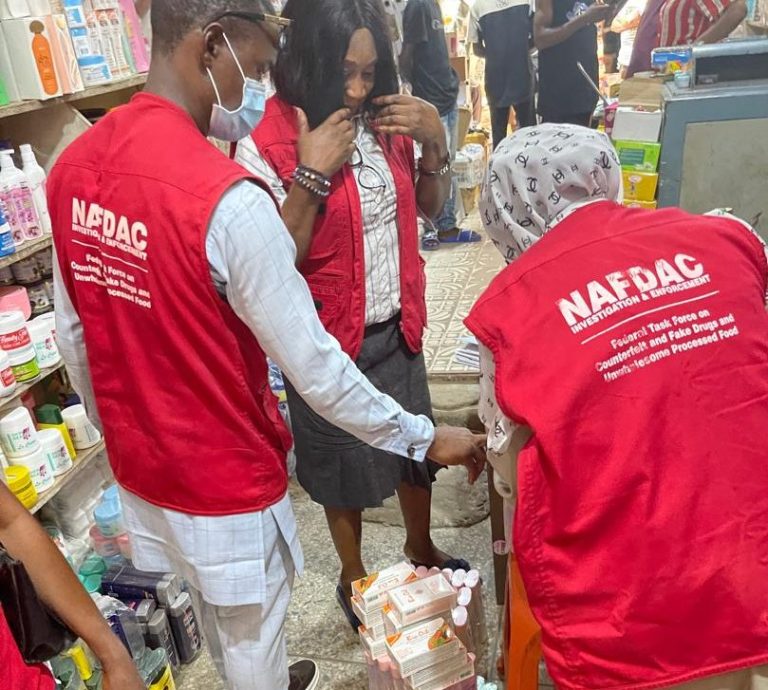
In addition to empty and freshly printed seals and packaging materials from several brands of dry gin, he added that during the search, operatives found significant amounts of hazardous compounds suspected to include formalin, methanol, and cochineal (carminic acid).

Super glue, stickers, shot glasses, and more than 60 liters of suspected counterfeit and adulterated dry gin were also found. After being taken into custody, the defendant readily admitted to making and repackaging tainted dry gin for more than 20 years using recycled original bottles. According to preliminary research, one of the discovered compounds, methanol, is extremely poisonous and has the potential to cause serious health issues, such as organ failure, permanent blindness, coma, and death. To ascertain the extent of dissemination and identify more individuals involved, an investigation is still underway.

Internet-based movie streaming services
In a different operation, on December 18, 2025, at around 8.05 a.m., members of the CP-Special Assignment Team (CP-SAT), under the command of ASP Julius Robinson, stormed a home in the Gana neighborhood of Sapele based on reliable intelligence.

According to Edafe, a 44-year-old man named Felix Africa was arrested as a result of the operation.

According to him, eight bags of weeds thought to be Indian hemp were found during a search of the property.

“The suspect acknowledged that he was the owner of the exhibits and that he had bought and sold Indian hemp and other illegal narcotics. There is a current investigation.

Senate Under Siege: 12 Months of Crises, Oversight, and Governance Tests

0

Nigeria’s Senate found itself at the center of national concerns during a turbulent and unpredictable year, dealing with pressing economic issues and growing insecurity. Every legislative session represented the pulse of a country demanding responsive governance as inflation skyrocketed and public unrest increased. Lawmakers had to balance upholding order with attending to the urgent issues of their constituents while dealing with the demands of constituency expectations and internal party dynamics. During a crucial year in Nigerian politics, SOLA SHITTU explores the Senate’s perseverance and shortcomings as it navigated these choppy waters.

The gavel struck more forcefully than normal on a stressful afternoon in the crimson chamber. While the galleries were calm, the surrounding countryside was not. The morning news was dominated by inflation statistics, security briefings were popular on digital platforms, and senators’ phones were constantly ringing with comments from constituents who were affected by every policy move made in Abuja. This was obviously not your typical sitting when the presiding officer called the chamber to order. It was simply another day in a year that kept pushing Nigeria’s Senate to the edge of institutional resolve and public tolerance.

The Senate functioned under the scrutiny of widespread fear all year long. Lawmaking was no more a far-off process shielded by procedure; instead, it took place in the context of growing costs, growing insecurity, and irate citizens. While confirmations, budget approvals, and policy endorsements were assessed based on their immediate impact on day-to-day living, motions discussed on the floor were immediately scrutinized outside the chamber. The Red Chamber essentially turned into a mirror reflecting the tensions in the nation.

“This was a perfect storm for the legislature,” says Dr. Nkechi Onu, a Center for Democracy and Development governance specialist. Senators were required to enact laws not just according to protocol but also in accordance with national sentiment. Beyond simple legal compliance, each vote and motion carried symbolic weight.

This delicate balance was overseen by a leadership committed to maintaining control in the face of uncertainty. Godswill Akpabio, the president of the Senate, kept a tight hold on the proceedings and insisted on discipline, speed, and order as stabilizing factors in a volatile political environment. Because both the Senate and the executive branch shared the view that legislative paralysis may worsen economic hardship and security issues, their relationship remained largely cooperative. However, this cooperation was frequently put to the test, especially when measures sparked opposition from the public and lawmakers had to balance party allegiance against demands from constituents.

The Senate’s agenda and public scrutiny were mostly focused on economic issues. Discussions over budget standards, taxation, income generation, and subsidy modifications became hot topics for criticism. Aware of the sentiment back home, senators spoke not only as lawmakers but also as political representatives. On the floor, a number of people publicly cautioned that hasty or insensitive actions could undermine confidence and stoke animosity.

Usually procedural, budget sessions became unusually intense. In a period of widespread hardship, debates on borrowing plans, oil benchmarks, and deficit finance were framed not only as financial choices but also as moral ones. Labor unions, civil society organizations, and market players kept a careful eye on the Senate’s approval procedures since they were all looking for clues regarding the government’s economic agenda. Beyond the chamber, every modification or alteration had symbolic significance.

“Senators weren’t just rubber-stamping budgets,” says economic policy researcher Chinyere Uzo. They had to deal with changes to the oil benchmark, improvements to subsidies, and financing for deficits. Every choice has an instant societal impact. Lawmakers were under tremendous pressure as a result of the constituents’ financial hardship.

The 2025 Appropriations Re-enactment Bill did, in fact, highlight the level of fiscal scrutiny. Senators from both parties examined President Bola Ahmed Tinubu’s request for parliamentary clearance to release ₦43.56 trillion in-depth. The breakdown of capital projects, debt servicing, statutory transfers, and recurring expenditures was discussed by lawmakers. While some questioned the viability of borrowing plans, others called for quick approval to avoid administrative stagnation.

“Every figure debated on the floor carried a real human story,” a senior senator who wished to remain anonymous stated. “You couldn’t talk about billions without considering families that are having a hard time making ends meet or students who are having trouble paying their tuition.”

Concerns about security were a persistent undercurrent. Plenary sessions were soberingly frequently interrupted by motions on violent attacks, kidnappings, and regional instability. As senators described episodes from their constituencies, the chamber occasionally fell into uncomfortable quiet as they blended legislative language with personal sorrow. The calendar began to regularly incorporate emergency sessions and private briefings, which strengthened the impression that the legislature was under constant pressure.

“Motions on violent attacks weren’t just parliamentary rhetoric,” says political analyst and former security assistant Peter Adebayo. The constituencies’ actual pain was reflected in them. Direct testimony from communities and families was given to senators. Because they were trying to get it right, that emotional weight influenced discussion and occasionally slowed down decision-making.

Legislation and oversight were frequently combined in the Senate’s reaction to security-related issues. Chiefs of the police and military were called before committees to discuss tactical gaps, budgets, and operations. A critical audience seeking for accountability saw several hearings in real time as they developed into public clashes. Others were settled amicably through backstage discussions that seldom made the news. A fundamental conundrum was brought to light by this contrast: how to use authority without undermining governance.

Oversight operations led to some of the most dramatic events of the year. Committees questioned agency leaders, budgets, and well-known projects. Live broadcasts of hearings increased public interest as confrontation and accountability became entwined. From technical budget clarifications to direct requests for justifications of public service failures, senatorial questioning covered a wide range.

Professor Emeka Okafor, a constitutional attorney at the University of Lagos, states that the Senate had to balance upholding accountability with permitting governance to continue. Oversight is crucial, but institutional stagnation could result from ongoing conflict without a resolution. They had to tread carefully all year long.

The Senate’s internal dynamics put unity to the test. Hasty caucus meetings and short-term adjournments were the result of intense discussions about economic measures. The moral need to alleviate public suffering, regional interests, and party allegiance had to be balanced by the leadership.

Political scientist Ibrahim Sule observes that Senate leadership has to constantly strike a balance between party allegiance and constituency demands, as well as speed and inspection. “Akpabio’s insistence on order was a stabilizing response to pressure on multiple fronts; it was not just formalism.”

Criticisms of obstructionism followed accusations that the chamber was too close to the executive. Senators discussed how to strike the right balance between independence and cooperation, knowing that public confidence changed with each choice.

Public opinion turned out to be one of the Senate’s most enduring problems. Civil society criticism, protests outside the National Assembly building, and constant media coverage made sure that few choices went ignored. Every motion, vote, and comment was magnified by social media, which frequently presented the discussion as a test of the legislators’ abilities.

According to media strategist Funke Adeyemi, “24-hour news cycles and social media made sure that no decision went unnoticed.” The Senate’s responsiveness and institutional rigor had to be balanced. Too much delay led to criticism, and too much hurry increased the chance of errors.

While some senators used stakeholder consultations and town halls to interact directly with critics, others relied on protocol to handle public criticism. The year’s defining fault line was the discrepancy between public expectations and institutional rationale.

Beyond the formalities of committee and plenary work, there was a personal cost. Senators discussed in private how lobby organizations, party leaders, and constituents were putting constant pressure on them. Late into the night, calls for assistance, clarification, or intervention rang out. Employees put in long hours to monitor movements, write reports, and plan public relations campaigns.

“The amount of calls, emails, and messages was overwhelming,” a legislative assistant remarked. “Managing expectations and making sure people felt heard were more important than simply passing laws.”

Quieter victories frequently went mostly unnoticed in the middle of this upheaval. Following stakeholder involvement, amendments were improved, committee reports incorporated constituency concerns, and potentially divisive proposals were defused through concessions. The hidden unfolding of legislative action was made up of these small victories that were obscured by more dramatic catastrophes.

Dr. Onu points out that not every achievement gets headlines. However, sustainable governance requires these behind-the-scenes changes. They show that the Senate is able to compromise and change.

As the year went on, it became evident that the Senate was being put to the test on empathy, discretion, and resilience in addition to productivity. Moments of unusual consensus were also produced by decisions made under duress, which exposed divisions within parties and between regions.

By the last few months of the year, weariness was apparent. Both politicians and staff were burdened by the sheer number of motions, debates, and emergency sessions. However, a sense of institutional resilience was also present. Even if questions remained about whether the Senate had done enough to close the gap between policy and perception, it had absorbed waves of criticism, modified its procedures, and carried on with its operations.

According to Professor Okafor, “Nigerian institutions can withstand crises because of the Senate’s resilience under pressure.” However, converting legislative efforts into concrete results is essential for maintaining public trust over the long term. Even well-meaning choices will be questioned if they have no obvious effect.

At the end of the year, the red chamber was clearly at a turning point. Its strengths and weaknesses had been revealed after months of working under close observation. Even if unanswered concerns about openness, responsiveness, and independence persisted, the Senate showed the capacity to absorb shocks, modify deadlines, and reevaluate priorities.

In the end, the year was more defined by what it showed about Nigeria’s struggling legislature than by any particular measures. The Senate emerged as an institution walking a tightrope between stability and sensitivity rather than as an inflexible gatekeeper or a passive appendage. It was a year of cautious reform, crisis management, and nonstop compromise.

Within the red walls of the chamber, the lessons of pressure, compromise, and consequence reverberate as another legislative year approaches. It’s still unclear if the Senate can use these lessons to build more public trust. It is evident that the institution has been altered by the experience, molded by a year in which the daily challenges of the country it serves were inextricably linked to the legislative process.

President Tinubu Calls on Govs to Enforce Supreme Court Ruling on Local Governments

0

If governors disobey the Supreme Court’s ruling on local government autonomy, President Bola Tinubu threatens to step in.

Speaking at the All Progressives Congress’s (APC) 15th National Executive Committee (NEC) meeting on Friday night in the Banquet Hall of the Presidential Villa in Abuja, Tinubu issued the warning.

He emphasized that governors must abide by and respect the Supreme Court’s ruling on local government autonomy because it continues to be the highest legal authority in the country.

Give them their money directly, according to the Supreme Court’s ruling. I will cut it if you wait on my executive order because I have the yam and the knife.

“We will calculate the percentage before FAAC, and I will forward it to their accounts.” All I’m doing is showing my governors a great deal of respect and understanding.

President Tinubu stated, “If you don’t start implementing it FAAC after FAAC, you will see deduction from the source.”

Tinubu instructed the National Assembly to call the Inspector General of Police to investigate the implications of the State Police in order to establish controls and stop abuses.

“We intend to pursue State Police.” The Forest Rangers will be armed by us. We shall vanquish those bandits and terrorists. The President stated, “We have to.

“Allow it, don’t elbow, don’t shut the door against the people,” Tinubu said, urging the party’s leadership to ensure justice in the APC e-membership registration process.

“You now have authority; if you don’t exercise it, we will remove it.” We are skilled at it. “We’ll handle it on your behalf,” he declared.

Earlier, Vice-President Kashim Shettima said, “APC is fortunate that President Tinubu is not in opposition today,” acknowledging President Tinubu’s contribution to the opposition culture that helped the APC win power.

He stood when it was out of style, long before power calling. financed democracy when it was safe to remain silent and organized when it was risky to do so.

Tinubu is the type of warrior you hope will never face you in the ring.

Shettima declared, “His experience is not just history; it is the party’s armor forged in resistance, sharpened by survival, and perfected by victory.”

Additionally, Prof. Nentawe Yilwatda, the National Chairman of the APC, stated that the party has solid roots across all six geopolitical zones and is still cohesive, resilient, and forward-thinking.

With steadfast backing, he promised that the party will solidify its gains and keep offering Nigerians significant leadership.

He restated the party’s unwavering support for the audacious and extensive changes being carried out by President Tinubu’s administration.

Nwoko Honors Late Sen. Nwaoboshi as Exemplary Party Leader

0

Sen. Peter Nwaoboshi passed away in the early hours of Friday, and Sen. Ned Nwoko (APC-Delta) has joined other Deltans in grieving.

In a condolence statement provided to the News Agency of Nigeria (NAN) in Abuja, Nwoko, the representative for the Delta North Senatorial District, called the late Nwaoboshi a perfect party administrator.

He also referred to his immediate predecessor, the late former congressman, as a longstanding political figure and a committed community leader.

He declared that Nwaoboshi would be remembered for his significant contributions, which date back to the 1990s, to the political development of Delta and Anioma land.

“I learned of Sen. Peter Nwaoboshi’s passing with a deep sense of sorrow and grief.

“Having held important positions as party chairman, civil commissioner, and senator, among other offices, he undoubtedly made a significant contribution to the social and political development of Delta as a state, Delta North, and the nation.”

“On behalf of my family, friends, and political associates, I offer the family my sincere condolences during this trying time of their patriarch’s passing.

“May the Almighty give the entire family the strength to bear the irreversible loss, as well as the people of Oshimili, Anioma, and Delta at large,” Nwoko prayed.

Late on Friday afternoon, word leaked out of the former lawmaker’s passing.

From 2015 to 2023, Nwaoboshi, a resident of Isieke, Umuekea quarters in Ibusa, represented the Delta North Senatorial District as a senator.

He started his political career in the late 1970s as an assistant to the governor of the former Bendel, a position that laid the groundwork for a lengthy and significant career.

Among other important national positions, he later held the position of Chairman of the Nigerian Railway Corporation.

In addition, Nwaoboshi served as Chief James Ibori’s political advisor before serving as the Delta State Commissioner for Agriculture and Special Duties from 2000 to 2006.

He held the position of State Chairman of the Peoples Democratic Party (PDP) in Delta from 2008 to 2014 before stepping down to run for the Senate, a decision that increased his reputation in politics.

He was affectionately called the “Oracle in Politics.”

Ahead of Tinubu’s Visit, Borno Police Step Up Security Measures

0

Ahead of President Bola Tinubu’s planned visit to the state on Saturday, the Borno State Police Command has stepped up security measures.

The Commissioner of Police, CP Naziru Abdulmajid, has implemented a thorough security architecture to guarantee a secure and trouble-free presidential visit, according to a statement released in Maiduguri by ASP Nahum Kenneth Daso, Police Public Relations Officer, PPRO.

Explosive Ordnance Disposal (EOD) units, tactical teams, surveillance squads, crowd control units, and regular police officers make up the security deployment, according to the statement.

Certain routes in Maiduguri, especially the parallel route from Airport Road to Shehu Road, may undergo temporary traffic limits or diversions, according to the police, in order to ensure public safety and allow dignitaries to move freely.

The on-duty security staff asked both residents and drivers to have patience and follow their legal instructions.

Before, during, and after the presidential visit, the Command informed the public of its dedication to safeguarding people and property while urging locals to cooperate, be vigilant, and show support.

Additionally, ASP Daso asked the public to notify the closest police station or established emergency contact channels right away of any suspicious movements or security-related issues.

Police in Jigawa Roll Out Initiative for a Safe Christmas

0

A countrywide Crime-Free Christmas Campaign has been started by the Jigawa State Police Command to urge people to stay alert and report any suspicious activity to the closest police station.

This was said in a statement given to reporters and signed by the command’s Police Public Relations Officer, SP Shiisu Lawan Adam.

“The Jigawa State Police Command has successfully conducted a one-day nationwide Police Campaign Against Cultism and Other Vices (POCACOV), tagged the Crime-Free Christmas Campaign/Sensitization,” the announcement states.

According to him, the campaign is a part of proactive steps to guarantee that the state’s Christmas and New Year celebrations are safe, pleasant, and free of crime.

He clarified that the campaign was executed concurrently throughout the state’s Divisional Police Headquarters in accordance with the Commissioner of Police’s order.

However, CP Dahiru Muhammad, the Jigawa State Commissioner of Police, instructed all Divisional Police Officers (DPOs) to mobilize important stakeholders within their jurisdictions and educate them about the risks and repercussions of criminal activity and social vices.

Cultism, drug misuse, cybercrime, vandalism, mob action, purported witchcraft practices, footprint tracing, gender-based violence, and other associated societal vices capable of endangering public peace and security were, according to him, major areas of focus during the sensitization.

The Jigawa State Police Command reaffirmed its dedication to community-oriented policing and urged parents, guardians, youths, religious and traditional leaders, civil society organizations, the media, and the general public to assist the command in its continuous efforts to combat crime and advance lawful behavior, peace, and justice.

He asked people to be on the lookout for unusual activity and to report it to the closest police station or via the designated emergency contact channels.

The Jigawa State residents were reassured by the leadership that sufficient security would be provided both during and after the holiday.

Peter Obi Decries Budget Padding, Forged Laws as Nigeria’s National Shame

0

Peter Obi, a former presidential candidate for the Labour Party, has accused Nigeria’s federal administration of making decisions that leave many concerns unanswered.

Peter Obi claims that the public is quickly losing faith in the government.

He called on the government to be more accountable, open, and respectful of the law.

In a post on Saturday on his 𝕏 account, the former governor of Anambra State said that there are differences in laws enacted by the legislature and what the executive eventually declared as law.

He bemoaned the fact that the government is now creating laws instead of just padding the budget.

Obi specifically stated that the House of Representatives never authorized the new enforcement and coercive powers being introduced by the government.

Naija News is aware Obi’s remarks came amid accusations made by Abdulsammad Dasuki, a member of the House of Representatives, regarding differences between the official versions of tax laws published by the executive branch and those passed by the National Assembly.

The former presidential candidate emphasized that Nigerians must comprehend what was signed, enacted, and officially documented. He also stated that the government cannot keep requesting more taxes from the populace while public confidence in the government is eroding.

“Even at the highest levels of government, the decisions made by our leaders continue to reveal our national shame,” he said. The documented differences between what was enacted by the legislature and what was eventually promulgated as law by the president serve as a stark reminder of this humiliation. This is a serious issue that goes to the heart of constitutional governance and exposes the depth of our institutional deterioration; it is not just an administrative oversight.

“We have moved from a Nigeria where budgets are padded to one where laws are forged—changes that affect the rights of taxpayers and, most importantly, access to justice.”

The addition of new enforcement and coercive powers that the House of Representatives never authorized is much more concerning. These include giving tax agents the authority to make arrests, selling assets without judicial review, and imposing an absurd 20% deposit requirement before appeals can be heard in court.

The President’s silence on accusations of falsification, institutional sabotage, and procedural abuse is perhaps the most unsettling. Who changed these things?

“This has to be made public. Nigerians must comprehend what was passed, signed, and officially documented. As public confidence in government erodes, we cannot keep asking taxpayers to pay higher taxes.

“We require leadership that respects the rule of law, upholds due process, and welcomes accountability and openness. Where laws are made and leadership is replaced by quiet, no country can prosper.

“We can create a new Nigeria. -PO.

Breaking: Tinubu Cautions Governors Against Retaining Local Government Funds

0

State governors have received a severe warning from President Bola Tinubu that if they disregard a recent Supreme Court decision upholding financial autonomy for Nigeria’s third tier of government, he may be forced to issue an Executive Order to mandate direct allocations to local governments.

At the All Progressives Congress’s (APC) 15th National Executive Committee (NEC) meeting on Friday at the State House Conference Centre in Abuja, Tinubu gave a speech.

Tinubu threatened to utilize the Federation Account Allocation Committee (FAAC) to directly distribute local council monies if governors were found to have withheld statutory amounts intended for local councils.

“The Supreme Court has capped it for you again, saying, ‘give them their money directly,'” the President remarked, addressing NEC members, who included governors, members of the National Working Committee, and other party leaders. I have the yam and the knife, so if you wait for my Executive Order, I’ll chop it.

“I’m simply being very respectful and understanding with my governors,” he continued. Otherwise, you’ll see if you don’t begin putting it into practice.

Tinubu’s comments come after the Supreme Court’s historic ruling on July 11, 2024, which affirmed the Federal Government’s lawsuit to require local governments to be financially independent.

A seven-member panel of the Supreme Court ruled unanimously that it is unlawful for state governments to keep or handle money intended for local councils.

According to Section 162(5–8) of the 1999 Constitution (as modified), the court mandated that allotments from the Federation Account be paid directly to local governments. Nonetheless, a few of states have persisted in using joint accounts to transfer the money.

In his remarks, Tinubu reaffirmed the need for governors to follow the ruling of the highest court and warned that any more infractions would result in federal intervention.

Our Supreme Court is the end aim. We must follow the rules. “The judgment must be respected,” he said.

2026 Budget Speech by President Tinubu (Complete Text)

0

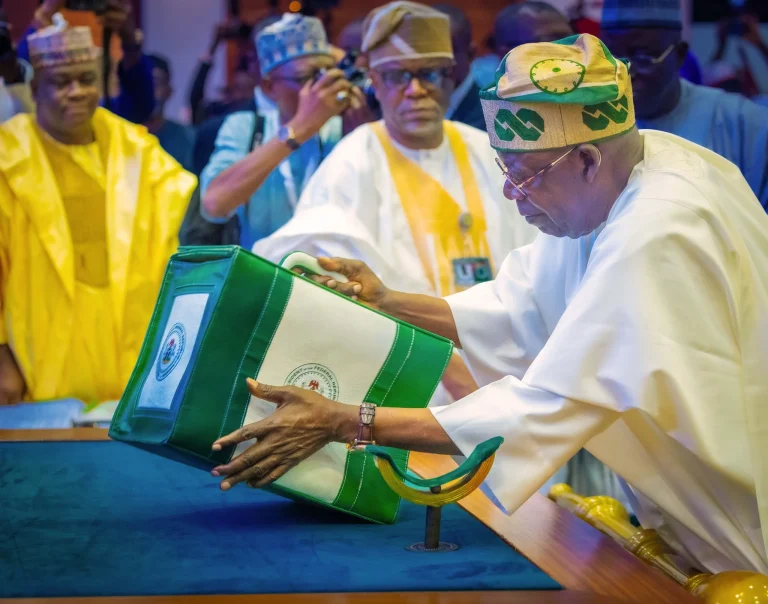
The 2026 Appropriations Bill, which President Bola Tinubu submitted to a joint session of the National Assembly on Thursday, calls for a total budget of N58.46 trillion, of which N15.25 trillion is expected for non-debt recurrent expenditures.

During his speech, the President established N26.08 trillion for capital expenditures and US$64.85 per barrel as the benchmark for crude oil prices for the fiscal year.

The President’s address and a summary of the 2026 budget are available here.
Techniques

Respected Senate President,

Honorable Members of the House of Representatives and Honorable Speaker,

Respected Senators and Honorable National Assembly Members,

Friends from Nigeria,

1. I am here to bring the Federal Republic of Nigeria’s 2026 Appropriations Bill before this Joint Session of the National Assembly in accordance with my constitutional obligation.

2. In the process of reforming and transforming our country, this is a turning point. We have made a conscious decision over the past two and a half years to address long-standing structural flaws, stabilize our economy, restore trust, and create a solid basis for a more resilient, inclusive, and dynamic Nigeria.

3. These changes have not been easy, but they were necessary. Budget execution has been put to the test, established procedures have been upset, and families and businesses have experienced strain. I openly accept these challenges and reassure Nigerians that their sacrifices are not in vain. Reform is the most certain way to achieve shared wealth and long-term stability, but it is rarely easy.

4. Today, we provide a budget that unifies our progress, fortifies our resiliency, and transforms recovery into higher living standards for every Nigerian household.

The budget’s theme for 2026

5. The topic of the budget for 2026 is “Budget of Consolidation, Renewed Resilience and Shared Prosperity.” It demonstrates our commitment to securing macroeconomic stability, enhancing competitiveness, and guaranteeing that growth results in respectable employment, rising wages, and an improved standard of living throughout our Federation.

Economic realities: indicators of stabilization and the goal of the following action

6. In light of the strengthening global picture, Mr. Chairman of this Joint Sitting, the 2026 Budget was created. However, Nigeria continues to be our first priority: creating a robust economy that benefits our citizens.

7. The fact that our reform initiatives are already producing quantifiable effects gives me hope:

Compared to the 3.86% growth in Q3 2024, our GDP expanded by 3.98% in Q3 2025.

Headline inflation dropped from 24.23% in March 2025 to 14.45% in November 2025, marking eight consecutive months of moderation in inflation. We anticipate that the disinflationary trend will continue due to stabilizing food and energy prices, tighter monetary conditions, and better supply responses. This means that, absent significant supply shocks, inflation will continue to drop over the 2026 timeframe.

Oil output has increased thanks to sector reforms, increased security, and technological deployment.

Improved tax management, not high taxes, has greatly increased non-oil revenues.

Capital inflows, fresh project finance, and increased private sector involvement are all indicators of the recovery of investor confidence.

As of November 14, 2025, our external reserves had increased to a seven-year high of over US$47 billion, offering more than ten months’ worth of import coverage and a more robust buffer against shocks.

8. These results are deliberate. They are a reflection of thoughtful yet challenging policy choices. Now is the time to build on these successes so that stability leads to prosperity and prosperity leads to shared wealth.

LESSONS, ACCOUNTABILITY, AND EXECUTION OF THE 2025 BUDGET PERFORMANCE

9. Distinguished Members, the implementation of our 2025 budget had to deal with the challenges of transition and conflicting demands for execution. As of Q3 2025, our records showed:

61% of our goal, or N18.6 trillion in revenue; and

60% of our goal, or N24.66 trillion, was spent.

10. As of June 2025, N2.23 trillion has been released for the execution of 2024 capital projects after the 2024 capital budget execution was extended to December 2025.

11. The government fulfilled its primary responsibilities despite ongoing financial difficulties. However, as of Q3, only N3.10 trillion, or around 17.7% of the 2025 capital budget, has been disclosed, indicating the focus on finishing priority 2024 capital projects during the transition period.

12. To be clear, 2026 will be a year of increased budget execution discipline. To ensure that the 2026 Budget is implemented strictly in accordance with the appropriated details and timelines, I have given directives to the Honourable Minister of Finance and Coordinating Minister of the Economy, the Honourable Minister of Budget and Economic Planning, the Accountant-General of the Federation, and the Director-General of the Budget Office of the Federation.

13. With the new National Tax Acts and the ongoing changes in the oil and gas industry, we anticipate better revenue performance. These reforms are intended to promote openness, efficiency, fairness, and long-term value in our fiscal architecture in addition to increasing revenue.

14. I’ll also be clear about government-owned businesses. All GOE heads are hereby instructed to meet the income targets that have been given to them. We will implement end-to-end digitization of revenue mobilization to support this, including standardized e-collections, interoperable payment rails, automated reconciliation, data-driven risk profiling, and real-time performance dashboards. This will ensure that leakages are sealed, compliance is verifiable, and remittances are timely. Institutional scorecards and performance reviews will be built around these goals. Leakages, inefficiencies, and poor performance in vital agencies are no longer acceptable to Nigeria. Each institution needs to contribute.

The 2026 Budget’s goals and philosophy

15. The 2026 Budget is directed by four distinct goals, Mr. Chairman and fellow Nigerians:

First, stabilize the macroeconomic environment;

2. Enhance the business and investment landscape

Three, lessen poverty and encourage growth that is rich in jobs; and

Four, bolster human capital while safeguarding the weak.

16. To put it succinctly, we will pursue growth that is broad rather than limited, sustainable rather than transient, and manage debt with discipline.

Summary of the 2026 Budget: The Financial Structure

17. Distinguished Members, the Federal Budget for 2026 is based on growth direction, prudence, and realism.

18. These are the major aggregates:

Total revenue of N34.33 trillion is anticipated.

An estimated N58.18 trillion will be spent overall, of which N15.52 trillion will go toward debt repayment.

Recurring (non-debt) spending: N15.25 trillion.

Spending on capital: N26.08 trillion.

4.28% of GDP, or N23.85 trillion, is the budget deficit.

19. These figures represent more than simply accounting lines. They represent the priorities of the country. We are still steadfastly devoted to value-for-money spending, debt transparency, and fiscal sustainability.

20. The 2026–2028 Medium-Term Expenditure Framework and Fiscal Strategy Paper establishes the budget’s criteria. The foundation of our forecasts is:

a prudent benchmark for crude oil at US$64.85 per barrel;

daily production of 1.84 million barrels of crude oil; and

For the fiscal year 2026, the currency rate was ₦1,400 to the USD.

21. We will keep cutting back on waste, tightening regulations, and making sure that every naira borrowed or spent generates quantifiable public benefit, particularly in the areas of infrastructure, human capital, and security.

SECURITY, PEOPLE, AND PRODUCTIVITY AS PRIORITIES AND ALLOCATIONS

22. Nigerians’ practical needs and the Renewed Hope Agenda are reflected in our allocations. Among the important sectoral provisions are:

N5.41 trillion for security and defense

Facilities: N3.56 trillion

Schooling: N3.52 trillion

Medical: N2.48 trillion

23. These priorities are connected. Investments will fail in the absence of security. Productivity will not increase without folks who are healthy and educated. Infrastructure is necessary for businesses and jobs to grow. For this reason, the budget is created as a single, cohesive national revitalization program.

24. Development is still built on security. The Budget for 2026 increases assistance for:

updating the armed forces;

intelligence-driven law enforcement and collaborative efforts;

border protection and technology-assisted monitoring; and

community-based efforts to prevent conflict and promote peace.

25. Since security spending must result in security outcomes, we will invest in security with clear accountability for results. Our first priority will continue to be enhancing the fighting capabilities of our armed forces and other security agencies through manpower increases and the acquisition of state-of-the-art platforms and other gear in order to safeguard our nation. In order to eradicate terrorism, banditry, abduction for ransom, and other violent crimes, we are also pursuing a new era in the criminal justice system. A new national counterterrorism doctrine—a comprehensive redesign based on unified command, intelligence, community stability, and counter-insurgency—is being established by our administration along with a reset of the national security architecture. This new ideology will drastically alter how we deal with terrorism and other violent crimes that have increased public fear and become existential threats to our corporate survival.

Any armed group or non-state actors with guns acting outside of official authority will be considered terrorists going forward under this new architecture. Bandits, militias, armed gangs, armed criminal networks, armed robbers, violent cult organizations, armed collectives headquartered in forests, and foreign-affiliated mercenaries are some examples of these. Terrorists also include organizations or individuals that use violence for sectarian, political, ethnic, or financial purposes. Any group that kidnaps civilians, extorts communities, or occupies or seeks to occupy Nigerian land would be labeled as terrorists. The commonality is that you are a terrorist if you use deadly weapons and act outside the bounds of official authority. Terrorists will also include any person or organization that facilitates the stated groups as financiers, money handlers, harborers, informants, ransom facilitators, and negotiators. Owners of safe houses, arms suppliers, transporters, and political guardians and intermediaries will all be labeled terrorists. Terrorists include politicians, traditional leaders, community leaders, and religious leaders who support and incite acts of violence and terror against Nigerians.

26. The caliber of a country’s citizens is its greatest asset. The budget for 2026 increases spending on social protection, healthcare, education, and skills.

27. In terms of education, we are using the Nigerian Education Loan Fund to increase access to higher education. In collaboration with 229 postsecondary institutions around the country, more than 418,000 students have received assistance.

28. I’m happy to point you that, net of liabilities, healthcare spending accounts for 6% of the whole budget.

29. International partners’ assistance is also greatly appreciated. More than US$500 million in grant financing for focused health treatments throughout Nigeria is now possible because to recent high-level interactions with the US government. We applaud this collaboration and guarantee Nigerians that these resources will be used efficiently and openly.

30. Throughout the country, initiatives under the Renewed Hope Agenda—such as energy and transportation infrastructure, port modernization, agricultural reforms, and strategic investments that unlock private capital—are progressing from concept to reality.

31. We will act decisively to bolster agricultural markets. Security of food is security of the country. Agro-value chains, irrigation and climate-resilient agriculture, storage and processing, and input financing and mechanization are all given top priority in the 2026 budget.

32. These actions will strengthen agro-industrialization, lower post-harvest losses, increase smallholder incomes, and create a more robust, diverse economy.

DISCIPLINE, NATIONAL COMPACT, AND DELIVERY

33. Distinguished Members and fellow Nigerians, we do not announce the best budget. We are the ones who provide it.

34. Consequently, three pragmatic commitments will serve as the foundation for 2026:

Efficiency, transparency, and compliance—particularly from GOEs—as well as better governance of the oil and gas industry will increase revenue mobilization.

Spending more wisely means giving priority to initiatives that citizens can measure, feel, and finish.

Improved accountability: bolstering monitoring, reporting, and procurement discipline so Nigerians can understand what their money is supporting.

35. We shall establish confidence by aligning our statements with outcomes and allocations with results.

RESULTS: A BUDGET THAT IS OURS ALL

36. Remarkable The 2026 budget is a budget of consolidation, renewed resilience, and shared prosperity, not a budget of promises, fellow Nigerians and members of the National Assembly. It addresses new issues, expands on the reforms of the previous 2.5 years, and lays out a clear course for a Nigeria that is safer, more competitive, more equal, and more optimistic.

37. I applaud our people for their perseverance, understanding, and selflessness. My government is still dedicated to making the transition easier and making sure that households and communities throughout the Federation benefit from reform.

38. We will fulfill the entire promise of the Renewed Hope Agenda with the help of the Nigerian people’s tenacity and the Executive and Legislature’s shared goal.

39. As a result, I am delighted to present to this esteemed Joint Session of the National Assembly the Federal Republic of Nigeria’s 2026 Appropriations Bill, which is titled “Budget of Consolidation, Renewed Resilience and Shared Prosperity.”

God bless Nigeria’s Federal Republic.

Senate Approves Yakubu, Fani-Kayode, Omokri for Ambassadorial Posts

0

President Bola Tinubu’s 64 ambassadorial candidates were approved by the Senate on Thursday, including former presidential aide Reno Omokri and former Minister of Aviation Femi Fani-Kayode.

The confirmation came after the Senate Committee on Foreign Affairs reviewed and approved a report stating that every nominee had been vetted and deemed qualified for the position.

The exercise took place 48 hours after three non-career ambassadorial nominees were confirmed by the upper chamber: Emmanuel Ayodele Oke (Oyo State), Aminu Dalhatu (Jigawa State), and Lateef Kayode Are (Ogun State). This increased the overall number of confirmed ambassadors to 67.

Former Interior Minister Abdulrahman Dambazau, former President Goodluck Jonathan’s Special Advisor on New Media Reno Omokri, former presidential assistant Ita Enang, and former senator Grace Bent were among those cleared on Thursday.

Others include Mahmood Yakubu, the former chairman of the Independent National Electoral Commission; Ifeanyi Ugwuanyi, the former governor of Enugu State; and Okezie Ikpeazu, the former governor of Abia State.

Thirty non-career ambassadors and high commissioners and thirty career ambassadors and high commissioners make up the total confirmed nominations.

The committee’s chairman, Senator Sani Bello (APC, Niger North), presented the committee’s findings and stated that all of the nominees were deemed deserving based on their credentials, experience, and behavior and that none had petitions against them.

Godswill Akpabio, the Senate President, thanked the appointees and asked them to constructively represent Nigeria in their positions.

The confirmation was made a few days after the Senate rejected social media rumors that some nominees, notably Fani-Kayode and Omokri, had been the target of petitions.

Senator Yemi Adaramodu, the Senate spokesperson, insisted that the screening process comprised in-depth interaction with the nominees rather than a simple “take a bow and go” procedure and stated that neither a formal complaint nor a petition had been received by the upper chamber.

“I am telling you that we did not receive petitions from any individuals, organizations, or legal entities,” he declared. Not even from any renegade, illegal, or nameless element. No nominee was the subject of a petition.

In an attempt to realign Nigeria’s overseas embassies and fill long-vacant diplomatic positions, Tinubu sent the Senate an extended list of 65 ambassadorial nominees on December 4.

The transmission came months after the recall of all Nigerian envoys in 2023, which sparked discussion over Nigeria’s diplomatic presence overseas.

In accordance with Nigeria’s foreign policy aims, the confirmed ambassadors are now anticipated to be sent to important world capitals and international organizations.