Home Blog Page 880

Presidency unveils AI, blockchain training in Jigawa

0
Presidency unveils AI, blockchain training in Jigawa

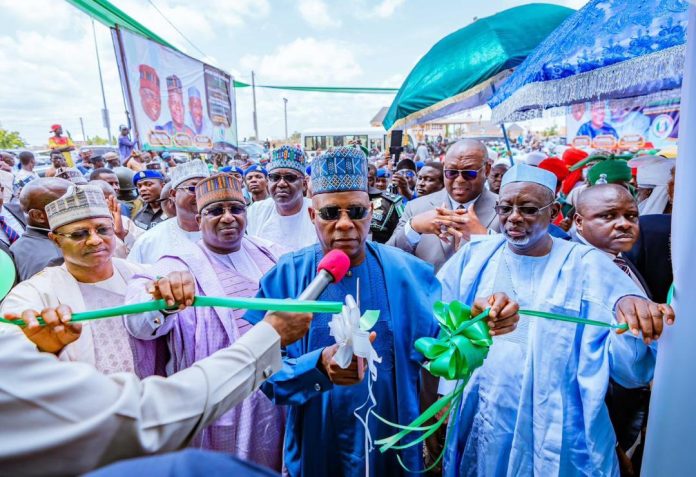
Vice President Kashim Shettima has unveiled the AI Expertise Blockchain and Technology Training and Outsourcing Initiative in Dutse, Jigawa State capital, noting that the move is part of Nigeria’s strategic plan for digital transformation and leadership in Africa.

The initiative, according to a statement on Tuesday, is in partnership with a tech company and aims to train 1,000 Nigerians annually in cutting-edge technologies like artificial intelligence, blockchain, and others.

Speaking at the unveiling, Shettima expressed confidence that Nigeria is poised to overtake the rest of the world in terms of economy and technology.

He emphasised the importance of digital transformation in driving economic growth and development.

“We are not merely catching up with the rest of the world; we are poised to overtake them. This initiative offers its beneficiaries the chance to become part of a global workforce, driving innovation that will shape our future,” he said.

The Vice President noted that Jigawa State’s pioneering role in digital technology adoption, calling the programme “a homecoming ceremony for those who have eased our journey through the Fourth Industrial Revolution.”

He also outlined the Federal Government’s broader vision, saying, “We are adopting this initiative across the nation to create a network of tech hubs that will power Nigeria’s economic growth for decades to come.”

Shettima commended the partnership with Gluwa, stating that it aligns with President Tinubu’s agenda to revolutionise Nigeria’s digital technology sphere. All

He acknowledged Gluwa’s significant impact, even as he applauded the firm for its empowerment of Aella Microfinance Bank, resulting in the disbursement of over N100bn to two million Nigerians.

Addressing the global implications of the initiative, Shettima said, “Our aspiration remains to transform Nigeria into a premier destination for technology outsourcing, creating a model that combines global expertise with local talent.”

Earlier, Jigawa state governor, Umar Namadi, noted the importance of the initiative, describing it as a rare opportunity at the doorstep of the youth.

He called on the population to “venture into the digital world of ICT outsourcing and reap all the benefits that it offers, particularly in terms of job creation and opportunities to contribute to the growth of our economy.”

Explaining that Jigawa has a history with ICT education, Governor Namadi said, “The state is blessed with hundreds of thousands of ICT-savvy and qualified youths in various fields of information and communication technology. This is courtesy of our very reputable Informatics Institute, established more than two decades ago.”

He said the new initiative aligns with both the federal government’s Renewed Hope Agenda and Jigawa state’s 12-Point Agenda, prioritising digital technologies and innovation.
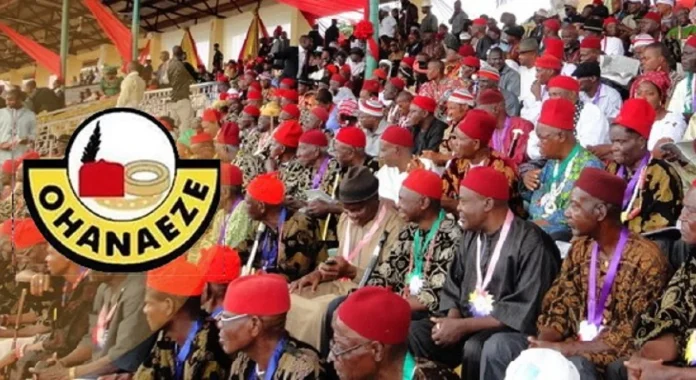

Ohanaeze hails Tinubu, Umahi for revitalising South-East economy

0

The apex Igbo socio-cultural organisation, Ohanaeze Ndigbo, has hailed the efforts of President Bola Tinubu and the Minister of Works, David Umahi, for their pivotal task of revitalising the economy of the South-east zone.
Ohanaeze said the ongoing construction works, specifically the proposed expansion of the Enugu-Port Harcourt Expressway (Aba segment) and the impending completion of the Aba-Ikot Ekpene, represent a beacon of hope for the reconnection of Aba to its neighbouring territories.
A statement issued on Tuesday by the factional secretary-general of Ohanaeze, Okechukwu Isiguzoro, said the initiatives have undoubtedly paved the way for the socio-economic renaissance of the ancient commercial city.
The statement reads in part: “It is no secret that the city of Aba has languished in economic stagnation for over two decades due to dilapidated road networks, which have hindered the influx of West African customers, local investors, and foreign traders to this cherished city of Ndigbo.
“The unfortunate neglect of crucial federal highways leading to Aba by former administrations from 1999 to 2023 further exacerbated the isolation and economic woes faced by the Southeastern region.
“Therefore, the unwavering support of Ndigbo for President Tinubu and Senator David Umahi stems from their resolute commitment to addressing the long-standing infrastructural deficiencies that have hindered the prosperity of the region.
“Ohanaeze Ndigbo, emphasizes that the ongoing road construction projects spearheaded by President Tinubu exhibit a profound sense of duty to revitalizing Aba, an economic hub with deep historical significance to the Igbo community.
“The swift and sustainable realization of improved federal highways within Aba has lifted the shadows of economic despair that loomed over the city, paving the way for lasting prosperity and growth. Aba’s historical stature as a regional trading haven for West African nations has been stifled by the lack of basic infrastructure, thereby impeding economic fortunes and deterring potential customers from harnessing the vast opportunities within the vibrant city of Enyimba.
“Given the accelerated pace of infrastructure development witnessed in the region over the past two decades, Ndigbo stands united in supporting President Tinubu and Minister David Umahi in their laudable efforts to rejuvenate Aba and bolster economic activities within the Southeast.
“The anticipated transformation of Aba’s economic landscape not only signifies a renewal for its inhabitants but also heralds a dawn of prosperity for the region at large.
“Ohanaeze Ndigbo urges all stakeholders to recognize and applaud the transformative impact of the ongoing road rehabilitation projects embarked upon by President Tinubu and Minister David Umahi. Let us collectively acknowledge and champion the promising future that awaits Aba as it returns to its former glory as a thriving economic nerve centre within the African continent.
“Ohanaeze implores all Ndigbo to forgo any stance on nationwide protests against President Tinubu, as his administration’s steadfast commitment to uplifting Aba and the Southeast region warrants our unwavering support and commendation. Let us stand together in celebrating the bright prospects that lie ahead for Aba and the Igbo people.”
Ohanaeze hails Tinubu, Umahi for revitalising South-East economy

Strike threat lingers over 2024 Olympics opening ceremony

0
Strike threat lingers over 2024 Olympics opening ceremony

Negotiations to end a strike threat from 700 dancers involved in the 2023 Paris Olympics opening ceremony failed to reach an agreement on Tuesday, meaning the event still faces the risk of disruption.

The SFA-CGT union, which says it represents roughly 10 per cent of the 3,000 performers involved in the opening ceremony, filed a strike notice last week over what it said were “outrageous disparities” in pay among dancers.

A meeting on Tuesday between the union and the games’ organising committee resulted in an offer of 120 euros ($130) extra for the lowest-paid performers, which was rejected.

“This Tuesday, a timid proposal was finally made to us, related to an increase in pay for broadcasting rights,” the union said in a statement sent to AFP.

The strike threat is an unwelcome development for French organisers and risks deepening France’s reputation for labour disputes just as the eyes of the world fall on Paris for the start of the games this Friday, July 26, 2024.

A host of French public sector workers have threatened strikes or stopped work ahead of the Olympics to demand bonuses for working over the July 26-August 11 event, which coincides with the summer holidays.

One-off payments of up to 1,900 euros have been agreed for police and municipal workers in Paris.

The head of the formerly Communist-aligned CGT, Sophie Binet, urged the company producing the opening ceremony, Paname 2024, to reach an agreement to end the strike threat quickly.

Some of the dancers protested on Monday during rehearsals by the river Seine by stopping and holding their fists aloft for eight minutes.

The opening ceremony is set to take place over a 6km (four-mile) stretch of the river Seine, with around 6,000-7,000 athletes expected to sail down the river on 85 boats.

It will be the first time a summer Olympics has opened outside of the main athletics stadium.

A small union at Paris airport operator ADP has also filed a strike notice for Friday.

Management of the company reached an agreement last week with most labour groups to end a dispute over Olympic bonuses.

AFP

DSS, Kano Hisbah arrest teenager, man who stole children from Yobe

0

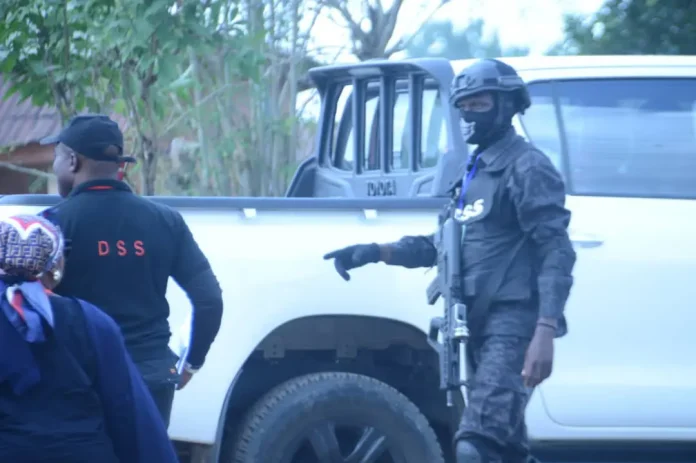
The Department of State Security, DSS, in collaboration with the Kano Hisbah Board, apprehended a 17-year-old girl and her sponsor and retrieved a four-year-old child, Aisha, that they stole from Nguru, Yobe State.
DSS Kano office explained that Hisbah officials arrested the 17-year-old lady (names withheld) after they suspected that she had no connection with the child.
Upon interrogation, the 17-year-old girl reportedly said she was lured to abduct the child by a man she knew as a groundnut seller close to her home after he promised her that nothing would happen to her.
DSS operatives subsequently tracked and arrested the man, who allegedly confessed that the kidnapping of four-year-old Aisha was the third nefarious act he had perpetrated in Nguru.
He admitted to being a member of a cartel that steals children across states.
DSS, Kano Hisbah arrest teenager, man who stole children from Yobe

#EndBadGovernance protest politically motivated – Wike

0

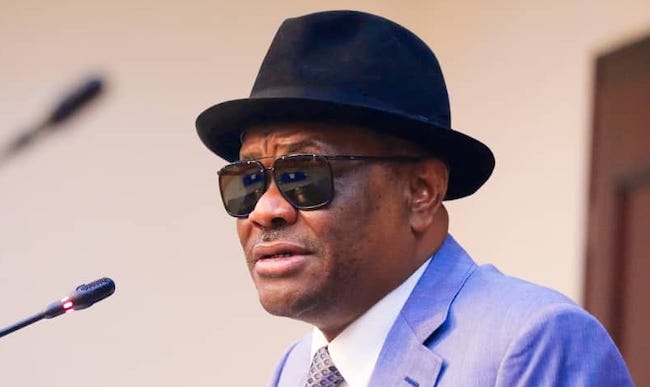
The Minister of the Federal Capital Territory (FCT), Nyesom Wike, claimed on Tuesday the planned protest against bad governance in the country was politically induced.
A group of Nigerians had planned a nationwide protest tagged: “EndBadGovernance” on August 1 to drive home their grievances over alleged corruption, insecurity and other problems in the country.
The minister, who addressed journalists during an inspection tour of the Apo Karshi Road in Abuja, said planned protest was to divert the attention of Nigerians from President Bola Tinubu administration’s efforts returning the country to the path of sustainable growth.
He urged Nigerians to be patient with the Federal Government on its current reforms.
The minister stressed that since Tinubu took office in May last year, Nigerians have observed positive changes in governance.
“You can see that the planned protest is political and nothing more. We need to be patient with this government,” he stated.
The post #EndBadGovernance protest politically motivated – Wike appeared first on Latest Nigeria News | Top Stories from TVN.

Planned protest political – Wike

0

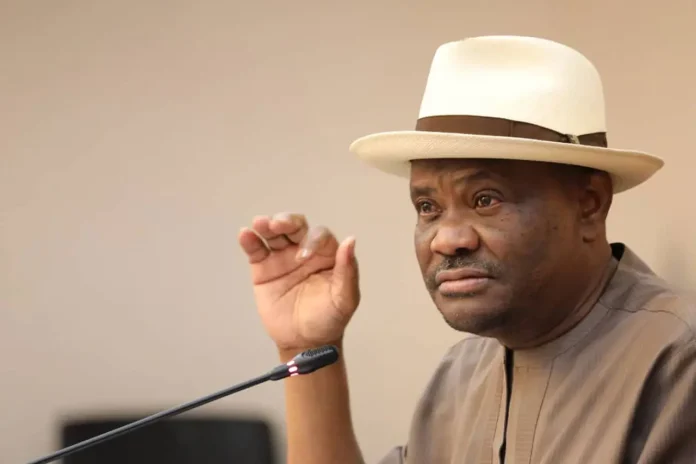
The Minister of the Federal Capital Territory, FCT, Nyesom Wike, has said the planned protest against President Bola Tinubu is politically motivated.
Wike urged Nigerians to be patient with Tinubu’s administration and not resort to protest despite the hardship.
Nigerians are billed to file out to protest against the biting hunger and hardship under Tinubu’s administration on August 1.
But, speaking during the inspection of Apo-Karshi Road in Abuja, the minister said all challenges facing the country can’t be resolved in one day.
He assured that the government of President Tinubu is doing everything possible to deliver the dividends of democracy in the shortest time possible.
“You can see that the planned protest is political and nothing more. We need to be patient with this government,” Wike said.
Meanwhile, President Bola Tinubu had urged Nigerians to reconsider the planned #EndBadGovernance protest.
Information Minister Mohammed Idris, during a briefing with State House correspondents, conveyed the President’s message, stating: “The issue of the planned protest, Mr President does not see any need for that. He’s asked them to shelve that plan. He’s asked them to await the government’s response to all their pleas.”
Planned protest political – Wike

Shortage of quality manpower in health sector huge

0
APC’s attack on Obaseki diversionary tactics, says aide

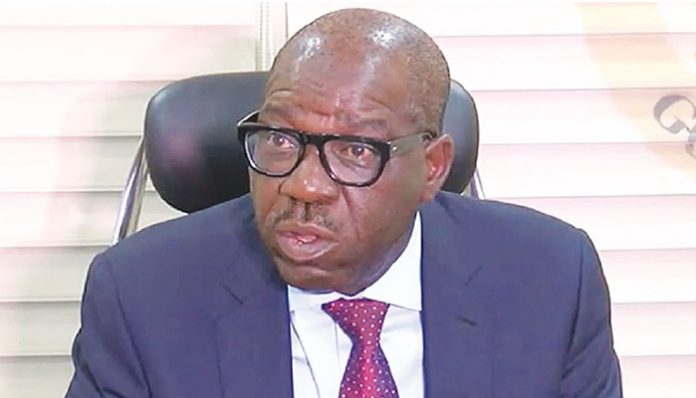
The Edo State Governor, Godwin Obaseki, on Tuesday, vowed to finish the state College of Health Science, while receiving the accreditation team for the school.

This is as he said the shortage of quality manpower in the health sector is huge.

The visit of the team is coming ahead of the reopening of the institution which has been upgraded into a world-class facility to drive the development of manpower for the state’s health sector.

Receiving the team at the Government House, in Benin, Obaseki said the COVID-19 outbreak pushed his administration’s intervention in the healthcare sector, leading to the total overhaul and holistic revamp of the healthcare system.

The accreditation team was led to the Government House by a consultant to the College, Dr. Esther Oshunluyi, the Chief Executive Officer of the Medical Laboratory Science Council of Nigeria, Prof. Tosan Erhabor, and the Director, Education Health Records Officers Registration Board of Nigeria, Halima Ahmed.

Obaseki said, “The shocker, for us, came during COVID-19 when I had to interact very closely with the health system and it showed that we have derailed in terms of understanding what the healthcare system entails and the kind of institutions and support required to build and sustain any health system.

“Our COVID response, mobilising over 5,000 doctors and a larger number of other healthcare workers to support the response, showed that the healthcare system has broken from the top to the bottom.

“Healthcare is not about doctors or hospitals but a whole support system, middle management system and manpower and without this support, the healthcare system will not stand.”

He noted that the experience of COVID-19 drove his administration’s intervention across the spectrum adding that he embarked on a total healthcare revamp, starting with the structure of healthcare.

“There are more private providers for healthcare services than government, and we realised that the core to sustaining quality healthcare was to put in place healthcare financing. We have put in place a vibrant insurance policy in Edo State which is the best in the country and after two years, we have over 250,000 subscribers and our target is one million.

“We can’t ask people to pay premiums if we can’t give them quality care. What are they paying for? Quality care is not about infrastructure but more about people providing care. If we are going to rebuild the healthcare system of Edo State which now stands on a pyramid and at the base of the system, is our primary healthcare institution. We now have to focus on institutions that train the bulk of staff that we have to work within our primary healthcare system,” he said.

Obaseki said that his actions were done for the Edo people and the nation. According to him, people don’t need to go abroad as a result of the facilities put in place.

He said, “I appeal to you that it’s good to have accredited programmes but our focus must be ensuring efficient learning and practical experience so that we stop brandishing certificates but ensuring it’s about skills as we have too many certificates in the system.”

“The shortage of quality manpower is huge and we are at the epicenter of migration as we know that a lot of people will travel. It’s better to train people who will go to other places to work rather than being unemployed and remaining at home.

“I am assuring you that as a government, we will finish this and invite you for reopening and you will be amazed with what you will see. As part of our reforms, the health Ministry has enumerated over 7,000 facilities and wants to create a linkage between the school and the healthcare market to help train and retrain the people they hire. This is what is done all over the world, the market is here.”

Promoters of protests enemies of Nigeria, says Kogi gov

0
Kogi assembly confirms two commissioner nominees, 50 special

The Kogi State Government has promised to abide by the Supreme Court judgment on local government autonomy.

It also said that those who are calling for a nationwide protest at this time are enemies of Nigeria.

This was contained in a statement issued on Tuesday by the state Commissioner for Informatio, Kingsley Fanwo, in Lokoja, the state capital, shortly after stakeholders meeting with members of the All Progressive Congress.

According to him, the governor, Alhaji Ahmed Ododo, also said that the state government under his leadership will ensure that democracy and continued autonomy of Kogi Local Government Councils stands.

The governor reiterated the readiness of his administration to strengthen democracy at the local government level.

Ododo said the October 19, 2024, local government election in the state will be free, fair and credible, urging stakeholders to encourage women’s participation in the election.

“I urge our party to give a good space for women’s participation. I am not expecting less than 40 per cent of the legislative seats at the local government level to go to our women. They vote massively during elections and it is high time we brought them to the decision-making table as a state.

“Under the leadership of Governor Yahaya Bello, we were able to get 30 per cent of women’s representation. We should push it to 40 per cent in the next election. I also wish to encourage candidates who emerge to run for the chairmanship seats to nominate Women as their running mates.

“I will not impose any candidate. Let the people go and decide who represents them in their various local government areas and wards. When elected, I urge the councillors to also consider women as their council leaders. We are a state known for women’s inclusion and we must continue to push the women forward to the decision-making corridors,” he said.

The governor also urged Nigerians to continue to support President Bola Tinubu, saying he is doing more than enough to get the country back on track.

“Our President is working hard day and night to make our nation better. Protests won’t bring food. We are working hard to ensure food prices crash in the next couple of months. Anyone promoting destructive protests at this time is an enemy of Nigeria,” he said.

Ododo also used the occasion to confirm the fact that Kogi Local Government Councils have been autonomous since 2016, saying the difference now is that Local Government Councils’ allocations will now go directly into their accounts.

He urged the Local Government Councils to justify the efforts of Mr President by touching the lives of people at the grassroots.

N5bn defamation threat: We meet in court – Onanuga replies Peter Obi

0

The Special Adviser to President Bola Tinubu on Communications and Strategy, Bayo Onanuga, has reacted to the threat by Peter Obi, the former presidential candidate of the Labour Party, to institute a lawsuit against him.
TVN recalls that Onanuga recently alleged that Obi and his supporters were responsible for the planned nationwide protests against the Tinubu-led government over the hardship in the country.
But Obi, in a letter signed by his lawyer, Alex Ejesieme, to Onanuga, urged the presidential spokesman to retract the statement and tender an unreserved apology to him within 72 hours.
Obi also demanded N5 billion in damages from Onanuga over the said allegation.
Reacting, Onanuga, in a fresh post on his official X handle on Tuesday, said: “I am still waiting for the letter from Peter Obi’s lawyer threatening a N5 billion suit and demanding an apology to Peter Obi over the planned ‘revolution’.
“Let me just tell Obi and his lawyer: I am not afraid of any legal action. We shall meet in court.”
N5bn defamation threat: We meet in court – Onanuga replies Peter Obi

OPINION: Ndigbo in the crosshairs of ‘Days of Rage’

0

IT’S less than 10 days away. That’s if the planned protests against hunger, poverty, bad governance etcetera, were to materialize. The protests are scheduled for August 1-10. The organisers have a name for it: Days of Rage. The protests are designed to happen simultaneously across the country for 10 consecutive days. Unless Nigeria has changed, this project and especially its duration looks like a tall order.
Nigeria of the 1960s, 1970s and 1980s appear to be a long gone era. The period has almost been blotted from our collective memories. During those epochs, Nigerian youths, led mostly by students of tertiary institutions were upfront in opposing any government policy or programmes considered not to be in the best interest of the country. They did so in 1962, just two years after Nigeria gained independence from Britain. They fought to ensure the scrapping of the obviously one-sided Anglo-Nigerian Defence Agreement.
Alex Lennox -Boyd was the British secretary of state for colonies in 1958, two years before Nigeria was granted independence. In fact, by 1958 both the Eastern region and the Western region had attained self rule status from the colonizers. The Northern region, apparently fearing dominance by the more sophisticated regions of the south said it was not ready to govern itself and so opted to be under the suzerainty of Britain.
The 1958 memo by Lennox -Boyd encapsulated the ingredients for the Anglo-Nigerian Defence Agreement which will be handed over to the government of an independent Nigeria to sign. There was no evidence that Nigerian nationalists who were jostling to replace the British made any input into drafting the so-called Agreement. But history has it that Chief Obafemi Awolowo, leader of the Action Group (AG) political party revolted against the pact when it came to his knowledge.
So, in 1962 when Britain showed its hand for the execution of the pact by the leaders of our country, Nigerian students rose as one to march on their campuses and on the streets in the country’s major cities in opposition to the Agreement. They did not relent until Britain backed down and Nigeria backed out. There were not too many universities then nor higher institutions. And students’ leaders were not known to be acolytes of partisan politicians of the then dominant political parties such as the National Council for Nigeria and Cameroons (NCNC) and AG. The issues of ethnic or tribal affiliations were virtually non-existent.
The vexatious issues in the pact were the granting by Nigeria to Britain overflying rights and testing by Royal Air Force aircraft; and whether Britain should still have any maintenance staff on ground in Nigeria. Nigerian youths said an emphatic no because they were persuaded that it amounted to an unequal relationship and moreover there was no evidence that Nigeria contributed in framing the so-called Agreement.
Consequently, Britain and Nigeria were forced to release a statement abrogating the pact. The statement read: “The British and Nigerian Governments have been consulting together about the Anglo-Nigerian Defence Agreement. They have noted with concern that the scope and purposes of the Agreement have been widely misunderstood. In particular, fears have arisen that in consequence of the Agreement, Nigeria’s action might be impaired and that she might even be drawn into hostilities against her wishes.
Continuing the statement said: “The text of the Agreement shows that these and other anxieties which have been expressed are wholly without foundation. Nevertheless, in order to end misunderstanding, the two governments have thought it wise to reconsider the need for a formal agreement.
“As a result, they have decided to abrogate the Agreement. Each government will, however, endeavour to afford to the other at all times such assistance and facilities in defence matters as are appropriate between partners in the Commonwealth”. That was the Nigeria of the 1960s.
By the 1970s, more higher institutions including universities had sprung up. And the win over the Anglo-Nigerian Defence Agreement had bolstered the resolve of youths and students that opposing real or perceived unjust policies of the government was right and winnable. And then came 1978. The regime of Gen. Olusegun Obasanjo who succeeded the assassinated Gen. Murtala Muhammed increased fees payable by students in the universities. Hell was let loose. Students would not take it and the military regime would not back down either. Col. Ahmadu Ali was the federal commissioner (minister) of education. He had the support of the hierarchy of the ruling junta to dig in. And he did. The protesting students were no less determined. The result was bloodshed on the streets, deaths and injuries mainly on the part of the students. The students revolt was appropriately tagged ‘Ali Must Go Protests’. The protests also known as the 1978 Students Crisis was for a long time regarded as one of the most violent student agitation in this country. It was also said to be responsible for the political crisis that dogged the Muhammed/Obasanjo military regime of 1975-1979.
Apart from fees reversal, the protesting students who also boycotted lectures demanded return to democracy and rule by civilians; democratisation of government institutions; genuine independence of the country; and, the enhancement of the quality of life of the masses. Some commentators argue that the bloody confrontation ended in a stalemate but it must be noted that the military regime vacated office just 17 months after for democratically elected administration of President Shehu Shagari and Vice President Alex Ekwueme.
‘Ali Must Go’ was a turning point in relations between Nigerians and their rulers. A template was adopted by subsequent rulers to the effect that there won’t be any consequences in using brute force and deadly violence to put down protests of any type.
Fast forward to October 2020. For decades, Nigerians were at the receiving end of the brutalities of the state security agents, particularly a branch of the Nigerian Police Force (NPF) called SARS- The Special Anti-Robbery Squad. SARS was notorious for bloodletting, visiting violence on hapless Nigerian youths, acting with impunity and as if its operatives were above the law. Any youngster they found with a laptop was automatically tagged as an Internet fraudster while those who wore braided hairs (dreadlocks) were treated as vagabonds and criminals. SARS dealt summarily with such young people by extorting or executing them. Even older people were not spared. Something had to give. And it did give from October 8, 2020 when the youths took a stand by protesting and demonstrating against police violence and brutality. The protests morphed into demands for good governance.By October 20, there was a repeat of the 1978 ‘Ali Must Go’ bloodletting but this time on a higher and unimaginable scale. There was a massacre. The world was repulsed. Voices of condemnation rent the air. Nigeria had finally perfected the art of killing its children who were protesting brutality, corruption and bad governance. They were only armed with patriotic songs, waving the national flag and singing the national anthem.
First, the government, led by Maj.-Gen. Muhammadu Buhari, the affliction, a military dictator masquerading as a civilian ruler used thugs and street urchins to infiltrate the hitherto peaceful protests, to instigate violence, looting and destruction of public property. Then under the cover of darkness on October 20, the mindless regime ordered soldiers to shoot and kill our children in cold blood. The ghosts of the children who were massacred in one of the killing fields -the Lekki, Lagos toll plaza- on that particular day are still haunting the place and hunting their killers. They can pretend but they will have no peace. I believe the Good Book which says that there’s no peace for the wicked and that those who kill with the sword will die by the sword. It’s just a matter of time.
In the four years since the ENDSARS Protests in October 2020, there has been a strident campaign by a section of the Yoruba nation, an insignificant number it must be acknowledged, to hold Ndigbo responsible for instigating the protests and spearheading the looting and burning of public buildings in Lagos in the aftermath of the riots. As Nigeria moves almost inexorably towards a fresh round of confrontations which could result from the planned Days of Rage from August 1, the narrative about the Igbo being responsible for past protests is resurfacing and gaining currency. And these false and wicked narratives have always had consequences for Ndigbo. The Igbo paid with livelihoods, limbs and life in 1966 after the July counter coup. July was the crescendo of the persistent peddling of lies and propaganda that the Igbo were the mastermind of the January 1966 military coup during which some political and religious leaders of the north died. It did not matter that it was a lie because the Igbo paid a huge price.
*To be contd.
AUTHOR: UGO ONUOHA

Articles published in our Graffiti section are strictly the opinion of the writers and do not represent the views of TVN or its editorial stand.
The post OPINION: Ndigbo in the crosshairs of ‘Days of Rage’ appeared first on Latest Nigeria News | Top Stories from TVN.