Home Blog Page 830

OPay recommits to safekeeping customers’ funds

0

Leading financial technology company, OPay, has reiterated its commitment to keeping customers’ funds safe.

This was disclosed on Wednesday during a courtesy visit by the media managers of OPay, Bracken Media Solutions to the Head Office of According Newspapers in Ogun State.

OPay’s Public Relations Manager at Bracken Media, Ayobami Ajenipa, said that while the company’s drive for financial inclusion was ongoing, it was determined to keep customers’ funds safe.

“For being the leader in the market, we boast of a large number; we cannot avoid that there would be complaints. Our competitors would have complaints too but by us being a major player, ours would inevitably be pronounced and somewhat blown out of proportion by the demarketing antics of our competitors.

“However, we have been releasing features that can help to secure their funds. These features are being released like the Nightguard. There is another security feature, we just released the USSD code, and these are very novel innovations that even our competitors are not yet offering. It is very novel in the space with more to come.

“For this year, OPay is focusing on security. We have a whole campaign called the Security series through which we want to reassure our customers that ‘OPay is secure, you can trust OPay’and these are what we have put in place to ensure that our customers are safe.”

Speaking further on efforts to keep customers’ funds safe, the Business Development Manager at Bracken Media, Godswill Okwuchi, said the efforts are already being made to resolve complaints as soon as possible.

On the nightguard feature, Okwuchi said “It was an algorithm push because it has been discovered that at night, a lot of funds get ‘missing’ so the ‘Nightguard’ helps a customer to double check if they want to do a transaction. We had instances of complaints both online and offline, first of all, to address the grassroots, you have to have physical offices to allow customers to see and reach us which helps to build a sense of trust and bring solutions closer to the grassroots.”

The According had earlier reported that the Managing Director of OPay, Mr Dauda Gotring, said that customers’ fund security was of great concern to the company.

“At OPay, users’ financial security is our top priority. By combining comprehensive regulatory compliance, innovative security features, and ongoing user education, we are building a digital banking ecosystem where users can transact with confidence,” he said.

During the visit, the General Manager of Digital and Publications of According Nigeria Limited, Mr Ademola Oni, maintained that the newspaper would continue to uphold professional ethics as it carries out its duties.

“We do not pander to anybody. We do not spew sentiments when we know the truth and that is why we are still standing,” he said.

Also present at the meeting were the Editor of The According, Mr Oyetunji Abioye and the Head of Digital Advert, Mrs Mary Stanley-Ubani.
INEC absence didn’t invalidate LP convention – Abure

0

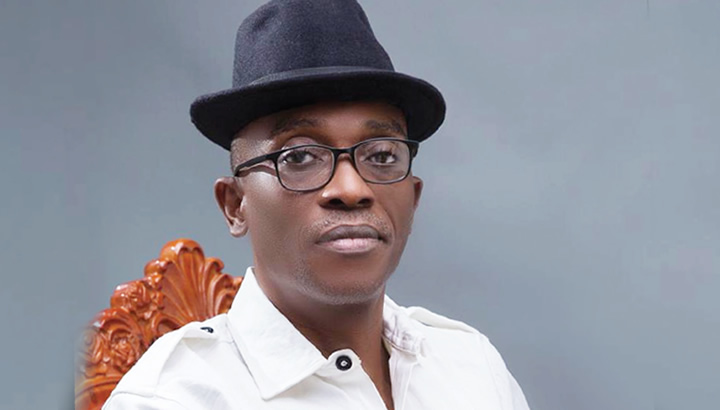
The leadership of the Labour Party has defended the validity of its March 27, 2024 convention, saying that the absence of officials of the Independent National Electoral Commission at the event does not in any way invalidate the election that returned its National Chairman, Julius Abure and members of the National Working Committee to office.

This was stated on Wednesday by the National Legal Adviser of the LP, Kehinde Edun, at the party’s secretariat in Abuja.

Edun’s statement came three days after the electoral commission announced that none of its officials attended or monitored proceedings at the disputed convention held at Nnewi, Anambra State.

In the past four months, Abure had been at loggerheads with the Nigeria Labour Congress over the legitimacy of his re-election.

The party’s internal rift remained unresolved as the NLC and its stakeholders continued to distance themselves from the current NWC of the party.

The situation escalated further when the INEC responded to a request by a lawyer for a Certified True Copy of its report on the convention and the party’s constitution.

In the letter referenced INEC/DEPM/LP/CTC/885/1, dated July 18 and signed by the Acting Secretary, Haliru Aminu, the commission declared that it could not report on the convention because it did not monitor it.

The letter, which was sighted by The According, partly read: “The commission has received your request for the Certified True Copy of the monitored report of the Labour Party convention at Nnewi, Anambra State, held on the 27th of March 2024, and the Labour Party constitution.

“The Certified True Copy of the Labour Party Constitution has been forwarded to your firm earlier.

“Regrettably, the commission did not monitor the Labour Party convention of 27th March 2024 and cannot, therefore, report on the convention.”

The position of the electoral umpire had since led to a chain reaction, with the NLC insisting that it had been vindicated.

But, addressing newsmen in Abuja on Wednesday, Edun said the INEC letter was wrongly interpreted.

According to the national legal adviser, the presence or absence of INEC officials did not in any way affect the legitimacy of the national convention.

He said, “On the deliberate misinterpretation of the INEC’s reply to an application by Messr Steve Adehi, SAN & Co, this letter is very clear and unambiguous and shouldn’t have been the subject of any argument.

“However, not finding anything to hold against us, they went to import what is not contained in the letter into it.

“The applicant (an agent of the NLC) requested for CTC of the INEC-monitored report of the Labour Party convention 2024 and the constitution. Though the applicant and his principal were dishonest, mischievous, dubious and manipulative, INEC’s response was accurate and unpretentious.

“How on earth could there be an INEC-monitored report when we have made it clear that INEC did not attend, a position also confirmed by INEC and is in the public domain? The NLC and its cronies, including the applicant, knew INEC didn’t attend. Why then ask for the INEC report and what is their business with it?

“In paragraph 3 of the INEC’s response, the commission expressed regret that it did not monitor the convention and could, therefore, not have an INEC-monitored report. Now, did the non-attendance of INEC invalidate the convention? The answer is capital no and INEC never said so.

“The law did not make it mandatory for INEC to attend any party’s convention. INEC knew they were at liberty to come or not. What the law requires is proper notice. Take note that the law did not say the failure of INEC to attend shall render the convention invalid. What then is the essence of the dishonest, dubious and misconceived hue and cry by the NLC?”

The party’s legal counsel said it would not be intimidated or cowed by any external aggressor to fold its hands and watch the party being hijacked.

Govt warns against repeat of #ENDSARS experience

0

The Secretary to the Lagos State Government, Abimbola Salu-Hundeyin, has urged residents to avoid violent protests that could lead to the destruction of public property, as seen during the 2020 #EndSARS protests. The SSG gave this advice on Tuesday while speaking to journalists after a routine security meeting with the secretaries to the local governments

Read More

Kano banker, three others nabbed for currency fraud

0

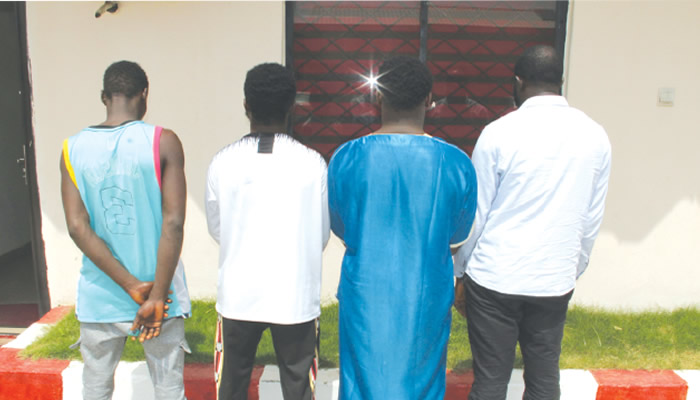
A banker, Kamaluddeen Lawal, and three businessmen have been arrested in Kano, over their fraudulent engagement in recycling and manipulating the specific amount of cash deposited in the bank for savings.

The three alleged accomplices include Ismail Ibrahim Ilu, Lamido Bala and Abba Mohammed, who had been arrested by operatives of the Kano Directorate of the Economic and Financial Crimes Commission, over their shady bank transactions.

The EFCC spokesperson, Dele Oyewale, who confirmed the arrest in a statement late Tuesday night, disclosed that the suspects were nabbed on Unity Road, Kantin Kwari Market, Kano, following credible intelligence on the activities of some individuals, suspected to be trafficking huge sums of money in cash.

The suspects, according to the statement, specialised in sourcing mutilated naira notes from different banks to remove a few notes from each bundle and deposit them in their bank accounts, with a particular bank where their banker accomplice would receive the money as the original amount.

“The suspects were perpetrating the fraud by going to their respective banks, requesting a certain denomination (in this case N200 notes) and carefully removing a few notes from each bundle. Thereafter,  they would hand them over to their accomplice at the bank.

“The accomplice will collect the money and make entries as filled in the tellers without counting them on the agreement that they would later give him his share of the money they removed,” Oyewale said.

According to the statement, a total sum of N7.5m was recovered from the suspects as of the time of their arrest.

The EFCC spokesperson said as soon as investigations were completed, the anti-graft agency would charge the suspects in court.

FG deploys reinforced concrete tech on East-West Road project

0

The Federal Government has announced that it is deploying reinforced concrete technology on the long-delayed East-West road, which spans the South-south region of Nigeria.

This move comes after threats of protests from the Movement for the Survival of Ogoni People and former agitators in the Niger Delta over the uncompleted axis of the road.

In a statement on Wednesday in Abuja by the spokesperson to the Minister of Works, Uchenna Orji, the government stated it was committed to ensuring that the segments of the road would not fail again.

He explained that the use of reinforced concrete technology would end pavement failures and years of infrastructural neglect on the highway.

MOSOP, in a statement signed by its Public Relations Officer, Imeabe Saviour, said the non-completion of the road had led to a series of accidents, resulting in loss of lives.

The group earlier in July said, “It is worrisome to mention that despite the substantial revenue generated within the Ogoni ethnic nationality, the stretch of the East-West road in our area has remained in its worst state, dilapidated and a nightmare to travellers and a death trap to the Ogoni people.

“It suffices to state that the East-West road, hyped as completed, still stands as an abandoned project today.”

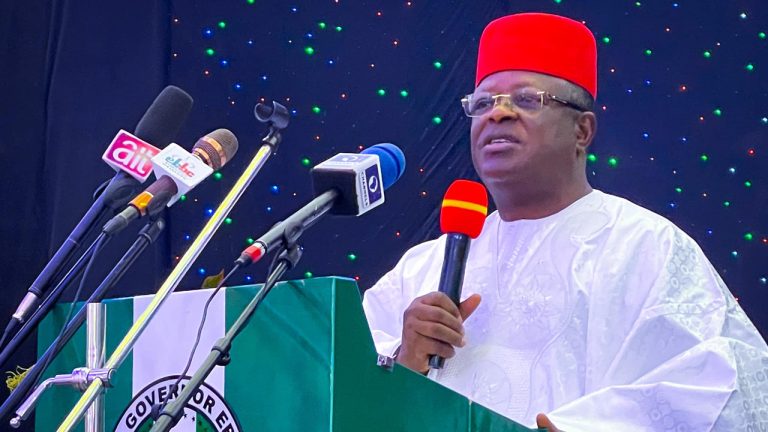
The Minister of Works, Dave Umahi, had visited sections of the road, including the Kaiama-Ahoada section in Rivers/Bayelsa states, and commended the contractors handling the relief culverts for their commitment to the intervention.

He also lauded the quality of work being done on the kilometre 15 section 3A of the East-West Road.

The minister assured MOSOP that a permanent solution was underway, with the project being procured to raise the road above the flood level, while reinforced concrete of 12 inches would be used to do the overlay.

“We are encouraging many more local contractors to come and work because there’s so much to work. And so our directive is that the contractor shouldn’t open more relief culverts. Let us contain the floods by working with the Niger Delta Development Commission,” he added.

He also urged patience from road users, stating that the project was expected to be completed by December.

The government’s move to fortify the road is seen as a step in the right direction towards addressing the infrastructure deficits in the region.

Reps panel seeks FCTA park-pay review

0

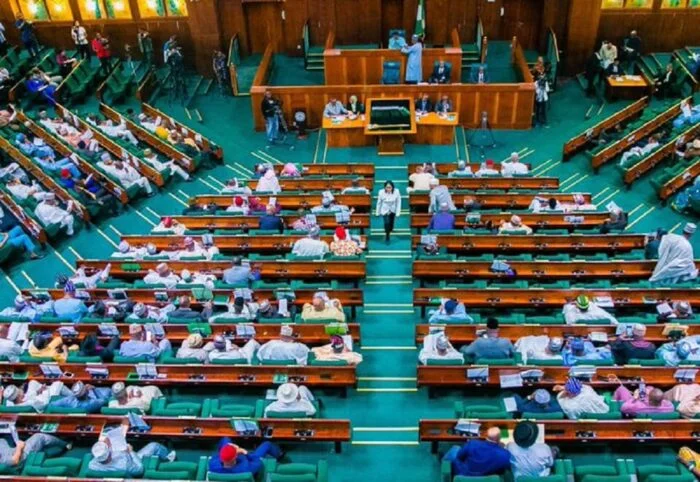
The House of Representatives Committee on Federal Capital Territory has questioned the operational model of the park and pay policy of the Federal Capital Territory Administration.

At a meeting with the mandate secretary in charge of the transportation secretariat, Chinedum Elechi, on Wednesday, the committee said residents and motorists of Abuja are being harassed by personnel in charge of the enforcement of the policy.

Recall that the FCTA reintroduced the park and pay policy in August 2023 after signing an agreement with two concessionaires.

The policy is to decongest the city and make motoring in the nation’s city a pleasant experience.

The policy was suspended in April 2014 after a high court judgment stopped the FCTA from collecting fees from residents for on-and-off-street parking within the metropolis. The court ruled that the policy was not supported by law.

Speaking on the issue at the interactive session, the Chairman of the Committee,  Muktar Betara, asked for justification for the reintroduction of the scheme and how remittances were made to the accounts of FCTA.

Responding, Elechi said the policy was applicable only to designated areas which served as parking zones.

“The park and pay is by regulation. We have a legal framework. It is part of the ways of controlling traffic. So, under the park and pay, designated areas are meant to be parks. So, it is legal.

“It is (revenue) paid through concessionaires. There is usually a ratio between the concessionaires and the FCT. So, for areas where we have the concessionaires, there is a percentage that goes to the concessionaires.

“It is 60 per cent to them and 40 per cent goes to FCT. The infrastructures for the work is usually provided by the concessionaire. It (revenue) goes straight to the revenue account of the FCT not transportation.”

Not satisfied, Betara probed Elechi further, asking, “How was the contract established? In appointing your concessionaires, what procedure did you follow? How much has been remitted to the FCDA from January to date and who gave you the approval?”

Responding, Director of Legal Services, Hussaina Olayemi, explained that the Infrastructure Concession Regulatory Commission and the Abuja Investment Company, the FCT organisation responsible for public-private partnerships, were involved.

“After their involvement, the concession was submitted to the Federal Executive Council for approval. So, we have the FEC approval,” Olayemi stated.

The panel however faulted the FCDA for allocating 60 per cent of revenue to concessionaires while the government received only 40 per cent, demanding clarification on what infrastructure the concessionaires are providing.

Education minister wrong on minimum age requirements

0

The Minister of Education’s reversal (or suspension) of his ban on “underage” university admissions after protests by stakeholders is another instance of this administration making a policy decision it has neither fully reasoned through nor consulted on with stakeholders. By not putting enough thought into executive decisions, leaders capitulate cheaply and their indecisiveness hurts everyone in the long run. Prof. Tahir Mamman was wrong on the ban, wrong to have suspended it, and wrong to have planned a re-introduction.

At the same Joint Admissions and Matriculation Examination policy meeting where the ban was negotiated amidst the rowdiness of dissenting with the minister, the JAMB Registrar, Prof. Ishaq Oloyede, also presented on the issues arising in university admissions. Several Nigerians shared the video through social media, captioning Oloyede’s presentation with the expected doses of scandalisation and sermonisation. People are justifiably shocked by the example of the systemic rot that Oloyede shared regarding a 12-year-old admitted to the university. The story might be eye-opening, but since we do not know enough about the person or their circumstances beyond their graduating at 15, we must treat it as merely anecdotal.

While I do not deny that we have a major problem on our hands, I see a ban as a superficial solution to a complex situation. The real issue here is that the Nigerian education system has become—like most other national infrastructure anyway—unduly privatised. We have a serious situation whereby public education—ideally subsidised with taxes and public funds—has collapsed, leaving parents with the more expensive option of paying—relative to their income—heavily for their children’s education. So terrible is the situation that more parents will rather take their children to the worst private schools—where their facilities are so decrepit that buildings can collapse on their poor children—than consider public schools. Many private schools are not necessarily better but they are at least accessible.

Right now, schoolchildren are on holiday. Give it a few more months when schools are about to resume, and you will start hearing Nigerian parents on social media agonising over the amount they have to shell out for school fees. From people pleading for assistance through WhatsApp, to church prayers for parents who will be stressed with the payments, you cannot miss the season. The problem of school fees is a major index of the collapse of the public school system. Elsewhere, private schools exist as an alternative, but not in Nigeria. Private schools are now like the generator—the supposed fallback option that has become the mainstay.

By turning education into a cash-and-carry affair, parents (as customers) can demand commensurate value and the providers must demonstrate it by delivering magical results. That is why, if the schools are not handing out “double (or even triple) promotions” to prove to the parents that they are getting value for their hard-earned cash, they are helping the children to cheat in external exams to make it seem they are truly delivering on quality learning. Years ago, I tried to register my child in schools in Ibadan and was stunned by the curriculum of lower classes. It was padded to impress parents with how much schools can stuff into the heads of even little children. Even though I attended a private primary school myself, I do not recall things being so bad.

Educationists tell us that at the early stages, children thrive better with minimal workload, exploration, and lots of play. But it is hard to sell “play-education” to a Nigerian parent who practically must sweat blood before they can pay school fees (many private schools in Nigeria do not even have a proper playground). They want their children to move through the system quickly—and brilliantly—enough to save them money. In an environment where schools have thus become a commodity, the mercantilist ethos will propel a redefinition of education to mean the ability to cram and disgorge textbooks while neglecting the social aspects of education. Unfortunately, no matter how brilliant a child might be, they still need socialisation. Remaining in lockstep with their peers is an integral aspect of knowledge-building. When kids skip classes, they miss this vital part of education and might lack the viral social competencies needed for life success.

In societies with functional public education systems, people try the reverse of what we do in Nigeria. They game the system by giving their children the age advantage. Such parents hold back their children from school enrolment until they are older. Because their system is stable and well-ordered, no one is in a hurry to see their kids graduate. When you think about it, the difference between the person who graduates at 19 and the person who does it at 22 is just three years of employment labour. If you retire at 70, what do you really gain by dedicating 51—instead of 48—years of your life to work? But then, their societies are stable enough for them to be certain the timing will work in their favour.

Nigerian parents who do otherwise are not crazy. By rushing their kids through the system, they are trying to buy time for them. Getting into the university early is hedging against the uncertainties built into the system: the ASUU strikes that will help you fritter away a portion of your life, and the prolonged years of unemployment. If you are lucky, you will still be young enough to take the jobs listed by employers who openly discriminate on account of age.

Yes, there are a few instances when children in stable public system societies go to the university at a young age, but that is when they are geniuses (different from being brilliant). But those are exceptions, and I know because I once tried to get my child to skip a class in the United States. While they readily agreed that the child was advanced for their class, they put up so many administrative barriers to the effort that I gave up. But what they also did was point us in the direction of resources that can help the child avoid the tedium of having to sit in class and learn what they have long mastered. It was even worse when we had to live in Germany. The child who had spent two years of school years of schooling in the US was going to be returned to first grade just because of age! When I protested, they told me that it was still no issue. If a kid is ahead of their class, they can always develop other interests.

And that brings me to another important point that Mamman’s ban will never address: the shrinkage of extra-curricular activities in our school system. In the past, public schools had programmes that occupied our attention and sucked part of our energy. One could learn sports and take part in competitive activities. Those not inclined toward physical activities could become part of debating societies or even learn crafts. Those activities hardly exist anymore. Even spaces where young people can explore and discover new interests hardly exist anymore.

Nigeria has no functional public libraries, no community centres, no public sports facilities, or recreational centres. Except perhaps for religious houses that provide spaces for young people to socialise outside their homes, the options are scant. That leaves book learning as their major recourse, to the disadvantage of other competencies they can acquire at the early formative stages of their lives.

These are the issues staring Mamman in the face, and not the cheap (non-)solution of a ban as if he is a military dictator. He must first come to terms with what has been lost in the Nigerian education enterprise and address them. Otherwise, he might just chase the wind.

Anyim meets Tinubu, says no regrets dumping PDP

0

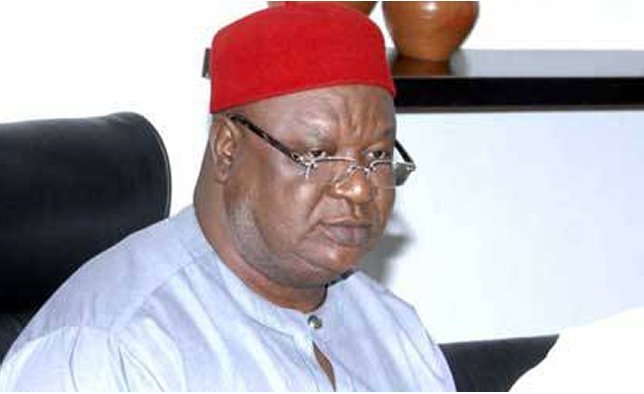
President Bola Tinubu, on Wednesday, received former Senate President, Pius Anyim, who recently defected from the Peoples Democratic Party to the ruling All Progressives Congress.

Anyim was led to President at the State House, Abuja, by the Chairman of the Progressives Governors’ Forum, Governor Hope Uzodimma of Imo State, and Governor Francis Nwifuru of Ebonyi State.

Anyim, a PDP presidential aspirant in the 2023 elections, said he joined the APC to join hands with the government, given the “turbulent times”.

According to him, all patriots have a duty to ensure that the country continues to have a peaceful atmosphere.

Asked why he was leaving the PDP, Anyim said: “Can you look back at the history of the PDP and tell me how many leaders the PDP has produced that had joined the APC or another party at any particular point in time? It’s common.

“But importantly, I am determined to be sure that the country moves on the right path and I should be available to contribute my quota.”

Asked if he could not have contributed his quota from the opposition party, the former Senate President said: “Contributing quota does not necessarily mean to work, but to engender a conducive atmosphere for progress.

“I’m not looking for work, but there is a need that given the challenges the country is facing today, we all need to put all hands on deck to make the country move forward.”

Anyim also talked about his interests in the APC, saying, “Certainly, the country is passing through turbulent times and it is the duty of every patriot, if you have nothing to add, ensure that you contribute to the peaceful atmosphere that will engender progress in the country.”

Meanwhile, Uzodimma described Anyim as a “big fish” finally caught by the ruling party.

The governor said the defection was a big plus for the ruling APC, which, he said, was already ripping the benefit of Anyim’s defection.

He said, “We have started harvesting from it. If you recall, only a few days ago, there was a local government election in Ebonyi State and in that election, it was like a one-party movement. The All Progressives Congress won the entire local governments and councils.

“The party that used to be the strong opposition party, PDP, was nowhere to be seen. The majority of the leaders had already decamped to the APC and they voted one way.

“So in the same manner, because democracy is about the people, when the people are now unanimously agreeing that government is doing well, and a political party is doing well, and they’re all collapsing into that political party, what is remaining is to address the campaign of calumny arising from the propaganda of the opposition, which most of us here are used to.”

The Imo governor said the delegation was at the Villa to first thank the President for all the support he had given to the people of the South-East.

The visit was also meant to formally inform President Tinubu that the former Senate President, Ayim “has family joined the APC and is now part of the bigger political family in the country.”

“So I think it a huge plus, politically speaking for our party, to the government of the country under the leadership of President Bola Tinubu, and also arising from that, we used the opportunity to commend and thank him for signing into law the South-East Development Commission Bill, which he just assented to,” Uzodimma added.

He described the new legislation as a significant triumph for the  South-East region, given past failed efforts to ratify it.

“He finally assented to the bill, which means listening to cries and the people of the South-East, particularly the leadership and the South-East Governors’ Forum, which I am the Chairman, are indeed very grateful,” he said.

On his part, the Enugu state governor said Anyim’s defection was for genuine reasons as he is “not looking for food.”

Nwifuru said Anyim was “not a small fry and is not looking for food”.

 “I’m very excited, and it’s a thing of joy for me that a very big fish in my state, especially that of our nation, Pius Ayim, and so many other distinguished leaders have decided to join our party, the All Progressives Congress. It is part of the benefits and dividends of democracy.

“Somebody like Pius, he’s not a pushover; he’s not somebody that you can say ‘because of money he is joining the APC,’ or that he is hungry or looking for a job.”

Explaining why several political bigwigs in his state had defected to the ACP, Nwiru said, “We’ve been able to do well according to our understanding and based on our best judgment. And that is what is engineering many of them to join APC.”

Ex-campaign coordinator sues Jimoh Ibrahim, demands N520m

0

A former commissioner in Ondo State, Julius Ijabiyi, has dragged the senator representing Ondo South, Senator Jimoh Ibrahim, before the Federal High Court in Abuja over alleged intimidation and threat to life.

Ijabiyi, who said he acted as the campaign coordinator for Ibrahim who was a governorship aspirant in Ondo State, is urging the court to slam N520m damages on the senator.

Ibrahim, through his legal team, has, however, opposed the suit, challenging the jurisdiction of the court to hear it.

According to court documents sighted by our correspondent on Wednesday, the matter came up on Monday before Justice Obiora Egwuatu, who adjourned hearing till October 28 for report of service.

Ijabiyi, in the suit, markedFHC/ABJ/CS/857/2024, alleged that Ibrahim had been threatening him with security operatives over what he termed “a mere civil issue bothering on religious and political relationship”.

The ex-commissioner said sometime early this year, Ibrahim appointed him to coordinate his political activities for the Ondo State governorship election where he was an aspirant on the platform of the All Progressives Congress before losing out to Governor Lucky Aiyedatiwa.

Ijabiyi said he was appointed to coordinate Ibrahim’s campaign machinery known as ‘Jimoh Ibrahim Aseyori Campaign Group’.

He, however, claimed that Ibrahim had lately resorted to threatening him with “arrest, detention over issues bothering on political party activities/party politics resulting into an infringement of my fundamental human rights.”

Apart from demanding N500m damages and N20m as the cost of filing the suit, Ijabiyi wants the court to restrain Ibrahim and his agents “from threatening the applicant with arrest, detention, harassment, intimidation or invitation over a mere civil transaction cum political relationship”.

Reps question UNIJOS power cut, huge electricity bill

0

The House of Representatives has promised to intervene in the electricity bill hike and disconnection of the University of Jos from the main power supply.

The Jos Electricity Distribution Company, in its reclassification of electricity consumers, classified the university under its Band A distribution.

The development resulted in high bills, leading to the disconnection of the institution by the electricity distribution company.

The appeal for intervention, according to the News Agency of Nigeria, was made by the Vice-Chancellor of the institution, Prof Tanko Ishaya, during the visit by members of the House of Representatives Committee on University Education, to the university.

Prof Ishaya called on the committee to intervene over the disconnection of the school from public light by the electricity distribution company, thus plunging the community into darkness for over a month.

He said before the grouping of electricity customers which placed the university in Band A, the electricity bill of the school stood at N20m to N25m per month.

“But with the classification, the bill jumps to about N79m to N80m every month, which is practically impossible to be paid due to lack of funds,” he said.

The vice chancellor said since the university could not meet up with the payment, he asked the JEDC to remove it from Band A, adding that the management was finding it difficult to pay the regular bill of about N25m per month.

Speaking, the Chairman of the House committee, Hon Abubakar Fulata, said such a hike was unacceptable, promising to work with other relevant committees, Ministries, Departments Agencies and stakeholders to ensure the issue was addressed as soon as possible.

Speaking further on the visit to the institution, Fulata said his committee was determined to do everything within its powers to improve the standard of education.

He stressed the need to ensure that the federal character principle was adhered to in recruitment in federal universities.

He said that a federal university, since it is not a state-owned institution, must fairly capture every state in the country, including the Federal Capital Territory.

He said the committee was examining how the previous allocations from the Federal Government and the internally generated revenue were utilised to ensure compliance with the Appropriation Act.

He said the committee was aware of the roles of the university council, which included employment, and promotion, among others, stressing, however, that the power of appropriation was vested in the parliament.

A member of the committee, Hon Victor Ogene, called on the authorities of the University of Jos to judiciously use the available resources allocated to it.

He said that the university, like any other government body, might not get all that was required in terms of funds, adding that effective and efficient use of available funds would help.