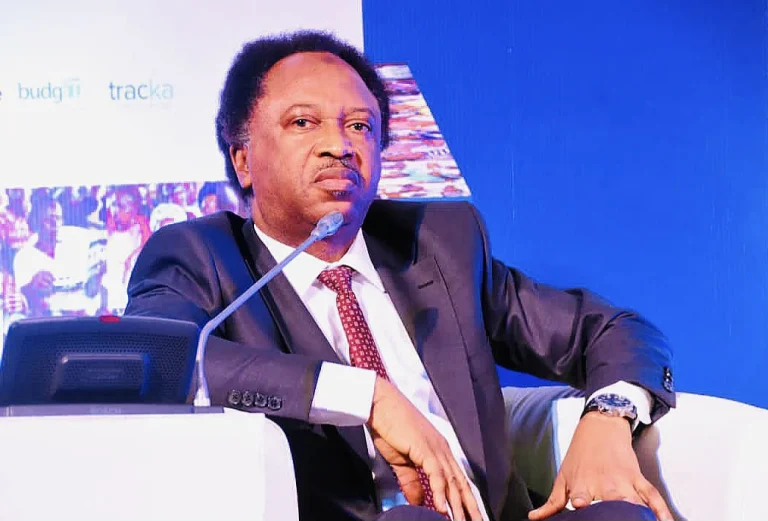
Former lawmaker, Senator Shehu Sani has mourned the passing away of veteran Nigerian singer and actress, Onyeka Onwenu.
Sani said the nation had lost a timeless legend and a great artiste who sang from the heart.
He posted on X: “Onyeka: the Nation has lost a timeless legend and a great artist who sang from the heart, spreading the messages of love and peace through music. Your melodies will forever resonate in our souls. Rest in peace.”
TVN reported that Onwenu passed away on Tuesday shortly after performing at a birthday party in Lagos.
According to the report, she collapsed at the Reddington Hospital in Lagos after falling ill during a private function.
Sources close to the family said Onwenu was attending a friend’s birthday party when she took to the stage to perform.
However, she suddenly collapsed shortly after returning to her seat.
Onyeka Onwenu: She spread messages of love, peace – Shehu Sani mourns
Bomb Blast: Yobe govt warns citizens against collecting, moving abandoned objects

Special Adviser on Security Matters to Yobe State Governor, Brigadier General, Dahiru Abdulsalm (Rtd), has warned the public, especially metal scavengers (known as Baban Bola), against collecting and moving of scraps and other abandoned metal objects from other places into the state.
The governor’s aide, who gave the warning in a statement issued on Tuesday, said this became necessary following the detonation of an abandoned unexploded ordinance picked by unsuspecting scavengers crossing over from the deserted parts of Sambisa Forest to Goniri area, injuring five of them.
“The public is hereby advised to report any suspicious object or movement of persons in their communities”, he advised.
Abdulsalam noted that the military Explosive Ordnance Disposal Unit was working round the clock to explode possible devices that might have been abandoned in the past years.
Bomb Blast: Yobe govt warns citizens against collecting, moving abandoned objects
Those killing innocent Biafrans cannot be addressed as police, Army officers – Simon Ekpa

The Simon Ekpa-led Biafra Republic Government in Exile has claimed that criminal elements are hiding under Nigerian security agencies to perpetrate evils in the South-East.
Ekpa made this known on Tuesday in a post on his official X handle while reacting to some incidents in the region, particularly Imo State.
He was particularly reacting to a recent attack at a checkpoint near SaveMore Market Place, Irete in Owerri West Local Government Area of Imo State where some security operatives and civilians were murdered.
According to him, “Those neutralized in Owerri were terrorists who killed innocent Biafran ladies during fierce battles with Biafrans.
“People that kill and maim innocent and unarmed civilians are not to be addressed like officers.
“They are none of those names, address them as terrorists they are”.
Ekpa further claimed that the Biafra forces have only been battling with terrorists causing mayhem in the region and not officers of the Nigerian security agencies as reported in the media.
TVN reports that Nigerian security forces have repeatedly blamed the Indigenous People of Biafra, IPOB, and its militant wing, the Eastern Security Network, ESN, for the various attacks on security agencies in the South-East.
Those killing innocent Biafrans cannot be addressed as police, Army officers – Simon Ekpa
Fight poverty, invest in education to combat human trafficking – Peter Obi to Nigerian Govt
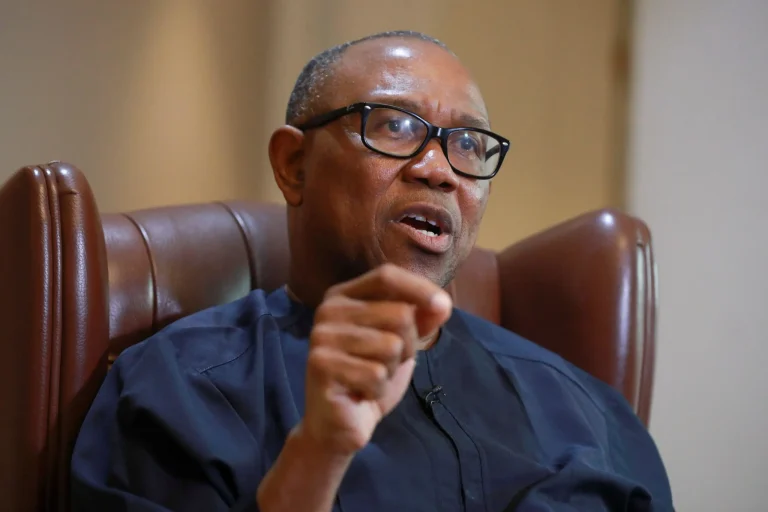
The Labour Party, LP, presidential candidate in the 2023 elections, Peter Obi, has called on the government at all levels to fight poverty, invest in education and health as a panacea to combat human trafficking.
In a post via his X handle on Tuesday, Obi called for measures to combat the menace as the entire globe commemorates World Day against Trafficking in Persons.
While regretting that statistics showed Nigeria is hit hard by cases of human trafficking, Obi said human trafficking is slavery.
“Trafficking in persons remains a global societal issue that must be addressed, with measures devised to combat the menace.
“The 2024 Trafficking in Persons Report by the U.S. Department of State, classified Nigeria as a Tier 2 country, ranking us among countries whose governments do not fully comply with the Trafficking Victims Protection Act’s minimum standards but are making significant efforts to comply with those standards.
“The 2023 Global Slavery Index Report ranks Nigeria 38 out of 160 of the countries with the highest number of slaves which is about 1.6 million. The National Agency for the Prohibition of Trafficking in Persons, NAPTIP, 2019-2022 statistics also show that 61 percent of human trafficking in Nigeria happens internally, while 39 percent is generated from cross-border trafficking,” he said.
The former governor of Anambra State tasked governments to address challenges of poverty, unemployment and porous borders which he blamed for Nigeria’s human trafficking cases.
He called for investment in education, health, and policies that will address poverty in the country, explaining that with a better and quality life, citizens will understand their rights as humans.
Fight poverty, invest in education to combat human trafficking – Peter Obi to Nigerian Govt
Hunger protest: Imo NURTW warns members not to participate

Following the planned nationwide hunger protest scheduled to hold on August 1 across the Federation, the Imo State Chairman of the National Union of Road Transport Workers, NURTW, Samuel Udeh has enjoined members of the union not to join the protest.
He said it would cause more harm than good.
He gave the warning to fellow unionists during an emergency meeting of the State Executive Committee, SEC, of the Union, held on Tuesday in Owerri.
Addressing the executives, Udeh noted that though a peaceful demonstration by citizens to express the unfair treatment being meted out on them by their leaders was a constitutional right, this particular right had been abused and wrongly carried out, which according to him had caused more pains, sorrows and setbacks.
The NURTW boss urged the members to resist the temptation of joining the planned protest.
He believed that dialogue with the leaders remained the best approach of getting things done rightly in the country rather than resorting to protest.
“The risk and possibility of the protest being hijacked by miscreants and hoodlums who may want to use it to perpetrate evil and cause havoc in the process should be a concern to Imo citizens.
“We are not disputing the fact that there is hunger and hardship in the land, but we must be careful not to allow those with evil intentions of destroying lives and property to prevail”, Udeh said.
In their separate speeches, some of the executive members agreed with what the Chairman said and commended him for calling the meeting which they said was timely as it availed the opportunity for the members to know the position of the Union as regards to the protest.
They also acknowledged the Chairman’s effort in fighting for the general good of the members as he always carried members along in the scheme of things.
They generally asserted that the protest would not in any way favour them as drivers, but would rather be to their own detriment and vowed not to be part of it.
Hunger protest: Imo NURTW warns members not to participate
Apologize to Northerners over ‘many children statement’ – Shehu Sani to Fayose

The former lawmaker who represented Kaduna Central senatorial district in the National Assembly, Shehu Sani has urged former Ekiti State governor, Ayodele Fayose to tender an apology to Northerners following his comments on people of the region.
Fayose had in an interview on a Channels Television programme on Monday night stirred the hornet’s nest when he said the failure of the federal government to develop Nigeria was because northerners were marrying multiple wives and having many children indiscriminately thereby constituting a huge problem for Nigeria and a burden on the government.
“The reason why it is difficult for Tinubu to develop Nigeria is because Northerners are giving birth to children they can’t cater for,” Fayose said.
Reacting in a post on his official X handle on Tuesday, the former lawmaker said Fayose’s statement was not palatable.
“Even though Fayose spoke as an individual, his reported statement on Northerners is contemptuous and unconscionable.
“I suggest he should humbly withdraw it and tender an apology as a statesman”, Sani stated.
Apologize to Northerners over ‘many children statement’ – Shehu Sani to Fayose
Top 10 stories from across Nigerian Newspapers, Wednesday, July 31, 2024

Here are the top 10 stories making headlines across the country.
1. Nigeria declares prisons ‘red zones’ ahead of #EndBadGovernance protests
The Federal Government has declared all the 256 custodial centres across the country as “red zones” ahead of the planned #EndBadGovernance protests to begin on August 1.Read more
2. EFCC grills Hajj commission chairman over alleged mismanagement of N90bn subsidy
The Economic and Financial Crimes Commission (EFCC) on Tuesday grilled the Chairman of the National Hajj Commission of Nigeria (NAHCON), Jalal Arabi, over alleged mismanagement of 2024 Hajj exercise fund.Read more
3. Organisers of #EndBadGovernance protests defy IGP, to proceed with street rallies
Organisers of the #EndBadGovernance protests have rejected the Inspector-General of Police, Kayode Egbetokun’s proposal of confined rallies.Read more
4. Amid attack over line disconnections, MTN shuts offices nationwide
MTN Nigeria has ordered the closure of its offices nationwide due to the violence that broke out over the disconnection of some MTN lines.Read more
5. Former PDP Chairman Secondus says Tinubu lacks moral authority to stop protests
Uche Secondus, a former National Chairman of the Peoples Democratic Party (PDP), has launched a scathing attack on President Bola Tinubu, asserting that he lacks the moral authority to stop the planned #EndBadGovernance protest.Read more
READ ALSO:Top 10 stories from across Nigerian Newspapers, Tuesday, July 30, 2024
6. Shehu Sani tells Fayose to withdraw comment about northern region, apologise
The former lawmaker who represented Kaduna Central senatorial district in the National Assembly, Sen. Shehu Sani has called on former Ekiti State governor, Ayodele Fayose to tender an apology to Northerners following his (Fayose’s) comments on people of the region.Read more
7. Keyamo gives NAMA go-ahead to ground Arik Air planes over $2.5m debt
The Minister of Aviation and Aerospace Development, Festus Keyamo has granted the Nigerian Airspace Management Agency (NAMA) permission to ground some aircraft belonging to Airik Airline over a $2.5m debt owed to Atlas Petroleum International Limited.Read more
8. NGX: Investors lose N171bn in five hours
Investors in the Nigerian capital market lost N171 billion at the close of trading on Tuesday.Read more
9. Woman kills husband, dumps body in uncompleted building in Abuja
A woman simply identified as Rahimat Salaum has allegedly killed her husband in the Federal Capital Territory (FCT).Read more
10. Osimhen’s agent debunks Chelsea loan move rumours
Super Eagles forward Victor Osimhen is yet to make any official move this summer and remains a Napoli player, his agent has said.Read more
The post Top 10 stories from across Nigerian Newspapers, Wednesday, July 31, 2024 appeared first on Latest Nigeria News | Top Stories from TVN.
Hamas political leader, Ismail Haniyeh killed in Iran
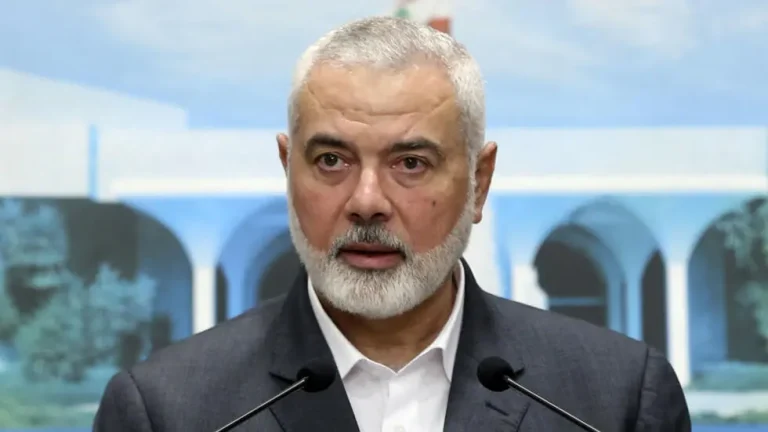
Hamas political leader, Ismail Haniyeh has been killed in Tehran, Iranian state media, Press TV reported on Wednesday, citing the Islamic Revolutionary Guard Corps (IRGC).
Haniyeh was the exiled political chief of the militant group and had spent much of his time in recent years in Qatar.
He had acted as a negotiator in the ceasefire talks and liaised with Hamas’s main ally, Iran, during the Israel-Gaza war.
A statement issued shortly after by Hamas said Haniyeh was killed alongside his bodyguard in a “Zionist raid” on his residence in Tehran after he participated in the inauguration of the new Iranian president.
CNN reports that it is not clear when Haniyeh was killed, adding that it has reached out to the Israeli military for comment on Hamas’ claim.
TVN recalls that Israeli airstrikes killed three of Haniyeh’s sons and four of his grandchildren in April, according to Hamas.
Hamas political leader, Ismail Haniyeh killed in Iran
How the haves have not

Those who wonder why the Dangote refinery has to buy imported petroleum have no clue how much Nigeria’s security system has failed to contain oil bunkering in the upstream sector of the petroleum industry.
Nigeria’s production quota, as approved by the Organisation of Petroleum Exporting Countries, is 1,500,000 barrels per day, out of which it reportedly achieves only 1,250,000 bpd, which some even say is overstated.
Some have suggested that if Nigeria pushes its production quota to anywhere near 2,000,000 bpd, OPEC will look the other way because of Nigeria’s current economic and (especially) foreign exchange challenges.
Imagine the delusion of those who fixed 1,780,000 bpd as the benchmark for Nigeria’s 2024 budget. This expected shortfall will result in inadequate cashback for the ambitious N27.5 trillion budget with its N9.18 trillion deficit.
And, of course, India and The Netherlands, major buyers of Nigeria’s petroleum, won’t ever get the quantity they need; they will get only a portion, and will have to source the shortfall from other suppliers.
The inability of the upstream sub-sector to achieve the OPEC quota caused the Federal Government to hire the security company of a former Niger Delta militant with a mouth-watering deal– which it announced with front-page display adverts to thank President Bola Tinubu for appointing a Niger Delta lady as Head of the Civil Service of the Federation.
With “too much money,” you may be looking for the most pedestrian way to announce that you don’t know what to do with the money. Peter’s Principle suggests that sometimes people are promoted beyond their level of competence!
It’s going to be awful difficult for NNPC Limited to supply enough petroleum to the Dangote refinery, or even its own refineries whose staff members are practically being paid as ghost workers, as they hardly produce a litre of petroleum products.
Here’s the math: Dangote refinery’s installed refining capacity is 650,000 bpd, while the four NNPC Limited refineries can refine 445,000 bpd. That gives you a total production capacity of nearly 1.1 million bpd, without considering the modular refineries.
But the priority supply is to oil bunkerers, the quota of the International Oil Company joint venture partners, Nigeria’s commitment to creditors, like AFREXIM Bank, and what NNPC Limited must sell to earn foreign exchange, which suggests that the 1.1 million bpd needed by NNPC Ltd and Dangote refinery may have to be imported.
You get no prize for correctly guessing the best kept secret of Nigeria’s petroleum sector, that NNPC Ltd and Dangote will not be able to refine enough petroleum unless they import the petroleum. Think of the child of a garment merchant with no clothes to wear.
If NNPC Ltd is able to reverse this trend (that is almost cast in stone) and (at least) supplies the 445,000 barrels due to NNPC Ltd to the Dangote refinery, for naira, as directed by Tinubu, petroleum products should get to Nigerians regularly and without the additional burden of landing and foreign exchange costs.
But it may not quite work out that way. The Chief Executive Officer of Nigerian Upstream Petroleum Regulatory Commission, Gbenga Komolafe, who is either unwilling or unable to check the IOC’s thieving games, coyly gave the wet blanket argument that crude oil, being an international citizen, will be sold in dollars.
What this means, in simple English, is that the proximity of Dangote refinery to Nigeria’s oil fields gives it no advantage in the cost it gets petroleum, especially when the booby-trap of “willing buyer, willing seller.”
When a Yoruba man is alarmed and laments, “Se e ri aye nyin l’ode,” what they are doing, in a sarcastic manner, it is to draw your attention to how pathetic your situation has degenerated. The street would say that you are in deep manure!
Farouk Ahmed, CEO of the Nigerian Midstream and Downstream Regulatory Commission, may have allowed himself to be used to demarket the quality of diesel produced at the Dangote refinery to save the face of the NUPRC that cannot up production on the oil fields.
With the help of the team from the House of Representatives that tested his diesel with the quality they bought off the street, Aliko Dangote was able to prove that his diesel was 80 per cent better than diesel imported by NNPC Ltd.
It is appropriate that the House of Representatives is asking the Federal Government to immediately suspend Ahmed for what appears to be a hoax on the quality of diesel refined by the Dangote refinery.
He may have been saved by the emergency meeting brokered by Heineken Lokpobiri, Minister of State for Petroleum Resources, between him, Aliko Dangote, NNPCL GMD, Mele Kyari; and Komolafe of the NUPRC.
This meeting would have been unnecessary if Nigeria was not suffering from a revenue deficit and pressure on the naira, caused by the alarming failure of the NNPCL to guarantee increased petroleum exploration in its oil fields, in addition to producing enough petroleum products in its refineries.
But people like Ahmed, Komolafe, Kyari and Lokpobiri, should be hiding their faces in shame for being well paid, only to deliver failure to Nigerians who put them in such high positions of responsibility.
Maybe Ahmed will be happy when the Dangote refinery is snapped by President Brice Oligui Nguema, whose country, Gabon, is the seventh largest petroleum producer in Africa. Because he is heckled as a monopolist within the Nigerian economy, Dangote is so frustrated that he is offering his refinery for sale to the NNPC.
This is not to say that he may not be having monopoly issues in his trade in other commodities. But that is for Tunji Bello, just appointed CEO of the Federal Competitive and Consumer Protection Commission, to determine.
Some Dangote critics speculate that he is a beneficiary of crony capitalism. If BUA Group, Dangote’s main competitor in the commodities market, goes beyond complaining and advances its grievances against Dangote to a formal report, maybe more could be revealed.
Perhaps Dangote should mention the names of those NNPC operatives, who find it more convenient to invest in a petroleum blending plant in Malta, instead of ensuring that refineries within Nigeria get enough crude petroleum to produce petroleum products.
That is the only reason the likes of Kyari will not have to be desperately explaining that they have no other personal businesses, except for an agricultural enterprise, located maybe somewhere in his village.
It is unreasonable to think that Tinubu will be fighting himself by engaging in a revenge war against Aliko Dangote, whom he recently appointed as a member of his Presidential Economic Coordination Council.
Tinubu, as the Minister of Petroleum and Gas Resources, must heed the timely warning of illustrious Dr Akinwunmi Adesina, President of Africa Development Bank, who observes, “This whole issue on Dangote is shocking and creating (negative?) waves for Nigeria globally.”
Failure to urgently do so may discourage the foreign direct investors that the President has spent so much financial resources and countless foreign trips wooing to Nigeria. The counsel by billionaire Femi Otedola for the President to create “an enabling environment to ensure (that) businesses thrive” is apt.
If Kyari and his “unworking and unbusy” NNPC Ltd can ramp up production to supply enough petroleum to local refineries, to guarantee a regular supply of petroleum to Nigerians at a good price, Nigerians would surely rejoice.
But if he and his team cannot achieve that modicum, the President should ask them all to go.
More workers losing fight against heat stress – ILO
The International Labour Organisation has said that heat stress is a silent killer that threatens the health and lives of a growing number of workers around the world, especially in Africa, Asia and the Arab states.
A new report from the ILO, titled “Heat at Work: Implications for Safety and Health”, warned that more workers were being exposed to heat stress worldwide.
It noted that regions previously unaccustomed to extreme heat would face increased risks, while workers in already hot climates would confront ever more dangerous conditions.
According to ILO, heat stress is an invisible and silent killer that can quickly cause illness, heatstroke or even death, adding that over time it could also lead to serious heart, lung and kidney problems for workers.
The report indicated that workers in Africa, the Arab states, Asia, and the Pacific were most often exposed to excessive heat.
“In these regions, 92.9 per cent, 83.6 per cent and 74.7 per cent of the workforce are affected, respectively. The figures are above the global average of 71 per cent, according to the most recent figures available (2020),” it added.
It stated that those fastest-changing working conditions were seen in Europe and Central Asia, noting that from 2000 to 2020 the region recorded the largest increase in excessive heat exposure, with the proportion of workers affected rising by 17.3 per cent, almost double the global average increase.
Meanwhile, it highlighted that the Americas, Europe and Central Asia were witnessing the largest rise in workplace injuries from heat stress since the year 2000, with increases of 33.3 per cent and 16.4 per cent, respectively.
It explained that this may be due to hotter temperatures in regions where workers are unaccustomed to heat.
Also, the report estimated that 4,200 workers globally lost their lives to heatwaves in 2020, adding that in total, 231 million workers were exposed to heatwaves in 2020, marking a 66 per increase from 2000.
It stated that nine out of 10 workers globally were exposed to excessive heat outside of a heatwave and eight in 10 occupational injuries from extreme heat happened outside of heatwaves.
The ILO Director-General, Gilbert Houngbo, said, “As the world continues to grapple with rising temperatures, we must protect workers from heat stress year-round. Excessive heat is creating unprecedented challenges for workers worldwide year-round, and not only during periods of intense heatwaves.
“Improved safety and health measures to prevent injuries from excessive heat in the workplace could save up to $361bn globally – in lost income and medical treatment expenses – as the heat stress crisis accelerates, affecting global regions differently, emphasises the study.”
The ILO estimate showed that low- and middle-income economies, in particular, were the most affected, as the costs of injuries from excessive heat in the workplace can reach around 1.5 per cent of national GDP.
“This is a human rights issue, a workers’ rights issue, and an economic issue, and middle-income economies are bearing the biggest brunt. We need year-round heat action plans and legislation to protect workers, and stronger global collaboration among experts to harmonise heat stress assessments and interventions at work,” added Houngbo.
“If there is one thing that unites our divided world, it’s that we’re all increasingly feeling the heat. Earth is becoming hotter and more dangerous for everyone, everywhere. We must rise to the challenge of rising temperatures – and step-up protections for workers, grounded in human rights,” explained the UN Secretary-General, Antonio Guterres.
The ILO also looked at the legislative measures in 21 countries worldwide to find common features that can guide the creation of effective workplace heat safety plans.
“The findings build on a previous report, published in April this year, which indicated that climate change was creating a “cocktail” of serious health hazards for an estimated 2.4 billion workers who are exposed to excessive heat. The April report indicated that excessive heat alone causes 22.85 million occupational injuries and the loss of 18,970 lives each year,” the report stated.