Home Blog Page 666

#EndBadGovernance and danger of misplaced anger

0

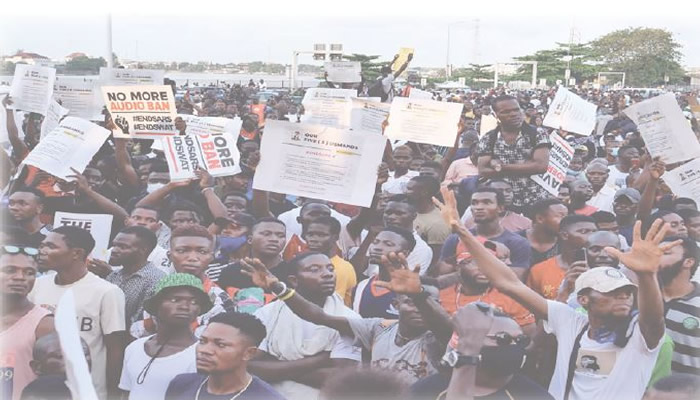
Today is the set date for the Nigerian citizens to unleash their pent-up anger and frustration against their political leaders, nay the President Bola Tinubu government, through a channel popularised and sold as #EndBadGovernance protest. My fear is that because they have waited far too long, the rage may have a double impact. Just like a magma that seethes under the earth until it bursts out as a smouldering larva, no one can really predict how the emotions of the citizens would flow. This is dangerous because it feeds into the psychology of defence mechanism to cope with hardship engineered over the decades by our own peculiar but dysfunctional socio-political experiment, or democratic process.

The real culprit that Nigerians should be protesting against is the International Monetary Fund and the Bretton Woods system that it represents. It is the IMF that told the Nigerian government to remove all subsidies, on petrol and electricity. It is understood that in declaring an end to petrol subsidy on the day he was being sworn in, Tinubu was sending a clear message to the IMF that he was ready to work with their plan, regardless of its venom.  In my opinion, Tinubu should look at China with a new lens. This is a country that has been able to successfully define its own prosperous economic path without looking the way of the Bretton Woods handouts or textbooks.

I believe the protest took a long time in coming because it would have naturally happened under the Muhammadu Buhari administration which failed to fulfil its key promise of ending the bad governance unleashed on Nigerians since 1999 by the political party it unseated. We must note that #EndSARS is not the same as #EndBadGovernance. However, this is not to say that Buhari is to be blamed for the woes of the nation. No. Yet, truth be told, the average Nigerian voted for him to replace Goodluck Jonathan and his Peoples Democratic Party because we believed he had a better deal than those who were looting the country blind.

The Buhari phenomenon became a historic reality on the consensus that corruption would be given the sucker punch. It was a revolution, led by Mr Anticorruption himself. This was the reason there was much talk about his body language forcing a change in the polity at the beginning of his tenure in 2015.

But as the new government dug in, we saw a total hijack of the instrument of power by unscrupulous politicians who rode in with the Buhari wave.  Buhari did not vet them, either. Within a short time, all the good and bad politicians melded into one. There was no longer any recognisable difference between the PDP and the so-called Buharists. Just like the tale in the popular novel Animal Farm, Nigeria reverted to its original state – the animals are underfed and overworked with little hope of a better future.

Interestingly, Buhari was insulated from protests for the same reason that he was elected. He enjoyed cult followership, especially in the North. Still, he was shrewd enough not to grab the tiger’s tail by removing the subsidy on petroleum, to the very end of his tenure. Tinubu became the fall guy by removing the subsidy on the first day he ascended into office. But Nigerians must understand that it is not really about subsidy. It is about corruption, that old serpent that refused to die or be exorcised. It is behind bad governance and the scam called fuel subsidy. That is why even up till this moment, subsidy is still being paid in some other fashion. To be sure, once you kill corruption, bad governance is dead.

I am convinced that what drives Nigerians as they enter the street today is nothing but displaced anger. Displaced (or misplaced) anger is when someone transfers their anger to someone or something other than what initially triggered it. This can lead to displaced aggression, that is, physical or emotional hostility toward someone or something other than the initial trigger.

Are Nigerians angry? Yes, they are. Why? There is no concrete answer to this question. The issue is so convoluted that if you put all of us in one room, we shall each have our own personal demands to present. At the end of the day, you realise that it is not even about bad governance. There are existential problems troubling us. And they are fundamental, at the soul of our survival as a nation. It may be corruption, or ethnic hegemony, or religious repression, or political misperception. But for the lack of a concrete term, it is called bad governance for now.

Protests seem to have a life of their own. You may never know how they come and go. Even during the 2012 protests that were ignited when Jonathan increased the pump price of petrol, it was revealed that we had inadvertently joined a global movement known as the Occupy Movement. Hence, while we saw it as a fuel hike protest, the organisers led us into the global theatre of social uprising that was charted in the spirit of the Arab Spring. It nearly collapsed Jonathan’s government.

The Occupy Movement was an international populist socio-political movement that expressed opposition to social and economic inequality and to the perceived lack of real democracy around the world. It aimed primarily to advance social and economic justice and different forms of democracy. The interesting aspect of the movement was that it had many different scopes, since local groups often had different focuses, but its prime concerns included how large corporations (and the global financial system) control the world in a way that disproportionately benefits a minority, undermines democracy and causes instability. I discovered that at the root of the Occupy Movement was the Zeitgeist Movement, an activist movement against market capitalism and historic religious concepts.

Therefore, we must be sure to understand and engage the philosophy of any protest we embark on, because some of them are demands to upturn civilisation as we know it. Populist politicians usually come into office riding on such promises. President William Ruto of Kenya enjoyed the massive support of Kenyan youths because they saw him as one of their own – “hustler-in-chief” as he described himself. But, alas, when he became the president, he did not commit to the class suicide required of him to fulfil his undeclared promises. Hence, the Kenyan youths were livid with disappointment.

This is the main reason I stated earlier that Buhari should be the one that would have answered to the anger of the masses. Just like Ruto, he enjoyed the support of the man on the street. But when he became president, he turned his back on them. As a matter of fact, Tinubu never made half the promises Buhari sold to us.

I suggest that in order to save a dying nation, the Tinubu team should adopt the standard treatment options for displaced anger. The first is talk therapy, which is a communication-based treatment, to better understand and manage thoughts and behaviours. In other words, the President must personally talk to Nigerians. The second is stress relief, utilising techniques and behaviours to calm the body and mind and decrease stress levels. This means that angry Nigerians must have their immediate needs met – revert to the old electricity tariff, support entrepreneurs, etc. The third is anger management, which utilises a set of techniques that helps people with anger react differently when they feel angry. This speaks to the ability of the president to present a better picture of his dream for Nigeria. The masses have lost the patience to wait for his economic plans to mature.

Ogunsemilore couldn’t prove her innocence — NOC

0

Nigerian boxer Cynthia Ogunsemilore was sent parking from the Olympic Games Village in Paris 2024 after failing to prove her innocence in a doping case, Nigeria Olympic Committee Media Officer Tony Nezianya told According Sports Extra on Wednesday.

The International Testing Agency had earlier reported that Ogunsemilore tested positive for furosemide, a prohibited diuretic, in an out-of-competition doping control on Thursday.

“She left the Games Village yesterday (Tuesday). She will be heading back to Nigeria, and she has to leave France,” Nezianya told our correspondent.

“She has been sent out of the Games Village in line with the directive that she should leave. Some certain items have also been recovered from her; a Samsung phone, an accreditation tag, and other things were returned to the IOC.”

Responding to Ogunsemilore’s claims that the test was wrongfully conducted, Nezianya stated, “Those testimonies should have been given to the IOC, and she did not tender it there. It is when they are caught that they start blaming procedures. Her signature is already on the result, which means she gave consent to the procedures followed.”

“She was alleged to have taken drugs, and she was not able to prove anything otherwise.”

The Court of Arbitration for Sport’s Anti-Doping Division confirmed Ogunsemilore’s provisional suspension on July 28, which will continue through the duration of the Paris 2024 Olympics.

The 2022 Commonwealth Games bronze medalist and African Games champion had been scheduled to face Taiwan’s Wu Shih Yi in a round of 16 bout on Tuesday before her suspension led to a win for Shih Yi.

All rights reserved. This material, and other digital content on this website, may not be reproduced, published, broadcast, rewritten or redistributed in whole or in part without prior express written permission from According.

Contact: [email protected]

Banks, others shut as hunger protest holds

0

Banks and other financial institutions in the country will be closed on Thursday, August 1, 2024, as the planned hunger strike begins across the country.

While none of the banks outrightly announced a closure, chats with different employees of the banks indicated that they have been advised not to report for work on Thursday as the banks monitor the protest.

A banker who spoke with The According said, “You saw what happened during previous protests, banks were targets. We don’t want a repeat of a similar experience, hence we have been advised to monitor the situation first and then we know where to go from there.”

Another banker based in Lagos simply said, “I’m not going to work tomorrow,” when asked.

However, another banker said they were not advised either way, just told to exercise caution during their commute.

A Pension Fund Administrator, Leadway Pensure, in a mail to their customers on Wednesday titled ‘Business Continuity Amid Planned Protest’ said, “Due to the planned nationwide protest starting August 1, 2024, please be informed that all our office will be closed on Thursday, August 1, 2024, and Friday, August 2, 2024, at the first instance as we monitor the situation.”

The PFA went on to urge its customers to adopt its digital channels for their transactions.

Asset Management firm, Meristem Securities Limited, also issued a notice of closure to its customers on Wednesday.

“Dear esteemed client. Due to the upcoming nationwide protest tomorrow, this is to inform you that all our offices in Lagos, Port Harcourt and Abuja will be closed on Thursday, 1st June 2024. We will closely monitor the situation and provide further communication, depending on the developments of the protest.”

Their customers were advised to reach them via their online channels.

Speaking with The According in an exclusive interview, the President of the National Union of Banks, Insurance, and Financial Institutions Employees,  Anthony Abakpa, said, “Banks will monitor the National planned protest closely and see how it plays out. The regulatory body has not given express approval to close any of the bank operations amid the protest.

“Banks cannot close shop without the express approval of the Central Bank of Nigeria. We will monitor closely while we have advised our members to exercise extra caution and be alert to stay safe during and after.”

Legal debate intensifies on citizens’ right to protest

0

As the #EndBadGovernance protest begins today, legal experts, among others, react to the recent Lagos State High Court ruling restricting the protest in the state to certain locations, writes ONOZURE DANIA

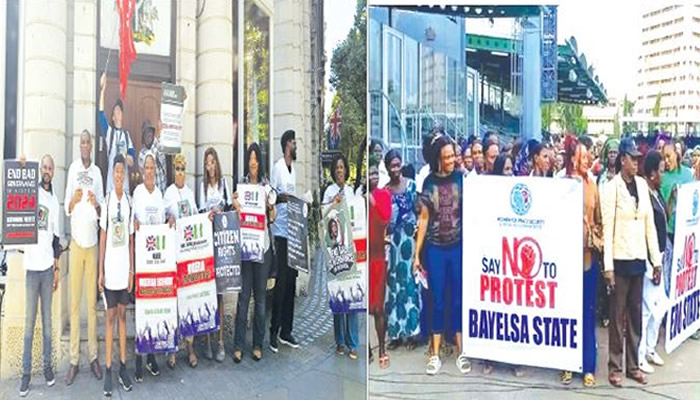
Today, August 1, 2024, marks the beginning of the nationwide protest tagged #EndBadGovernance. The protest, meant to register the displeasure of the citizens against the policies of the government which have led to hunger and economic hardship,  is expected to end on August 10.

Before today, the Federal Government had feared that the protest might go the way of the #EndSARS protest of October 2020, which was characterised by the destruction of property.

The Federal Government had also mentioned that the protest could be hijacked. As a result, some security agencies had already deployed personnel across the country to protect lives and property during the protest.

In an announcement made by the Nigeria Security and Civil Defence Corps, Ahmed Audi, during a meeting with commandants and zonal Commandants at the Corps’ national headquarters in Abuja on Monday, the NSCDC Commandant-General said, “Based on the foregoing I have ordered the deployment of no fewer than 30,000 personnel nationwide which includes Intelligence and other Tactical Units across all formations; the Zonal Commanders and all State Commandants in the 36 States and FCT are to supervise their personnel and monitor the protest with a view of ensuring the protection of lives and property as well as securing the nation’s critical assets and infrastructure.”

Some supporters of the protest pointed out that President Bola Tinubu was among those who organised the Occupy Nigeria protest that started on January 2, 2012, against the administration of former President Goodluck Jonathan when he increased the price of fuel from N65 per litre to N87.

On Monday, women from different states were seen in Abuja carrying banners protesting against today’s protest, saying there must not be any protest.

A Lagos State High Court at Tafawa Balewa Square on Tuesday restricted protesters participating in the nationwide protest to specific locations within the state.

Justice Emmanuel Ogundare had made the order while declaring that demonstrations could only take place at the Gani Fawehinmi Freedom Park in Ojota and Peace Park in Ketu.

But the Lagos State High Court ruling confining demonstrators to the Gani Fawehinmi Freedom Park and Peace Park in Ketu, Lagos, from 8:00 AM to 6:00 PM, has sparked widespread reactions, with some questioning the judiciary’s role in safeguarding civil liberties.

The Convener, Access to Justice, Joseph Otteh, expressed grave concerns about the implications of this ruling on the judiciary’s reputation.

Otteh described the ruling as unfortunate and would occasion considerable reputational harm to the nation’s judiciary.

“The orders issued by the court significantly undermine principles fundamental to the exercise of judicial power and the normative content of globally recognised rights,” Otteh stated.

He stated that the court made these determinations without providing those affected the opportunity to a fair hearing.

“It is a rudimentary principle that every person is entitled to be heard before any orders are made against them,” he added.

Otteh continued by saying, “A truly independent court, conscious of its constitutional role, would not make orders that limit the exercise of fundamental rights in the manner this court has done.”

Speaking on the NBA stance on the protest, Otteh said it surprised many, describing it as misplaced, and emphasising that the association, which was founded to defend the rule of law, should prioritise expanding civic spaces for the expression of civil rights.

“The Bar ought to be more concerned with expanding civic spaces for the expression of civil rights and defending those who desire to exercise those rights within constitutional boundaries,” Otteh said.

But a Senior Advocate of Nigeria, Prof. Edoba Omoregie, says, “There is no specific portion of the constitution that guarantees anyone the right to ‘peaceful protest.”

He explained that the Constitution guarantees the right to peaceful assembly, freedom of expression, and freedom of movement. “It’s in reference to a combination of these constitutional guarantees that many assume the right to protest or peaceful protest is guaranteed,” Omoregie added, stating that “the right to peaceful assembly and association cannot undermine the right of others to free movement.”

He says that any protest that escalates into violence, riots, or insurrection will grant the government the authority to intervene, even by using lethal force if necessary.

“This is why it’s crucial for those planning protests to abide by the law,” Omoregie urged, stressing the need for transparency and accountability from protest organisers.

 “No responsible government will allow faceless people to cause confusion and harm in society in the guise of protest,” Omoregie asserted, advocating a civil and constructive approach to the expression of dissent.

Mrs Titilola Akinlawon, also a Senior Advocate of Nigeria, emphasised the constitutional right to protest, saying, “Of course, protest is a constitutional right which no one, not even the government, can take away.”

However, Akinlawon voiced concerns about the potential for violence, given the country’s current socio-economic climate.

“The contention is that because of the prevailing situation in the country of acute hunger, miscreants would exploit this to loot, maim, and kill,” she stated.

“There is so much hunger and anger in the land,” she noted, “and in such a situation, peaceful protest may turn violent, and no one knows how it would end.”

This delicate balance between safeguarding citizens’ rights to express their grievances and ensuring public safety underscores the complexity of the current discourse on protest and civil liberties in Nigeria.

Civil society organisations had reacted ahead of the protest day, reaffirming the right to peaceful protest as a fundamental aspect of democratic governance.

A coalition of 36 organisations issued a statement emphasising that peaceful protest is a legitimate form of expression, protected under international human rights laws and the 1999 Constitution. “Protesting allows citizens to publicly voice their concerns, challenge injustices, and participate actively in the democratic process,” the statement read in part.

However, these organisations also acknowledged the potential for protests to escalate, especially in a highly charged environment, thereby urging all parties, including law enforcement agencies, to prioritise safety and the rule of law.

“Law enforcement agencies have a duty to safeguard protesters while upholding public order. Demonstrators must avoid activities that might exacerbate tensions, cause unrest, or threaten public safety,” they advised.

A lawyer, Saheed Ajadi, believes that “the law should take its course, and anyone who acts contrary to the law should be punished without bias.”

Commenting on the economic measures taken by the Tinubu administration, such as the removal of petrol subsidies and the unification of the naira, Ajadi said, “All these measures have implications for the economy, and they have been primarily responsible for the crisis we are facing now in terms of inflation and the high cost of food.”

Despite these challenges, Ajadi expressed optimism about the future, urging Nigerians to support the government and offer constructive advice.

Ofili’s omission smears Nigeria’s Olympic campaign

0

The omission of Favour Ofili from the Women’s 100m event of the 2024 Olympic Games in Paris has smeared Nigeria’s campaign, with the Athletics Federation of Nigeria and Nigeria Olympic Committee trading blames, According Sports Extra reports.

In Wednesday’s release, AFN Technical Director, Samuel Onikeku, expressed shock at Ofili’s exclusion, stating, “We registered Ofili for the 100m, 200m, and the 4x100m relay. We don’t know how her name got missing in the 100m. This is our stand as a federation.”

Ofili took to her social media page to announce her omission on Tuesday, expressing her anger by writing, “It is with great regret that I have just been told I will not be competing in the 100 metres at this Olympic Games. I qualified, but those with the AFN and NOC failed to enter me. I have worked for 4 years to earn this opportunity.

“For what… to not be entered and compete at the Olympic Games because the responsible organisation failed to enter me? ‘ Please remember, in the last Olympic Games I was not able to compete because AFN, NADC, and NOC failed to release funds for athletes to be tested, which made 14 Nigerian athletes that qualified to not compete.

“Now this. If those responsible are not held accountable for taking this opportunity from me, neither organisation can ever be trusted in the future!‘ Next one is the 200 metres; I hope I’m entered.”

In a statement on Wednesday, the Minister of Sports Development, John Enoh, expressed his dismay at the ugly development and promised to hold those responsible accountable.

“As Minister of Sports, I will not tolerate this utter recklessness. It is highly inexcusable, and there will be thorough sanctions after investigations into where and from whom this gross negligence originated,” he said.

D’Tigress face France in second Group B clash

0

Nigeria’s senior women’s basketball team, D’Tigress, will hope to continue their fine form at the Paris 2024 Olympics when they take on hosts France in their second Group B game on Thursday (today), The According reports.

The African champions, who are ranked 12th in the world, put on a great display at the Pierre Mauroy Stadium to beat the world’s third-best team Australia 75-62 in their opening game, ending their 20 years without a win at the Olympics.

Thursday’s game is expected to be fiercely contested, but the Nigerian team, buoyed by their opening victory, appear ready for the challenge.

The African champions, who are making their second consecutive appearance in Paris, having participated in the 2020 Tokyo Olympics, will be looking to land another surprise blow and claim their first-ever successive win at the event.

D’Tigress head coach Rena Wakama will most likely start with the quintet that defeated the Opals on Monday, with returning point guard Ezinne Kalu, 2023 Afrobasket MVP, team captain Amy Okonkwo, Elizabeth Balogun, Pallas Kunaiyi-Akpanah, and Promise Amukamara all putting on a great display in their opening game.

Once again, Nigeria will be banking on terrific Okonkwo and Kalu for inspiration after both put up an impressive display in the opener against Australia.

Kalu brought in her A-game to bag 19 points, five rebounds, and five assists in the game.

If both players can turn up the dial in the frontcourt, then that will be massive, especially since D’Tigress have received a huge boost with their historic victory on Monday.

There will be further strength under the basket in the shape of Murjanatu Musa, whose size and power will be vital, as will that of Pallas Kunaiyi Akpanah.

Speaking after the game against Australia, Wakama sent a clear message to their rivals, saying they were in Paris to win.

“We’ve come a long way, and we’re not stopping for anybody,” Wakama said.

“This victory is just the beginning. We respect all our opponents, but we fear none. Our sights are set on the gold, and we will fight for it with everything we have.”

The knockout stage of the games will be held at the Bercy Arena in Paris, with the final scheduled for August 11.

Banks spend $50m on private jet maintenance annually, says Otedola

0

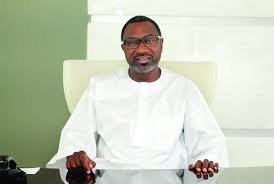
Billionaire businessman, Femi Otedola, has supported the 70 per cent windfall tax proposed by the Federal Government on foreign exchange gains of banks.

In a statement he issued on Wednesday, Otedola, who is the chairman of FBN Holdings, slammed the banking sector for its $50m estimated bill on maintaining private jets and an even higher bill on the purchase of private jets.

In July, the Senate amended the Finance Act to impose a 70 per cent windfall tax on banks’ foreign exchange profits.

A windfall tax is a higher tax levied by the government on sectors or businesses that have disproportionately benefited from favourable market conditions.

President Bola Tinubu said the money would be part of the revenue used to fund the N6.2tn supplementary budget.

Otedola argued, “I write to express my strong support for the implementation of a windfall tax in Nigeria and to highlight the critical role this measure plays in fostering a fairer and more equitable economic environment.

“This endorsement aligns with the ongoing efforts to reform the Nigerian banking sector, aimed at enhancing economic stability and integrity within our financial institutions. Windfall taxes are levies on companies or individuals who receive substantial, unexpected profits due to circumstances beyond their usual control or investment. Taxing these extraordinary gains ensures a fairer distribution of wealth, allowing those who benefit disproportionately to contribute more significantly to the broader societal good.”

He said that the revenue generated from windfall taxes could be channelled into essential public services, such as healthcare, education, and infrastructure, benefiting all citizens and helping to reduce social inequalities.

“The recent announcement of a windfall tax on the extraordinary profits earned by Nigerian banks is a significant first step towards achieving these goals.

The consolidation of various foreign exchange rate systems into a single investors and exporters (I&E) window led to the depreciation of the Naira and substantial increases in the value of bank assets denominated in United States Dollars.

“This extraordinary gain should be redistributed to fund critical infrastructure development, education, healthcare access, and public welfare initiatives, addressing the intense pressure on public finances and alleviating the cost-of-living crisis many Nigerians face,” he said.

Otedola, who is also the chairman of Geregu Power, pointed out that while the financial statements of manufacturing, telecoms, and SMEs indicated that many of them may not be able to pay corporate tax for at least the next two years, due to their negative equity, therefore, becoming essential for the government to step in and provide support to those entities.

On the appetite of the banking sector for private jets, Otedola said, “Amid the progress with banking sector reforms, there is an urgent need to address entrenched issues within the Nigerian banking sector.  A concerning trend has emerged where some bank chief executives prioritise personal gain over their duty to shareholders and customers. The core values of banking—trust, integrity, and service—must be upheld. I am particularly critical of the culture of flamboyance, especially the ownership and operation of private jets.

“Nigerian banks are spending an estimated $50m annually just on maintaining private jets, with over $500m gone into purchasing nine private jets by four banks. This level of extravagance significantly erodes public trust in our financial institutions and diverts crucial resources away from vital areas such as operational efficiency, technological innovation, and customer service.”

He called on the banks to regain the trust of their customers by realigning their

financial priorities and invest in areas that directly improve customer services and enhance technological infrastructure.

The billionaire also commended the recent recapitalisation initiative in the banking sector, saying, “This move is designed to strengthen the banking sector’s capacity to support Nigeria’s broader economic development goals. It is crucial for banks to focus on operational efficiency, technological innovation, and customer service, rather than executive extravagance.”

Monthly power subsidy soars by 151% to N211bn

0

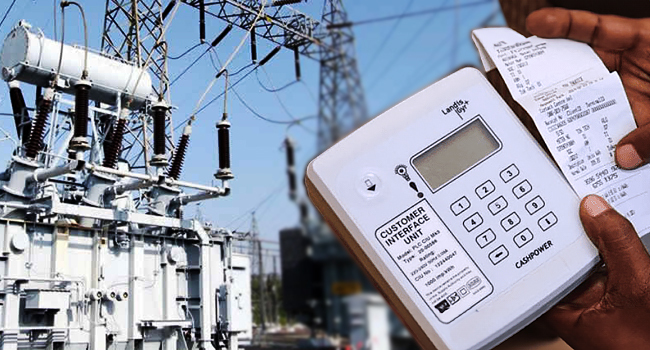
The electricity subsidy obligation of the Federal Government rose from N252.76bn to N633.30bn in the first quarter of 2024, a report by the Nigerian Electricity Regulatory Commission has disclosed.

The NERC said the electricity subsidy skyrocketed to N211.10bn per month in the first three months of 2024, from N84.25bn in the last quarter of 2023.

NERC revealed that the increase was largely attributable to the government’s policy to harmonise the exchange rates while also issuing a policy directive that end-user customer tariffs remain at the rates that came into effect in December 2022.

“Due to the absence of cost-reflective tariffs across all distribution companies, the government incurred a subsidy obligation of N633.30bn (90.57 per cent of total Nigerian Bulk Electricity Trading Plc invoice) in Q1 2024 (average of N211.10bn per month). Across 2024/Q1, this represents an increase of N380.56bn (150.56 per cent) compared to the N252.76bn (average of N84.25bn per month) incurred in Q4 2023,” the regulator stated.

The absence of cost-reflective tariffs was said to have caused the Federal Government to undertake to cover the resultant gap between the cost-reflective and allowed tariff in the form of tariff subsidies.

For ease of administration, the subsidy is only applied to the generation cost payable by Discos to NBET at source in the form of Disco’s Remittance Obligation.

The DRO, it was learnt, represents the total Genco invoice that is billed to the Discos by NBET based on what the allowed Disco tariffs can cover.

In the first three months of the year, the DRO-adjusted invoice from NBET to the Discos was said to be N65.96bn while the total remittance made was N65.52bn, which translates to a 99.33 per cent remittance performance.

“Comparatively, in 2023/Q4, the Minimum Remittance Obligation-adjusted invoice from NBET to Discos was N223.32bn and the total remittance was N156.40bn, which translated to a 69.92 per cent remittance performance. This means that the remittance performance of Discos to NBET increased by 29.41 points percentage in 2024/Q1 compared to 2023/Q4,” the NERC said.

The According recalls that the NERC had on April 3 cut off subsidy payment in areas categorised as Band A, in an attempt to reduce subsidy obligations. This has since raised the tariff in Band A to above N200 per kilowatt-hour from N68.

It was gathered that the electricity claim for April was N140bn; it was N102.30bn in May and N158.53bn in June, a reflection of the Band A subsidy removal. However, it is higher than the N84bn recorded monthly in Q4 2023.

Our correspondent reports that the NERC recently removed NBET from the power purchase agreement between the Discos and Gencos, giving the two parties the chance to transact businesses without a middleman.

Meanwhile, the International Monetary Fund has warned the Nigerian government to remove what it called implicit energy subsidies.

In a recent report, the IMF told Nigeria that the subsidies would guzzle three per cent of the nation’s gross domestic product in 2024, as against one per cent in the year before.

As Nigerians agitate for the reversal of the Band A tariff to N68/kWh, IMF submitted, “The tariff adjustment will help reduce expenditure on subsidies by 0.1 per cent of gross domestic product while continuing to provide relief to the poor, particularly in rural areas.”

Opposition, OPS oppose higher borrowing limit for FG

0

Both chambers of the National Assembly have raised the threshold for the Ways and Means advances by the Central Bank of Nigeria to the Federal Government from five per cent to 10 per cent of the previous year’s revenue.

However, this decision was opposed by the Organised Private Sector and members of the opposition parties in the National Assembly, as they kicked against the move.

Ways and Means are advances provided by the CBN to the Federal Government to cover revenue shortfalls in budget implementation.

The National Assembly also rescinded and re-enacted the 2024 Appropriation Act through an amendment bill sponsored by leaders of both chambers.

In the Senate, the increase in the threshold was achieved through the consideration and passage of a bill sponsored by its Leader, Senator Opeyemi Bamidele (APC Ekiti Central).

In his lead debate, Bamidele explained that the bill seeks to amend the CBN Act to increase the total CBN advances to the Federal Government.

He stated that the bill aims to help the government meet its immediate and future obligations due to the increasing need for funds to finance budget deficits and other expenses.

“The Central Bank of Nigeria’s Advances to the Federal Government are essentially loans that the bank provides to the government to help it meet its financial obligations. These advances are typically short-term and are expected to be repaid by the government,” he said.

Bamidele explained that the request to increase the threshold to 15 per cent of the previous year’s revenue was made to provide immediate funds to address budget shortfalls, finance essential government expenditures, maintain financial market stability, inject money into the economy, and support critical sectors like agriculture, healthcare, and infrastructure development.

This would also lower government borrowing costs compared to traditional borrowing methods.

During the debate, many Senators supported the amendment but argued that the 15 per cent requested should be reduced to 10 per cent.

It was recalled that from 2014 to 2023, the Federal Government collected a total of N30tn through Ways and Means from the CBN without National Assembly appropriation, prompting the Senate to set up an Ad-hoc committee for investigation.

The committee, headed by Senator Jibrin Isah (APC Kogi East), has yet to submit its report on the expenditure of the N30tn.

The amendment bill initially proposed a borrowing limit of 15 per cent, but several lawmakers cautioned that it should not exceed 10 per cent to ensure fiscal discipline.

Consequently, during a clause-by-clause consideration of the bill, the Deputy Senate Minority Leader, Abba Morro, moved for an amendment to substitute 15 per cent with 10 per cent in clause 2, which was supported by the majority of Senators.

Abdul Ningi proposed that the borrowing be limited to capital expenditure, but his motion was not seconded.

Meanwhile, both the Senate and the House of Representatives, during the emergency sitting, repealed and re-enacted the N35.05tn 2024 Appropriation Act through an amendment bill.

The Senate leader explained that the amendment was necessitated by observations made by the Directorate of Legal Services of the National Assembly on the previously passed 2024 Appropriation Act.

He specifically stated that the long title of the bill, clauses 1, 13, and 14, and the explanatory memorandum portion of the bill were meant for amendment, which was done expeditiously without changing the budget size.

After these amendments, both chambers adjourned plenaries to September 17, 2024.

During the debate on the Ways and Means advances at the House of Representatives, the opposition lawmakers voted nay in their numbers, but the Deputy Speaker, Benjamin Kalu, hit the gavel in favour of the ayes, saying, “The ayes have it. The bill to amend the CBN Act, 2007 read for the third time and passed.”

OPS, experts react

Reacting to the development, the National President of the Association of Small Business Owners of Nigeria, Dr Femi Egbesola, said the move was counter-productive to combating inflation.

He said, “Raising Ways & Means is indeed counter-productive to fighting inflation as it increases liquidity which indeed fuels inflation. Also, it increases Nigeria’s debt servicing burden because each loan taken must be repaid with interest, however low.

“This leaves little resources for infrastructure and development programmes that will benefit the common man.”

Egbesola posited that it was evident that something was wrong with the nation’s fiscal policy.

He asserted, “It shows that the government of the day is not innovative in raising revenue through other noble means. It Is an indication that something is wrong with our fiscal policy. This is not the best for us now.”

Meanwhile, the National Vice President of the Nigerian Association of Small-Scale Industrialists, Segun Kuti-George, said the borrowing mechanism has been abused over time by the government.

He said, “Ways and Means borrowing is usually obtained by the Federal Government from the central bank, which is the lender of last resort, to meet temporary, short-term, and emergency needs of the government. It was pegged at 5 per cent, but records have it that it has been abused over time, particularly by the last government of President Mohammadu Buhari.

“Ways and Means borrowing grew to as much as 70 per cent of the revenue without any ratification of amending it from five per cent to anything. The effect of Ways and Means borrowing on the economy is that it increases money in circulation, which in turn can generate inflation. So by formally increasing it from five per cent to 10 per cent, it means that it is going to give the government the leverage each time they borrow to increase money in circulation. However, if this government adheres to the 10 per cent borrowing, it will still be far lower than what the former President’s borrowing was.

“Because that was far above the 10 per cent, well I think that since the temporary borrowing is done under its financial discipline and is repaid on time, the effect may not be so much. But usually, Ways and Means borrowing increases money in circulation and can cause or aid further inflation.”

The Director of the Centre for Promotion of Private Enterprise, Dr Muda Yusuf, described the increase of Ways and Means to 10 per cent as realistic, not excessive, and more tolerable than the experience during the President Muhammadu Buhari administration.

“I don’t think it is excessive. I think it’s tolerable,” Yusuf said.

He added, “The current increase to 10 per cent pales in comparison to the previous regime’s Ways and Means spending. It was as high as 40 – 50 per cent.”.

He further explained how Ways and Means exist as a measure to plug spending gaps caused by seasonality issues in how the government gets revenue.

Additional reports by Arinze Nwafor, Oluwakemi Abimbola, and Daniel Adaji

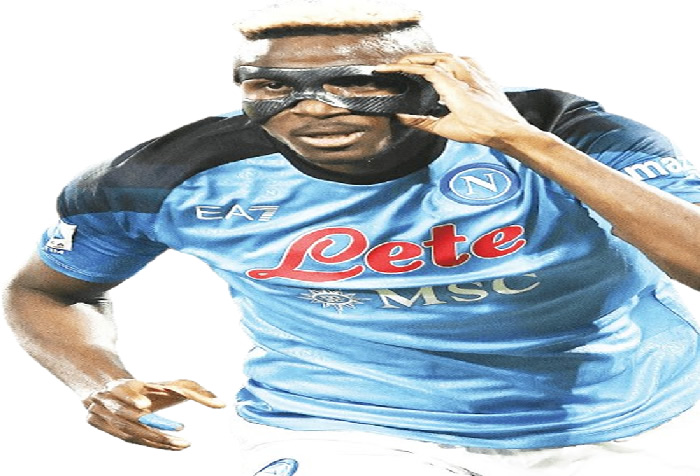
Chelsea intensify Osimhen talks with Napoli

0

Victor Osimhen could end up at Chelsea, with news rife that the Premier League giants have intensified talks with Napoli to finalise a deal that will see Romelu Lukaku heading in the opposite direction.

The deal will also see Chelsea paying Napoli a hefty lump sum for their bid to have the Nigeria striker lead their line next season.

The 25-year-old Nigerian striker is still waiting for his high-profile move away from the Partenopei this summer, having signed a new contract back in December that includes a €130m release clause. Paris Saint-Germain seemed seriously keen, but their highest offer didn’t break the €90m mark.

Napoli are keen to snap up Lukaku to please new coach Antonio Conte and have been in contact with Chelsea regarding a possible swap deal involving Osimhen and a large cash sum. Both players expect to leave their respective clubs ahead of the 2024–25 season.

Page eight of today’s Corriere dello Sport details how Lukaku is valued at around €30m by Napoli, despite his €44m release clause, so Chelsea would need to pay €70m as well to secure a deal for Osimhen, who is open to the move to West London.

A double loan deal looks extremely unlikely considering that both players have contracts expiring in 2026, so the operation would need to be on definitive terms. Talks between the two clubs are ongoing, and developments are expected.

Osimhen and Napoli agreed to part ways before the end of last season despite signing a new deal with the Azzurri in December, with the former Serie A champions smartly inserting a 130m euros release clause that has seen his suitors beating a retreat sooner than enquiring about his availability.

Manchester United, PSG, and Arsenal were among the several top European clubs interested in his signature, but they have all settled for other option, leaving Chelsea as the only club that help  help the former Lille striker fulfill his dreams of playing in the Premier League.

Osimhen, who has shunned several lucrative offers from the Saudi Pro League, has been left out Antonio Conte in Napoli’s preseason, making his departure from Diego Maradona Stadium increasingly imminent.