Governor AbdulRahman AbdulRazaq of Kwara State has approved the constitution of a tripartite committee to work out the consequential adjustment component for other categories of workers on the new minimum wage.
This comes as a new national minimum wage has been pegged at N70,000, triggering a need for consequential adjustments for senior cadres of workers in the state.
The committee comprises representatives from the state government, the labour unions, and the organised private sector, according to a statement by the governor’s spokesman, Rafiu Ajakaye in Ilorin.
The tripartite committee is chaired by the Head of Service and co-chaired by the Commissioner for Finance, while the Director (Establishment and Pension) is the Secretary.
Other members are the Commissioners for Budget & Planning, Works and Transports, Local Government and Chieftaincy Affairs, Communications; Senior Adviser and Counsellor to the Governor; Permanent Secretaries (Finance, Service Welfare, Justice); and Senior Special Assistant to the Governor on Labour Matters.
Apart from the Federal Controller on Labour and Employment, the Labour movement is represented on the committee by the Chairman of the Nigeria Labour Congress, Chairman of the Trade Union Congress, Chairman of the Joint Negotiation Council (JNC), Chairman of JOHESU, and Secretary of the JNC.
The private sector is represented by the Kwara Chamber of Commerce (KWACCIMA), Manufacturers Association of Nigeria, and the Nigerian Association of Small and Medium Enterprises, the statement added.
Minimum wage: Kwara names committee for consequential adjustment
Minimum wage: Kwara names committee for consequential adjustment
Top 10 stories from across Nigerian Newspapers, Friday, August 2, 2024

Here are the top 10 stories making headlines across the country.
1. Minister laments looting of Kano Tech Hub by alleged #EndBadGovernance protesters
The Minister of Communications, Bosun Tijani, on Thursday, decried the destruction of the Nigeria Communications Centre in Kano by alleged #EndBadGovernance protesters.Read more
2. Protesters dare Asari Dokubo, turn out enmasse in Port Harcourt, Yenagoa (Video/Pictures)
Aggrieved Nigerians protesting against hardship and hunger as a result of the policies of President Bola Tinubu on Thursday, defied threats from former Niger Delta militant leader, Mujahid Asari-Dokubo, and turned out in their thousands in Port Harcourt, Rivers State and Yenagoa, Bayelsa State, on the first day of the #EndBadGovernance protest.Read more
3. Kano joins Borno to impose curfew as violence trails #EndBadGovernance protest
The Kano State Governor, Abba Yusuf, has declared a 24-hour curfew in the state after the hoodlums hijacked the ongoing #EndBadGovernance protest.Read more
4. PROTEST: US embassy security alert highlights heightened tensions in Nigeria
The recent security alert issued by the US embassy to its citizens in Nigeria underscores the growing apprehension over potential civil unrest in the country.Read more
5. ‘Keep your money’, Outrage in Rivers Govt House as Fubara offers monetary gift to protesters
A wave of anger swept through Government House, Port Harcourt, on Thursday after state Governor Siminalayi Fubara promised a monetary gift to protesting youths.Read more
READ ALSO:Top 10 stories from across Nigerian Newspapers, Wednesday, July 31, 2024
6. Senate President’s Office debunks reports of ‘eating while protesting’ comment
The Communications and Strategy Office of the Senate President, Godswill Akpabio, on Wednesday, issued a statement refuting media reports that Akpabio said he would be “eating while protesters are protesting”.Read more
7. NGX: #EndBadGovernance protests impact equities market as investors lose N235bn
The Nigerian equities market felt the impact of the #EndBadGovernance protests on Thursday as investors lost N235 billion at the close of the day’s trading.Read more
8. LASU temporarily closes campus amid nationwide protest
Lagos State University (LASU) on Wednesday night announced a temporary closure of its campus to ensure the safety of its staff and students.Read more
9. Actor Ben Affleck seeks divorce from singer Jennifer Lopez after months of split rumours
The pair of Hollywood actor Ben Affleck and singer cum actress Jennifer Lopez are reportedly set to file for divorce thus confirming many months of rumours that they had split.Read more
10. Paris Olympics: D’Tigress defeated by host nation France
Nigeria women’s basketball team D’Tigress were defeated by the host nation France in their second group B game of the Paris Olympic Games.Read more
The post Top 10 stories from across Nigerian Newspapers, Friday, August 2, 2024 appeared first on Latest Nigeria News | Top Stories from TVN.
Hunger protest: Kaduna CAN urges restraint amid killings, destruction of property
The leadership of the Christian Association of Nigeria, CAN, Kaduna State chapter, has called on Nigerians to exercise restraint and not take the law into their hands.
The leadership of CAN also enjoined Christians in the state to continue to remain steadfast amid the ongoing hunger protest.
The chairman of the state CAN, Rev. Ma’aji Caleb, in a statement, said, “Our nation came to a stand still as a consequence of the ongoing hunger protest.
“This experience speaks volumes to us about our growth towards ideal nationhood.
“As leaders, the Christian Association of Nigeria (CAN) Kaduna State in line with our national leaders made their position clear about the protest.
“We sincerely appreciate the Christian communities who we are privileged to lead for the way and manner in which our faithful conducted themselves during the protest that took place.”
He said Christians adhered to the call on them to be civil and peaceful if they must participate in the protest.
He lamented that, “in some states in the country, the protest became violent with recorded loss of lives. This is regrettable. Our hearts go to the families of all those who were victims of this unfortunate incident and those who lost properties.”
Hunger protest: Kaduna CAN urges restraint amid killings, destruction of property
EndBadGovernance Protest: Sultan of Sokoto tasks Imams, Muslim leaders
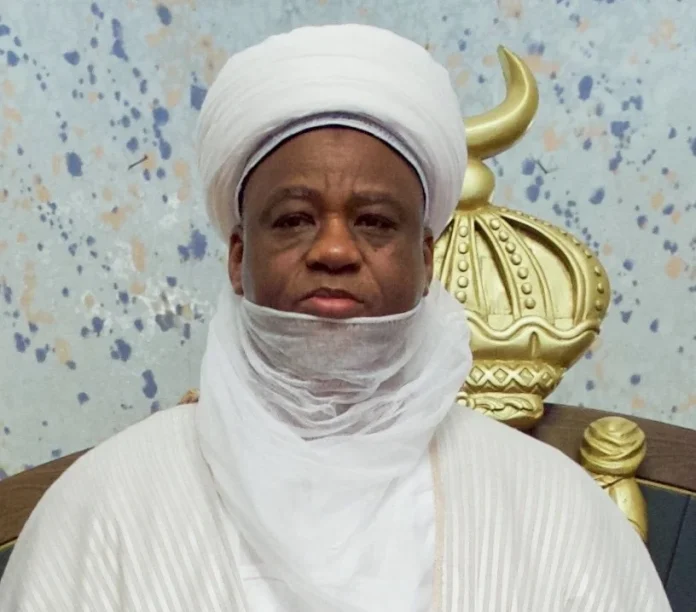
Amid the ongoing EndBadGovernance protest in Nigeria, Sultan of Sokoto, Alhaji Muhammad Sa’ad Abubakar, has appealed to the Jumu’ah mosque Imams and Muslim leaders to calm nerves and call on the Ummah to appreciate peace than chaotic state of affairs.
He also urged Nigerians in general to end the protest and urgently come to table for dialogue.
Abubakar made the call in a statement issued by the Secretary-General of JNI, Prof. Khalid Aliyu, on Thursday.
“Therefore, we in the name of Allah, the Most High, call for an end to the snowballing rampage, in the name of protest.
“We should all understand that there must be a stable country called Nigeria, before we can proudly call ourselves Nigerians.
“With tomorrow being Friday, Jumu’ah mosque Imams and Muslim leaders are implored to calm nerves and call on the Ummah to appreciate peace rather than chaotic state of affairs, which may even deny us congregational prayers,” he said.
Abubakar urged all Nigerians to be in continued prayers for Allah’s apt intervention on the current situation in the country.
TVN reports that Thursday marked the commencement of the #EndBadGovernance protest in Nigeria.
The first day of the protest witnessed widespread violence and lootings across major cities, with several protesters reported dead.
EndBadGovernance Protest: Sultan of Sokoto tasks Imams, Muslim leaders
Jigawa: Gov Namadi imposes 24-hour curfew
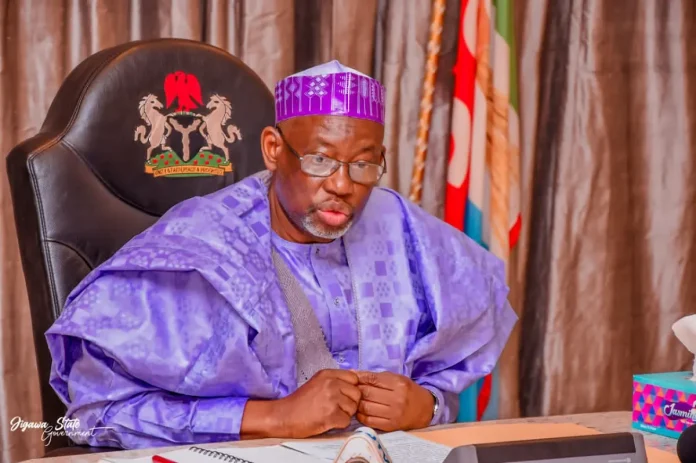
The Jigawa State Government has declared a 24-hour curfew in the state from today Thursday, 1st of August, 2024, until further notice.
In a speech delivered by His Excellency, Governor Mallam Umar Namadi to the people of Jigawa State Friday night, he announced the imposition of the curfew across the state.
He explained that the curfew will be relaxed on Friday, 2nd August, 2024, from 1200hrs to 1430hrs, to allow Muslim ummah to observe Friday (Juma’at) prayer.
He said no vehicle would be used in going to the mosque.
The Governor added that the decision would be reviewed after assessing the situation.
Jigawa: Gov Namadi imposes 24-hour curfew
Soldiers not served poor meal, Army reacts to viral video
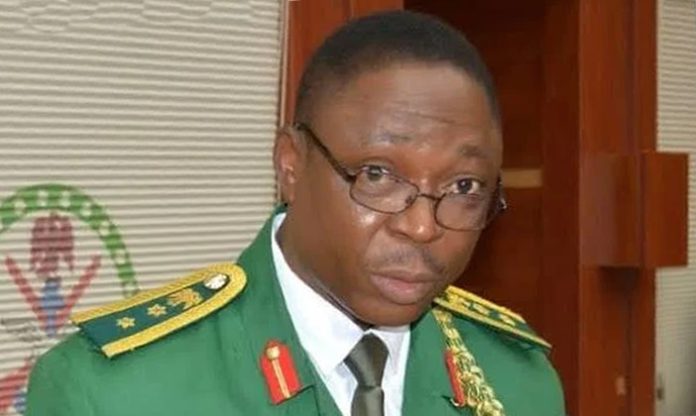

The Nigerian Army has said the individual in a viral video complaining about soldiers being poorly fed in Yobe State is not a military personnel.
In the viral video, the man displayed the small portion of semo he received, lamenting that soldiers in Kanama, Yobe State, were being inadequately fed with poor meals.
However, reacting in a statement on Thursday, the Director, Army Public Relations, Maj. Gen. Onyema Nwachukwu, said the authorities immediately launched an investigation into the matter.
According to him, the investigation revealed that the person in the viral video was not its personnel.
Onyema said no personnel in that area were served with substandard meals.
He said, “The Nigerian Army has taken note of a viral video on social media alleging that soldiers of 159 Battalion in Kanama, Geidam Local Government, are being poorly fed.
“Sequel to the viral video, the Chief of Army Staff, Lieutenant General Taoreed Lagbaja, ordered an investigation headed by the Commander Sector 2 Operation HADIN KAI to ascertain the veracity of the claim to address any problem of poor feeding in the unit.
“Following the findings of the investigation, it is crucial to clarify that the video in question was not created by soldiers of 159 Battalion, but was rather recorded by a police officer stationed with the troops deployed in Geidam. Contrary to the claim made in the video, no personnel in that location was served substandard meals as shown in the video. ”
Onyema said the police officer made the video and shared it online with an ulterior motive.
He stated that the Nigerian Army doesn’t joke with the welfare of its personnel on the frontline.
Onyema said, “Preliminary investigation has also revealed that the police officer who recorded and shared the video did so with an ulterior motive yet to be uncovered by the investigation. It is anticipated to be unravelled during further investigation.
“It is expedient to unambiguously state that the leadership of the Nigerian Army places a premium on the welfare and well-being of troops and their families to ensure that they are adequately rewarded and motivated.
“The COAS has continued to show undeniable passion and commitment to the well-being of soldiers, particularly those deployed on the frontlines, where they are making priceless sacrifices in defence of the nation and ensuring the safety and security of the citizens.
“This is evident in the several welfare schemes berthed and currently implemented by the COAS. These include an increase in the Ration Cash Allowance, prompt medical evacuation of wounded in action soldiers for both foreign and local treatments and commencement of payment of the backlog of the Group Life Insurance Scheme that had accumulated since 2012. Affordable House Ownership Option for all Soldiers with the COAS offsetting about 60 per cent of the cost, and the activation of Personnel Insurance Scheme payments to soldiers who incure injury in combat operations.
“These are aside from massive revamping and equipping of Nigerian Army Reference Hospitals and other medical facilities across formations and units of the Nigerian Army to cater for the health of personnel and their families and the ongoing renovation of old and construction of new accommodations for soldiers and their families in various Nigerian Army Cantonments and Barracks.”
Troops kill one, as Boko Haram commander surrenders
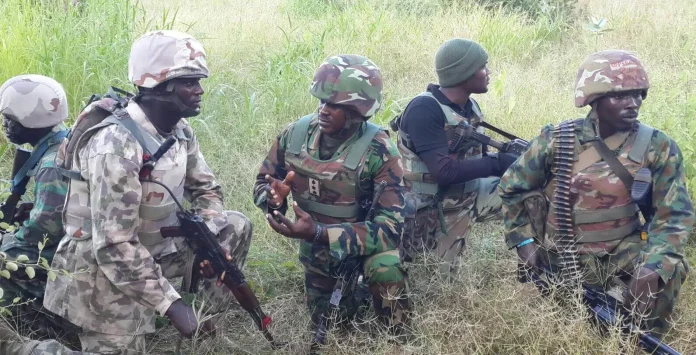
The High Command of the Nigerian Army, says a notorious Boko Haram commander, identified as Babakarami Balawan, has surrendered to its troops deployed for counter terrorism operations.
The Army also said that the troops conducted a series of operations that resulted in the rescue of abducted persons, neutralization of a notorious terrorist, interception of illegally refined Automated Gas Oil (AGO), and seizure of arms.
This is contained in a statement by the Nigeria Army, saying that in Kogi State, troops responded swiftly to a distress call along the Obajana Oshokoshoko road, where some civilians were abducted and taken into the forest.
The statement also explained that the troops moved in swiftly to locate the victims, where they had a fierce shoot-out with the kidnappers and successfully extricated the hostages.
The Army added that troops in Imo State acting on credible intelligence intercepted a vehicle transporting 21 sacks of illegally refined diesel (AGO), stressing that it also arrested armed individuals who were hired to escort the illegal product.
The statement said: “In another development in Borno State, a notorious Boko Haram fighter named Babakarami Balawan has surrendered to troops in Bama Local Government Area, following aggressive onslaught on terrorists’ hideouts in the area.
“Items recovered from the terrorist are one AK 49 rifle, a magazine, and a bicycle. The same troops during an encounter neutralized two terrorists and recovered 11 rounds of 7.62 mm NATO ammunition, 23 rounds of 7.62mm special ammunition, three rounds of 5.56 mm x 45mm NATO ammunition, and three empty magazines.
“Relatedly, the gallant troops also rescued a woman and her two children in a search and operation in Gwoza Local Government Area of Borno State”.
Troops kill one, as Boko Haram commander surrenders
Trump revives ‘birtherism’ as Harris gains in polls
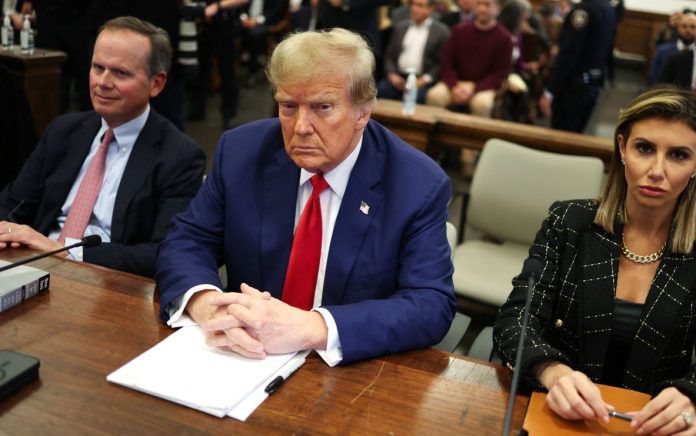

Donald Trump is facing a fierce backlash for questioning the race of US election rival Kamala Harris, but to those acquainted with the Republican’s long history of inflammatory language and behavior around the issue, the smear was nothing new.
Trump’s political career was forged in the cauldron of the 2010s “birther” conspiracy theory that sought to delegitimize then-president Barack Obama — who had a Kenyan father — by claiming falsely that he was born abroad.
Those who say Trump is racist point to dozens of other controversies the property tycoon has stoked, from being sued in the 1970s for discrimination against Black tenants to his notorious pandering to white supremacist marchers in 2017.
Trump’s worst impulses resurfaced Wednesday with his outlandish claim that Harris — the first female and non-white vice president — recently “became a Black person” for political convenience.
Like an estimated 34 million Americans in the nation’s fastest-growing demographic, Harris is mixed race and has been consistent in celebrating her Black and South Asian identity.
The attack handed Trump back a media spotlight that had evaded him since Harris’s game-changing entry into the White House race but it also honed attention on his extensive record of racial transgressions.
“He did crap the bed… The only question is whether he’s going to roll around in it or get up and change the sheets,” veteran strategist Scott Jennings, a one-time aide to former President George W. Bush, told CNN.
‘Lion’s den’
Trump’s inflammatory comments came amid a barrage of insults and falsehoods as he attacked Harris during a combative interaction with African American journalists in Chicago.
The 78-year-old is desperate to woo Black voters from Harris — who has erased his polling leads since jumping into the race — but the invitation was already controversial, given his well-documented history of denigrating Black female reporters.
Jennings suggested that Trump should move on from the scandal, but the former president has been doubling down, sharing images of Harris celebrating her Indian origins as some kind of ill-conceived “gotcha.”
Riding high after surviving an assassination bid in July, Trump saw his campaign thrown into chaos when the 59-year-old vice president replaced Joe Biden at the top of the Democratic ticket for the November 5 election.
Keith Gaddie, a politics professor at Texas Christian University, said Trump’s motivation for his latest remarks was likely a compulsion to grab back the limelight, as “no one is talking about assassination attempts any more.”
But he also sees significance in the context — a conversation with three African American interviewers in front of an audience of fellow Black journalists — and believes the ex-president was playing “the gladiator in the lion’s den” for his white base.
“He essentially decided to battle his opponent by proxy, by battling with Black female journalists,” Gaddie said.
‘No sense of decency’
Bill Kristol, chief of staff from 1989-93 to then vice president Dan Quayle, said Trump’s goal was likely to revive old characterizations of Harris as inauthentic after her pivot to the political left during her 2020 primary campaign.
“Trump has no sense of decency. It would be nice if this were disqualifying for political success,” Kristol wrote in a newsletter Thursday for center-right publication The Bulwark.
“But decency doesn’t always prevail in this world of ours. Decency needs to be aggressively defended. Indecency needs to be exposed and denounced.”
While some observers see Trump’s racial remarks as part of some clever political strategy rather than the intemperate outbursts of a bigot, analysts are mixed on whether they are helpful.
“Birtherism made him an avatar of populist conservatism in 2011 and his attacks on Mexicans and Muslims played a critical role in his victories in 2016,” said Donald Nieman, a political analyst and professor at Binghamton University in New York state.
“They stoke the passion of the base and that’s important. But they also turn off a lot of the few swing voters who play a critical role in deciding elections these days — as the results in 2018, 2020, and 2022 suggest.”
Political scientist Nicholas Creel, of Georgia College and State University, told AFP the latest controversy lays bare Trump’s lack of self-control and narcissism — “Trump being Trump” — rather than some underlying strategy.
“The best way to view this specific scandal is not as some sort of fifth-dimensional chess strategy whereby he was looking to excite his base via dog whistles,” he said, “but simply as an insensitive comment from a latently racist old man who thinks he can do no wrong.”
AFP
Kwara sets up committee on minimum wage adjustment
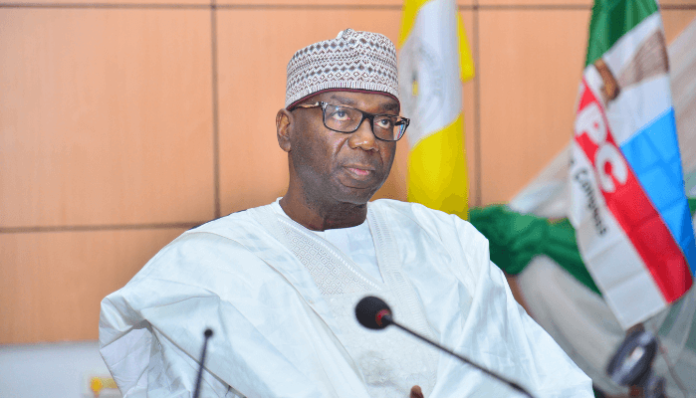

Kwara State Government has set up a 21-member tripartite committee to work out the consequential adjustment component for other categories of workers on minimum wage in the state.
The state governor, AbdulRaman AbdulRazaq, approved the constitution of the committee, according to a Government House statement released to the press on Thursday.
The statement noted that the constitution of the committee comes as a new national minimum wage has been pegged at N70,000, triggering a need for consequential adjustments for senior cadres of workers in the state.
The statement signed by the Chief Press Secretary to the Governor, Rafiu Ajakaye, noted that the committee comprises representatives from the state government, the labour centres, and the organised private sector.
It read, “The tripartite committee is chaired by the Head of Service and co-chaired by the Commissioner for Finance, while the Director (Establishment and Pension) is the Secretary.
“Other members are the Commissioners for Budget and Planning, Works and Transports, Local Government and Chieftaincy Affairs, Communications; Senior Adviser and Counsellor to the Governor; Permanent Secretaries (Finance, Service Welfare, Justice); and Senior Special Assistant to the Governor on Labour Matters.
“Apart from the Federal Controller on Labour and Employment, the Labour is represented on the committee by the Chairman of the Nigeria Labour Congress, Chairman of the Trade Union Congress, Chairman of the Joint Negotiation Council, Chairman of COHESU, and Secretary of the JNC.
“The private sector is represented by the Kwara Chamber of Commerce, Manufacturers Association of Nigeria, and the Nigerian Association of Small and Medium Enterprises.”
It’s misleading – Nigerian Army on video of soldiers being poorly fed
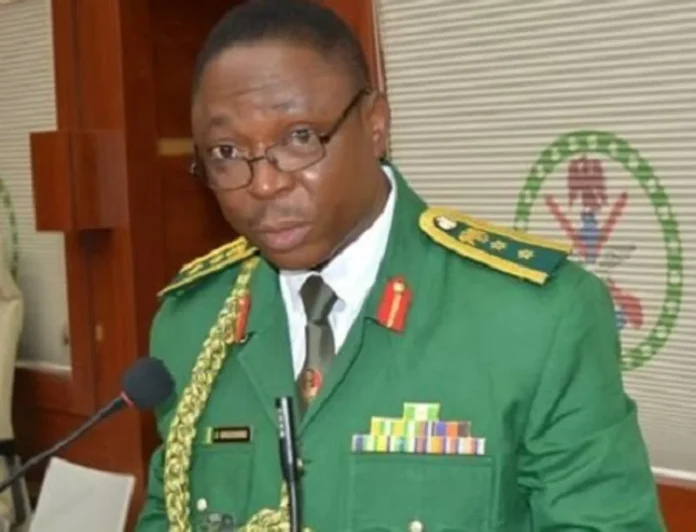
The Nigerian Army has described a viral video circulating on social media on soldiers being poorly fed as misleading.
Major Gen. Onyema Nwachukwu, Nigeria Army’s spokesperson made this clarification on Thursday.
This comes amid a video that the 159 Battalion in Kanama, Geidam Local Government, is being poorly fed.
However, Nwachukwu said after investigation as ordered by the Chief of Army Staff, Lieutenant General Taoreed Lagbaja, it was found that “no personnel in that location was served substandard meal as shown in the video”.
“The Nigerian Army has taken note of a viral video on social media alleging that soldiers of 159 Battalion in Kanama, Geidam Local Government, are being poorly fed.
“Sequel to the viral video, the Chief of Army Staff Lieutenant General Taoreed Lagbaja ordered an investigation headed by the Commander Sector 2 Operation HADIN KAI to ascertain the veracity of the claim to address any problem of poor feeding in the unit.
“Following the findings of the investigation, it is crucial to clarify that the video in question was not created by soldiers of the 159 Battalion, but was rather recorded by a police officer stationed with the troops deployed in Geidam.
“Contrary to the claim made in the video, no personnel in that location was served substandard meals as shown in the video.
“Preliminary investigation has also revealed that the police officer who recorded and shared the video did so with an ulterior motive yet to be uncovered by the investigation. It is anticipated to be unraveled during further investigation,” he said.
He added that the Nigerian Army places a premium on the welfare and well-being of troops and their families.
“It is expedient to unambiguously state that the leadership of the Nigerian Army places a premium on the welfare and well-being of troops and their families to ensure that they are adequately rewarded and motivated,” the spokesperson said.
It’s misleading – Nigerian Army on video of soldiers being poorly fed
