Home Blog Page 63

Court Directs Probe Into Evidence Tampering by Registrar and Defendant in N10bn Fraud Case

0

In the ongoing ₦10 billion fraud trial, Justice James Omotosho of the Federal High Court, Maitama, Abuja, ordered the Nigeria Police Force and the Department of State Services to look into allegations of tampering with important exhibits by the court registrar, Nasiru Onimisi Zubairu, and the second defendant, Daudu Sulaiman, on Thursday.

The order came after the judge revealed that the registrar allegedly admitted that Sulaiman had asked him to remove important WhatsApp communications from a phone that was turned in to the court as Exhibits N and O.

According to reports, the registrar was asked to describe what happened between him and the second defendant after Justice Omotosho played his confession in front of the court.

“I have to disclose it because that is what the Chief Judge told us, to ensure we disclose such a thing as early as possible,” the judge remarked in front of the court. At the Federal High Court, we have a discovery and disclosure policy. This kind of attitude is not tolerated at all. I’ll call the person in question so you can hear directly from the source.

Sulaiman allegedly approached Zubairu and offered to help him with his lodging issues in exchange for removing some material from the exhibits, Zubairu told the court.

He stated, “I was asked to remove some specific information, some WhatsApp messages in the exhibits on the promise that I will be given a house.”

EFCC Verifies Chat Deletion
Additionally, the judge authorized the prosecution’s attorney, Director of Public Prosecution Rotimi Oyedepo (SAN), to instruct the Economic and Financial Crimes Commission’s (EFCC) investigating officer, Muhammad Audu Abubakar, to confirm whether the conversations had been erased.

Abubakar informed the court that data from Exhibits N and O, comprising conversations from 2020 to 2022, had been deleted.

The registrar acknowledged accessing two discussions but claimed he did not recall which individual chats he erased.

He said in court, “I can’t remember, but I opened only two chats.”

Information About Missing Messages
The investigating officer verified during the hearings that a number of messages purportedly connected to financial transactions were missing.

“There was no chat on 23 December, it stopped on December 22 and continued on 29 December, 2020,” he added, informing the court that there were no conversations between December 3 and December 28, 2020.

Subsequent investigations turned up more deleted texts, including ones that purportedly mentioned financial transactions, including “Hudu is bringing ₦100 million,” “₦60 million is on transit,” and “Mr. Ododo has collected ₦50 million and will be coming to Abuja tomorrow.”

It was also determined that references dated February 28, 2022, and further comments such as “Hudu is on his way, coming with 93m, 7m for TJ,” were missing.

Abubakar testified in court that he came across the conversations while conducting the investigation prior to their purported deletion.

In response to the development, Oyedepo stated that there was a high suspicion of tampering and urged the court to conduct an expedited investigation and forensic testing of the exhibits.

“There is an urgent, irresistible suspicion that exhibit N, which contains important evidence, has been tempered with. This issue should be investigated and the report brought to your lordship.” We request that the Lordship issue an order revoking the defendant’s bail and directing a forensic examination of exhibit N,” he stated.

Although shocked by the accusations, the defendant’s attorney asked the court to wait for the results of the investigations.

The defense attorney stated, “I will urge my lord to await the outcome of the investigation.”

In his decision, Justice Omotosho ordered the DSS and the Police to look into the alleged tampering and report back to the court.

The trial was postponed until February 9, 2026.

‘I Stopped Posting My Children’ – Yul Edochie Opens Up About Social Media Choices

0

Yul Edochie, a Nollywood actor and filmmaker, has denied claims made by his former wife, May Edochie, that he has a tense relationship with his three children.

According to sources, Yul confirmed that he gets along well with his other kids during an interview on the KaaTruths podcast.

Due to his ongoing divorce from his estranged wife, Yul disclosed that a court order prohibiting him from posting the kids on social media is the reason he hasn’t done so.

The actor made it clear that he still communicates with his kids and frequently pays his bills.

Yul also revealed that he recently spoke with his son, who told him about his university matriculation. However, because he was not notified in time, he was unable to attend the occasion.

“I don’t post anything about my kids with May because of a court order that says we must stop posting our kids, not because I don’t have a good relationship with them,” he stated. In actuality, I still communicate with my kids and continue to provide money to my son via his mother.

Yul responded, “The main issue is not on social media,” when asked if he was honest with his former wife during their marriage. I would want to remain silent. I don’t want to claim that my ex-wife did this or that. That is not how real men handle problems. Nobody is flawless; it’s all family-related.

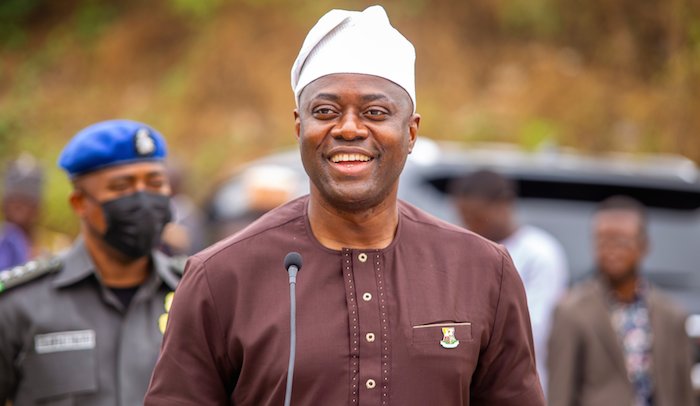
Oyo @ 50: APC Alleges Makinde Squandered N2.9bn

0

The All Progressives Congress (APC) chapter in Oyo State has charged Governor Seyi Makinde with wasting N2.9 billion for the state’s 50th anniversary.

The accusation was made by the APC in a statement that Wasiu Olawale Sadare, its publicity secretary, signed.

According to reports, Makinde’s government recently commemorated the state’s 50th anniversary.

However, the governor wasted N2.9 billion on the celebration, according to the APC.

The party pointed out that N90 million was taken out of each of the 33 local government councils’ federal allotment in order to pay for the anniversary celebration.

“We have it on good authority that a sum of N90 million was deducted from the federal allocation of each of the 33 local government councils ostensibly to fund the anniversary project while another undisclosed amount was taken from the coffers of the state government for the same purpose at the same time and the question now is—what did they do with over N3 billion,” the APC statement stated in part.

“Did the disproportionate award ceremony, the one-man show novelty soccer match, the color-riot Ankara uniform for PDP members, and the misplaced air show justify the enormous cost?”

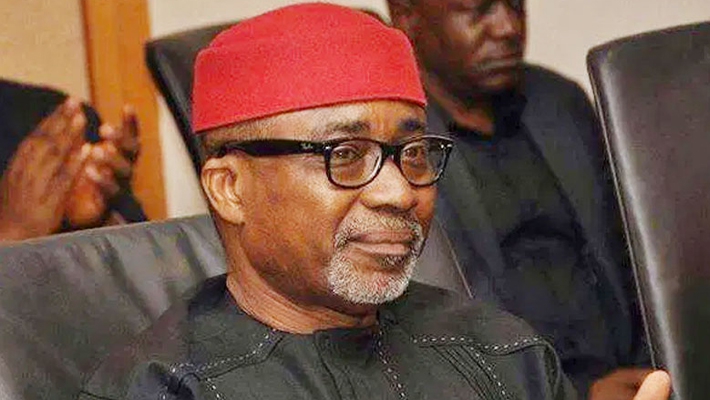
Abaribe Critiques Senate, Says Electoral Act Focuses Solely on Result Transmission

0

In its ongoing amendment to the Electoral Act, the Senate Minority Caucus has clarified that the Senate passed real-time broadcasting of election results from polling stations.

A proposal to require the Independent National Electoral Commission, or INEC, to electronically transmit all election results was reportedly rejected by the Senate on Wednesday.

Opposition MPs, including Senator Enyinnaya Abaribe, Aminu Waziri Tambuwal, and Natasha Akpoti, among others, stated at a news conference on Thursday that the motion was not turned down, emphasizing that the Senate passed results transmission rather than transfer.

On behalf of the opposition legislators, Abaribe told reporters, “We felt that it is necessary to clarify what happened yesterday to put the record straight.”

“The Senate failed to enact the 2022 Act, which was a transfer of outcomes, yesterday. We succeeded with the results transfer.

“I must clarify something. Under the confidence of their senatorial zones, each of us who has the honor of representing a senatorial district came here.

“We went into the closed-section to clean up everything so that we could pass it without any animosity when we returned to plenary.

I can guarantee you that Section 63, which deals with the electronic transmission of results, was approved by the Senate’s electoral committee, ad hoc committee, and executive session. Instead of transfer, we permitted transmission.

“What is in the 2022 Act is transfer, and we don’t want a law that is so ambiguous or that anyone may misunderstand it.

“We desire a legislation that is explicit, succinct, and clear. The results are transmitted electrically.

N2.4bn Fraud: Court Sentences Ex-NEXIM Bank Boss Robert Orya to 490-Year Jail Term

0

Robert Orya, a former managing director of the Nigerian Export-Import (NEXIM) Bank, was given a 490-year prison sentence by a Federal Capital Territory (FCT) High Court in Abuja.

Orya was found guilty of several fraud-related allegations brought against him by the Economic and Financial Crimes Commission, or EFCC, and was convicted on Thursday, February 5.

Samuel Ugwuegbulam, an EFCC counsel, brought charges against the former CEO of NEXIM, who led the bank from 2011 to 2016, for allegedly embezzling N2.4 billion.

Judge F. E. Messiri found Orya guilty on all 49 counts and gave him a 10-year prison sentence for each of them.

But the judge mandated that all of the sentences be served together.

‘We’ll Take Control of PDP Secretariat by Monday’ – Anyanwu After INEC Meeting

0

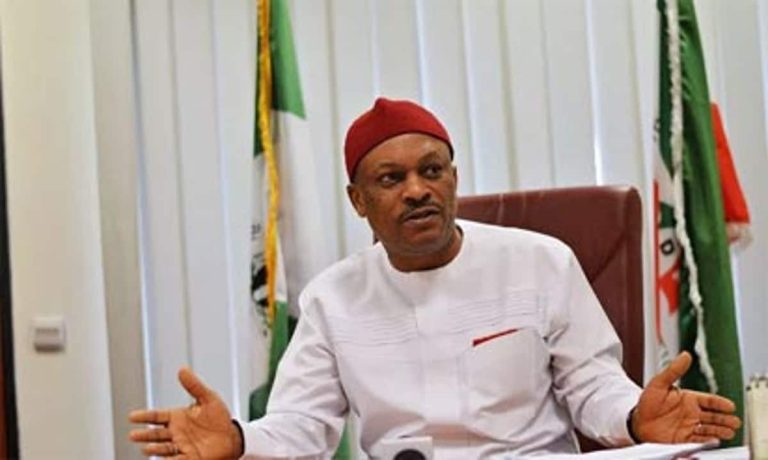
Senator Samuel Anyanwu, the Peoples Democratic Party’s (PDP) factional national secretary, has stated that the party is no longer divided.

He claims that the Federal High Court’s recent ruling in Ibadan, Oyo State, has resolved the party’s leadership problems.

Anyanwu announced on Thursday that his group would seize control of the PDP National Secretariat in Abuja on Monday following a gathering of political party leaders with the Independent National Electoral Commission (INEC).

According to him, the Oyo Court ruling superseded the earlier court order that resulted in security personnel shutting the secretariat.

He claims that a recent ruling by the Federal High Court in Ibadan, Oyo State, has set the stage for the opposition party’s quick comeback.

As the National Chairman of the party, he said Abdulrahman Mohammed is the head of the genuine PDP leadership.

Anyanwu went on to say that the court ruling has allayed any concerns over candidates’ eligibility, allowing the PDP to submit candidates for the 2027 elections.

“In actuality, we don’t have any issues with our party. We don’t have any faction. In Nigeria, there is just one PDP, led by my chairman, Abdulrahman Mohammed.

The Federal High Court in Ibadan made it very evident last week that the PDP’s problems are over because the so-called convention of November 15–16, 2025, is a nullity and that no one else should claim to be the party’s chairman. First of all, it is obvious that Nigerians are aware that we had problems, particularly serious ones.

“With the exception of Abdulrahman Mohammed’s National Working Committee, no one else has the complete authority to speak, work, and administer on behalf of the party.”

As you are aware, the police had already sealed the area. The other group then petitioned the court to have the police open, but their request was denied due to their lack of jurisdiction.

We will therefore take over the office by Monday. Those who were worried they wouldn’t be able to run in the upcoming election now have nothing to worry about, which has already made the party members happy. “The issue is resolved,” he declared.

Pat Utomi: Nigeria May Become Great After I Am Gone

0

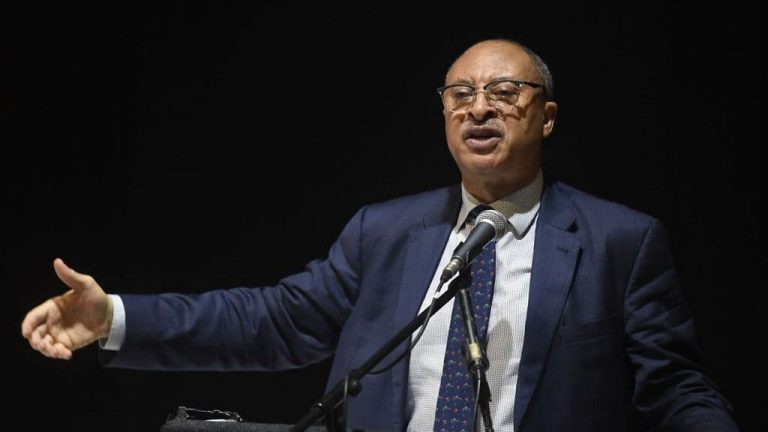
Pat Utomi, a former presidential contender, bemoaned Nigeria’s abandonment of intellectual leadership.

Speaking on Arise Television, Utomi claimed that Nigeria’s issue stems from the 1999 end of military control in the nation.

He claimed that public life has been poisoned and democracy has been hollowed out by the rejection of ideas in favor of naked power.

When asked what he had learned about Nigeria from life that he wishes he had known sooner, Utomi responded that the nation’s struggle should be seen through a long historical lens.

He remarked, “I was reminded of Socrates a few days ago by Reverend Father George Ehusani.” He made an effort to reassure me that I shouldn’t feel guilty if Nigeria hasn’t yet been shaped by the lessons I’ve taught for the most of my life. Western civilization was founded on the ideas of Socrates, who was encouraged to consume poison. Therefore, in a manner, I am meant to find solace in the thought that Nigeria might rise to greatness as a result of the ideas I shared after I am gone.

Utomi insisted that Nigeria has a special historical duty and expressed his continued hope for change during his lifetime.

He declared, “I think Nigeria was given to humanity to redeem the crushed dignity of the Black man and to undo the path to serfdom paved by colonial oppression and slavery.” “We might leave with the impression that we contributed to making Nigeria the catalyst for that redemption if we concentrate on being a generation that is redeeming.”

At one time in our history, people stopped appreciating concepts. Obafemi Awolowo was a deep philosopher in his 30s and 40s. He continued, “Fela Anikulapo Kuti was one of the greatest philosophers of all time if you listen to him.

He claimed that military dictatorship and oil revenue caused the final break.

Utomi cautioned that having power without ideas can have long-term negative effects.

Nigeria Set to Surpass Algeria as Africa’s Third-Largest Economy, IMF Forecasts $334bn GDP

0

According to the International Monetary Fund (IMF), Nigeria’s GDP is expected to reach $334 billion in 2026, surpassing Algeria as Africa’s third-largest economy.

According to the fund’s World Economic Outlook (October 2025), Nigeria ranked fourth in Africa in 2025 with a GDP of roughly $285 billion at current prices, after South Africa, Egypt, and Algeria.

Increased oil production, improved foreign exchange (FX) liquidity, and the results of ongoing economic reforms, such as the elimination of fuel subsidies, the liberalization of exchange rates, and fiscal adjustments, all of which are intended to support medium-term growth despite short-term inflationary pressures, were all linked by the IMF to Nigeria’s projected economic rise.

Nigeria is expected to surpass Algeria, whose output is predicted to reach $284 billion this year, with a GDP of over $334 billion.

According to IMF forecasts, the review year will see a change, with Nigeria’s economy continuing to maintain its resilience and have a promising growth outlook.

With a projected GDP of $443 billion in 2026, South Africa is predicted to continue to have the largest economy in Africa, followed by Egypt at $399 billion.

With a GDP of $426 billion, South Africa continued to be the continent’s largest economy in 2025. Egypt came in second with $349 billion, and Algeria came in third with roughly $288 billion.

Because of currency devaluations, rebasing efforts, and more general macroeconomic issues impacting major African economies, Nigeria’s economic standing has changed recently.

The IMF raised the country’s 2026 GDP growth estimate from 4.2% to 4.4% earlier this year.

In addition, the World Bank increased its growth estimate for Nigeria from 3.7% in mid-2025 to 4.4% in 2026.

The IMF predicted last week that Nigeria will rank sixth internationally and among the top 10 countries in terms of its contribution to real GDP growth, with a 1.5% growth rate in 2026.

Furthermore, the development put the nation ahead of a number of developed and growing countries, such as Saudi Arabia (1.7%), Vietnam (1.6%), Brazil (1.5%), and Germany (0.9%).

At 26.6%, China is predicted to continue to be the biggest contributor to global growth, followed by India (17.0%), the United States (9.9%), Indonesia (3.8%), and Turkey (2.2%).

43.6% of the world’s economic growth is expected to come from China and India this year.

In keeping with the region’s ongoing economic momentum, the IMF study also alluded to the Asia Pacific region’s supremacy, which was predicted to contribute close to 50% of world economic growth.

“The balance of power is changing,” Tesla CEO Elon Musk stated in response to the IMF study.

Sources claim that despite present difficulties, Nigeria’s true growth forecast stays at about 3–4%.

economy in trade, telecoms, energy, and services was facilitated by the nation’s consumption-driven economy.

The ranking also highlighted the county’s exceptional resilience in the face of persistent domestic and international economic issues, as well as its role as a major growth generator among rising economies.

The IMF report demonstrated how China and India were becoming key players in the expansion of the world economy.

Together, the Eurozone contributes two percent to global growth. Emerging markets are expected to grow by 4.2%, while advanced economies as a whole are expected to grow by 1.8%.

Untangling the Legal Pathways in the Coup Plot Against the State

0

The question of how Nigeria should prosecute accused coup plotters has returned to the forefront of public discourse during a time of increased political vigilance and rekindled concerns about national stability.

It’s not only guilt or innocence that’s at issue. It concerns jurisdiction, a constitutional issue that lies at the nexus of the rule of law, military discipline, and democratic administration.

The subject at hand is deceptively straightforward: Should people suspected of conspiring to overthrow the government be tried in civilian courts or in the military’s court-martial system?

As is always the case with Nigeria’s constitutional design, the solution is based on what can be called a dual-track constitution.

Nigeria’s 1999 Constitution establishes two distinct legal systems, each with its own goals and parameters. Sections 6 and 36 serve as the foundation for the civilian judiciary, which is responsible for upholding fundamental rights and adjudicating crimes against the state. The purpose of the military justice system, which is protected by Sections 217, 218, and 315, is to impose discipline on members of the armed forces.

Sometimes these two systems clash, particularly when troops and civilians are accused of participating in the same alleged plot in politically delicate situations.

There is no uncertainty in the Constitution for civilians. The Federal High Court has exclusive jurisdiction over treason and treasonable felonies, as stated in Section 251(2). For this reason, a civilian court tried and found businessman Muhammadu Mandara guilty of organizing troops to overthrow President Shehu Shagari during the Second Republic.

No matter how serious the accusation, Mandara’s case serves as a reminder to law scholars that civilians cannot be tried by military tribunals.

For active military troops, the circumstances are very different. The Armed Forces Act, which is protected by Section 315 of the Constitution, gives the military the power to discipline its members. Court-martial jurisdiction is triggered by the accused’s status rather than the nature of the offense.

Nigerian appellate courts have regularly upheld this principle. The Court of Appeal ruled in Brigadier-General Anyankpele v. Nigerian Army that court-martial procedures are constitutionally legitimate and come under the judicial authority acknowledged by Section 6.

For soldiers, a coup attempt constitutes not just treason under civilian law, but also conduct that is detrimental to military discipline, mutiny, and insubordination—all of which are crimes that fall under the Armed Forces Act.

Because of this dual nature, soldiers who are suspected of attempting coups have traditionally been tried by court-martial, even while civilians who are implicated in the same plan are tried by the Federal High Court.

Nigerian courts have historically managed to strike a careful balance between military discipline and civilian supremacy. Tribunals were the norm during military administration. The courts have adopted a more active stance under democracy, upholding the constitutional bounds of military justice while demanding due process.

The judiciary has ruled against attempts to try civilians in military courts, supported court-martial proceedings for active military personnel, demanded rigorous respect to fair-hearing standards, and stepped in when military tribunals overreached their legislative authority in politically contentious cases.

This delicate balancing act mirrors a larger constitutional principle: the military must never eclipse civilian power while maintaining discipline in the Armed Forces.

The controversy has been rekindled by recent claims of coup plotting, allegedly including active military officers.

Since treason is a crime against the democratic order, rights attorney Femi Falana (SAN) has urged that all accused, including soldiers, should face trial in civilian courts.

His stance is based on constitutional supremacy and is based on principles. However, it faces a long-standing legal reality: Nigerian courts have always recognized the military’s right to trial its own personnel, and the Constitution specifically guarantees military discipline.

The Mandara precedent, which is frequently brought up in public discussions, exclusively pertains to citizens. The issue of how to handle soldiers who are accused of masterminding a coup remains unresolved.

In the end, Nigeria’s constitutional system exhibits a practical equilibrium. People who are accused of conspiring against the state are put on trial in public, with the public watching. In the military system that oversees their service, soldiers who are charged with the same offense are tried together.

It is a two-pronged strategy that is flawed, disputed, and intentional.

Even during times of political unrest, the court serves as the silent referee as Nigeria fortifies its democratic institutions, guaranteeing that the rule of law is upheld and that neither system goes too far.

Ultimately, the map is provided by the Constitution. The compass comes from the courts. The country keeps a close eye on this, knowing that the way we prosecute accused coup plotters reveals just as much about our democracy as the accusations themselves.

New Developments Bring Fresh Hope to Tudun Biri

0

The aforementioned statement from an unnamed academic reflects moral and ethical perspectives on the nature of good governance, the social contract, and public integrity in Nigeria under President Bola Tinubu’s government. The premise is that the consent of the governed, which denotes a frequently unwritten agreement to act in the citizens’ best interests, is the foundation for the legitimacy of government.

The current condition of affairs in Nigeria is indicative of a fiduciary vision of public office, in which the state’s primary responsibility is to uphold its promises to the people.

President Tinubu’s plan to reconstruct Tudun Biri, a peaceful hamlet in Kaduna State’s Igabi Local Government Area that was destroyed by a fatal military drone misfire, in December 2023 was written off by some as one of those meaningless government promises.

However, on Friday, January 29, 2026, the village that had been abandoned and reduced to a shell of its once-vibrant self came back to life. The president’s pledge to reconstruct the community—which had been badly damaged by a military drone mishap bomb that killed innocent people, injured others, and left many traumatized—became a happy reality.

When Vice President Kashim Shettima launched the Tudun Biri Resettlement Scheme, roughly 133 housing units, schools, and other cutting-edge infrastructure were finished.

When VP Shettima visited the tragedy’s victims in December 2023, he was astounded by what he observed at Kaduna’s Barau Dikko Teaching Hospital, where some of the wounded—the majority of whom were women and children—were being treated. He was clearly having trouble stopping the tears from streaming down his face. Touched by the heartbreaking scene, he instructed the National Emergency Management Agency (NEMA) to make sure the victims received enough supplies for relief.

“Most importantly, the President approved the commencement of the Pulaku Initiative by next month,” the Vice President said, announcing President Tinubu’s commitment to reconstruct the neighborhood and addressing community leaders and other state stakeholders. The President’s special non-kinetic response to the problems in the Northwest is the Pulaku Initiative.

Although our original plan was to launch the initiative in Sokoto, the President ordered that the Pulaku Initiative be launched here in Kaduna State due to recent events. Additionally, Tudun Biri will be the program’s first beneficiary. He continued, “It’s a comprehensive set of solutions as a non-kinetic response to the issues of kidnapping and banditry in the North West.”

Aside from the sheer number of casualties, the vice president also told the leaders of the community how concerned President Tinubu had been about the terrible event, admitting that it was horrific to lose even one life. “The President is very concerned, which is why I am here.” He was profoundly moved by the events. Let’s not discuss the numbers, as the late Dele Giwa correctly said: “One life taken in cold blood is as gruesome as millions lost in a pogrom.”

In order to fulfill that commitment, Senator Shettima visited Kaduna again last Friday to officially launch the resettlement plan. A government that places a high priority on accountability, transparency, and keeping its word is viewed as an ideal and frequently contrasted with the reality of broken promises. The inauguration genuinely represents this, demonstrating the Tinubu administration’s dedication to fulfilling its commitments and producing outcomes.

The project’s agenda, according to the vice president, is based on the straightforward yet potent idea that government should serve the people, bridge differences, and fortify the basis of national stability.

Today is a real-life example of that idea in action. He said, “The Tudun Biri Resettlement Scheme’s commissioning is a testament to our shared conviction that justice is the binding agent of a nation and that compassion is not a state weakness but rather its moral strength.”

The ability of good governance to fulfill commitments related to social welfare, economic growth, and human rights is the real litmus test. Even the most difficult tasks can be completed with dedication, teamwork, and caring leadership, as the Tinubu administration has demonstrated. The Pulaku Initiative, which is now known as RSPIC, is a prime illustration of this dedication.

The goal of the Federal Government intervention project is to resettle, reintegrate, and rehabilitate internally displaced people (IDPs). RSPIC is a crucial part of the administration’s non-kinetic strategy to manage insecurity, especially in the North West and North Central areas. It was started by President Tinubu in July 2024 and is supervised by Vice President Shettima.

In order to provide long-term, permanent solutions, such as constructing sturdy homes, schools, and hospitals for communities uprooted by banditry and conflict, the program goes beyond short-term humanitarian relief. It is intended to cover seven states—Sokoto, Kebbi, Benue, Katsina, Zamfara, Niger, and Kaduna—that were initially impacted by banditry and disputes between farmers and herders. In order to facilitate social and economic reintegration, the plan calls for building roads, clinics, residential buildings, and skill development facilities.

Following the security incident, the pilot phase was started at Tudun Biri, Kaduna State. The Kaduna State government, led by Governor Uba, and the federal government worked together to make the project a success.

The Tudun Biri Resettlement Scheme’s effects extend beyond only offering housing. It is about giving the people of Tudun Biri their dignity, optimism, and sense of identity back.

“The Tudun Biri Resettlement Scheme is a vehicle for hope for families whose lives were disrupted,” as Vice President Shettima put it, and “a practical assurance that the Nigerian state does not abandon its citizens in times of adversity.”

The plan reflects the Federal Government’s resolute will to take strong action in response to the humanitarian crisis and internal displacement that have occurred throughout Nigeria, he continued.

He claims that the program offers a realistic guarantee that the Nigerian government does not desert its people during difficult times, giving hope to families whose lives were upended.

Without a doubt, the tale of Tudun Biri is a fantastic example of what can be accomplished when leaders collaborate flawlessly. More than just a pledge, President Tinubu’s plan for the community’s rebuilding aimed to give the residents of Tudun Biri their dignity and hope back. And he was certain that Vice President Shettima should be given the task of realizing that vision.

The project’s success was largely due to Senator Shettima’s continuous passion and attention. To make sure that every little detail was taken care of and that the job was finished on schedule, he worked assiduously.

Additionally, the host governor, Senator Uba Sani, was more than happy to collaborate and offer the assistance required to complete the project.

The way the job was carried out is what really sets it apart. The VP underlined that cooperation, mutual trust, and shared ownership between the federal government, state authorities, host communities, and development partners are what make the project successful. The project was completed on schedule thanks to the Vice President’s oversight, which Governor Sani acknowledged while praising the President’s caring leadership.

The actual beneficiaries of this endeavor are ultimately the residents of Tudun Biri. They now have access to contemporary housing, healthcare, and education, which has given them a fresh start. Because of these leaders’ combined efforts, the neighborhood is flourishing.

This is how governance ought to be: leaders cooperating, prioritizing the demands of their constituents, and producing outcomes. President Tinubu’s dedication to reconstructing communities and reestablishing stability under the Renewed Hope Agenda is demonstrated by this approach, which can be used throughout Nigeria.