Home Blog Page 609

Chowdeck boosts food delivery with logistics tech

0
Chowdeck boosts food delivery with logistics tech

Nigerian technology startup Chowdeck has announced its partnership with Chicken Republic, a popular quick-service restaurant chain, to enhance food delivery experiences in Lagos and Ibadan.

By leveraging its advanced logistics technology, Chowdeck said it is focusing on how to provide faster, more affordable, and reliable delivery services to customers.

According to a statement from the firm, the partnership will enable customers to enjoy lower delivery fees, exclusive in-app discounts, and loyalty rewards through Chowdeck’s loyalty programme.

It noted that the collaboration would drive increased daily sales and customer engagement while addressing the growing demand for online food delivery, projected to reach 52.0 million users by 2029.

“The partnership will include periodic in-app special discount offerings and the opportunity to earn Chowscore points through Chowdeck’s loyalty program, further enhancing value and satisfaction for loyal customers. To kick off the partnership, Chowdeck users are being offered an exclusive N1000 meal deal,” the company stated.

The Chief Executive Officer of Chowdeck, Femi Aluko, said that the collaboration underscored the firm’s commitment to delivering high-quality, efficient, and convenient services.

He stated that by combining its fast-growing delivery network with Chicken Republic’s exceptional offerings, it aimed to enhance the customer experience and bring happiness to more individuals across Lagos and Ibadan.

The Chief Executive Officer of Food Concepts, Kofi Abunu, expressed excitement about expanding the company’s partnership with Chowdeck.

He noted that Chowdeck’s impressive growth over the past year, combined with its forward-thinking approach and commitment to investing in partner development, indicated a long-term commitment to addressing the last-mile delivery challenge.

Abunu also stated that customers, particularly in Lagos and Ibadan, could expect an improved delivery experience with Chicken Republic on Chowdeck.

Minister laments poor international support for govt reforms

0
Minister laments poor international support for govt reforms

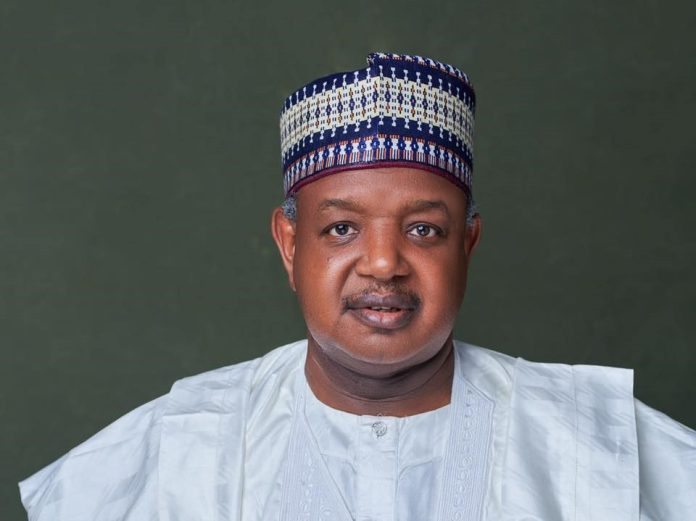
The Minister of Budget and Economic Planning, Atiku Bagudu, has expressed dissatisfaction with the inadequate support from international development partners, noting that the government had anticipated greater assistance for its reform efforts to yield results.

He said the international bodies have not provided enough support to consolidate the “bold, courageous, and risky” reforms undertaken by the current administration since its inception over a year ago.

He advocated enhanced international development assistance to African countries, suggesting that it should be more proportional to their populations.

Bagudu said this in an interview with journalists on the sidelines of the just concluded African Caucus meeting with the theme, “Facilitating Intra-African Trade: Catalyst for Sustainable Economic Growth in Africa”.

The African Caucus, established in 1963, aims to strengthen the voice of African Governors in the Bretton Woods institutions on development issues pertinent to Africa.

Representing all 54 African countries, the Caucus meets twice yearly to consolidate views and convey them to the heads of the IMF and World Bank through a memorandum.

The According reports that Nigeria has secured a total of $4.95bn in loans from the World Bank under the administration of President Bola Tinubu.

Not less than six loan projects have been approved and they include loans for power ($750m), women empowerment ($500m), girl’s education ($700m), renewable energy ($750m), economic stabilisation reforms ($1.5bn) and resource mobilisation reforms ($750m) for the benefit of Nigerians.

Speaking during the interview, the former Kebbi governor said international development assistance is important to mobilise capital, adding that priority should be given to the African caucus.

He added that geography should not prevent any nation from accessing capital while allowing another country to receive it in abundance.

He said, “For us in Nigeria, both historically as an evolutionary development, international development assistance is important to de-risk other forms of investments. It was for us a tool that would mobilise capital that would otherwise not be provided by the private capital market at that time.

“Nigeria recognised a long time ago that it intends to benefit from international development. it is also in a position to assist others and that is why Nigeria had 1976, a trust fund with the African Development Bank.

“But the resources that we require have been much less than what we have been able to mobilise both historically and concurrently and even despite the increasing relevance of bilateral official development assistance or that which is provided for a bloc of countries for example like the European Union, Global gateway or the Chinese silk and belt initiative.”

The minister added that the “Assistance should be a tool to mobilise long-term capital at the scale of shared prosperity.”

Bagudu said he “just finished participating in a session on the International Development Association, stressing that “while a country with 10 million people in Europe can find $200bn, Nigeria with over 200 million people can hardly find $10bn.”

Meanwhile, African finance ministers and central bank governors have outlined a four-point strategy to enhance intra-African trade and stimulate economic growth.

The plan agreed upon at the 2024 African Caucus Meeting in Abuja, focuses on strengthening payment systems, improving energy access, leveraging partnerships with banks, and reforming the global financial architecture, a communique issued on Sunday read.

The meeting, held amidst a challenging global economic climate, stressed the need to increase intra-African trade as a catalyst for job creation and investment. While acknowledging Africa’s economic resilience, the leaders emphasised the continent’s low share of global trade, currently at 14.4 per cent.

To address this, the caucus called for concerted efforts to dismantle trade barriers, including tariffs, fragmented payment systems, and inadequate infrastructure. They also highlighted the importance of the African Continental Free Trade Area in promoting trade among African nations.

The communique read, “At the meeting, the governors underlined four key pathways to boosting intra-Africa trade, namely: strengthening pan African payment ecosystem, enhancing energy access, affordability, and connectivity; leveraging partnerships with MDBs, and reforming global financial architecture.

“The Caucus also called on the IMF and World Bank Group to ensure that their support to member countries continues to be guided by principles of balance and evenhandedness, and consistent with their policies. These considerations are all the more important at a time when countries are being assailed by adverse exogenous shocks and facing immense financing needs.”

Tech adoption crucial for wealth transfer to Gen Zs – Investment advisors

0
Using technology to safeguard against insecurity

Investment experts have advised that when it comes to transferring wealth to Generation Z, digital strategies must be at the forefront.

This came to the fore at the recent Cordros Summit in Lagos, with the theme ‘Wealth Revolution’, where leading financial experts gathered to explore innovative strategies for transferring wealth to Generation Z.

According to reports, Generation Zs are in line to inherit trillions of dollars from their parents and guardians in the next 10 years globally with their penchant for holding assets in digital format.

Experts noted that it was important to tailor wealth transfers to fit their financial behaviours and expectations.

In his keynote address, the Chief Executive Officer of Globus Bank, Elias Igbinakenzua, said that research had shown that there is about $90tn to be transferred to the next generation majority of whom are Gen Z in the next ten years.

He noted that Gen Zs were thinking digital, “they are not like what we used to know in time past. We must move with their thinking and create a framework that will sustain that wealth when it’s transferred”.

He said, “Today, we have over $1tn in market cap in digital assets, and if we don’t understand how that works and impact the economy we will be on the losing side because the Gen Z are thinking global, we that will transfer the assets to them must think global, if we don’t do so, most of them will flee from our midst to global realm.”

Speaking on Nigeria’s economic outlook, the Chief Executive Officer of The CFG Advisory, Tilewa Adebajo, wondered if the country’s population was an asset or liability.

According to Adebajo, any population that does not have purchasing power is not an asset but a liability.

“During the global financial crisis of 2008, it was the prudent in our physical planning that helped Nigeria navigate through the challenge of that period but what we have today is different from what we have at that period and that’s simply what is responsible for what we are passing through today.

“We have consistently followed the path of bad physical management to destroy our value. How do you grow, preserve and even transfer wealth in an environment with bad physical management?’ he added.

Also, the Managing Director of Cordros Assets Management, Gbolahon Aina, remarked, “Nigeria has a youthful population, and most of them are investing in digital assets. At the moment, we have a considerable number of Nigerian youths in Fintech and with government support, I think the future will be great for them.

“To the Nigerian youths, I will advise that they seize this opportunity, invest in assets, learn more about investment and they should not be afraid to take risks.”

On his part, the Group Managing Director, of Cordros Capital, Wale Agbeyanji, wanted the government to create an enabling business environment for Nigerian youths to give them the room to work with the trends in the global economy.

Kwara seeks Army’s support on monthly sanitation

0
Kwara unveils healthcare for mothers, children

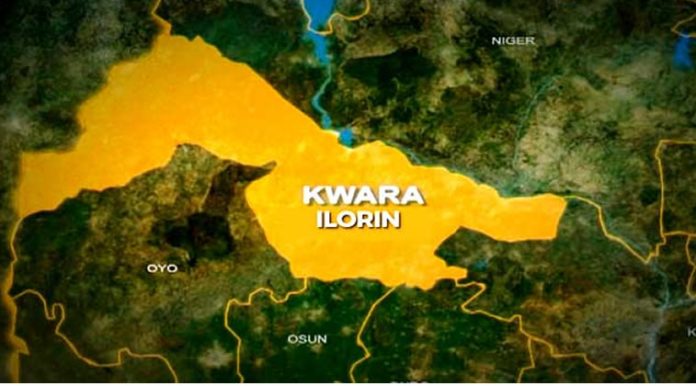
The Kwara State Government has sought the collaboration of the 22 Brigade Commander, Brig. Gen. Olufemi Williams, for the sustenance of a cleaner Kwara.

The Commissioner for Environment, Hajia Nafisat Buge, disclosed this on Saturday, when she paid a courtesy visit to the 22 Brigade Commander at Sobi headquarters, Ilorin.

She said, “We are here to seek the collaboration of the Nigerian Army to achieve a cleaner Kwara, most especially on the enforcement of laws during the monthly sanitation exercise, as well as curbing deforestation, to sustain a clean and hygienic environment capable of paving the way for healthy living.”

A statement by the Press Secretary in the ministry, Esther Abolarinwa, made available to the press on Sunday, revealed that indiscriminate dumping of waste had become rampant in the metropolis, which might lead to the outbreak of cholera currently ravaging the country.

The commissioner reiterated the commitment of the state government, under the leadership of Governor AbdulRahman AbdulRazaq, to make the environment safe and healthy for residents.

Responding, Brig Gen Williams commended the governor’s efforts at repositioning the state to be safe for healthy living and also attractive to investors for even development.

He assured of the readiness of the military to give support in enforcing environmental laws, to achieve a cleaner Kwara.

All rights reserved. This material, and other digital content on this website, may not be reproduced, published, broadcast, rewritten or redistributed in whole or in part without prior express written permission from According.

Contact: [email protected]

Customers’ deposits rise to N136tn in Q1

0
Customers’ deposits rise to N136tn in Q1

The value of customers’ deposits in banks has risen to N136tn as of the end of the first quarter of 2024, data from the Nigerian Exchange Limited and banking industry have indicated.

In Q1 2024, the banking sector recorded an inflow of about N21tn in new deposits to push the sector’s total deposits to about N136tn, on course to surpass the 2023 financial year’s performance, which stood at N115tn.

Total deposits in the banking sector rose by 63 per cent from about N70.5tn in 2022 to about N115tn in 2023 and hit about N136tn in March 2024, representing an increase of 18.26 per cent in three months.

Regulatory filings and others made available by industry associations showed impressive growth in deposits across the tiers of the banks, with the middle tier and newly established banks competing well with the larger banks.

According to reports, Zenith Bank’s total deposit, which was up by 69 per cent from N8.98tn in 2022 to N15.17tn in 2023, stood at N16.78tn in March.

FCMB Group saw its deposits steadily rise from N2.07tn in 2022 to N3.4tn in 2023 and N3.7tn in the first quarter of 2024.

Premium Trust Bank, which commenced operations in April 2022, grew its deposit base by 382 per cent from N55bn in December 2022 to N265bn in December 2023 and improved to N309bn in Q1 2024.

Fidelity Bank’s deposits rose from N2.58tn in 2022 to N4.02tn in 2023 and closed the first quarter of 2024 at N4.71tn.

United Bank for Africa’s deposits grew from N10.86tn in 2022 to N14.9tn in 2023 and went up to N18.4tn as of March.

Access Holdings’ deposits saw a quantum jump from N11.3tn in 2022 to N19.8tn in 2023 and N24.7tn in March 2024, while Sterling Holding Financial Company crossed the N2tn mark to N2.15tn during this period, from N1.4tn and N1.8tn in 2022 and 2023, respectively.

Guaranty Trust Holding Company has doubled its deposits since 2022, rising from N4.6tn in 2022 to N7.55tn and N9.20tn in 2023 and Q1 2024, respectively.

There is a correlational relationship between deposits and loans and expenses, and as such, national economic growth.

The According has earlier reported that CBN data indicated that Nigerian banks’ loans and support for the private sector had increased by about N30tn over one year.

According to the CBN, credit to the private sector rose by 65.9 per cent or N29.52tn to N74.31tn in May 2024, compared with N44.79tn recorded in the comparable period of 2023.

The credit to the private sector includes loans, trade credits and other account receivables and supports provided by banks to the private sector within a period.

Obaseki blames FG for hardship as protesters worship on street

0
Edo strengthens gender policy with GIZ partnership, training

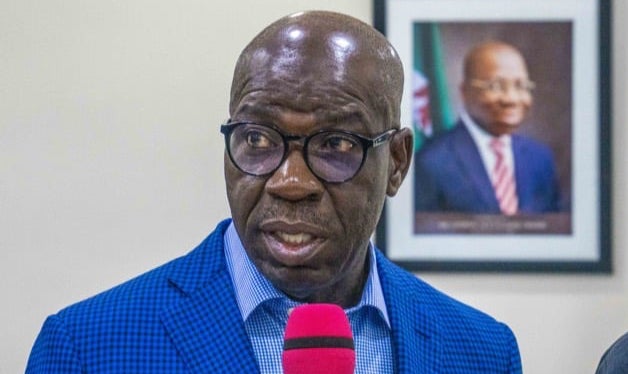
The Edo State Governor, Godwin Obaseki, on Sunday, said the hardship in the country is blamable on the policies of the Federal Government.

This was as hunger protesters in Edo State held a church service on the street.

Obaseki, in a statement on Sunday, said his government had implemented several people-oriented programmes to reduce the suffering of Edo people in the wake of the difficult living conditions which the people have had to endure, arising from various policies that had been implemented by the Federal Government.

Obaseki listed some of the programmes to ameliorate the sufferings of the people to include raising the minimum wage for workers to N70,000 to boost their purchasing power, introducing a free transport scheme along the routes operated by the Edo City Transport Service, extending free Wi-Fi services to public spaces to help citizens telecommute and kick-starting a state-wide feeding for the vulnerable implemented in partnership with Christians and Muslim institutions, among others.

Obaseki said, “The protest is obviously the result of the difficult living conditions which Nigerians have had to endure particularly over the last one year, arising from various policies that have been implemented by the Federal Government.

“These policies have taken a severe toll on citizens who have had to endure astronomic high food prices, high transportation costs, galloping inflation and loss of operating capital by small business owners across the country.

“In Edo State, we have taken several actions within our constitutional authority to reduce the suffering and hardship of our people by showing empathy and supporting our people to weather and survive this trying time despite the challenges witnessed across the nation.”

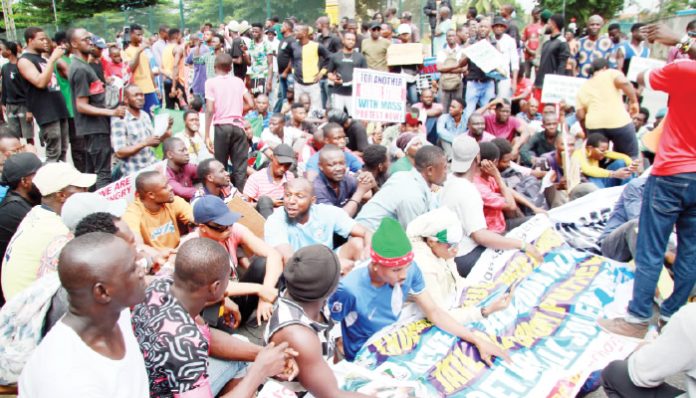
The According reports that some protesters in the ongoing nationwide #EndBadGovernance protests continued their protest on Sunday and held a Church service on the road as part of Sunday activities in the state.

Some Civil Society Organisations had on Saturday withdrawn from the protest, opting to wait for President Bola Tinubu’s nationwide broadcast on Sunday morning before deciding on their next line of action.

However, at the Agho Junction on Ekehuan Road where the church service held, the protesters sang and danced while praising God and calling for an end to bad governance.

The protesters barricaded the road during the church service, restricting vehicular movement.

Soldiers in convoy were seen patrolling the major roads in the state with a view to clear any barricade placed by protesters.

The Coordinator of the Edo State Civil Society Organisation, Agho Omobude, said the protest was for 10 days and would continue as the President failed to address the protesters’ demands.

Bank directors disown chairmen’s views on windfall tax

0
Bank directors disown chairmen’s views on windfall tax

The Bank Directors Association of Nigeria have distanced itself from the views of some bank chairmen on the proposed foreign exchange windfall tax.

The Chairman of the association, Mustapha Chike-Obi, who disclosed this via his X (formerly Twitter), noted that BDAN would communicate its views on the issue after its board meeting on August 12.

He said, “I have read the personal views of some bank chairmen on the windfall tax issue. Those views do not represent the banking community. BDAN will communicate its views after our board meeting on the 12th(August), on this and other very important issues concerning our community.”

In the past week, at least three bank chiefs had expressed support for the move by the FG to impose a 70 per cent windfall tax on the foreign exchange earnings of banks from 2023 to 2025.

In a statement on Wednesday, the Chairman of FBN Holdings, Femi Otedola, said that the revenue generated from the forex segments harmonisation policy implemented in June 2023 could be channelled into essential public services, such as healthcare, education, and infrastructure, benefiting all citizens and helping to reduce social inequalities.

He stated, “The recent announcement of a windfall tax on the extraordinary profits earned by Nigerian banks is a significant first step towards achieving these goals. The consolidation of various foreign exchange rate systems into a single investors’ and exporters’ window led to the depreciation of the naira and substantial increases in the value of bank assets denominated in United States dollars.

“This extraordinary gain should be redistributed to fund critical infrastructure development, education, healthcare access, and public welfare initiatives, addressing the intense pressure on public finances and alleviating the cost-of-living crisis many Nigerians face.”

He added that the financial statements of manufacturing, telecoms, and SMEs indicated that many of those companies may not be able to pay corporate tax for at least the next two years, as they were currently showing negative equity.

“It is essential for the government to step in and provide support to bridge these gaps, ensuring revenue generation and fostering economic development,” the bank chief maintained.

Also, after a meeting with President Bola Tinubu, on Wednesday, the Chairman of the United Bank for Africa, Tony Elumelu, reasoned that mutual prosperity was vital to sustaining the system.

He said where businesses thrive, jobs are created, and foreign and local investors benefit, leading to a prosperous society.

“We believe in prosperity, in creating jobs and employment for our people, in democratising prosperity, and in ensuring that Nigerians have access to a good life. So today, we spoke about the Windfall Tax. We support the government.

“We believe that where extraordinary income has made a part of, it should go towards helping to alleviate poverty in the country, which is what the government intends to do. We support that, and we just believe that we should ensure that no one segment suffers, that the government is able to continue to create jobs, and that businesses are also able to do well because we need mutual prosperity,” he declared.

The FCMB Group Chief Executive, Ladi Balogun, in his comments after the meetings, remarked, “The purpose of the meeting was to ensure that this government’s reform agenda is well transmitted to not only the banking sector but also the investment community. We sought to ensure that we were all on the same page.

“We also sought to ensure that we are also playing our role as a banking system and as an industry to channel back some of the gains we have made into the general economy. Now, we believe that this government and this administration are very much pro-investment and pro-growth, and they demonstrated that by listening to the concerns of the industry.”

Five banks recorded N67bn FX gains in H1

0
Five banks recorded N67bn FX gains in H1

Five banks declared N67.89bn in foreign exchange gains in the first half of 2024, according to the analysis of their interim reports by The According.

According to their interim financial results filed with the Nigerian Exchange Limited, the forex gain recorded by the financial institutions for the half year was about 67.89 per cent lower compared N211.42bn posted in the prior period of 2023.

The financial institutions reviewed include FCMB Group, Ecobank Transnational Incorporated, Wema Bank, Sterling Financial Holding Company and non-interest bank, Jaiz Bank.

In the period under review, FCMB Group recorded forex gains (unrealised) valued at N35.19bn compared to N50.99bn in the same period of the previous year.

Throwing more light on the gains, FCMB in its financial statement said, “Foreign currency revaluation gain represents gains realised from the revaluation of foreign currency-denominated assets and liabilities held in the non-trading books.

“The Central Bank of Nigeria adopted a more liberal foreign exchange management system in 2023, which resulted in a significant movement in the naira exchange rate against the US dollar from N756.24/$ in June 2023 to N1,488.21/$ (Nigerian Autonomous Foreign Exchange Rate Fixing in June 2024).

“The impact of this foreign currency revaluation of net foreign currency-denominated assets and liabilities held in the non-trading books is represented as foreign exchange gains for the period ended 30 June 2024.”

Pan-African bank, ETI, recorded N21.07bn as forex translation gains lower than N156.28bn at the end of June 2023.

Wema Bank saw its forex revaluation income jump to N6.20bn in the six months of 2024 from N623.02m in June 2023. It is also about half of what the lender earned in the full year 2023 (N13.60bn).

Sterling HoldCo reported a forex revaluation gain of N5.34bn, lower than N3.63bn in June 2023.

Acknowledging the proposed 70 per cent windfall tax, in its financial statement, the lender said, “The Federal Government of Nigeria recently proposed to impose a windfall tax of 70 per cent on the realised profits from all foreign exchange transactions of banks.

“As of the reporting date, the bill for the introduction of the said windfall tax is currently undergoing the legislative process. The initial bill passed by the National Assembly has indicated that the tax would be retroactive and apply to the 2023 financial year and may extend to the 2025 financial year.  The group will review the full impact of the law when

the bill is finalised by the National Assembly and signed by the President.”

Jaiz Bank raked in N73.89m as forex revaluation gain (unrealised) of compared to a loss of N110.31m in 2023.

However, FBN Holdings reported N80.85bn forex revaluation loss, an improvement from the N192.57bn loss it suffered in the corresponding period of last year.

In mid-July, President Bola Tinubu introduced a one-time 50 per cent windfall tax aimed at the substantial foreign exchange gains reported by banks in 2023.

He proposed this tax as part of an amendment to the 2023 Finance Act, seeking to generate additional revenue for crucial infrastructure, education, and healthcare projects under his Renewed Hope Agenda.

The Senate has since increased the windfall tax to 70 per cent to be applied to FX gains of banks from when the naira was devalued till the 2025 FY.

While Moody’s Investors Service and other analysts raised concerns about the potential negative impact on the banking sector, the Chairman of FBN Holding, Femi Otedola, backed the FG’s move.

In a statement issued on Wednesday, Otedola said the proposal aligns with the ongoing efforts to reform the Nigerian banking sector to enhance economic stability and integrity within the country’s financial institutions.

The billionaire businessman also berated the banking executives for ownership of private jets, saying, “I am particularly critical of the culture of flamboyance, especially the ownership and operation of private jets.

“Nigerian banks are spending an estimated $50m annually just on maintaining private jets, with over $500m gone into purchasing nine private jets by four banks. This level of extravagance significantly erodes public trust in our financial institutions and diverts crucial resources away from vital areas such as operational efficiency, technological innovation, and customer service.”

Meanwhile, the Chairman of United Bank for Africa, Tony Elumelu, after a meeting with the president in the past week, said, “We believe in prosperity, in creating jobs and employment for our people, in democratising prosperity, and in ensuring that Nigerians have access to a good life. So today, we spoke about the Windfall Tax. We support the government.

“We believe that where extraordinary income has made a part of, it should go towards helping to alleviate poverty in the country, which is what the government intends to do. We support that, and we just believe that we should ensure that no one segment suffers, that the government is able to continue to create jobs, and that businesses are also able to do well because we need mutual prosperity.”

Ribadu silent on According journalist’s abduction, stolen camera, phones

0
Ribadu silent on PUNCH journalist’s abduction, stolen camera, phones

The Office of the National Security Adviser, Nuhu Ribadu, has not responded days after its officials abducted The According photojournalist, Kayode Jaiyeola, and made away with his camera and phones.

The officers have yet to return the camera and phones they took from Jaiyeola, either to the Federal Capital Territory Police Command or to him directly.

The officials’ misconduct has further contributed to the oppressive actions of security agencies against journalists covering the ongoing protests.

Our correspondent on Sunday could not get the reaction of ONSA’s spokesperson, Zakari Mijinyawa.

Frantic efforts made by Jaiyeola to recover his belongings, including going back to the NSA’s office, were futile.

The photojournalist said the security operatives at the gate denied him access despite explaining what transpired to them.

The officials had abducted Jaiyeola last Thursday while he was doing his job, covering the #EndBadGovernance protest at Eagles Square in Abuja.

He was rough-handled and whisked away by the security men despite showing his official identity card.

The ONSA officials drove him to the FCT police command and ordered his detention without stating any offence against him.

Jaiyeola said the officials refused his requests to call his office or family to inform them of his whereabouts.

The FCT Command spokesperson, Josephine Adeh, confirmed that officials from the NSA office brought Jaiyeola to the command.

She added that they didn’t leave his belongings with them.

“We didn’t arrest him. He was brought from the NSA office. He has been told to go but he said his phone and gadgets are with the people who brought him and we have been trying to see how he could get them back which was why he is still with us. The FCT police command didn’t arrest him, please,” Adeh said on Thursday.

Meanwhile, the Nigerian National Committee of the International Press Institute, on Sunday, condemned in strong terms the deployment of excessive force against journalists covering the nationwide protests.

It should be recalled that on Saturday, August 3, 2024, several journalists covering the #EndBadGovernance protests were shot at the  Moshood Abiola Stadium in Abuja by security agents wearing hoods.

The journalists narrowly escaped unhurt, but bullets damaged one of their cars.

The firing of what is suspected to be live ammunition at the main entrance of the stadium was strongly condemned.

The shooting also appeared to be premeditated,  as the journalists were particularly targeted and shot twice within minutes.

In a press statement by its President,  Musikilu Mojeed; and Legal Adviser, Tobi Soniyi, the IPI said: “Saturday’s shooting is even more worrisome as it happened a day after the Chief of Defence Staff said on live television that journalists should stop publicising the activities of the protesters.

“The IPI is hereby demanding an immediate investigation of the shooting incident at the stadium, where journalists were targeted. The officers involved, reported to be personnel of the police and the State Security Service, should be identified and punished.

“The media has a responsibility to cover the ongoing protests across the country, and journalists must be allowed to carry out their constitutionally mandated role without interference and intimidation by anyone.

“Targeting and shooting at journalists carrying out their legitimate duties is tantamount to taking a wild shot at our democracy and it should be condemned by all.”

Mbah, Otti, Umahi hail S’East for shunning hunger protests

0
From 1929 Aba Women’s Riot to 2024 hunger anger

Enugu State Governor, Dr Peter Mbah, his Abia State counterpart,   Dr Alex Otti, and the Minister of Works, David Umahi, have praised the South-East region for not joining the ongoing nationwide hunger protests.

Addressing journalists during a project inspection tour in Enugu on Sunday, the governor and the minister said the region’s decision to abstain from the protests helped to avoid potential losses and demonstrated the region’s goodwill towards the President Bola Tinubu-led Federal Government.

“I also want to take the opportunity to commend our people greatly for heeding our call to shun the protests and go about their business. We commend them highly because they understand the value of hard-work,” Mbah said.

“Sometimes, you may not be able to appreciate the effect of government policies immediately, but I tell you that some of these policies are well-intentioned. With time, if we can just exercise a little more patience with the Federal Government, we are going to begin to see the values of these reforms.

“We want to continue to call on our people to go about their business and know that if they destroy our assets, we are still going to use the wealth of our common patrimony to fix those assets. So, we must remain focused and continue to do our work,” the governor stressed.

In the same vein, the Minister of Works said the people of the South-East and the Igbo community all over Nigeria had made a loud statement by not joining the anti-government protest.

“We are not going to protest. We want proper integration in the affairs of this country. Bola Ahmed Tinubu, Mr President, started it by making an Igbo man the Minister of Works, and appointing an Igbo Man as a service chief, among others.

“We have been excluded from governance and development in the past. But now, you can see infrastructural developments in the South-East. So, why should we protest against a man who has given to us what was never given to us before?

“I thank Governor Mbah very much for showing leadership not only in developmental strides but also when it mattered most. I appreciate other governors and other states that did not protest,” Umahi said.

On his part, Otti thanked the people of Abia State for not participating in the hunger protest.

Speaking on Saturday while observing the Sabbath worship at the Seventh-Day Adventist Church, No 1 School Road, in Aba South Conference of the Seventh-Day Adventist Church, Otti said, “I want to use this opportunity to thank you and Abia people who listened to my plea not to come out, pour into the roads and disrupt services and activities and probably visit mayhem on the people.”

The governor had appealed to the people not to join the protest when he received the presidential candidate of the Labour Party in the 2023 election, Mr Peter Obi, during a private breakfast meeting.

The Indigenous People of Biafra had last week called on southeasterners to shun the protest, saying the region’s interest was in a referendum to exit Nigeria and to have the detained IPOB leader, Nnamdi Kanu, freed.

The separatist group’s spokesman, Emma Powerful, said, “What we are interested in now is for President Bola Tinubu to release Mazi Nnamdi Kanu and give us a date for the Biafran referendum for Biafrans to decide their fate in Nigeria or an independent Biafra Nation.”