Home Blog Page 6

Nasarawa Police Begin Crackdown on Political, Digital Thuggery

0

The Nasarawa State Police Command has kicked off the National Campaign Against Political and Digital Thuggery in the state.

This is part of the effort to sensitize the youth on the dangers of political violence, criminality and the misuse of digital platforms.

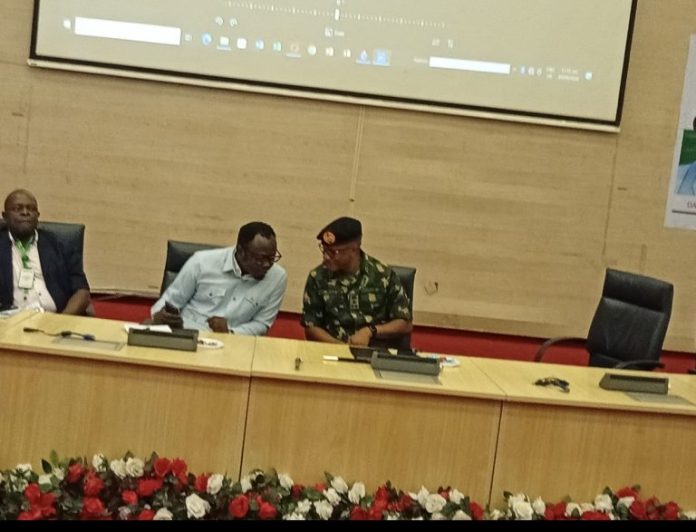
The campaign, which was held in Lafia, the Nasarawa State capital, brought together youths and other relevant stakeholders.

The Commissioner of Police, Nasarawa State Command, CP Shetima Mohammed, representing the Inspector-General of Police, IGP Olatunji Rilwan Disu, called on the youths to be responsible citizens and peaceful participants in democratic processes.

The Police Commissioner, addressing the participants during the exercise, said that security is a collective responsibility.

He emphasized that lasting security goes beyond law enforcement and was built on prevention, partnership and shared responsibility among security agencies, government, communities and citizens.

The CP said political and digital thuggery are grave threats to peace, democratic values and national development, warning youths not to allow themselves to be manipulated or used as instruments of violence, criminality or social disorder.

He urged the youths to understand that their future is far greater than political and digital thuggery, while urging them to invest their youthful energy in civic education, entrepreneurship, innovation, education and positive values, which would promote social responsibility and contribute significantly to national security and development.

On the specific issue of digital thuggery, the Commissioner cautioned the youths against the use of social media and other digital platforms to propagate misinformation, disinformation, cyberbullying, digital manipulation, incitement and other forms of harmful online activities.

He urged them to reject political violence and criminality in every guise, saying that no political interest or personal gain is worth the sacrifice of their future, their freedom and the peace of the nation.

The CP urged the youths to embrace education, innovation, entrepreneurship, responsible digital citizenship and constructive civic participation as routes to personal fulfillment, sustainable development and national progress.

He also urged participants to be good ambassadors of Nigeria by promoting peace, tolerance, unity and responsible citizenship both offline and online.

The Commissioner stressed the importance of young people being careful in their use of digital platforms, advising them to “think before they click and verify before they share” any information online, especially information that could incite panic, hatred, violence or division among the public.

Eight Dead After Charter Plane Crashes in Alaska

0

Eight people have died after a charter aircraft crashed near a remote military radar facility in western Alaska, according to the US military’s Alaskan Command.

The Cessna 441, operated by Anchorage-based air charter company Security Aviation, crashed west of Cape Newenham Long Range Radar Site Airport at about 12:15 p.m. local time on Thursday, the Federal Aviation Administration said.

The aircraft had departed from Anchorage International Airport and was travelling to Cape Newenham, according to an FAA spokesperson.

The Cape Newenham facility is part of a network of remote radar installations used to monitor aircraft operating in Alaskan airspace and along the state’s borders.

Authorities are investigating the cause of the crash.

ECOWAS Deepens Efforts to Harmonise Statistical Data Across West Africa

0

The ECOWAS Commission’s Directorate of Research and Statistics has organised two regional workshops in Abidjan, Ivory Coast from August 18 to 22, 2026, to strengthen the production, quality, and harmonisation of statistical data within the ECOWAS region.

This forms part of the regional priorities for modernising statistical systems and fall within the framework of the PHASAOC project, which aims in particular, to improve statistical performance, access to data, and their use in member states, ECOWAS said on its website.

The first workshop which is focused on migration statistics, will host the 6th Regional Coordination Meeting on improving the availability, quality, and comparability of national data related to regional migration indicators.

The proceedings will, in particular, provide an opportunity to review and validate the third edition of the Regional Report on International Migration in West Africa, as well as to promote the dissemination of disaggregated statistics, in accordance with the guidelines of the ECOWAS Council of Ministers.

The second workshop focuses on capacity building for members of the National Coordination Committees and National Economic Policy Committees with a view to operationalising the Common Regional Frameworks for the Compilation and Publication of Macroeconomic Statistics.

This will help strengthen multilateral surveillance and support the implementation of the ECOWAS Pact on Macroeconomic Convergence and Stability.

Participants will also review the updating and populating of the ECOMAC and ECOBASE databases, as well as the processing and harmonisation of national statistics covering the period 2000–2025, to ensure their comparability and reliability.

The opening ceremony was attended by the Director General of the National Statistics Agency of Ivory Coast, Mr. Touré Brahima, represented by Mr. Thiékoro Doumbia, Director of Research and Statistics at the ECOWAS Commission, Professor Félix N’Zué as well as the ECOWAS National Focal Points, members of the Technical Working Group on Migration Data, representatives of the ECOWAS Commission’s technical departments, imcluding experts from AFRISTAT, AFRITAC-West, AMAO, IMAO, and the UEMOA Commission.

In his opening remarks, President of the National Economic Policy Committee of Ivory Coast, Mr. Hien Sansan, speaking on behalf of Mr. Adama Coulibaly, Minister of Economy, Finance, and Budget of the Republic of Ivory Coast, welcomed the various experts present in Côte d’Ivoire.

He emphasised the importance of the meeting, which will promote the adoption and effective implementation of regional frameworks for the compilation and publication of macroeconomic statistics necessary for multilateral surveillance.

The Director of Research and Statistics at the ECOWAS Commission, Professor Félix N’Zué, representing the President of the ECOWAS Commission, Dr. Omar Alieu Touray, and the Commissioner for Economic Affairs and Agriculture, Dr. Kalilou Sylla, welcomed the participants to the two day workshops.

Vision 2050
The workshops are part of the ambitions of ECOWAS Vision 2050 and the ECOWAS Statistical Policy, adopted by the Heads of State and Government, which recognises statistics as a regional public good essential for planning, monitoring public policies, and assessing progress toward regional integration.

“Without harmonised, comparable, and regularly produced statistics, it would be difficult to objectively assess the progress of our member states, guide economic and social policies, and measure the concrete effects of our regional programs. Statistics are no longer just numbers. Today, they constitute a strategic tool for governance, transparency, and foresight,” Professor N’Zué stated.

In the same vein, the Director General of the National Statistics Agency of Côte d’Ivoire, Mr. Touré Brahima, representing Mr. Thiékoro Doumbia, commended the ECOWAS Commission, which, through its Directorate of Research and Statistics, is stepping up initiatives to promote better production and use of statistics in the region.

The ECOWAS Commission reaffirms its commitment to promoting reliable, harmonised, and accessible statistical data, which are essential for developing evidence-based public policies and strengthening regional integration.

2027 Presidency: Obi Promises Campaign Free From Ethnic and Religious Sentiments

0

As campaigns begin for the 2027 general elections, the presidential candidate of the Nigeria Democratic Congress, NDC, Mr Peter Obi has marshaled out his plans for Nigerians pledging to run a campaign devoid of ethnicity and religion.

Obi also gave a blow by blow account of how he will develop the country including his areas of concentration in the various regions of the country while speaking to journalists at a world press conference in his home in Onitsha, Anambra State on Friday.

He said the election is a defining moment for Nigeria’s democracy, and gives Nigerians the opportunity to assess the records, ideas and plans of those seeking their mandate to lead their country at a time of grave uncertainty in a rapidly changing world.

Here is part of his text: “I consider myself quite privileged to be one of those seeking your mandate to deal with these challenges facing our country. I bring to this contest one unshakable conviction: Nigeria can work, Nigeria must work. Nigeria has a number of serious challenges. Some are truly existential in nature.

The IMF estimates that 63% of Nigerians, or over 140 million people, live at or below the national poverty line, while humanitarian agencies estimate that 35 million people will need food assistance in the 2026 lean season. Some 3.6 million Nigerians are internally displaced, mostly because of conflict and insecurity.

Every year millions of young people enter the labor market, but far too many find it difficult to find productive opportunities. Households continue to be burdened and enterprises constrained by weak infrastructure, unreliable power, insecurity and the high cost of doing business. These are not statistics. They reflect the daily realities of Nigerian families, farmers, workers, students and businesses.”

Obi, who vowed to run a campaign free of ethnicity and religion, said: “The campaign period is a period of opportunity for every citizen to participate in the national conversation. Nigerians must examine each candidate’s record and proposals; ask hard questions; and demand evidence behind every promise.

“We must challenge ideas without hate, compete without violence and disagree without weakening the bonds that bind us. “When Nigerians make their choice, that choice must be respected.

“Nigerians should reject and dismiss any campaign that is driven by propaganda, ethnicity, religion, elitism and cronyism. “My team and I, as we travel across the country, will listen to Nigerians, understand their needs and concerns and assure them that we have the competence, character and compassion to lead and reset Nigeria for the good of all.

Obi, who promised to strengthen the six geopolitical zones, espoused the strength of Nigeria’s diversity. “Nigeria’s diversity is an economic strength. Each region has its own assets, and national policy must unlock those assets and link them to one productive economy.

“The Northwest can grow agriculture, livestock, irrigation, agro-processing and manufacturing while improving education and security. The Northeast has the potential to accelerate reconstruction, restore livelihoods and expand agriculture, education, enterprise and regional trade.

“The North-Central can increase food production and processing even as it develops its mineral resources responsibly. The Southwest has the opportunity to build on its strengths in manufacturing, technology, finance, trade and the creative economy.

“The Southeast can boost its entrepreneurial and industrial strength through better infrastructure, stronger connectivity and greater access to investment. The South-South can provide more value-added to oil and gas and expand maritime services, fisheries, agriculture, and other productive sectors with stronger environmental protection.

“The Federal Capital Territory has to show what good urban planning, transportation, housing, sanitation, security and public services can achieve. Every region must generate. All regions must contribute. Every region must get a benefit.”

The presidential hopeful seized the occasion to speak about his pedigree in governance, saying, “My successful private-sector experience, studies in institutions of repute on policy and business matters, and my service as Governor of Anambra State have shaped my understanding of public leadership. Government must be responsible in its use of resources, it must establish clear priorities and it must measure the outcomes of its decisions. Public office is a public trust. It is not a reward for services.

“In Anambra, I concentrated on the fundamentals of long term development; education, healthcare, infrastructure, fiscal discipline and institutional capacity. I do not offer that record as perfect, but as an experience from which Nigerians can draw their own conclusions.

“Senator Rabiu Musa Kwankwaso has a complementary but different governing experience. As Governor of Kano State, he emphasized education, technical training, scholarships, infrastructure and human-capital development. His administration’s investment in education and skills reflected an appreciation that the people are the most important long-term resource of any state.

“Our experiences are different, but we agree on the conclusion that Nigeria must invest in its people and manage public resources with discipline,” Obi said.

NGX Extends Losing Streak to Eight Sessions, Market Cap Drops N5.45tn

0

Investors in the Nigerian stock market lost a total of N5.45 trillion as the equities market continued its bearish run for the eighth straight session on Thursday.
It was reported that since Tuesday, August 11, 2026, the Nigerian Exchange Limited (NGX) listed stocks have continued to witness sharp decline.

Investors on the NGX lost N3.8 trillion in four straight bearish sessions last week.

From Monday to Thursday this week, stocks on the NGX have lost a total of N1.65 trillion.

Hence, the losses in the last eight trading sessions alone were at N5.45 trillion, erasing gains earlier made in the market.

Market summary for Thursday
The market on Thursday continued its bearish run, with investors losing N440 billion, following sustained profit-taking in large and mid-cap stocks.

Market capitalization declined by 0.30 per cent or N440 billion from N155.417 trillion at the opening of trading to N154.977 trillion at the close of trading.

Haldane McCall topped the gainers’ chart with a gain of 9.38 per cent to close at N3.85, while International Energy Insurance topped the losers’ chart, dropping by 9.85 per cent to close at N4.30.

It is said the poor performance of insurance stocks has been brought about by the implementation of the Nigerian Insurance Industry Reform Act 2025, after the National Insurance Commission revoked the licences of Universal Insurance and Nigeria Reinsurance in recent weeks.

Adeleke Meets Wike in Abuja After Presidential Meeting With Tinubu

0

Re-elected Governor of Osun State, Ademola Adeleke, paid a courtesy visit to the Minister of the Federal Capital Territory, Nyesom Wike.

It is understood this is as part of a series of consultations in Abuja after his recent election victory.

The meeting was disclosed in a photograph posted on social media by Wike’s media aide, Lere Olayinka.

In the photo, Adeleke is seen shaking hands with the FCT Minister while they both hold the governor’s certificate of return.

Olayinka captioned the picture, “Governor Ademola Adeleke visits FCT Minister, Nyesom Wike.”

Recall that the visit was hours after the governor met with President Bola Tinubu in a closed-door meeting at the Aso Rock Presidential Villa.

At the meeting, the governor presented his certificate of return, and thanked the people for the conduct of the August 15 governorship election.

Read Also: DSS Foils Kidnap Operation, Arrests Three Suspects and Rescues Victim

Tinubu told the governor that the State Governor did not conquer anyone, but won an election.

He told Governor Adeleke not to stigmatize his opponent after the result of the Osun gubernatorial election, saying “whoever does not celebrate a free and fair election does not deserve the laughter and happiness of democracy.”

“Do not stigmatize any of your opponents,” he said. And the people of Osun State passed their judgment on you that they love you, they want you to govern. So you’re going back to rule.

Anybody, any democrat, anybody in the political environment who cannot celebrate the joy of a free and fair election does not deserve the laughter and the happiness of democracy.

“Don’t make an individual a victim of your campaign. Don’t do that! Not for yourself only. Not for Osun, not for the generations ahead. It’s more important that you build unity network.

“As I said, you didn’t conquer anyone. You won a poll That is what democracy is all about. I’m so glad we have this talk.”

DSS Foils Kidnap Operation, Arrests Three Suspects and Rescues Victim

0

Nasarawa State: Three suspected kidnappers have been arrested by operatives of the Department of State Services (DSS) in Nasarawa State and a victim rescued.

One suspect was arrested at the hideout of the criminals in Atabula, Duduguru community, Jenkwe Development Area while the remaining two suspects were tracked and arrested at a hotel in Lafia, the state capital.

The security operatives also burned down the makeshift camp used by the criminals, and recovered cash, five mobile phones and other items during the raid.

Governor Abdullahi Sule described the arrest as a demonstration of the effectiveness and dedication of the security agencies in a statement issued on Thursday by the Chief Press Secretary to the Governor, Ibrahim Addra.

Read Also: FG Secures N7.2trn Through Bonds to Strengthen Government Financing

Governor Sule commended the security agencies for their vigilance and determination to combat crime and criminality in the state.

He urged them to keep the momentum and be steadfast in the fight against criminal elements in all parts of the state.

The governor assured the security agencies of continued support of his administration in the discharge of their responsibilities.

Governor Sule also urged citizens to be vigilant and to pass on credible, useful and timely information to security agencies.

“Peace and security in the state require collective vigilance and cooperation,” he said.

FG Secures N7.2trn Through Bonds to Strengthen Government Financing

0

The federal government has so far this year raised almost N7.2 trillion through bond auctions, thus placing the domestic financial system at the center of an increasingly difficult effort to finance the country’s widening fiscal needs, data obtained by Daily Sun revealed yesterday.

The data indicated the total raised by the Debt Management Office (DMO) excluded borrowing through treasury bills, sukuk and other instruments. It nevertheless gives an early indication of the scale of government recourse to banks, pension funds, asset managers and other local institutions as the country seeks to fund a N31.5 trillion budget deficit.

The budget provides for domestic borrowing of about N29 trillion, it said. So far, the DMO has raised less than a quarter of that target through bond auctions and has a large financing requirement for the rest of the year at the current pace. The problem is not just whether investors have enough money to absorb the supply, but whether the government can keep raising money without pushing up borrowing costs and diverting credit from businesses and households.

At its recent bond auction, the debt office sold N805.2 billion in competitive allotments across the January 2035, April 2037 and June 2038 maturities, below the N1.1 trillion on offer. But total sales increased to almost N1.6 trillion after N752.3 billion in non-competitive allotments.

Total subscriptions stood at N1.7 trillion, translating into a bid-to-cover ratio of 2.1 times versus 1.9 times at the previous auction. Rather, the DMO seemed reluctant to accept bids at yields that it thought were too expensive.

Read Also: ‘Why We’re Turning Our Backs on Nigerian Army’ – South-East Youths

The bond with the highest demand was the June 2038 bond, which recorded bids of N821.3 billion against competitive sales of N631 billion. The DMO also sold N742.3 billion of the same instrument through non-competitive sales. The bond was sold at a marginal yield of 17.79 per cent although bids were as high as 19 per cent.

This pattern was more pronounced in the January 2035 note. Investors bid N513.6 billion for the security, but the DMO allotted N64.1 billion. The bids were from 16% to 22.6% and the final marginal rate was 17.15% The outcome suggests that the agency is limiting borrowing to avoid higher funding costs being reflected in the public debt stock.

Such restraint may become more difficult to sustain. Banks are likely to stay among the biggest buyers of sovereign debt, especially since government securities provide a liquid, relatively low-risk outlet for funds, Quest Merchant Bank said in an emailed note to Daily Sun.

The bank said the strong demand at the auction was a sign of increasing expectations that yields may have peaked after recent moderation in inflation and the prospect of a sustained disinflationary trend.

Therefore, as it said, investors are keen to capture higher yields, particularly at the long end of the curve.

But industry experts said a more aggressive sovereign borrowing program could soak up liquidity that could have otherwise gone to corporate lending, trade finance and consumer credit.

The risk is even more acute for smaller companies which already face high lending rates and limited access to formal credit. If banks can earn near 18 per cent on long-dated government debt – with lower credit risk and lower operational costs than private lending – the incentive to lend to riskier businesses is reduced.

Pension funds and asset managers may also continue to favor long-dated sovereign paper as they try to lock in elevated returns before inflation and rates fall. This could bolster the DMO’s funding program, but it would increase the financial system’s exposure to the sovereign when public debt-service costs are high relative to government revenues.

“That said the agency still has a long way to go to meet its domestic funding target of about N29 trillion as outlined in the budget.

“We expect strong investor demand, supported by easing inflation and expectations of a gradual decline in yields,” Quest Merchant Bank said.

The FG therefore finds itself in a narrow corridor of policy. It must finance a large deficit, maintain investor confidence and cope with a growing debt-service burden, without a borrowing strategy that starves the private sector of credit.

Hence, the ability of the DMO to keep that balance will determine not just the credibility of the budget but also availability and cost of financing for Nigerian businesses.

‘Why We’re Turning Our Backs on Nigerian Army’ – South-East Youths

0

The Chief of Army Staff, COAS, Lieutenant General Waidi Shaibu, expressed concern last month over the persistently low enlistment of youths from the Southeast geopolitical zone into the Nigerian Army.

Shaibu disclosed this during the passing-out parade of the pioneer batch of 90 regular recruits at the Nigerian Army Recruit Training Depot, Amasiri-Edda, Ebonyi State.

Reports have it that the Nigerian government is begging the Southeast to fill its slots, while youths in other parts of the country are fiercely competing for the limited slots in the Army.

“The South-East’s quota of recruitment has remained unfilled for years. The trend is unacceptable,” Shaibu said.

The Army Chief however urged traditional rulers, parents, community leaders and other stakeholders in the region to encourage eligible young men and women to take advantage of the recruitment opportunities available in the Nigerian Army.

He says military service is not just a career, but an honorable calling that represents patriotism, leadership and national service.

He said: “We seek your continued support because military service is very demanding. Please support them, encourage them and pray for them.

“To our hosts the Ndigbo, I humbly appeal to you to encourage your youths to take their rightful place in the defense of our fatherland.

‘There has not been full utilization of recruitment quota allocated to this zone for some time now. This isn’t right. Military service is an honorable pursuit of patriotism, leadership and national contribution; it is not just a career.

Therefore, I urge all community leaders, parents, guardians and elders across the Southeast to encourage our young men and women to see this depot as theirs and come out to serve the nation.”

Nobody wants to come in – Orji Kalu
Former Abia State Governor, Senator Orji Uzor Kalu had also expressed concern on the reluctance of a lot of people from the Southeast to join the security agencies in the country.

Kalu said this while speaking on the state of the nation in a recent interview with News Central TV.

The Abia Senator stated that in his area, people were often given application forms to join the Nigerian Army, Police and Air Force but many were still not willing to apply.

I know in my area they give me forms for people to join the Army; nobody wants to join. They give me forms for people to join the Police. Nobody wants to join them. They give me forms for people to join the Air Force, they will not want to apply,” Kalu said.

He said Nigeria’s security problems are related to problems of hatred, tribalism and religious divisions among the citizens.

Kalu said Nigerians, particularly in the South East, should first see themselves as citizens of the same country and work together to solve insecurity.

He also described the armed forces as some of the best institutions in Nigeria, arguing that most of the personnel are not affected by tribalism.

Joe Igbokwe: Southeast will regret Army recruitment rejection
Also an All Progressives Congress, APC, chieftain, Joe Igbokwe, warned that the Southeast would pay dearly in the future if the youths in the region continued to show little or no interest in joining the Nigerian Army.

Responding to reports that many recruitment slots allocated to the Southeast are yet to be filled as applicants from the North continue to fill their quotas in their large numbers, Igbokwe described the situation as worrying.

“Mark my words: Southeast will regret turning down Nigerian Army recruitment,” he said.

Igbos suffer systematic marginalization – Lawyer, Ejimakor
However, human rights lawyer, Aloy Ejimakor said the refusal of Igbo youths to join the Nigerian armed forces is not due to a lack of valor but a deliberate refusal to serve an institution they distrust profoundly.

The lawyer made the post on X after the Chief of Army Staff expressed concern over the persistently low enlistment of youths from the Southeast geopolitical zone into the Nigerian Army.

Ejimakor said history and current events show the Igbo people are systematically marginalized in an ethnically skewed leadership structure in Nigeria’s security services.

“The armed forces are also repeatedly weaponized against Ndigbo in times of crisis,” the lawyer said.

“The trauma of the 1967 army massacres of Ndigbo in the North remains an unhealed wound, perpetually reopened by modern atrocities against youths suspected of IPOB links, such as the Nkpor state-sanctioned violence, the Aba prayer ground, Obigbo, the Trump victory rally in Port Harcourt, and many more,” he said.

He also said that the youths are very angry about the inclusion of “repentant” Boko Haram terrorists into the military.

“They will not sacrifice their dignity by being asked to bleed under a prejudiced command, with former terrorists.

“So their unwillingness to enlist is not cowardice. It is rather a silent but powerful protest against an institution that has failed the Ndigbo so many times,” Ejimakor said.

Why Southeast youths do not want to join the Army
With reports that the Nigerian Army is finding it difficult to attract enough applicants from the Southeast for its recruitment exercise, spoke to some young South-easterners on why many youths in the region are reluctant to enlist.

Their answers ranged from concerns about insecurity and poor welfare for soldiers to alleged discrimination, political interference and a general loss of confidence in the military.

‘I don’t want to die for politicians’
In a chat, Tuesday, Chinedu Udemmezue, a trader from Anambra State said he had nothing against the Nigerian Army.

He said he once wanted to join the military but had second thoughts because of the safety of soldiers.

He said: “I don’t have anything against the Nigerian army. I wanted to join when I was younger, actually. But I have no interest today.

My fear is simple: I don’t want to go into the Army and become a casualty of a war politicians aren’t serious about ending. Look at the number of soldiers that are getting killed in different parts of the country.

“Sometimes you hear about soldiers being sent somewhere without the right equipment or support. Then, when something happens they will talk about sacrifices.

“Sacrifice is good, but you’ve got to have some reason to believe your life is valued. I have a family, I have a life. “I cannot just volunteer to die because some people in Abuja want to score some political points.

“There is a trust problem.”
For Enugu State graduate, Ifeanyi Nwankwo, the main problem for him is trust.

“Young people may be reluctant to join an organization where they think opportunities and promotions are not always merit-based,” he said.

“You cannot ask young people to join an organization when they believe that opportunities and promotions are not always based on merit.

“For years there has been a perception that people from the Southeast are treated unfairly by some of the national institutions.

“It’s another matter whether every allegation is true or not. But perception is important. If a young man thinks that even after joining the Army, he may not get equal opportunities because of where he comes from, why would he want to join in a hurry?

The government has to address that perception. “You cannot just announce recruitment and expect people to forget all they have heard or experienced,” he said.

‘Army is not the problem
Chukwuebuka Eze, an undergraduate at Enugu State University of Science and Technology, said he actually wants to join the Army but his parents oppose it.

Rising insecurity across the country was their major concern, he said.

“I want to join the Army really bad. I have always respected the military. But my parents are against it because of insecurity.

They keep asking me, ‘What will you get if you are killed?’ “That question is difficult to answer,” he said.

“Why should I join when soldiers are treated badly?
Uche Madu, 27 years, a mechanic from Imo State said he thought of joining the Army after his secondary school education but changed his mind.

He said one reason was inadequate welfare for soldiers.

“Go and ask the families of soldiers who died in the line of duty if they were properly taken care of. Sometimes it seems the government remembers the soldiers only when they have to send them into trouble.

“If the salary, insurance, housing, healthcare and welfare are attractive, you will see more young people apply.

“Why would I choose military service if I can work here as a mechanic, open a business or travel abroad to possibly earn better money without carrying a gun into a dangerous place?” he asked.

‘Stop politicizing the military’
Obinna Onwe, 29, a civil servant from Ebonyi State, said one of the major factors that discourage young people from joining the military was alleged political interference.

“The main problem for me is political interference.

“The military should be a professional institution that serves the country, not politicians. When young people begin to believe that soldiers are being used to settle political scores or suppress certain communities, it impacts recruitment.

“Look at the history of military intervention in Nigeria. See the various conflicts and how the security agencies are viewed by communities. These things create a sense of resentment.

“If the government is serious about getting young people from the Southeast to join the military, it has to rebuild confidence.

“People can’t be convinced with propaganda. “Provide reasons for them to believe in the institution,” he urged.

“We are still interested” Kelechi Ugwu, 23, an undergraduate from Enugu State, disagreed with the suggestion that Southeast youths have completely lost interest in joining the military.

He said he also applied for Army recruitment because he wants to serve his country.

“I think that it is wrong to say Southeast youths have given up on Nigeria.

“I joined the Army because I wanted to serve my country. I don’t agree with people saying no one from the Southeast wants to join.

“But I get it, why some people are scared. Parents want to keep their kids. Young men have taken up security work and never come back.

What the government should do is improve the conditions of service and make recruitment transparent. “If the youth sees that the soldiers are respected and they have the right weapons, then they will come more.”

‘Government must question, not blame us’
An entrepreneur from Anambra State, Onyemaechi Nwafor, 25, said the government should engage the youth in the region rather than accusing them of abandoning the country.

“I don’t think the answer is to accuse South-Easterners of leaving Nigeria.

Ask the youth why they are not coming. Don’t just sit in Abuja and say they are not patriotic.

“Some are concerned about discrimination.” Some fear insecurity. Some don’t have confidence in the recruitment process, others simply have better opportunities elsewhere.

“If the government wants more people from the region, it should deal with them. Go to the universities, the communities and youth organizations. Describe the opportunities. Fix the complaints. Make them feel wanted in the NA.

“People will react to what they think the country also appreciates about them,” he said.

Analyst urges military reforms, tells Nigerians not to blame Southeast
Meanwhile, a political analyst and communication expert at Peaceland University, Enugu, Nduka Odo, has blamed the problem on poor remuneration, deplorable living conditions and the perceived mishandling of insecurity in the country.

The government should reform the military and make the profession attractive to young people instead of blaming the region for its low recruitment figures, Odo, who spoke on Tuesday, said.

Available records, he said, indicated that the number of youths from the Southeast seeking recruitment into the Nigerian Army had declined significantly.

He said the Southeast youths are very ambitious and want career paths that will give them the opportunity to meet their aspirations and attain global competitive standards.

He said, “Joining the Nigerian Army will not fulfilll their life ambitions. The youth of the region are among the most ambitious in the world.

“They want a system that is up to global standards. They want to be great and to be known in their communities.

‘Soldiers’ pay is rubbish. They ought to go into trading and other businesses, they’d be better off. The low salaries and living standards for soldiers also discourage youths from joining the Army.”

Odo also criticized the state of barracks for military personnel, saying the deplorable condition of some facilities could scare away potential recruits.

‘Have you been to the barracks at all? You’d think no one could live there. Shabby homes. “It’s like the police stations,” he said.

He bemoaned the killing of senior military officers in terrorist and bandits’ attacks, stating that the situation had eroded public confidence in the security system.

“Generals and officers are killed like birds at the hands of terrorists and so-called bandits. But you see the government rejoicing at the repentance of terrorists. “Who does that?” he asked.

Odo also called for a wider discussion on the underrepresentation of Southeast youths in the Nigerian military, stressing that the issue is beyond recruitment into the Army.

He also said the alleged difficulties being faced by the youths of the region to gain admission into the Nigerian Defense Academy (NDA) should be addressed.

“When we talk of Southeast youths not joining the Army, let’s be specific. They’re talking about coming in as recruits.

“We ignored decades of inability of Southeast youths to join Nigerian Defense Academy. These are the people who come out later to lead the military.

“Youngsters without generals as godfathers cannot get into NDA even if they qualify,” he alleged.

He urged the government to also examine the representation of South East youths in other strategic federal institutions and agencies.

“Likewise, the military is not the only thing they need to ask the youth to join. What about NNPC, Customs, Airport Authority and all the other juicy jobs?” he asked.

‘Atiku Cannot Rule Nigeria’ – IBB Issues Warning to Obasanjo

0

Former Cross River State governor, Donald Duke has disclosed how the former military head of state, Ibrahim Babangida (IBB) secretly warned former President Olusegun Obasanjo not to trust his deputy at the time, Atiku Abubakar.

Duke’s account was said to be contained in a new book by Seun Oloketuyi, ‘How to Win Elections in Nigeria’, which examines political developments and intrigues surrounding the early years of Nigeria’s Fourth Republic.

Duke, who ruled Cross River between 1999 and 2007, told of a tense encounter involving Babangida, former military head of state Abdulsalami Abubakar, Obasanjo and Atiku at the Presidential Villa, Abuja.

“The relationship between Obasanjo and Atiku had deteriorated a lot as Obasanjo was preparing to run for a second term,” Duke said.

He said Atiku’s political activities had raised questions whether the then Vice-President was still committed to Obasanjo’s re-election.

The difference eventually became a major issue in the Peoples Democratic Party (PDP) with some party leaders looking for alternatives to Atiku for the vice-presidential position.

Duke said he and nine other governors were in talks with the then National Chairman of the PDP, Solomon Lar, on a possible replacement for the Vice-President.

It was a development that Obasanjo was very concerned about, he said. Duke said he got a late-night telephone call from the President, who complained about what he saw as his deputy’s betrayal.

Duke remembered: “I begged him to stay calm and told him that I would fly to Abuja the next morning.”

Duke said the situation later led to a strange meeting at the Presidential Villa after Atiku allegedly arranged for Babangida and Abdulsalami to meet with Obasanjo.

During the meeting, Babangida reminded Obasanjo of the political understandings reached after the latter’s release from prison.

He had also apparently told Obasanjo that it would be difficult to get the support of influential northern politicians for his bid for a second term.

Duke said Obasanjo asked if the position was final or if there was still a possibility for negotiations.

Discussions could still go on, Babangida said, the former governor added.

The most important part of the meeting happened after the formal meeting appeared to be finished, Duke said.

He said Babangida told him he had forgotten his keys in Obasanjo’s private study and asked the former President to follow him back inside.

When the two men were alone, Duke said Babangida dropped the diplomatic tone of the discussion earlier and gave Obasanjo a direct warning about Atiku.

Babangida reportedly told Obasanjo, “I told you not to trust that deputy of yours.”

Duke added that upon their return to the others, Babangida looked at Atiku and turned to Obasanjo and reportedly said, “This one cannot rule Nigeria.”

The incident showed how deep the mistrust between Obasanjo and Atiku was and how their political differences had become a topic of discussion among influential figures, Duke said.

Duke said looking back at the episode, it reinforced a big lesson he learned from his years in political office.

“Betrayal is a very crazy thing in politics,” he said.