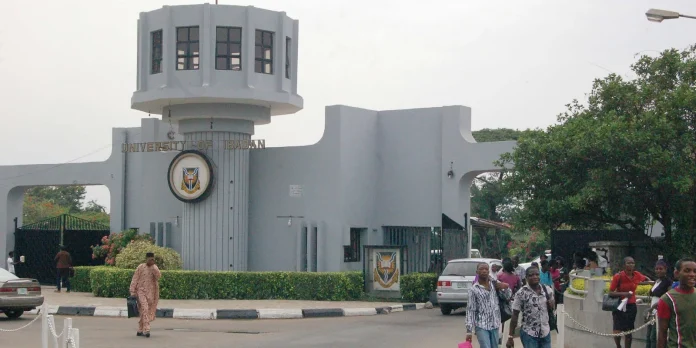
The University of Ibadan, UI, has declared that candidates who scored below 200 in the 2024 Universal Tertiary Matriculation Examination (UTME) will be considered for admission at its Distance Learning Centre.
The institution made this declaration via a statement signed by the Director of DLC, Professor Babatunde Omobowale, on Monday.
Omobowale added that any candidate with intention to pursue undergraduate degrees in the university will be enrolled through Open Distance eLearning (ODel) mode.
He added that the institution took the decision in order to make quality education accessible to all.
The don further maintained that new and returning students will resume in September.
Omobowale said, “UI is committed to making quality education accessible to all.
“Those who scored below 200 in JAMB UTME or did not sit for the UTME can also take advantage of this opportunity and enrol in any of the University undergraduate programmes in ODeL mode.”
Candidates with low score in 2024 UTME will be considered for admission – UI
Candidates with low score in 2024 UTME will be considered for admission – UI
Reps dissolve committee investigating adulterated fuel import, others
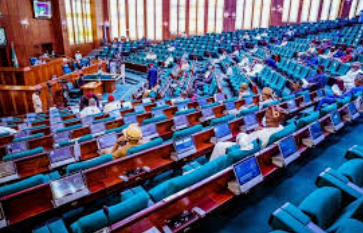

The House of Representatives has resolved to dissolve the current ad-hoc Joint Downstream and Midstream Committee investigating the importation of adulterated petroleum products, the non-availability of crude oil for domestic refineries, and other critical energy security issues.
At the committee’s inauguration penultimate Monday, the Deputy Speaker, Benjamin Kalu, speaking on behalf of the Speaker, Tajudeen Abbas, expressed concern over the resurgence of fuel queues at petrol stations, the increasing cost of Premium Motor Spirit, and the unavailability of crude oil feedstock for domestic refineries.
Kalu noted that the investigation would also extend to other related issues impacting the sector, emphasizing the need for compliance with global standards in the quality of petroleum products imported into Nigeria.
He stressed that the Nigerian Midstream and Downstream Petroleum Regulatory Authority and the Standards Organisation of Nigeria must ensure that all petrol imported into the country is rigorously tested in laboratories to meet standard sulfur and octane levels.
“It is unacceptable that the petrol imported into the country contains high sulfur levels, is lead, and has low octane levels. This has previously led to socio-economic losses, including damage to vehicle engines.
“One critical aspect we must address is the infrastructure for quality assurance that enables robust testing of petroleum products with full adherence to the standard practice for manual sampling,” Kalu said.
He tasked the joint committee with investigating the quality and the number of laboratories that both the NMDPRA and SON use for their tests and to provide actionable feedback.
Since the probe began, the House has faced controversies, with lawmakers splitting into various groups and factions.
The ad-hoc committee led by the Chairman of the House Committee on Petroleum Downstream, Ikenga Ugochinyere, had been calling for the sack of the Group Chief Executive Officer of the Nigerian National Petroleum Company Ltd, Mele Kyari, while another group of 50 lawmakers has called for his retention.
The lawmakers led by Billy Osawaru ( Edo State) said the call for the sacking of Kyari when an investigation is currently being carried out was an action that is against parliamentary culture.
However, in a statement on Monday in Abuja, the Spokesperson for the House, Rotimi Akin, announced that the ad-hoc committee had been dissolved and a new one would be constituted.
He said, “The Leadership of the House of Representatives has resolved to dissolve the current ad-hoc Joint Downstream and Midstream Committee.
“Initially tasked with investigating the importation of adulterated petroleum products, the non-availability of crude oil for domestic refineries, and other critical energy security issues, this committee will be succeeded by a newly constituted ad-hoc committee with the same mandate.”
Akin added, “To ensure the efficacy and independence of this investigation, the new committee will consist of honourable members selected for their expertise, competence, and integrity.
“The House remains committed to addressing these vital issues and ensuring thorough oversight. Further details on the new committee’s operations will be provided in due course.”
Protests: Tinubu not wholly responsible for Nigeria’s economic woes – PDP chieftain
A Peoples Democratic Party, PDP, chieftain in Ondo State, Nicholas Tofowomo, says President Bola Tinubu should not be blamed wholly for the economic challenges currently facing the country.
Tofowomo, who represented Ondo South Senatorial District at the Ninth National Assembly, stated this on Monday in Okitipupa.
Although the lawmaker noted that the economic situation was exacerbated by fuel subsidy removal and other economic policies introduced by the Tinubu administration, he said that the President should not be blamed for the country’s woes.
He noted that the administration of former President Muhammadu Buhari had removed provisions for fuel subsidy in the 2023 budget.
The former senator further stated that Tinubu, who inherited the budget, only announced and took responsibility for the subsidy removal.
“I was part of the ninth national assembly that passed the 2023 budget. There was no provision for fuel subsidy in the budget. So it was the Buhari administration that removed the fuel subsidy.
“The truth is that Tinubu inherited the budget; he only announced it during his inaugural speech on May 29, 2023, and took responsibility.
“So I don’t think we should put all the blame on him for the current economic woes,’ he said.
The PDP chieftain, however, said that Tinubu’s information strategy was defective and that his information handlers were not doing enough on the issue, thus resulting in a nationwide protest.
The former lawmaker, however, said that despite the late broadcast, the president had acknowledged that he heard Nigerians loud and clear and called on the organizers to halt the protests and embrace dialogue.
Tofowomo urged the protesters to suspend their protests, go back to the drawing board, and embrace dialogue to chart a new course for the country, adding that nothing meaningful could be achieved through violent protests.
Recall that the protests, which kicked off on August 1, had resulted in loss of lives and destruction of property in some parts of the country.
Protests: Tinubu not wholly responsible for Nigeria’s economic woes – PDP chieftain
IPOB asks for referendum, says Igbo ready to exit Nigeria
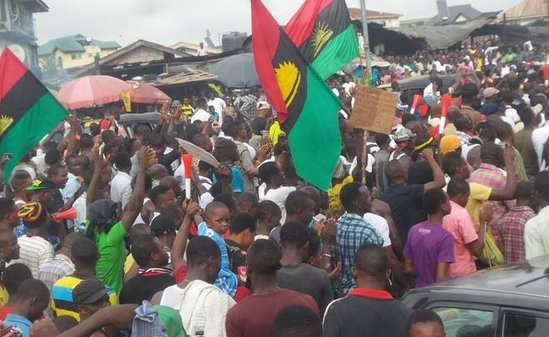

The leadership of the Indigenous People of Biafra has lashed out at the facilitators and purveyors of the “IgboMustGo” campaign in the South-Western part of the country, saying it was high time they convoked a referendum for the Igbo to exit.
It said it was laughable that the authorities in the South-West were treating the “IgboMustGo” campaign and its proponents with a wave of the hand, adding the Igbo people were already ‘on the ground and feared no fall’.
According to the group, indications abound that sponsors of the “IgboMustGo” proponents were highly placed individuals within the Lagos State and Federal Governments, urging Southerners to be cautious of their actions in the South-Western region.
IPOB Director of Media and Publicity, Emma Powerful, said this in a statement on Monday, a copy of which was made available to The According.
The statement read, “Following the provocative and genocidal “IgboMustGo” proposed protest slated to commence from August 20-30th 2024, by some faceless Yoruba groups and persons, the Indigenous People of Biafra (IPOB) wish to remind the Yoruba anti-Igbo groups that Ndigbo are ready to exit Yoruba land and Nigeria via a referendum. Ndigbo will not succumb to any threat from any group or persons to leave any state or region in Nigeria.
“It is laughable that the Governor of Lagos State, Mr. Babajide Sanwo-Olu, was reported to have hypnotically condemned the proponents of the “Igbo Must Go” protest.
The Governor will not hoodwink Ndigbo with his hypocritical condemnation of those calling for Igbos’ expulsion from the South West Region of Nigeria. The governor was the first to ethnically profile Ndigbo with his biased demolition of Ndigbo’s businesses, properties, and investments in Lagos State. There is a high chance that the proponents of the “IgboMustGo” are sponsored by high-profile persons in the Lagos State Government and the Federal Government.
“Nevertheless, Ndigbo are not perturbed. We have seen it all in Nigeria and are prepared for any opportunity to exit Nigeria at any time.
“But it will be more appropriate for us to be allowed to exit Nigeria peacefully and democratically in order to maintain good neighbourly relationships. However, if Ndigbo is forced to exit Nigeria violently, there’s a possibility that we shall remain hostile neighbors for the foreseeable future.
“The Yoruba tribal bigots and their sponsors must understand that Ndigbo is not moved by threat. We have made up our minds to exit Nigeria, so there is no basis for the threat of violence or genocide agenda tagged “IgboMustGo” protest.
“Instead of threatening to unconstitutionally and violently force Ndigbo out of the Yoruba region, they should tell President Tinubu, their brother, to release Mazi Nnamdi Kanu and to organise a referendum for Ndigbo to decide between Biafra and Nigeria. We will gladly vote and leave Nigeria and the Yoruba region in peace. We are demanding this so they can have peace after we are gone. Ndigbo is more enthusiastic about exiting Nigeria than it was in the 1960s.
“The ongoing “EndBadGovernance” protest in Nigeria was organized by Yoruba and Fulani to lure Ndigbo into destruction, but Ndigbo has learned their lessons. Though, Ndigbo declined to participate in the ongoing protests, yet they are being attacked and accused of being behind the protest. One can imagine what would have become of Ndigbo in the Northern and Western Regions if they had taken part in the ongoing protest. Ndigbo has always been a victim of every protest in Nigeria.
“Though Ndigbo is facing the same economic hardship that Tinubu’s government has imposed on Nigerians, however, to avoid being targeted as always, they decided to shun the protest. The scenario that led to the genocidal war against Biafrans in 1967-1970 is rearing its ugly head. Ndigbo is not only facing existential threats from the Western region but also from the Northern regions.
“We are calling Ndigbo in the North and West to think home as fast as possible. No amount of threat will make IPOB retreat from our divine mandate of restoring Biafra.
“We are calling the attention of the international community to the existential threat against Ndigbo in Nigeria. The Human Right Organisations, United Nations (UN), European Union (EU), African Union (AU), all the lovers of freedom should understand that Biafrans are endangered species in the contraption called Nigeria. The ethnic profiling and hatred against Ndigbo are glaring in the areas of security, politics, and economics in Nigeria.”
It added, “Silencing the quest for Biafra referendum is indirectly supporting genocide against Ndigbo and Biafrans. Just like our forebears and our heroes defended the Biafra people and land, the present generation of Biafrans have decided to remove our territory from Nigeria and defend the genocidal war spearheaded by Britain in 1967. This generation of Biafrans is determined to defend ourselves from those who want to annihilate us. We are not interested in the calls for the arrest of the “IgboMustGo” criminal elements because we know that nothing will happen to them.
“They are just the attack dogs of the big masquerades in Yoruba land, led by the State and Federal Government. We advise them to channel their energy in convincing President Tinubu to release Mazi Nnamdi Kanu and schedule a date for Biafra Referendum. Threatening Ndigbo to leave Yoruba land is a sign of weakness and cowardice. Ndigbo are ready to exit Yoruba land and Nigeria just like yesterday.”
Recall that Lagos State Governor Babajide Sanwo-Olu condemned the call for Igbo people to vacate Lagos and Southwest in entirety.
Sanwo-Olu remarked in a statement through his Special Adviser on Media and Publicity, Mr. Gboyega Akosile.
The governor said, “The attention of Lagos State Governor, Mr Babajide Sanwo-Olu, has been drawn to a post by LagosPedia, a social media handle on X (formerly Twitter) that calls on the Igbo to vacate Lagos and Southwest of Nigeria and brace up for a massive hashtag IgboMustGo protest from August 20-30, 2024.
Clash of interests: Reps to reconstitute ad-hoc oil & gas investigative committee
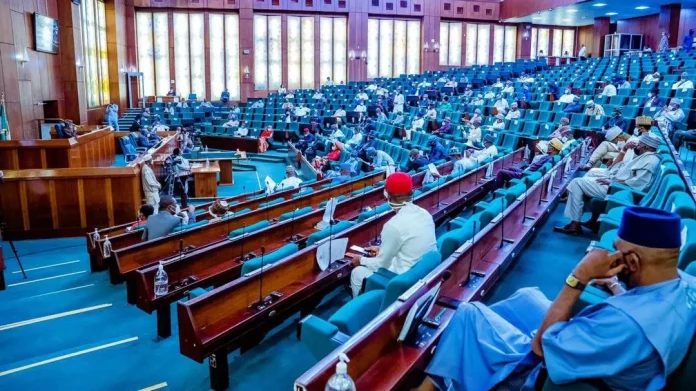
A clash of interests among members of the House of Representatives has forced the leadership of the House to dissolve the current ad-hoc Joint Downstream and Midstream Committee.
Initially, the joint committee initially was investigating the importation of adulterated petroleum products, the non-availability of crude oil for domestic refineries, and other critical energy security issues.
But following the decision of the lawmakers to engage in media war to protect their interest, the House leadership decided that the committee would be succeeded by a newly constituted ad-hoc committee with the same mandate.
TVN reports that the Deputy Spokesperson of the House, Philip Agbese, recently asked President Bola Tinubu to immediately dismiss the Group Chief Executive Officer of the Nigerian National Petroleum Company Ltd (NNPCL), Mele Kyar and the Chief Executive of the Nigeria Midstream and Downstream Petroleum Regulatory Authority (NMDPRA), Farouk Ahmed, for allegedly stifling the economy’s growth due to the oil sector crisis.
Also, the Special Joint Committee set up by the House led by Ikenga Ugochinyere last Wednesday directed NNPCL to halt the mortgage of future crude oil for loan from foreign creditors, pending the outcome of the ongoing forensic audit of various transactions carried out so far.
However, 50 members of the House of Representatives kicked against the call for the sack of Kyari and Ahmed, describing it as premature.
The lawmakers led by Billy Osawaru while addressing a press conference last Thursday in Abuja said the call for the sacking of Kyari when an investigation was currently being carried out was premature, and made in bad taste.
But the spokesperson of the House, Akin Rotimi in a statement issued on Monday, said to ensure the efficacy and independence of the investigation, the new committee would consist of lawmakers selected for their expertise, competence and integrity.
“The House remains committed to addressing these vital issues and ensuring thorough oversight. Further details on the new committee’s operations will be provided in due course,” he said.
Clash of interests: Reps to reconstitute ad-hoc oil & gas investigative committee
Bitcoin drops to $52,000 in market sell-off


The world’s largest cryptocurrency by market cap, Bitcoin, dropped to $52,000 amid a market sell-off on Monday.
The price of the digital asset dropped significantly by 13 per cent in 24 hours.
The cryptocurrency dipped from $60,752 on August 4, to $52,312 on August 5, according to CoinMarketCap, a price-tracking website for crypto assets.
Similarly, the price of other cryptocurrencies also experienced a downswing. The price of Ethereum fell from $2,905 on August 4 to $2,261 on August 5 — a decline of 22.46 per cent in 24 hours.
CoinMarketCap also said the global cryptocurrency market cap shrank to $1.85 trillion, after recording a reduction of over $184.39 billion or 14.06 per cent in the last 24 hours.
Bitcoin, the world’s largest cryptocurrency by market cap, dropped to $52,000 amid a market sell-off on Monday.
The price of the digital asset fell by 13 per cent in just 24 hours.
Bitcoin declined from $60,752 on August 4 to $52,312 on August 5, according to CoinMarketCap, a price-tracking website for crypto assets.
Similarly, other cryptocurrencies experienced a downswing. The price of Ethereum fell from $2,905 on August 4 to $2,261 on August 5, a decline of 22.46 per cent in 24 hours.
CoinMarketCap also reported that the global cryptocurrency market cap shrank to $1.85 trillion, losing over $184.39 billion, or 14.06 per cent, in the last 24 hours.
A report by the Economic Times stated that the dramatic drop was attributed to a hasty sell-off by investors due to geopolitical tensions, fears of a U.S. recession, and the global impact of the Yen’s appreciation following the Bank of Japan’s decision to raise interest rates to 0.25 per cent and reduce bond purchases.
On March 19, Standard Chartered Plc raised its 2024 forecast for Bitcoin (BTC) from $100,000 to $150,000.
Standard Chartered also predicted that BTC would reach an all-time high of $250,000 by 2025 before settling around $200,000.
On March 11, Bitcoin crossed $71,000 for the first time in two years.
Bitcoin dips below $50k as global crypto market bleeds

The price of Bitcoin plunged below $50,000 on Monday, reaching lows not seen in over six months.
The dip in the value of the digital assets followed a widespread global market sell-off.
Bitcoin dropped as much as 20% to around $49,000 before rebounding slightly to trade above $50,000 again.
The steep decline coincided with crashing stock markets worldwide, fueled by recession fears.
The overall Bitcoin market cap shed nearly $200 billion over the weekend.
READ ALSO:Bitcoin hits new highs
The $50,000 level is seen as an important support area for Bitcoin. The latest Bitcoin crash exemplifies the asset’s volatility and correlation with speculative equities. But Bitcoin has rebounded from previous sell-offs before resuming its long-term uptrend.
The United States exchange-traded funds for Bitcoin suffered their largest outflows in about three months on August 2.
One question is whether the products will attract dip buyers when they resume trading, or witness a deeper efflux.
Similarly, Ether shed over a fifth of its value before paring some of the slide to change hands at $2,342. Most major coins also nursed losses.
By: Babajide Okeowo
The post Bitcoin dips below $50k as global crypto market bleeds appeared first on Latest Nigeria News | Top Stories from TVN.
Nigeria will soon overcome food inflation, shortage
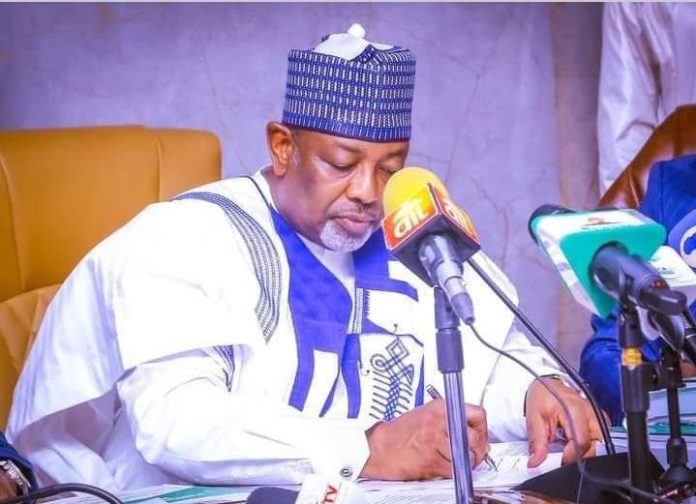

The Federal Government has said the country will soon overcome its present food shortage and inflation, which has reached 40 per cent, according to data from the National Bureau of Statistics.
The Minister of Agriculture and Food Security, Abubakar Kyari, stated this on Sunday during an interview on Channels Television’s Sunday Politics.
Kyari revealed that the Bola Tinubu government has measures in place to address the present food inflation and increase food production in the country, saying that the country is expecting a bumper harvest before year-end.
The minister added that some of the reasons for the acute food shortage in the country are seasonal reasons, reduced landmass, flooding, and others.
He said, “It [bumper harvest] is about October-November this year. That’s when we are going to have the harvest. We are expecting a bumper harvest barring any natural issues. Well, I am just giving you the assurance that we will have a bumper harvest.
“The season we have here is a critical issue we have in agriculture. This is what we call the lean season, and this is between June and July and the next harvest.
“The shrinkage of land mass for agric, flooding, habitation problems, and insecurity…An ageing farming population; younger people are not going into agriculture now.”
Kyari said the federal government is further ramping up moves for mechanised farming with the distribution of fertilizers to farmers and efforts to purchase tractors.
He added, “We have ordered. It’s not like chewing gum; you can’t buy it off the shelf. I went to Belarus and ordered 200 tractors and 9,000 other implements,” the minister said on the current affairs show.
“The basic implement for farming in Nigeria is a hoe, which is archaic and antique. That’s why we are talking mechanisation.”
Protesters occupy Kaduna, insist Tinubu must step down
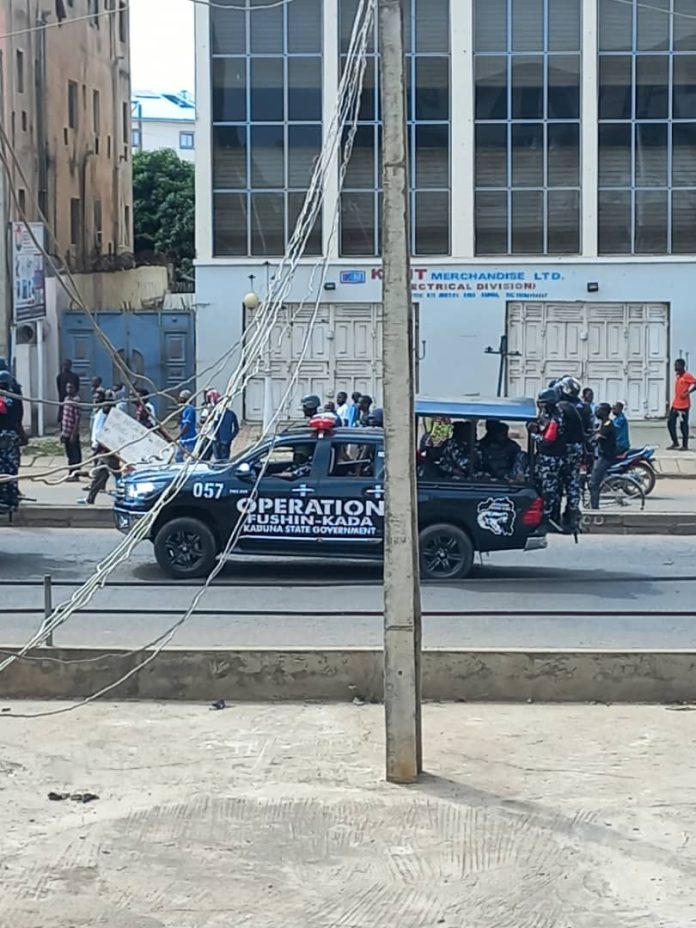
A large crowd of protesters, supported by various groups from different parts of the Kaduna metropolis, has demanded President Bola Tinubu step down from office.
The protesters, observed by The According, initially assembled at the Stadium Roundabout within the Kaduna metropolis.

The large protest procession began at 10:15 am on Monday, marching along Junction Road towards Ahmadu Bello Road, chanting, “Tinubu ze soka’ kaa’sa,” loosely translating to “Tinubu must step down.”
Our correspondent witnessed the protesters sharing banners, flags in Nigerian green-white-green colours, and placards bearing inscriptions such as “#End Hunger in Nigeria.” They gathered around the Stadium Roundabout before commencing their march.
The protesters, insisting that President Tinubu must step down, hailed every military van they encountered, shouting, jumping, and chanting, “Tinubu yaa’so’ka, mu’na so soja,” meaning “Tinubu step down, we want soldiers.”

Approximately six police vans carrying anti-riot policemen were seen blaring sirens as they drove around the metropolis to manage the swelling crowd of protesters. Additional security agents stood guard at strategic points on Ahmadu Bello Road to the Central Market.
As the protest progressed at 10:45 am, more protesters joined the group, coming from areas such as Constitution Road, Saudana Crescent, Katuru Road, Offa Road, and Abuja Road within the Kaduna metropolis, increasing the crowd heading towards the Central Market.

A few protesters were flying a flag resembling the Russian flag.
The protesters chanted in Hausa, “Bama so,” meaning “We don’t want hunger.”
A more desperate faction of the group was seen burning and tearing the Nigerian flag.
Although the police detachments manning different parts of the city made efforts to calm the protesters and urged them to vacate the roads, the adamant protesters insisted on heading to the Government House. This move agitated the security personnel, who hurriedly called for reinforcements as the protesters’ ranks continued to swell.
Hunger protest: Northern Elders Forum faults Tinubu’s address
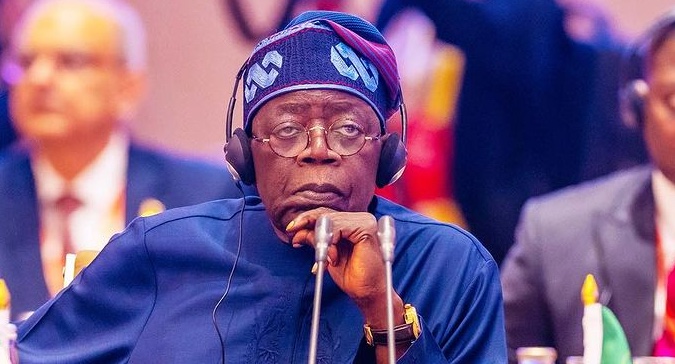
The Northern Elders Forum (NEF), has expressed concern over President Bola Tinubu’s national address on the ongoing hunger protests.
The NEF said the President was silent on the severe security situation in the North-West and other parts of the North.
In a statement released on Monday by its Director of Publicity and Advocacy, Abdul-Azeez Suleiman, the NEF lamented the escalating issues of banditry, kidnapping, rape and other criminal activities in the region that have caused widespread fear and insecurity.
The Forum equally noted that there are challenges in policing northern communities, where criminal elements continue to cause harm, resulting in abandoned farmlands, closed schools and destroyed livelihoods.
The NEF expressed disappointment that the President’s speech did not address these pressing issues or offer reassurance to affected communities.
It regretted that despite choosing not to comment on the ongoing protests in the country — thereby remaining committed to peace and national stability — the Forum had hoped for the President’s acknowledgment of the North-West’s struggles and other affected regions.
“They anticipated words of encouragement and an assurance of concrete steps being taken to alleviate the security challenges faced by these communities. The NEF had high hopes for the President’s speech, expecting that he would address the dire humanitarian disaster that criminal activities have brought upon our nation.”
According to the NEF, the scale of the crisis is immense, with millions of the citizens displaced internally, and hundreds of thousands of orphans facing hunger and malnourishment. The Forum described the challenges as new and alarming realities that were previously unknown in the land.
The Forum added that it is essential that the magnitude of the challenge is not underestimated, and expressed the belief that dealing with the humanitarian disaster in the North will require a level of political will and administrative competence that goes beyond what is needed to defeat criminal gangs.
It added, “The simultaneous challenges of combating insurgency and banditry, rehabilitating IDPs, and rebuilding lives, communities, and infrastructure must all be top priorities for the government. We expected the President to acknowledge the gravity of the situation and outline concrete plans for addressing these critical issues.”
The group opined that the focus should have been on finding sustainable solutions to the crisis, prioritizing the needs of the affected communities, and ensuring that necessary resources are allocated to support them.
The Northern elders in the same vein pointed out that it is vital that the government demonstrates a strong commitment to addressing the humanitarian disaster and shows that it has the capability to lead the nation through challenging times.
Hunger protest: Northern Elders Forum faults Tinubu’s address
