Home Blog Page 559

What you should know before investing in bank shares

0
Learn Africa creates over 96 million additional shares

DAMILOLA AINA explores the essential factors to consider when investing in bank shares and the pitfalls to avoid

The Nigerian banking sector has recently become a focal point for investment, largely due to a new directive issued by the Central Bank of Nigeria, mandating an increase in the minimum capital base for banks.

As a result, 26 banks are actively engaged in the capital markets and other investment platforms, seeking to raise funds to strengthen their financial stability and resilience.

This initiative is designed to bolster the sector’s ability to support economic growth, enhance its robustness against financial shocks, and ultimately contribute to a more stable and dynamic economic environment.

In late March, the Central Bank of Nigeria directed deposit money banks to recapitalise. The apex bank directed commercial banks with international authorisation to increase their capital base to N500bn and national banks to N200bn while those with regional authorisation are expected to achieve a N50bn capital floor.

Similarly, non-interest banks with national and regional authorisations will need to increase their capital to N20bn and N10bn, respectively.

According to the CBN circular, only the share capital and share premium items on the shareholder fund portion of the balance sheet will be recognised in this particular round of recapitalisation.

The apex bank circular said the banks must meet the minimum capital requirement within 24 months commencing from April 1, 2024, and terminating on March 31, 2026, using the options of raising additional capital, mergers and acquisitions, and license change.

Currently, five major banks are on course to raise N1.36tn in the capital market. Zenith Bank has commenced plans to raise about N290bn in fresh capital, which is higher than the N230bn it needs to meet the fresh recapitalisation mandate of the CBN.

Fidelity Bank has also expanded the scope of the bank’s capital raising from its initial target of N127.1bn to N205.45bn.

Access Holdings is raising N351bn from existing shareholders, while Guaranty Trust Holding Company is seeking N400.5bn from the public.

While FCMB Group has launched its public offer seeking to raise N110.9bn additional capital through the issuance of 15.197bn shares at N7.30 per share. More banks are still expected to enter this market to raise funds.

The Group Chief Executive Officer, FCMB Group, Ladi Balogun, during its “Facts Behind the Offer” presentation at the Nigerian Exchange, noted that in addition to its public offer, the Group has adopted a three-phased approach to raise up to N397bn additional capital to drive its diversification plans, including incorporating a Technology Holding Company by 2026.

Under the ongoing recapitalisation, the CBN is using a distinctive definition of minimum capital as an addition of share capital and share premium, rather than the entirety of shareholders’ funds used under the 2004 recapitalisation.

With the distinctive definition, nearly all banks need to raise funds to retain their banking license.

While banks have employed a range of strategies, including collaborating with social media influencers, to attract potential investors to buy shares, customers should be mindful that their investment choices can result in either profit in the form of dividends or significant losses. Therefore, it is crucial for investors to carefully evaluate their options and make informed decisions about where to invest their money.

In separate interviews with our correspondent, financial experts advised that patience is a key trait for any potential investor. They emphasized the importance of carefully evaluating all options and taking the time to make a well-informed decision before investing.

They emphasised that customers should also closely examine various indices and metrics before making any investment decisions.

CaR ratio

This includes assessing the banks’ capital adequacy ratios, which evaluate the bank’s capital relative to its risk-weighted assets. A higher capital adequacy ratio signifies a stronger capacity to absorb potential losses, indicating a more stable and secure investment.

Assets

Also, evaluate the quality of the bank’s assets, particularly their loan portfolios. High levels of non-performing loans can indicate potential risk and stay informed about regulatory changes and government policies such as the windfall tax, which has set the market on a run of negative ratings. These changes can impact the banking sector’s stability and profitability.

Return on equity

Each bank’s profitability metrics, such as return on equity and return on assets, provide insights into the bank’s operational efficiency and profitability. Similarly, analyse the bank’s dividend policies. Changes in dividend payouts can indicate the bank’s financial health and its ability to generate cash flow.

Funding sources

Other important indices to consider include funding sources, as a diversified and stable funding base can help mitigate risks associated with market volatility. Additionally, evaluating management quality is crucial, as strong leadership can drive a bank’s performance and strategic direction.

Investors should also assess the bank’s market position and competitive advantages; banks with robust market positions are generally better equipped to attract both capital and customers, enhancing their overall stability and growth potential.

Pitfalls to avoid

One pitfall to avoid is investing in banks that are likely to be involved in mergers and acquisitions. While these activities can create synergies and improve market presence, they may also introduce uncertainties and risks that could affect investor returns. It is important to carefully consider the potential impacts of such strategic moves on the bank’s performance and overall stability before making an investment decision.

Don’t take your eyes off economic data

Likewise, it is important to monitor the broader economic environment, such as interest rates, inflation, and economic growth, as these factors can greatly affect the performance of the banking sector during recapitalisation.

Don’t overlook the status

Speaking further, the former President of the Chartered Institute of Bankers of Nigeria and professor of Economics, Prof. Segun Ajibola, affirmed that it is generally better to invest in tier-one banks because these institutions are considered more stable and less likely to experience sudden, adverse events.

He explained that some banks, despite not being among the largest, have demonstrated strong performance over time. By examining their track records, investors can see that these banks have consistently performed well. These factors can help investors decide to choose shares from such banks based on their solid performance history.

Ajibola said in a telephone interview, “Ordinarily, it is safer to deal with tier-one banks. These tier-one banks are the big banks around. That one can at least place some trust in their shares. So, investing in them, one can be sure.

“Nothing untoward can happen to them that fast. So, then, to a fair extent, those who are categorized under tier two, because tier one, it is almost certain that they will meet the new capitalisation base.

“Tier 2, some of them should be able to, but Tier 3 is a risk. Secondly, invest in banks that have broad ownership. Wema Bank, for example, is not a big bank but has very broad ownership. And some other banks like that, that their ownership is a bit broad and cannot liquidate anyhow.

“Thirdly, you have to check the performance of the banks over the years, over the period.”

Management structure

According to the don, intending investors should not invest heavily in a bank where ownership is in the hands of very few people, and their scope of operation is not that broad.

“You cannot compare a regional bank with an international bank. What has been their performance over the years? Does the bank pay dividends regularly? Is it a bank with appreciating shares? It’s always better to buy shares and stocks of listed companies,” he noted.

Furthermore, the Chief Executive Officer of Cowry Treasurers Limited, Charles Sanni, told The According that value was a key index premised on earnings per shareholder or dividends per shareholder in the past period.

Records

“You are to look at their track records, which include their financial performance and their market opportunities. It should be such that you are seeing an upside that is based on the forecast that the banks have or you are seeing the value that would come to you obviously as a shareholder, because what it means is that either you are increasing your stake or taking a fresh stake in entities.

“Therefore, value is what you should be going for and this is what you would see from either their earnings per shareholder or dividends per shareholder in the past period. Also, that you having good earnings doesn’t translate to the fact that it would be distributed, so potential investors have to check what their dividend payout ratio is like,” he explained.

Corporate governance structure

According to Sanni, customers must look at the corporate governance culture of the entity.

“What is it like, I know that they are all under the central bank’s supervision. But you can see that these guys are up there in terms of their corporate governance. That gives you a sort of confidence that the funds or capital being raised are not going to just fickle away.

“That takes me to the fact that you have to look at their non-performing loan portfolio to see what it looks like. What is the provision for those types of loans? Those are just the things you have to look at.

“You also have to look at the loan-to-deposit ratio. So, if it’s very high, the higher the risk, the higher the return, so you need to be able to balance that,” he counselled.

On his part, the Director of Research and Strategy at Chapel Hill Denham, Tajudeen Ibrahim, stated, “I believe that investors should be aware that investment in equities is a variable income instrument, which means the value of investment can reduce over time, and it is against this backdrop, investors have to speak to professionals to know which of the banks are good investments for them.

“Importantly, investors should be enlightened in their investment arrangements when they want to invest in equities, and those include offers currently in the market.”
Delta community celebrates granting of autonomy by court

0
Delta Chief Judge reviews 215 cases in Kwale Correctional Centre

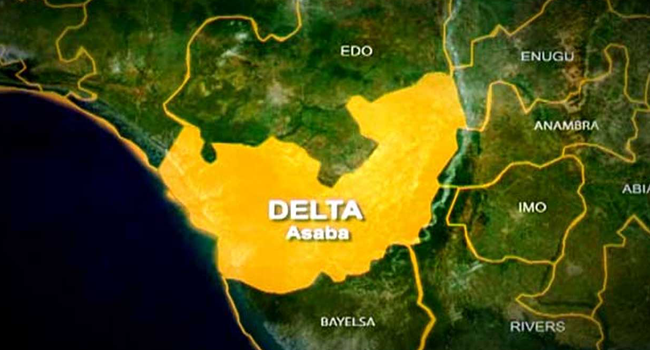
It has been celebration galore in Egrangbene community in Burutu Local Government Area of Delta State, following a judicial declaration that granted the community autonomy to install its king.

Sons and daughters of the community on Tuesday gathered in celebration at the community’s town hall, rejoicing over the judgment delivered by the Delta State High Court, sitting in Bomadi Judicial Division, which declared Egrangbene as “an autonomous community that is distinct and separate from Oporomor clan/kingdom.”

The court presided over by Hon. Justice S. O. Adolor, delivered the judgment on July 22, 2024, in Suit No: HCB/16/202.

Justice Adolor, while delivering the judgment had partly declared, “I am in agreement that the claimants are entitled to have their king and in their kingdom distinct from Oporomor clan.”

With the court judgment, the people of Egrangbene federated communities, which comprise Egrangbene, Abadiama, Ekumugbene, Ekogbene, Ekolegbene and Ebeberegbene communities said, “It is a sweet victory for the community.”

Some of the community leaders including High Chief Etare Lucky Yoweibo, Mr. Globemi Allele and Mr. Kofi Kobuyou, stated in reaction to the judgment that “the court has proven that indeed, it’s the last hope of the common man.”

The people of Egrangbene further announced that they are “now set to have their own Pere (king) in the person of Henry Ambakaderemo Okrikpa.”

A statement jointly issued by the community leaders, copies of which were made available to journalists in Warri on Tuesday partly reads, “The elders, leaders, men women and youth of Egrangbene federated communities are hereby calling on His Excellency, Rt. Hon. Sheriff Oborevwori to quickly look into our prayers as granted by the Delta State High Court sitting in Bomadi, by giving a directive to the Ministry of Chieftaincy Affairs to gazette our designated monarch in the person of Pere, Henry Ambakaderemo Okirikpa, to be installed as elected king of Egrangbene federated communities in no distant time.”

South-South According correspondent gathered that High Chief Etare Lucky Yoweibo, Mr Globemi Allele, Chief Oboye, Omonibeke, Mr Christopher, Mr Daniel Egberonamene and Mr Kofi Kobuyou had, through their lawyers – Chinyere.C. Ndoala Esq. (Mrs.) and Mr Owen Nanakumoh Esq. – approached the High Court on behalf of the people of Egrangbene federated communities and their associated towns.

Their prayers included “a declaration that Egrangbene community in Burutu Local Government Area of Delta State is an autonomous community distinct and separate from all other communities in Burutu Local Government Area of Delta State, including Oporomor clan/kingdom.”

The claimants commenced the suit against the defendants vide a writ of summons signed by Prof. Osaretin.G. Izevbuwa, filed on 23/5/2022.

Other prayers from the claimants comprised “a declaration that Egrangbene federated community as an autonomous community distinct and separate from Oporomor clan/kingdom with its peculiar traditions and customs is entitled to its king/traditional ruler to act as the custodian and administrator of its distinct customs and tradition.

“An order of perpetual injunction, restraining the defendants jointly and severally from initiating/continuing the process for the nomination, election and installation of a new king for Oporomor kingdom following the demise of HRH Capt Samuel Evah Rtd with the inclusion of the people of Egrangbene community or any of its federated communities.”

But the defendants, Hon. Felix Okpora, J.O. Seiba, Benjamin Oroso (for themselves and on behalf of the Ojobo community), Otiki Bekekeme, Akeme Afido, Appolos Oroso (for themselves and on behalf of Bubu-Ojobo community), Felix Gbadiakumor, Francis Mounzimor, Opena Esamasuode (for themselves and on behalf of Akorugbene community), Yeipegha Onuama, Biri Ebi and Samuel Tamaraumienyefa (for themselves and on behalf of the people of Ndoro community) had joined issues with the claimants with their statements of defence through their counsels, Chief Benjamin Fankoro Yeigagha Esq and Anthony Riasavwe Esq respectively.

The matter eventually went into trial and both parties legally slugged it out, but the trial judge, Hon. Justice Adolor resolved the matter with the judgement that “the claimants are entitled to have their king and in their kingdom distinct from Oporomor clan.”

MTN, IHS Nigeria extend tower lease agreements to 2032

0
MTN

IHS Nigeria, a subsidiary of IHS Holding Limited, and MTN Nigeria have announced the renewal and extension of their Nigerian tower Master Lease Agreements until December 2032.

The agreement, according to a statement on Wednesday, covers approximately 13,500 tenancy contracts, with the renewal including around 2,500 MTN Nigeria tenancies that were set to expire at the end of 2024 and in 2025.

Under the new terms, IHS Towers, one of the largest independent owners, operators, and developers of shared communications infrastructure, will renew 1,430 tenancies, including new collocations.

According to the firm, the updated contracts feature new financial terms, providing a more sustainable balance between local and foreign currency, as well as a diesel-linked component.

MTN
MTN

IHS noted that this arrangement underscored the importance of its infrastructure and the robust operational relationship with MTN Nigeria, which boasts approximately 79 million subscribers.

“Under the new terms, there is a dollar component that will continue to benefit from annual escalators linked to the US Consumer Price Index, a naira component that will benefit from escalators linked to the Nigerian Consumer Price Index, and a new component indexed to the cost of providing diesel power, introduced to act as a hedge against diesel prices and FX fluctuations,” the statement highlighted.

The Chairman and CEO, IHS Towers, Sam Darwish, said, “We are delighted to announce the renewal and extension of our agreement with our largest customer, MTN Nigeria.

“This marks a significant milestone for IHS Towers as it has completed the renewal of all tower MLA’s in Nigeria, a testament to the deepened relationship between the two companies.

“We are cognizant of the challenges faced in emerging markets and are proud to extend our relationship into the next decade, working together to navigate global and local macro conditions while broadening mobile connectivity in Nigeria through our critical infrastructure,” Darwish remarked.

Abductors free slain Katsina varsity lecturer’s children

0
Abductors free slain Katsina varsity lecturer’s children

Terrorists have released the two abducted children of the slain lecturer of the Federal University Dutsinma, Katsina State, the late Dr. Tiri Gyang, after spending about 37 days in their den.

Gyang was killed by terrorists at his residence in Dutsinma while his two children were kidnapped by the hoodlums, According Metro learnt.

Our correspondent learnt that the terrorists had earlier demanded an N20m ransom to release the children. However, it was not clear whether the exact amount was paid to secure their release.

According to a source, who spoke on the condition of anonymity because he was not permitted to speak with the media, after the ransom was paid, the terrorists released the younger son, Caleb, then demanded two motorcycles and N200,000 mobile recharge cards to release the eldest one, Derrick, on Sunday.

It was also learnt that the slain lecturer’s remains would soon be committed to earth following the release of his children.

In a related development, Mallam Garba Funtua, the father of the female student, Aishab Garba, who was kidnapped alongside Gyang’s children, who himself took the demanded ransom to the terrorists to free his daughter, had also been held by the hoodlums.

The terrorists however released the daughter, Aisha, after collecting the ransom but later killed the father, Funtua.

According Metro learnt from one of the late Funtua’s sons on his official social media, Facebook, that his father was killed by the bandits after paying a N2 million ransom for Aisha’s release.

He explained that the hoodlums held their father captive and demanded an additional N5m, unknown to them he had been killed 17 days earlier, a day after they took him captive.

“It is with total submission to the will of Allah (SWT) that I announce the death of my father, Alh. Abubakar Funtua. He was killed by the bandits that kidnapped my sister last month. Jana’iza holds 5/08/2024, at his residence in Gangaren Tasaulawa, Funtua by 9 a.m., Insha Allah. Please pray for his soul”, part of Garba’s Facebook post read.

However, no official statement from the relevant authorities on the development.

According Metro had earlier reported that terrorists stormed the residence of the Gyang and launched their heinous mayhem in the early hours of Tuesday, July 2, 2024. Until his demise, he was the Head of the Department of Agricultural Economics, Extension, and Rural Development at the institution.

Nasarawa deploys health workers as five die of strange disease

0
Nasarawa deploys health workers as five die of strange disease

The Nasarawa State Government has deployed health workers following the death of five children within 24 hours in the Gidinye community of Obi Local Government Area of Nasarawa State.

Gidinye, one of the communities in the Jenkwe Development Area of the local government area, houses thousands of able-bodied men and women including children.

Findings by According Metro on Wednesday revealed that the children, who were between the ages of five and 15, died after complaining of stomach aches, vomiting, and purging on Monday and Tuesday.

Confirming the incident in Lafia on Wednesday, the State Epidemiologist, Dr Grace Tsakpa, said healthcare workers had been deployed to the community to take samples of the surviving family members.

While noting that the results from the samples collected had yet to be released, Tsakpa explained that from her observations, the cause of their deaths could be related to food poisoning because the ailments started immediately after they finished eating their meal on the farm.

She said, “For now, we have taken samples from the other family members, but our suspicion is going towards food poisoning. This is because the incident happened after they ate food at the farm.

“The five children belong to two brothers. The family (parents and children) went to the farm, cooked there, and ate. It was on the farm that one of the children started complaining of abdominal pains, and he later died. The other four children also died after developing symptoms.”

The state epidemiologist further commiserated with the families for the untimely death of their children and assured them that she and her team would leave no stone unturned to unravel the actual cause of the children’s death.

Speaking to our correspondent on the incident, the Publicity Secretary of the Migili Youth Association, Samuel Akala, said the children had left home alongside their parents to their farms close to the Keana Local Government Area when they suddenly fell ill.

He appealed to the Nasarawa State Government and all the relevant authorities to swiftly look into the matter to contain the situation and save the lives of other children in the area.

He said, “We lost the five children in less than 24 hours in the same community. The children left home for the farm. While on the farm, one of them started complaining of stomach ache and started vomiting and purging at the same time.

“Within a short time, he began to have difficulty with his breathing, and when he was rushed home, he died. The other children had similar symptoms and died.

“The case is still on the increase and we have yet to discover the cause of their deaths.”

He said the circumstances that resulted in the sudden death of the children called for forensic findings and suggested that the Centre for Disease Control and the Primary Healthcare Development Agency should be invited to carry out disease surveillance in communities around Obi and Keana LGAs where there were reported cases of acute diarrhoea, vomiting, and death of children in the past few days.

While emphasising that the community was interested in knowing the actual causes of the untimely death of the five children, Akala appealed to the authorities to make haste in finding a solution to the matter to prevent the unknown disease from affecting a wide range of the populations in the area.

Muhammad wants Usman for UFC title defence

0
Muhammad wants Usman for UFC title defence

Belal Muhammad, the newly crowned UFC welterweight champion, has set his sights on a potential bout with former champion Kamaru Usman for his first title defense.

Muhammad, who recently defeated Leon Edwards at UFC 304 to claim the championship, has expressed his eagerness to defend his title promptly, a contrast to many fighters who often take a hiatus after reaching the pinnacle.

Muhammad attended UFC Abu Dhabi this past weekend and, reflecting on his victory in Manchester, mentioned two possible contenders for his first defense.

“Any of them, right? Usman, obviously, I think for legacy,” Muhammad said.

“He’s one of the biggest names in the division; he’s under GSP, and I think he’s still got a treat in the tires, even though he lost the close fight to Leon and then the really close fight to Khamzat.”

Despite Usman’s recent losses, Muhammad acknowledges his name value and legacy in the division saying, “I think name value; he has the bigger name. But I also want to fight the boogeyman,”

“The boogeyman that everybody says can beat anybody is gonna walk through anybody… I knew after beating Leon; they would say, ‘Well, Shavkat will walk through him.’ He can’t do that to Shavkat!’ I’m just gonna keep doing it… Dana White, you have to give me the time and the date, and I’m ready to go.”

I don’t have to answer critics — Dessers

0
I don’t have to answer critics — Dessers

Cyriel Dessers says he does “not have to answer” his critics after scoring what could prove to be a pivotal equaliser in Rangers’ pursuit of the Champions League group stage.

Despite scoring 22 goals in his debut campaign at Ibrox, the Nigeria forward has been a much-maligned figure during his time in Scotland.

That theme was carried into the start of this season as the 29-year-old missed chances in Saturday’s goalless draw with Heart of Midlothian and then in Tuesday’s Champions League first-leg qualifying tie with Dynamo Kyiv.

But Dessers kept a cool head to net a 94th-minute leveller in Lublin and reacted to the dramatic finale by saying, “It would be nice to get more recognition.”.”As a striker, you have to believe,” he told BBC Scotland. “Even if it is an impossible ball or you don’t think it will fall.

“I knew it was the last ball into the box in the game, and that was the case. I was happy to be at the end of it.”I don’t have to answer people; I’m just doing my job for the team, for the manager, and for myself. That’s the only thing that matters.

“It would be nice to get more recognition for what you do, but I get the recognition inside the building, and that’s the most important thing.”

Dessers recognises “there are always reactions from the media” and a “small part” of the support, but the striker feels “a lot of love” from a “bigger part” of the fanbase.There have been calls for Philippe Clement to find an upgrade on the Nigerian if he is to guide the Ibrox side to a Scottish Premiership title.

Meanwhile, Nigeria teammate Leon Balogun has jumped to the defence of the striker, backing him to deliver this season.

“What do you mean by how confident I am of him? I think he’s scored quite a number of goals for us already, and the season just started last weekend,” Balogun said, per Rangers TV.

“I looked at him last season, and I think he scored quite a significant number of goals, so I am confident.”

Scaling Nigeria’s utility solar and energy storage

0
#EndBadGovernance and danger of misplaced anger

With the amount of abundant– yet untapped – renewable energy resources Nigeria is blessed with, we are not supposed to have any business with energy poverty and the attendant economic backwardness that comes with it. We should not even be counted among the other developing nations who often face obstacles of poor infrastructure, high levels of poverty, weak power transmission and distribution networks, which naturally lead to an inability to adapt to climate change or embark on an equitable just transition for its citizens. But, the sad situation is that we are the chief culprit and undisputed band leader.

According to the International Energy Agency in a 2022 report, over 140 million people do not have access to energy in Nigeria, which is about 71 per cent of the country’s population. When we talk about energy access, we refer to people’s ability to access modern energy services, including electricity, clean cooking facilities, and modern fuels. Consequently, energy inaccessibility has significant negative impacts on health, education, and economic development.

One, therefore, cannot help but imagine what our society is going through today. If we had it rough when the fuel pump price was lower, then the citizens must be gasping for air at the moment. In other words, the indices would be showing red now that the removal of subsidy on petrol is our present reality. Electricity is out of reach too. Do not be deceived by the so-called “Band A-only tariff hike.” I, for one, have been lumped into the exorbitant band, yet the power supply got even worse. I believe if the IEA carries out a fresh study, it will be discovered the country’s access-to-energy index has sunk deeper than it was some two years ago.

To be sure, the consequence of this abysmal relapse may not be fully manifest until some years in the future. Many of the households that used to depend on the popular ‘I pass my neighbour’ generator for domestic power can no longer afford it today. Small businesses are now struggling, juggling the cost of going forward with meagre margins and the risk of losing customers gained over the years. Everybody is anxious about what tomorrow holds. It has dawned on all of us that petrol is actually at the heart of the Nigerian commercial engine because we are basically an informal sector-driven economy.

But, I digress.  My objective for today’s piece is to examine the possibilities of scaling up Nigeria’s utility solar, with its naturally linked energy storage infrastructure. Utility-scale solar refers to large photovoltaic or concentrating solar power systems capable of generating at least one megawatt of electricity – enough power for about 250 homes.

These large solar installations are designed to feed power directly onto the electric grid. They are built by developers who sign long-term contracts called power purchase agreements with utility companies in their areas. Before now, you can count such locally installed utility solar projects on your fingers. But with the Nigerian Electricity Act of 2023, which has devolved powers to state governments and individual players, one can only hope that more developers come on stream.

Considering that the Nigerian government has signed the Paris Climate Pact, and is therefore set for a net-zero carbon future, we cannot shy away from deploying renewable energy as a substantial portion of the country’s energy mix. Solar energy always enjoys a major space in this basket. According to a report titled Renewable Energy Road Map for Nigeria developed by the Energy Commission of Nigeria and the International Renewable Energy Agency, under current and planned policies, Nigeria’s utility-scale solar system can offer 5GW and 25GW by 2030 and 2050 respectively. The green vision is known as 30:30:30 – that is, looking at deploying 30GW of power by 2030, of which 30 per cent should come from renewable energy sources.

However, I am afraid that without an aggressive push by both private and public sector players to drive the solar power engine, we may find ourselves where the oil and gas sector is today – moving with haste but gathering no speed. The government must show the world that we are ready to do green business. When I say the government, I mean, the state governments. The Federal Government has no shoulder to carry all of us on this green power journey. Therefore, the state governments must take up the gauntlet. For instance, the Abia State Government – Geometric Power partnership should be replicated on the green side of power supply.

A few months ago, the Federal Government, with Chinese partners, commissioned a 300KWp solar pilot project, including a battery energy storage system in Niger State. The project has a 675kWh battery, which is an integral part of the extension of 1G3 and 1G4 under the rehabilitation of the 1G9 in the Kainji Hydro Power Plants project. The concessionaire, Mainstream Energy Solution’s Managing Director, Lamu Audu, said the plan is at an advanced stage and aims to build 450MWp and 150MWp Solar PV at Kainji and Jebba HPPs. This is the kind of distributed energy resources project that would broaden the green horizon for the country’s energy sector. But it only scratches the surface.

I came across a paper entitled Mobilising Investments for Clean Energy in Nigeria prepared by the Renewable Energy and Energy Efficiency Associations Alliance and the World Economic Forum with support from Marsh, which took an in-depth study of the Nigerian energy sector, and made valid suggestions for the survival of the industry. In developing the report, the working group carried out a country context risk analysis that shows Nigeria’s biggest risks in scaling the sector are complications with currency convertibility, financing structures, the availability and affordability of technology supply and technical know-how in the renewable energy sectors. These risks negatively affect the growth of the sector. As such, developing financial and technical assistance solutions are key to stimulating the sector’s growth.

Nigeria’s power sector challenges are well known. In fact, it looks like a resident evil that never leaves our shores. With an installed capacity of 12,500MW but a paltry actual power generation output of about 4000MW, we struggle with incessant power grid collapses caused by obsolete power infrastructure. Yet, it became obvious that the privatisation of the power sector was shoddy. Licences were put in the hands of businessmen who didn’t have the financial and technological muscle to upgrade and revitalise the sector. Instead of bringing in their own money, they still looked up to the government that gave them the task.

The rise in diesel, and now, petrol prices, should be positive for the renewable energy industry, and therefore drive up investments. Ironically, it is not. Among the Nigerian citizenry, there is no disposable income to make such green power purchase plans. Families are struggling to feed, while businesses are floundering like fish out of water. The whole economic landscape oozes despair and stagnation. To put it in another way, despite the fact that the motivation for investing in renewable energy, potentially combined with battery storage, as a replacement for diesel and fuel generators, is now manifestly clear; struggling potential customers simply cannot afford the upfront cost.

It is this bleak picture that international investors see when they consider putting down their money in the country’s green sector. Therefore, I am of the opinion that instead of just sitting and waiting for foreign investments, the federal and state governments should incentivise the green energy sector. The Central Bank of Nigeria should direct Nigerian banks to commence active green banking, not only for the benefit of solar/green energy entrepreneurs, but the average Nigerian consumer who needs credit facilities to set up alternative energy systems at home.

Iheanacho eager to reunite with Navas

0
Iheanacho eager to reunite with Navas

Nigeria international Kelechi Iheanacho says he can’t wait to play alongside former Manchester City teammate Jesus Navas at Sevilla, According Sports Extra reports.

Sevilla announced the signing of the 27-year-old, signing a two-year deal with the Andalusian club on a free transfer following the expiration of his contract with Leicester City at the end of last season.

Iheanacho spent two seasons at Manchester City with Navas, but both players left the Cityzens in 2017, with the 38-year-old Spaniard rejoining his boyhood club, while Iheanacho moved to the East Midlands, England.

The duo is now set to reunite at the Ramon Sanchez-Pizjuan Stadium for the 2024/25 season, and Iheanacho said he was eager to play with the Spaniard.

“Jesus is a legend here. He is an incredible person with a great personality. I’ve known him for a long time. He’s a fantastic leader. He has won many trophies in Sevilla’s history, and I’m looking forward to playing with him,” Iheanacho said on the club website.

Last season, Iheanacho played majorly fringe roles in the Foxes’ return to the English Premier League, scoring six goals and providing three assists in 26 appearances. He will, however, be handed a major role in Sevilla, with Youssef En-Nesyri departing the club.

But Iheanacho stated that he was focused on winning trophies with the club.

“As a player, obviously scoring goals would be great, but the most important thing is to play and win as a team. The most important thing is to win trophies, achieve aims, and have great success,” he added.

Iheanacho could make his La Liga debut in their first game of the 2024/25 campaign against Las Palmas on Friday, August 16.

‘Osimhen won’t take pay cut to join Chelsea’

0
PSG seek further slash in Osimhen price

Football transfer expert Fabrizio Romano has confidently stated that Victor Osimhen will not take a pay cut to facilitate his move to Chelsea, The According reports.

The Italian hinted that Chelsea’s pursuit of the Napoli striker could allegedly ‘go down to the final week of the transfer window’.

The Blues are in dire need of a striker capable of guaranteeing them goals, and with less than two weeks until the start of the new Premier League season, they have intensified their search.

Chelsea are reportedly closing in on a deal for Atletico Madrid attacker Samu Omorodion, but the London club are also heavily being linked with Osimhen, with the Super Eagles forward said to be ranking prominently on their wish list to lead their line during the 2024/25 campaign.The Nigeria international has emerged as one of the most sought-after strikers in Europe, having been linked with moves to Chelsea, Arsenal, Paris Saint-Germain, Manchester United, and Liverpool, among others.

However, his hefty €130m release clause has scared off many suitors, with PSG the only European club still keen on signing him.

There has been talk of a potential swap deal involving Romelu Lukaku, as Chelsea are unlikely to be in a position to activate the £113m release clause in his Napoli contract.

Osimhen is Serie A’s highest earner at around £325,000 a week. He signed a new contract with Napoli in the latter stages of last year, but he is expected to leave the club before the transfer window closes.According to Romano, Osimhen is not willing to accept a pay cut to move to Stamford Bridge, and a potential transfer for the Nigerian could ‘go down to the final week of the window’.

“Forget about Victor Osimhen taking a pay cut; he won’t reduce his salary. This will be a deal I think will go down to the final week of the window,” Football Transfers quotes Romano on their website.

Osimhen joined Napoli from Lille in the 2020 summer for a club record fee of €70m plus another €10m in bonuses.

The 25-year-old has been in top form for the Parthenopeans for the past two seasons, guiding them to their first Scudetto in over three decades in the 2022/23 season, scoring 26 league goals, which earned him the top scorer award.