Home Blog Page 51

Federal Government Refutes Claims Over Igbo-Excluding History Textbook

0

The contentious “Living History” textbook has apparently garnered criticism for allegedly excluding Igbo content, although the Federal Ministry of Education has denied endorsing it.

The ministry made it clear that no Nigerian school is permitted to use this book.

According to reports, the Federal Government emphasized that “Living History” has never been submitted to the National Educational Research and Development Council (NERDC) for review in a statement released on Tuesday (today) by the ministry’s Director of Press and Public Relations, Boriowo Folasade.

The ministry claims that NERDC is the statutory authority in charge of examining, assessing, and authorizing educational resources that adhere to the national curriculum.

According to the statement, “the book was neither included on the official list of approved History textbooks nor recommended by NERDC.”

The ministry revealed that an examination of officially approved teaching materials and discussions with NERDC leadership verified that “Living History” is not included in the approved textbooks for use in classrooms nationwide.

Parents, educators, school owners, and administrators were asked by the ministry to ignore rumors, false information, and “emotionally charged narratives” about the book.

The use of unauthorized teaching resources could compromise curriculum standards and have a detrimental impact on teaching and learning results, it said.

“All approved textbooks promote inclusivity, balance, and unity while reflecting Nigeria’s rich cultural diversity, shared history, and core national values,” the ministry said, adding that they closely adhere to the national curriculum.

Folasade also urged the public to reject divisive falsehoods, encourage responsible conversation, and confirm educational materials’ approved status through proper channels before using them in classrooms.

For confirmed information about approved textbooks, the public is urged to contact NERDC. The truth is the foundation of education. Understanding fosters unity, the message continued.

I Did Not Distribute Money During 2012 Re-Election’ — Oshiomhole

0

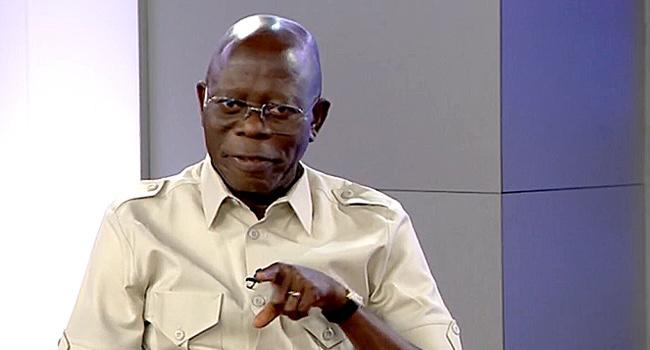
Adams Oshiomhole, the former governor of Edo State, revealed that he did not give money to anyone in order to win his reelection in 2012.

He claimed to have publicly warned voters at the time that he would not stand for vote buying of any kind.

When discussing the delays in Nigeria’s electoral reforms in advance of the general election in 2027, Oshiomhole made the revelation on Monday in an interview on News Central’s Politics HQ.

He warned that vote buying and the manipulation of election results undermine the will of the people.

“I won every one of Edo State’s eighteen local government districts in my 2012 reelection. He answered, “I didn’t give money to anyone.”

He claims that at the time, he publicly informed voters that he would not engage in vote buying.

Instead, I told the voters that if my opponent had money to offer them, they could pick it up without a receipt or reimbursement. Oshiomhole remarked, “I will give you my all in terms of development, but I have no money to give you.”

According to the senator, a key component of democracy is the integrity of elections.

The beauty of democracy, he said, is to have the inner feeling that, out of the two hundred million people in your constituency, you have been selected by the state to use its resources creatively in order to provide the greatest good to the greatest number of people. That is why he believes it is important for people to realize that the worst crime they can commit is to cheat on elections.

Vote buying and results manipulation are already clearly prohibited by current electoral regulations, according to Oshiomhole.

“Vote buying carries consequences. We have allocated funds for it. A presiding officer who knowingly works to subvert the electorate’s will or who willfully alters or destroys the ballot sheet in a way that tilts the results in favor of the loser faces consequences, he said.

He went on to say that fines are not the only punishment.

Oshiomhole stated, “And the penalty is not only monetary, but also a penalty for jail.”

He went on to say that everyone who engages in electoral misconduct faces consequences.

Nigerian Stock Market Opens February on Upbeat Note, Adds N9bn to Market Cap

0

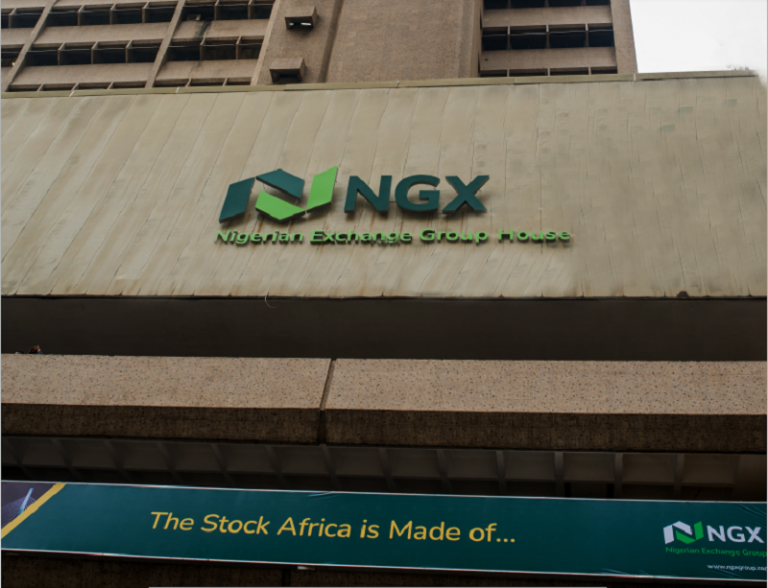
The Nigerian stock market yesterday commenced February 2026 trading activities on a positive note, as the major bench appreciated by 0.01 per cent.

The NGX ASI, or Nigerian Exchange Limited All Share Index, closed at 165,384.64 basis points, up 14.24 basis points, or 0.01 percent. To close at N106.162 trillion, market capitalization also increased by N9 billion.

The NGX Insurance fell by 2%, the NGX Banking Index fell by 0.6%, the NGX Consumer Goods fell by 0.4%, the NGX Industrial Goods fell by 0.1%, and the NGX Oil & Gas increased by 2%, indicating a generally poor sectoral performance.

With 44 falling stocks overshadowing 29 rising stocks, the market’s breadth was bearish. Premier Paints and Universal Insurance recorded the highest price gain of 10 per cent each to close at N11.00 and N1.32 respectively, while Daar Communications followed with a gain of 9.93 per cent to close at N1.55, per share.

R.T. Morison Industries increased 9.91 percent to close at N10.98 per share, while Briscoe (Nigeria) increased 9.92 percent to close at N8.64.

Omatek Ventures, on the other hand, closed at N2.70 per share, 10% ahead of the losing chart. DEAP Capital Management & Trust fell 9.90 percent to close at N8.46 per share, while AXA Mansard fell 9.94 percent to close at N14.31.

C & I Leasing depreciated by 9.80 per cent to close at N6.90, while Royal Exchange declined by 9.63 per cent to close at N1.97, per share.

Additionally, there were 55,374 transactions totaling 762.751 million units, valued at N18.409 billion, a 10.96 percent increase in the total volume traded. Transactions in the shares of Tantalizer topped the activity chart with 88.489 million shares valued at N329.387 million. Zenith Bank followed with 40.188 million shares worth N2.873 billion, while Veritas Kapital Assurance traded 39.211 million shares valued at N92.110 million.

Universal Insurance traded 29.298 million shares valued at N38.074 million, while First HoldCo sold 27.635 million shares worth N1.134 billion.

On market outlook, a group of analysts at United Capital Plc said, “Nigerian equities are likely to trade sideways with sector rotation, as liquidity remains supportive, but investors stay selective, favouring oil & gas and insurance stocks amid profit taking in banking sector stocks.”

Emefiele Followed Buhari’s Order to Print Redesigned Naira Notes Locally — EFCC Witness

0

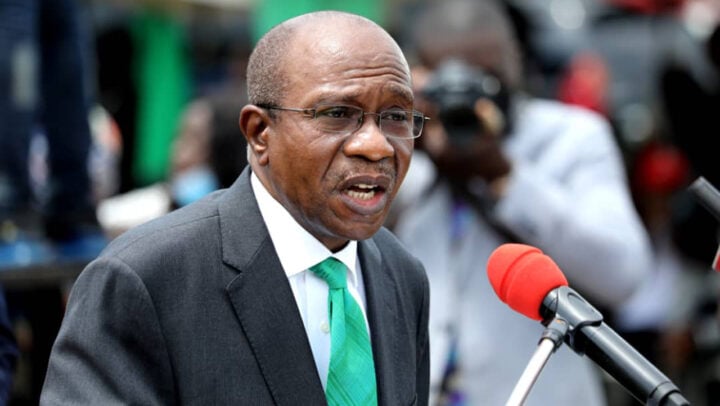
According to a prosecution witness in the ongoing trial of Godwin Emefiele, the immediate former governor of the Central Bank of Nigeria (CBN), the Nigerian Security Printing and Minting Company (NSPMC) produced the redesigned naira notes locally on Tuesday at the Federal Capital Territory (FCT) High Court, following the directive of the late President Muhammadu Buhari.

In front of Justice Maryann Anenih in Maitama, Abuja, Emefiele is being prosecuted by the Economic and Financial Crimes Commission (EFCC) on four counts of violating the law and committing an unlawful act that harms the public.

In the charge, designated CR/264/2024, Emefiele was accused, among other things, of violating Section 19 of the CBN Act between October 19, 2022, and March 5, 2023, by permitting the printing of 375,520,000 pieces of color-swapped N1,000 notes at a total cost of N11,052,068,062 without the CBN Board’s recommendation or the President of the Federal Republic of Nigeria’s strict approval, causing harm to the public.

According to the EFCC, he allegedly committed crimes that were punishable under Section 123 of the Penal Code, Cap. 89 Laws of the Federation, 1990.

He did, however, enter a not guilty plea.

The seventh prosecution witness, PW7, Chinedu Emere, an EFCC investigator, told the court during the case’s resumed hearing on Tuesday that Emefiele had written a memo to former President Buhari on October 6, 2022, requesting permission to redesign, produce, and reissue the redesigned N1,000, N500, N200, and N100 notes while being cross-examined by Emefiele’s attorney, Olalekan Ojo, SAN.

He claimed that in his minute on the memorandum, the former president authorized the redesign of the naira notes but instructed that the notes be produced locally.

“The defendant, Emefiele, requested approval for bank notes that were already redesigned and linked to the memoranda.

“The prior president’s minute was to complete the production. He said, “Approved.” “But to be produced locally,” PW7 stated in court.

He said that the high rate of counterfeiting, the growing scarcity of banknotes in circulation, and public stockpiling of naira notes were some of the reasons Emefiele listed for the redesign policy.

The Nigerian Security Printing and Minting Company, or NSPMC, received bills of settlement from CBN for the creation of the revised notes, the witness continued.

“The Nigerian Security Printing and Minting Company produced the redesigned notes,” the prosecution witness said in response to a question asking the court to confirm whether the naira notes were produced by NSPMC. This complies with the presidential order to produce the Nlnaira notes locally.

He informed the court, however, that although NSPMC produced the notes domestically, a foreign business called De La Rue redesigned them.

He told the judge that in 2023, CBN paid De La Rue in British pounds sterling for the notes’ designing, while it paid NSPMC in naira for the notes’ manufacture.

The witness added that the features in the notes were also products of the foreign company, confirming that De La Rue was the company that initially designed the naira notes that were later redesigned.

He told the court that he could not recall if any of the deputy governors under Emefiele had informed the EFCC investigation team during the course of the investigation whether any Nigerian company had ever created naira notes for the Nigerian government, but that was not the investigation’s main focus.

The witness further stated that Buhari eventually introduced the revised notes, although he was unable to recall whether the former president voiced any objections.

After being assigned, the EFCC investigation team produced an investigative report, he told the court.

In the meantime, Justice Anenih ordered the prosecution to provide the defense with the investigative report in order to support its defense, even though the prosecuting attorney, Rotimi Oyedepo, SAN, objected to Emefiele’s attorney’s request.

The case was then postponed until Tuesday, February 10, 2026.

ADC Sets Out to Change Political Narratives, Inaugurates Policy and Manifesto Committee

0

Ahead of the general elections in 2027, the African Democratic Congress (ADC) has promised to provide people-focused governance based on empathy, pragmatism, and accountability.
This was announced by the party on Monday in Abuja during the Policy and Manifesto Committee’s inauguration, which it called a crucial turning point in its efforts to save Nigeria from escalating socioeconomic suffering.

Speaking at the event, Senator David A. B. Mark, National Chairman of the ADC, stated that the nation was in dire need of a new political narrative that put citizens at the center of governance rather than detached policy experiments.

He said that the inauguration was a calculated move to provide Nigerians legitimate options to what he called “years of ineffective governance,” rather than a standard party ritual.
Families are earning less while working harder. The power supply is still unstable despite rising tariffs, food prices are rising more quickly than wages can keep up, and social and economic life is still disrupted by insecurity, according to Mark.

Although poverty and hardship have always existed in Nigeria, he contended that under the current administration, the extent of suffering has increased due to policies that disregard the everyday reality of the populace.
Mark emphasized that Nigerians are anxious for measures that alleviate their suffering and give them hope; they are no longer interested in political rhetoric, statistics, or blame-shifting.
“Nigerians do not seek out persuasive arguments. He stated, “They want policies and actions that demonstrate that the government is aware of what they are going through and is ready to act with courage, compassion, and clarity.”

According to the former Senate President, Nigeria’s problem is not a lack of ideas but rather a failure to bring them to life. He pointed out that many government initiatives are still merely theoretical endeavors that do not result in better living conditions.

“Reports are written, committees are formed, and documents are produced, but nothing changes in the lives of the people, which is what matters most,” he continued.
Mark questioned the rationality of measures that place greater obligations on citizens without real advantages, citing the elimination of fuel and energy subsidies.
Whether or not people can enhance other aspects of their lives by paying more for food, transportation, gasoline, and power is the true question. “The answer is obviously no,” he stated, adding that the ADC needs to give specific explanations of what it will do differently.

As important areas that need to be tackled comprehensively rather than piecemeal, he named insecurity, food production, healthcare, education, transportation, and job creation.
“Loss of life is only one aspect of insecurity. Mark cautioned, “It is about closed schools, displaced communities, abandoned farms, and a climate of fear that stifles economic activity.”

Additionally, he advocated for internal party protections to prevent the concentration of power in the hands of a select few, stating that no one individual should control the party regardless of their wealth or influence.
“You are here to do more than just make suggestions. “You are here to make sure that every suggestion is realistic and lessens suffering, not just reorganize it,” he informed the committee members.
Dr. John Oyegun, the chairman of the Policy and Manifesto Committee, praised the party leadership for their faith in the committee during his acceptance address. He described the task as both an honor and a significant duty.

The committee will use Mark’s speech as a foundation, Oyegun stated, emphasizing that government under the ADC would not be “business as usual.”
He stated, “You have asked us to create a manifesto and policies that the average Nigerian can relate to and understand how they fit into their everyday lives.”

Despite significant public investment, he criticized decades of governance failures, pointing out that Nigerians are unable to identify a single sector where issues have been significantly fixed.
We cannot claim to have reliable electricity, reasonably priced transportation, or true security with confidence. Oyegun said, “There is a lot of movement and noise, but there is no real improvement in the people’s lives.”

Promising that the ADC will oppose what he called a “contractor-governed system,” the former national chairman of the All Progressives Congress cautioned against the culture where party manifestos are abandoned once power is gained.

Oyegun pledged that the committee would endeavor to guarantee that ADC governments continue to be answerable to the people and do not distance themselves from their electorate.

Former APC Vice Chairman North Hon. Salihu Lukman, former Deputy Governor of Kogi State Hon. Simon Achuba, and members of the party’s National Working Committee were among the committee members in attendance at the inauguration.

NTI Issues 13,710 Certificates to Its Graduates

0

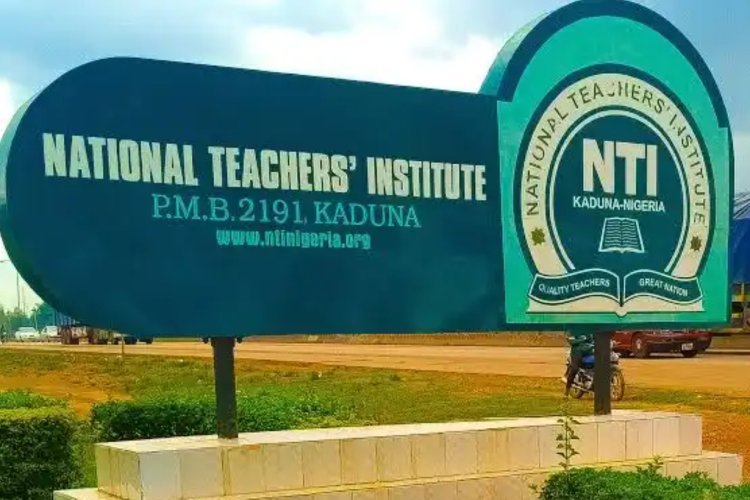
13,710 pending Post-Graduate Diploma in Education (PGDE) and Nigeria Certificate in Education (NCE) certificates have been issued by the National Teachers’ Institute (NTI), Kaduna.

The Institute’s Head of Public Relations and Protocol Unit, Yusha’u Ahmed, made this announcement in a statement to the News Agency of Nigeria (NAN) in Kaduna on Monday.”Therefore, the Institute is calling those concerned to contact its offices in states across the country with the necessary documents and observed procedure for collection,” he stated.Next week, the certificates for the Bachelor Degree programs (BDPs) will also be accessible for pickup.

In association with the National Open University of Nigeria (NOUN), 6,954 PGDE diplomas spanning the years 2013, 2014, 2015, and 2016 had been issued thus far, according to the breakdown provided by the Institute’s Academic Records Division of Registry Department.

Additionally, there are 119 PGDE certificates associated with the University of Ilorin and 445 PGDE certificates for Post-Graduate Diploma in Education associated with Usmanu Danfodiyo University, Sokoto, Ahmed continued.

Additionally, 6,192 NCE certifications for 2023 were issued by the Institute.

Prof. Sadiya Sani-Daura, the director and chief executive of the National Teachers’ Institute in Kaduna, has stated that he is committed to finding a permanent solution to the outstanding certificate issue.

The certificates’ issuance was delayed because of issues that have since been fixed.

“The National Teachers’ Institute in Kaduna is unwavering in its fulfillment of its mission as a teacher education institution and reaffirms its dedication to its clientele, which consists mainly of the Institute’s students.”

Ahmed claims that all parties involved, including students, alumni, and those enrolled in its programs at different levels, are guaranteed by the Institute.

“That it has renewed its responsibility of delivering quality and exceptional education through the distance learning technique and the use of modern technologies as obtained globally in similar institutions around the world,” he went on.

“NTI would like to thank all of the stakeholders for their support and patience,” he continued.

Yilwatda Says Tinubu’s Foreign Trips and Meetings with World Leaders Are Purposeful, Not Ceremonial

0

President Bola Tinubu’s international travels and meetings with world leaders, according to Prof. Nentawe Yilwatda, National Chairman of the All Progressives Congress (APC), are not ceremonial but rather intentional actions that have strengthened Nigeria’s international partnerships and drawn substantial foreign investment into the country.

He went on to say that the president’s interactions with important international allies demonstrate his steadfast dedication to furthering Nigeria’s economic objectives.

President Tinubu has visited important parts of the world since taking office in May 2023, including Africa, Europe, the Middle East, Asia, and the Americas. He has met with leaders and investors in countries like the United States, the United Kingdom, France, Germany, China, India, Saudi Arabia, Qatar, Brazil, and others.

Trade expansion, improved strategic alliances, and economic cooperation have been the main objectives of these missions.

Yilwatda praised Tinubu for his strategic foreign engagements and the progress Nigeria has made via persistent diplomatic and economic outreach in a statement released on Tuesday by his Special Advisor on Media and Communications Strategy, Abimbola Tooki.

“These visits have helped reposition our country on the world stage, yielding tangible benefits that will support long-term prosperity,” he said.

According to the national chairman, Nigeria has already obtained over $50 billion in FDI commitments thanks to President Tinubu’s diplomatic efforts. Major corporations and industries have committed to investments in a variety of fields, including manufacturing, energy, logistics, agriculture, technology, and infrastructure.

Yilwatda also cited recent diplomatic successes, such as the Comprehensive Economic Partnership Agreement with the United Arab Emirates (UAE), which aims to expand investment, trade, and collaboration in vital industries including agriculture and energy.

Yilwatda responded to critics who have called the president’s foreign trips “overdone” or superfluous, saying that such viewpoints show a lack of respect for the administration’s larger reform trajectory and shortsightedness.

“These are not promises on paper,” he declared. These pledges signify actual financial flows, employment prospects, and technological transfers that bolster our economy.

“Those who prioritize expenses over benefits fail to see the wider picture. Under President Tinubu, Nigeria has implemented a bold, strategic, and essential reform program.

“Knowing that the benefits will be felt throughout the economy, we implore all Nigerians to patiently support these efforts.”

Yilwatda emphasized that the president’s ability to carry out reforms—from institutional strengthening to changes in economic policy—demonstrates a strong commitment to improving the Nigerian economy and raising residents’ standards of life.

“Mr. President has demonstrated both the vision and the resolve to see through the reforms this country needs,” he continued. As these diplomatic and economic initiatives start to result in noticeable changes in people’s lives, the moment is not for skepticism but rather for solidarity and helpful support.

Marwa Seeks Nationwide Support for Alternative Development to Curb Illicit Drug Cultivation

0

Brig. Gen. Buba Marwa (rtd), the chairman and chief executive officer of the National Drug Law Enforcement Agency (NDLEA), has urged widespread support for Nigeria’s recently implemented alternative development program and called for a coordinated national response against illicit drug cultivation.

In order to guarantee the initiative’s success, Marwa made the plea during a news conference in Abuja on Tuesday, emphasizing the necessity of ongoing cooperation between government agencies, communities, development partners, and the private sector.

The first alternative development initiative in Africa was recently introduced as a pilot program in three cannabis-producing towns in Ondo State: Ilu Abo, Ifon, and Eleyewo.

Marwa claims that by giving the impacted communities legal and long-term economic options, the program aims to address the underlying causes of illegal drug production.

The head of the NDLEA explained that the program goes beyond simply substituting other crops for cannabis; it also enhances food security, builds agricultural value chains, fosters rural economic growth, and eases the burden on law enforcement and the criminal justice system.

He pointed out that the strategy also promotes social stability and tranquility in places where drug-related criminality was previously a problem.

The degree of acceptance by host communities and traditional authorities, according to Marwa, showed the efficacy of community-driven solutions, even though she described the pilot phase as optimistic.

He clarified that locals have welcomed the program as a respectable route to better livelihoods, less poverty, and increased local security.

Marwa emphasized that Nigeria’s drug problem, especially cannabis usage and cultivation, required a change from enforcement-only tactics to UN-approved development-focused approaches.

He referenced data from the 2018 National Drug Use Survey, which showed that over 14 million Nigerians have used psychoactive substances in a year, with cannabis being the most often used substance.

He went on to say that cannabis is still the most widely used illegal substance in Nigeria, with millions of users and thousands of hectares of land under production, especially in the Southwest’s forested regions.

He claims that organized crime networks that supply both domestic and international markets are frequently connected to these cultivation facilities.

Widespread cannabis production and use present major threats to public health, society, and security, particularly for young people, the NDLEA chairman cautioned.

He said that cannabis accounted for almost 75% of all illegal substances found by the agency over the previous five years, highlighting the severity of the issue.

Despite the difficulty, Marwa was hopeful that with strong political will and ongoing stakeholder cooperation, the alternative development program may drastically cut down on illicit cultivation.

He underlined that the program is in line with President Bola Tinubu’s Renewed Hope Agenda, especially with regard to community development, agriculture, and security.

The United Nations Office on Drugs and Crime, agricultural research institutions, and development organizations from several nations were among the local and international partners Marwa praised for their support of the pilot initiative.

Additionally, he thanked the Federal Ministry of Agriculture and Food Security and the Ondo State Government for their cooperation.

He described the program as a people-focused intervention aimed at protecting Nigeria’s future and urged communities impacted by illegal drug cultivation to collaborate closely with the NDLEA in creating safe, secure, and productive lifestyles.

Nigeria Hands Over Africa Energy Bank Headquarters to APPO in Major Milestone

0

Nigeria officially turned over the Africa Energy Bank’s (AEB) headquarters to the African Petroleum Producers’ Organization (APPO) yesterday, marking a significant turning point in Africa’s drive for energy financing and laying the groundwork for the $5 billion financial institution to launch before the middle of the year.

Nigeria played a pivotal role in the establishment of the bank, which is anticipated to close Africa’s long-standing financial gaps in oil and gas development. Government officials and important continental stakeholders attended the symbolic transfer ceremony, which took place in Abuja.

Heineken Lokpobiri, the Minister of State for Petroleum Resources (Oil), spoke at the event and stated that Nigeria had fulfilled all of its responsibilities as the host nation. He described the transfer of the fully furnished headquarters as the last commitment needed for the bank to start operations.

Lokpobiri stated that the process of finding a suitable headquarters had not been simple, pointing out that before the current location was ultimately decided upon, two previous locations were turned down because of issues with size and location. He emphasized that Nigeria had fulfilled its obligations as the host country by purchasing, funding, and furnishing the entire edifice.

As APPO President, we are formally here today to inform you that Nigeria has fulfilled all of its obligations. And this bank was the final commitment. As I mentioned earlier, this relates to the third one.

“After the first one was too large and the second one had a location problem, we are finally happy to have this one that is paid for and furnished. Nigeria is officially very happy today to hand over this furnished Africa Energy Bank building premises to APPO and Afreximbank, which are the enablers of the AEB,” Lokpobiri emphasized.

He continued by saying that once the headquarters problem was fixed, all obstacles that had impeded the bank’s growth had been removed, allowing operations to start as early as the end of April. He said that the bank’s establishment was strategically significant for oil and gas investment throughout the continent at a time when access to foreign funding had become more limited.

According to Lokpobiri, the bank was established in response to what he called the weaponization of finance against the advancement of Africa. He maintained that although though African nations made very small contributions to global emissions, they were frequently under pressure to stop developing their fossil fuel resources, despite the fact that energy poverty remained widespread on the continent.

He pointed out that the global narrative was changing, with proponents of a quick energy transition now recognizing that fossil fuels continue to dominate the world’s energy balance and that consistent investment totaling hundreds of billions of dollars is required each year. He claimed that despite Africa’s abundant oil and gas resources, the continent has been hindered by a lack of access to funding, making the bank’s creation essential.

“In this situation, Nigeria has fulfilled all of its financial and material responsibilities. Finance is a problem for Africa.Global emissions are a victim of us. However, each time they advocate for Africa to cease utilizing God’s resources, Lokpobiri said.

The minister clarified that the bank will serve the entire continent in addition to member nations, stressing that the necessary protocols will be closely adhered to to guarantee that everything is completed correctly.

“This bank will serve not just APPO member countries, which are about 18, but the entire African continent,” Lokpobiri stated. The organization would adhere to standard governance practices, such as holding shareholder meetings, appointing board members and management, and hiring employees once operations started.

The handover was characterized as a significant turning point in the lengthy process of establishing the bank by Mamadou Sangafowa-Coulibaly, the Ivorian Minister of Mines, Petroleum, and Energy and the 2026 President of APPO.

Sangafowa-Coulibaly said that the establishment of a permanent office eliminated one of the final practical barriers to the institution’s opening, and he commended Nigeria for providing a well-designed and operational headquarters. He stated that although an earlier launch was possible, APPO was totally committed to making sure the bank launched by June at the latest.

He stated, “We needed a headquarters to enable this bank to flourish, and we now have it.” “Going to the General Assembly and formally launching the bank is what’s left.” All of us are dedicated to doing this as quickly as possible,” he continued.

Additionally, he emphasized the collaboration with Afreximbank, characterizing it as a significant asset for the new organization. He stated that the Africa Energy Bank will benefit greatly from Afreximbank’s experience managing a continental financial institution, with APPO offering strategic guidance centered on member nations’ and the continent’s energy requirements.

Speaking as well, APPO Secretary General Farid Ghezali characterized the occasion as the realization of a vision that many had previously believed to be unachievable. He claimed that service and observable outcomes for Africans must now take precedence above infrastructure and symbols.

Ghezali remarked, “This was once a dream, but today that dream has come true.” Africans require every drop of oil and every BTU of gas, so we must collaborate to turn this effort into results. Without electricity, industrialization and economic independence are impossible, he said.

Africa could no longer rely exclusively on external financing cycles, which were frequently erratic and politically motivated, Ghezali emphasized, contending that the Africa Energy Bank was a step toward the continent’s economic and energy sovereignty.

Additionally, he reiterated Afreximbank’s dedication to making sure the new bank is successful from its first day of operation, pointing out that the collaboration between Afreximbank and APPO brought together technical banking know-how with a comprehensive grasp of Africa’s energy objectives.

Without energy, industrialization and economic freedom are impossible, which is why the energy bank is crucial. Furthermore, we cannot rely on foreign funding for energy that has ups and downs and cycles. It is too costly for Africa. Thus, we’re making history and building a significant foundation for economic sovereignty in Africa,” he emphasized.
Federal Government Generates N16.2bn in Revenue Following Data Privacy Reforms

0

According to Dr. Vincent Olatunji, National Commissioner of the Nigeria Data Protection Commission (NDPC), data protection-related activities have brought in approximately N16.2 billion for the Nigerian economy, giving Nigerians job prospects in the digital ecosystem.

Speaking at a media training workshop in Lagos during National Privacy Week 2026, “Privacy in the Era of Emerging Technologies: Trust, Ethics and Innovations,” Dr. Olatunji described privacy as a strategic confidence-building tool that will propel Nigeria’s digital transformation and draw investment. He added that this substantial revenue is supplemented by additional income from licensing and penalties.

In Nigeria’s rapidly expanding digital economy, he proclaimed data privacy a fundamental human right and a crucial pillar for trust, equity, and freedom. He pointed out that the swift adoption of digital platforms, robotics, artificial intelligence, and telecommunications makes privacy protection not only necessary for the country’s progress but also a necessity.

The head of the NDPC emphasized that ethical reporting is essential to fostering trust in digital systems and defending people’ rights, and that media must first gain a thorough understanding of the subject before raising public awareness.

However, from the introduction of the Nigeria Data Protection Regulation (NDPR) in 2019 to the creation of the NDPC with complete legal authority, he charted the development of Nigeria’s data protection system. The strategic pillars of awareness, human capital development, collaboration, technology-driven processes, robust governance, and sustainable funding, he clarified, are what propel the commission.

He claims that these changes have completely changed the industry, increasing the number of licensed Data Protection Officers from zero to over 7,000. With the help of regional certification programs and a Virtual Privacy Academy, more than 23,000 professionals are currently employed throughout the nation’s data privacy ecosystem.

Since sector regulators now spearhead data protection initiatives throughout their industries, he continued, public sector compliance has much improved from its original 4%.

According to Olatunji, Nigeria collaborates with over 40 nations and international data protection organizations on the international scene, and NDPC is a current member of the Network of African Data Protection Authorities (NAPA) and the recipient of the Picasso Award for Africa’s most exceptional data protection authority.

Legal expert Barr. Alex said In a thorough analysis of the Nigeria Data Protection Act (NDPA) 2023, Onwe claimed that the new law creates an essential foundation for protecting personal data in the digital era.

“The NDPA’s primary goal is to protect data subjects’ rights and freedoms, as guaranteed by the Constitution,” Onwe said.

The law’s application extends to any organization processing personal data in Nigeria, regardless of the organization’s domicile, while emphasizing its basis in fundamental human rights.

Barr? Onwe warned of harsh consequences for non-compliance, including fines of up to two percent of yearly turnover, and outlined the fundamental principles that organizations must adhere to, such as legitimate processing and strict security measures.

In addition to ensuring thorough staff training, he recommended organizations to create data privacy rules. Furthermore, since the NDPC has the authority to enforce the Act through investigations, orders, and severe fines, proactive adherence is not only required by law but also crucial for fostering confidence.

jojobet