Home Blog Page 49

Student Loan Scheme Hits N1.5 Billion Disbursement – NELFUND

0

The Nigerian Education Loan Fund (NELFUND) has disbursed ₦1.5 billion to 6,129 students in three institutions for the 2025/2026 academic session.

NELFUND made this known on Thursday in an update on its verified 𝕏 handle.

The beneficiary institutions, according to NELFUND, are Bamidele Olumilua University of Education, Science and Technology, Ekiti State; Sikiru Adetona College of Education, Science and Technology, Omu-Ajose, Ogun State; and the Edo State College of Nursing Sciences, Benin City, Edo State.

A breakdown of the disbursement showed that BOUESTI received the highest amount with ₦1,360,920,800 released to cover 5,396 students across five tranches.

Sikiru Adetona College of Education, Science and Technology received ₦104,530,000 for 680 students, and Edo State College of Nursing Sciences received ₦36,485,000 for 53 students.

The Fund said the three institutions received a total of ₦1,501,935,800 for 6,129 beneficiaries.

The three institutions have acknowledged receipt of the funds in letters seen by Channels Television.

The Registrar of Sikiru Adetona College, Dr Bukola Makinde, said the money had been credited to the accounts of the student beneficiaries.

“The said money had since been paid into the bank accounts of the beneficiaries of the students,” she said.

Makinde said the intervention was a major support that would enable students “to enjoy financial hitch-free academic progress.”

The Provost, Edo State College of Nursing Sciences, Mabel Omobude, also confirmed receipt of the funds, and pledged that the money would be used strictly for the purpose it was released.

“The disbursement will be judiciously used strictly for its intended educational purposes in tandem with global best practices,” she said.

She said the college reaffirmed its “continued commitment to compliance, transparency, and accountability in the administration of this facility.”

The BOUESTI Vice-Chancellor, Prof. Andrew Babatunde Omojola, said the university received the full ₦1,360,920,800 approved for its students in five tranches.

“We hereby confirm the receipt of a total sum of One Billion, Three Hundred and Sixty Million, Nine Hundred and Twenty Thousand, Eight Hundred Naira only, being total payment of the five tranches of student loan approved to 5,396 students of BOUESTI,” he said.

Omojola praised the Federal Government and NELFUND management for ensuring the funds were released efficiently.

“We want to appreciate the Federal Government and we sincerely applaud the Managing Director/CEO of NELFUND and his team for their efforts and efficiency in ensuring that the objectives of the scheme are achieved across the country,” he added.

It was reported that the student loan scheme is one of the Federal Government’s interventions to expand access to tertiary education by lessening the financial burden on students and their families.

N1.5bn Suit: May Edochie Drags Ex-Lawyer, Others To Court Over Alleged Data Leak

0

May Yul-Edochie, estranged wife of Nollywood actor Yul Edochie, has taken her battle against years of alleged online harassment to a Lagos High Court, naming her former legal representative among those she blames for the attacks.

The lawsuit, filed by her current legal team at Greylaw Partners, is against Yinka Omolola Theisen, Emeka Ugwuonye and several unnamed operators of social media accounts on Facebook, Instagram and X, and seeks permanent injunctions to stop the alleged harassment and to compel the removal of disputed content from all platforms.

One of the suit’s more curious aspects is May’s inclusion of a former lawyer. The person had acted for her in a legal case and she claims that in revealing information learned in that capacity, the person violated solicitor-client confidentiality and weaponized privileged access to her.

To understand why she has come under attack, we need to go back to 2022, when Yul Edochie announced publicly that he had taken a second wife, actress Judy Austin, with whom he had fathered a child.

May, who has been married to Yul for 20-plus years and has four children with him, was caught off guard by the news. The fallout was almost entirely public, turning May into one of the most talked-about figures in Nigerian entertainment that year, garnering her sympathy and, in some quarters, sustained hostility online.

According to a 126-paragraph affidavit filed in support of her suit, the hostility never stopped. She alleges a sustained campaign over several years, involving doctored photographs, AI-generated images, fabricated stories, defamatory caricatures and death threats, all intended, she says, to humiliate her and damage her commercial standing.

Her personal contact details were also leaked online, reportedly exposing her and her family to direct harassment outside of social media.

She tried to resolve the situation out of court. In September 2025, cease-and-desist notices were sent to two of the named defendants, demanding takedowns, public retractions and apologies. Instead, she says, the attacks became more aggressive and new accounts were created specifically to continue the attacks after earlier ones were flagged.

In addition to emotional distress, she is pointing to concrete financial consequences, including lost endorsements, damaged business relationships and reputational harm she says has directly affected her income.

May is demanding ₦1 billion in damages from Ugwuonye, ₦500 million from Theisen, and court orders requiring social media platforms to identify and disclose information about the operators of anonymous accounts involved in the alleged campaign.

Justice Abdul-Raheem Tejumade Muyideen ordered that the court’s processes be served through all known contact channels for the defendants. The matter has been adjourned for service report.

Petrol Price Increase Rumours Trigger Closure Of Filling Stations Across Nigeria

0

Some Nigerian filling stations have shut down following speculative hikes in the price of premium motor spirit.

Total, Emedab and other filling stations are closed as it was Thursday morning showed.

DAILY POST contacted the national president of the Petroleum Products Retail Outlets Owners Association of Nigeria, Billy Gillis-Harry on the matter and he said that genuine petrol retailers will not close their outlets over fuel price speculation.

But he said the association will keep an eye on the situation.

Genuine petrol retailers can’t close a station because of price speculation, because prices can move against them. “but we will be watching the situation,” he told.

This is amid the rebound of hike in crude oil prices on Wednesday. The United States and Iran have resumed airstrikes in the Middle East.

US President Donald Trump has announced the end of the ceasefire between his country and Iran.

Brent and West Texas Intermediate crude oil prices jumped more than 4 percent to $77 and $73 a barrel from $72 and $68 a barrel the previous day.

Following the price volatility, depot owners in Nigeria raised automotive gas oil/diesel prices by 3 percent to N1,450 per liter.

Meanwhile, fuel prices were unchanged yesterday at most filling stations in Abuja and its environs at N1155 and N1299 per litre.

The Independent Petroleum Marketers Association of Nigeria said the retail pump price had dropped by at least N125 per litre in the last three to four weeks.

The Dangote Refinery on Wednesday announced free delivery of its petrol product at N1075 per dollar in five states and the Federal Capital Territory, Abuja.

Former CCT Chairman Danladi Umar Sent To Kuje Prison By Court

0

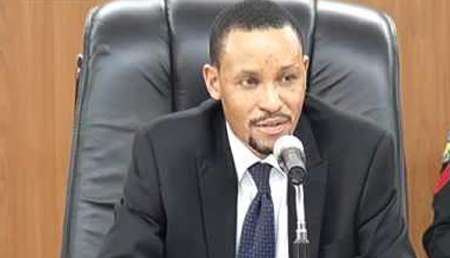
The Federal High Court in Abuja has ordered the remand of the former Chairman of the Code of Conduct Tribunal (CCT), Danladi Umar in the Kuje Correctional Centre.

The decision was taken on Thursday when the court heard the alleged corruption charges against Umar, it was reported.

Justice Kekemeke ordered the remand after the federal government arraigned the former CCT boss on four counts of corruption.

The federal government said its investigations found the defendant had abused his official position to confer on himself an undue advantage when he was head of the tribunal.

He was charged with using his wife’s bank account to collect the sum of ₦5.5 million from a contractor hired to paint the headquarters of the CCT in Abuja in 2021.

The federal government further alleged that on January 25, 2024, the defendant also collected ₦6 million from a contractor that handled the digitization of the CCT’s records using his wife’s account.

The defendant was also accused of ordering another contractor to pay ₦2.43 million as tuition fees for his daughter at Baze University, Abuja.

He was believed to have committed offences that are punishable under section 19 of the Corrupt Practices and Other Related Offences Act, 2000.

Umar, however, denied the charges.

The prosecution counsel, Christopher Mshelia, after his plea applied for his remand in a correctional facility while urging the court to fix a date for the commencement of trial.

However, the defendant through his legal team, pleaded with the court to grant him bail pending the determination of the case.

Justice Kekemeke then adjourned the case till July 15 for the defendant’s application for bail.

Remember in 2024, the Senate fired Danladi Umar as the Chairman of the Code of Conduct Tribunal (CCT).

The sack of Umar comes after the closed-door session of the lawmakers where the lawmakers approved the sack of the embattled CCT Chairman.

More than 84 senators supported the move to remove Umar from office, the Senate said.

The Senate relied on section 157 (1) of the 1999 constitution which provides that two-third of the membership of the Senate can remove the head of any statutory body alleged to have indulged in gross misconduct and misdemeanor in office.

The lawmakers had earlier adjourned into an executive session to deliberate on the allegations against Umar after a motion was moved on the Order Paper by the Senate Leader, Senator Opeyemi Bamidele.

It was tagged, “Invocation of the provision of Section 157 (1) of the Constitution of the Federal Republic of Nigeria 1999 as amended for the removal of the Chairman of the Code of Conduct Tribunal.”

The Senator observed that the CCT boss had not met the required standard of a public officer to run the affairs of such a Tribunal.

He said the lawmakers have received a series of petitions, complaints and allegations of corruption and misbehaviour against the chairman.

Bovi Advises Not To Do Business With People That Place Ronaldo Over Messi

0

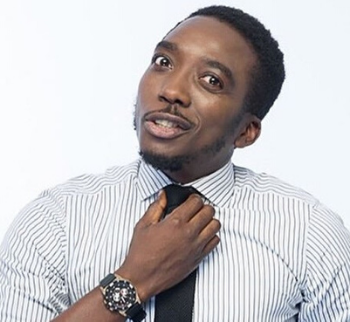
Nigerian comedian and actor, Bovi Ugboma, popularly known as Bovi, has sparked new reactions from football fans after weighing in on the age-long debate over who is the better footballer between Lionel Messi and Cristiano Ronaldo.

In a video shared on his Instagram page on Wednesday, Bovi jokingly advised people to be wary of going into business partnerships with anyone who insists that Ronaldo is a better footballer than Messi.

‘Ask Them What Their Favourite Footballer Is’
The comedian said a person’s position in the Messi-Ronaldo rivalry can indicate how they view facts and reality, especially when money and trust are on the table.

“If you want to do business with someone you don’t know so well and you’re going to invest your money together, ask the person who his favourite footballer is.

“If he says Ronaldo you might still want to do business with him. If he says Ronaldo is his GOAT, that’s fine. But ask him to choose between Ronaldo and Messi, as to who is the better footballer. “If he says matter-of-factly that Ronaldo is a better footballer than Messi, pick up your shoes and run,” Bovi said.

Bovi: ‘Don’t Change Reality’
The comedian clarified there was nothing wrong with anyone liking Ronaldo as a favourite player or even regarding him as the GOAT (Greatest of All Time).

However, he argued that confidently claiming the Portuguese star is a better footballer than Messi should be taken as a red flag.

According to him, people holding such views may have the tendency to “alter reality” to fit their personal beliefs irrespective of the facts or evidence available.

He said this way of thinking could extend beyond football disputes and affect business transactions, as the individual might distort clear facts to match a desired story.

Since Bovi’s comments, a debate has ensued on social media with fans of both players arguing again about the superiority of Messi and Ronaldo.

For more than a decade, the rivalry between the Argentine and the Portuguese has dominated football conversations, with both players considered two of the greatest footballers of all time.

Nigerian Banks Face Rising Climate Risks From Oil And Agriculture, Fitch Says

0

Nigerian banks are especially exposed to climate-related risks as large parts of their loan books are exposed to oil, gas and agriculture, sectors that face profit pressure from global decarbonisation and rising extreme weather, Fitch Ratings has warned.

The rating agency said banks are facing growing climate risk that could affect asset quality and credit profiles in the coming decades.

In a new report titled “African Banks Have Structural Exposure to Climate Risk; Credit Implications Evolving,” Fitch Ratings said that while immediate impact on African lenders is still manageable, both transition and physical risks will increase over time, posing “significant challenges for banking systems across the continent.”

Fitch said a key vulnerability was Nigeria’s heavy dependence on hydrocarbons and agriculture.

A significant chunk of Nigerian banks’ loan books are exposed to sectors which could be hurt by global decarbonization policies, technological transitions and shifting investor preferences.

“Oil and gas, mining and heavy industry remain core activities in a number of countries, with Nigerian banks being among the most exposed due to the country’s dependence on hydrocarbons and agriculture,” Fitch said.

The agency warned tougher international commitments on climate could damage profitability in carbon-intensive industries and leave some assets “stranded” which would raise credit risks for lenders with concentrated exposures.

Agricultural borrowers also are facing more uncertainty as floods, droughts and other extreme weather events become more frequent and more severe.

These developments could impair the ability of borrowers to repay, depress collateral values and result in higher credit losses across the banking sector, said Fitch.

The report also noted an increase in regulatory focus on climate-related policy across Africa. Nigeria is developing carbon-pricing and carbon-market systems as part of its broader climate commitments.

These measures support sustainability goals but could increase operating costs for businesses in the affected sectors, with potential knock-on effects for banks through weaker borrower performance, Fitch said.

African banks are generally vulnerable to high transition risks given their exposure to sectors at risk from emissions-reduction policies and technological change. Transition risks dominate the near-term outlook, but Fitch expects physical climate risks to become more prominent by 2050, as higher temperatures, flooding, droughts and other hazards weigh on economic growth.

West Africa is listed as one of the most vulnerable regions and Fitch said the indirect effects for Nigeria could be significant.

Climate shocks can depress household incomes, lower corporate profitability and increase macroeconomic volatility, which may lead to higher credit risk for banks.

Real estate and agriculture related collateral could also lose value over time, increasing loan-to-value ratios and impairment charges.

“Fitch estimates Nigeria could score between 50-55 on its Climate Vulnerability Signals (Climate.VS) framework by 2050, putting it in a similar bracket to Ghana, Egypt, Kenya and South Africa,” it said.

“There are risks but there are also opportunities for banks that act early,” Fitch said. The report highlighted growth in green finance, sustainable lending and climate-focused investment products as possible avenues to diversification and resilience.

It recommended that banks integrate climate considerations into their risk management frameworks, diversify sector exposures, and engage customers on low-carbon transition strategies.

Fitch also cited increasing regulatory scrutiny. The Central Bank of Nigeria has started working on frameworks to enhance climate-risk classification, governance and transparency in the financial sector. The agency warned that banks that fail to adapt may face reputational damage, reduced investor confidence and funding constraints as global capital shifts towards institutions with stronger sustainability credentials.

Nigeria is walking a fine line between growth and climate commitments. The country, a major producer of oil and gas and possessing vast natural gas reserves, has also pledged to cut emissions under the Paris Agreement.

Fitch said the transition is likely to be gradual but that banks need to start preparing now.

“Institutions that are able to adapt to climate risks and benefit from emerging green finance opportunities are expected to be better positioned to remain resilient and support sustainable economic growth,” the report said.

Recall that last month Fitch warned that Nigeria’s proposed $5 billion Total Return Swap (TRS) with First Abu Dhabi Bank could obscure risks to the sovereign’s debt and make future debt restructuring more difficult.

While TRSs provide cheaper financing and diversify funding sources, they also carry “significant structural and transparency risks,” according to Fitch’s report Emerging Market Sovereigns’ Use of Total Return Swaps Raises Risks: Balancing Transparency and Recovery Risks Against Financing Flexibility.


‘El-Rufai Fought Buhari Because Of You’ — Wife Addresses Tinubu

0

The wife of the troubled governor of Kaduna State, Nasir El-Rufai, Asiya El-Rufai, has responded to claims that her husband is viewed as a political threat.

“Why would anyone be afraid of political competition? Democracy should allow opponents to compete freely, rather than be intimidated.”

The lawyer was reported to have said this during an appearance on Arise Television.

“They think he’s a threat?” she said. Is he a risk? Why not test it? Why don’t they let him go and see if he’s really a threat or not? Fear of what? What can he do? He’s a person. He is one man. “Yes, he’s smart.” Yes, he’s smart. Yeah, he’s tactical. Yes, he’s powerful. But isn’t politics all about competing? Why do we fear competition? If we know that we have done well why should we run away from facing the opposition?

El-Rufai also said her family had supported his 2023 election saying they expected “basic courtesy” in return, while adding that President Bola Tinubu should not interfere with the trial.

She said the President may not have the power to stop the prosecution, but he has the power to ensure that the relevant agencies act fairly and follow the law.

I know what we went through. My husband supported President Tinubu because he is an honourable man. He fought everybody, he even fought President Buhari. He went to court against the President just to make sure that this agreement would stand. So yes I mentioned it because it’s normal to expect basic courtesy from someone that you’ve done so much for. “I campaigned for him myself,” she said.

“The President can’t stop anything, but he can tell them to do the right thing,” she added.

Federal High Court Voids ARCON’s N60bn Fine Against Facebook Nigeria

0

LAGOS — The Federal High Court in Lagos has nullified the N60 billion sanction imposed on Facebook Nigeria Operations Limited by the Advertising Regulatory Council of Nigeria (ARCON), ruling that the regulator acted outside the powers granted to it by law and violated the company’s right to fair hearing.

In a judgment delivered by Justice Yellim Bogoro in Suit No. FHC/L/CS/2205/2024, the court declared ARCON’s Notice of Violation and Demand for Compliance dated October 21, 2024, invalid and unenforceable.

The court also granted a perpetual injunction restraining the regulatory agency from taking further steps to enforce the disputed sanction against Facebook Nigeria.

The case stemmed from allegations by ARCON that advertisements displayed on Facebook and Instagram were targeted at Nigerian audiences without obtaining prior approval from the Advertising Standards Panel, contrary to the provisions of the Advertising Regulatory Council of Nigeria Act, 2022.

Based on the alleged infractions, the regulator directed Facebook Nigeria to discontinue the advertisements and imposed a N60 billion penalty.

Dissatisfied with the action, Facebook Nigeria approached the court, arguing that ARCON lacked the legal authority to impose what it described as a punitive sanction without first giving the company an opportunity to defend itself.

The company also contended that it neither owns nor operates Facebook or Instagram, maintaining that both platforms are owned and controlled by Meta Platforms Inc., a separate corporate entity.

ARCON, however, argued that Facebook Nigeria represents Meta’s business interests within Nigeria and should therefore be held accountable for alleged breaches involving advertisements displayed on the platforms.

In resolving the dispute, Justice Bogoro held that the regulator failed to establish any legal basis for treating Facebook Nigeria and Meta Platforms Inc. as the same corporate entity.

The judge ruled that there was no sufficient evidence showing that Facebook Nigeria owns, controls, or manages the Facebook and Instagram platforms, adding that the regulator’s assertions alone were inadequate to establish liability.

The court further held that ARCON breached the constitutional principle of fair hearing by imposing a substantial financial penalty without first allowing the company to respond to the allegations.

Justice Bogoro also held that the offences relied upon by the regulator under the ARCON Act are criminal in nature and that any sanction for such offences can only be imposed after a conviction by a court of competent jurisdiction.

Accordingly, the court ruled that ARCON has no statutory authority to impose criminal fines through an administrative notice and declared the N60 billion penalty unlawful.

The judgment is expected to serve as an important judicial interpretation of the limits of regulatory authority in Nigeria, particularly in relation to digital advertising and the enforcement of statutory sanctions.

Legal observers say the decision reinforces the constitutional requirement that regulatory agencies must observe due process and fair hearing before taking enforcement actions capable of affecting the rights and obligations of individuals or corporate entities.

EFCC Arraigns Former Port Harcourt Refinery Boss Over Alleged N218.4m Money Laundering

0

ABUJA — The Economic and Financial Crimes Commission (EFCC) has arraigned the immediate past Managing Director of the Port Harcourt Refining Company (PHRC), Ahmed Dikko, before the Federal High Court in Abuja on allegations of money laundering involving N218.4 million.

Dikko was docked alongside Masterpiece Projects & Investment Ltd on a 12-count charge alleging violations of the Money Laundering (Prevention and Prohibition) Act, 2022.

According to the EFCC, the former refinery chief allegedly used about N218.4 million to acquire a property in the Katampe Extension area of Abuja without processing the transaction through a financial institution, an act the commission said contravenes the provisions of the anti-money laundering law.

When the charges were read in court, Dikko pleaded not guilty to all counts.

Following the plea, prosecution counsel, Ekele Iheanacho (SAN), requested that the court fix a date for trial.

Counsel for the defendants, Ikechukwu Ajunwa (SAN), urged the court to grant his client bail, arguing that Dikko had complied with the conditions of the administrative bail earlier granted by the EFCC. He also assured the court that the former managing director would remain available for trial and would not interfere with the judicial process.

The prosecution opposed the application, relying on documents already filed before the court.

In his ruling, Justice Inyang Ekwo admitted the defendant to bail in the sum of N150 million with one surety in like sum.

The court directed that the surety must own landed property within the jurisdiction of the court and submit relevant title documents for verification. The judge also ordered Dikko to deposit his international passport with the court and prohibited him from travelling outside Nigeria without prior judicial approval.

The case was adjourned until October 12, 13 and 14 for the commencement of trial.

The arraignment comes weeks after the EFCC filed separate charges against Dikko and the former Managing Director of the Warri Refining and Petrochemical Company (WRPC), Jimoh Yisawu, over the alleged diversion of funds allocated for the rehabilitation of government-owned refineries.

In addition to the property acquisition allegation, the anti-graft agency accused Dikko of allegedly receiving and retaining funds from contractors engaged by the Nigerian National Petroleum Company (NNPC) Limited, concealing the source of part of the funds through third parties, and conducting financial transactions said to be in breach of the Money Laundering (Prevention and Prohibition) Act, 2022.

The charges are yet to be determined by the court, and the defendant is presumed innocent until proven guilty in accordance with Nigerian law.

Motion to Invite Tinubu Over Constituency Project Funding Sparks Heated Debate in House of Representatives

0

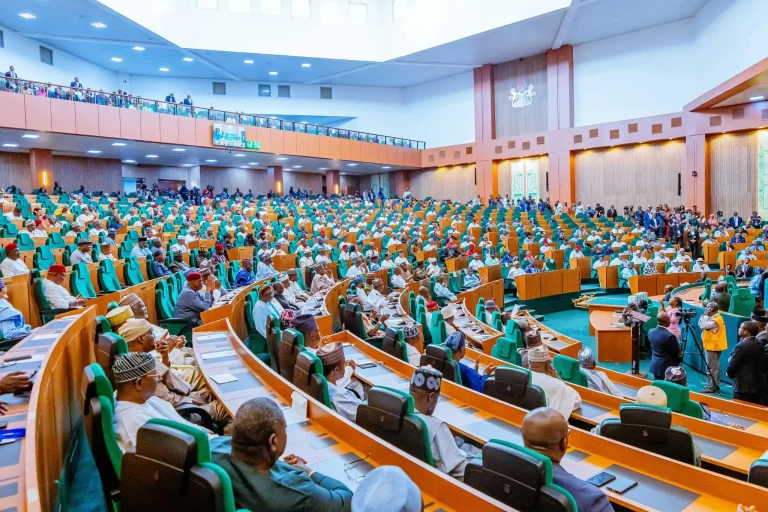
ABUJA — Proceedings in the House of Representatives on Wednesday were marked by a spirited debate after a motion seeking to invite President Bola Ahmed Tinubu to address lawmakers on delays in the funding of constituency projects generated sharp divisions among members.

The motion, sponsored by the member representing Aba North/Aba South Federal Constituency of Abia State, Hon. Alex Mascot Ikwechegh, drew attention to concerns over the implementation of appropriated funds for constituency and zonal intervention projects across the country.

While presenting the motion, Ikwechegh said delays in the release of capital funds to Ministries, Departments and Agencies (MDAs) had adversely affected the execution of projects approved under the national budget. He noted that information presented during budget defence sessions suggested that several government agencies had received little or no capital releases despite budgetary provisions.

The lawmaker argued that the development had slowed the implementation of projects intended to improve infrastructure and public services in various constituencies, prompting the need for greater accountability in the execution of the Appropriation Act.

As part of the motion, Ikwechegh proposed that President Tinubu be invited to appear before the House to provide clarification on the challenges affecting the release of funds and the implementation of constituency projects.

The proposal, however, attracted divergent views from lawmakers.

Members who backed the motion maintained that the House has the constitutional responsibility to oversee the implementation of budgets approved by the National Assembly and to seek explanations where government spending falls short of legislative expectations.

Those opposed argued that the operational responsibility for implementing constituency projects rests with the relevant Ministries, Departments and Agencies, rather than the President directly. They contended that oversight inquiries should be directed at the agencies responsible for project execution and budget releases.

The debate became increasingly animated as members defended their positions before Speaker of the House, Rt. Hon. Tajudeen Abbas, intervened.

Delivering his ruling, the Speaker observed that the prayers contained in the motion differed from those in the version initially submitted by its sponsor. Consequently, he declined to admit the motion in its presented form, effectively bringing deliberations on the proposal to a close.

The development has renewed discussions about the implementation of constituency projects and the timely release of appropriated funds for capital expenditure. Constituency projects remain a significant component of the federal budget, with lawmakers often describing them as important instruments for delivering infrastructure, healthcare, education, water supply, and other social amenities to communities.

Political analysts say the debate also reflects broader concerns over budget implementation and the constitutional roles of the executive and legislative arms of government in ensuring that public funds are effectively utilised.

As the implementation of the current budget continues, attention is expected to remain on the pace of capital releases and the progress of projects approved to support development across the country.