Home Blog Page 4

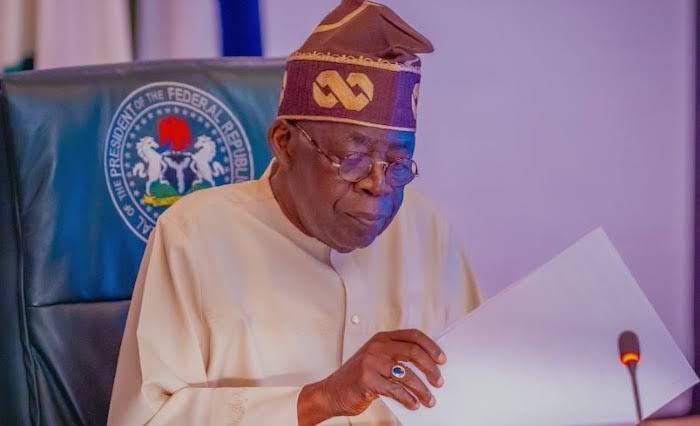
Rufai Oseni Questions Tinubu Over $3bn NNPCL Refinery Expenditure

0

Nigerian journalist, Rufai Oseni, has challenged the President Bola Tinubu to tell Nigerians how the sum of $3 billion was spent on the Nigerian National Petroleum Company Limited, NNPCL, refinery in Port Harcourt.

Oseni’s comments reportedly followed Tinubu’s statement during a meeting with the leadership of the Nigerian Union of Petroleum and Natural Gas Workers (NUPENG) at the Presidential Villa, Abuja, where he said the NNPC refinery will come back to work.

Rufai Oseni, while reacting on Arise Television’s Morning Show on Friday, berated the Tinubu government over the inconsistent claims about the refinery’s revitalization.

He pointed out the paradox: Tinubu congratulated the NNPCL on the success of the refinery’s operation in 2024, but is now saying it would work again.

Rufai said the $3 billion spent on the turnaround maintenance could have been wasted or mismanaged.

“I don’t want to be dramatic but Nigeria will make you mad as a human being,” he said. If you try to see what the government does in this country you will go mad.

As at the 26th of September, 2024 president Tinubu congratulated the NNPC on the successful revitalization of the Port Harcourt refinery.

“Now the president is saying the same refinery that he congratulated, will work again today. So his congratulations didn’t work? They’ve made this country a joke, you see.

“Before anything, we must know how that $3 billion was spent, President Tinubu, as the father of the nation.

“You spent $3 billion on the turnaround maintenance on a refinery, and you said it worked in 2024, Today you are saying it will work again? “No.”

INEC Declares Readiness for Osun Governorship Poll

0

The Independent National Electoral Commission (INEC) has assured the people of its preparedness for August 15 Osun State governorship election.

The commission said a total of 2,038,039 voters have been registered for the election, out of which over 1.8 million have collected their Permanent Voter Cards (PVCs).

Fifteen candidates are vying for the election, including the incumbent governor, Ademola Adeleke, who is seeking a second term.

Head of Department, Voter Education, Publicity, Gender and Inclusivity, INEC, Mr Rufus Ariyo said the commission had intensified voter sensitization across the state, targeting youths, women, persons with disabilities, trade-based organizations and other grassroots groups.

He called on eligible voters to come out and exercise their franchise peacefully. Various groups have assured the commission of their readiness to take part in the poll.

Read Also: Marwa Urges Nigerians to Intensify Fight Against Drug Abuse

One of the major features of the election is the use of Bimodal Voter Accreditation System (BVAS) for accreditation of voters.

Ariyo said; “manual accreditation would not be allowed, adding that voters would be electronically accredited thru BVAS using facial recognition or fingerprints.

He said the system would also help prevent multiple voting because the number of votes recorded at a polling unit could not be more than the number of accredited voters transmitted from the unit.

The official said BVAS is not electronic voting and stressed that what Nigeria has now is electronic accreditation and not electronic voting.

He said the electronic ECV system by INEC would complement the manual election documentation process and help reduce errors by providing information on registered and accredited voters.

The system would allow election officials to spot discrepancies and correct errors recorded by hand, he said.

Ariyo said; “the commission had taken steps to prevent a recurrence of the technical challenges experienced during accreditation in the Ekiti Governorship election.

He said two weeks to the Osun poll, the INEC conducted a mock accreditation exercise to test its systems and identify possible challenges.

He said an error discovered during the exercise was corrected immediately, which has increased the commission’s confidence in its preparedness for Saturday’s election.

Ariyo also assured Muslim women wearing hijab that they would not be marginalized, saying female election officials would assist them in ‘biometric verification where necessary’.

“I want to tell every voter in Osun to come out en masse on Saturday, come out and elect their own leader by themselves. “They shouldn’t let a few people decide their fate,” he said.

Marwa Urges Nigerians to Intensify Fight Against Drug Abuse

0

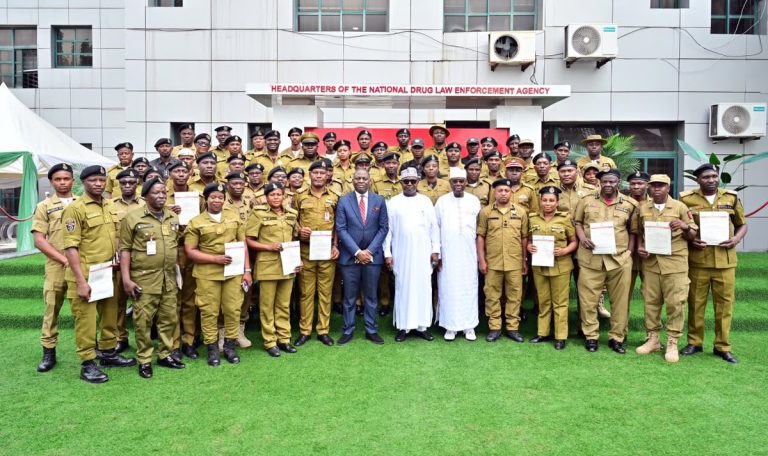
The National Drug Law Enforcement Agency (NDLEA) has urged its staff to maintain the war against illicit drugs, saying the war is a generational responsibility that requires resilience and long-term commitment.

The Chairman and Chief Executive Officer of the agency, Brig. Gen. Buba Marwa (Rtd) made the call in Abuja while honoring 274 personnel for outstanding performance.

The 12th Chairman/Chief Executive Officer’s Commendations and Awards ceremony also acknowledged 18 commands and 19 non-governmental and media organizations for their roles in Nigeria’s fight against drug abuse.

The drug threat kept evolving, Marwa said, as trafficking networks came up with new routes and methods to evade law enforcement.

War on drugs is not a campaign with a completion date. “It’s a responsibility of the generations,” he said.

“Intelligence says every time we knock down a cartel, another will try to rise. “For every corridor we shut down traffickers will find another route,” he added.

“Drug trafficking remains a persistent problem that requires ongoing dedication by the agency and its partners,” he said.

Read Also: FG Encourages Nigerians to Take Active Role in Strengthening National Security

He stressed that enforcement alone could not defeat drug trafficking and substance abuse, and said that civil society organizations and the media played an important role.

Civil society groups have an important role to play in preventing addiction and in helping vulnerable young people in communities, while journalists have a role to play in raising public awareness of trafficking routes, rehabilitation and families trying to rebuild their lives after addiction, he said.

“Enforcement alone was not going to win the fight against drug trafficking and substance abuse,” said Marwa.

He said civil society and media organizations had a multiplier effect on the agency’s efforts by bringing anti-drug messages into homes, schools and communities.

Marwa pointed to recent operations such as the dismantling of the Amadi Simon drug cartel and the busting of two Nigerian-Mexican methamphetamine cartels operating in forests in Ogun and Oyo states.

He also said disruption of a tramadol cartel operating along the Togo-Benin Republic-Nigeria corridor had been feeding opioid abuse among Nigerian youths for years.

These were not simple raids. “They were the result of patient intelligence collection, cross-border collaboration and officers willing to go where the criminals thot no one would follow,” he said.

Marwa told the award winners to look at the award as a benchmark to be followed and not a cap to their performance.

He also urged civil society organizations and media groups to see the recognition as a boost to intensify their efforts in the fight against drug trafficking and substance abuse.

The NDLEA Chairman congratulated the awardees and thanked Nigerians for continuing to repose confidence in the agency in the fight against the persistent drug trafficking and substance abuse challenges in the country.

FG Encourages Nigerians to Take Active Role in Strengthening National Security

0

Nigeria is strengthening efforts to tackle insecurity through closer collaboration among security agencies, governments, communities and citizens, with renewed emphasis on intelligence gathering, public education and coordinated surveillance.

Minister of Information and National Orientation, Mohammed Idris, stated this when he received the Special Adviser to the President on Homeland Security, Major General Adeyinka Famadewa, and his team on a courtesy visit to his office in Abuja.

The Minister said Nigeria could not rely solely on military force to achieve lasting peace, stressing that effective intelligence gathering and surveillance required the active participation of citizens since security agencies could not be physically present in every community.

“Security situation in this country or anywhere in the world is such that there must be collaboration between the security agencies, the armed forces and the general public,” the Minister said.

Idris noted that peace and security remained the foundation of economic development, adding that the Federal Government’s goal of achieving prosperity for Nigerians could not be realised without a secure environment.

“There is no development that can ever happen if there is no peace. Peace and security are essential elements. In fact, they are the building blocks of any development that can happen anywhere,” he said.

The Minister reaffirmed the Ministry’s readiness to work with the Office of the Special Adviser on Homeland Security to improve public understanding of national security issues and encourage citizens to provide useful information to security agencies.

He highlighted the role of the National Orientation Agency (NOA), noting that it has more than 800 offices and over 5,000 personnel across the country.

According to him, the agency’s grassroots presence provides access to communities and individuals who can contribute valuable information for security planning and intelligence gathering.

“They live with the communities. They live with vulcanisers, groundnut sellers, traditional rulers, market women, teachers, students, everybody,” Idris explained.

The Minister explained that information gathered through such interactions could help security authorities better understand developments within communities and respond more effectively to emerging threats.

He also called for coordinated surveillance between the Federal Government and state governments, warning that criminals and terrorists often exploited state boundaries to evade security operations.

“Surveillance cannot be done by just one state alone. There is no one state government. There is not even the federal government alone that can fight this. We need to come together, coordinate,” the Information Minister emphasised.

Idris cited the recent rescue of abducted schoolchildren in Oyo State as evidence of the benefits of stronger coordination among security agencies, the armed forces and local communities.

According to him, the development demonstrated how improved intelligence gathering and cooperation with citizens could strengthen the government’s response to security incidents.

The Minister also urged the media to give greater prominence to the successes and sacrifices of the armed forces and other security personnel combating terrorism, banditry and other criminal activities, while avoiding reports that unnecessarily glorify criminals.

“Terrorists, criminals, bandits, all these people that don’t wish us well are enemies of all of us. We should treat them as such. We need to celebrate. We need to strengthen our armed forces by reporting the successes that they have achieved in their fight against insecurity,” he said.

Idris further identified fake news, misinformation and disinformation as significant security concerns, particularly ahead of the 2027 general elections. He said the Ministry was expanding media and information literacy programmes to help Nigerians identify credible information and reject false reports capable of creating panic or undermining security operations.

“It’s not just enough to be educated, you also have to be media literate for you to discern what is fake news and what is bad,” Idris stressed.

Earlier, the Special Adviser to the President on Homeland Security, Major General Adeyinka Famadewa, said his office was seeking a structured partnership with the Ministry because public education had become a critical component of national security.

He noted that emerging threats involving artificial intelligence, disinformation, propaganda and perception management required a more proactive approach to information management.

“Unlike before, public information or public education is not just about the media. It is a key capability that is required for Homeland Security,” he said.

Famadewa clarified that the new office was established to complement existing security institutions rather than replace them.

He identified four immediate priorities of the office as establishing a unified national intelligence and surveillance programme, improving border security, addressing anonymity, and developing protocols for reporting and responding to security incidents.

“I will emphasise here that the office is to complement, not to replace any office. The idea is this. No space of land in Nigeria should be left unmonitored. We should be able to see what’s happening, who is moving, and what they are doing,” the Special Adviser said.

Famadewa also called for the development of an incident-reporting platform and stronger community resilience through national orientation, stressing that Nigeria could not rely solely on military force to overcome insecurity.

“It is difficult to shoot our way out of insecurity. But it is easier for us to build the resilience of the nation so that the man who wants to perpetrate violence has some level of resistance from society,” he noted.

The Special Adviser described every Nigerian as a potential source of security intelligence and urged citizens to remain vigilant and report suspicious activities.

“National security is not the work of anybody. It’s the work of every Nigerian. Every Nigerian is a sensor. And if we optimise the sensor ability of every Nigerian, then we’ll have a better society,” he stated.

Both officials expressed confidence that stronger cooperation among the information sector, security agencies and communities would enhance Nigeria’s response to insecurity and support sustainable national development.

Osun Poll: Sensitive Election Materials Arrive CBN as INEC Begins Distribution Preparations

0

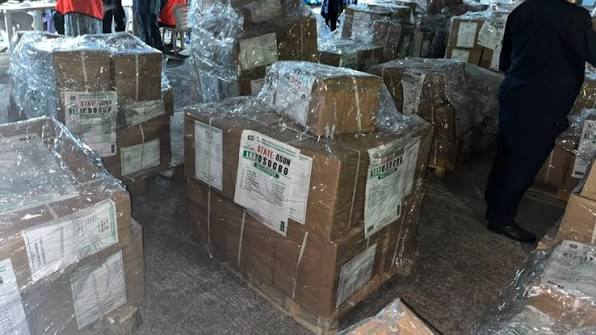
Sensitive materials for Saturday’s governorship election in Osun State have arrived at the Central Bank of Nigeria (CBN) facility in Osogbo for distribution to the state’s 30 local government areas.

The materials were being unloaded at the CBN facility, brought in trucks from Abuja as preparations for the August 15 election stepped up.

Distribution was supposed to start at 8am Thursday, but as of 9:50pm, they were still offloading the materials.

The delay came after reports that the Independent National Electoral Commission (INEC) had to reprint ballot papers following the late inclusion of the Social Democratic Party (SDP) candidate in the final list of contestants.

Read Also: DSS Calls for Unified Front Against Terrorism in Nigeria’s North-West

The development brought the number of candidates for the governorship election to 15 from 14.

The extra printing exercise is thot to have disrupted the original schedule for the movement of the sensitive materials to the local government areas.

The materials are expected to be distributed to the 30 LGAs after the offloading process before they are moved to polling units ahead of the voting.

Ballot papers, result sheets and other documents necessary for the conduct and collation of election results are generally sensitive election materials.

The materials arrived less than 48 hours before voters in Osun State go to the polls to elect the next governor.

DSS Calls for Unified Front Against Terrorism in Nigeria’s North-West

0

The Director-General of the Department of State Services, Oluwatosin Ajayi has called for stronger collaboration among security agencies, government institutions and communities to tackle terrorism, banditry and other criminal activities in the Northwest.

Ajayi made the call at the second Northwest Zonal Conference of State Directors of Security on Thursday in Katsina organized by the DSS with the theme, “Unite Against Terror.”

Represented by the Chairman, Northwest Forum of State Directors of Security and Kano State Director of Security, Husseini Abubakar, the DSS boss said the conference provided an opportunity for security stakeholders to review the evolving security situation in the region, share operational experiences and develop effective strategies to contain terrorism and banditry.

He said: “The Northwest SDSS Conference edition will be another avenue for us to compare notes, share experiences and take stock of the evolving and endemic security challenges, particularly the threat of banditry, and to think of appropriate containment strategies toward securing our communities.”

Ajayi said the DSS was also enhancing the tactical capabilities of its personnel to enable the Service to respond more effectively to emerging security threats.

He praised the existing synergy between security and law enforcement agencies in the region, noting that such collaboration was vital to securing communities.

“We should remember that the war against terror is a task that must be accomplished. I am optimistic as we go into the technical session,” he said.

The Katsina State Director of Security, Alhassan Iliyasu, in his welcome address said the conference was geared toward strengthening intelligence-led operations and developing a common regional strategy against insecurity.

The summit, with the theme ‘Unite Against Terror’, was said by Iliyasu to be aimed at emphasizing the significance of collective action and stressing that the security of communities should not be left in the hands of security agencies alone.

He said: “It involves everybody, the whole society, not just the security agencies, by standing together against terror.”

He said Katsina State had adopted a community-based security approach involving the government, security agencies, community watch structures and vigilante groups to address security threats.

“If you see in Katsina State, that theme, ‘Unite Against Terror’ is no longer news because we live as one family. Any time of the day, no matter how late it is, whoever you call among the action agencies, we are responding,” Iliyasu said.

He said the conference would afford participants the opportunity to critically examine the security challenges facing the Northwest, review the existing counter-measures and develop renewed strategies against banditry and other related criminal activities.

Iliyasu said a communique would be issued at the end of the deliberations to serve as a roadmap for coordinated security responses across the region.

“By the end of the day, after brainstorming, we will come up with a communique, and the communique will be like a roadmap that will be used or considered for effective countermeasures against banditry and related criminal organizations or criminal activities in the entire North-West,” he said.

The Katsina State Director of Security also called for increased community engagement in intelligence gathering, urging residents to report suspicious activities to the appropriate authorities.

“We cannot leave anybody behind, because it is our civic responsibility to see something and say something, to hear something and review and report,” he said.

The conference was attended by State Directors of Security from Katsina, Kano, Kaduna, Jigawa, Kebbi, Sokoto and Zamfara, heads of security agencies, traditional rulers, government officials and retired security personnel.

The participants are expected to discuss intelligence sharing, inter-agency cooperation, community engagement and other measures aimed at strengthening the collective capacity of the seven Northwest states to confront terrorism, banditry, kidnapping and other forms of organized crime.

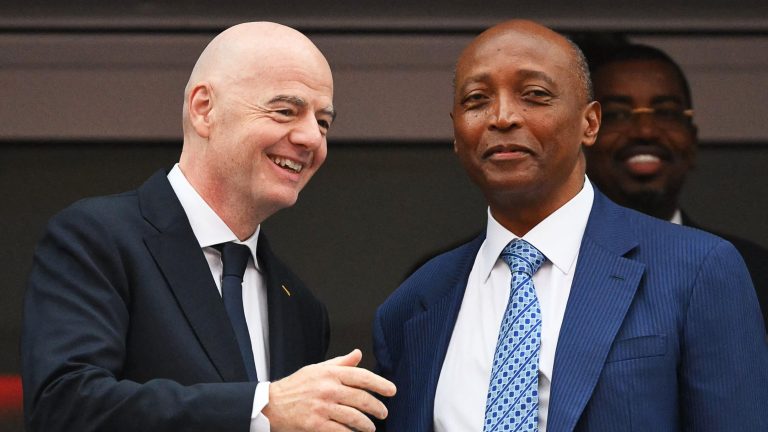
Motsepe Reveals What It Would Take to Remove Infantino as FIFA Boss

0

Confederation of African Football (CAF) President Patrice Motsepe has stated that Gianni Infantino can only be removed from the FIFA presidency thru the correct electoral process.

Motsepe, who is also a FIFA vise president, made the disclosure as pressure mounted from some of FIFA’s regional football bodies for Infantino to resign.

CAF is one of the confederations that are supporting Infantino to continue as FIFA president, it was reported.

The 56-year-old FIFA president has faced criticism after UEFA, the Asian Football Confederation and CONCACAF accused him of “deception” over an alleged plan to sell stakes in the World Cup to investors.

Confederations have reportedly asked Infantino to resign and have opposed his intention to run for another term when FIFA holds its presidential election in March next year.

But Motsepe insisted that anyone looking to oust Infantino must abide by the regulations governing FIFA elections.

The president of the CAF told Sky News there was a clear process in the FIFA statutes to deal with disputes involving the president.

“If anybody has got any problem against anybody, whether it is Gianni, whether it is anybody else, follow the process, follow the FIFA process, simple as that,” he said.

Motsepe called on those opposed to Infantino’s leadership to take their complaints to the election rather than seeking to oust him outside the process.

He added: “If you want to take him out, go for elections; let the 211 member associations decide.”

The CAF president also appealed to football stakeholders to let the electoral process take its course.

“You must be very careful. There will be elections next year. “Shouldn’t we let that process run?” he asked.

Infantino has been president of FIFA since 2016 and was re-elected unopposed in 2019 and again in 2023.

The latest controversy has, however, led to fresh tensions within the world football governing body, with some confederations questioning his leadership.

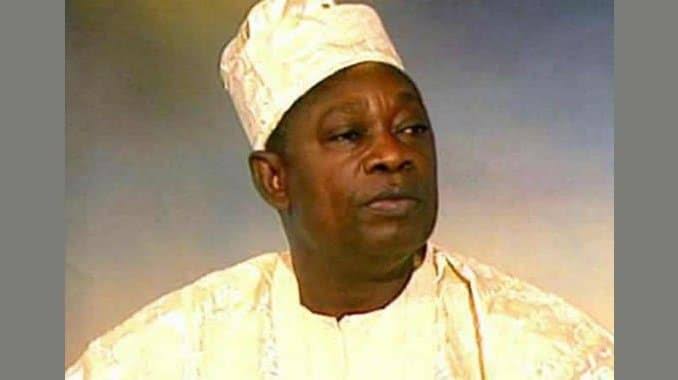
How Abiola was killed in government custody

0

Chief M. K.O. Abiola declared himself president on June 12, 1994 based on the June 12, 1993 presidential election which he won fair and square.

He was arrested by the military junta of General Sani Abacha and charged with treasonable felony at the Federal High Court. Chief Abiola was subjected to horrendous psychological and mental torture while he was held incommunicado in a military custody for 4 years. Despite the serious health challenges of Chief Abiola, the maximum dictator refused to give him medical care.

Archbishop Desmond Tutu who visited Nigeria at the instance of President Nelson Mandela and met with the imprisoned Chief Abiola confirmed his parlous meical state on April 27, 1998. The revered priest said Abiola’s health and living condition were deteriorating rapidly and called for his immediate release to attend to his failing health. The military regime disregarded the call.

After the controversial death of Abacha on June 8, 1998, he was succeeded by his Chief of Defense Staff, General Abdusalami Abubakar as Head of State and Commander-in-Chief of the Armed Forces of Nigeria. The new military junta ordered the immediate release of all political prisoners from prison including General Obasanjo (rtd) and other convicted coup-plotters. Abubakar refused to release the detained Abiola saying he would not renounce his claim to the presidency. The news that Abiola died during a brief meeting with the American delegation on July 7, 1998, shocked Nigerians.

The Chukwudifu Oputa Panel set up by the administration of President Olusegun Obasanjo to probe the egregious human rights abuse that characterized military rule in Nigeria investigated the death of Chief Abiola. Abubakar had refused to give an account of his role in the whole saga as demanded by the Oputa Panel because he did not want to be cross examined by lawyers. In his autobiography, “Call of Duty,” about 28 years later, the former military ruler dismissed claims that Abiola was poisoned, insisting that an autopsy carried out by foreign pathologists had ascribed his death to natural causes.

In dismissing the allegation that Chief Abiola was poisoned, Abubakar did not respond to the evidence presented to the Oputa Panel that there are poisons that cannot be detected by autopsy. Abubakar, washing his hands like Pontius Pilate, said: “Way back in 1994 when he was arrested by the Abacha Administration for declaring himself President, it was a public knowledge that Abiola was managing certain medical conditions which could seriously affect the quality of life of any human being.

Abubakar also mentioned the transcript of Thomas Pickering’s press conference and the report of Susan Rice in her memoir, “Tough Love: My Story of the Things Worth Fighting For.” She denied that Abiola had been poisoned but conceded that he had been neglected medically. She said she noticed that “Abiola’s ankles were swollen and that about five minutes into their conversation, Abiola started to cough, at first mildly and intermittently, and then wrackingly with consistency.”

Abubakar also cited a radiological report by Colonel (Dr) O. Awofeso, then Chief Consultant Radiologist at the Nigerian Army Defense Hospital, Sokoto, on September 28, 1994, which found that Abiola’s heart was enlarged with “right ventricular preponderance” consistent with hypertensive cardiac disease. “it was common knowledge that Abiola was managing certain medical conditions which could adversely affect the quality of life of any human being,” Abubakar argued.

General Abubakar, knowing that Chief Abiola’s health was endangered during his 4-year dehumanizing incarceration by the maximum ruler, Abacha, deliberately refused to accede to the request to allow him to attend to his health. His personal physician, Dr. Ore Falomo, was equally refused when he wanted to come and see him. As if that was not enough, Abubakar also subjected Abiola to undeserved mental torture to make him dump his claim to the presidency.

Following abortive meetings between Abiola and the service Chiefs on the mandate, Abubakar decided to involve the so-called international community to resolve the political logjam. To persuade Abiola to renounce his mandate, the then Secretary General of the United Nations, Mr. Kofi Annan, and the Secretary General of the Commonwealth of Nations, Chief Emeka Anyaoku, were flown in. In their separate meetings with Chief Abiola, they pled with him to trade the June 12 mandate for his release from custody.

Both diplomats, while refusing the offer of conditional release, hinted in their press statements that he had agreed to give up the mandate. In a letter dated July 6 1998 addressed to Chief Gani Fawehinmi SAN, Abiola denied both diplomats’ claim. “True, both Annan and Anyaoku (apparently working together, although I saw them separately), wanted me to sign a statement that I will not, once again, demand my mandate, once released… he said, Both diplomats talked of arranging my UNCONDITIONAL release. “Any release obtained on that basis would be the worst form of “capitulation” with the demand for such a statement which would make me “a deserter

“I have read the history of June 12. I told them that at the very beginning, in July 1994, Obasanjo came to me with 26 traditional rulers to make a similar statement. He was given a stern telling off in the presence of the retinue of traditional fathers, after I had explained that the issue is one of God versus a few ‘powerful elements’. “The voice of the people is the voice of God, ‘Vox Populi Vox Dei’ a popular maxim long before Jesus Christ arrived.”

It is noteworthy that the aborted efforts of Annan and Anyaoku to persuade Chief Abiola to relinquish his mandate led to the invitation of the Americans by Abubakar. Having regard to the facts and circumstances of the suspicious death of Abiola, Abubakar could not justify while allowing the American delegation to breach the prison regulations of both Nigeria and the United States during the visit.

Under the Federal Bureau of Prisons (BOP) and state prison systems, visitors are prohibited from bringing any food or beverages, including tea, into prisons in the United States. The rule is designed to stop the smuggling of contraband, narcotics and poisons into prisons. All meals and beverages in a correctional facility, therefore, are provided by the institution only or purchased thru the secure prison commissary.

In Nigeria, visitors are allowed to bring food or water from outside to inmates or detainees in police stations, correctional centers and other detention facilities. But visitors are absolutely required to taste the food or water in the presence of the officers on duty before serving it to the prisoners or detainees. Visitors should taste the food or water to ensure that it has not been poisoned or adulterated to harm the prison inmates or detainees in custody of the government.

In the United States, visitors to prisoners are strictly forbidden from bringing, serving, or passing anything outside of food or beverages—like tea, for example. But the Abubakar military junta allowed American visitors to bring a tea flask to the detention facility when they visited the detention facility of Abiola, who was visited on July 7, 1998. A member of the delegation, Ms. Susan Rice, who served the tea to the detainee, did not taste it before giving it to him, which was in total violation of the rules of the Nigerian correctional center.

ACP Zadok who was the guard to Chief Abiola from 1996-1998 testified before the Chukwudifu Oputa Panel. In his testimony, the police officer said that in strict compliance with prison regulations, he tasted the food, water or tea prepared for Abiola before passing same to the detainee. But on the fateful day, Zadok said he was removed from his duty post by Major A. S. Aliyu, Chief Security Officer to the head of the military junta.

Aliyu had forsaken his own primary duty of protecting the head of state to attend to the American delegation. Major Aliyu in his oral testimony before the Oputa Panel, confirmed that Susan Rice did not taste the tea before serving it to Abiola. Zadok agreed. This was the first and only time that a foreign visitor had been permitted to serve tea to a detainee in the government’s custody.

Major Aliyu turned round to say that the tea in question was prepared by a villa staff, but he could not name the staff during his highly misleading testimony. By the end of his proceedings it was crystal clear that Aliyu had set out to cover up the actual cause of Abiola’s death. So, he could not tell why Zadok was ejected from the Akinola Aguda house and why he assumed charge of Chief Abiola’s security when the American delegation visited him.

In his memoir, “Interventions (A Life in War and Peace)”, the late Kofi Annan disclosed that he had told Abubakar, “Abiola had to be released if he was to gain international goodwill and mine. Here Abubakar hesitated a little. He promised that he was prepared to release Abiola immediately but on the condition that he did not try to wrest the presidency back.”

Equally, Mr. Kofi Annan said that although the foreign pathologists had established that “it was the result of heart condition, and there was no foul play- other than the fact, I thot that Abiola had been denied adequate medical care throughout his incarceration. Either way, he was just another victim of the systematic violations of a whole host of human rights which are inevitable under personalized and oppressive regimes.”

Before then, the Oputa Panel had, after a critical review of the evidence presented before it, stated thus, “In the case of Chief Moshood Abiola, we are of the view that the government of the day knows much more than it has admitted. We believe that the denial of Chief Moshood Abiola’s mandate was a breach of the rights of Nigerians to choose their leaders freely. We regard this as a grave violation.”

The Oputa Panel thus concluded that “Chief Moshood Abiola’s death was a consequence of his incarceration and denial of access to adequate medical attention. The evidence of the Chief Security Officer to the then Head of State, General Abdulsalami Abubakar, was replete with contradictions. “From the evidence before us, Chief Abiola died in suspicious circumstances. The Commission therefore recommends that a thorough investigation be carried out to throw light to and inform the Nigerian people on what killed Chief Moshood Abiola.

The Federal Government should without further delay, reopen investigation into the suspicious death of Abiola, in view of the denial of Abubakar and the members of the American delegation of any involvement in the matter. As the Oputa Panel opined, the fresh investigation will “throw light to and inform the Nigerian people on what killed Chief Moshood Abiola” in the custody of the Abubakar military junta.
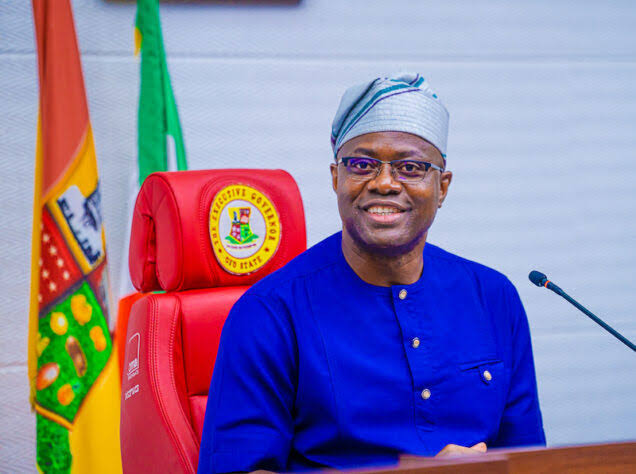
2027: Makinde Says APM Will Partner Opposition Parties for Political Alternative

0

The presidential candidate of the Allied People’s Movement (APM), Seyi Makinde, has said the party will work with other opposition political parties to give Nigerians a credible alternative in the 2027 general elections.

Makinde, who is the governor of Oyo State, spoke on Thursday at the APM national convention, held at the Dr Rilwanu Sulaimanu Adamu Square, Government House, Bauchi.

The governor was said to have stressed that the survival of democracy depends on strong opposition and urged the new leadership of the party to work with other opposition groups in readiness for the 2027 elections.

“I have said that the existence of a credible opposition is what sustains democracy. “Therefore, our new leaders must be ready to collaborate with other opposition parties to ensure that we give Nigeria an incredible alternative in the 2027 general election,” Makinde said.

He said the next general election should be based on measurable improvement in the lives of Nigerians and not on political slogans, campaign promises and government announcements.

“Announcements have been the yardstick of governors for too long. “We are presented with policy after policy rather than evidence of where those policies have improved people’s lives,” he said.

Makinde said that the economic policies were felt by Nigerians in terms of their purchasing power, and that the impact of government policies should be measured by its effect on daily life.

Our mothers go to the market and they feel economic policy as a statistic. They feel it in what they can buy with their money: how much rice, how much beans, and how much they can take home.

“We see job creation policy in a press statement. The experience is can you find productive work,” he added.

The governor urged Nigerians to judge the governments on productivity, access to markets, improved welfare and security of families, rather than the number of programs launched or security meetings held.

“Security is not how many security meetings there are in Government House. “It is whether people come home and sleep with their two eyes closed,” he said.

Makinde said the 2027 election should be about ideas and evidence, with political candidates telling Nigerians how their policies would lead to visible improvements in their lives.

“The election in 2027 should not just be about what government has done. It should be about what has changed for Nigerians.”

“And we who pose as alternatives must answer the question, exactly what will we do differently and what measurable difference should Nigeria expect to see?” he said.

The APM candidate said the areas that need urgent attention include poverty reduction, productive jobs for young people, quality education and effective security.

He also called for a more robust federal structure that would devolve more decisions and resources to the people and strengthen accountability.

“We need a federation that takes more decisions and resources closer to the people and accountability for results,” Makinde said.

He also appealed for a political system that could restore confidence between the leadership and the citizens, saying that political differences should not turn opponents into enemies.

“We want a politics where disagreement does not make us enemies; a politics where opposition is not only about removing those in power, but about presenting a credible and showing a better alternative,” he said.

Makinde said the ultimate goal ahead of the 2027 elections should be to give Nigerians a real choice about the future of the country.

“The task ahead of all of us is bigger than winning an election. It is to present Nigerians with a genuine choice about the future of their country.

“Let the campaign ahead be an issues campaign. Let’s argue the evidence.” Let us have a comparison of records. “Let all who want to lead Nigerians answer one simple question: How will the lives of Nigerians be better because we were given the chance to lead?” he asked.

FG Reacts to U.S. Report on Nigeria’s Fiscal Transparency Performance

0

The Federal Government has said that it would use the latest fiscal transparency report by the United States Department of State as an external benchmark to further strengthen ongoing reforms in public financial management.

The Special Adviser to President Bola Tinubu on Media and Public Communications, Sunday Dare made this known in a statement on Thursday, while reacting to the report that assessed Nigeria against the minimum fiscal transparency requirements of the US Department of State.

Nigeria for the second consecutive year failed the minimum fiscal transparency requirements with the U.S Department of State saying the country made no significant progress in improving its financial management and opening up its public finances in 2025, according to reports.

The department assessed 139 governments and the Palestinian Authority in its 2026 Fiscal Transparency Report published Tuesday, with only 73 meeting the minimum standards.

Of the 67 that did not, 14 were marked as making significant progress, while 53, including Nigeria, were marked as making no progress.

Reacting to the feedback, Dare said the Federal Government noted the findings but called for them to be properly contextualized, emphasizing that the report should not be seen as a comprehensive assessment of Nigeria’s fiscal governance.

He said the US Fiscal Transparency Report focused particularly on public disclosure of information about the national budget, government contracts and natural-resource licences.

“It should therefore not be viewed as a comprehensive assessment of all the fiscal and public financial management reforms that are currently ongoing in Nigeria,” Dare said.

He stated that the report itself admitted that Nigeria has made progress in making budget documents and debt obligations public.

However he said the government recognized the concerns raised in the areas of procurement disclosure, budget-execution reporting and audit processes.

“The issues raised, especially in relation to procurement disclosure, budget-execution reporting and audit processes, are areas that the government takes seriously and where ongoing institutional reforms are intended to yield further improvements,” he said.

Government Emphasizes Transparency Initiatives
Dare said Nigeria had set up several mechanisms to improve fiscal transparency, including the Open Treasury initiative, public budget documentation, debt disclosures and reforms to public procurement.

He also said the Federal Government was beefing up digital procurement and other systems to improve accessibility, reliability and timeliness of public financial information.

“The right response, therefore, is neither to reject the findings nor to represent them as a total picture of Nigeria’s fiscal governance. “Rather, the report provides an external benchmark that can be used to further strengthen existing reforms,” Dare said.

He said the administration of President Bola Tinubu was committed to improving the quality and timeliness of fiscal reporting, strengthening audit institutions and increasing access to procurement information.

The government will continue to work to make sure that citizens, investors and other stakeholders are better informed about the management and use of public resources, added Dare.

The ultimate goal was to establish a fiscal system that was transparent, accountable and credible, he said.

“Ultimately the objective is the same: a more transparent, accountable and credible fiscal system that enhances public confidence, supports investment and ensures that public resources are managed efficiently and in the national interest,” he said.