Tears of joy as NGO resettles IDPs By Lawrence Audu
Following the final decapitation of the dreaded Boko Haram terrorists and the complete return of peace to the Northeast, the Peace Rehabilitation and Reconstruction Initiative PRRI has resettled over 1000 displaced persons into their communities.
The Boko Haram insurgency which began an armed rebellion against the Nigerian state in 2012 with the aide of international conspirators like Amnesty International and a host of others took a substantial part of the Northeast of Nigeria thereby rendering millions homeless while killing unarmed civilians and raping women in uncountable numbers.
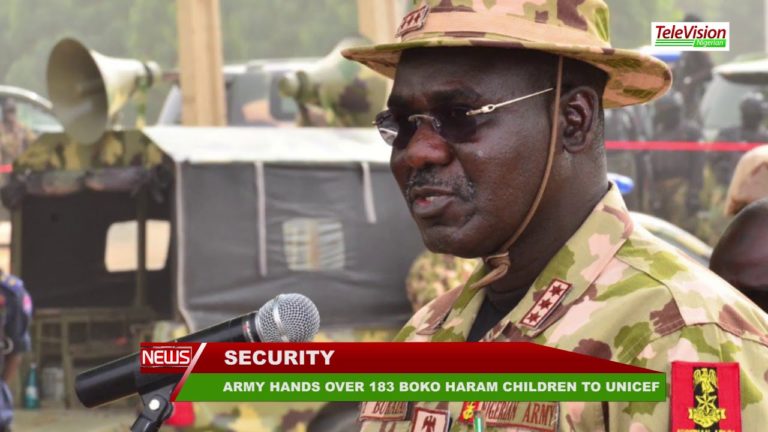
The renewed commitment of the Nigerian Military particularly the Nigerian Army within the last three years was able to take back areas held by these criminal elements.
With the return of peace in these communities, the PRRI has in the last two years been involved in the provision of humanitarian interventions such as relief materials, Medicare and financial assistance to victims.
The 2018 edition tagged “Home Return” was organized in collaboration with Entrepreneur Network Nigeria (EEN) and featured various vocational skills in soap making, insecticide, germicide, bead making , reusable sanitary towels, cosmetics shoemaking and tailoring.
Speaking at the distribution ceremomy, Deputy Secretary of PRRI Nkechi Odoma, who represented the PRRI Chairman, Hon Sam Ode mni said, PRRI is happy to be a part of their story and enjoined them to put the skills and resources already acquired into good use and encouraged others with such lofty ideas to reach out to them and not be discouraged.
She tasked the community to return home and start a living but must report movement of suspicious persons to the military and remain law abiding citizens.
Over 1000 Internally Displaced Persons benefited from the scheme at the Mongonu and Baga IDP camps with items such as sewing machines, cosmetic kits, and other starter packs as well as food items of assorted variables.
A beneficiary Amina Bulama who lost her husband and two children couldn’t hide her emotions while speaking to TheNigerian. Expressed gratitude to the organization for the program which she said has given her a reason to stay alive.
“This scheme has given me a new life, I am very excited to return home and begin anew,” she said.
Another beneficiary, Mohammed Kaita recounted his ordeal with the terrorists.
“They killed my aged mother and raped my two wives right before me. I had a barn filled with grains but they burnt all including our houses. My two sons were spared because they were not home at the time of the attack but my neighbours son who refused to join the insurgency were slaughtered like rams before their aged father who couldn’t survive the trauma.
“I have lost everything I ever worked for but I am very grateful to God for this initiative the PRRPI has brought. I have learnt how to make clothes I am prepared to go home any moment from now because peace has now returned to my village”. He said
In 2014, the insurgency spread to neighboring Cameroon, Chad, and Niger thus becoming a major regional conflict.
In 2015, a coalition offensive by the Multi National Joint Task Force pushed Boko Haram to retreat into the Sambisa Forest until the Nigerian Military in a decisive operation cleared their entire strong holds.
The insurgency which has largely been political took place within the context of long-standing issues of religious violence between Nigeria’s Muslim and Christian communities even though the insurgents did not discriminate along religious lines in their killings.
Boko Haram has been called the world’s deadliest terrorist group, in terms of the number of people it has killed and territories it captured.
The PRRI has remained one of the organizations working not only to ensure that peace returns but that communities are reconstructed victims rehabilitated and resettled in their homes.
“Coming here by road all the way from Abuja, I have seen so much. The magnitude of devastation is unimaginable but the recovery effort is very very impressive” François de Rubet a French journalist told TheNigerian.
“It’s not about sitting in that luxury hotel in Abuja to say things that don’t add up, its about coming up here to assess situations for yourself.
“The most amazing aspect is the home grown solutions the Nigerian authorities have adopted. To me, this is the best solution to completely avert a future occurrence” he added.
After the intensive training by the PRRI Team beneficiaries where issued certificates and given materials and cash to start up businesses.
The intervention of the PRRI according to Hadiza Usman a beneficiary living with disability, will linger in their minds for a long time to come as they prepare to return back home. But above all the love she has been shown by the team has helped her to stay hopeful that the event of the recent past has come to a final end.
Final Return of Peace to North East Nigeria and Matters Arising By Philip Agbese
There is relative peace in northeast Nigeria. Thanks to the efforts of the Nigerian Military whom had made great sacrifices for peace to return and for also the peaceful return of Internally Displaced People (IDP) back to their homes. As the North East of Nigeria recovers from a protracted insurgency, a thoughtful response to the humanitarian crisis becomes imperative. The over ten years of insurgency left scores dead and millions displaced. At some point, it was so bad that we feared for the continued existence of Nigeria. But thank God all of that is history. However, it is not Uhuru yet. A lot still has to be done primarily in the areas of reintegration and resettlement.
This is the issue as typical with most post-conflict societies. Collaboration initiatives in advancing post-conflict situations and securing lasting peace are an essential component in achieving the implementation of justice and accountability mechanisms as well as charting national policies and institutional responses.
As mentioned, there is a need to multi-approach collaborations between the military; the various state governments, international donor organizations, as well as development partners, especially in the area of the provision of infrastructure in the affected areas. Nigeria’s Recovery and Peace Building Assessment (RPBA) pre-financing assessment conducted in alliance with the federal and states governments alongside global partners, such as the United Nations, World Bank, and the European Union hinted of the extent of damage and amount of funds required to inject life into the six states arrested by the insurgency. It tentatively pegged the figure on damaged infrastructure at $9 billion.
The report which was anchored on three main parameters like infrastructure and social services, peacebuilding, stability and social cohesion, and economic recovery, disclosed that $6 billion was instantly needed for immediate stabilization and reconstruction of the Northeast region’s states of Adamawa, Bauchi, Borno, Gombe, Taraba, and Yobe. This is the challenge.
So far so good, IDPs have been returning to their places of abode but not homes because of the near absence of the essential social amenities. There is the wanton destruction of infrastructure in these communities that returnees barely have access to decent shelter, water or medical facilities.
This is where I firmly believe that states governments and international development partners or donor organizations have to come in. Leaving the task of rebuilding these communities in the military can be overwhelming and denies the returnees access to the necessities of life. It must also be noted that for the returnees to overcome the psychological trauma associated with the crisis to agree to return, speak of a people willing in spirit to continue to brave all odds. And for this, the critical stakeholders must come to their aid by ensuring the provisions of these amenities.
For example, should a state government decide to support the military in ways numerous to mention, that would not only speed up the process, it would also serve as a morale booster for others that are yet to make up their minds on returning to their bases. This is also on the heels of the complexity involved in administering IDP camps. In this circumstance, the military has demonstrated capacity for ensuring that these communities are safe for return. The state government and other development partners also have to play their various roles in providing that these people not just return to empty spaces, but return to life. A life they once lived in peace and harmony. I stand to be corrected; this might be another crisis in the making if the people perceive the government as insensitive to their plights. We must also remember that these people are humans and have entitlements as enshrined in the constitution. One of which is a right to the provision of essential amenities of life.
It is also imperative for government and international actors to engage local NGOs and researchers who are committed to rehabilitation of displaced persons in Nigeria. The aim of engaging them is to gather thematic challenges confronting the displaced persons and the solutions to such challenges. The authorities concerned in the various states should note that the continuous stay of the IDPs in camps is another problem because the children/orphans are cut-off from adequate education, proper parental care, and attention. And this might come with its attendant socioeconomic challenges.
We must rise to the occasion to ensure that those are returning are at the least comfortable. They have suffered economic, social and psychological losses since the advent of the insurgency. They have also seen the worst of times as human beings and also as Nigerians. Do they have anywhere to call home? The question this is where home is? A home without access to necessary infrastructures, and home in ruins.
I must commend the efforts of the Nigerian military so far. They have done their bit by ensuring that these communities are free from further attacks. They have also guaranteed that never would these communities be ransacked by Boko Haram terrorists again. The task of rebuilding these communities is a task that must be done by concerned stakeholders. It also involves the principle of structural functionalism, where all structures play its part towards the success of any given endeavor.
The first step has been completed by the Nigerian military. The next steps have to commence, and this is where I engage the various state government and development partners. The truth is that we are all victims of this circumstance. Humanity deserves a chance. And all hands must be on deck. This is a task that must be completed.
Philip Agbese holds a Bachellor of laws degree from the Middlesex University London where he is currently studying for his Masters in Law [LLM Human Rights ]. He has special interest in human rights and international humanitarian laws and has written so many articles on the Nigerian government’s fight against Boko Haram. He has travelled to and fro the theatre of Boko Haram’s operations in the north east of Nigeria 18 times in the last 3 years and equally involved in charity work to the displaced persons. Philip has hosted numerous international conferences and seminars on human rights in Nigeria with specific focus on conflict resolution and prevention