Home Blog Page 260

Abacha Didn’t Loot Nigeria, He Safeguarded the Money – Al Mustapha Defends Late Leader

0

The claims that his former employer embezzled Nigerian funds and concealed them abroad have been denied by Hamza Al-Mustapha, the former Chief Security Officer of the late military Head of State, General Sani Abacha.
He said that the funds in question were utilized to help Nigerians through difficult economic times in an interview with the BBC.
He maintained that the funds were not pilfered but rather were held in a national account to fund Nigeria’s economic strategy.

“At that time, the government was operating under a lot of hardship,” he said. No money was present. So, along with a few others, we traveled to Libya to find out how they were coping. Libya had been subject to sanctions for eleven years.
He clarified that after researching Libya’s system, the Abacha administration implemented a program that let Nigerian-owned businesses to obtain government funding in order to purchase commodities and resell them to the populace at reasonable costs.

Read Also: Tinubu Approves State Pardon for Ken Saro-Wiwa, Others

By God’s favor, Nigerians were spared throughout the copying of these materials. Abacha’s death, however, caused some people to refuse to return the money. Instead, they made up a lot of untrue things about him.

“The money that they claim was sent back to Nigeria wasn’t in Abacha’s name, in my opinion. In order to sustain this economic plan, the funds were retained in national accounts. He stated, “Some gave it back, while others concealed it.”

Further challenging the accusations, he said, “Did Abacha ever travel abroad? Did he sign the money that was discovered? Or was he caught moving funds? “No.”

Al-Mustapha responded that while there has been political advancement in Nigeria, the lives of average Nigerians have not changed when questioned about the country’s democracy.

According to him, “democracy is good, but it’s a big problem when it’s used in a way that harms the people.”

Tinubu Approves State Pardon for Ken Saro-Wiwa, Others

0

President Bola Ahmed Tinubu has fully pardoned Ogoni Nine leader Ken Saro Wiwa (CON) and his fellow activists.
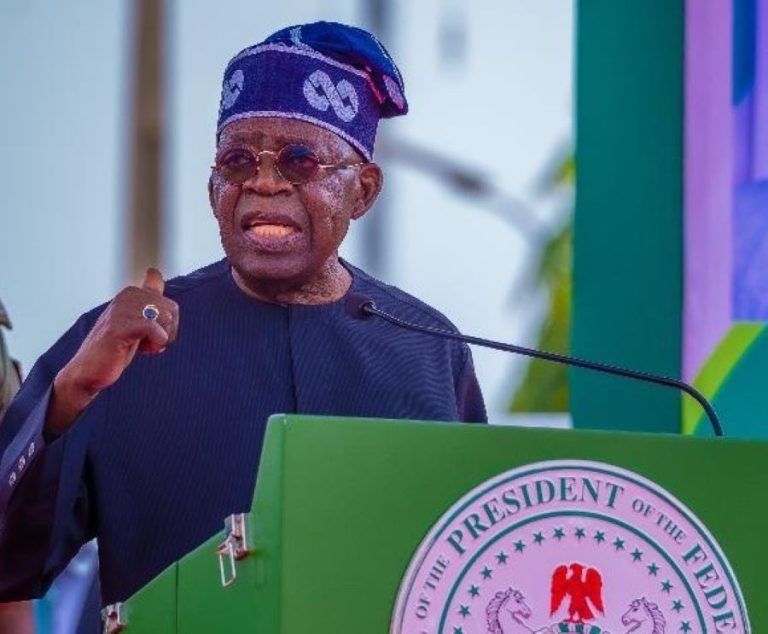
In an address to the National Assembly on Thursday in honor of June 12th, Democracy Day, the President reportedly revealed this.
“I will give the Ogoni nine activists and others whose names will be revealed later in cooperation with the National Council of State,” he said.

“In addition, I bestow posthumous national honors on Ken Saro Wiwa (CON), the leader of the Ogoni Nine, and his fellow travelers, Saturday Dobee (OON), Nordu Eawo (OON), Daniel Gbooko (OON), Paul Levera (OON), Felix Nuate (OON), Baribor Bera (OON), Barinem Kiobel (OON), and John Kpuine (OON).” “I will also be using my authority under the prerogative of mercy to fully pardon these national heroes, along with others whose names will be revealed later in collaboration with the National Council of State,” Tinubu said.

Remember that in 1995, under General Sani Abacha’s military regime, Ken Saro-Wiwa was hung after being tried by a special military trial for allegedly planning the killing of Ogoni leaders during a pro-government gathering.

Because of the international outcry over his death, Nigeria was suspended from the Commonwealth of Nations for over three years.

Breaking: Lagos Residents Stage Anti-Tinubu Protest on Democracy Day

0

Nigerians have flocked to the streets of Lagos to protest the economic hardships under the current government, which is led by President Bola Tinubu, as part of the June 12 Democracy Day celebration.
The demonstrators, who assembled near the Ikeja Underbridge, are demanding that certain policies put in place by the current government be reversed.

According to reports, the demonstrators were seen waving placards with a variety of inscriptions, such as “Reverse Electricity Tariff Hike” and “No one deserves a death sentence for protesting against hunger,” among others, even though law enforcement officers were present.

Below are further images from the ongoing protest:

[BREAKING] June 12: Anti-Tinubu Protest Breaks Out In Lagos [Photos]


As it commemorates Democracy Day, it was understood that demonstrators opposing bad governance had previously taken over the streets of Ikeja in Lagos State to express their displeasure with the country’s current situation.
Olohundare Moshood Jimoh, the Lagos State Commissioner of Police, reportedly showed there to interact with the protesters, according to The reports.

Furthermore, Benjamin Hundeyin, the public relations officer for the Lagos State Police, has previously confirmed the protest’s continuation on social media.

Hundeyin, who shared video recordings, said there was no cause for alarm.

“Democracy Day protesters and celebrants at Ikeja Underbridge,” he wrote. sufficient security for both demonstrators and revelers on the ground.

“There’s nothing to be alarmed about. Our top concern is still keeping you safe and secure. #LagosPoliceNG

Governor Okpebholo Urges Edo Citizens to Uphold Democratic Values on June 12

0

As Nigeria commemorates Democracy Day, Edo State Governor, Senator Monday Okpebholo, has called on citizens to recommit themselves to the ideals of democracy, justice, and national unity. Reflecting on the significance of June 12, the governor described the day as a solemn reminder of the country’s struggle for democratic freedom and the sacrifices of its champions.

In a statement released by his media aide, Fred Itua, Governor Okpebholo emphasized the historic importance of June 12, 1993, when Nigerians overwhelmingly chose a path of popular will, symbolized by the legacy of the late Chief M.K.O. Abiola and other democracy advocates.

“June 12 is not just a date in history—it is a symbol of our collective resolve to build a nation grounded in justice and the will of the people,” Okpebholo said.

He reiterated his administration’s commitment to inclusive, transparent governance through the implementation of the ‘SHINE’ agenda, which prioritizes improvements in healthcare, education, infrastructure, agriculture, and public safety.

The governor further encouraged residents to play active roles in the democratic process, stressing that accountable leadership and civic participation are essential to sustaining democratic growth. “Our democracy can only thrive when citizens engage constructively and demand responsible leadership,” he added.

Governor Okpebholo concluded by urging the people of Edo to remain vigilant, contribute positively to development efforts, and continue working together to achieve lasting peace and prosperity.

Wike Speaking Like Nigeria’s Owner – Dele Momodu

0

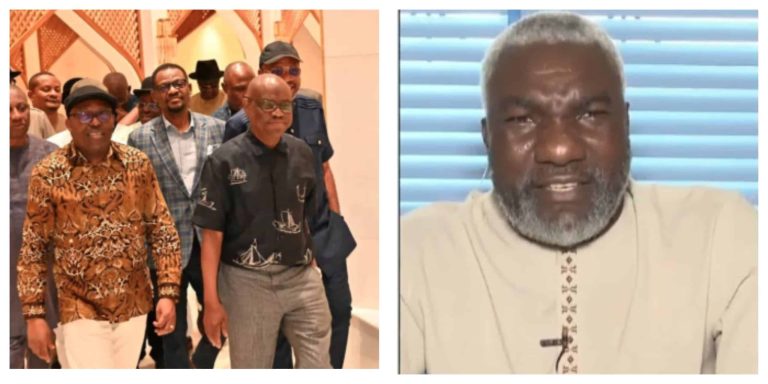
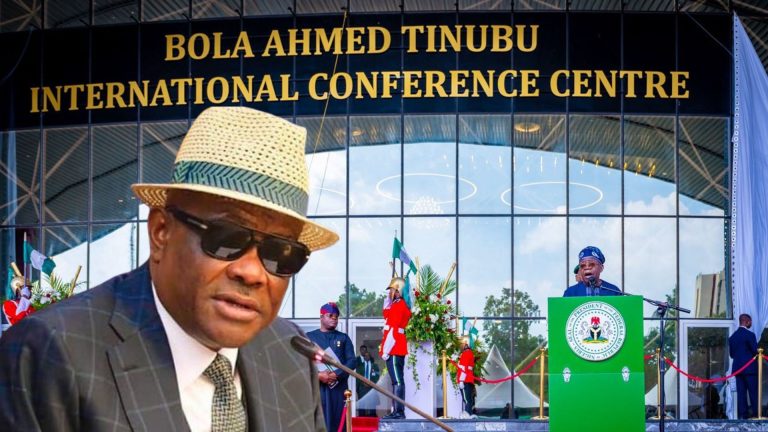
The Democratic credentials of Nyesom Wike, the Minister of the Federal Capital Territory (FCT), have been questioned by publisher and politician Chief Dele Momodu.
Because he wants to decide the zoning of the PDP’s 2027 presidential ticket and make sure his wishes are carried out, Momodu accused Wike of stirring up trouble inside the party.

The former PDP presidential candidate also charged that Wike was acting like an elder in Nigerian politics when, in reality, he had nothing to do with the democratic movements of June 12.

That one individual, who ought to be occupied in Abuja, is deciding where the PDP presidential ticket should go in 2027 sounds absurd. Wike is essentially repeating his actions from Rivers State, and it is obvious that the high brass supports him in this endeavor.

Read Also: Court Sentences Man to 74 Years Imprisonment for ₦360 Million Fraud and Bounced Cheques in Lagos

Where was Wike at the conflict on June 12? He was unknown back then. But now, he talks like he’s Nigeria’s founding father,” Momodu stated in an interview with Channels Television on Wednesday.

Wike Is to Blame for the Rivers Crisis
Chief Momodu also charged the FCT Minister with trying to maintain power in Rivers State, which led to a political crisis in the oil-rich state, according to Naija News.

“One man planned and exacerbated a massive crisis of monumental proportions.” A state of emergency had to be established just because he refused to leave quietly. “It’s unprecedented in Nigerian history,” he said.

Wike Is Putting Up A Coup
Momodu further claimed that Wike’s efforts are dividing the PDP and staging a coup against it.

His current actions amount to a coup against the party that helped shape who he is now. “He lacks the ethical authority to control the PDP’s course,” the publisher said.

Court Sentences Man to 74 Years Imprisonment for ₦360 Million Fraud and Bounced Cheques in Lagos

0

A Lagos High Court judge in Ajah, Josephine Oyefeso, sentenced Chukwudi Okonkwo Goodness to 74 years in prison for stealing ₦360 million and giving his victim counterfeit checks.
According to reports, the verdict, which was handed down on Tuesday, concludes a nine-year trial that started in June 2016 when Goodness was charged with 33 counts of fraud, theft, and issuing fraudulent financial instruments by the Economic and Financial Crimes Commission (EFCC).

The EFCC claims that between June and July 2015, Goodness fraudulently converted Henry Nnadike’s ₦360 million.

“That you, Chukwudi Okonkwo Goodness, committed the crime of stealing by conversion in violation of Sections 278 and 285 of the Criminal Law of Lagos State, 2011, sometime between June and July 2015 at Ikeja… fraudulently converted and stole the sum of ₦360,000,000.00…,” the charge sheet stated.

Read Also: Aide to Ekiti State Governor Tenders Resignation

Goodness entered a not guilty plea to each of the 33 charges. To support the claims, prosecuting attorney T.J. Banjo called four witnesses and submitted numerous exhibits during the trial.

Goodness was found guilty on 32 of the 33 counts by Justice Oyefeso, and he was only found not guilty on the point of possessing forged documents.

The following punishments were imposed by the court:

7 years in jail on the first offense of theft;

two years each on charges three through thirty-two for issuing faulty checks, with no possibility of a fine;

7 years without the possibility of a fine on count 33.

The judge mandated that each term be served concurrently, which translates to a total of seven years behind bars.

In addition, the court ordered Goodness to give the victim a refund of ₦215 million within 30 days of the ruling. The offender may only be eligible for a fine once the refund has been issued, according to Justice Oyefeso’s ruling.

Aide to Ekiti State Governor Tenders Resignation

0

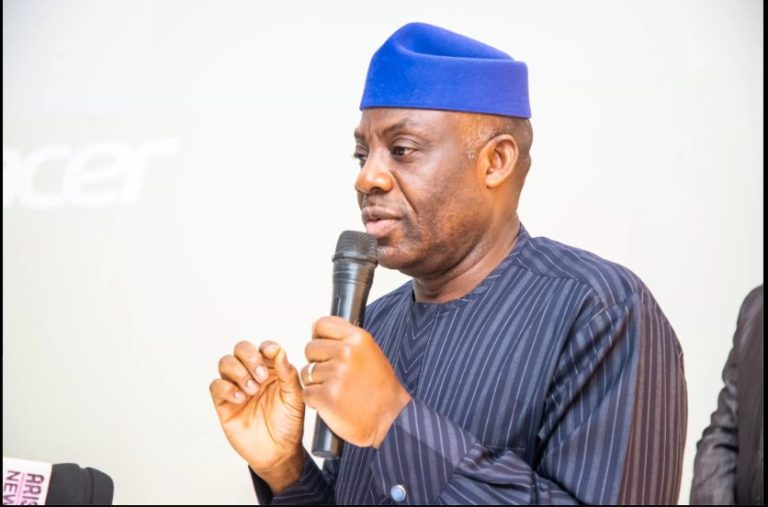
Wale Ade-Oba, a member of the Ekiti State Waste Management Board, has resigned from his position in the government of Governor Biodun Oyebanji.
Ade-Oba criticized Governor Oyebanji, citing what he describes as the administration’s lack of notable achievement in spite of large budgetary commitments.

Ade-Oba said in a statement released on Wednesday that he would no longer work with the Oyebanji-led administration and that he supported Mr. Kayode Ojo, the pro-chancellor of the University of Nigeria, Nsukka, UNN, whom he described as a visionary leader who could change Ekiti State.

He claimed that inefficient governance has resulted from the governor’s frequent absences from the state and his pursuit of what he called a “unclear agenda.”

“I am writing to share with you a decision that may surprise many,” the statement says. As you are aware, Governor Biodun Oyebanji’s current administration has me as an appointee. But after giving it some thought, I’ve chosen to work alongside Engr. Kayode Ojo, a leader who has a vision for a better Ekiti.

“I think that many local government districts, including mine, Irepodun/Ifelodun, have not seen much growth from the administration.

“In spite of their diligence and commitment to the party’s success, our party members are being disregarded and underappreciated. Rather, our devoted supporters are being disregarded while members of the opposition party who did not help us win are being appointed to important positions.

Read Also:Breaking: Democracy Day Parade Off the Table as FG Pulls the Plug

“The current administration’s lack of productivity is a result of the governor’s frequent absences from the state, where they pursue ambiguous agendas. I think a change is in order.

“I agree with Engr. Kayode Ojo’s leadership style and vision for Ekiti. His administration, in my opinion, would put our citizens’ interests first, honor the work of our party members, and promote growth in all governmental regions.

“I am making this change because I want to be a part of a government that values the contributions of its devoted supporters and genuinely serves the people of Ekiti.” I’m prepared to work toward a better future for our state, and I cordially welcome everyone to accompany me on this path.

Breaking: Democracy Day Parade Off the Table as FG Pulls the Plug

0

The federal government has decided to cancel the military parade commemorating the 26th Democracy Day, which was slated for Thursday, June 12, 2025.
According to the Inter-Ministerial Committee on Democracy Day celebrations, President Bola Tinubu will deliver a nationwide address at 7 a.m. on Thursday, instead of the traditional Democracy Day parade that has been held in past years.
Instead, President Tinubu will attend a special joint session of the National Assembly at 12 p.m.

Read Also: No Escape for Ex-JAMB Boss: Court Dismisses N5.2B No-Case Submission

This joint session is expected to contain talks about the state of the nation, reflections on Nigeria’s democratic experience, and new calls for national unity and reform.

Later that day, a public lecture is scheduled for 4 p.m. at the State House Conference Centre in Abuja.
According to reports, this event would bring together government officials, political leaders, and civil society groups to discuss the country’s democratic future under the topic “Consolidating on the Gains of Nigeria’s Democracy: Necessity of Enduring Reforms.”

The statement encouraged the people to watch the broadcast and participate in the national conversation aimed at strengthening democratic institutions and reforms.

No Escape for Ex-JAMB Boss: Court Dismisses N5.2B No-Case Submission

0

A no-case submission submitted by Dibu Ojerinde, the former Registrar of the Joint Admissions and Matriculation Board, in a ₦5.2 billion fraud case brought against him by the Independent Corrupt Practices and Other Related Offences Commission (ICPC) has been rejected by Justice Obiora Egwuatu of the Federal High Court in Abuja.
On Tuesday, the court reportedly decided that Ojerinde has a case to answer based on the anti-graft agency’s initial evidence.
When Justice Egwuatu delivered his decision, he concluded that Ojerinde had to enter his defense since the prosecution’s witnesses had sufficiently connected him to the accused offenses.

Thus, the no-case submission is rejected.

The judge declared, “The prosecution has proven sufficient evidence to require the defendant to provide explanations.”
The defendant’s defense was allowed to begin on July 16 after the case was postponed.

Ojerinde, a former head of the National Examinations Council (NECO) and JAMB, was charged with 18 counts in July 2021 that included conspiracy to defraud the federal government, abuse of office, and criminal conspiracy to divert public monies.

Ebenezer Shogunle, the lead lawyer for the ICPC, claims that the alleged offenses are in violation of sections 1(1)(b) of the Advance Fee Fraud Act of 2006 and 19, 24, 25(1)(a) and (b) of the Corrupt Practices and Other Related Offenses Act of 2000.

In February 2022, Ojerinde’s attorney, Ibrahim Ishyaku (SAN), tried to negotiate a plea agreement with him, but the agreement fell through, and the trial went on.

When the ICPC closed its case after calling several witnesses, the defense filed a no-case submission, which was later thrown out.

Read Also: World Bank Flags Economic Concerns for Africa Amid Rising Budgetary Pressures

The main accusations made by the ICPC were that Ojerinde, while working as registrar at JAMB and NECO, had transferred billions of naira into personal accounts and private firms.

The panel further said that he violated anti-graft legislation by giving himself an unfair advantage.

On the other hand, Ojerinde has entered a not guilty plea to all counts.

World Bank Flags Economic Concerns for Africa Amid Rising Budgetary Pressures

0

African economies are dealing with increasing budgetary strains as a result of a difficult external environment characterized by trade tensions, inflationary pressures, and growing debt loads, while global GDP is predicted to decline to its worst rate since 2008.
The World Bank is pushing Nigeria to step up efforts to diversify its economy and fortify regional trade alliances in the face of a global economic slowdown brought on by rising trade tensions and policy uncertainties.
Because of Nigeria’s significant reliance on oil exports and susceptibility to changes in global markets, economic diversification and more African integration are essential to maintaining growth and boosting resilience in the face of growing worldwide

The World Bank’s most recent Global Economic Prospects report emphasizes that, barring outright recessions, sustained global trade tensions and policy uncertainty are predicted to cause global growth to decline to its lowest level since 2008. Nearly 70% of economies, including Nigeria and most of Africa, are expected to see slower growth as a result of this downturn.
In 2025, global growth is predicted to slow to 2.3%, which is almost 0.5 percentage points less than previous projections.
The average growth rate in the 2020s is expected to be the slowest since the 1960s, even though a global recession is not predicted.
Nonetheless, it stated that a worldwide recession is not anticipated. However, the bank predicted that the first seven years of the 2020s will see the slowest average global growth since the 1960s if predictions for the next two years come to pass.
These international dynamics present serious difficulties for Nigeria. Because of the combined effects of falling oil prices, rising import prices, and capital flow issues amid increased global uncertainty, the International Monetary Fund (IMF) lowered Nigeria’s growth prediction to 3% in 2025 and 2.7% in 2026. Nigeria is especially susceptible to fluctuations in the price of commodities worldwide due to its reliance on the export of crude oil, which accounts for more than 70% of its export revenue.

“The developing world outside of Asia is evolving into a region devoid of development. remarked Indermit Gill, Senior Vice President for Development Economics and Chief Economist for the World Bank Group.
“” It has over ten years of self-promotion. Over the course of three decades, the growth rate in developing countries has decreased, from 6% per year in the 2000s to 5% in the 2010s to less than 4% in the 2020s.

That reflects the decline in global trade growth, which dropped from an average of 5% in the 2000s to roughly 4.5% in the 2010s and less than 3% in the 2020s. While debt has increased to all-time highs, investment growth has also halted.

It is anticipated that growth will decelerate in almost 60% of developing economies this year, averaging 3.8 percent in 2025 before gradually increasing to an average of 3.9 percent in 2026 and 2027. That is over a percentage point below the 2010s average.

Low-income nations are predicted to expand 5.3% this year, which is 0.4 percentage points less than what was predicted at the beginning of 2025. In addition, tight labor markets and tariffs are driving up global inflation, which is still higher than it was before the epidemic and is expected to average 2.9% in 2025.

When growth slows, developing nations will find it more difficult to create jobs, alleviate extreme poverty, and catch up to established economies in terms of per capita income. It is anticipated that developing economies’ per capita income growth would be 2.9% in 2025, which is 1.1 percentage points less than the average for the years 2000–2019.

According to the analysis, it will take developing economies other than China almost 20 years to reach their pre-pandemic economic output trajectory assuming they can maintain an overall GDP growth rate of 4%, which is the figure predicted for 2027.

According to the Bretton Woods institution, if major economies can resolve trade issues, financial volatility and overall policy uncertainty will decrease, allowing global growth to recover more quickly than anticipated. According to the report, global GDP would be on average 0.2 percentage points stronger in 2025 and 2026 if the trade disputes of today were settled with accords that cut tariffs in half from their levels in late May.

According to Ayhan Kose, director of the Prospects Group and deputy chief economist at the World Bank, “developing and emerging-market economies have benefited from trade integration but are now at the forefront of a global trade war.”

The best course of action is to intensify integration efforts with new partners, promote pro-growth measures, and strengthen fiscal resilience to withstand the storm. In the paper, Kose said, “A more stable and prosperous future can be mapped out through renewed global dialogue and cooperation as trade barriers rise and uncertainty increases.”

The paper makes the case that developing nations should aim for further trade liberalization in the face of growing trade obstacles by diversifying their trade, especially through regional accords, and pursuing strategic trade and investment alliances with other nations. Policymakers should prioritize fiscal spending for the most disadvantaged households, mobilize domestic income, and reinforce fiscal frameworks in light of the government’s limited resources and growing development demands.

Read Also: The Dance of Politics in Enone Federal Constituency: An Ode to Rep. Philip Agbese!

In order to accelerate economic growth, the World Bank stated that nations must enhance business environments and encourage productive employment by providing individuals with the skills they need and establishing the framework for labor markets that effectively connect workers and businesses.

In order to assist the most vulnerable emerging economies, international cooperation will be essential. This cooperation will include multilateral interventions, concessional funding, and emergency assistance and support for nations involved in ongoing wars.

Nigeria’s own 27 percent tariff on American goods exacerbates trade tensions, which include the US imposing a 14 percent duty on Nigerian exports, which threatens to lower export demand and foreign cash inflows. These reciprocal duties run the danger of raising import prices for Nigerians, depreciating the value of the Naira, and upsetting vital supply lines for the country’s economy.

The World Bank cautions that these trade disputes and the uncertainties they cause will probably limit Nigeria’s fiscal flexibility and make it more difficult to finance infrastructure and social initiatives. Nigeria and other African countries are at further risk due to the slowdown in global trade growth, which went from 5% in the 2000s to less than 3% in the 2020s, as well as growing debt levels.

Experts advise Nigeria to increase economic diversification by strengthening its own value chains and industrial capabilities in order to address these challenges and lessen its reliance on outside demand. To counteract global concerns, smart commercial alliances inside Africa and the strengthening of regional trade integration could be beneficial.

Moreover, maintaining growth and job creation depends on strengthening the business environment, increasing labor market efficiency, and mobilizing domestic revenues. To support Nigeria and other vulnerable African economies during this time of increased economic uncertainty, international cooperation and concessional finance will be crucial.