Home Blog Page 2573

10 die in multiple auto-crash along Ijebu-Ode-Benin Expressway

0

At least 10 people died Saturday in a car crashes involving multiple cars along Sagamu-Ijebu/Ode- Ore expressway.

The Federal Road Safety Corps, Ogun State Sector Commander, Clement Oladele, made this known late Saturday.

He said the first crash occurred around 5a.m. when the day was still dark, while the second crash occurred at about 8.20 a.m. on the same corridor at Ijebu Ife, Ogun State.

The two crashes involved 26 persons.

The sector commander said the first crash was suspected to have been caused by an armed robbery attack. Two people died when the driver of a Toyota Picnic suddenly reversed on the highway after sighting armed robbers.

An oncoming truck crashed into the fleeing vehicle.

“The injured victims were rescued to General Hospital Ijebu-Ode , Ogun State. The corpses of the dead victims were deposited at the General Hospital Ijebu-Ode, morgue,” he said.

Seven people died in the second crash involving a Mack tanker and a Toyota Hiace commuter bus coming from Okitipupa, Ondo State.

“The commuter bus due to excessive speed could not manoeuvre the diversion point and in the process collided head on with the truck,” Mr Oladele said.

He said the injured victims were taken to the General Hospital, Ijebu-Ode, for medical treatment.

Catholic bishop calls for ordination of women as priests

0

A Brazilian bishop has called for the ordination of women to the diaconate for service in the Amazon region. The bishop said that 2009 revisions to canon law could allow for the ordination of women deacons, but a leading canon lawyer in the Vatican has disputed that idea.

Bishop Evaristo Pascoal Spengler, OFM leads the territorial prelature of Marajó in Brazil and is participating as a member of the Synod on the Pan-Amazonian region in Rome.

During a press conference on Oct. 25, Spengler said that “there is a path that is open for the ordination of women,” citing a 2009 document from Pope Benedict XVI.

While referencing the role of women leaders, saints, and teachers in the history of the Church in making, Spengler did not account for the theological and sacramental impediments to such a development.

“We know that in the history of the Church there are women deacons. A role that should be expanded on.”

Spengler said a canonical possibility for the ordination of women was created by Pope Benedict in 2009.

“In 2009 the pope made a change in canon law according to which the bishop, the priest and the deacon receive their mission and the faculty to act in the name of Christ. But this was changed by Pope Benedict, who changed this paragraph [which] said that, from that moment onward, that deacons were no longer linked to Christ but be able to serve the people of God in the diaconate in the liturgy of the word and in charity,” Spengler said.

“So, we realize that there is a path that is open for the ordination of women.”

The bishop was referencing Benedict’s 2009 motu proprio Omnium in mentem, which revised canons 1008 and 1009 of the Code of Canon Law.

Benedict’s document noted that some language in canon law did not fully reflect the teaching of Vatican Council II on the nature of the diaconate, and that Pope John Paul II had already updated the Catechism of the Catholic Church to address the same issue. Benedict’s document revised the law to emphasize the distinction between diaconal and priestly ministry.

“Those who are constituted in the order of the episcopate or the presbyterate receive the mission and capacity to act in the person of Christ the Head, whereas deacons are empowered to serve the People of God in the ministries of the liturgy, the word and charity,” the revised canon 1009 says.

While the new wording reflects that deacons do not act in the person of Christ through the celebration of Mass, Benedict left intact canonical wording which reflects the unity of the sacrament of orders at all three grades of deacon, priest and bishop.

Canon 1008 states that “By divine institution, some of the Christian faithful are marked with an indelible character and constituted as sacred ministers by the sacrament of holy orders. They are thus consecrated and deputed so that, each according to his own grade, they may serve the People of God by a new and specific title.”

Benedict’s reforms left intact the essential provision of canon 1024, which states that “A baptized male alone receives sacred ordination validly.”

Bishop Juan Ignacio Arrieta Ochoa, secretary of the Pontifical Council for Legislative Texts, told CNA that Benedict made revisions to canon law to “better distinguish the ministry of priests and deacons.”

“The canon was changed to reflect the Catechism,” he added.

“Nothing is said or mentioned regarding women,” Arietta said.

Arrieta mentioned that Pope Francis established in 2016 a commission to study the female diaconate which has thus far reached no definitive conclusion Earlier this year, the pope said that while there is no consensus on questions related to the issue, the matter will continue to be studied.

Spengler also said that “we know that in the history of the Church there are women deacons. A role that should be expanded on – deaconess – and how to include this in the Church.”

In May, the pope said that the deaconesses described by St. Paul in the New Testament, and referenced by Spengler on Friday, can not be understood as equivalent to the modern sacramental notion of the diaconate.

A 2002 document published by the International Theological Commission concluded that female deacons in the early Church did not have the same functions as male deacons, and had “no liturgical function,” nor a sacramental one. It also said that even in the fourth century “the way of life of deaconesses was very similar to that of nuns.”

“The formulas of female deacons’ ‘ordination’ found until now, according to the commission, are not the same for the ordination of a male deacon and are more similar to what today would be the abbatial blessing of an abbess,” Francis said May 7 during an in-flight press conference returning from North Macedonia and Bulgaria.

“For the female diaconate, there is a way to imagine it with a different view from the male diaconate,” said the pope while insisting that the issue needed further study.

Bishop Spengler did not mention either Pope Francis or the commission for the study of women deacons on Friday.

During the press conference, several journalists groaned when Spengler was asked about the Church’s sacramental theology and its restriction of ordination to men alone.

Earlier in the session, applause broke out among some journalists after Paulo Ruffini, Prefect for the Vatican Dicastery of Communications, intervened to correct a question from veteran Vatican correspondent Sandro Magister.

Magister had made reference to an earlier event held in the Vatican gardens, during which a group of participants knelt in a circle around several carved items arranged around a controversial statue, variously identified as an earth mother figure or fertility symbol.

Ruffini insisted that the event was not an “official” synod event, and that questions about such events did not have to be answered. He also said that “there was no ritual” and “no prostration,” to applause from several journalists present at the press conference.

Buratai calls for more budgetary allocation to the Nigerian Army

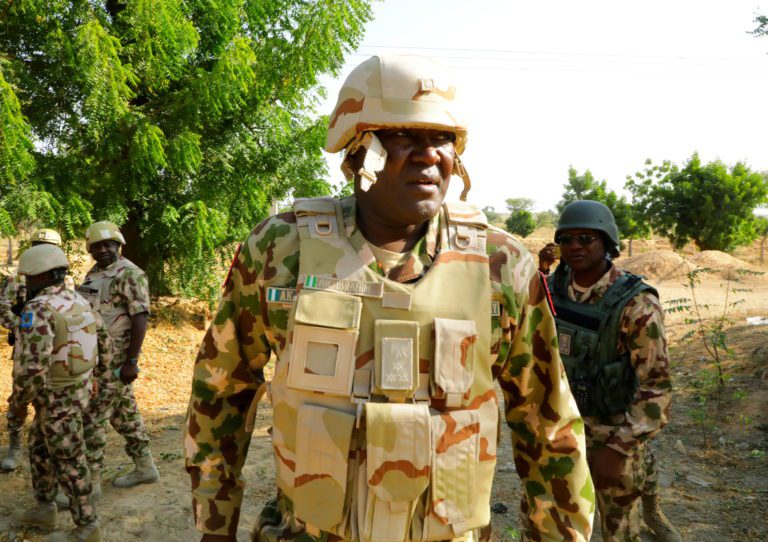
The Chief of Army Staff Lt. General Tukur Yusuf Buratai has called for more funding to enable the Army to acquire necessary platforms to conclude the war against Boko Haram terrorism and other myriads of security threats facing the country.

The Army boss made the call during the Nigerian Army budget performance appraisal for the 2019 and the Army budget defence for the year 2020 on Thursday.

He called on the National Assembly to prevail on the Ministry of Budget and National Planning to review the budget of the military.

Gen Buratai based his submission on the on-going structural changes, volatile security environment and massive engagement of troops in virtually all the 36 states of the federation.

This, he said, was because his outfit was allotted N232.4 billion as against N472.8 billion requested from the national planning ministry in the 2019 budget.

Buratai explained that for the 2019 budget, N350.5 billion would be expended on Nigerian Army Personnel Emolument, N43.6 billion for Army Overhead Budget, and N78.5 billion for Nigerian Army Capital Budget.

Meanwhile, the National Assembly has applauded the commitment and achievements of the Nigerian Army under the leadership of Lt. General Yusuf Tukur Buratai the Nigeria Chief of Army Staff.

The Chairmen of the two committees in the National Assembly on the Army, Senator Ali Ndume and Hon Abdulrazak Sa’ad Namdas promised to support the Army to secure more funding to acquire the necessary platforms required to tackle the nation’s security threats such as the Boko Haram insurgency.


Thousands protest in Guinea over Condé’s presidential bid

0

Demonstrators have returned to the streets of Guinea to contest the president’s possible bid to seek another term. Unlike smaller demonstrations which saw at least nine people killed and several opposition leaders jailed, Thursday’s march was peaceful. But the situation remains volatile amid allegations of Russian interference.

The situation in Guinea is “explosive,” says Marie-Madeleine Dioubaté, an opposition presidential candidate.

“Mr Alpha Condé is nearing the end of his mandate in 2020 and he absolutely wants to seek a third term,” she told RFI.

Eighty-one-year-old Condé has neither denied or confirmed whether he will run again in next year’s presidential race.

But the fact that he’s asked his government to look into drafting a new constitution that could allow him to seek a third term, has raised fears that he will reset the button on his presidency.

Those fears are unfounded Conde’s Information and Communication Minister Amara Somparé said.

“The demonstrations are against rumours not facts, because we don’t know yet if the president intends to stand for a third term. So, people are wasting their time,” he told RFI.

“There is a debate in the country regarding a new constitution to be submitted to the people by referendum. They will decide either yes or no. This is an act of democracy,” he said.

Crackdown on protests

The wave of demonstrations began on 14 October. At least nine people were killed that day when police opened fire on demonstrators as they ransacked military posts and blocked roads with burning tyres in the capital Conakry.

Authorities deny the use of excessive force, but have launched an investigation.

“What we saw last week were not demonstrations but riots by young people who had been brainwashed to destroy public property,” comments Information Minister Somparé.

Several opposition campaigners and politicians were arrested and sentenced to prison for inciting civil disobedience, including Abdourahmane Sanoh, a former government minister and head of the National Front for the Defence of the Constitution, behind the current protests.

Rights groups have denounced government interference in the judicial system–a charge the government denies.

“I cannot make any comments on the decisions made by justice,” says Somparé. “That is proof that the justice system is not under control, because we’re not giving instructions to them, we’re accepting their decisions,” he said.

Mining boom for who?

The public’s rage is also about corruption and discontent with a leader, whose victory in 2010 had raised hopes for democratic progress in Guinea after years of military rule.

For presidential candidate Marie-Madeleine Dioubaté, who is also the coordinator of the National Front for the Defence of the Constitution in France, Alpha Condé has failed to live up to the public’s expectations.

“The population of Guinea are protesting because they are upset. You know our country has the largest bauxite mines in the world. We have gold, diamonds and yet the people don’t get anything,” she said.

“The government takes all the resources of the mining and the population gets poorer and poorer. They don’t have even food, school, or access to health, so the population are fed up now, and want the president of Guinea to leave power.”

Guinea gets around a third of its revenues from the mining sector. Authorities insist that 15 percent of its profits are shared with communities impacted by the extractive industry and used to build social infrastructure projects around the country.

France re-opens holy site in Jerusalem after ownership battle

0

France has re-opened access to an ancient tomb in Jerusalem, after a dispute over who owns it. The Tomb of the Kings is an important religious site for ultra-Orthodox Jews and Israel has disputed the ownership of the site.

Around 30 people visited the site in Israeli-annexed east Jerusalem on Thursday morning, while other ultra-Orthodox Jews danced and prayed outside the gates while they waited for their turn to visit, with police keeping watch.

Ultra-Orthodox Jews consider the 2,000-year-old tomb to be a holy burial site of ancient ancestors.

The site has been closed since 2010, first for renovations, but then because of challenges to its ownership.

The tomb was bought by a French family after its discovery 1863, and the family then gave it to the French state. That ownership has been challenged in Israel’s rabbinical court, which rules on matters related to Jewish law and holy sites.

France had reopened the site in June, but immediately closed it after a group of ultra-Orthodox Jews tried to enter and pray, despite not having signed up as requested.

Visitors are allowed in during set hours, twice per week, and must pre-register online and pay a fee. A maximum of 30 people at a time can visit the exterior of the tomb, including ritual baths and an ancient frieze above the entry, but they are not allowed to go into the tomb itself.

Maina remanded in prison

0

The Federal High Court, Abuja, on Friday, ordered the Economic Financial Crimes Commission (EFCC) to remand Mr Abdulrasheed Maina, former Chairman, Pension Reform Task Team, in the Nigerian Correctional Service’s centre pending the determination of the case.

Justice Okon Abang, who gave the order adjourned the matter till Oct. 30 for commencement of trial.

Consequently, Maina’s son, Faisal, is also being arraigned in the same court on a separate but similar charge.

Faisal’s case is yet to be called as at the time of sending this report.

NAN reports that the anti-graft agency is arraigning the former pension task team chairman on a 12-count charge bordering on “money laundering, operating fictitious bank accounts and fraud.”

The development is coming after Folashade Ogunbanjo, a judge, ordered the forfeiture of 23 property linked to him.

The judge gave the order following an ex parte motion filed by the EFCC

EFCC’s motion was supported by a 30-paragraph affidavit which it brought pursuant to section 17 of Anti-money Laundering Act.

Maina is accused of being involved in pension fraud running into over N100 billion.

The Federal Civil Service Commission dismissed him in 2013 for “absconding from duty” but he returned to the country in 2017 and was reinstated as a director in the interior ministry.

Following outrage, President Muhammadu Buhari ordered his dismissal and demanded a probe of his recall. (NAN)

EFCC busts gang who defrauded a professor

0

The Economic and Financial Crimes Commission (EFCC) has arrested a gang of fraudsters who specialise in exploiting personal data of foreign-based Nigerians to defraud their friends and relations back home.

In a statement by the commission said, four of the gang-members  namely Hon.’ Oladipupo Adebayo, Bimbo Bilewu, Ibrahim Odunayo and Oyeleye Oluwatosi – are currently in the EFCC custody. Others are still at large.

The Commission had launched a manhunt on the suspects after receiving a petition from one Prof Godwin Ekhaguere.

The professor of Mathematics, who retired from the University of Ibadan, alleged in the petition that the gang defrauded him of sums totaling N565,500 (Five Hundred and Sixty-Five Thousand, Five Hundred Naira). He also alleged that the fraudsters made him to part with MTN recharge vouchers worth N36,000 (Thirty-Six Thousand Naira) in the deal.

According to him, he only realised that he had been scammed after he managed to reach his friends on the phone, who denied sending anyone to him. That prompted the petition.

It was in the course of investigating the allegations that the Commission arrested Bilewu at an ATM point where he went to cash the money sent to him by one Pastor Osuji.

Incidentally, Osuji was also a victim of a crime similar to that which the Commission was investigating.

The gang’s patterns of operation are similar in nature. One of them would call their would-be victim with the impression that he was an old-time friend, now based abroad. He would claim that he has a mouth-watering gift to be sent through someone who is allegedly coming home for an event.

The victim would then be handed over to the ‘home-bound’ member. He would be the one to make all sorts of requests ostensibly to clear some obstacles to delivering the consignments from the foreign-based ‘relation’ or ‘friend’, as the case may be.

Investigations into the gang’s operations revealed that they have a mobile application used in making a local number appear foreign to the call recipient.

They also use unregistered SIM cards to make their calls in order to blur out the chances of tracing their real identities.

Another trick to evade arrest, according to investigations, was to open bank accounts in other people’s names and take over the ATM cards from them. They direct their victims to pay into such accounts and use the ATM cards to withdraw the cash.

The suspects have owned up to the allegations against them, and are now helping the Commission in further investigations into crimes of similar nature.

PMB’s arrival as the end of Shekau

By Gabriel Onoja

It’s over two whole years, the actions or voice of the strongest, vicious and potently atrocious Boko Haram factional leader, Abubakar Shekau has been heard nor his shadows sighted anywhere. Before the administration of President Muhammadu Buhari, the cursed Boko Haram leader, Shekau was a lion and king of the Boko Haram jungle.

He straddled the Northeast and other parts of Nigeria with gusto and a panache in horrendous atrocities and gruesome of murders of anybody at sight. He maimed, committed acts of arson, abducted and killed quicker than the executioner’s noose.

Shekau was more than a deadlier and heartless devil’s incarnate. His somewhat mythical prowess in Satanism was nourished by a dozen equally ferocious commanders and thousands of incensed foot soldiers ever ready to indulge in bloodletting at the snap of the fingers.

The founder and leader of Boko Haram, Mohamad Yusuf died mysteriously in the hands of Nigeria’s security agents. Abubakar Shekau who then deputized Yusuf took over the gearshifts of leadership of the extremist religious sect.

By 2010, the sadistic Shakau prosecuted the Boko Haram senseless war on Nigeria with a viciousness that elevated its dreary image to an all -time high in the psyche of Nigerians. Shekau’s leadership of Boko Haram insurgency spared no friend nor foe; Muslims or Christians, much as security agents.

An incensed Shekau was on an unrestrained, unmolested and unchallenged killing spree, abductions and other assorted atrocities without discrimination. It soon brought him into loggerheads with other sect members, leading to the split of Boko Haram and the second faction led by Musab Al-Barnewi.

Worse still, Shekau was in the habit of frequently releasing boastful videos of his demonic exploits on YouTube and other online platforms. At such instance, he claimed responsibility for Boko Haram’s scary attacks on communities, villages, city centers, markets, shopping malls and every conceivable place, in outright braggadocio of his evil exploits. He dared security agents, including the military and promised Nigerians tougher days ahead under his supervised butcheries and destructions.

Nigerians will still recount vividly the national and international outrage which trailed the Boko Haram abduction of 276 Chibok schoolgirls on April 14, 2014. Shekau’s vexatious video appeared in the aftermath, claiming responsibility and displaying the photographs of the trapped schoolgirls. It drenched Nigerians with tears and coalesced the national spirit of collective action against Boko Haram.

But Shekau still reigned supreme and unchallengeable. Indeed, the fear of Boko Haram was the beginning of wisdom for all Nigerians, everywhere they were domiciled without exclusion. Before the Buhari Presidency in 2015, the Boko Haram sect had effectively taken firm control of the Northeast, most cities of Northern Nigeria and was already fast transiting to Southern Nigeria.

Its immediate gory reminiscences were the annexation of 18 LGAs in the Northeast, abductions of about 23,000 Nigerians held in secret camps, and displacement of over 2.4 million natives according to a United Nations report. It was the saddest moment in Nigeria’s history.

However, President Buhari’s resolve to end Boko Haram terrorism led to the appointment of new Security Chiefs. And Lt. Gen. Tukur Yusufu Buratai who emerged as the COAS and leader of anti-insurgency operations turned out to be Shekau, his sponsors and by implication, Boko Haram’s greatest nemesis and unresolved mystery.

Like echoed by an African proverb, Gen. Buratai and Nigerian troops have proved to Shekau that where a lion lives in the jungle, the lioness can never be king. So, Shekau was a lion of the jungle in the despicable days of the old regime. But now, he is a shadow of his old self under a new order spearheaded by Gen. Buratai.

It is quite pleasant that under the reign of Gen. Buratai, the known Shekau has been reduced to a mere rat looking for food to eat in forests, caves and mountains of distant land. Probably, he is disfigured and limping, with strength barely enough to scavenge for food in his hideous caves. His demeaning loquaciousness on Nigeria is also silenced.

Yet, Shekau was the fetish leader of insurgents, who severally led convoys on deadly missions from Damaturu to Maiduguri. Thrice, Shekau’s ragtag armed insurgents almost overran the Government Houses in Maiduguri and Damaturu, intent on converting them into the administrative seat of power for the Boko Haram “Caliphate.”

Shekau’s convoys had security sophistry envied by Nigerian State Governors. But this same formerly “super and invincible” Shekau has not been seen in any video in the last two years. Yet, some Nigerians in their usual malicious mindsets or conspiracy of silence have found no reason to appreciate the Nigerian Army.

So, Nigerian troops under Gen. Buratai vowed never to afford Shakau and his terrorists such luxury anymore. And kicking his own phase of the counter-terrorism campaigns, Gen. Buratai launched relentless assaults and offensives on insurgents’ strongholds in the Northeast; shattered their camps, massively arrested hundreds of foot soldiers and top commanders, freed thousands of Nigeria hostages and reclaimed all parts of Nigerian territories captured, and occupied by Boko Haram within months.

Next on Gen. Buratai’s agenda was puncturing the fabled myth of invincibility about Sambisa forest. It was where Shekau and top commanders found comfortable fortress to recuperate after each attack on Nigerians, plot fresh atrocities and staged out in execution.

Thus, on December 24, 2016, the Nigerian Army pulled down Sambisa forest, only akin to the manner the Biblical Joshua pulled down the walls of Jericho. It penetrated its innermost sanctuary to camp zero, an enclave which provided shelter and protection for the evil men.

Shekau was lucky to escape the onslaught by Nigerian Army on Sambisa forest. But Gen. Buratai and troops sustained the manhunt for Shekau. The Army Chief declared a military “fatwa” on Shekau, directing the Theatre Commander, Operation Lafiya Dole to capture him dead or alive, and or, precisely, “to smoke out Shekau wherever he is hiding in Nigeria”.

An ostensibly distressed Shekau who was hit below the belt began to wonder in veiled disguise in dark spots to avert the danger that awaited his fate. A clearly flustered Shekau abandoned his followers, and disguised in a woman’s hijab to escape detection by vigilant Nigerian soldiers.

Shekau’s action after the collapse of Sambisa forest was an unambiguous message to his adherents that “ to your tents, oh Israel!,” as the Army shattered insurgents unified coherence. It marked the beginning of the defeat of the once indomitable Boko Haram.

And within the ensuing weeks, Shekau and other Boko Haramists was under tight Army surveillance, and at least 10 top commanders of Shekau were neutralized by troops offensives in different locations in the Northeast.

In military operations at Alafa in Borno on Sallah day, Shekau’s top commanders like Afdu Kawuri and Abubakar Banishek bowed to the military might of the Nigerian Army. Earlier, at Magumeri Local Government Area of Borno, a Shekau top commander, Ba’Abba Ibrahim and two others were humbled; while five other key leaders of the sect and close associates of Shekau were also neutralized during a joint military bombardment.

While the Army’s heat on capturing Shekau intensified and scores of his top commanders neutralized, the Boko Haram factional leader sneaked out, obviously using bush paths to Kolofata in neighbouring Cameroun. A Boko Haram commander, Abdullahi Bello (alias Abu Zainab), whom the Army captured in Bauchi made the revelation.

And it has been the last ever heard of Shekau. The Nigerian Army has even placed a ransom of N3 million on his head to anybody who would give useful information leading to his arrest. But quite strange to the antecedents of Shekau, he has not come out to announce his presence or display his exploits in any online video. Perhaps, he has not sufficiently recovered from the injuries he obtained, preferring silent recuperation in the Cameroonian caves, a better and sensible option.

Therefore, anyone who knows Shekau’s whereabouts should voice out. The ransom has not been withdrawn. But its obvious Shekau no longer exists. In any case, Gen. Buratai has vowed to see the last of him dead or alive. If Shekau is truly still alive, let him stop hiding and come out and surrender.

It is praiseworthy that the Nigerian Army has ended the war on Boko Haram insurgency. And like the experience with other such insane extremists like the Maitatsine sect, Nigerians have also won the battle against Boko Haram insurgency. The remnants of insurgents still feigning a feeble battle with the Nigerian Army are fighting in vain. As prophesied, the end of Shekau and his demons has come to fulfilment.

Nigerians owe a debt of gratitude to the Nigerian Army and immensely appreciate Gen. Buratai and the entire Nigerian military for the big sacrifices everyone has made in the counter-terrorism battles. The joy is that Nigeria has won the war at last.

Onoja is the President, Coalition Againts Terrorism and Extremism and wrote this piece from Abuja.

Bishop Oyedepo releases N650m for road repairs after purchase of N2bn chopper

0

Days after the purchase of a new helicopter worth two billion naira, presiding Bishop of Living Faith Church, David Oyedepo is said to have released a sum of N650 million naira for road repairs.

The roads which covers the old toll gate bordering Lagos and Ogun State as well as stretches of the Idi-Iroko expressway from Oju Ore to Iyana Iyesi as well as Sango itself began to undergo repairs as executed by the Church recently.

Traveling along the road to the border as well as Agbara and other towns had become a harrowing experience for both worshippers at the Church and non-worshippers alike every day of the week. This led the Church to intervene in order to give the people a respite.

Speaking yesterday, Bishop Oyedepo announced that the sum of N650 million was approved and released for the repairs, adding that Canaan Land, where the Church is situated, is the birthplace of giants where many have gotten their spiritual and physical needs met for the past 20 years.

Egypt, Ethiopia ‘agree’ to resume talks on massive Nile dam

0

With Agency News

Egypt and Ethiopia’s leaders have agreed to restart the work of a committee aimed at brokering an agreement on the operating terms of a giant hydropower dam, an Egyptian presidency spokesman said.

The apparent breakthrough on Thursday was announced after a meeting between Egyptian President Abdel Fattah el-Sisi and Ethiopian Prime Minister Abiy Ahmed on the sidelines of a Russia-Africa summit in the Black Sea resort of Sochi.

It came after a long-running diplomatic spat between Cairo and Addis Ababa over the Grand Ethiopian Renaissance Dam (GERD) on Ethiopia’s Blue Nile escalated in recent days, with bellicose rhetoric prompting a mediation offer from the United States.

The Egyptian foreign ministry on Wednesday said Cairo had accepted Washington’s overture for a meeting of foreign ministers from Egypt, Ethiopia and Sudan, the third nation affected by GERD, on the $5bn infrastructure project. It did not state a date for the talks, or if the other nations had agreed to attend.

But in his statement on Thursday, el-Sisi’s spokesman made no mention of a mediator but said the technical committee would resume its work “in a more open and positive manner, in order to reach a final vision on the rules for filling and operating the dam”.

Ethiopia’s Ministry of Foreign Affairs meanwhile confirmed el-Sisi and Abiy had held “discussions” over the project in a post on Twitter.

Cairo frets over scarce waters

The work of the technical committee had failed to produce an agreement despite years of meetings between officials from Ethiopia, Egypt and Sudan.

Earlier this month, Egypt said it had exhausted efforts to reach a pact on conditions for operating the dam, the largest in Africa, and filling the reservoir behind it.

Cairo is concerned the project, located near Ethiopia’s border with Sudan and approximately 70 percent complete, will restrict its already scarce share of water from the Nile.

Egypt wants Ethiopia to agree to release a minimum of 40bn cubic metres of water from the dam annually. It is also calling for the accompanying reservoir to be filled over a longer period than the four or so years envisaged by Addis Ababa, in order to ensure water supplies remain sufficient in the event of droughts.

A water basin is seen near Ethiopia's Grand Renaissance Dam as it undergoes construction work on the river Nile in Guba Woreda, Benishangul Gumuz Region, Ethiopia September 26, 2019
The GERD is designed to be the centrepiece of Ethiopia’s bid to become Africa’s biggest power exporter [File: Tiksa Negeri/Reuters]
The Nile provides approximately 90 percent of Egypt’s irrigation and drinking water needs and the country claims “historic rights” to the river guaranteed by treaties from 1929 and 1959.

Ethiopia, for its part, says the dam is crucial to its economic development and, at its peak, will generate more than 6,000 megawatts of electricity.

Addis Ababa has also accused Egypt of trying to sidestep the negotiation process over the project.

Abiy earlier this week said his country would not be stopped from completing the dam, warning that Addis Ababa could “deploy many millions” of people in the event of any conflict over it.

“Some say things about use of force [by Egypt]. It should be underlined that no force could stop Ethiopia from building a dam,” Abiy, the winner of this year’s Nobel Peace Prize, said on Tuesday. “But war is not a solution.”

Abiy’s comments were met with scorn by Egypt, which labelled them “unacceptable”.

Russia, which is hosting the Sochi summit in an attempt to expand its influence in Africa, meanwhile said on Thursday it is ready to play a role in resolving the dispute.

“The dam … was discussed during [Russian President Vladimir Putin’s] meeting with the president of Egypt, and during a meeting with the prime minister of Ethiopia,” the AFP news agency quoted Kremlin spokesman Dmitry Peskov as saying.

Putin told the two leaders they should take advantage of their presence in Sochi to “directly discuss [their] concerns” and that he also offered “his assistance”, Peskov added.