Home Blog Page 2572

Buhari to proceed to London after Saudi Arabia summit

0

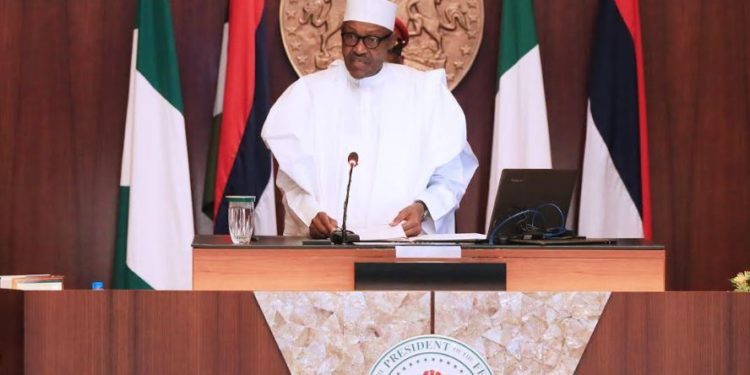
President Muhammadu Buhari is scheduled to proceed on a 14-day private visit to the United Kingdom at the end of his official trip to Kingdom of Saudi Arabia for the Economic Forum of the Future Investment Initiative (FII) in Riyadh.

In a statement by the Special Adviser on Media and Publicity Femi Adesina,  President Buhari will hold bilateral talks with His Majesty King Salman and His Majesty King Abdullah ll of Jordan on the sidelines of the event.

The statement adds that the President will participate in the High Level Event titled “What is next for Africa: How will Investment and Trade Transform the continent into the Next Great Economic Success Story?” with Presidents of Kenya, Congo-Brazzaville and Burkina Faso.

President Buhari will on Saturday 2nd November, 2019, proceed to the United Kingdom to return to Nigeria on 17th November, 2019.


Allow us return home, Russian ISIS women beg Putin

0

Russian women who were held in Kurdish-controlled camps in Syria as Islamic State group supporters have recorded emotional appeals to President Vladimir Putin to help them return home.

The audio recordings released by RBK news website late Saturday were provided by Chechen rights ombudswoman Kheda Saratova, who has been involved in repatriating IS widows and children. It was not clear when they were made.

The women referred to two different camps holding alleged IS family members — Al-Hol in northeastern Syria and Ain Issa near the Turkish border.

Thousands of Russians joined IS forces in Syria and Iraq. Russia has repatriated some of the women and children.

“My request is to help me return home. I don’t want to go back to the IS,” says one woman, who gives her name as Yulia Kryukova from the city of Saint Petersburg, her voice breaking as she starts crying.

“I appeal to President Vladimir Putin, Kheda Saratova and Natalya Moskalkova,” she says, misnaming Russia’s rights ombudswoman Tatiana Moskalkova.

She says she fears she could be beaten up by other women in the Al Hol camp who still support the IS.

“They are very aggressive, they set fire to tents and beat up people, I don’t know what to do.”

Saratova told RBK that the women’s relatives had been in contact with her. She said the women had all travelled to Syria to live with IS fighter husbands who were later killed.

In the final recording, a woman who does not give her name, says she and other women have fled their camp and are on the road to Tal Abyad five kilometres (3 miles) away.

Since Kurdish fighters withdrew, Tal Abyad is under the control of Turkey and its Syrian proxies.

Saratova told RBK that the women in the recordings eventually fled their camps and reached a Turkish-controlled area where the military helped them.

Moskalkova told Echo of Moscow radio station on Sunday that she would ask Russia’s security service and foreign ministry and the Red Cross to help the women.

In the brief recordings, the women appeal to the Russian authorities to evacuate them.

“We have children, there is a state of war, what can we do?” says one woman, who does not give her name, weeping as she speaks.

“Why is it hard to take us away from here?

Buhari departs for Riyadh Saudi Arabia to attend Future Investment Initiative

0

President Muhammadu Buhari will on Monday depart Abuja for Riyadh, the Kingdom of Saudi Arabia, to attend the third edition of the Future Investment Initiative (FII) organised by Saudi’s Public Investment Fund (PIF).

The summit under the theme, ‘‘What’s Next for Global Business?’’, the event, which holds from October 29-31, will focus on three key pillars: Sustainable Future, Technology for Good and Advanced Society.

The three-day event will be held under the patronage of the Custodian of the Two Holy Mosques, King Salman bin Abdulaziz of Saudi Arabia and chaired by Crown Prince Mohammed bin Salman bin Abdulaziz, deputy premier, chairman of the Council of Economic and Development Affairs and PIF.

In a statement by his Special Assistant on Media and Publicity Garba Shehu said given the increased investor confidence in Nigeria’s economy, President Buhari will use the occasion to speak about the economic opportunities that abound in Nigeria, the effectiveness of his administration’s policies to improve the business environment, and invite investors to the country.

Mr Shehu noted that the total value of capital inflow into Nigeria increased from US$12 billion in the first half-year of 2018 to US$14 billion for the same period in 2019.

The Nigerian delegation will leverage on the resources in Saudi’s PIF, which aims at becoming one of the largest and most impactful sovereign wealth funds in the world, to seek foreign investments in critical projects in the country’s oil and gas sector, particularly the Ajaokuta-Kaduna-Kano (AKK) gas Pipeline – the 614 km-long natural gas pipeline currently being developed by the Nigerian National Petroleum Corporation.

Nigerian officials the statement say will also take advantage of the summit to accelerate discussions on the planned interest of the Saudi oil company, Aramco, to revamp Nigeria’s refineries and new investments in the oil and gas sector.

According to the organisers, the high-profile conference has proven to be a substantial international platform for expert-led debate among investors, innovators and governments as well as economic leaders, with the power to shape the future of global investment, since it was launched in 2017.

The conference is focused on utilizing investment to drive growth opportunities, enable innovation and disruptive technologies, and address global challenges.
More than 4,000 delegates from over 90 countries are expected to participate in the FII 2019, which will also host 12 workshops on different topics including cities, energy, climate, health, data, mobility, food, travel, sports, shopping and youth.

The President will be accompanied by Governor Babagana Zulum of Borno State, Governor Abubakar Bagudu of Kebbi State and Governor Aminu Bello Masari of Katsina State.

Also on the entourage are, Minister of State, Foreign Affairs, Zubairu Dada, Minister of Industry, Trade and Investment, Niyi Adebayo, Minister of State, Petroleum Resources, Timipre Sylva, Minister of Communications, Ibrahim Pantami, the National Security Adviser, Major General Babagana Monguno (rtd), Director-General, National Intelligence Agency, Ambassador Ahmed Rufa’i Abubakar, and the Group Managing Director, Nigerian National Petroleum Corporation (NNPC), Mele Kolo Kyari.

After the investors’ conference in Riyadh, President Buhari will proceed to Makkah, accompanied by close personal aides, to perform the Umrah (lesser pilgrimage) before returning to Abuja.

Benue born comedian MC Smart goes global, takes comedy to the UK

0

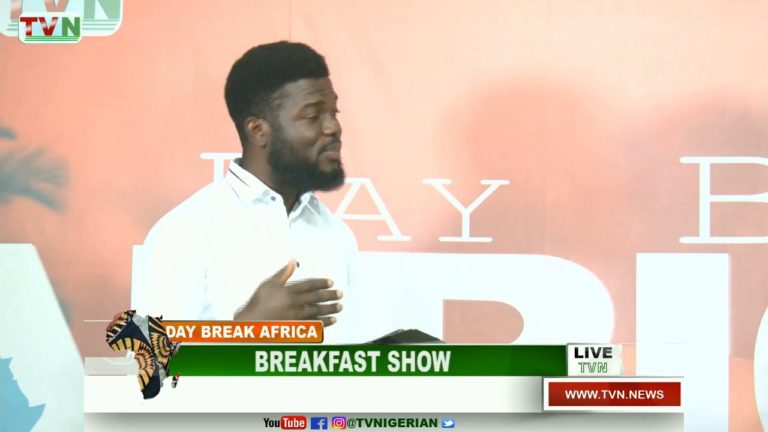
Nigeria’s fastest growing comedian cum compere Mc Smart Naija appears to be making new waves as he embarks on a tour of the United Kingdom.

In a chat with TeleVision Nigerian, Mc Smart shares a brief insight into why he ventured into what he termed ‘My London Experience’

”I’m in London for my London experience, the idea behind this movement is to, boost my international presence and also, introduce my talent to the bigger picture.

”So far, I have performed at the biggest comedy fest in London’s with Mc OJB Pastor of comedy.

After that, I had produced some viral comic skits in the UK and also, did some media tour and finally had my London Experience show hosted on the 25th October.

The show according to MC Smart was more of a party celebrating his stay in London.

”During this period of the tour, I got hooked up to Pencil comedians show billed for 28th October that event will highlight the climax of my London experience.

”My plans subsequently, is to produce more content and also put plans for a greater experience next year. While gathering pieces of my acts together In preparation for my Benue experience when I’m back In Nigeria Where I will get to discuss all my encounter here.”

”It’s been a great experience thus far” he added.

The operation that took out ISIS leader al-Baghdadi

Abu Bakr al-Baghdadi, the leader of the notorious Islamic State (also known as IS, ISIS, ISIL), was killed in Syria’s Idlib province on October 27, 2019, in a military raid carried out by the United States 1st Special Forces Operational Detachment-Delta (1st SFOD-D), also known as Delta Force. The Delta Force is considered as Tier 1 unit.

The operation was carried out after the CIA agents have acknowledged the al-Baghdadi’s possible whereabout. In coordination with Joint Special Operations Command, commonly known as JSOC, they have coordinated the raid which resulted in the death of al-Baghdadi. In addition to Delta Force, participating units under JSOC included the 160th Special Operations Aviation Regiment (Airborne)—also known as “Night Stalkers”—and operators from the CIA’s Special Activities Division, which recruits heavily from former JSOC Special Mission Units. The operation ended a nearly 5-year search for al-Baghdadi since he announced the Islamic State califate in Mosul’s great mosque in April 2014.

U.S. military helicopters with operators onboard have flown to Syria’s northwestern Idlib province, where the CIA agents have located al-Baghdadi. The al-Baghdadi was the target of the top-secret operation in the last bastion of the country’s Islamist-dominated opposition, a faction that has clashed with ISIS in recent years.

In a brief firefight that followed the raid, shortly after the Delta Force operators entered the compound in Idlib’s Barisha village, notorious ISIS leader al-Baghdadi detonated his suicide vest killing himself on the scene. Family members were present. No children were harmed in the special operations raid but two Baghdadi wives were killed after detonating their own explosive vests.

The compound in which al-Baghdadi was located was then wiped out with an airstrike shortly after the Delta Force operators withdrawn from the scene. That was carried out in order to prevent the site from becoming a shrine to the notorious ISIS leader.

Vatican considers synod’s call for married priest, increased role for women

0

The meeting for the Synod of Bishops for the Pan-Amazonian region has approved a final document which calls for the ordination of married men as priests and for women to be considered for diaconal ordination.

The 33-page document, approved Oct. 26, is the result of a three-week meeting in Rome. The synod’s 181 voting members, together with representatives from indigenous communities, religious orders, lay groups and charities, discussed a range of issues concerning the region, spread across nine countries.

In ordinary sessions of the Synod of Bishops, delegates are elected by the world’s bishops conferences. In the special session for the pan-Amazonian region, all attendees were by special invitation.

The document presents the synodal assembly’s reflections and conclusions on topics ranging from environmentalism, inculturation in the Church, and the human rights of indigenous communities in the face of economic, environmental, and cultural exploitation.

The draft text was presented to the assembly on Friday night, and various amendments were proposed and debated during the approval process. The synodal document does not have magisterial authority; the conclusions are presented to Pope Francis, who will issue his own document later.

One of the document’s most anticipated and likely controversial items is the call by the synod fathers for the ordination of proven married men, so-called viri probati, in the face of an acute shortage of priests in many parts of the region.

“Many of the ecclesial communities of the Amazonian territory have enormous difficulties in accessing the Eucharist,” the document says, while noting that some communities go for months, even years between visits from a priest.

The synod fathers said that they “appreciate celibacy as a gift of God to the extent that this gift enables the missionary disciple, ordained to the priesthood, to dedicate himself fully to the service of the Holy People of God.” But, the bishops concluded, “legitimate diversity does not harm the communion and unity of the Church, but expresses and serves it.”

The document proposes “to establish criteria and dispositions on the part of the competent authority… to ordain as priest suitable and esteemed men of the community, who have had a fruitful permanent diaconate and receive an adequate formation for the priesthood, having a legitimately constituted and stable family, to sustain the life of the Christian community.”

These criteria, together with each individual paragraph of the text, was approved by a two-thirds vote of the synod’s voting members.

Speaking after the session ended, Cardinal Peter Turkson said that the voting process had proceeded smoothly and that all the articles of the document had passed by a comfortable margin.

Bishop Erwin Kräutler, the retired head of the Xingu prelature in Amazonian Brazil, told reporters that the proposal for the ordination of married men was not a surprise.

“It is what we expected, of course,” Kräutler said. The article passed by a margin of 128-41.

Kräutler has been an adamant proponent of married clergy, telling an Oct. 9 press conference that there is “no other option” for the region, and said that indigenous people in the Amazon were unable to understand the evangelical witness of celibacy.

While the proposal to allow the ordination of married men garnered a clear majority of synod participants, the issue of married clergy was a focal point of debate during the weeks of the synod.

Shortly before the synod opened, Cardinal Marc Ouellet, prefect of the Congregation for Bishops, published a book entitled “Friends of the Bridegroom: For a Renewed Vision of Priestly Celibacy,” and Cardinal Robert Sarah, head of the Congregation for Divine Worship made several public interventions in favor of celibacy.

The synod’s final document explicitly linked the proposal to ministry in “the most remote areas of the Amazon,” but recognized that several of the synodal participants “were in favor of a more universal approach to the subject.”

Presenting the document at a press conference on Saturday evening, Cardinal Michael Czerny, special secretary of the synod, said some members felt that proposing to change the discipline of clerical celibacy should be reserved to the universal Church.

“Other felt that the existing norms of canon law… allow us to consider this within the context of a specific region,” said Czerny who also serves as under-secretary of the Migrants and Refugees Section of the Dicastery for Promoting Integral Human Development.

Cardinal Osward Gracias, Archbishop of Bombay and a close advisor of the pope, said in an interview on Saturday that he was in favor of the proposal, in as much as it represented a merely disciplinary change.

“I think that the present canon law…says its an impediment if you have a wife to receive orders, but it is an impediment that can be dispensed by the Holy See – and it has been dispensed. But I think there should be very clear criteria, conditions put [on the proposal],” Gracias said, referencing how the Church had worked to incorporate married former Anglican ministers who had been ordained as Catholic priests.

The synodal document also called for new and enhanced ministerial roles for women in the life of the Church in the region.

Noting that “the Magisterium of the Church since the Second Vatican Council has highlighted the central place that women occupy in the Church,” the document called for the Church to “recognize and promote [the leadership of women] by strengthening their participation in pastoral councils of parishes and dioceses, or even in instances of government.”

The bishops also recognized that in the Amazon “the majority of Catholic communities are led by women,” and asked “for the institution of a ministry for ‘women’s leadership of the community’ to be created and recognized within the service of the changing demands of evangelization and community care.”

The bishops also noted that “in a large number of these consultations, the permanent diaconate for women was requested.”

“For this reason the theme was important during the synod,” the bishops wrote, but noted that Pope Francis had already created a commission to examine the question and so requested that they be given the chance to feed into that process.

In his speech to the closing session of the synod on Saturday, Pope Francis said that he would consider reconstituting the commission, which he established in 2016 under the auspices of the Congregation for the Doctrine of the Faith, to examine the historical role of female deacons and expand the commission to include new members.

Earlier this year, the pope addressed the issue directly, noting that “the formulas of female deacons’ ‘ordination’ found until now, according to the commission, are not the same for the ordination of a male deacon and are more similar to what today would be the abbatial blessing of an abbess.”

In its own right, the final synodal document has no teaching or binding authority of its own. Synods are merely consultative assemblies, convened by the pope or a bishop, to advise on some particular topic. Typically after a meeting of the Synod of Bishops in Rome, the pope issues a post synodal apostolic exhortation.

In his remarks in the synod hall on Saturday, Francis said that he hoped to issue an exhortation before the end of the year, time permitting.

During the press conference on Saturday, Paulo Ruffini, prefect of the Vatican Dicastery for Communications confirmed that the pope hoped to issue an exhortation “within a relatively short period of time.”

Ethiopian PM warns of worsening ethnic violence

0

Ethiopian Prime Minister Abiy Ahmed warned Saturday of further instability and vowed to bring to justice those responsible for violence that left at least 67 people dead this week.

“The crisis we have faced will become even more fearsome and difficult if Ethiopians don’t unite and stand as one,” Abiy said in a statement issued by his office, his first remarks since the violence broke out.

“We will unswervingly work to ensure the prevalence of the rule of law and to bring perpetrators to justice.”

This year’s Nobel Peace Prize laureate also noted that what began as protests against his government had quickly morphed into clashes that took on an ethnic and religious dimension.

“There has been an attempt to turn the crisis into a religious and ethnic one. In the process our comrades have become victims in terrible circumstances,” he said.

He added that homes, businesses and places of worship had been destroyed, and that an untold number of Ethiopians had been displaced.

Violence erupted in Addis Ababa, the capital, and in much of Ethiopia’s Oromia region on Wednesday after a high-profile activist accused security forces of trying to orchestrate an attack against him — a claim police officials denied.

The activist, Jawar Mohammed, is credited with promoting the protests that swept Abiy to power last year but he has recently become critical of some of the premier’s policies.

Both men are from the Oromo ethnic group, Ethiopia’s largest, and their feud highlights divisions within Abiy’s Oromo support base that could complicate his bid for a five-year term when Ethiopia votes in elections currently planned for May 2020.

On Friday, Oromia police chief Kefyalew Tefera said 67 people had been killed there, including five police officers.

He said most of the dead had lost their lives in “clashes between civilians” rather than at the hands of security forces.

He also claimed that calm had been restored but the defence ministry announced Friday that it was deploying forces to seven hotspots to restore order, and reports of violence persisted through Friday night and into Saturday.

Abiy was in Sochi, Russia, for the Russia-Africa summit when Jawar’s supporters first started mobilising in Addis Ababa.

Prior to Saturday’s statement, he was facing criticism for saying nothing about the unrest.

In an interview with AFP Friday, Jawar accused Abiy of acting like a dictator and said he could challenge his former ally in next year’s elections.

But Jawar said he could also end up backing Abiy if he changes course.

ECOWAS Commission partners UAE on Investments

0

The Commission of the Economic Community of West African States (ECOWAS) and the Ministry of Economy of the United Arab Emirates (UAE) are to collaborate on how to make the region benefit from sustainable partnership with investors.

The 10th edition of the Annual Investment Meeting (AIM) of the UAE comes up in March 2020 at the Dubai World Trade Centre with the Theme Investing for the future: Shaping Global Investment Strategies.

Conferring with the Director-General of AIM Mr. Walid Farghal on the 25th of October 2019 in Abuja, Nigeria, on potential collaborations through AIM, the ECOWAS Commission’s Vice President H.E. Madam Finda Koroma stated the willingness of the Commission to revitalise the existing Memorandum of Understanding (MoU) which spells out the areas of cooperation.

Vice President Koroma discussed the prospects of a High-Level ECOWAS Member States’ investment showcase where regional projects will be presented to international investors during the AIM 2020 event.

Madam Koroma assured the AIM team of the Commission’s commitment towards more meaningful exploration of the existing business partnership covering the key priority sectors of infrastructure, energy, mines, hospitality, utilities and tourism as well as agribusiness among others

In his remarks, Mr. Walid Farghal stressed the need for interactions between ECOWAS and investors; like the participants at the AIM. He expressed optimism that his meetings with government and business authorities preparatory for the AIM in 2020 will yield positive results.

The AIM team was at the Commission’s Headquarters to present their new pillars meant to support the attraction of new forms of investments to the ECOWAS region. They highlighted the importance of the involvement of the private sector in the AIM 2020 Small & Medium Enterprises Pillar, through the cooperation with the Federation of West African Chambers of Commerce and Industry (FEWACCI).

The AIM is a Foreign Direct Investment-focused event that convenes key decision-makers from around the world, bringing together businesses and countries willing to engage in sustainable partnerships with investors.

Somalia advancing towards ‘inclusive and peaceful future’ for women, deputy UN chief

0

Ms. Mohammed’s one-day visit was part of a joint UN-African Union trip to the Horn of Africa region, focusing on women, peace and security. In Somalia they emphasized the international commitment to the pursuit of peace, stability and credible elections in the country.

She was joined by AU Special Envoy on Women, Peace and Security, Bineta Diop, and the Special Envoy of the UN Secretary-General for the Horn of Africa, Parfait Onanga-Anyanga.

The importance of women’s meaningful participation in elections, efforts to counter extremism, and the economic development of Somalia, were underscored by the delegation, who met with Prime Minister Hassan Ali Khayre and cabinet ministers from the Federal Government of Somalia to hear about government policy in this area, as well as with female civil society leaders.

“The opportunity to hear from a diverse range of voices about the role of Somali women in different spheres of life drove home just how vibrant and engaged they are, and also how committed they are to ensuring that the role of women and gender equality is factored into all facets of life here”, said the Deputy Secretary-General. “This means challenging some outdated traditional views on the role of women and creating a space for them to be able to fulfil their potential.”

However, the deputy UN chief noted that further progress is needed, when it comes to gender equality; the role of women in politics, peacebuilding and security; and women’s full participation in the “one person, one vote” federal elections, due around late 2020 and early 2021.

Ms. Mohammed praised the engagement of Somali women in a range of spheres, and their commitment to ensuring that the role of women and gender equality is factored into all facets of life. “This means challenging some outdated traditional views on the role of women and creating a space for them to be able to fulfil their potential.”

The delegation also met with senior officials from the UN Assistance Mission in Somalia (UNSOM), UN Support Office in Somalia (UNSOS) and UN agencies, funds and programmes.

Following the joint mission, Ms. Mohammed is due to travel to Sudan with senior UN officials. She will visit Khartoum and Darfur, including the UN Mission UNAMID, in El Fasher.

While there she is due to meet the President, Prime Minister, and other senior politicians, as well as civil society and women leaders.

Discussions will focus on the UN’s collaboration with Sudan, during the new phase of civilian-led government following months of political turmoil, in particular on economic development, and will also highlight the importance of women’s leadership.

Pilgrims cautioned of rising pickpocketing in Lourdes

0

As reports of theft are on the rise at a famous Marian shrine in France, Lourdes authorities have increased security and encouraged pilgrims to be more aware of their belongings.

Pierre Aurignac, a local prosecutor, told Agence France-Presse (AFP) that the town has had a “statistical explosion” of pickpocketing. So far this year, he said, there have been 274 accounts of pickpocketing, whereas 117 incidents were recorded during the first nine months of 2018.

Most reported robberies occur in the streets near the shrine, where religious shops sell items such as rosaries, icons, statues, and Lourdes water.

“The pickpockets are highly organised professionals,” said Philippe Subercaze, a city official in charge of security.

“They arrive in waves and change all the time. As soon as one is identified or arrested, they are replaced. It’s a game of cat and mouse,” he said, according to the Telegraph.

Since last year, Lourdes authorities have installed an estimated 50 CCTV cameras, and Church officials have established more surveillance cameras near the shrine, the Telegraph reported.

The Lourdes shrine is centered around a grotto in the foothills of the Pyrenees, a mountain range separating Spain and France. In the grotto, St. Bernadette Soubirous, the first daughter of a poor miller, was visited by the Virgin Mary in 1858.

The location of the apparition was notoriously dirty – often used as a garbage dump for the small village. During one of the visions, Bernadette discovered a spring and was asked by the Virgin Mary to drink from and wash in the muddy water. After she followed Mary’s request, the water became clear.

Many pilgrims have also followed Mary’s request, and the shrine today has numerous water taps and 17 bath cubicles full of this water, to which many miracles have been attributed.

Thousands of ill and afflicted people seek out these waters each year for physical and spiritual healing. Reports of miracles are examined by the Lourdes Medical Bureau. The 70th official healing was recognized in February 2018 in which a French nun, Sister Bernadette Moriau, was regained mobility after years of spinal problems had left her restricted to a wheelchair.

According to official numbers, the Telegraph reported, over 770,000 people visited the shrine last year, but local authorities believe the number to be much higher, noting that some pilgrims do not stay for a long period of time.

While the site is known for its miracles and spiritual conversions, Subercaze cautioned people to take caution, noting that the religious site often lures people into a false sense of security.

“Many people think when they arrive in Lourdes nothing can happen and they leave their handbags open wider than they would in Paris,” Subercaze said, according to the Telegraph.

“In Lourdes, they think the Virgin will protect them and nothing will happen to them.”