Home Blog Page 232

N10 Million Ransom Paid, Yet Retired Army Major Dies in Captivity

0

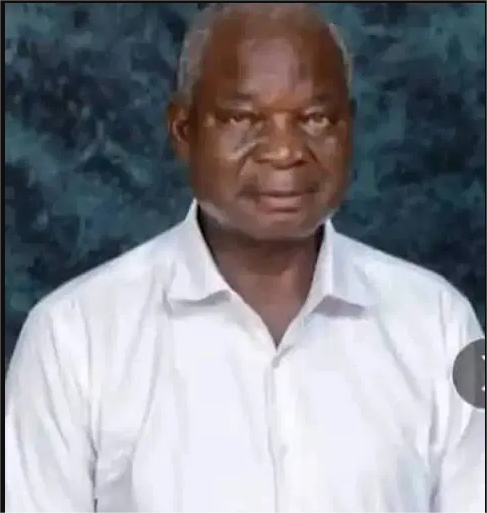
Joe Ajayi, a retired Army Major who was kidnapped a few weeks ago from his home in Odo-Ape, Kabba-Bunu local government area of Kogi State, has reportedly died in captivity.
Ajayi’s family discovered his lifeless body after paying a ₦10 million ransom for his release.
On Wednesday, May 21, 2025, at around 11:30 p.m., armed assailants abducted Major Ajayi from his home and fired indiscriminately.

According to reports, the kidnappers’ original ransom demand of ₦50 million remained unmet for a long time, causing a decline in his health due to a lack of treatment.

It was also alleged that the kidnappers informed the family that their request for his medication to be sent to him would involve an extra fee, which the family could not pay.

The abductors reduced the demand to ₦10 million naira after learning about Ajayi’s serious condition.

According to a community source, the Ajayi family agreed to pay the reduced price of ten million naira for his release since they believed he was still alive.

“Once the ransom was paid, the kidnappers directed the family to where they would find him, only for them to meet his (Ajayi’s) lifeless body,” Vanguard quoted a community source as saying.

The retired army officer’s remains have been placed in the morgue at Kabba Specialist Hospital.

Kidnapping has been believed to be on the rise in the state for some time, as evidenced by the abduction of a notable monarch, Oba James Dada Ogunyanda, the Oba Okoloke in the Yagba West Local Government Area, who was similarly abducted from his home in early May.

Read Also:Allegations Surface Against Tinubu Govt Over Sunday Igboho’s Frozen Accounts

He is yet to be released.

Nonetheless, the state governor, Usman Ododo, addressed the public at the Eid grounds during the recent Sallah in Okene, imploring citizens to remain calm, citing good outcomes from measures to eliminate criminal groups from the state.

Retired Joe Ajayi, 76, previously served as Chairman of the Christian Association of Nigeria’s Kabba/Bunu Chapter.
Allegations Surface Against Tinubu Govt Over Sunday Igboho’s Frozen Accounts

0

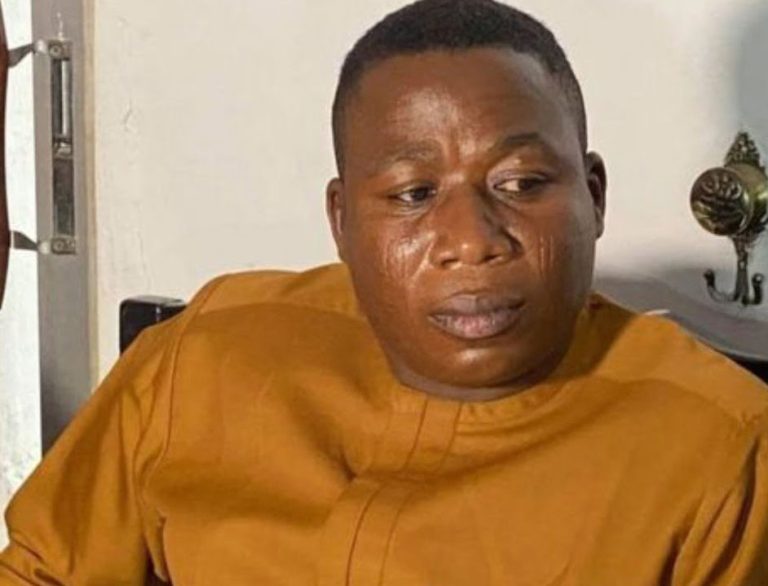
The purported persecution of Yoruba Nation agitator Sunday Adeyemo, also known as Sunday Igboho, which allegedly started under previous President Muhammadu Buhari, has been accused of being carried out by the administration of President Bola Tinubu.
In an audio message sent on Monday, Olayemi Koiki, the spokesperson for Igboho, made the assertion.
Why the administration of Bola Ahmed Tinubu has persisted in witch-hunting Sunday Igboho is unknown. As of right now, he remains on

“The list of wanted persons,” Koiki stated.
He continued by saying, “We requested that his bank accounts be opened, but they declined; the same is true for his businesses.

“Igboho’s offense was speaking out against the injustice that was occurring in Yorubaland, and the problems he raised are still present today.”

Igboho is regarded with respect elsewhere, yet he is still considered a criminal in his own nation, claims Koiki.

Only in his native nation is he viewed as a criminal, even when traveling the world. “No one has paid him yet, even after the court ruled that he should,” he claimed.

During the contentious raid on Igboho’s home in Ibadan in July 2021 by Department of State Services (DSS) agents, Koiki charged that the Buhari-led administration was trying to eradicate him.

The raid was allegedly carried out because of intelligence that Igboho was storing weapons, according to the DSS. Despite Igboho’s escape during the raid, the DSS subsequently labeled him sought and said they had found weaponry in his house.

Igboho fled to the Republic of Benin, where he was apprehended. He was then charged with instigating unrest, smuggling weapons, and encouraging secession from Nigeria when he was arraigned at the Court d’Appel in Cotonou.

There was celebration in some sections of the Southwest when Beninese authorities freed him in March 2022.

In addition, prominent Yoruba historian and Oodua Nation supporter Banji Akintoye said that when Igboho was in custody, the Nigerian government attempted to coerce him into abandoning his cause.

Read Also: No Single Opposition Party Can Defeat Tinubu in 2027 – Former Presidential Aspirant

The Nigerian government has allegedly failed to take Igboho off the list of sought people, Koiki bemoaned, despite court orders and the Benin Republic authorities’ decision to free him.
As a special envoy, Lt. Gen. Tukur Buratai (retd.), the then-Chief of Army Staff, allegedly visited Igboho in prison and gave him a document pledging billions of naira in exchange for giving up his campaign for Yoruba independence, according to Akintoye.

Buratai took the document away when he refused to sign it, according to Akintoye.

Igboho allegedly wrote to Keir Starmer, the prime minister at the time and the current leader of the UK Labour Party, in October 2022, pleading with the British government to recognize and back the Yoruba independence movement in Nigeria.

Even after being freed, Sunday Igboho has not yet returned to Nigeria, and his supporters maintain that the government continues to unfairly persecute him.

No Single Opposition Party Can Defeat Tinubu in 2027 – Former Presidential Aspirant

0

Without a solid alliance, it would be extremely difficult for any one opposition party to beat President Bola Tinubu in the general elections of 2027, according to former presidential candidate Martin Onovo.
Onovo made this claim in an interview with the News Agency of Nigeria (NAN) in Lagos on Monday. Onovo was a presidential candidate in 2015 under the National Conscience Party, which is now closed.
“A strong coalition of opposition forces must present a united front in order to defeat the All Progressives Congress in 2027,” he said.

Calling it a positive start, Onovo extended his support behind the coalition efforts being led by Alhaji Atiku Abubakar, the former vice president and PDP presidential candidate.

“The Coalition of United Political Parties (CUPP), the biggest coalition in the Fourth Republic’s history, was my idea. The only alternative is to form a coalition. “United minorities are more powerful than divided majorities,” he stated.

He was certain that the APC may suffer a crushing defeat at the polls thanks to a well-organized alliance.

According to Onovo, “if the coalition does not undermine itself, it will win the 2027 election with 99 percent of the vote.” If the ruling party does it correctly, it will be successful and beat them convincingly.

The Tinubu-led administration received negative marks from Onovo for mid-term performance, especially in the areas of security and basic welfare services.

“There hasn’t been much progress in addressing insecurity or enhancing the quality of life for average Nigerians,” he said.

He urged the President to spend the rest of his term effectively addressing the fundamental needs of Nigerians.

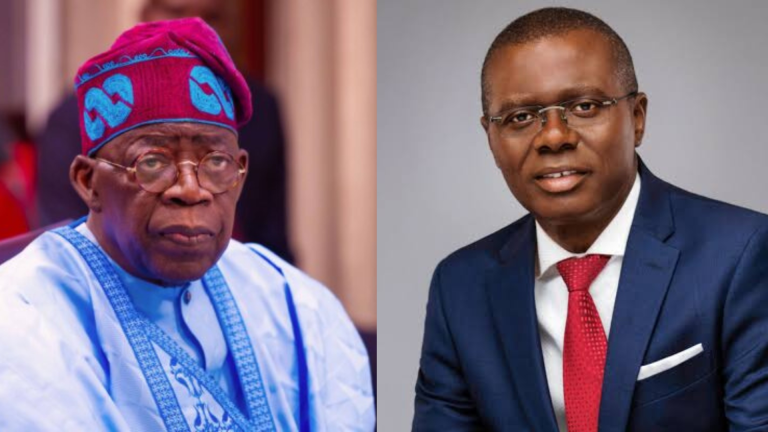
Read Also: Sanwo-Olu’s Fallout with Tinubu Tied to Alleged 2023 Election Funding for Atiku

Instead of political loyalists, Onovo emphasized the necessity for capable hands in governance.

Instead of loyalists, we need capable individuals in positions. As the President assumes leadership and accountability, let’s assemble the best team, the best plans, and a moral atmosphere.

For the suffering to stop, we need the right leaders with sound economic and security plans. He went on, “Loyalty must not come at the expense of performance.”

In addition, he asked the President to step up efforts to combat corruption and take significant action to lower wealth inequality, citing them as the main sources of societal unrest and insecurity in Nigeria.

Sanwo-Olu’s Fallout with Tinubu Tied to Alleged 2023 Election Funding for Atiku

0

Muraina Taiwo, a member of Lagos State’s Governance Advisory Council (GAC), has stated that President Bola Tinubu and Governor Babajide Sanwo-Olu’s apparent feud has been resolved.
Taiwo, who spoke with Punch over the phone on Sunday, said the misunderstanding had been resolved.
“God has already resolved everything they are saying. The father (Tinubu) has dragged his son (Sanwo-Olu) closer, and the son has hugged his father; we are now together in Lagos.

“It only looked like that, but currently, we are in the meeting, and God has done it,” he told us.

Olusegun Osoba, former Ogun State Governor and APC chieftain, also weighed in, saying party leaders were actively attempting to repair the schism between the two leaders.

“You don’t expect an elder like myself to reveal what we’re doing. But know that we will not remain silent and let the situation spiral out of hand.

After all, I’m involved in the Lagos and Rivers crises. “We are assuring the nation that everything will be fine,” added Osoba.

The reconciliation comes after widespread speculation about the President’s icy attitude toward Sanwo-Olu during his recent trip to Lagos.

On May 31, at the inauguration of the 30km portion of the Lagos-Calabar Coastal Highway, videos leaked on social media showed Tinubu allegedly ignoring Sanwo-Olu’s greeting.

The governor was also absent from the two-day-old commissioning of the 27-kilometer Lekki Deep Seaport Road, adding to fears about deteriorating relations.

Sanwo-Olu’s deputy, Obafemi Hamzat, attended the ceremony but did not speak on behalf of the state, which is unusual for official state ceremonies.

To add to the uneasiness, Sanwo-Olu was not in Lagos for the President’s Sallah celebrations, instead went to Uyo, Akwa Ibom State, to bring Governor Umo Eno into the APC.

Meanwhile, images of Lagos Assembly Speaker Mudashiru Obasa prostrating before Tinubu in Lagos went viral on Saturday, implying a deepening split.

However, on Sunday, the President’s media aide, Bayo Onanuga, shared a group photo of Tinubu with Sanwo-Olu, Hamzat, Obasa, and GAC members on X, implying a restoration to normalcy.

According to sources close to the Lagos political structure, the schism predates the current Lagos Assembly crisis, which resulted in Obasa being briefly removed as speaker before his reinstatement.

According to Punch, Tinubu’s rage was fueled by reports that Sanwo-Olu supported Atiku Abubakar’s 2023 presidential campaign, which both the Presidency and Atiku’s camp have firmly denied.

According to the source, “it is proven that there is a gap (between the President and the governor). According to what I gathered, it was because Sanwo-Olu was reported to have provided Atiku money during his campaign.

“Recall that at one point, Sanwo-Olu sought the court to seek an injunction against the EFCC from investigating him. “The following day, Sanwo-Olu denied it.”

He said that the governor’s decision was the result of a deteriorated relationship.

“The Obasa’s issue is just the last straw that broke the camel’s back,” said one insider.

While allegations of financial ties between Sanwo-Olu and Atiku gained momentum in certain stories, the Presidency, Atiku, and the EFCC all denied them.

Atiku, via his media adviser, Paul Ibe, described it as a “baseless smear campaign.”

In 2024, news appeared that Sanwo-Olu had launched a lawsuit against the EFCC to avoid a possible post-tenure detention. The Lagos State administration, through its Attorney General, Lawal Pedro (SAN), disputed the claim.

The EFCC further denied that its ongoing case against Aisha Achimugu, a socialite who has been proclaimed sought for alleged money laundering, has anything to do with Atiku or Sanwo Olu.

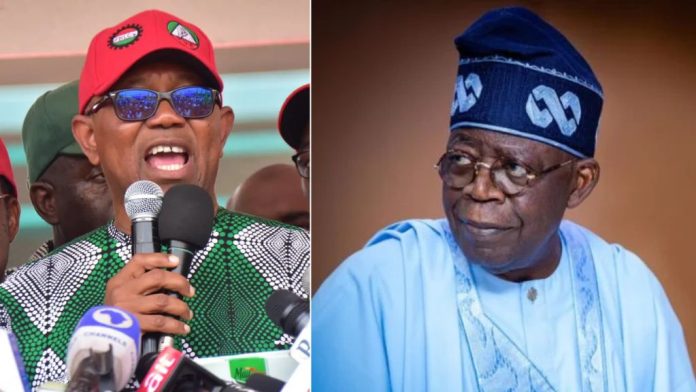
Read Also: Peter Obi Criticizes Tinubu: Coastal Road Can’t Outweigh Security Needs

Peter Obi Criticizes Tinubu: Coastal Road Can’t Outweigh Security Needs

0

Peter Obi, a former presidential candidate for the Labour Party, has called the current coastal highway project being carried out by President Bola Tinubu’s administration an inappropriate priority.
According to the former governor of Anambra State, the current administration must address more urgent problems including the difficulties posed by insecurity and a faltering economy.
He asked why such massive infrastructure projects are being prioritized above initiatives that directly impact residents’ lives.

In a Monday interview with Arise Television, Obi questioned the project’s timing and justification for the Lagos-Calabar coastal route.

He said it is dubious to spend a lot of money on a number of infrastructure projects that will “lead nowhere when we have crisis.”

He questioned, “Are you saying that securing Nigeria is less important than the coastal road?”

According to reports, the former governor maintained that before starting such large-scale initiatives as the coastal highway project, the problems of insecurity and economic stabilization must be resolved.

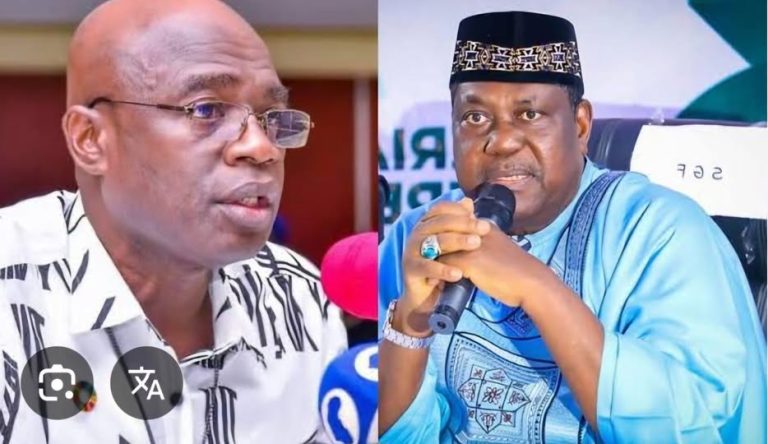
Read Also: Political Feud Between Akume and Alia Deepens Insecurity in Benue

“The roads we have across the nation are no longer durable,” he remarked. You secure your nation by using your resources and repairing those roads first. Roads are significantly less important than security. If you couldn’t drive to your village, would you rather have a road? Let’s continue what we are doing if you would like. Therefore, let’s address those issues if you claim that our problem is power, our problem is insecurity, or they are unable to travel to the farm.

As a government, we are. We need to take immediate action to protect our people.

He urged the administration to provide the security forces the authority to respond forcefully to any criminal danger.

“We would proclaim a state of war if we were engaged in combat. I would do everything it took to protect the nation,” Obi declared.

Political Feud Between Akume and Alia Deepens Insecurity in Benue

0

By Nelson Ogbu

Benue State is facing a dual crisis: a surge in insecurity and a festering political feud between two of its most influential sons—Secretary to the Government of the Federation (SGF), Senator George Akume, and Governor Hyacinth Alia. Their power struggle within the All Progressives Congress (APC) has fractured the party and now threatens to undermine efforts to address the state’s growing security concerns.

Origins of the Feud

The tension between Akume, a long-standing political leader in Benue, and Governor Alia, once his protégé, began over disagreements in party leadership and governance style. The tipping point came in 2023 during the tussle over the Speakership of the Benue State House of Assembly. While Akume backed Mrs. Becky Orpin, Governor Alia outmaneuvered him to install his ally, Mr. Aondona Dajoh, as Speaker—signaling a significant power shift.

Despite Governor Alia’s public denials, dismissing the rift as mere “speculation,” the divide is visible. The APC in Benue now operates in two clear factions: one loyal to Alia, led by Benjamin Omale, and the other to Akume, led by Austin Agada. Attempts by the APC national leadership to mend fences, including forming a caretaker committee with members from both camps, failed after Agada’s group secured a court order to block the dissolution of its executive.

Security Implications of Political Disunity

The timing of this political disarray could not be worse. Benue is once again witnessing a rise in violence, particularly deadly clashes between farmers and herders. In recent weeks, coordinated attacks in Gwer West and Apa Local Government Areas claimed more than 20 lives.

These tragedies highlight the urgent need for cohesive and united governance. Unfortunately, political rivalry has disrupted crucial lines of communication and cooperation. Influential politicians loyal to Akume—many of whom reside in conflict-prone areas and possess valuable grassroots intelligence—are reportedly sidelined by the Alia administration. The reverse is also true, creating an information gap and weakening collective response strategies to the violence.

Governance Paralysis and Fallout

The feud has paralyzed parts of the Benue State administration. Lawmakers aligned with Akume have faced suspensions, denial of official vehicles, and delays in accessing constituency allowances. Meanwhile, federal legislators allied with the SGF remain at odds with Governor Alia, further exacerbating the dysfunction.

This internal strife distracts from the urgent need to secure lives and property. Criminal elements are emboldened by the lack of unified leadership, exploiting administrative gaps to intensify attacks on communities.

Calls for Reconciliation

Recognizing the damage the feud is causing, several stakeholders have appealed for unity. The Tiv Traditional Council, led by the Tor Tiv, Professor James Ayatse, has intervened, urging both leaders to place Benue’s interests above personal or political ambitions. The North-Central APC Forum has similarly warned that continued division could spell doom for the party’s 2027 electoral prospects in the region.

Despite these peace overtures, reconciliation remains elusive. Reports suggest that Governor Alia has resisted efforts by President Bola Tinubu and other APC elders to broker peace. In a recent appearance on Channels Television’s Politics Today, Alia hinted at deeper political undercurrents, revealing that preliminary findings from a Judicial Commission of Inquiry on insecurity point to the complicity of “big Abuja-based politicians”—a veiled reference many believe targets Akume’s allies.

He further vowed to take decisive action against those implicated, stating, “I will deal with them without mercy when the full report is out.”

The ongoing feud between Senator George Akume and Governor Hyacinth Alia is more than a political power struggle—it is a destabilizing force undermining governance and worsening insecurity in Benue State. At a time when unity is vital to confront violence and restore peace, disunity within the ruling party has left the state vulnerable.

Benue’s path to peace, development, and stability hinges on reconciliation and collaboration among its political leaders. Anything less risks plunging the state deeper into crisis, with citizens paying the ultimate price.

Insecurity in Benue State: A Comparative Analysis of Ortom’s Bold Leadership vs. Alia’s Passive Approach

0

Benue State continues to grapple with violent farmer-herder clashes and widespread insecurity. While both former Governor Samuel Ortom and current Governor Hyacinth Alia inherited deeply rooted crises, their approaches to resolving these issues have been markedly different. Ortom is remembered for bold, confrontational policies aimed at defending his people, whereas Alia’s tenure has been characterized by cautious rhetoric and minimal innovation. This report evaluates their leadership styles, policies, and outcomes, revealing why Ortom’s tenure is seen as more effective in the fight against insecurity.

1. Security Philosophy: Transparency vs. Denial

Ortom: Direct and Confrontational
Governor Ortom adopted an unyielding stance on insecurity, openly condemning herder attacks and challenging the federal government’s perceived complicity. He frequently addressed the public during crises, even inviting media coverage of mass burials to highlight the severity of the violence. This transparency built public trust and mobilized support for state-led interventions.

Alia: Ambiguous and Evasive
Governor Alia, on the other hand, projects an image of “relative peace,” often downplaying ongoing violence. His administration has been accused of suppressing information about killings, particularly after declaring peace in troubled areas like Gwer East, where attacks have continued. Farmers and local leaders see this as a denial of reality and a betrayal of their suffering.

2. Policy Implementation: Institutional Innovation vs. Cosmetic Changes

Ortom’s Legislative and Structural Framework
Ortom’s government enacted the Open Grazing Prohibition and Ranches Establishment Law in 2017, a decisive legal step to restrict herders’ movements and prosecute offenders. He also established the Community Volunteer Guards and Livestock Guards, both aimed at localized intelligence gathering and law enforcement.

Alia’s Minimal Adjustments
Alia has retained Ortom’s laws without introducing significant new legislation or enforcement strategies. His main contribution has been the rebranding of Ortom’s security outfits into “Operation Anyam Nyor,” a move critics say is superficial. No substantial institutional reforms have accompanied this change, and operational efficiency remains stagnant.

3. Federal Engagement: Defiance vs. Compliance

Ortom: Confronting the Centre
Ortom boldly criticized the Buhari administration for failing to protect Benue, often accusing it of enabling attacks. While this confrontational approach strained federal relations, it rallied local support and drew national attention to Benue’s plight.

Alia: Silence and Submission
In contrast, Alia avoids criticizing the federal government under President Tinubu, choosing instead to praise federal support despite the persistence of violence. This deference is viewed as political expediency rather than genuine leadership.

4. Operational Outcomes: Measurable Action vs. Rhetoric

Ortom: Localized Security Response
Under Ortom, security forces trained and deployed across rural areas responded rapidly to attacks. The Community Volunteer Guards and Livestock Guards were active in enforcing the anti-grazing law, leading to arrests and deterrence.

Alia: Equipment without Effectiveness
Although Alia has distributed motorcycles and Hilux vehicles to security agencies, he has admitted that no terrorists have been apprehended. His security initiatives have yielded no measurable success, and even his supporters question the effectiveness of these efforts.

5. Humanitarian Response: Empathy vs. Optics

Ortom: Focused on IDP Protection
Ortom maintained IDP camps and acknowledged the displacement of over four million people, attracting local and international support. His administration prioritized safety over public relations.

Alia: Forced Returns Amid Ongoing Violence
Alia has claimed that IDPs have reduced to under one million and has reopened markets in some areas. However, reports indicate that many of these “returns” are premature, with attacks still occurring in local governments like Agatu and Gwer West. Survivors have accused the government of coercing returns to create a false image of peace.

6. Leadership and Accountability: Courage vs. Excuses

Ortom: Political Courage
Ortom survived an assassination attempt and refused to repeal the anti-grazing law despite federal pressure. He stood firmly with Benue farmers, earning widespread respect for his resolve.

Alia: Deflecting Responsibility
Alia continues to blame Ortom for the insecurity he inherited, even though Ortom faced similar challenges from his own predecessors. His aides accuse Ortom of “envy” rather than addressing the current realities. Residents in places like Gwer East describe a growing sense of abandonment and fear.

Leadership Matters

Ortom’s tenure, though not without flaws, was marked by three defining traits that are glaringly absent in Alia’s administration:

  • Transparency: Willingness to expose the harsh realities to mobilize help and demand justice.

  • Accountability: Creation and enforcement of legal frameworks to protect lives.

  • Courage: Readiness to confront political powers to defend Benue’s interests.

Alia’s leadership so far has relied on inherited policies, minimal reform, and public relations narratives. Without concrete results, his claims of peace appear hollow. Until Governor Alia adopts a bolder and more transparent strategy, Benue’s security situation risks further decline.

Final Verdict:
Samuel Ortom stood with the people in their darkest moments, confronting attackers and calling out federal failures. Hyacinth Alia, by contrast, appears more concerned with avoiding controversy and maintaining political alliances. The difference is clear: Ortom fought for Benue’s future; Alia merely manages its perception.

Why the Federal Government Is Constructing a Rail Line to Niger Republic

0

Kayode Opeifa, the managing director of the Nigerian Railway Corporation, has provided additional context for the federal government’s desire to see the Kano-Maradi Railway project completed.
He claims that in an attempt to guarantee food security in the nation, the administration is establishing ties between Nigeria and the Niger Republic.
During an interview on Channels Television on Saturday, Opeifa stated that the Kano-Maradi railway line is a connection that will ensure Nigeria’s food supply chain.
He claimed that Maradi is linked to the food security of Nigeria and West Africa in terms of cattle and cereal, and that it will be simpler to go to other regions of Nigeria if the link to Kano is established.

In accordance with AU 2063, African nations are urged to establish connections with landlocked nations due to their potential. By the way, according to the information I’ve read, Maradi is linked to the cattle and crop security of Nigeria and West Africa. You can see how Kano and Maradi are related.

In addition, food security will not exist if mobility is eliminated from the equation. Nigerian managers of our food security should realize that removing mobility from logistics and supply chains is really a joke.

Read Also: Veteran Musician Mike Ejeagha, Known for ‘Gwo Gwo Gwo,’ Passes On

“The Kano-Maradi, which will now be Kano to Kaduna, Kaduna to Abuja, and Abuja to Lagos, will represent mobility, which is at the heart of food security,” the NRC chief stated.

He claimed that most people are merely wary of the name of Maradi, which is in another nation, and do not comprehend the necessity of resolving the mobility issue in food security.

“Now, the government is also actively pursuing,” he stated. Many people only hear the term Maradi and don’t know what the Kano-Maradi actually is.

Speaking further, it was claimed that Opeifa reaffirmed the government’s commitment to establishing new train lines throughout cities in order to ensure that important cities are connected via a new rail infrastructure map.

He went on to say that because the rail system was added to the concurrent list, states now have more options to get funding for the development of their rail lines.

Veteran Musician Mike Ejeagha, Known for ‘Gwo Gwo Gwo,’ Passes On

0

Mike Ejeagha, the well-known Highlife maestro who turned Igbo proverbs and traditions into enthralling music, has passed away.
The “Gwo Gwo Gwo crooner” passed away on Friday, June 6, 2025, at the age of 95, according to reports.
On Friday night, Emma Ejeagha, the musician’s eldest son, confirmed his passing to Vanguard.

It was reported that the singer passed away at the Nigerian Army’s 32 Garrison Hospital in Enugu.

Mike Ejeagha’s distinctive Igbo folk music style, which appealed to all age groups, made him a prominent voice on Nigerian radio in the 1980s.

Other news: Justice Mohammed Lawal Uwais, the former Chief Justice of Nigeria, died at the age of 89.

According to reports, his family released a statement on Friday, June 6, 2025, announcing his death.

Read Also: Mike Ejeagha’s Passing Leaves Huge Gap in Our Culture – Gov Mbah

Uwais, who was born on June 12, 1936, in Zaria, Kaduna State, was known as a reformer dedicated to maintaining the integrity of the bench and a champion of judicial independence. He held the position of Chief Justice of Nigeria (CJN) from 1995 to 2006.

His unwavering commitment to justice, constitutionalism, and democratic governance earned him widespread respect throughout his tenure.

“Inna Lillahi Wa Inna Ilaihir Rajiun.” In a succinct statement, the family wrote, “We announce the passing of our beloved father, Justice Mohammed Lawal Uwais, former Chief Justice of the Federation, with heavy hearts but with immense gratitude to Allah Subhanahu Wa Ta’ala.”

Mike Ejeagha’s Passing Leaves Huge Gap in Our Culture – Gov Mbah

0

Peter Mbah, the governor of Enugu State, has expressed his sorrow over the departure of Mike Ejeagha, a folklorist and highlife star, calling his passing a terrible cultural loss and a gap that would be hard to fill.
Ejeagha passed away on Friday at the age of 95 following a protracted fight with prostate cancer. He was most recognized for his deep storytelling through music and hit songs like “Gwo gwo gwo ngwo.”

In a message shared on his verified social media account, @PNMbah, the governor praised the Enugu-born music legend’s humility and broad influence.
“I am deeply saddened by the passing of music legend Gentleman Mike Ejeagha,” he wrote.

A beloved son of Enugu State, Mike Ejeagha was a cultural ambassador and a legend.

He had a laid-back demeanor and modesty that belied his enormous fame, making him one of the best artists of his generation.

Read Also: PDP to Alia on Benue Killings: Present Full Report, Stop the Propaganda

“The warmth and wisdom he exuded, the joy he found in the everyday, and the memories I will always treasure of the time spent with him.”

In addition to his personal family, Enugu State, the whole music industry, and the nation as a whole all suffer greatly from this loss.

“Ejeagha’s extraordinary brilliance and creativity were demonstrated by the way he transformed straightforward indigenous folktales into timeless songs that have a universal appeal.

“Ejeagha’s fan base was international. One of the most recognizable voices in music was undoubtedly his.

“His passing creates a massive hole that will be challenging to fill. On the other hand, his legacy will endure forever.

“I extend the Ejeagha family my sincere condolences on behalf of the Enugu State government and promise them our assistance.

We would make sure that his memory is appropriately preserved as a government.

“I pray above all that his family finds the strength to endure the loss and the consoling grace of God’s love to be experienced.”