Home Blog Page 230

Aide to Ekiti State Governor Tenders Resignation

0

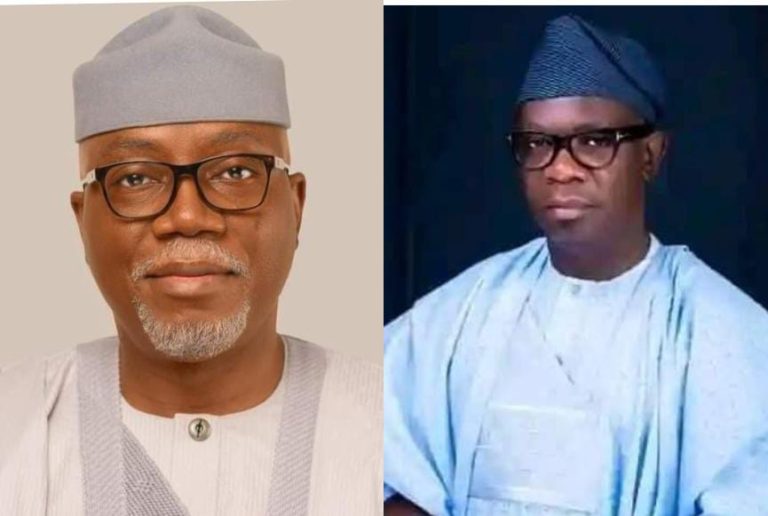
Wale Ade-Oba, a member of the Ekiti State Waste Management Board, has resigned from his position in the government of Governor Biodun Oyebanji.
Ade-Oba criticized Governor Oyebanji, citing what he describes as the administration’s lack of notable achievement in spite of large budgetary commitments.

Ade-Oba said in a statement released on Wednesday that he would no longer work with the Oyebanji-led administration and that he supported Mr. Kayode Ojo, the pro-chancellor of the University of Nigeria, Nsukka, UNN, whom he described as a visionary leader who could change Ekiti State.

He claimed that inefficient governance has resulted from the governor’s frequent absences from the state and his pursuit of what he called a “unclear agenda.”

“I am writing to share with you a decision that may surprise many,” the statement says. As you are aware, Governor Biodun Oyebanji’s current administration has me as an appointee. But after giving it some thought, I’ve chosen to work alongside Engr. Kayode Ojo, a leader who has a vision for a better Ekiti.

“I think that many local government districts, including mine, Irepodun/Ifelodun, have not seen much growth from the administration.

“In spite of their diligence and commitment to the party’s success, our party members are being disregarded and underappreciated. Rather, our devoted supporters are being disregarded while members of the opposition party who did not help us win are being appointed to important positions.

Read Also:Breaking: Democracy Day Parade Off the Table as FG Pulls the Plug

“The current administration’s lack of productivity is a result of the governor’s frequent absences from the state, where they pursue ambiguous agendas. I think a change is in order.

“I agree with Engr. Kayode Ojo’s leadership style and vision for Ekiti. His administration, in my opinion, would put our citizens’ interests first, honor the work of our party members, and promote growth in all governmental regions.

“I am making this change because I want to be a part of a government that values the contributions of its devoted supporters and genuinely serves the people of Ekiti.” I’m prepared to work toward a better future for our state, and I cordially welcome everyone to accompany me on this path.

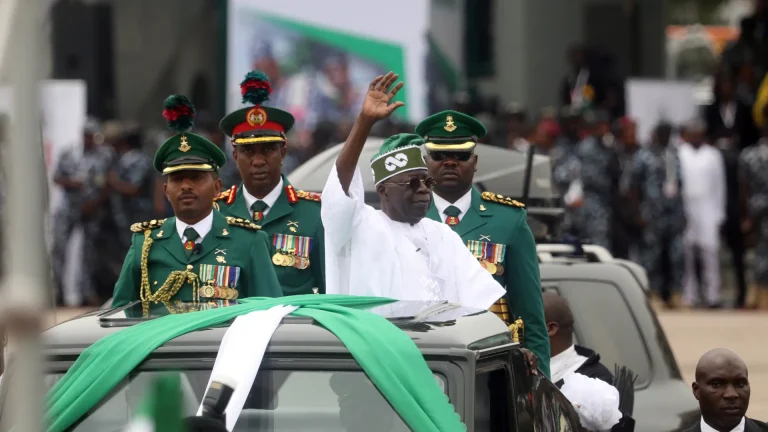
Breaking: Democracy Day Parade Off the Table as FG Pulls the Plug

0

The federal government has decided to cancel the military parade commemorating the 26th Democracy Day, which was slated for Thursday, June 12, 2025.
According to the Inter-Ministerial Committee on Democracy Day celebrations, President Bola Tinubu will deliver a nationwide address at 7 a.m. on Thursday, instead of the traditional Democracy Day parade that has been held in past years.
Instead, President Tinubu will attend a special joint session of the National Assembly at 12 p.m.

Read Also: No Escape for Ex-JAMB Boss: Court Dismisses N5.2B No-Case Submission

This joint session is expected to contain talks about the state of the nation, reflections on Nigeria’s democratic experience, and new calls for national unity and reform.

Later that day, a public lecture is scheduled for 4 p.m. at the State House Conference Centre in Abuja.
According to reports, this event would bring together government officials, political leaders, and civil society groups to discuss the country’s democratic future under the topic “Consolidating on the Gains of Nigeria’s Democracy: Necessity of Enduring Reforms.”

The statement encouraged the people to watch the broadcast and participate in the national conversation aimed at strengthening democratic institutions and reforms.

No Escape for Ex-JAMB Boss: Court Dismisses N5.2B No-Case Submission

0

A no-case submission submitted by Dibu Ojerinde, the former Registrar of the Joint Admissions and Matriculation Board, in a ₦5.2 billion fraud case brought against him by the Independent Corrupt Practices and Other Related Offences Commission (ICPC) has been rejected by Justice Obiora Egwuatu of the Federal High Court in Abuja.
On Tuesday, the court reportedly decided that Ojerinde has a case to answer based on the anti-graft agency’s initial evidence.
When Justice Egwuatu delivered his decision, he concluded that Ojerinde had to enter his defense since the prosecution’s witnesses had sufficiently connected him to the accused offenses.

Thus, the no-case submission is rejected.

The judge declared, “The prosecution has proven sufficient evidence to require the defendant to provide explanations.”
The defendant’s defense was allowed to begin on July 16 after the case was postponed.

Ojerinde, a former head of the National Examinations Council (NECO) and JAMB, was charged with 18 counts in July 2021 that included conspiracy to defraud the federal government, abuse of office, and criminal conspiracy to divert public monies.

Ebenezer Shogunle, the lead lawyer for the ICPC, claims that the alleged offenses are in violation of sections 1(1)(b) of the Advance Fee Fraud Act of 2006 and 19, 24, 25(1)(a) and (b) of the Corrupt Practices and Other Related Offenses Act of 2000.

In February 2022, Ojerinde’s attorney, Ibrahim Ishyaku (SAN), tried to negotiate a plea agreement with him, but the agreement fell through, and the trial went on.

When the ICPC closed its case after calling several witnesses, the defense filed a no-case submission, which was later thrown out.

Read Also: World Bank Flags Economic Concerns for Africa Amid Rising Budgetary Pressures

The main accusations made by the ICPC were that Ojerinde, while working as registrar at JAMB and NECO, had transferred billions of naira into personal accounts and private firms.

The panel further said that he violated anti-graft legislation by giving himself an unfair advantage.

On the other hand, Ojerinde has entered a not guilty plea to all counts.

World Bank Flags Economic Concerns for Africa Amid Rising Budgetary Pressures

0

African economies are dealing with increasing budgetary strains as a result of a difficult external environment characterized by trade tensions, inflationary pressures, and growing debt loads, while global GDP is predicted to decline to its worst rate since 2008.
The World Bank is pushing Nigeria to step up efforts to diversify its economy and fortify regional trade alliances in the face of a global economic slowdown brought on by rising trade tensions and policy uncertainties.
Because of Nigeria’s significant reliance on oil exports and susceptibility to changes in global markets, economic diversification and more African integration are essential to maintaining growth and boosting resilience in the face of growing worldwide

The World Bank’s most recent Global Economic Prospects report emphasizes that, barring outright recessions, sustained global trade tensions and policy uncertainty are predicted to cause global growth to decline to its lowest level since 2008. Nearly 70% of economies, including Nigeria and most of Africa, are expected to see slower growth as a result of this downturn.
In 2025, global growth is predicted to slow to 2.3%, which is almost 0.5 percentage points less than previous projections.
The average growth rate in the 2020s is expected to be the slowest since the 1960s, even though a global recession is not predicted.
Nonetheless, it stated that a worldwide recession is not anticipated. However, the bank predicted that the first seven years of the 2020s will see the slowest average global growth since the 1960s if predictions for the next two years come to pass.
These international dynamics present serious difficulties for Nigeria. Because of the combined effects of falling oil prices, rising import prices, and capital flow issues amid increased global uncertainty, the International Monetary Fund (IMF) lowered Nigeria’s growth prediction to 3% in 2025 and 2.7% in 2026. Nigeria is especially susceptible to fluctuations in the price of commodities worldwide due to its reliance on the export of crude oil, which accounts for more than 70% of its export revenue.

“The developing world outside of Asia is evolving into a region devoid of development. remarked Indermit Gill, Senior Vice President for Development Economics and Chief Economist for the World Bank Group.
“” It has over ten years of self-promotion. Over the course of three decades, the growth rate in developing countries has decreased, from 6% per year in the 2000s to 5% in the 2010s to less than 4% in the 2020s.

That reflects the decline in global trade growth, which dropped from an average of 5% in the 2000s to roughly 4.5% in the 2010s and less than 3% in the 2020s. While debt has increased to all-time highs, investment growth has also halted.

It is anticipated that growth will decelerate in almost 60% of developing economies this year, averaging 3.8 percent in 2025 before gradually increasing to an average of 3.9 percent in 2026 and 2027. That is over a percentage point below the 2010s average.

Low-income nations are predicted to expand 5.3% this year, which is 0.4 percentage points less than what was predicted at the beginning of 2025. In addition, tight labor markets and tariffs are driving up global inflation, which is still higher than it was before the epidemic and is expected to average 2.9% in 2025.

When growth slows, developing nations will find it more difficult to create jobs, alleviate extreme poverty, and catch up to established economies in terms of per capita income. It is anticipated that developing economies’ per capita income growth would be 2.9% in 2025, which is 1.1 percentage points less than the average for the years 2000–2019.

According to the analysis, it will take developing economies other than China almost 20 years to reach their pre-pandemic economic output trajectory assuming they can maintain an overall GDP growth rate of 4%, which is the figure predicted for 2027.

According to the Bretton Woods institution, if major economies can resolve trade issues, financial volatility and overall policy uncertainty will decrease, allowing global growth to recover more quickly than anticipated. According to the report, global GDP would be on average 0.2 percentage points stronger in 2025 and 2026 if the trade disputes of today were settled with accords that cut tariffs in half from their levels in late May.

According to Ayhan Kose, director of the Prospects Group and deputy chief economist at the World Bank, “developing and emerging-market economies have benefited from trade integration but are now at the forefront of a global trade war.”

The best course of action is to intensify integration efforts with new partners, promote pro-growth measures, and strengthen fiscal resilience to withstand the storm. In the paper, Kose said, “A more stable and prosperous future can be mapped out through renewed global dialogue and cooperation as trade barriers rise and uncertainty increases.”

The paper makes the case that developing nations should aim for further trade liberalization in the face of growing trade obstacles by diversifying their trade, especially through regional accords, and pursuing strategic trade and investment alliances with other nations. Policymakers should prioritize fiscal spending for the most disadvantaged households, mobilize domestic income, and reinforce fiscal frameworks in light of the government’s limited resources and growing development demands.

Read Also: The Dance of Politics in Enone Federal Constituency: An Ode to Rep. Philip Agbese!

In order to accelerate economic growth, the World Bank stated that nations must enhance business environments and encourage productive employment by providing individuals with the skills they need and establishing the framework for labor markets that effectively connect workers and businesses.

In order to assist the most vulnerable emerging economies, international cooperation will be essential. This cooperation will include multilateral interventions, concessional funding, and emergency assistance and support for nations involved in ongoing wars.

Nigeria’s own 27 percent tariff on American goods exacerbates trade tensions, which include the US imposing a 14 percent duty on Nigerian exports, which threatens to lower export demand and foreign cash inflows. These reciprocal duties run the danger of raising import prices for Nigerians, depreciating the value of the Naira, and upsetting vital supply lines for the country’s economy.

The World Bank cautions that these trade disputes and the uncertainties they cause will probably limit Nigeria’s fiscal flexibility and make it more difficult to finance infrastructure and social initiatives. Nigeria and other African countries are at further risk due to the slowdown in global trade growth, which went from 5% in the 2000s to less than 3% in the 2020s, as well as growing debt levels.

Experts advise Nigeria to increase economic diversification by strengthening its own value chains and industrial capabilities in order to address these challenges and lessen its reliance on outside demand. To counteract global concerns, smart commercial alliances inside Africa and the strengthening of regional trade integration could be beneficial.

Moreover, maintaining growth and job creation depends on strengthening the business environment, increasing labor market efficiency, and mobilizing domestic revenues. To support Nigeria and other vulnerable African economies during this time of increased economic uncertainty, international cooperation and concessional finance will be crucial.
The Dance of Politics in Enone Federal Constituency: An Ode to Rep. Philip Agbese!

By Comr. Patrick Eza
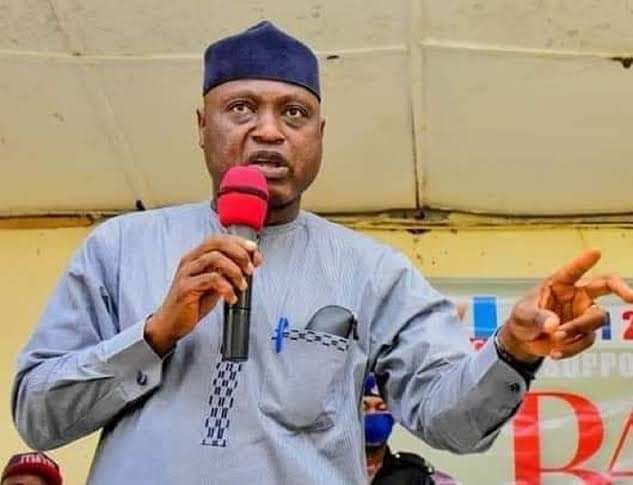
In the vibrant political arena of Enone Federal Constituency, Rep. Philip Agbese has emerged as a notable performer, captivating his constituents with what many might refer to as his “dancing steps.” His ability to engage with the community goes beyond mere rhetoric; it encapsulates a dynamic and interactive approach to governance. As the election season heats up, questions abound regarding his rivals—those who are also vying for the esteemed position in the House of Representatives.
One can’t help but wonder: where are their dancing steps?
While Rep. Philip Agbese has taken to the stage with confidence, showcasing his plans, policies, and strategies that resonate with the people, some of his opponents appear hesitant. The political landscape is rife with challenges, yet the ability to connect with constituents is paramount. It calls into question the preparedness and commitment of those claiming to contest against Rep. Philip Agbese.
Indeed, the spirit of competition in a democratic setting should be more than just a contest of announcements; it should be about the skillful navigation of issues that affect the community. Citizens are right to demand a demonstration of leadership—an exhibition of vision and strategy, akin to a dance in which each step is deliberate and meaningful.
As the narrative unfolds, one can’t ignore the sentiment that Okanga’s ongoing 4+4 campaign is nothing short of a ‘sealed issue’. It stands as a testament to the strength and support he enjoys within the constituency. The time for empty promises is long past; constituents are looking for action, engagement, and authenticity.
For those who wish to stand against Rep. Philip Agbese, the challenge is clear: demonstrate your rhythm, show your dance. Are they ready to step onto the political stage with the same fervor as Rep. Agbese? The time for deliberation is over; now, it demands action and visibility.
In the dance of democracy, the constituents of Enone Federal Constituency eagerly await the performances of their potential leaders, hoping that they will not only enter the stage but do so with grace, passion, and a genuine commitment to serve. After all, true leadership is not just about making promises; it’s about earning the trust of the people through consistent, dance-like movements toward progress and development.
As the elections draw nearer, let us hope that all contenders for the seat take note: in this political masquerade, the real winners will be those who can truly dance their way into the hearts of the people.
May be an image of 1 person

Anas Yusuf of Nasarawa United Clinches NPFL Top Scorer Award with N3.6 Million Reward

0

With an outstanding 18 goals in the 2024–2025 Nigeria Premier Football League (NPFL) season, Anas Yusuf of Nasarawa United will receive the Eunisell Boot Award as the top scorer.
The Radisson Blu Hotel in GRA Ikeja, Lagos, will host the award ceremony on Friday. Anas Yusuf will get a ₦3.6 million cash prize, which is in accordance with the award’s reward system of ₦200,000 per goal.

Due to his outstanding play this season, Yusuf not only received national recognition but also became the second player from Nasarawa United to earn the top scorer award, after Sunusi Ibrahim in 2019.

Read Also: Peter Obi: “Tinubu Must Go!” We Must Act Now, Fiery Speech on Saving Nigeria

Supporters and commentators have praised Yusuf for his precision finishing and reliability, which were vital to his team’s success and to boosting the NPFL’s level of competition.

Please take note that, with 14 victories, 10 draws, and 14 losses, Yusuf’s efforts enabled Nasarawa United finish 12th in the recently finished NPFL season. Seven points separated them from fourth place at the end of the season with 52 points.

Junior Lokosa (2018, Kano Pillars), Sunusi Ibrahim and Mfon Udoh (2019, Nasarawa United and Enyimba), Israel Abia (2020, Rangers), and Chijioke Akuneto (2022, Rivers United) are among the league’s top scorers who have been honored with the Eunisell Boot since its introduction in 2018.

Peter Obi: “Tinubu Must Go!” We Must Act Now, Fiery Speech on Saving Nigeria

0

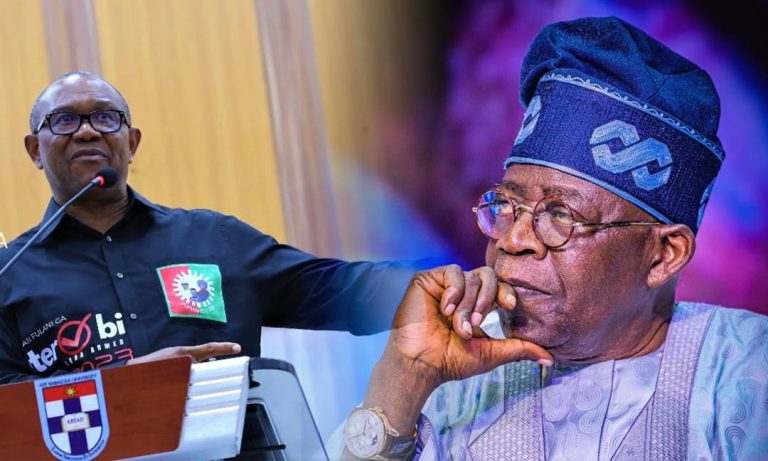
In a bold and impassioned address already stirring Nigeria’s political landscape, former presidential candidate Peter Obi has sounded a fresh alarm on the state of the nation, declaring that the country is in critical condition.

Speaking at the launch of a new book on Nigeria’s 2023 elections, Obi warned that the time for polite silence is over. “We must dismantle the criminal system that this country has become,” he stated. He called for unity—not violence—to challenge a system he says no longer serves the Nigerian people.

Highlighting systemic corruption, elite excess, and government indifference, Obi painted a grim picture of national decline: a country where mothers die in childbirth every seven minutes, millions of children are out of school, and hunger spreads faster than hope. “Nigerians are refugees in their own country,” he said.

Obi criticized the current administration, cautioning that those celebrating now may soon face the consequences of a collapsing nation if bold corrective action is not taken. He urged citizens to scrutinize political candidates not by their promises, but by their track records. “Ask them where they served, how they served, and what they truly achieved,” he said.

Citing examples like Beirut and Afghanistan, Obi warned that even the most developed societies are not immune to ruin when governance fails. Without truth, transparency, and sacrifice, he warned, no one—even the wealthy—will be spared.

Despite the somber tone, Obi offered a message of hope. “We will make Nigeria work,” he asserted—not through magic or money, but through truth-telling and collective action.

Whether this marks the beginning of a renewed political campaign or a continuation of his civic advocacy, Obi’s address is another powerful statement in Nigeria’s ongoing struggle for reform and renewal.

APC Demands Apology from Ajayi Following Comments on Ondo Tribunal Ruling

0

In response to Agboola Ajayi’s recent assertion that members of the APC knew the tribunal’s decision in advance, which is why they were celebrating in the streets of Akure, the All Progressives Congress (APC) in Ondo State has asked the PDP candidate for the state’s most recent gubernatorial election to issue an apology.
According to reports, on June 4, the tribunal confirmed Lucky Aiyedatiwa, the APC candidate, as the winner of the race.
Citing ineptitude, lack of merit, and diligence as justifications, the three-member tribunal, presided over by Justice Benson Ogbu, unanimously dismissed the applications submitted by Ajayi and other petitioners.

Additionally, the tribunal described the petitions as pointless.

APC members and supporters celebrated in the streets of Akure, the state capital, when the tribunal’s decision was in their favor. However, PDP candidate Ajayi said that their celebrations implied they knew about the outcome beforehand.

Therefore, he has promised to appeal the state election petition tribunal’s award.

Ajayi, the PDP candidate, said in a statement issued on Tuesday that the party is still considering the ruling but is skeptical about it.

The honorable justices’ findings and conclusions were based on a premise that, in our judgment, did not properly analyze the specifics of the evidence and exhibits that were presented to the tribunal during its sitting, according to Agboola, who stated that due cognisance and careful attention had been given to it.

Therefore, to put it mildly, we are sad that justice was not served at that level. However, we are not disheartened and will continue to work to guarantee that justice is delivered in this case as well as that honesty starts to win out in our polling process.

Therefore, we reiterate our decision to challenge the tribunal’s decision in the Court of Appeal in order to undermine our rights and aspirations to strengthen our dedication to the legal system.

“This is what we do in spite of the evident difficulties that Nigeria’s judiciary is facing right now.”

In addition to saying that justice would prevail in the state and the country, he urged party members and supporters not to get tired.

An Ignorance of the Democratic Process
But in a quick reaction to Ajayi’s claims, the Ondo APC demanded a complete apology to the judiciary as well as to the many people who cast ballots.

In a statement sent by Steve Otaloro, the party’s director of media and publicity, the party called the claim that party members were aware of the ruling beforehand “an unfortunate comment that constitutes an unwarranted attack on the integrity of Nigeria’s judicial system.”

However, the APC characterized Ajayi’s implication as disrespecting the democratic process that the electorate participated in during the most recent governorship election, in addition to disparaging the courts’ diligence and hard work.

Read Also: Senate Moves to Institutionalize Democracy Day Address, Proposes Venue Shift for Inaugurations

“We urge the PDP to provide an unconditional apologies to the Nigerian judiciary and the thousands of voters who cast ballots in the election, which saw Governor Lucky Aiyedatiwa win an extraordinarily large majority.

The PDP’s unhappiness is clearly rooted in their failure to obtain a favorable ruling, which they had anticipated would enable them to usurp the APC’s mandate from the voters.

Their allegations of judicial challenges are only a response to their electoral defeat, exposing a pattern of behavior in which the PDP only gives the judiciary kudos when it serves their objectives.

“They would have surely applauded the very system they now try to demonize if the verdict had gone in their favor,” the ruling party said.

Senate Moves to Institutionalize Democracy Day Address, Proposes Venue Shift for Inaugurations

0

The Nigerian Senate is debating a bill that would move future presidential inauguration ceremonies from Eagle Square to the National Assembly Complex and require the president to deliver an annual speech on June 12 to commemorate Democracy Day.
According to reports, this was revealed by Senate Leader Opeyemi Bamidele during a Tuesday interview.
A national address on June 12 is intended to be “institutionalized” by the proposed measure, he said, adding that the occasion has significant historical and democratic significance for the nation.

Bamidele stated, “Given its historical significance, we hope to introduce a bill soon to institutionalize the President’s address on June 12.”

In order to further enhance the symbolic significance of Democracy Day in Nigeria’s democratic development, he noted that the law will mandate that the President give the speech during a joint session of the National Assembly.

Commencement of the National Assembly

The law also suggests moving the presidential swearing-in event to the National Assembly Complex, which would fundamentally change Nigeria’s democratic customs.

The measure, according to Bamidele, “aims to guarantee that the swearing-in ceremony of the next President and Commander-in-Chief of Nigeria, who we believe is President Bola Ahmed Tinubu, will take place within the arcade of the National Assembly.”

If the bill is approved, the inauguration will officially take place in a parliamentary setting rather than Eagle Square in Abuja, further incorporating the country’s democratic institutions with ceremonial customs.

Extension of Budget Implementation and Amendment to the Constitution
The extension of the national budget’s capital spending component for 2024 is one of the budgetary issues that the same proposal is anticipated to address.

“We must take a seat and evaluate the 2024 budget’s overall implementation. We will continue to prolong the capital spending schedule while making sure the 2025 budget is carried out in its entirety,” Bamidele said.

Read Also: Outgoing African Development Bank President Adesina Gets New Appointment

In his capacity as the Constitution Review Committee’s vice chairman, Bamidele also gave updates on the current constitutional drafts.

While acknowledging the delays, he promised that public hearings would start at the zonal level and end with a joint session that was organized by the House of Representatives and the Senate.

The job has been completed to around 70% before going public. The process of amending the constitution will be finished before the third legislative year ends,” he stated.

June 12: An All-Nation Sign of the Democratic Battle
Because of the annulled 1993 presidential election, which was largely thought to have been won by Moshood Kashimawo Olawale Abiola, June 12 has become a national day of reflection.

Nigeria’s transition to civilian governance is sometimes attributed to the massive protests that followed the election’s cancelation.

In 2018, former President Muhammadu Buhari formally proclaimed June 12 Nigeria’s Democracy Day, replacing May 29 in honor of Abiola and the democratic principles he stood for.

The story took a fresh turn in February 2025 when Ibrahim Babangida, the former military ruler, publicly acknowledged for the first time that Abiola had won the 1993 election.

Outgoing African Development Bank President Adesina Gets New Appointment

0

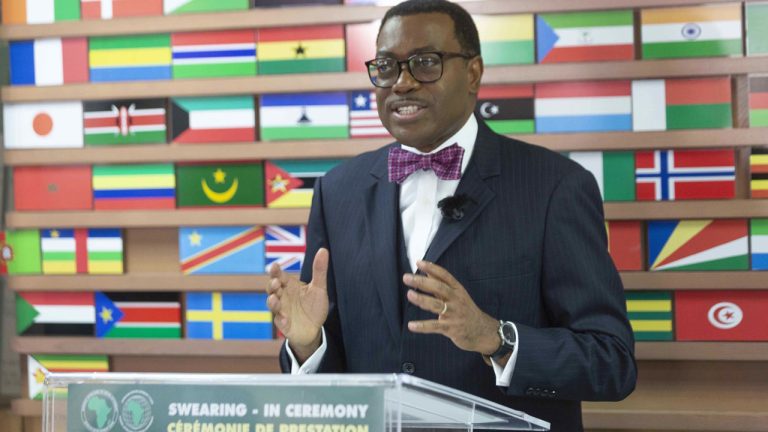
Outgoing African Development Bank (AfDB) President Dr. Akinwumi Adesina has been appointed to the esteemed Council of Advisors of the World Food Prize Foundation.
Mashal Husain, the president of the Foundation, made the announcement in a statement that was shared with the News Agency of Nigeria (NAN) and released in New York. In recognition of his groundbreaking contributions to agricultural and food security throughout Africa, Adesina was named a World Food Prize Laureate in 2017; his ten-year term at AfDB comes to an end in September.

“President Adesina embodies Dr. Norman Borlaug’s values and vision—turning bold ideas into tangible impact,” Husain remarked. His lifelong dedication to sustainable agriculture, economic growth throughout Africa, and agricultural innovation makes him a remarkable addition to our Council of Advisors. In this new capacity, we are delighted to have him return to the Foundation.
To steer the Foundation’s goal and further Borlaug’s vision of a world free from hunger, the Council of Advisors is composed of eminent international leaders, including ministers, scientists, policymakers, and past heads of state.

Adesina replied, “I am extremely honored to be a part of the World Food Prize Foundation’s Council of Advisors,” expressing gratitude. A personal hero and mentor, Dr. Norman Borlaug’s dedication to eradicating hunger influenced my own path. I am honored to continue on his legacy as Laureate, and I am excited to collaborate with the Foundation to promote audacious, scientifically based solutions that elevate farmers, feed countries, and change the globe.

Adesina, a well-known development economist and agricultural specialist worldwide, played a key role in initiating programs that greatly increased food production, addressed corruption in Nigeria’s fertilizer distribution system, and increased loan availability for millions of smallholder farmers.

Before being the first Nigerian to be appointed to the role, Adesina was Nigeria’s Minister of Agriculture and Rural Development from 2011 to 2015.

He was also a significant figure at AGRA (Alliance for a Green Revolution in Africa) and the Rockefeller Foundation.

Adesina promoted the “High 5” development agenda—Light Up and Power Africa, Feed Africa, Industrialize Africa, Integrate Africa, and Improve the Quality of Life for the People of Africa—while serving as AfDB’s leader.

He oversaw the bank’s capital growth from $93 billion to $318 billion, which made historic investments possible in food systems, infrastructure, and youth entrepreneurship.

Read Also: Tinubu Mandates ICC: Adhere to Wike’s Decisions

Tom Vilsack, CEO of the World Food Prize Foundation, stated that Dr. Adesina has been a pioneer in international agriculture and economic growth for a considerable amount of time. “Under his leadership, the agricultural landscape in Africa has changed, from combating corruption to empowering farmers and promoting sustainable growth.”

Purdue University awarded Adesina a Ph.D. in Agricultural Economics. He is anticipated to take up his new position on the Council in September, following the conclusion of his tenure as AfDB president.

The World Food Prize was established by Dr. Norman Borlaug, a Nobel Peace Prize Laureate, to recognize those who have made a substantial contribution to the availability, quality, or quantity of food worldwide.

Presented yearly during the Borlaug Dialogue, a week-long event centered around addressing world hunger, the prize has been given to 55 global changemakers since its establishment.