Home Blog Page 229

Nigeria, Philippines Deepen Cooperation on Labour and Migration Issues

0

Among other things, the Federal Government of Nigeria and the Republic of the Philippines have committed to deepening their bilateral relations on labor and migration.

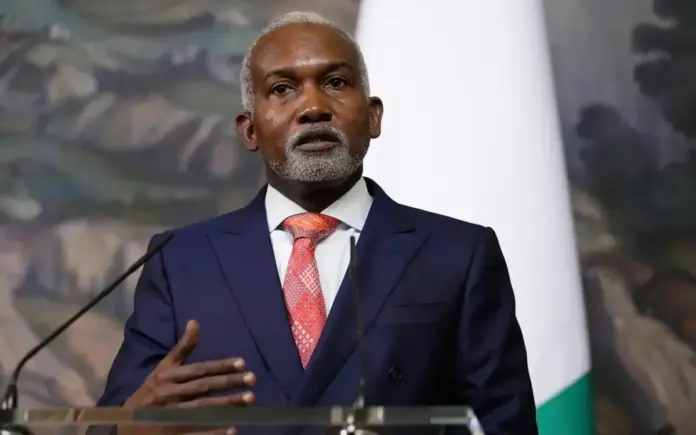
This was the conclusion of a high-level discussion held in Abuja on Wednesday, when Ambassador Yusuf Maitama Tuggar, the Minister of Foreign Affairs, welcomed the Philippine team headed by Secretary of Migrant Workers Hon. Hans Leo J. Cacdac.

Amb. Tuggar acknowledged the historical connections between the two nations, which date back to Nigeria’s independence, in his opening remarks.

The Minister emphasized the significant contributions made by Filipino professionals in Nigeria throughout the years, especially in the fields of education, aviation, and maritime.

“Filipinos taught a lot of Nigerians in my generation, particularly in STEM subjects. These connections foster the development of cultural bridges and go beyond the exchange of knowledge, according to Tuggar.

According to him, Nigeria is eager to absorb the Philippines’ internationally acclaimed method of managing foreign workers as part of President Bola Tinubu’s foreign policy agenda, which is based on democracy, demography, development, and diaspora.

“As the Philippines does, we want to make sure our own diaspora workers are empowered and protected with respect, dignity, and full government support,” he stated.

Additionally, the Minister mentioned Nigeria’s Technical Aid Corps (TAC) program, which was founded in 1987 and sends qualified Nigerians to ACP (African, Caribbean, and Pacific) nations.

Amb. Tuggar disclosed ambitions to turn the project into a profitable business while also looking for further foreign cooperation.

Cacdac responded by expressing President Ferdinand Marcos Jr.’s directive to strengthen labor ties with partner nations, such as Nigeria, where Overseas Filipino Workers (OFWs) are employed.

“We are pleased to see that Nigeria has been a safe and welcoming place for some of our nationals,” Cacdac said after meeting with some of them here. “We are here to strengthen coordination and protection mechanisms and to build on that goodwill.”

Deputy Minister for International Cooperation John Al Rasul, Assistant Secretary for Pre-Employment Concerns Juleen Abito, and Director for Anti-Illegal Recruitment and Human Trafficking Giant Mendez were among the high-ranking officials in the Philippine group.

The employees of the Philippine Embassy in Abuja accompanied them.

Cacdac underlined how crucial it is for both countries to learn from one another in areas like labor system development, anti-trafficking initiatives, and migratory governance. In order to better meet the requirements of Filipino workers in Nigeria and improve communication with local authorities, he also formally asked that a specialized labor office be established within the Philippine Embassy in Abuja.

Read Also: Tambuwal Blasts APC: ‘I Couldn’t Stay Amid What’s Happening in the Country’

Our objective is to use institutional cooperation to further fortify interpersonal relationships. Building safer migratory routes for our countrymen and exchanging knowledge about work practices are two examples of this,” Cacdac said.

Secretary Cacdac thanked the Nigerian government for its hospitality and for encouraging greater interaction between the two countries in a press conference following a private meeting.

“The Nigerian government and people, as well as the Honorable Foreign Minister, have our sincere gratitude for the cordial welcome.

“We have received a clear directive from President Ferdinand Marcos Jr. to strengthen our bilateral labor relations for the benefit of both nations.”

Cacdac described Nigeria as a “safe haven” for overseas Filipino workers (OFWs) and underlined the Philippines’ desire in bolstering safety for Filipino migrant workers there.

Additionally, he disclosed that the Philippines is looking into the possibilities of opening an Abuja Migrant Workers Office.

“With targeted programs and services, this will enable us to better serve our people here and their families back home,” he continued.

According to Cacdac, his delegation will also meet with the Ministry of Labor in Nigeria today to discuss bilateral labor agreements, capacity building, and the sharing of information about labor laws and safeguards.

In order to expedite processes and enhance comprehension of each nation’s systems, Secretary Cacdac emphasized the value of reciprocal information sharing.

“Our president has ordered us to streamline domestic bureaucratic procedures, particularly for foreign workers.”

“We support the welfare of both our employees overseas and foreign workers in the Philippines, and we are signatories to the UN Convention on the Protection of Migrant Workers.”

“We are honored and delighted to welcome Secretary Cacdac,” stated Ambassador Tuggar. The Philippines has long been a pioneer in the development of human resources, and many Filipinos have made significant contributions to Nigeria, particularly in the fields of education, aviation, and the marine industry.

As a populous country, the Philippines fits into Nigeria’s demographic diplomacy, according to Tuggar, who also emphasized the strategic alignment of this alliance with President Bola Tinubu’s “4D” foreign policy, which stands for Democracy, Development, Demography, and Diaspora.

“We want our employees to travel overseas in safety and respect. About nine agreements with the Philippines are still outstanding, and Secretary Cacdac has suggested a tenth that would concentrate exclusively on labor, Tuggar stated.
Tambuwal Blasts APC: ‘I Couldn’t Stay Amid What’s Happening in the Country’

0

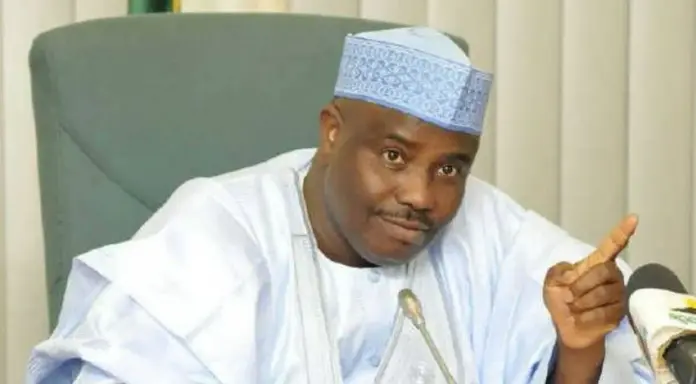
According to Aminu Tambuwal, the former governor of Sokoto State, the Africa Democratic Congress (ADC) opposition coalition is not supporting any one person’s presidential ambition but rather is working to save Nigeria.
Speaking in Sokoto shortly after being greeted by a resounding wave of fans, Tambuwal pledged that the coalition will soon present a comprehensive policy program that would address insecurity, boost the economy, and enhance the welfare of its constituents.
He criticized the All Progressives Congress-led government for failing to handle the economy, insecurity, and the well-being of Nigerians, calling governance “human faceless.”
He reaffirmed his commitment to democracy, the rule of law, and responsible leadership. I can’t be forced to give up these values by any organization. I left the APC in 2018 because of the injustices occurring in this nation. All of the reasons I left are now even more evident.

Despite the President’s authority, he claimed, no meaningful action has been taken, such as hiring more security guards.

Read Also: Reflections on Goodluck Jonathan’s Possible Return: He Who the Cap Fits Should Wear It (Part One)

Tambuwal responded to assertions that the alliance is being formed to further Atiku Abubakar’s goals by saying, “This coalition is not about any individual.” Nigeria has to be saved. The NNPP, PDP, Labour Party, and other political parties are uniting to provide Nigerians with a viable option.

Tambuwal remembered his opposition to any sudden elimination of fuel subsidies without compensatory measures.

“I cautioned against eliminating subsidies without a structure to safeguard the public while I was Speaker. The cost of its unilateral removal is being felt by Nigerians.

The senator asked Nigerians to support leaders who are dedicated to genuine reform, promising that the alliance will provide a model of governance based on competence, accountability, and compassion.

Reflections on Goodluck Jonathan’s Possible Return: He Who the Cap Fits Should Wear It (Part One)

0

Anticipation permeates the air. The fire seems to be nearby, and there is smoke all over. Deafening excitement is building to a crescendo: Jonathan is on the way! Jonathan will arrive soon! The jury is already out in full force, as expected, with a number of journalists, pundits, and self-described political strategists analyzing the potential ramifications of former President Goodluck Ebele Jonathan returning to the political scene for a potential 2027 presidential endeavor.

Almost all opinion writers concur that his return to politics will result in a seismic upheaval in the power dynamics being calculated by the various political platforms, including the ruling APC, the main opposition PDP, and the rebranded ADC parties. For the simple reason that the North will remember and honor him for the massive pro-people and pro-poor programs and policies he unleashed during his first presidential term—programs that have been diminished and abandoned over the past ten years—his inclusive and compassionate style of governance, and, of course, the fact that he will only be constitutionally eligible for one term in office, many people think he will win handily if he runs. The South East, his adopted geopolitical base, will also support him, especially if Peter Obi’s name is not on the ballot, even if his South South base would vote for him with overwhelming and decisive force.

I don’t intend to address every opinion piece that has already been written about former President Jonathan’s alleged second coming in this three-part essay. Some of these articles are direct, measured, and objective, while others are written by paid hacker types who aim to damage his reputation and image. For now, I want to let his words and those of others speak for him and about him—his compassionate nature, his love for peace and good governance, his liberal outlook and tolerance, and the significant socioeconomic change he brought about in the country between 2010 and 2015. I will say a few words about the ongoing media conversation surrounding the Jonathan phenomenon.

Reviving his legacy and telling his story through his and others’ words is like traveling back in time to Nigeria, when influential figures like Dr. M I Okpara, Sir Ahmadu Bello, Chief Obafemi Awolowo, Sir Tafawa Balewa, and Dr. Nnamdi Azikiwe walked the land they lead with moral clarity and intellectual force. You can then study their sayings and wise words, peruse their works, and hold them accountable using their words. Dr. Goodluck Ebele Jonathan is one such leader—certainly not other presidents who cannot even be remembered by a single catchphrase!

With my modest commentary, I would like to rapidly offer to the Nigerian public and the international society at large a collection of these profound words and deep thoughts. This presentation approach will be carried over into parts two and three of this article.

On Political Issues Without Resentment

“My political aspirations are not worth any Nigerian’s blood.”

Jonathan Goodluck, President

This peace mantra has gained international recognition, is a source of moral clarity, and is being used as a benchmark to evaluate how African political leaders behave while in government.

President Jonathan remains a man of peace.

The inconceivable was done by President Jonathan in 2015 when he called an election with no final results yet for the opposition candidate. He had the ability to incite conflict, but for whatever reason he decided to choose peace.

― Journalist and public scholar Simon Kolawole

Kolawole was spot on in terms of his mental and visual clarity. He has a great perspective that cannot be improved.

As a Transformational Leader, Jonathan

“Dr. Jonathan’s innovative programs, such as YouWin, which the World Bank has determined is likely the most successful business growth competition globally, helped millions of young people escape poverty.” In addition, Dr. Jonathan had the impressive record of constructing 165 elementary and high schools and 14 universities for Nigeria’s young, an accomplishment that significantly increased the country’s GDP since, as any leader should understand, the more you study, the more you make.

— President of the Republic of Ghana John Dramani Mahama

There is nothing more to add to these stirring words from one of Africa’s greatest modern leaders.

A Forgiving and Caring Leader

I’ve learned from history and my own experience that using power as a sword rather than a shield will wear you down and inflict unimaginable suffering for the people you serve. People who observe power from the sidelines much too frequently mistakenly think that the strong man is the one who wields power. It isn’t true, though. Controlled strength is what is meant by real power.

—Goodluck Jonathan, President

Indeed, rather than being the opposites, the main components of presidential power are compassion, tolerance, and controlled authority. Jonathan’s famous statement has been staring us in the face ever since he left office.

Jonathan as the Face of Democracy in Africa

Because of his legacy of a democratic and peaceful handover of power, Goodluck Jonathan has become the face of democracy in Africa. Africa would quickly rise to become one of the world’s most stable and developed regions if all African leaders adopted the Jonathan Doctrine.

—Joe Trippi, popular novelist and political strategist from the United States

I agree that a lot of African leaders have not yet adopted the Jonathan Doctrine, which is why the region continues to struggle. Sit-tight civilian dictators continue to be prevalent throughout the continent, suppressing the opposition and misusing term-limit clauses in the constitution. They should put the Jonathan Doctrine into effect and give Africa some breathing room.

President Jonathan on the Moral Need for Authority

“My goal is to start an idea-based campaign, not a defamatory one. Love, not hate, is what I’ve come to preach. Our quest for nationhood has been bogged down by the dividing tendencies of the past, and I have come to break you free. I have no adversaries. We have a similar identity and you are all my buddies.

— Jonathan, President

We last heard of this kind of moral clarity during the years of Nigeria’s struggle against British colonialism and the establishment of a post-colonial nation, before Jonathan arrived to say these incredibly transforming words.

What should I say at the end of this first section of a piece that I have been considering for a long time and have finally found the confidence to write? President Jonathan’s opponents and their army of persistent translators have dubbed him names that cannot be printed. He’s been called weak, inept, and uninformed. The people who said these hurtful things have withdrawn in embarrassment ten years after he left office because the true inept and ignorant people have come calling. The remaining Chibok girls have been deserted by those who used their awful situation as a weapon to overthrow him in an election, eleven years after the abduction of the Chibok girls. It goes without saying that the Dapchi girls have subsequently been added to the expanding list of citizens and girls kidnapped between 2015 and 2025. The Unity Fountain in Abuja, where the Bring Back the Girls protesters had set up camp for months in an attempt to overthrow him and his administration, has been closed, fenced, and padlocked with DSS and police officers on duty.

I’m a Muslim, a Northerner, a public intellectual, and I’m from Gombe State. President Jonathan is an Ijaw person of Bayelsa state and a devout Christian. However, if he were to run for reelection, I would be happy to support him, advocate for him, and cast my vote because I believe in him and his historic promise as a revolutionary leader.

The Executive Director of the Leadership and Governance Training Collective, Adamu Musa Abdulkadir, wrote from Gombe, Gombe state.

Foluke Daramola Reveals Losing N25M Deal and Marital Strain Over 2023 Tinubu Support

0

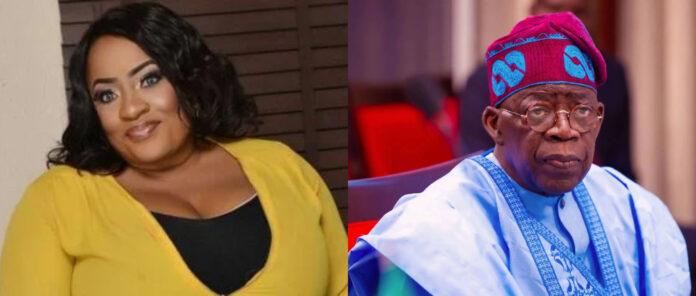
The Nollywood actress Foluke Daramola-Salako has spoken candidly about the difficulties she encountered on the personal and professional fronts during the 2023 elections.
She stated that she will take a different tack in 2027 in an interview with Behind The Fame TV.
Two ambassadorship engagements worth 10 million and 15 million naira were reportedly lost as a result of her choice to back President Bola Tinubu in 2023.
She also revealed that her marriage was nearly ruined by her position.

As she put it: “The fact is that I cannot be the same person I was in 2023 and 2027.” That isn’t possible since It doesn’t matter how much is seen; I know what I missed without collecting a kobo. Two ambassadorial deals, worth 10 million and 15 million dollars, were lost due to the election and the Obedient movement. I nearly divorced.

Read Also: Bye-Elections: Mark, ADC Leader Urge INEC to Remain Neutral

“I nearly lost my marriage, but the important thing is that I made my own decision and followed my conscience.”

The performing arts directorate section of the APC’s 2023 presidential campaign committee in Lagos State hired Daramola-Salako as their media assistant.

She described Tinubu as a father figure who had supported her on many occasions, including her wedding, yet she remained faithful to him in spite of criticism.

Her husband, Kayode Salako, a supporter of Peter Obi and the chairman of the Labour Party in Lagos, supported her position.

Nigerians can choose who they want to support, he said.

As a benefactor to their family, he said, they would rather not to support any political candidate than to oppose Tinubu.

Bye-Elections: Mark, ADC Leader Urge INEC to Remain Neutral

0

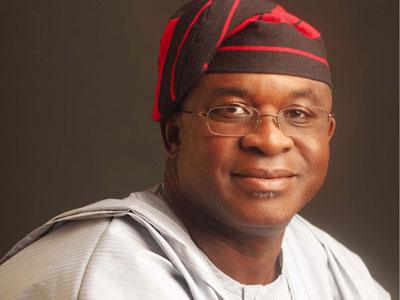
The Independent National Electoral Commission (INEC) has been encouraged by Senator David Mark, National Chairman of the African Democratic Congress (ADC), to maintain impartiality and transparency in the nationwide bye-elections that are set for Saturday, August 16, 2025.

Additionally, Mark called on the electoral umpire to carry out a procedure that will rebuild public confidence in the electoral process.

The former Senate President praised the party’s candidates for the Senate, House of Representatives, and State Houses of Assembly, calling the ADC a “child of necessity,” originating from a sincere desire to provide Nigerians with an alternative and better administration.

In Anambra, Edo, Oyo, Taraba, Adamawa, Kaduna, Zamfara, Kano, Niger, and Ogun States, the ADC will run candidates in the bye-elections for senators, the House of Representatives, and state houses of assembly.

Read Also: Popular Nollywood actor Seun Confirm passed away

In a statement sent by his media adviser, Paul Mumeh, Senator Mark urged voters to give the party a chance to establish its credibility.

He emphasized that a really free, fair, and credible election on Saturday might help restore INEC’s reputation, reminding it that “all eyes are on the Commission” to rectify previous mistakes that have damaged its public image.

The former Senate President praised the bravery and commitment of ADC candidates and urged them and their supporters to abide by electoral regulations while being on guard against intimidation or manipulation.

Additionally, Senator Mark urged security forces to ensure that everyone is treated equally and that the people’s will is allowed to triumph without hindrance.

Popular Nollywood actor Seun Confirm passed away

0

Seun Confirm, a Nollywood actor, passed away because of aggressive BPH.
According to reports, Jaiye Kuti, Seun’s coworker, posted the news on her Instagram profile on Thursday, August 14, 2025.

The movie star prayed for God to comfort the deceased’s family and conveyed her sorrow over the death.
Seun confirmed, she wrote. Lku omo yin dun mi ooooo kabiyesi olorun, aaaah. Kabiyesi olorun, ijinle ife alailenikan iku doro, kabiyesi olorun. Peaceful rest is terrible.

“Lord, not now! Sa odun mi. Odun mi o, olorun. Odun’s BPH is high. Jesus, ama pade lese. The sun ree o. May God comfort you and your family.

Aside from that, Nollywood actress Destiny Etiko and her adopted daughter, Chinenye Eucharia, have made amends following a three-year separation.

Read Also: Breaking: Sowore Attends Court Hearing for New Cybercrime, Forgery Charges

According to reports, the development was made public on August 12, 2025, when Eucharia posted on Instagram that Etiko had started following her again.

She included a screenshot of the notification with the post and said she was happy about their newfound connection.

A relationship that had been the subject of public criticism since 2022 is about to undergo a sea change with the reunion.

At the time, Etiko said in a live session that their mother-daughter bond had been stressed by a series of disappointments.

She openly backed another adopted daughter and quit following Eucharia on Instagram.

Breaking: Sowore Attends Court Hearing for New Cybercrime, Forgery Charges

0

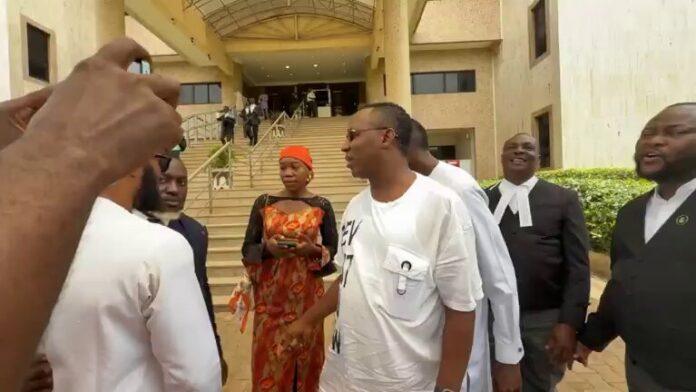
According to the report, Sowore was accused by the police of inciting police mutiny, forgery, and cybercrime during a rally in July that involved retired police officers. Justice Emeka Nwite will hear arguments on the three counts.
Before entering the trial, Sowore told reporters that he would not be frightened by Kayode Egbetokun, the Inspector General of Police.
“Regardless of the intimidation, I remain resolute and undaunted,” he stated. The police and residents of Nigeria must be freed from the shackles of the oppressors who have been holding them captive.

Together with several of his friends, the activist arrived with human rights attorneys Abubakar Marshal, Alexander Oketa, Wayne Chikezie Elijah, and Chike Anago Amanze.

Read Also: FEC Approves Major Funding for Power Sector: N13B Compensation, $34M Transformers

This most recent prosecution follows months after Sowore was arraigned on 17 counts of computer offenses in January 2025 for calling Egbetokun “illegal IGP” on multiple occasions.

The accusations stemmed from a video clip and many social media posts in which he urged widespread opposition to what he called “constitutional vandalism” in the wake of the contentious extension of the IGP’s term.

In a post on Thursday morning, 𝕏, Sowore confirmed his court appearance, writing, “I am attending to recently filed accusations by the Nigeria Police Force, which include unsubstantiated cybercrime and forgery, before the Federal Court Abuja. Now, #Revolution

FEC Approves Major Funding for Power Sector: N13B Compensation, $34M Transformers

0

In order to improve Nigeria’s national electrical system and solve the issues facing the power sector, the Federal Executive Council (FEC) has authorized four important reforms.
The government’s ongoing efforts to modernize transmission infrastructure, increase supply reliability, and satisfy the growing demand for power across the country include the permission, which was announced on Wednesday.
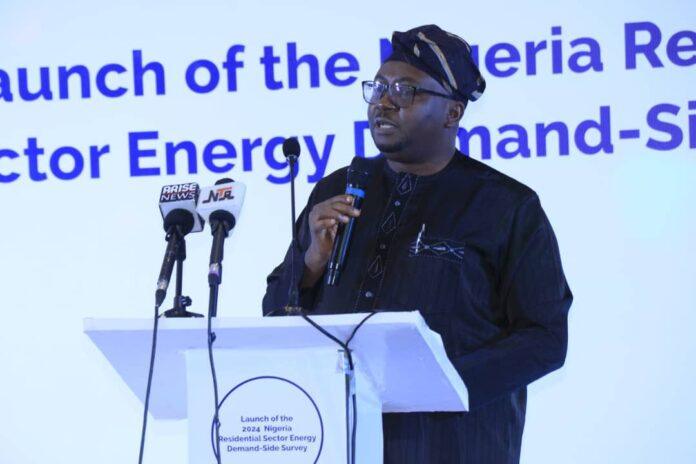
The development was reportedly disclosed by Adebayo Adelabu, the Minister of Power, following the FEC meeting, which was chaired by President Bola Tinubu.
The issuance of ₦13 billion for compensation associated with the Lagos Industrial Transmission Project was the first significant clearance.

This project is a component of a larger plan to update transmission infrastructure in Lagos and the industrial centers nearby.

According to Adelabu, the project, which was made possible by a $238 million development credit from the Japan International Cooperation Agency (JICA), aims to improve the electricity supply to important industrial clusters in Lagos.

According to Adelabu, “this funding covers compensation to property owners and communities affected by the transmission lines’ route.”

“The Lagos Industrial Transmission Project, when finished, will guarantee that our industrial estates have the committed, reliable power they require to spur economic expansion and job creation.”

National Grid’s New High-Capacity Transformers
FEC approved three more amendments aimed at enhancing Nigeria’s power supply infrastructure in addition to the compensation approval.

Among these are the purchase and installation of high-capacity transformers to replace the nation’s current grid’s aging, overburdened, and weak equipment.

The $34 million purchase would have ₦5.2 billion added for related expenses. What’s in the package:

A pair of 150MVA 330/132kV transformers
Three 100MVA, 132/33kV transformer units
Five 60MVA 132/33kV transformer units
A pair of 30MVA 132/33kV transformers
“To relieve overloaded facilities, improve voltage stability, and accommodate the increased transmission capacity we are building, these transformers will be strategically deployed across the grid,” said Adelabu.

The Minister characterized Nigeria’s national grid as aging, pointing out that many of its parts—like cables and transformers—had been in use for more than 50 years and were now beyond their built-in lifespan.

Adelabu admitted, “A lot of the transformers, cables, and associated components are weak and prone to failure.”

Read Also: Why Institutional Reforms, Civic Empowerment, and Accountability Are Crucial for Nigeria – Akingbade

“If we want to create a stable, dependable, and efficient grid that serves the needs of homes, workplaces, small businesses, and industries, regular maintenance and prompt replacement are crucial.”

He emphasized that the new reforms were a component of the Tinubu administration’s larger plan to decrease system failures, remove transmission bottlenecks, and increase availability to power in order to lay the groundwork for long-term economic growth.

According to reports, the recent reforms are regarded as a major step in resolving Nigeria’s problems in the power sector.

In addition to addressing the current grid stability issues, the improvements are anticipated to lay the groundwork for Nigeria’s long-term economic goals by providing dependable energy access for all economic sectors.

The private sector is anticipated to be crucial in carrying out these reforms, Adelabu emphasized, and the government’s objective is to make sure the power industry becomes a major engine of economic growth and employment creation.

Why Institutional Reforms, Civic Empowerment, and Accountability Are Crucial for Nigeria – Akingbade

0

Otunba Yomi Akingbade is a leader of the All Progressives Congress (APC) and a Nigerian living abroad. He discusses state policing, Nigerian democracy, and the benefits of political participation for honest people in this interview. The entrepreneur also discusses the significance of accountability in governance and institutional reforms, among other topics. Joy Anigogu provides the following excerpts:

What would you say about President Bola Ahmed Tinubu’s current administration?

The administration of President Bola Tinubu has undertaken an assertive “shock therapy” economic reset, exchanging short-term pain for macroeconomic stability, the development of infrastructure, and the extension of social programs. Some human rights organizations and investors have praised these actions. However, the societal cost is still considerable, particularly for inflation, insecurity, and limited civic space. The success of this ambitious reform plan will depend on whether noticeable improvements can reach those who will be most impacted as Nigeria enters the last two years of his mandate.

You entered politics when?

Every year, I conduct medical outreach in a few different places around the nation, particularly in Ondo State. I had to start at the grassroots level a few years ago because this move seemed political to many. I have therefore always been interested in politics.

Tell us about your goals and political journey.

My goal is to make the less fortunate people in society smile, and this is the main reason I entered politics: to be able to repeat what I have done on a modest scale for a wider audience that primarily needs the necessities of life.

Regarding Nigerian democracy, what can you say?

The democratic system in Nigeria is intricate and dynamic. Although it has achieved great progress since military rule ended in 1999, it continues to face enduring difficulties. Nigerian democracy is robust, but it is also vulnerable. Despite surviving more than 20 years of civilian governance, the system faces challenges with openness, accountability, and inclusivity. Although the foundation for a truly democratic society is in place, the true test will be in strengthening democratic principles—not simply conducting elections, but also guaranteeing everyone’s freedom, justice, and equal opportunity. Without localized, responsible, and intelligent policing, Nigeria’s security crisis cannot be resolved in a sustainable manner. Politically, constitutionally, and practically, the nation is prepared for state police. But decentralisation must be paired with oversight and reform to prevent misuse. Addressing the social and political causes of violence is also necessary for long-term security.

What do you think about the National Assembly’s attempt to change Nigeria’s constitution?

One of Nigeria’s most important governance possibilities in decades is the 2025 constitutional revision process. It has the ability to advance the country toward genuine federalism, election integrity, and more responsive local governance if it is implemented in an inclusive, deliberate, and transparent manner. But failure to manage state ratification hurdles, democratic protections, and uniform implementation risks turning the exercise into yet another unmet promise.

Would you say Nigeria is ripe for state police and how best do you think the government can fight the current insecurity in the nation?

Yes; Nigeria is poised for state police, and many experts, civil society groups, and even governors concur. Because of its scale, complexity, and lack of local intelligence and accountability, Nigeria’s centralized security architecture—particularly the Nigerian Police Force (NPF)—has found it difficult to successfully combat pervasive insecurity.

What role do you think diasporic Nigerians can play in the nation’s progress?

It’s by returning home and making significant investments. Once a business is established, the following step is to hire staff, which is the first step in helping the nation flourish. Joining politics will allow you to alter the narrative on a broader scale, and everything you have experienced while living overseas can be progressively duplicated in your own nation.

What do you think about the claim that politics is a dirty game?

Many people hold the view that “politics is a dirty game,” particularly in a nation like Nigeria where politics is frequently linked to violence, corruption, treachery, and manipulation. But a complicated situation is oversimplified by that term.

Lack of openness is the main reason why politics appears to be nasty. Politicians frequently work behind closed doors, negotiating agreements that benefit elite or personal interests over the general welfare. The second is the use of power and money. Instead of ideas or integrity, political campaigns in many countries, including Nigeria, mainly rely on funding, networks of patrons, and occasionally electoral violence or thuggery. Corruption and impunity rank third. Many political players avoid responsibility, misappropriate public funds, or change parties for personal benefit. The public’s cynicism is strengthened by this. The fourth is the manipulation of religion and ethnicity. To seize power, politicians frequently take advantage of identity divisions (tribe, religion, and area), which exacerbates conflict and erodes national cohesion. Politics isn’t always dirty, really. Theoretically, politics isn’t nasty. In actuality, it is a noble and essential instrument for allocating resources, structuring society, and peacefully resolving disputes.

Read Also: Still on the Hunt for Bello Turji’ – DHQ Confirms

It is the people and systems, not the idea, that are “dirty.” Politics is an instrument for public service. Effective politics promotes social justice, economic growth, and better policies. There are good politicians; they’re simply frequently overshadowed by the bad ones. Democracy also requires participation. Only the corrupt will control politics if decent people shun it because it’s “dirty,” and the cycle will continue. Politics has created great leaders. Leaders such as the late Nelson Mandela, Barack Obama, or Ngozi Okonjo-Iweala show that politics, when driven by ethics, can alter lives for the better. Personally, I think what should change is to clean up politics, especially in areas like Nigeria.

How can we accomplish that?

Let’s enhance institutions like the Independent National Electoral Commission (INEC), Economic and Financial Crimes Commission (EFCC) and the courts. Let’s use voting, the media, and civil society to demand accountability. Let’s educate and enable young people to take part in public life. Let’s promote issue-based politics over identity or money politics, uphold campaign finance regulations, and promote party transparency. The claim that “politics is a dirty game” is partially accurate, but it also serves as a justification for excluding decent individuals from positions of authority. We must stop letting the corrupt control politics and instead try to change the system from the inside out if we want to have honest, efficient government. “Being governed by those worse than themselves is the penalty that good people pay for not being involved in politics,” goes a proverb.

How can the government, in your opinion, best address the numerous issues affecting the Nigerian economy?

You are entirely correct; among the many issues the Nigerian economy is confronting in 2025 are high rates of inflation, underemployment and unemployment, food insecurity, a depreciating value of the naira, the load of public debt, an excessive reliance on oil, and many more. Nigeria needs to address its economic issue in a way that goes beyond temporary fixes. Building infrastructure, investing in people, diversifying the economy, and fostering an atmosphere that supports economic success are the ways to go forward. Instead of “managing poverty,” policy must focus on generating wealth.

Since 1999, do you think the current democracy has been favorable? How can we make it better, in your opinion?

Since 1999, Nigeria’s democracy has maintained political stability and granted certain civil liberties, but it has fallen well short of meeting the expectations of its citizens for justice, equity, and economic growth. Elections are only one aspect of democracy; other aspects include participation, openness, and efficient governance. In order for democracy to benefit everyone, not just the wealthy, Nigeria must now prioritize accountability, civic empowerment, and institutional reform.

What do you think of the suggestion that we return to the parliamentary form of government?

A parliamentary system might be an option for Nigeria. It might lower expenses, boost accountability, and enhance executive and parliamentary collaboration. However, any system—presidential or parliamentary—will continue to yield subpar results if the fundamental issues of corruption, shoddy institutions, and a bad political culture are not addressed.

Still on the Hunt for Bello Turji’ – DHQ Confirms

0

Bello Turji, the terrorist leader, has reportedly turned himself in to the military, although the Defense Headquarters has denied this.
According to reports, Turji, a wanted bandit commander who primarily operates in the states of Zamfara and Sokoto, has been charged with planning many attacks on NW villages.
According to recent reports, Turji released 32 kidnapped people and turned over his weapons as part of a peace attempt mediated by Islamic clerics in Zamfara State.
Nonetheless, Maj. Gen. Markus Kangye, Director of Defense Media Operations, said that Turji is still being sought during a press conference on Armed Forces operations on Thursday in Abuja.

“Simple response to the question regarding terrorist leader Bello Turji: we are still searching for him and Turji has not turned himself in,” he stated.

Read Also: Ododo’s Welfarist Policies Reshape Lives Across Kogi State

Dauda Lawal, the governor of Zamfara State, has promised that individuals responsible for the state’s violence will face consequences.

In response to recent killings in the Kauran Namoda Local Government Area—which was recently struck by a wave of bandit attacks—he made this statement.

The governor swore that divine intervention will uncover and shame those responsible for the terrible killings.

Five communities that were severely impacted were visited on Wednesday: Banga, Sakajiki, Kuryar Madaro, Maguru, and Tambarawa.

Bandit attacks have become more frequent in these locations, which has left many locals distraught and grieving the loss of loved ones.

Having been out of the state when the latest attack happened, Governor Lawal claimed that he gave the Deputy Governor the order to send a high-ranking delegation to show sympathy for the victims right away.

He returned to Gusau, the state capital, and went to the impacted towns to inspect the devastation and offer consolation to the bereaved relatives.