Home Blog Page 2256

Centre to UK House of Lords: Attaching religion to insecurity crisis in Nigeria for any sanction will harm humanity

0

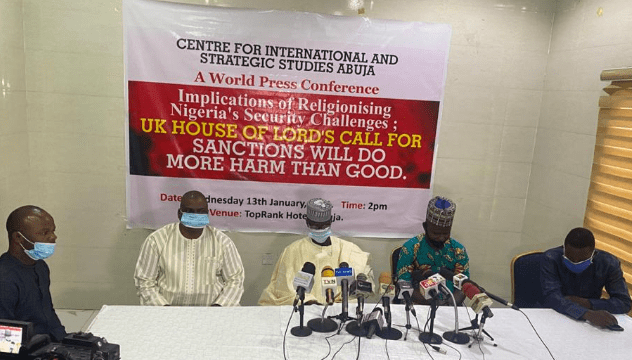
The Centre for International and Strategic Studies (CISS) has warned the House of Lords in the United Kingdom against attaching religion to Nigeria’s security challenges, as any sanction would do the country more harm than good.

The centre, which gave the warning in a press conference on Wednesday, in Abuja, also advised the British parliamentarians to be properly guided in their assessment, noting that any wrong move could lead to a crisis of unimaginable proportion.

In his address, special rapporteur, Professor Peter Maidoki rubbished the call by some lawmakers for sanction on Nigeria over an “erroneous report of the rising number of killings of Christians by terrorists and state actors”.

According to Prof Maidoki, it is wrong to reduce security threats in Nigeria to the fault lines of religion.

The special rapporteur noted that the current administration of President Muhammadu Buhari and his service chiefs have made the most impact in addressing the country’s security challenges and it is unfair to even mutter the idea of sanction.

Prof Maidoki added that both Christians and Muslims have been at the receiving end of the crisis in northern Nigeria.

The CISS, however, advised the House of Lords not to play into the hands of the terrorists based on the ignorance expressed in its report.

The centre further demanded that the lower chamber of the UK’s parliament treats the letter calling for sanctions on Nigeria in a similar manner the world rejected the invasion of the US Capitol.

Instead of such sanction, the CISS urged the parliamentarians and the entire world to join hands with Nigeria to stamp out terrorism.

Read the full statement below:

You are aware that some members of United Kingdom House of Lords have called on the UK Government to apply sanctions on Nigeria based on an erroneous report of the rising number of killings of Christians by terrorists and state actors in Nigeria.

The call, which was contained in a letter to Dominic Raab, MP, UK’s Foreign Secretary, House of Commons, London, was signed by David Patrick Paul Alton, the Lord Alton of Liverpool, a Liberal Democratic member of UK Parliament; Caroline Annex Cox, a  cross-bench member of the UK House of Lords; and others but most remarkably, the former Nigeria President, Chief Olusegun Obasanjo.

We had thought that since one of our own is involved in writing the letter, that at least the UK parliamentarians would be properly guided in their assessment of the security situation in Nigeria.

Unfortunately, this has not been the case as we have seen traces of partisanship and deliberate attempts to twist facts to arrive at a predetermined conclusion.

THE ISSUES

The petitioners, rather than be objective in their analysis, reduced the entire Boko Haram terrorism and other criminal activities by armed groups to a religious conflict.

They also alleged cases of human rights abuses against a particular faith by the armed groups and state actors.

While it is true that more needs to be done about the security situation in Nigeria, it is definitely misleading to reduce the challenges to the fault lines of religion and to accuse the Nigerian military of either collusion or inaction or perpetrating human rights abuses.

The most uncharitable is to use such baseless allegations as a basis to call for sanctions against Nigeria.

This is most unfair because if there is an administration that has given the issue of security a deserved attention, it is the current administration of President Muhammadu Buhari.

Since May 2015 when the Buhari administration was inaugurated, it has taken bold steps to curb terrorism, insurgency and other crimes in the country hence cannot at all, be accused of sleeping on the matter.

Within the last year, the Nigerian military has neutralised over 2,000  terrorists across the northern part of the country, arrested over a hundred of their members and informants and destroyed their weapons and operational facilities.

This is in addition to major feats it recorded in the previous years which have restored normalcy to most parts of the region.

Nigerian troops, for instance, have entered the base of the terrorists at Sambisa Forest and captured their centre, called Camp Zero.

The troops have also recaptured territories seized  y terrorists including 20 local governments spread across the three states of Adamawa, Borno and Yobe and brought them back to Nigeria.

They have retaken captured military bases in  Bama, Monguno and Gwoza as well as recapturing territories captured by the terrorists while the efforts of the military have made it impossible for the insurgents to launch further attacks on communities.

Added to that, Nigeria’s annual military expenditure has grown from $1.8bn in 2016 to $2.1bn by 2021, at a compound annual growth rate of 3.73%, according to a report by Strategic Defence Intelligence.

To boost its preparedness and resolve to flush out the terrorists, the Nigerian Army last year purchased more equipment including the Chinese Rotary Wing AVIC AV500 drone to carry out ISR missions at medium altitude, carry out strikes and stay airborne for nine hours while fighting terrorists.

The Nigerian Chief of Army Staff, Lt. Gen Tukur Yusuf Buratai at a time, even relocated to the centres of the conflict and stayed in the trenches with troops until substantial damages were inflicted on the ranks of the terrorists.

The battle was so fierce against the terrorists that the leader of the Boko Haram terrorists, Abubakar Shekau was heard weeping in an audiotape about how his men have been subdued by Nigerian forces and had even considered surrendering.

For a government that has taken these steps and has made it a priority to defeat terrorism, it is most unfair for anyone to contemplate taking sanctions against them.

We recall that it was similar gestures based probably on such misleading reports that led the US government and other nations to stop selling weapons to Nigeria during the past administration which gave the insurgents an upper hand in the fight and enhanced their recruitment drive.

But the impression given by this letter is that the Nigerian Government is not doing anything about exterminating the problem.

We do not want the UK to be misled by the current report into believing that the Nigerian government is either lax about the situation or supporting the insurgents.

This is far from the truth.

THE RELIGIOUS CARD

The most misleading aspect of the letter is the claim that the attacks are purely religious and targeted at only Christians.

The letter reads in part: ‘’We write following the publication of a new report by Nigerian human rights group`, Intersociety (December 14, 2020,  Intersociety, an estimated 34,400 Christians have been killed in Nigeria since 2009 – including 17,000 by Boko Haram (and its splinter groups) and 15,500 by Fulani militia.”

We ask, what is the total number of people that have died as a result of terrorism in Nigeria since 2009 that only Christians would be up to 34,400.

We, therefore, a state without fear of contradiction that the report is not only misleading but is an attempt to incite the people against religious lines.

While some terrorists have tried to use primordial fault lines to instigate a large scale crisis in the country, it is wrong to conclude that the victims of the crises have been only Christians.

Attacks in the northern states and the Middle Belt have been visited on all persons in those areas irrespective of religious beliefs or ethnicity.

In fact, the demographics of the affected areas, indicate that non-Christians have been more at the receiving end of such atrocities like killings, rape, abductions, arson etc by the terrorists.

The areas worse affected by the attacks in the Northeast include the Northern and central parts of Borno State which are populated mainly by Muslims.

Same with the other parts of the Northeast like Yobe and Adamawa States.

In the Northwest, all the areas affected like Sokoto, Zamfara and Katsina with the probable exception of Kaduna State are almost hundred per cent Muslims.

Even in the Middle Belt states, the crisis cannot be termed religious as people of different faith in states like Niger, Nasarawa, Plateau and Benue have suffered similar fates.

It is also not true that Nigerian security forces have committed crimes against humanity and war crimes.

The Nigerian Army has conducted itself most professionally by always observing the rules on engagement.

The chief of Army Staff to check the few reported cases even set up a desk for civilians to report cases of abuse and since then there have been no reports of human rights violations.

OUR CALL

We, therefore, consider the call for sanction against Nigeria based on these inexact and misleading reports as callous and unacceptable.

such calls aim to further polarise the people of the country and set them up against each other on religious lines which is exactly what the insurgents have been praying for.

The UK Government should not be based on the ignorance expressed in this report play into the hands of the terrorists.

We have seen how a young UK parliamentarian goofed when he said a former Nigerian Head of State stole the Central Bank.

This is one of such faux pax that should not be allowed to stand.

We demand that the same manner the world rebuffed the UK parliamentarian for getting his facts twisted should be applied here.

Furthermore, we demand that the manner  the world treated the invasion of US Capitol as despicable, should be the same way it treats this letter as it tends to violate the right of the people of Nigeria to be protected by its government and armed forces.

We call on all to join hands with Nigeria and the rest of the world to stamp out terrorism.
NNPC commits to OPEC+ settlement, to concentrate on gas

0

The Nigerian National Petroleum Company (NNPC) on Wednesday reiterated its dedication to abiding by the output minimize settlement of the Organisation of the Petroleum Exporting Nations (OPEC) and its allies aimed toward stabilising the worldwide oil market.

The Group Managing Director of NNPC, Mr. Mele Kyari, acknowledged this Wednesday whereas talking on the ongoing digital Gulf Intelligence “International” UAE Power Discussion board 2021.

Read also: Why we approved ‘slight increase’ in petrol price — NNPC

Mr. Kyari famous that regardless of the destructive results of the manufacturing minimize on authorities income, it was one of the best steps in direction of redeeming the worth of hydrocarbon sources on the world market within the curiosity of all.

Talking on the subject, “Outlook for Africa/Nigeria’s Oil & Gasoline Sector in Put up-Covid Period”, Kyari stated NNPC was hopeful that by the top of the 12 months demand for crude oil would choose up and there could be a marginal enhance in output, stressing that the Company was focusing extra on fuel, condensate and different income streams to sort out the income problem arising from the OPEC+ manufacturing minimize association.

Read also: PENGASSAN strike won’t cause fuel scarcity, NNPc assures

He defined that gasoline proved to be a gentle and dependable income stream through the top of the COVID-19 pandemic in 2020, including that gasoline manufacturing and utilization would stay key precedence for the Company in 2021.

Read also: Just In: Former NNPC GMD, Dr Maikanti Baru is dead

NECO result is out: 2020

0

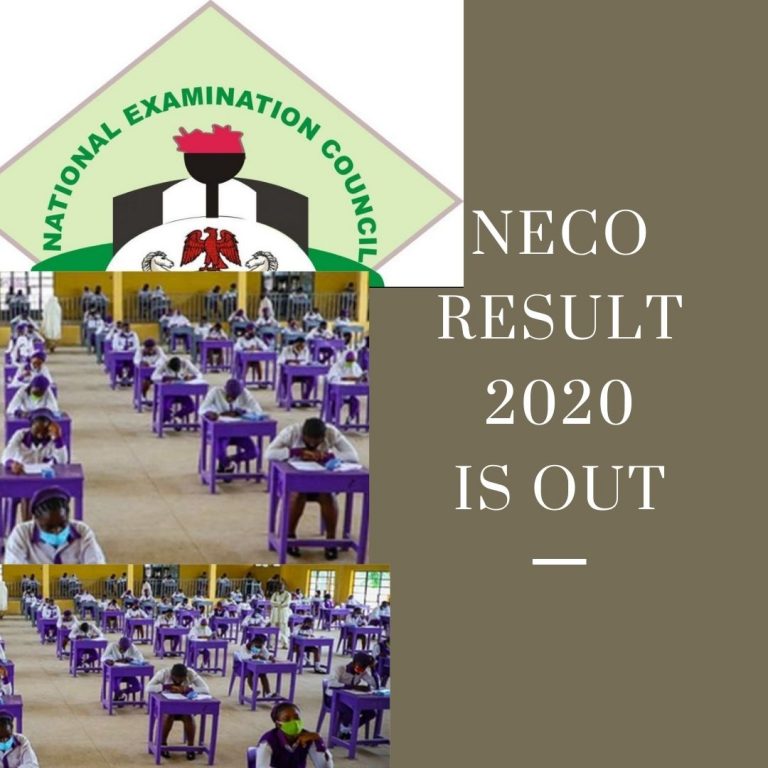
The National Examination Council (NECO) has announced the release of the 2020 Senior School Certificate Examination (Internal) results.

The registrar of the council, Godswill Obioma, made this known in Minna, Niger State capital, on Wednesday.

“Indeed, this is a defining moment for the Council, given the challenging circumstances in which the examinations were conducted the last year 2020. We are indeed grateful to the Almighty God for making this occasion possible,” he said.

Read also: JAMB Remits Another N7.8bn

“Pursuant to the mandates of Council in conducting credible examinations aimed at improving the overall quality of education in the country, the various stages in the conduct of our examinations from the pre-examination to post-examination stages have continually undergone improvement. It is gratifying to note that these processes have been concluded for the 2020 SSCE (Internal) culminating to the release of the results.”

Mr. Obioma said the COVID-19 pandemic and the EndSARS protest posed a challenge to the conduct of the examination.

“You will recall that the first case of Covid-19 in Nigeria was reported in February 2020 in Ogun State and since then a new norm has been introduced in the scheme of things. This new norm has altered not only our way of life but also affected our schedule of activities. For instance, our 2020 SSCE (I) would have been written from 28th May 2020 to 10th July 2020.

“However, due to the Covid-19 Pandemic, the Examination was rescheduled to hold from Monday 5th October 2020 to Wednesday 18th November 2020. It is rather unfortunate to note that barely two weeks into the commencement of the Examinations, the ENDSARS protests erupted across some states in the country leading to the imposition of curfew and closure of schools by some State Governments in order to safeguard lives and property, thus truncating the process of examinations once more.”

He noted that the Council has made special arrangements for those candidates who missed some papers due to the #EndSARS protests in those states.

The affected candidates will now sit for those papers missed during the forthcoming 2020 SSCE (External) scheduled from Monday 1st February 2021 to Wednesday 3rd March 2021.

Read also: Over 200,000 withheld as WAEC releases 2020 SSCE results

Soldier to die by firing squad for killing his superior

0
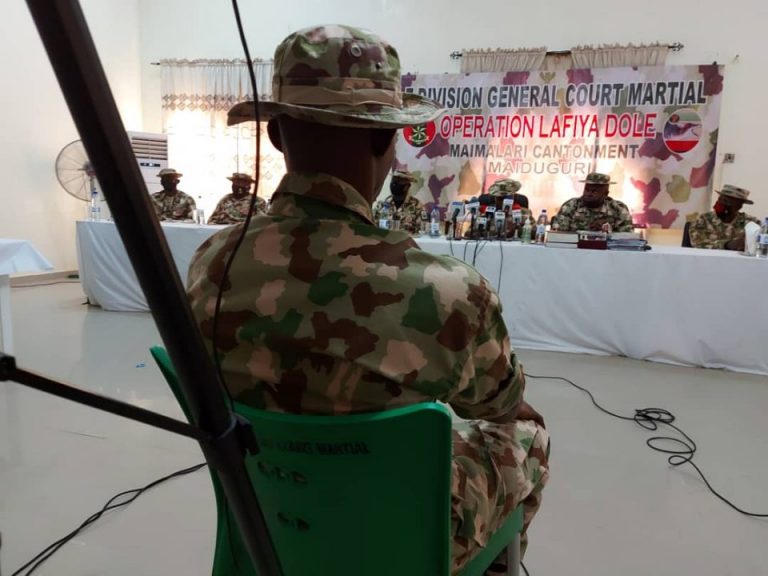
The Nigerian Army 7 Division General Court Martial has sentenced to death by firing squad one private Azunna Mmaduabuchi.
Mmaduabuchi who was serving at 202 Battalion Bama was found to have deliberately fired nine rounds of ammunition on Lieutenant Babankaka Ngorgi who instantly died.
Delivering the judgement at Maimalari Cantonment Maiduguri, President of the Court, Brigadier General Arikpo Ekubi said the soldier was found guilty of murder punishable under section 106 sub section A of the Armed Forces Act 2004.

Read also: Scores of bandits meet waterloo as troops intensify clearance operations, recover cache of arms in Katsina State (Graphic Images)

He said the gruesome murder of Lieutenant Ngorgi who was the adjutant of the battalion by private Mmaduabuchi negates the tenants of military regimentation.
The Court has also convicted private Mohammed Kuru serving at 212 Battalion to three years imprisonment for manslaughter.
Mohammed was convicted of recklessly by accidental discharge killed 12 year old Adamu Musa at a wedding ceremony in London Ciki area of Maiduguri metropolis.
Some of the accused soldiers before the 7 Division court martial in Maiduguri, Sergeant Sani Ishaya and 3 others were also convicted of manslaughter, where the court handed over a sentence from one to four years imprisonment.
All the convictions are subject to confirmation by superior authority.

Presidency welcomes report of COVID-19 research team

0

The Presidency has welcomed a team of Nigerian professors and scientists investigating effectiveness and role of Ivermectin drug in the treatment of the novel coronavirus.

Composed of scholars at home and abroad, the group also submitted its report on usefulness of the drug to the World Health Organisation (WHO) that had appointed a peer review expert from the United Kingdom.

Speaking yesterday while being briefed on the report by a team of scientists led by the Principal investigator, Prof. Femi Babalola, and the Chief Medical Director, Lagos University Teaching Hospital (LUTH), Prof. Chris Bode, Vice President Yemi Osinbajo expressed satisfaction that Nigeria and Nigerians “are at the cutting edge of scientific research into COVID-19 treatment.”

Read also: Scores of bandits meet waterloo as troops intensify clearance operations, recover cache of arms in Katsina State (Graphic Images)

He said: “We have an opportunity here and I am so fascinated to hear this drug has been used in the treatment of river blindness in this country.”

Commending the squad, Osinbajo added that with the report, Nigeria was at an advantage both in knowledge and availability of the drug, especially since Ivermectin had been found useful not only in the treatment of COVID-19, but also as a prophylactic medication.

He promised that the Federal Government would explore ways to support the research for the benefit of Nigerians and humanity, while also advancing effective funding of scientific research in the country.

Aside Babalola and Bode, other members of the IVERCOVID Research Group are Chairman of LUTH Medical Advisory Council, Prof. Lanre Adeyemo; a U.S.-based clinical pharmacologist, Prof. Adesuyi Ajayi; two project virologists: Prof. S.A. Omilabu and Dr. Olumuyiwa Salu; and also the project coordinator, Dr. Felix Alakaloko.

Both Profs. Babalola and Bode commended the government for encouraging the research, thanking the Vice President for his support.

The report was titled “A randomised controlled trial for the repurposing of Ivermectin in the management of COVID-19.” The study, carried out at LUTH, followed the report of a 5,000-fold reduction in viral load by Australian workers with in-vitro use of Ivermectin on COVID-19 in culture.

The Senior Special Assistant on Media and Publicity to the VP, Laolu Akande, in a statement, explained that the PI had worked extensively with Ivermectin on the Onchocerciasis-River Blindness control programme.

The study, according to him, revealed that the mechanism of action of Ivermectin include “inhibiting viral entry into cells nucleus and direct suppression of viral RNA load of SARS CoV 2.”

The report stressed that Ivermectin “is not meant to replace other COVID-19 measures such as social distancing, face masking and hygiene or vaccinations.” The group stated that it had also forwarded its findings to the National Agency for Food and Drug Administration and Control (NAFDAC).

Read also: BREAKING: Ekiti Assembly sacks workers as Labour protests

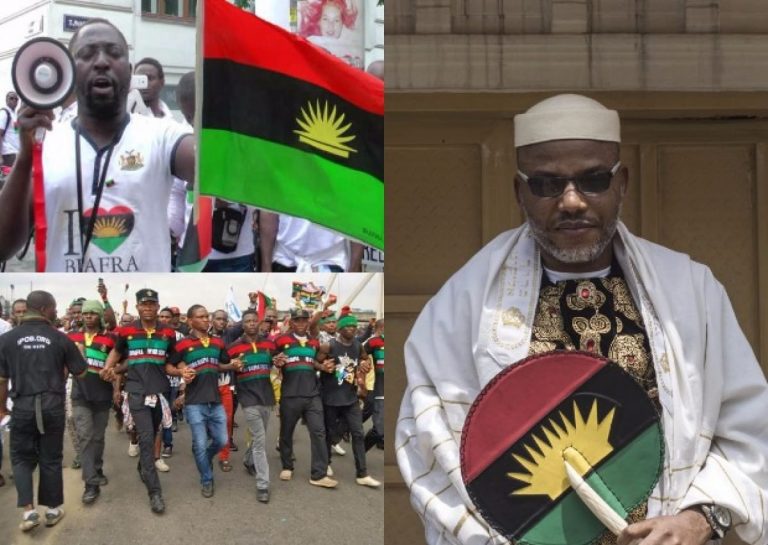
The Biafra question beyond Nnamdi Kanu’s IPOB

0

Nigeria is in a state of undeclared battle with itself. Probably the most populous Black nation on earth is combating on totally different fronts. From the Boko Haram insurgency to the scourge of marauding killer Fulani herdsmen and the militant actions of the avengers within the Niger Delta, clearly, all shouldn’t be well with Nigeria. The widespread denominator of all these groups is separatism caused, not solely by the structure of the Nigerian state however in its operation by the political management. The longest-operating separatist agitation is the Biafra aspiration amongst Nigeria’s Igbo ethnic group.

The Biafran battle has resurfaced within the type of the Indigenous Individuals of Biafra (IPOB), a separatist group led by Nnamdi Kanu. The Biafra spirit is as alive at present because it was in 1967 as a result of Nigeria is as divided as we speak as was then. The Igbo ethnic group, one of many largest in Nigeria, with over forty million people, is probably the most marginalized and politically deprived. The marginalization of the Igbo is systematic and much-reaching.

Read also: Scores of bandits meet waterloo as troops intensify clearance operations, recover cache of arms in Katsina State (Graphic Images)

Modern Nigeria is a British colonial legacy. The 18th Century was the age of European exploration of sub-Saharan Africa, following the industrial revolution and the declining Slave Trade, to determine the feasibility of legitimate trade in the interior of the continent. In the preceding era of the Trans-Atlantic Slave Trade, European merchants had limited knowledge of the interior of sub-Saharan Africa, as trade was conducted on the coast with local businessmen serving as middlemen between them and chieftains of slave raiding chiefdoms. Following the amalgamation of the various kingdoms, chiefdoms, and peoples of Nigeria in 1914, by the colonial governor of the territory formerly known as the Niger Area, Lord Frederick Lugard, Nigeria’s journey to nationhood began. The various peoples who suddenly found themselves under a common umbrella accepted their new status with mixed feelings and reservations, with each group seeking a better deal within the constitutional framework of the new nation.

One group of people who embraced the modern state of Nigeria without reservations was the Igbo. The pre-colonial egalitarian socio-political system of the Igbo was consistent with the concept of modern constitutional democracy. The independent spirit and unbridled republican nature of pre-colonial Igbo society, where feudalism and serfdom were almost absent, entirely fostered in them the spirit of competition, culture of hard work, and a societal reward system that was based largely on merit. Coming from this background, the Igbo saw an opportunity in the prospect of a modern state to unleash their energy and enterprise. Equipped with western education, the Igbo moved freely around Nigeria and made a home out of every part of Nigeria. They made a success of their enterprise with huge financial profits, which readily distinguished them in their host communities.

Read also: We are well catered for, ready to return to battle front – Wounded soldiers

Their success sometimes made them boisterous, with a high sense of self-worth, which, unfortunately, was mirrored as arrogance to other ethnic groups. The rest of Nigeria began to view the Igbo with suspicion of an intention to dominate everywhere and everything. The resentment became more manifest by the dawn of Independence in 1960.

The struggle for independence was on the strength of pan-Nigerian nationalism as championed by the likes of Herbert Macaulay, H.O. Davies, and Nnamdi Azikiwe. However, independent Nigeria elevated regionalism over nationalism. Therefore, the Igbo were caught in between the ideals of nationalism and the reality of regionalism. Regionalism limited the Igbo economically and politically. The Igbo, who dominated all federal institutions, from the military to the academia and the judiciary, could only be curtailed from dominating other regional institutions by a rigid form of ethno-geographic regionalism. This scenario created tension in the polity.

Issues boiled over by January 1966, when a group of mostly Igbo military officers carried out a coup that clearly targeted the political leaders of northern Nigeria and their allies in the Western Region. The coup was a precursor to the Civil War, following the Biafran separatist movement as a direct result of a bloody counter-coup staged by northern officers, who saw the killing of the military head of state as well as other top officers of Igbo origin.

Read also: Nigeria releases posting for ninety five ambassador-designates

Political power has since been in the hands of serving and retired military elite, of mostly northern origin, who actively participated in the counter-coup of July 1966 and who also subsequently prosecuted the civil war that crushed the Biafra rebellion 30 months later, in 1970.

The resurrection of the spirit of Biafra through IPOB is a consequence of the heightened marginalization of the Igbo ethnic group under the current administration. President Muhammadu Buhari’s political scorched earth policy of “97 per cent and 5 per cent” patronage distribution formula, directly proportional to the percentage of votes cast for him, was made real and the Igbo appear to be punished for freely making a democratic choice as guaranteed by the Constitution. 

The Biafra question is beyond Nnamdi Kanu’s IPOB, which is only a symbolic expression of deep dissatisfaction brought about by asystematic injustice on the Igbo. Then ruling military elite ensured the South-East geo-political zone, which is the homeland of the Igbo, had the least number, of states (five) and local governments (95), which translates to less revenue from the Federation Account, fewer representation at the National Assembly, fewer executive positions in all political parties, with the collective consequences of political irrelevance in the national power equation.

Read also: Atiku sends message to new Ohanaeze Ndigbo’s President-General, George Obiozor

This situation is further compounded by the fact that Nigeria exists more for political reasons than economic. Therefore, merit by way of excellence and hard work is not always rewarded. Sectionalism has been entrenched in the system to reward less work, provided you are from the right part of the country. The policy of quota system ensures that standards are lowered to accommodate people from educationally disadvantaged states of northern Nigeria into higher institutions of learning, while the standard is raised for people from educationally advantaged states from mostly the southern part of Nigeria.

Talking about eating your cake and having it, the policy of Federal Character also ensures the North-West, with seven states and 187 local governments, gets a higher quota of federal jobs and appointments, irrespective of their educational disadvantaged status. 

This system clearly shuts out the Igbo, limiting their opportunities in a country they call their own. It also appears that the rest of the country is unanimous in their opposition to the emergence of a Nigerian President of Igbo extraction, as none of the major political parties has a clear agenda for that purpose. Under the current President Buhari administration, no Igbo is trusted enough to be in the kitchen cabinet. The entire top echelons of defence and internal security apparatus are exclusive of the Igbo. Nothing has been done to address the deep-rooted injustice against a significant section of this country. This largely explains the high level of legitimacy Nnamdi Kanu’s IPOB enjoys among the Igbo today, a legitimacy only comparable to the Chukwuemeka Ojukwu-led Biafra Republic. This is because, 51 years after the end of the civil war in 1970, Nigeria appears to be bedevilled by the same issues of nepotism, marginalization, injustice and leadership ineptitude that has rendered some Nigerians outsiders inside their own country and left them feeling less Nigerian than others.

To carry a correct closure to the unhappy chapter of Nigeria’s civil conflict and its horrible memories, there may be an urgency to redress the structural injustice towards the Igbo via a purposeful restructuring process. And to deal with the systemic political exclusion of the South-East from the very best office within the land, the rest of Nigeria might think about putting in movement a deliberate bi-partisan political course of that may outcome within the emergence of a Nigerian president of Igbo extraction in 2023.   

Nigeria releases posting for ninety five ambassador-designates

0

The Nigerian Government has finally authorised the postings of ambassador-designates to Nigerian missions overseas.

In a press release signed by the permanent secretary, Ministry of Foreign Affairs, ambassador Gabriel Aduda, the posting, which was authorised yesterday by President Muhammadu Buhari, comprised the forty three profession ambassadors and fifty-two non-profession ambassadors.

Atiku sends message to new Ohanaeze Ndigbo’s President-General, George Obiozor

0

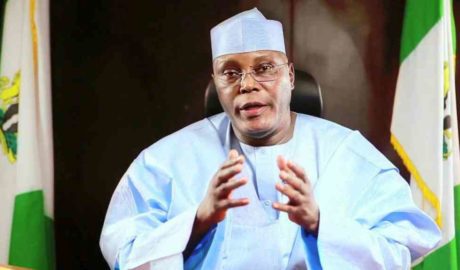
Former Vice President, Atiku Abubakar, has urged Prof. George Obiozor, the newly-elected President-General, Ohanaeze Ndigbo, to enhance upon the cooperation between the group and different ethnic-social groups within the nation.

Atiku, in a press release signed by him on Tuesday in Abuja, felicitated with Obiozor, advising him to make sure that the unity of the nation was stronger and that peace reigns throughout Nigeria.

He additionally expressed optimism in Obiozor’s inter-personal abilities and sufficient group dynamics expertise for the job and to climate the storm.

Read also: Court orders Atiku’s son’s arrest over failure to obey judgment

Atiku stated, “I’ve recognized Obiozor since his days as Director-General of Nigeria Institute of International Affairs, and a one-time Ambassador of Nigeria to the US of America, Israel and Cyprus.

“I can attest to his brilliance, knowledge and expertise, qualities that I’m assured will come to bear as he pilots the affairs of Ohanaeze Ndigbo.

“I additionally be aware of the “massive footwear” left behind by Obiozor’s predecessor, Chief Nnia Nwodo, who elevated Ohanaeze Ndigbo to enviable heights such that he was appointed because the Coordinator of all of the notable socio-cultural teams within the nation.

Read also: Abuja Court Remands Lady In Jail For Allegedly Beating Up Ex-Husband