Home Blog Page 2224

Five oil thieves have been convicted and sentenced to prison

0

In a ruling handed down by Justice E.A. Obile of the Federal High Court in Port Harcourt, Rivers State, five oil thieves have been convicted and sentenced to various prison terms.

The Port Harcourt Zonal Office of the Economic and Financial Crimes Commission, also known as the EFCC, was responsible for bringing the convicts to court.

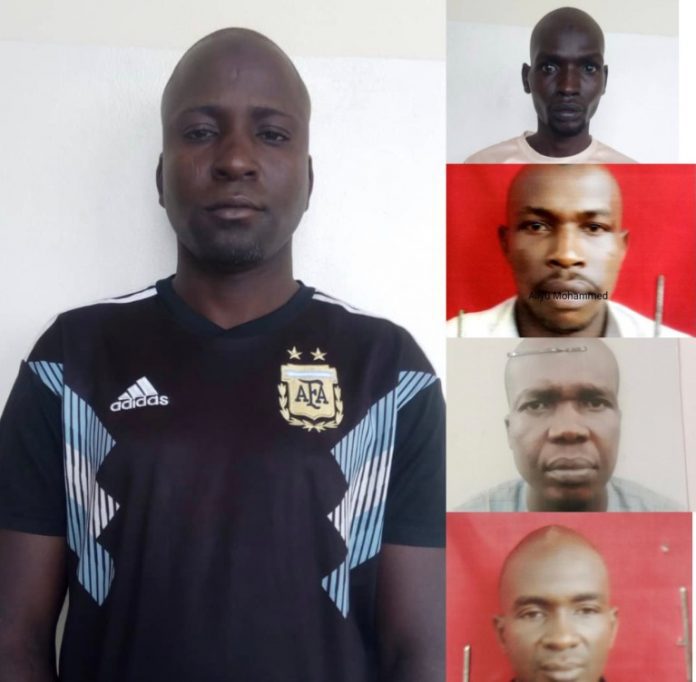
Those found guilty included Salisu Abubakar, Aliyu Mohammed Umar, Mohammed Sambo Yahaya, Musa Mohammed, and Abbas Melle, all of whom pleaded “guilty” to charges of dealing in petroleum products without the proper license.

Melle was sentenced to four years’ imprisonment, while Abubakar, Umar, Yahaya, and Mohammed were each sentenced to three years’ imprisonment.

Read also: FG approves payment of outstanding pension liabilities

In addition, Abubakar, Umar, and Yahaya were sentenced to prison under Section 1 (1) (a) of the Miscellaneous Offences Act, CAP M17 of the Revised Edition (Laws of the Federation of Nigeria), 2007; Mohammed and Melle were found guilty under Section 1 (18) (a) I of the Miscellaneous Offences Act, Cap M17 of the Revised Edition (Laws of the Federation of Nigeria), 2007. Abubakar, Umar,

Abubakar, Mohammed, and Melle were sentenced to prison by Justice Obile on Monday, June 28, 2021, while Umar and Yahaya were sentenced to prison on Thursday, June 24, 2021.

One of the convicts was charged with a single count of a separate charge, which read as follows:

That you Aliyu Mohammed Umar on or about the 31st day of December, 2017 at Port Harcourt-Aba Road, Port Harcourt Rivers state within the jurisdiction of this Honorable Court dealt in petroleum products to wit: Automated Gas Oil (AGO) conveyed in a truck with Registration number: EKY 157 XS and thereby committed an offence contrary to Section 1 (1) (a) and punishable under Section 1 (1) (b) of the Criminal Procedure Code and punishable under

The convicts, on the other hand, were given a variety of good options.

Abubakar and Melle were given the option of paying a fine of Five Hundred Thousand Naira (N500,000.00) each, whereas Umar, Yahaya, and Mohammed were given the option of paying a fine of Three Hundred Thousand Naira (N300,000.00) each.

Truck FKY 206 YF was ordered to be sold by the Department of Petroleum Resources, DPR, and the proceeds of the sale were to be deposited into the Federal Government’s Account, according to Justice Obile’s ruling.

It also stated that the products on board the truck with the registration number XA 327 JMT would be forfeited to the government and that both trucks would be released to their respective owners after a thorough inspection.

The journey of the convicts to the Correctional Centre began when the Economic and Financial Crimes Commission (EFCC) took over the investigation of their cases from the 6 Division, Nigeria Army, Port Harcourt, Rivers State, on various dates.

Several trucking companies were involved in the cases, including an Iveco Tanker with the registration number XA 521 KBG, a Mack Tanker with the registration number River GGU 138 XA, and three other trucks with registration numbers EKY 157 XS, FKY 206YF, and XA 327 JMT. These individuals were all apprehended at various locations while loading petroleum products suspected to contain illegally refined Automotive Gas Oil (AGO).

Troops kill 73 terrorists and rescue 55 victims -DHQ

0

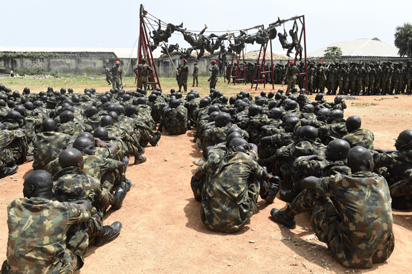
According to the Defence Headquarters, Operation Hadin Kai troops in the North East have killed 73 Boko Haram/Islamic States West Africa Province (ISWAP) terrorists in less than two weeks.

Brig.-Gen. Bernard Onyeuko, the acting Director of the Defence Media Operation, revealed this during a press conference.

On Thursday in Abuja, he briefed journalists on military operations between June 18 and June 30.

The troops also recovered a large cache of arms and equipment from the terrorists in the area, according to Onyeuko.

various encounters over the course of the period.

He went on to say that on June 27, the troops had received a total of 55 terrorist camp escapees.

15 adult males, 12 adult females, and 27 children surrendered to them in Borno’s Darajemel.

He said 73 terrorists were killed, with 44 AK-47 rifles, two PKTs, seven anti-aircraft guns, and seven gun trucks among the weapons used.

Ammunition of various calibres, as well as weapon cleaning supplies, was discovered.

Blankets, food, vehicles, generators, IED materials, religious scripts, and other items were also recovered, he said.

Another feat was accomplished on the same day, according to the acting director, when the air component of Operation Hadin Kai was coordinated.

Multiple airstrikes in the Borno region’s Lake Chad axis destroyed some terrorist commanders’ strongholds.

He went on to say, “Airstrikes were launched against terrorist camps in the towns of Sabon Tumbu, Jibularam, and Kwalaram in the state.

Read also: 8 Boko Haram terrorists surrender as troops rescue more captives

“Terrorists’ spiritual bases and training camps in the north-east of Borno State and on the outskirts of Lake Chad were destroyed by air bombardment during the air operations.

“This followed a credible intelligence report revealing that some top ISWAP/BHT commanders were meeting at the aforementioned locations.

“As a result, the Air Component mobilized on NAF platforms with force packages and launched attacks on the targets.”

During that time, Onyeuko said, troops from Operation Hadarin Daji and other security agencies in the North West carried out a series of land and air operations in various locations.

He explained that the operations resulted in the capture and arrest of kidnappers and drug dealers who admitted to supplying illegal drugs to miners and other criminals.

According to the spokesman, the operations resulted in the deaths of a large number of bandits, the peaceful resolution of farmer/herder clashes, the recovery of arms and ammunition, and the recovery of rustled livestock.

“The operations also resulted in the rescue of kidnapping victims in various locations, including a teacher and some students kidnapped at the Federal Government College in Birnin Yauri, Kebbi, and a teacher and some students kidnapped at the Federal Government College in Birnin Yauri, Kebbi.

“At Tangaza LGA in Sokoto State, some gunrunners and bandit logistics suppliers, including one Lawali Na Habu, were apprehended with trucks loaded with large quantities of AGO, and one Mallam Ibrahim Aliyu, a wanted notorious bandit, was also apprehended.

“During this time, the air component also carried out a number of air operations, provided Close Air Support to ground troops, and dominated the airspace.

“Overall, troops have continued to dominate the theater of operations with aggressive fighting and confidence-building patrols to reassure citizens of the military’s commitment to eliminating all forms of criminality in the zone,” he said.

Anambra Assembly passes Hydroform, Concrete Agency Establishment Bill

0

The Anambra State House of Assembly has passed a bill for the establishment of the Anambra State Hydroform and Concrete Agency to reduce the cost of building construction and housing in the state.

The Assembly passed the bill after Third Reading on the floor of the House on Wednesday.

The lawmakers took turns to perfect some corrections in the 27-clause bill before it was finally passed.

The Speaker, Mr Uche Okafor, conducted a voice vote on each of the sections of the bill before passage by the House.

Okafor said: “Having considered the Third Reading for the bill – Anambra State Hydroform and Concrete Agency Establishment Law 2021, and to provide for other related matters – the bill is hereby passed.”

The speaker directed the Clerk of the House, Mr Pius Udo to forward a clean copy of the bill to Gov. Willie Obiano for his assent.

According to the bill, the Agency will be solely empowered to produce blocks for the construction of government buildings.

It says that the agency would be saddled with the responsibility of determining prices for the products and ensure it is affordable and cheaper for the state government.

It also said that the agency shall develop strategy for diversifying into other block making businesses in the near future.

“The agency would develop the strategy for commercialising the products as may be directed by the governor

“It shall ensure that government and its institutions pay for any service rendered by the agency,” it said.

Insecurity: Illegal possession, importation of firearms to attract 3-year jail term

0

The Senate on Wednesday passed a bill which provides for 3-year jail term or N3 million naira fine or both, as  penalties for anyone caught illegally possessing or dealing in firearms in Nigeria.

Titled, “Firearms Act (Amendment) Bill, 2021,” the piece of legislation amends Section 35 (2) of the Principal Act which previously provided a fine of just N1,000 naira as penalty.

The amendment to Section 35(2), which is captured in Clause 4 of the bill, provides for stiffer penalties for the illegal possession of firearms and ammunitions by any individual, organization or corporate entity.

The passage of the amendment bill followed the consideration of a report by the Committee on Judiciary, Human Rights and Legal Matters.

The Senate sequel to receiving the Committee’s report, dissolved into the Committee of the Whole to carry out a clause-by-clause consideration of the Committee’s recommendations on the bill.

The upper chamber inserted a new Section 39 after Section 38 of the Principal Act, to make it lawful for any officer of the Nigerian Armed Forces, Nigeria Police Force, Nigeria Customs Service, Nigeria Security and Civil Defence Corps and officers of other law enforcement agencies to seize and confiscate any illicit and illegal firearms imported into the country without any valid import documents or firearms in possession of any individual, corporate bodies and other organizations, without a valid license.

The new section empowers the head of agency responsible for the seizure, to create a place for safe custody of the firearms, as well as designate officers whose responsibility it shall be to record the details of the firearms in a database.

It further provides that the agency responsible for the confiscation or seizure of illegal firearms shall within fourteen days (14) days deposit the confiscated and seized firearms  with the Office of the National Security Adviser, who shall act as the Central Coordinating Body for all illicit and illegal firearms seized by any law enforcement agency.

Upon receipt of the confiscated illegal firearms, the new Section provides that the National Security Adviser in collaboration with the Armed Forces shall assess and separate the firearms that are of military serviceable grades to be deployed to the military; and serviceable but not of military grades to be deployed for use by Civilian Joint Task Force (JTF) and Registered Vigilantes under the approval and supervision of the Office of the National Security Adviser.

Also, in accordance with Section 39 subsection (4), same provides that arrangement shall be put in place by the Office of the National Security Adviser for the destruction of the unserviceable firearms during a destruction ceremony.

However, the destruction ceremony referred to in subsection (6) gives the Office of the National Security Adviser a maximum period of two months to carry out same after seizure of illegal firearms.

In addition, the Senate inserted new Section 41 in the Principal Act which provides for the recycling of waste materials from destroyed firearms.

Under the new Section, the Minister in charge of Defence is required to develop a policy for recycling and reusing waste materials such as metal, wood and plastic derived from the destruction of firearms seized pursuant to the provision of the bill in order to generate revenue and produce objects with practical artistic and symbolic value.

FG approves payment of outstanding pension liabilities

0
Buhari cautions contractors and businesspeople against bribery.

The Federal Government has given presidential approval for  payment of outstanding pension liabilities under the Contributory Pension Scheme (CPS).

The Head of Corporate Communication at National Pension Commission (PenCom) Mr Peter Aghahowa, said this in a statement in Abuja on Wednesday.

He said, “PenCom is pleased to inform all its stakeholders, particularly retirees of Treasury-funded Federal Ministries, Departments and Agencies (MDAs) that President Muhammadu Buhari  has approved PenCom’s submission.”

The submission was on the payment of some critical aspects of the outstanding pension liabilities of the Federal Government under the CPS specifically.

Aghahowa said payment of the outstanding accrued pension rights was for verified and enrolled retirees of treasury-funded MDAs retired but yet to be paid their benefits and backlog of death benefits due to beneficiaries of deceased employees.

Aghahowa said payment of 2.5 percent differential in the rate of employer pension contribution for Federal Government retirees and employees resulted from increase in the minimum pension contribution for employers from 7.5 percent  to 10 percent in line with Section 4 of the Pension Reform Act, (PRA) 2014.

He said that payments for retirees and existing employees would begin from July 2014.

Aghahowa said the Federal Government was expected to continue with the payment of the 10 percent rate of employer pension contribution for its employees, thus ensuring a remittance of at least 18 percent monthly (employer 10 percent and employee 8 percent) as provided by the PRA 2014.

He said the  funds had already been made available for the settlement of the above stated pension liabilities.

Also, he said that remittance into the various Retirement Savings Accounts (RSAs) of the affected retirees and employees were currently being processed.

Aghahowa said the affected retirees and employees would be notified in due course by their respective Pension Fund Administrators (PFAs).

“The settlement of the outstanding accrued pension rights of verified and enrolled FGN retirees and compliance with the reviewed rate of pension contributions are significant developments, that have resolved the challenges in these aspects that have lingered since 2014,” he said.

Aghahowa added that the board and management of the commission reiterated their appreciation to the president for his untiring support, commitment to the implementation of the CPS and ensuring the welfare of retirees.

Inauguration of the National Road Safety Advisory Council (NARSAC): FRSC continues to grow in leaps and bounds under Oyeyemi

0


Nothing gladdens the heart of a citizen than the empirical indices of positive changes and development of his country. When the nation is blessed with crop of leaders who formulate and implement policies that guarantee the safety and security of lives and properties of all and sundry, that feeling of assurance is second to none. The feeling has a magic wand that could trigger up immeasurable degree of patriotism. It breeds confidence, nurtures trust in the government, eradicates apathy, and entrenches great deal of citizenship participation in governance.

A case at hand is the Federal Road Safety Corps and the crop of leaders the lead agency in road safety administration and traffic management in Nigeria has had since creation. In its over three decades of entrenching safety and creating a safer motoring environment in Nigeria, the agency, through coordinated formulation and implementation of life saving policies, has in no small measure, clamped down on factors that have bedeviled the highways and successfully reduced to the barest minimum, the cases of road traffic crashes and fatalities on our roads.

Since 18 February, 1988 when the Corps commenced full operational activities geared towards eradicating road traffic crashes, the Federal Road Safety Corps has brought down annual record of crashes from over Forty Thousand deaths per year to below Five Thousand deaths.

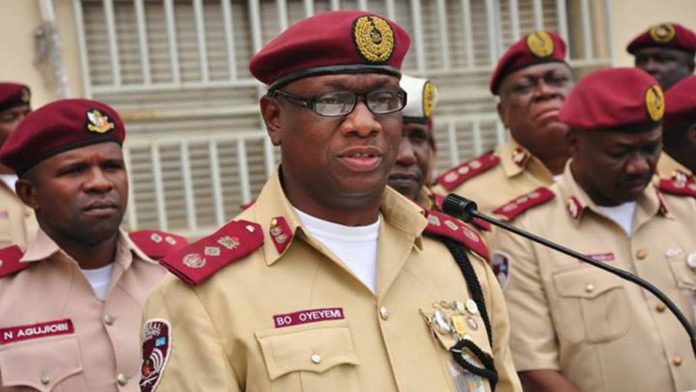
The foregoing, of course is not the crux of this article, since several publications abound on how the Corps achieved the aforementioned strides. My opinion will dwell mostly on the resourcefulness, inventiveness, dexterity and administrative prowess of the present Corps Marshal, Dr Boboye Oyeyemi whose administration defined its cause in tandem with UN Decade of Action as well as the mantra of functional 21st century organization by chatting a path to meet the Accra Declaration of 50% reduction in fatality by 2015, achieve the UN decade of action on road Safety of 50% fatality reduction by 2021 and the rollover of UN Decade of Action in 2031 among others.

The Corps Marshal, Apart from succeeding in securing the endorsement of the first National Road Safety Strategy in 2016, made Nigeria the first African country to be admitted into International Traffic Safety Data analysis group IRTAD, became the first African country to accede to six (6) United Nations Conventions on Road Safety. These efforts have been systematically coordinated to align with global best practice as the standards have been domesticated and part of this domestication led to the birth of the National Road Safety Strategy for the years 2021-2030.

This quest to have a coordinated road safety framework anchored on the safe system approach and the five pillars of UN Decade of Action was aggressively pursued by the Corps Marshal owing to the fact that according to the United Nations, Africa faces specific issues exacerbating road traffic crashes. The UN report revealed that the population in Africa is steadily growing. The region’s economy is growing faster than any other continent, less affected by the global economic crisis, which results in a rapid expansion in middle class and increasing motorization in the continent.

The UN submitted that, in most African countries, urbanisation is growing and road infrastructure is expanding, while safety consideration in land-use planning and road design is not adequate to serve the mixed traffic that exists in the region. Road transport is the dominant mode of motorised transport, but traffic operation is unsafe due to many variables including poor road use and old vehicle fleet. Generally road traffic concentrates at and near urban centers and on specific major roads. In most African countries, post-crash care is weak or nonexistent. Above all, with these risk factors of road crash, governance and commitment are important concerns in Africa thereby worsening the situation.

Expectedly, the need to set Nigeria on a path that will exonerate her from the identified risk factors, is the propelling factor that triggered Oyeyemi’s resolve and determination to ensure that Nigeria has a working document that will not only coordinate the implementation of road safety policies, but also encompass everyone ranging from the public to private sectors, civil society to non-governmental organizations and government at all levels; vis Federal, State and Local government.

Retrospectively, the year 2011 was marked by the launch of the UN Decade of Action for Road Safety. For this occasion, the UN called on Member states, international agencies, civil society, businesses and community leaders to ensure that the Decade leads to real improvement, and recommended governments to develop national action plans for the decade 2011-2020.

As a response, several countries released or updated in 2011 their national road safety strategies. The achievement of this ambitious objective significantly reduced the consequences of road traffic crashes as well as physical and mental torment of direct victims and their relatives. In addition to the purely human dimension, road traffic crashes also carry an economic dimension; therefore a substantial reduction in road traffic accidents represents considerable savings for the whole society.

By adopting the first National Road Safety Strategy, Nigeria joined in with countries where citizens have shown their will to fight against the new global epidemics – epidemics of serious consequences of road traffic crashes. As such, a major precondition for successfully achieving the objectives of the new Strategy is to have road traffic safety adopted by each and everyone as their personal right and responsibility. This was also part of the variables that informed the management of the Corps under the leadership of the Corps Marshal to facilitate the involvement of Governments at all levels towards the realisation of the objectives of the NRSS document to create a safer motoring environment in line with the safe system approach where road crashes do not occur at all, and even if they do, would result in zero death.

Hence the inauguration of the National Road Safety Advisory Council, chaired by Vice President Yemi Osinbajo, with the Corps Marshal, Federal Road Safety Corps (FRSC), Dr Boboye Oyeyemi as Secretary.

Other members of the 29-member Advisory Council include six governors representing the six geo-political zone, Secretary to the Government of the Federation, Minister of Transport, Minister of Works, Minister of Health, Minister of Justice, Minister of Education, Minister of Finance, Budget and National Planning, Minister of Environment, Minister of Labour and Employment, Minister of Police Affairs, Minister of the Federal Capital Territory, National Security Adviser, President, Association of Local Government of Nigeria, ALGON.

The National Road Safety Advisory Council is a critical aspect of the updated or second version of the Nigeria Road Safety Strategy 2021-2030 adopted by NEC and approved by the Federal Executive Council late last year. The updated version came following the expiration of the first document in December, 2020. And its primary function is to set National Road Safety Strategy target(s), Ensure co-ordination between Federal, States and Local Governments in achieving Road Safety targets, Drive the implementation of the NRSS via: Requests for progress reports from relevant agencies, Invitation of relevant agencies to defend proposed activities and road safety efforts on a quarterly basis, Endorsement of disbursement of pre-approved funds for strategic initiatives, Endorsement of disbursement of pre-approved funds for strategic initiatives and Monitoring of funds disbursement for strategic initiatives among others.

The Council is a very important body in Road safety management in Nigeria whose key role is to enhance the entrenchment of safety of all road users anchored much on the successful implementation of the Nigeria Road Safety strategy (NRSS) 2021-2030 where it is expected as earlier stated that crashes when they occur, result in zero deaths. The main objective of the NRSS document is to stem the menace of crashes through a systemic, nationally coordinated; deliberate and all inclusive crash management process that manages all the variables that interact on the road. Viz; road, road users, vehicles and road managers.

The National Road Safety Council is part of the general organised efforts of the Corps to ensure that all hands are on deck to end road traffic crashes in Nigeria. The move is to get the buy-in of major stakeholders in the public sector that play critical role in policy formulation. This is why the understanding and effective implementation of the provisions of the NRSS from the grass-root to the state and federal level will facilitate the achievement of the national goal of having a country where road traffic crashes results in zero death on Nigerian roads. As such, it is now more than ever, the time for every citizen to wake up to the realities of the present time and begin to contribute towards the actualization of the safety mandate because road safety is indeed, everybody’s business.

It was based on these stated fact, that I leveraged on these successes to summarily adjudge the Corps Marshal’s leadership of the Federal Road Safety Corps as the proper placement of a square peg in a square hole and commend President Muhammadu Buhari for re- appointing Dr. Boboye, whose drive and sense of commitment to duty and professionalism is no doubt a clear justification of President Muhammadu Buhari’s confidence in appointing him Corps Marshal.

Assistant Corps Marshal Bisi Kazeem, fsi, Amnipr is the Head of Public Education Office at the FRSC National Headquarters, Abuja.
PRESIDENT Buhari: Ethnicity and religion are not our issues

0
Buhari cautions contractors and businesspeople against bribery.

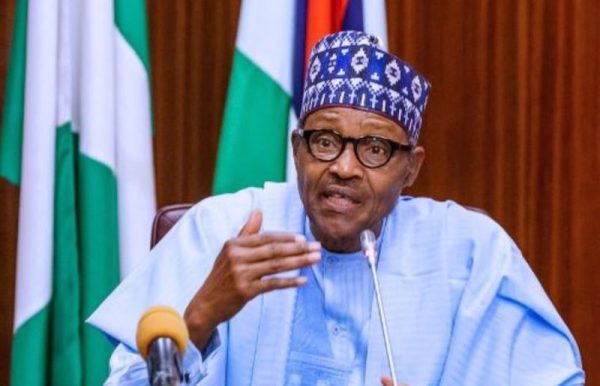
Buhari has reflected on the complexities of Nigeria’s situation, concluding that inherent injustices are not caused by ethnicity or religion, but by “us ourselves.”
Buhari made the remarks while receiving members of the Muhammadu Buhari/Osinbajo (MBO) Dynamic Support Group, who were in Abuja to present a compendium of the administration’s five-year achievements.

After disputed presidential election results in 2003, 2007, and 2011, he went into the trajectory of his legal battles, claiming that those who ruled against him were of his ethnic stock and religious persuasion, while those who stood up for him were of other faiths and ethnicity.
“I came out to speak to those who were present after my third appearance in the Supreme Court. “I told them I’d spent 30 months in court since 2003,” he said.
“My classmate in secondary school in Katsina was the President of the Court of Appeal, which was the first port of call for presidential candidates at the time. We were in the same class for six years, Justice Umaru Abdullahi.
Chief Mike Ahamba, a Roman Catholic and an Ibo man, was my legal advisor. My first witness was in the box when the President of the court decided that we should present our case.
“Ahamba insisted that a letter be sent to the Independent National Electoral Commission (INEC) requesting that the register of constituencies in some of the states be presented to show that what they had announced was false. It was recorded.
“When they handed down their verdict, another Ibo man, the late Justice Nsofor, inquired about INEC’s response to the letter sent to them. They simply ignored it. He then made the decision to write a minority opinion. After 27 months in court, he was released.
“We went to the Supreme Court,” says the narrator. Who was Nigeria’s Chief Justice (CJN)? I’m a Hausa-Fulani from Zaria. The panelists went in for about 30 minutes and then returned to say they were taking a break. They were gone for three months. They dismissed us after they returned in less than 15 minutes.
“Who was the Chief Justice of the United States in 2007?” Kutigi. A Muslim from the north once more. He dismissed the case after about 8 months.

Read also: Rivers State House of Assembly bans revenue contractors from collecting personal income tax
“In 2011, Musdafa, a Fulani man from Jigawa, my state’s neighbor, was elected CJN because of my persistence. My case was dismissed by him.
“I’ve shown you around to show you that our issue isn’t one of ethnicity or religion. It is we who are to blame.
“I was adamant about not giving up. After what happened in Khaki, I attempted to wear the Agbada. Something was done to me as a result of what I had done to others. You’re aware of it. Finally, I was arrested and detained, and they were given back the items they had taken. I spent three and a half years there. Nigeria is the name of the country.
“I hope historians and intellectuals will document this, because it is an amazing stage of political development. Allow our great-grandchildren to see how far we’ve progressed. We didn’t have it as easy as some people believe. Not because God has blessed us with a large population and abundant resources. We’ve had to go through a lot along the way.
“I made an effort to mention these things because you banded together, pooled your resources, and used your energy without any help from me. I can’t express my gratitude enough. I’m grateful to you and Nigerians because, in 2019, I visited every state, and the people who came out to see me across the country (because I’m committed to serving Nigeria and Nigerians) showed genuine affection.
“Thank God, they haven’t been able to accuse me of corruption over the years.” I’ve served as Governor, Minister of Petroleum Resources, Head of State, and President, and I’m currently serving my second term. I appreciate the fact that you came together, used your energy, time, and resources without being forced, and I thank you for that. I assure you, history will be kind to you. “

Reps to investigate non-payment and underutilisation of allowances of the Nigerian Army

0

The House of Representatives has mandated its committee on the Army to investigate. It follows a motion by Ibrahim Hassan Nalaraba at plenary on Wednesday, which was adopted by the House.

Despite an increase in welfare budgetary allocations, the House of Representatives’ Army Committee has been charged with investigating the non-payment and underutilization of non-regular allowances by Nigerian Army personnel.
This came after Ibrahim Hassan Nalaraba’s motion on matters of urgent public importance was passed in plenary on Wednesday.
The budgetary provision for Non-Regular Allowances was increased from N283 billion in 2020 to around N380 billion in 2021, according to the lawmaker who presented the motion.
He regretted, however, that despite the increase in their welfare, Nigerian Army personnel engaged in internal security operations, training, and performance had not felt the same effect, and that other military duties were still owed various types of Non-Regular Allowances.

Read also: Bandits have declared war on Nigeria, and you must defend yourself. – Afenifere

He went on to say that the Nigerian Army’s Non-Regular Allowance was significantly increased in 2017 to ensure that serving Army personnel are adequately compensated and motivated to provide the best possible security in the country.

“Non-Regular Allowances, which include payments to soldiers and officers such as First 28 Days Allowance, Operations Allowance, and Duty Tour Allowance, were necessary to mitigate the effects of current economic realities on the welfare of troops and the entire Nigerian Army personnel.

“The increment was captured in the Manual of Finance Administration (MAFA) and approved for implementation on January 26, 2018 by the President and Commander in Chief of the Armed Forces of Nigeria,” he said.

As a result, the House mandated that the committee investigate and report within four (4) weeks.

Rivers State House of Assembly bans revenue contractors from collecting personal income tax

0

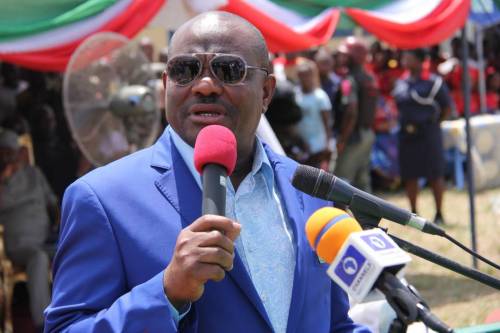
The Rivers State House of Assembly bans revenue contractors from collecting personal income tax. Governor Wike requested a ban on the services of middlemen or contractors in matters relating to government revenue collection. The move followed a letter from the Governor Nyesom Wike to the House.

On Wednesday, the Rivers State House of Assembly passed a bill prohibiting contractors and private consultants from collecting personal income tax in the state.

The bill was introduced in response to Governor Nyesom Wike’s letter to the House, in which he requested a ban on the use of middlemen or contractors in matters relating to government revenue collection.

The letter, read at the plenary, requested that the state regulations prohibiting the use of contractors or private consultants to collect government revenue be considered and approved.

Members affirmed the request during the debate, stating that its provision was in the best interests of the state.

Read also: Breaking: IPOB mobilizes members to storm a court of law in protest of Nnamdi Kanu’s arrest

Mr. Martin Amaehule, who represents Obio/Akpor State Constituency 1, said the request was in accordance with the state’s laws in his contribution.

“The request we have today is for a regulation in accordance with section 75 of the Rivers State Board of Internal Revenue Service law No.12 of 2012 and all other powers enabling the board’s laws.

The most important point in today’s request is that the state’s Board of Internal Revenue Service no longer requires consultants to help with tax collection.

“To allow for accountability and transparency, the board wishes to be the only recognized body in charge of all revenue services,” Amaehule said.

“Whenever regulations regarding the board’s duties are to be made, this section makes it mandatory for the chairman of the board to seek the approval of the state House of Assembly.

Asekun, the ex-Vice Chairman of the Lagos Island Local Government, has been arrested for exporting cocaine

0

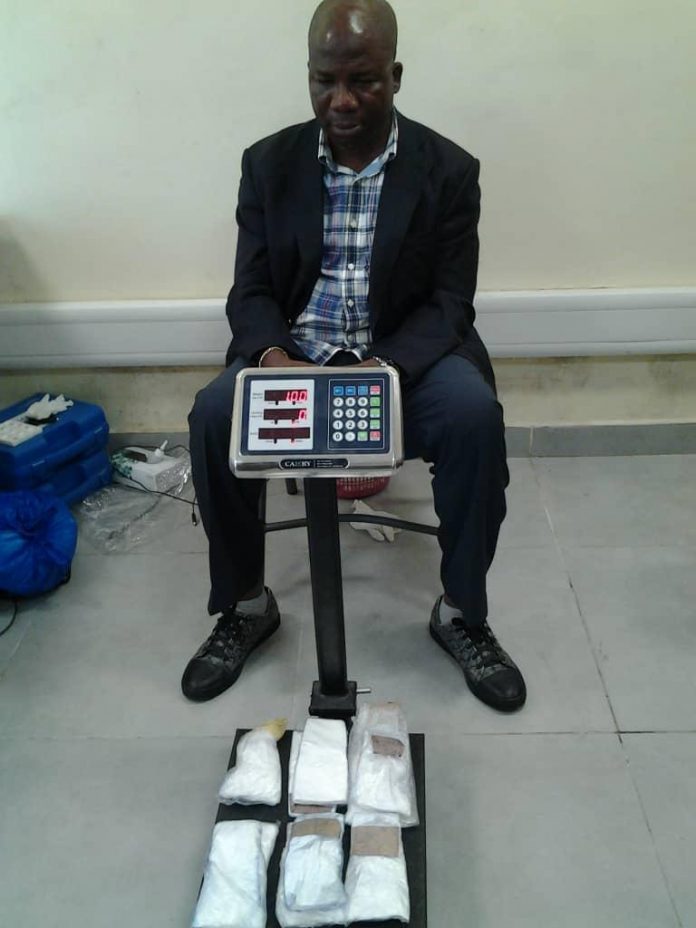
Asekun Sakiru Kehinde was on Wednesday arraigned by the National Drug Law Enforcement Agency. The former Vice-Chairman of Lagos Island East Local Government is accused of exporting kg of cocaine. He pleaded not guilty to the charge.

Asekun Sakiru Kehinde, the former Vice-Chairman of the Lagos Island East Local Government, was charged with exporting 1.000kg of cocaine before a Federal High Court in Ikoyi, Lagos, on Wednesday.

The National Drug Law Enforcement Agency, or NDLEA, has charged him with drug dealing.

“That you, Asekun Sakiru Kehinde, Male, Adult, on or about the 7th May, 2021, during the outward clearance of passengers on Virgin Atlantic Airlines flight from Lagos to London-Heathrow, at the Departure Hall of the Murtala Muhammed International Airport, Ikeja- Lagos, without lawful authority exported 1.000 Kilogramme of Cocaine, a Narcotic Drug, and you thereby committed an offenders offense,” the charge read.
After he pled not guilty to the charge, the prosecuting attorney for the NDLEA, Abu Ibrahim, sought the court to set a trial date in light of the defendant’s plea of not guilty.

Read also: Wike taunts Matawalle over his defection, saying, “I will never betray my people.”

However, the defendant’s attorney, Olasupo Sasore SAN, representing Chief Benson Ndakara, informed the court that a bail application had been submitted with the court and that the NDLEA had responded to it.

Mr Abu reiterated Mr Sasore’s viewpoint in his response.

Following that, Sasore urged the court to admit the defendant on bail, while Abu opposed the bail motion and urged the court not to grant the defendant release due to the seriousness of the crime.

After hearing both sides’ arguments, the presiding judge, Ayokunle Faji, delayed the case until July 16, 2021, when he will rule on the bail application and begin the trial.
He also ordered that the defendant be remanded in correctional services’ custody.