Home Blog Page 2143

Orientation: NYSC will continue to prosecute fake graduates – DG

0


The National Youth Service Corps has again restated that it would not bow to pressure to compromise its mobilisation process.

It said anyone caught with fake certificates during registration would be prosecuted as enshrined in the NYSC Act.

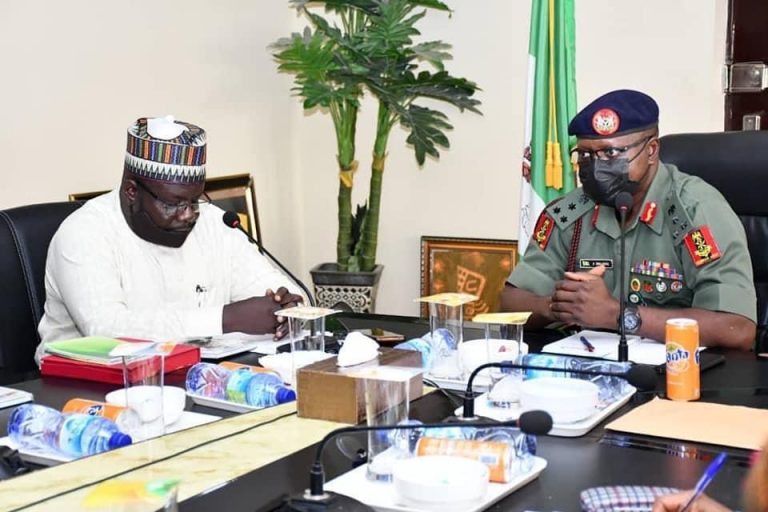
The Director-General, Brigadier General Shuaibu Ibrahim disclosed this today, when he hosted the Registrar/CEO of Health Records Officials Registration Board of Nigeria, Alhaji Babagana Mustapha who paid a courtesy visit to him in his office in Abuja.

He said NYSC would not relent to do the needful in line with the NYSC Act.

“I want to assure you that we will move our collaboration to the next level and will continue to post graduates of Health Information Management to medical facilities”, he said.

Speaking earlier, the Registrar of the Board, Alhaji Babagana Mustapha who described the NYSC as one of the critical stakeholders of the Board expressed gratitude to General Shauibu Ibrahim for his support to the Board since assuming duty as the NYSC helmsman.

He commended the DG for preventing unqualified persons from being mobilised by the Scheme for service.

He also expressed gratitude to the Corps in respect of having graduates of Health Information Management licensed before mobilisation for service in order to forestall quackery and posting of unqualified persons to health institutions.

“Considering the fact that Health Records Professionals are critical to any effort at healthcare delivery, therefore, if left in the hands of quacks, it will jeopardize the confidentiality of patients’ data and management of patients’ care in general.

I am here to inform you sir, that since approval, our graduates are now gladly and wholeheartedly posted to hospitals and health centres which has helped in no small measure in combating quackery and exposing our graduates to the practical aspects of all they learnt while in school”, he added.

The Registrar hinted that one major challenge facing the board is the presentation of licence by its graduates at Orientation Camps.

“We had stated categorically in our Memorandum of Understanding that only Higher National Diploma certified licences are to be presented at camps for acceptance/clearance from camp officials, not National Diploma licences as presented by some of the graduates.

We entreat you to kindly give consideration and action in this regard at future camps which we are confident you will oblige”, Babagana stated.

Nigeria lost $50 bn investments over the last ten years due to stagnation and uncertainty in the petroleum industry, according to Buhari

0

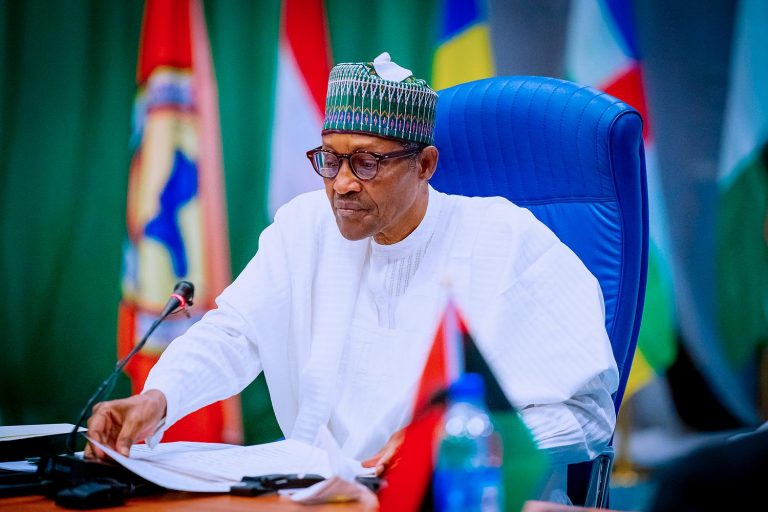
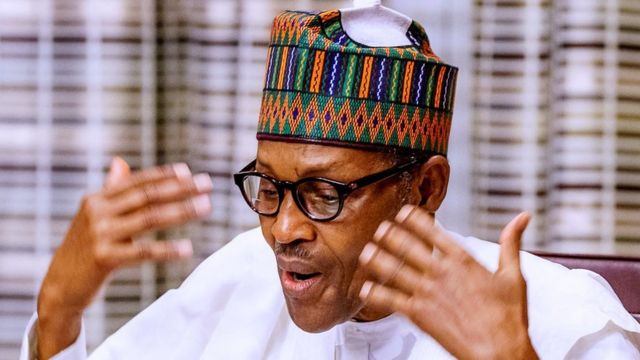
President Muhammadu Buhari said in Abuja on Wednesday that the uncertainty created by the non-passage of the Petroleum Industry Bill (PIB), lack of progress, and stagnation in the petroleum industry has cost Nigeria an estimated $50 billion in investments over the last ten years.

The President said the stagnation was affecting the economy’s growth during remarks at a ceremony commemorating the passage of the PIA, which preceded the Federal Executive Council (FEC) meeting. He cited a lack of political will on the part of previous administrations to implement the necessary changes.
According to the President, the signing of the Petroleum Industry Bill on August 16, 2021, will put an end to decades of uncertainty and underinvestment in the industry.

“We are all aware that previous administrations recognized the need to further align the industry for global competitiveness, but there was a lack of political will to make the necessary changes.

“This lack of progress has stymied the industry’s growth and our economy’s prosperity. Nigeria has lost an estimated US$50 billion in investment over the last ten years as a result of the PIB’s failure to pass.

“This administration believes that passing the Petroleum Industry Bill in a timely manner will assist our country in attracting investments across the entire oil and gas value chain.

“In light of the value that a stable fiscal framework for the oil and gas industry will provide to our Nation and investors, our Administration has determined that it is necessary to work with the two chambers of the National Assembly to ensure the passage of the PIB,” he said.

The bill’s signing, according to the President, is part of the administration’s commitment to building a competitive and resilient petroleum industry that will attract investment, improve our revenue base, create jobs, and help us achieve our economic diversification goals.

As a “nation that relies on oil resources for the development of other sectors, Nigeria operates a petroleum industry that is largely governed by laws enacted over 50 years ago, such as the principal legislation, the Petroleum Act of 1969, and other obsolete legislations,” the President stated.

He stated that the President’s assent to the “Petroleum Industry Act 2021″ marked the start of a journey toward a competitive and resilient petroleum industry that will attract investments to help the country’s Economic Recovery and Growth Plan.

“The Petroleum Industry Act 2021” establishes a regulatory environment that ensures efficiency and accountability throughout the oil and gas value chain, as well as repositioning NNPC as a commercially driven National Petroleum Company accountable to the Federation.

“The Act also establishes a direct benefit framework to support the long-term development of Host Communities. I urge the host communities to carefully examine the contents of the Bill, which, if implemented, will provide them with real and long-term benefits.

“Furthermore, the Act calls for a deliberate end to gas flaring, which would help Nigeria meet its Paris Agreement Nationally Determined Contributions by providing a funding mechanism to support gas flare out projects in host communities,” he added.

The administration believes that passing the Petroleum Industry Bill in a timely manner will help our country attract investments across the oil and gas value chain, according to the President.

The President, while directing immediate implementation of the framework for the Petroleum Industry Act (PIA), urged all relevant stakeholders to comply and reposition themselves for full activation within 12 months.

Mr Timipre Sylva, Minister of State for Petroleum Resources, will lead the implementation team, according to the President, who urged all Ministries, Departments, and Agencies (MDA) to adjust to the transition, which is intended to reposition the economy.

“To reaffirm this administration’s commitment to delivering the law’s value proposition, I’ve approved an implementation framework that will begin immediately to ensure the industry envisioned in the new law takes shape.
“The implementation process, which will be led by the Hon Minister of State for Petroleum Resources, has been given a 12-month deadline to complete the implementation of this act. As a result, I am directing all relevant government Ministries, Departments, and Agencies to fully cooperate in ensuring the law’s successful and timely implementation,” he said.
The President praised the 9th Assembly’s leadership for continuing to pursue national aspirations and demonstrating mutual harmony with the Executive in the pursuit of a patriotic outcome in the passage of the PIB.

Read Also:  Investors Will Be Attracted By New Petroleum Industry Law – Minister

“I also commend the entire executive team for their tireless efforts to ensure the passage of this critical legislation for our country. I appreciate the contributions and support of Nigerians and other industry stakeholders in achieving this historic milestone,” he said.
The Senate President, Dr. Ahmed Lawan, the Deputy Senate President, Ovie Omo-Agege, the Deputy Speaker, Hon. Ahmed Idris Wase, and other lawmakers, members of the Federal Executive Council (FEC), and the Group Managing Director of the Nigerian National Petroleum Corporation, Mele Kyari, were all present at the ceremony.
Over 600,000 doses of AstraZeneca have been donated to Nigeria by UK

0

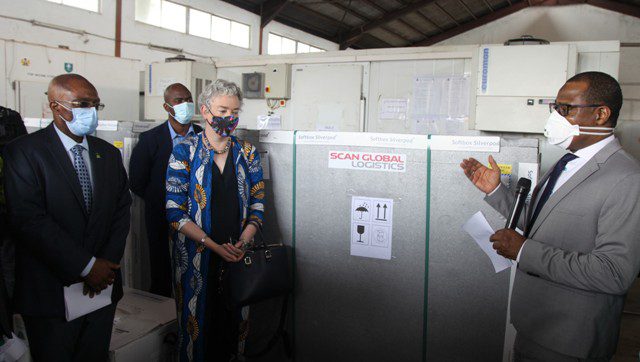
The UK government has donated 699,760 doses of AstraZeneca vaccines to Nigeria through the COVAX Facility in order to combat the global spread of COIVD-19.

Dr. Faisal Shuaib, Executive Director/CEO of the National Primary Health Care Development Agency, who unveiled the vaccines on behalf of the Federal Government of Nigeria, said the “vaccine will be deployed immediately to the states and would be administered as the second dose to those who had previously received only the first dose of the vaccine during the first phase of the vaccination rollout.”

He advised anyone who had received the first dose of AstraZeneca to go to the nearest vaccination site and get the second dose to ensure complete protection.

“AstraZeneca is a vaccine that we are all familiar with, and our health workers are experienced in its administration and management,” Dr. Faisal explained. It must be stored at temperatures of +20°C +8°C, just like the majority of our routine vaccines.”

“All vaccines certified by NAFDAC are highly effective against COVID-19 virus, including the Delta variant,” he assured Nigerians, adding that “WHO does not approve mixing of different brands of COVID-19 vaccine.” Both the first and second doses of the vaccine must be taken.”

Dr. Faisal promised that the agency would “continue to strengthen our collaboration with all stakeholders and partners, under the guidance of the Presidential Steering Committee on COVID-19 and the Federal Ministry of Health, to ensure we surpass the first phase’s achievement.”

“We have also received communications from the COVAX facility indicating the availability of an additional 801,600 doses of AstraZeneca vaccines,” he added. The Canadian government has agreed to donate these doses, which will be delivered by the end of August.

“We will continue to count on your partnership and support to get the factual message about the vaccine and vaccination across to the people,” the ED said, charging journalists as stakeholders in getting the truth about vaccines to the public.

Gill Atkinson, UK representative and Acting British High Commissioner to Nigeria, said the UK was one of the first countries to support COVAX, pledging 548 million pounds.

Read Also:  AstraZeneca vaccine not from Bill Gates, Fani-Kayode says after vaccination

“We have consistently pushed for a global effort that helps every country receive the COVID-19 vaccine,” she says. I’m thrilled to see Nigeria receive 699,760 doses of the vaccine through COVAX, thanks to a donation from the United Kingdom. This is the first of 1,299,760 doses that the UK is expected to donate through COVAX. We can only end the global coronavirus pandemic by vaccinating more people around the world.”

She also stated that as one of the largest donors to COVAX and through its engagement with the Nigerian-led response, the UK will continue to play a global role in promoting an effective rollout of the vaccines.

Dr. Walter Kazadi Molumbo, WHO Country Representative in Nigeria, said in a goodwill message that the portfolio of COVID-19 vaccine in Nigeria is growing, opening the possibility of covering a larger population and achieving herd immunity for the country.

Dr. Molumbo urged those who had received their first doses of the AstraZeneca vaccine to seek second doses at a health facility near them.

He claimed that all of the vaccines given to Nigeria have been approved by the World Health Organization and are safe and effective, as well as preventing hospitalization and death.

Mr. Rahman Kelani, Director Vaccine Program, CHAI, thanked the UK government for the donation and urged all stakeholders to work together to ensure the vaccines’ successful rollout in the country.

Nigeria’s U-20 team qualifies for the Mixed 4x400m final at the World Athletics Championships

0

At the U20 World Athletics Championship in Nairobi, Kenya, Nigeria’s mixed 4x400m quartet advanced to the final after winning Heat 2 of their race in a Championship Record (CR) time of 3:21.66.

The men’s and women’s 400m heats were scheduled for the morning session, with individual heats starting in under two hours. Regardless, Nnamani Johnson, Ella Onojuvwevwo, Opeyemi Oke, and Bamidele Ajayi won their heat by a comfortable margin.

Read Also:  AFN: Ibrahim Gusau begs sports ministry for Reconciliation

Italy U20 and South Africa U20 finished second and third, respectively, and qualified for the final. They will reassemble in the finals, with Nse Imaobong and Dubem Amene possibly joining them to claim Nigeria’s first medal of the Championships.

Egypt’s coach expects difficult group with Super Eagles

0

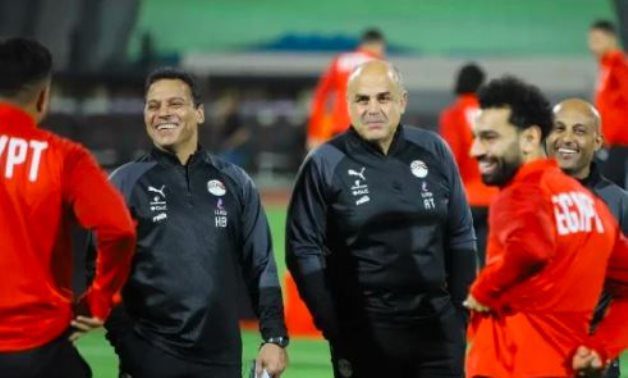
Hossam El-Badry, the head coach of Egypt’s national football team, believes that qualifying from Group D, which includes the Super Eagles of Nigeria, Sudan, and Guinea-Bissau, will be a difficult task for the Pharaohs.

The Super Eagles, three-time African champions, were seeded first in Group D of the 2021 Africa Cup of Nations tournament.

Egypt With Nigeria, Sudan, and Guinea-Bissau in their group, Coach El-Badry has warned that qualification will be difficult for the Pharaohs. Only two teams will advance from a group that includes three former African champions, and the Pharaoh’s head coach is wary of the other three nations’ challenge.

“Our group was quite balanced and not easy due to the improvement of all these teams, all of whom have great players,” El-Badry said after the draws were made in a press conference.

“I have a lot of faith in God and the players’ abilities to overcome this group and perform well enough to meet the expectations of the Egyptian fans.”

Read more: Nigeria Draws Egypt, Sudan, and Guinea Bissau for AFCON 2021
Egypt’s Pharaohs will be favorites to win their 2021 Africa Cup of Nations (AFCON) group in Cameroon, based on their pedigree and the fact that they have one of the best players in the world in two-time African best player Mohamed Salah.

Read Also:  NLC: Allow market forces to determine the price of gasoline

The TotalEnergies Africa Cup of Nations will be held in five cities across Cameroon from January 9 to February 6, 2022.

President Buhari appoints Petroleum Industry Act Steering Committee

0

President Muhammadu Buhari has approved a steering committee to oversee the implementation of the recently signed Petroleum Industry Act (PIA).

Timipre Sylva, Minister of State for Petroleum Resources, is the chairman of the steering committee.

Permanent Secretary, Ministry of Petroleum Resources, Group Managing Director, NNPC, Executive Chairman, FIRS, Representative of the Ministry of Justice, Representative of the Ministry of Finance, Budget and National Planning, Senior Special Assistant to the President on Natural Resources, Barrister Olufemi Lijadu as External Legal Adviser, Permanent Secretary, Ministry of Petroleum Resources, Group Managing Director, NNPC, Executive Chairman, FIRS, Representative of the Ministry of Justice, Representative of the Ministry of Finance, Budget and National Planning, Senior Special

The steering committee’s primary responsibility will be to guide the effective and timely implementation of the PIA during the reform program’s transition to the petroleum industry, and to ensure that the new institutions created are fully capable of carrying out their mandate under the new legislation.

Read Also:  Investors Will Be Attracted By New Petroleum Industry Law – Minister

The committee will have 12 months to complete the task, and the President will be updated on a regular basis.

Investors Will Be Attracted By New Petroleum Industry Law – Minister

0

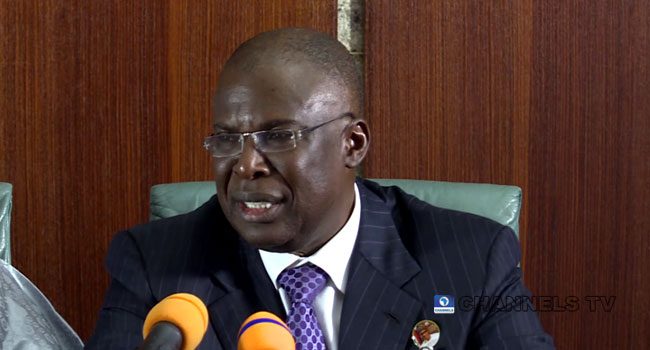
Chief Timipre Sylva, Minister of State for Petroleum Resources, stated that the goal of the President’s signing of the Petroleum Industry Bill (PIB) into law was to attract investors.

On Tuesday, the minister revealed this while responding to questions about the 3% allocation to host communities in the PIB in Abuja.

President Muhammadu Buhari, according to Sylva, will speak extensively on the Act on Thursday, which will aid in the development of the oil and gas sector.

“As a country, we have a course that we are following. So, for us in the Niger Delta, if you talk about three percent in the Act, I’ll ask, three percent of what? Isn’t that preferable to knowing 100% of what you don’t know?

“What we want to accomplish is the philosophy behind this bill, which is to attract investors to Nigeria and produce as much crude as possible on the ground. That’s what we’re aiming for.

“We must measure everything against this philosophy, so that if activities are not taking place in the Niger Delta, nothing happens because investors look at the numbers to see if they add up for them to operate,” he said.

According to Sylva, the percentages are usually charged to operation costs, and a lot has been added to the operation costs in Nigeria.

He pointed out that there was a need to be cautious about adding more costs to the operation because the impact would be felt in other areas.

He claimed that the country’s high operating costs would deter investors.

Sylva pointed out that the problems with frontier exploration funds were not limited to the North, as some had suggested, but affected all areas where oil is being explored.

“Every frontier territory aspires to be a host community, and they are not all in the same place in the country; they are in Cross River, the North East, the South West, and so on, so when people think of frontier territory as being in one place, they are mistaken.

“We must come together as a country, as a frontier and host community, and for host communities; we must realize that, at the end of the day, it is about the philosophy of bringing investment to the territory,” he said.

According to Sylva, the country has had about 37 billion barrels of oil reserves for the past ten years and has not added to them, and production, which was about three million barrels, has decreased until recent work was done.

Sylva stated that the system needed to be reenergized and that the country needed to look forward to a positive outcome.

Read Also:  Petroleum ministry spent N14.5m to buy ‘biros’ in one year, Auditor-General reveals

On the price of gasoline, he stated that the sector had been fully deregulated since the PIB was signed into law.

He did say, however, that the deregulation would not happen right away.

Sylva explained that products would be sold at market-determined prices, and that the cost would be shared by all parties involved in the PIB signing.

He stated that the government was aware of the potential for hardship and difficulties for Nigerians.

“As a result, we will not rush to implement it; instead, the implementation framework will address how we will alleviate the suffering that this may cause.

“We will work with labor to ensure that a framework exists that allows us to implement deregulation,” he added.

Ugandan government may grant asylum to Afghan refugees

0

The Ugandan government says it is considering a request from the United States to accept refugees from Afghanistan, where tens of thousands of people are attempting to flee since the Taliban took power.

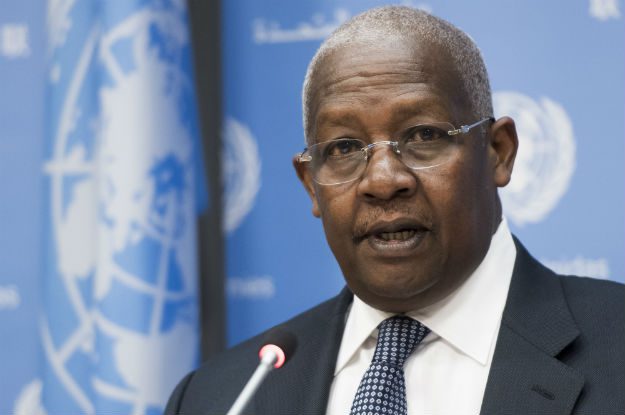
“President Yoweri Museveni has expressed Uganda’s willingness to provide assistance, including temporary hosting of some of the affected persons in the current crisis, and discussions are still ongoing,” said Sam Kutesa, Uganda’s foreign affairs minister.

According to media reports, Uganda, which already has Africa’s largest refugee population, had agreed to take in about 2,000 refugees, but this was not confirmed in the ministry statement.

“Following the events of last weekend in Afghanistan, the US government reached out to several of its international partners, including Uganda, to offer assistance in the unlikely event that some Afghans and international citizens who may be evacuated need to be temporarily housed,” the statement said.

Read Also:  In Nige, APC Chairman kidnapped and rescued by the police

The UN refugee agency told AFP that while it had not been involved in the talks between the US and Uganda, it was “ready to support” any refugees who arrived in the East African country. Uganda has one of the world’s largest refugee populations, with nearly 1.5 million people fleeing South Sudan and the Democratic Republic of Congo, according to the UN.

The majority live in large refugee settlements in the sparsely populated north of the country, but Kampala, the capital, has around 81,000 urban refugees. Aid organizations have repeatedly stated that the international response to refugees in Uganda, a country with a population of 44 million people, is underfunded.

Dangote calls for revolution in the power sector

0

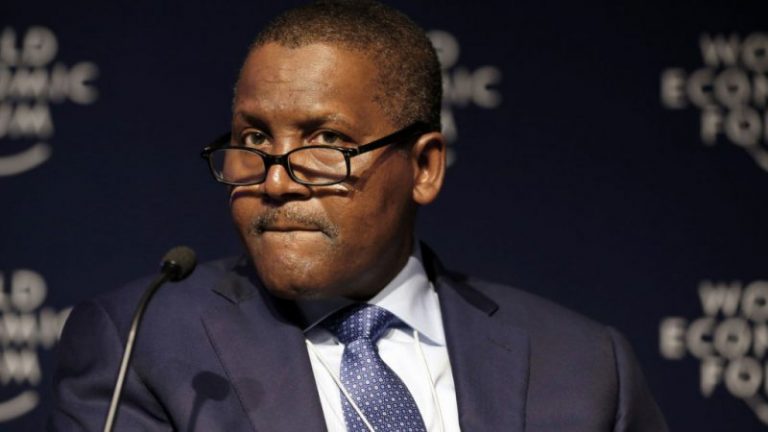
Dangote Industries Ltd. CEO Aliko Dangote has called for a revolution in Nigeria’s power sector.

He also urged local engineers to work together to increase manufacturing in order to prevent capital flight and accelerate Nigeria’s industrialization.

Mr Dangote, who was represented by Fola Ali, Group General Manager/Human Resources, Dangote Projects, said this at a luncheon hosted by the Nigerian Society of Engineers’ Ikeja Branch as part of activities to mark the 2021 engineering week.

For rapid industrialisation and environmental safety, the businessman called for youth mentorship and a power sector revolution.

“It’s time for us to take charge of our lives. Members of our illustrious NSE branches should be encouraged to collaborate. Engineers who are unable to function independently are among us. He said, “You can get together.”

Mr Dangote went on to say that if engineers worked together, manufacturing would improve, capital flight would be addressed, and local capacity development would be enhanced.

Devakumar Edwin, a Dangote director who joined the meeting via Zoom, said manufacturing could help speed up the process of industrialisation.

Mr. Edwin praised the local engineers’ knowledge and abilities, claiming that they can help to improve Nigeria.

He said, “They’re the best I’ve ever seen.”

Nigerian engineers, he said, were excellent, but they needed more exposure to make an impact.

Governor Babajide Sanwo-Olu, who was represented by Rotimi Thomas, permanent secretary of the Lagos State Ministry of Works and Infrastructure’s Office of Infrastructure, congratulated the NSE on its program, emphasizing the importance of local content development.

Mr Sanwo-Olu was also given a draft report from the NSE on the Lagos State Engineering Index and Infrastructure Scorecard.

Rauf Aregbesola, the Minister of the Interior, called for cooperation to bridge the gap between power generation and distribution, as well as the adoption of clean energy and a diverse energy mix.

Read Also:  Mimiko believes that healthcare should remain a fundamental human right

He claimed that the energy mix would provide additional energy sources for Nigeria’s industries to thrive, while clean energy would benefit the environment.

“We must understand that power generation generates wealth for the country,” he explained.

Former DSP Ibrahim Mantu was mourned by Lawan and Omo-Agege

0

The Senate President, Ahmad Lawan, has expressed his condolences to the family of Ibrahim Mantu, the former Deputy Senate President who died in the early hours of Tuesday.

Lawan also expressed his condolences to the former Senator’s friends and political associates, as well as the government and people of Plateau State, in a statement issued by his special Adviser on Media, Ola Awoniyi.

“Mantu had a brilliant political career, which he capped with quality representation for the people of Plateau Central District as their two-term Senator between 1999 and 2007.”

“In his role as Deputy Senate President, Mantu demonstrated great energy and finesse, earning him the respect and admiration of his colleagues.

“The former Deputy Senate President dedicated his life to his people and the country as a whole. He left his mark on the Senate, having performed admirably in the Upper Chamber during his time there.”

The Senate President prayed that Allah would grant Mantu’s soul eternal bliss and comfort those who were grieved by his death.

Senator Ovie Omo-Agege, who is also the Senate’s Deputy President, has expressed his shock and sadness over the death of Senator Ibrahim Mantu, a former lawmaker and elder statesman.

Senator Omo-special Agege’s Adviser on Media, Yomi Odunuga, paid tribute to his patriotism and commitment to building a viral Legislature in a condolence message. Senator Omo-Agege served as Deputy President of the Senate from 2001 to 2007.

Mantu, 74, died early Tuesday morning after a brief illness.

Mantu’s commitment to meeting the needs of his community as a two-term lawmaker, as well as his devotion to national development, were lauded by the Delta Central lawmaker, who added that his insightful contributions on the Senate floor would be fondly remembered.

Omo-Agege expressed his heartfelt condolences to the Plateau State government and people, as well as the deceased’s family and friends.

Read Also:  Makinde is asking Oyo lawmakers to approve a N50 billion supplementary budget

“From 1999 to 2007, distinguished Senator Ibrahim Mantu served the Fourth and Fifth Senates with compassion and diligence. He held various positions in the Senate, including Chairman of the Senate Committee on Information, Deputy President of the Senate, and Chairman of the Joint National Assembly Constitution Review Committee.

From 2005 to 2006, he chaired the Policy Analysis and Research Project (PARP), which later became the National Institute for Legislative and Democratic Studies (NILDS), Amirul Hajj, and also oversaw the Palliative Consolidated Committee for Cushioning Measures, according to him.